Three years ago, Alexander Whitmore thought the hardest part of losing his marriage was signing the final papers.
The garden fell silent after Eleanor’s last words.
Alexander stood beneath the bare branches of an old maple tree, watching the faint lights of Manhattan shimmer beyond the stone wall. The sounds of the gala had become distant now—muted laughter, the occasional clink of glass, the soft music drifting through the open doors behind them.
For the first time that evening, he had no prepared response.
He had spent three years imagining what he would say if he ever saw Eleanor again.
In some versions of that fantasy, he apologized perfectly.
In others, she cried, and he comforted her.
Sometimes she told him she had never stopped loving him.
Sometimes she admitted she had made a mistake by leaving.
But reality had given him none of those things.
Instead, she had looked at him with calm eyes and said she wasn’t sure how she felt.
Not “I hate you.”
Not “I love you.”
Not even “I forgive you.”
Just uncertainty.
And somehow, that uncertainty hurt more than rejection.
Alexander lowered his gaze.
“I don’t deserve an answer tonight,” he said quietly.
Eleanor folded her arms against the cold.
“No,” she replied. “You don’t.”
There was no cruelty in her voice.
That made it worse.
“I used to think about this conversation,” Alexander continued. “For years, I imagined I’d have the right words.”
“You probably did.”
He looked up.
“Probably?”
A faint smile touched her lips.
“You had three years.”
Alexander almost laughed, but there was no humor in it.
“Fair enough.”
For a moment, neither spoke.
Then Eleanor turned toward the doors.
“You should go back inside.”
“And you?”
“I’m leaving soon.”
“Will I see you again?”
She stopped.
The question seemed to surprise even him.
Eleanor looked over her shoulder.
“That depends.”
“On what?”
“On whether you want to see me because you miss me,” she said, “or because you finally understand what you lost.”
Alexander’s expression tightened.
“I don’t know if there’s a difference.”
“There is.”
She walked away before he could answer.
Alexander remained beneath the tree long after she disappeared inside.
The next morning, the newspapers did not report their conversation.
They reported something else.
At 8:15 a.m., a financial publication released an article about the rapidly expanding Ashford Group, the company Eleanor had built quietly over the previous three years.
The headline made Alexander sit upright in his office.
Ashford Group had completed another acquisition.
This time, it was a logistics company with operations across the northeastern United States.
Alexander read the article twice.
Then he reached the financial section.
The company was not merely growing.
It was becoming strategically important.
Ashford had investments in logistics, commercial real estate, renewable energy, hospitality, and technology infrastructure.
Several of the companies were connected, directly or indirectly, to properties and businesses that had once been considered part of the wider Whitmore sphere.
Alexander felt something cold settle in his chest.
He had known Eleanor was successful.
He had not understood the scale.
He called his chief financial officer.
“How much of our recent restructuring was connected to Ashford?”
There was a pause.
“Which part?”
“All of it.”
Another pause.
“Alexander, are you asking about the properties we sold last year?”
“Yes.”
“Some were acquired through intermediary firms.”
“And?”
“And the beneficial ownership traces back to Ashford Capital in several cases.”
Alexander closed his eyes.
He remembered the gala.
The announcements.
The donation.
The way Eleanor had stood among people who had once treated her as nothing more than Alexander’s wife.
She hadn’t come back asking for revenge.
She had simply become impossible to ignore.
His CFO continued.
“There is something else.”
“What?”
“Ashford has been buying debt positions connected to several of our older development projects.”
Alexander stood.
“How much?”
“I’d rather discuss it in person.”
“Tell me.”
The CFO hesitated.
“Enough that you should probably stop thinking of them as a competitor.”
Alexander looked through the window at the city.
“What should I think of them?”
“An independent financial force.”
The call ended.
Alexander remained still.
For years, he had thought Eleanor’s departure had created an empty space in his life.
Now he was beginning to realize that while he had been staring at the empty space, she had been building something on the other side of it.
That afternoon, Eleanor sat in a conference room overlooking downtown Manhattan.
Her executive team had already reviewed the morning reports.
Her chief strategist placed a folder on the table.
“Whitmore’s asking about our ownership structure.”
Eleanor barely looked up.
“Of course they are.”
“Do you want us to slow the acquisitions?”
“No.”
“Increase them?”
She finally looked at him.
“No.”
The strategist waited.
“Then what?”
“We continue according to the plan.”
“And Whitmore?”
“We don’t build our strategy around Alexander.”
There was something deliberate in the way she said his name.
Not bitterness.
Not affection.
Just recognition.
Her strategist nodded.
“Understood.”
After the meeting ended, Eleanor remained alone.
She opened a drawer in her desk.
Inside was a small photograph.
It was old, slightly faded.
She and Alexander stood together on the steps of a brownstone in Brooklyn, years before the gala, before the divorce, before everything had become complicated.
Alexander was smiling at the camera.
Eleanor was looking at him instead.
She stared at the photograph for several seconds.
Then she put it back.
She had learned not to destroy the past simply because it hurt.
But she had also learned not to live inside it.
That distinction had taken her years.
Three years earlier, Eleanor had left their home with two suitcases and a box of documents.
She had no grand plan.
She had no secret empire waiting for her.
She had only anger, embarrassment, and a stubborn refusal to spend the rest of her life explaining why she had stayed.
Her first year had been brutal.
She had rented a small apartment in Manhattan and worked until midnight most nights.
People who had known her only as Alexander’s wife suddenly treated her differently.
Some assumed she would fail.
Others assumed Alexander would eventually take her back.
Neither assumption interested her.
She built relationships.
She studied markets.
She learned the parts of business Alexander had once handled for her.
Then she discovered something unexpected.
She was good at it.
Not because she had suddenly become someone else.
Because she had spent years quietly observing everything around her.
She understood people.
She understood negotiations.
She understood the difference between what someone said they wanted and what they were actually willing to sacrifice to get it.
Her first acquisition was small.
Then came another.
Eventually, investors started calling her.
By the second year, Ashford Group had become a serious company.
By the third, Eleanor no longer needed anyone to introduce her.
She could walk into a room and command it herself.
But there was one thing she had never completely resolved.
Alexander.
Not because she wanted him back.
That was the easy answer.
The difficult answer was that some part of her still wanted to know whether the man she had loved had ever understood what he had done.
The gala had given her part of that answer.
He had.
Perhaps too late.
A week after the gala, Alexander received an unexpected invitation.
Not from Eleanor.
From the Ashford Foundation.
They were hosting a community investment forum in Queens.
Alexander almost declined.
Then he saw Eleanor’s name on the program.
He went.
The event was nothing like the Whitmore gala.
There were no chandeliers.
No red carpet.
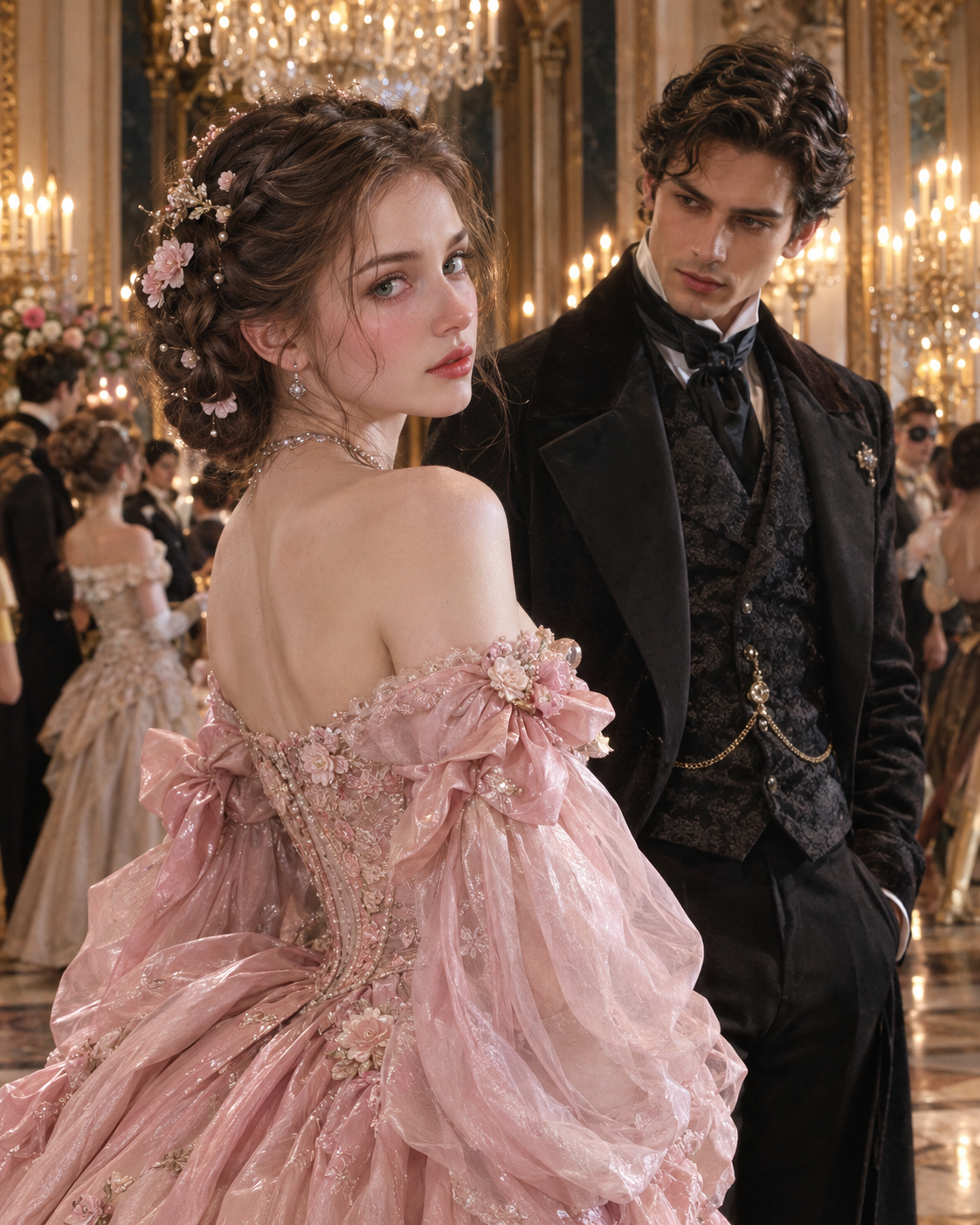
No photographers waiting outside.
It was held inside a renovated community center where local entrepreneurs, small-business owners, teachers, and nonprofit leaders had gathered.
Alexander watched Eleanor speak from the front of the room.
She talked about access to capital.
About rebuilding neighborhoods without displacing the people who already lived there.
About giving small businesses a chance to survive long enough to become strong.
There was no mention of him.
No mention of the divorce.
No mention of revenge.
When she finished, the audience applauded.
Alexander remained seated.
For the first time, he understood why she had donated the fifty thousand dollars to his foundation.
It wasn’t about him.
It had never been about him.
She had supported the work, not the man.
That realization humbled him more than any insult could have.
After the event, he waited outside.
Eleanor eventually emerged carrying a folder.
She stopped when she saw him.
“You came.”
“I did.”
“Why?”
“I wanted to understand.”
Her expression softened slightly.
“Understand what?”
“You.”
She looked away.
“I’m not sure anyone understands anyone completely.”
“Then let me try.”
Eleanor studied him.
“You have a habit of arriving after the important part.”
Alexander nodded.
“I know.”
“Why now?”
He took a breath.
“Because I don’t want my apology to be another thing I do for myself.”
That caught her attention.
He continued.
“I used to think apologizing meant saying the right words until the other person felt better.”
“And now?”
“Now I think an apology is accepting that the other person may never feel better because of it.”
Eleanor was silent.
Alexander looked down.
“I hurt you. I betrayed you. I treated your patience like it was permanent. I made you feel invisible while you were standing right beside me.”
His voice cracked slightly.
“And there is nothing I can say that changes that.”
Eleanor’s eyes remained steady.
“No.”
“I know.”
She exhaled.
“Thank you.”
It was a small sentence.
But Alexander understood that it was not forgiveness.
It was acknowledgment.
And for once, he did not ask for more.
Weeks passed.
Their lives continued separately.
Alexander began changing the way he ran his foundation.
He created a leadership program for women returning to the workforce.
He insisted that several community investment decisions be made independently of his personal interests.
When someone asked why, he simply said the foundation had a responsibility to serve people rather than the family’s reputation.
Eleanor heard about it.
She said nothing.
But she noticed.
Then, one evening, Alexander received a message.
It was from Eleanor.
“Coffee tomorrow?”
He stared at the screen for nearly a minute.
Then he replied.
“Yes.”
They met at a small café in Greenwich Village.
No photographers.
No assistants.
No board members.
Just two people sitting across from each other.
For the first twenty minutes, they talked about business.
Then Eleanor laughed.
“You’ve changed.”
Alexander smiled.
“I hope that’s not a bad thing.”
“It isn’t.”
“Have you?”
She looked out the window.
“Every day.”
He nodded.
“I suppose that’s the only way to survive.”
“No,” she said. “It’s the way to live.”
The words stayed with him.
They spoke until the café began closing.
Outside, the city was quiet.
Eleanor pulled her coat around herself.
Alexander hesitated.
“I want to ask you something.”
“You can ask.”
“Do you ever think about us?”
She looked at him.
“Sometimes.”
“Do you miss me?”
A long silence followed.
“Sometimes.”
His heart moved before his mind could stop it.
But Eleanor raised a hand.
“Don’t turn those words into a promise.”
He stopped.
“I won’t.”
“I mean it, Alexander. Missing someone doesn’t mean you belong with them.”
“I understand.”
“And caring about someone doesn’t erase what happened.”
“I understand that too.”
She studied him for several seconds.
“Maybe that’s why I’m willing to talk to you now.”
“Why?”
“Because you’re finally listening.”
They began seeing each other occasionally.
Not as husband and wife.
Not as lovers.
Not even as a couple.
Something much less defined.
They had coffee.
They attended a business conference together once.
They argued about investments.
They laughed about old memories.
Sometimes Eleanor disappeared for weeks because of work.
Alexander never demanded an explanation.
Sometimes Alexander called just to tell her about a foundation project.
She listened.
Their relationship became something neither of them had expected.
It was not a return to the past.
It was an encounter between two people who had survived it.
Then came the crisis.
A major development project involving both companies began to collapse.
A regulatory change threatened the financing.
Several investors wanted to pull out.
The press started speculating about a battle between Whitmore and Ashford.
Alexander’s board urged him to protect the family company.
Some suggested using Eleanor’s connection to the project as leverage.
Alexander refused.
“We don’t use personal history as a business weapon.”
His board was surprised.
One director asked, “Even if it costs us?”
Alexander answered, “Especially then.”
Eleanor learned about his decision.
She called him that night.
“You didn’t have to do that.”
“I know.”
“Why did you?”
“Because it was right.”
There was a pause.
“Thank you.”
The project survived.
Not because either company defeated the other.
They worked together.
For the first time, Alexander saw Eleanor not as his former wife, not as the woman he had lost, but as an equal.
And she saw something in him she had not expected to find again.
Not the man from before.
Someone different.
Someone who had finally learned that love without respect was not enough.
Months later, winter arrived in New York.
Snow covered the sidewalks.
The city seemed quieter beneath the white streets.
Eleanor stood outside the Whitmore Foundation’s new community center.
Alexander joined her.
They looked through the glass at children participating in an after-school program.
“You know,” Eleanor said, “three years ago I thought my life was over.”
Alexander turned toward her.
“I thought mine was over too.”
She smiled.
“The difference is, you thought losing me was the end.”
“And you?”
“I discovered it was the beginning.”
Alexander nodded.
“Do you regret marrying me?”
Eleanor thought for a long time.
“No.”
He looked surprised.
“Why?”
“Because I loved you. And because that version of me needed to learn something.”
“What?”
“That loving someone doesn’t mean abandoning yourself.”
Alexander lowered his eyes.
“I wish I’d understood that.”
“So do I.”
They stood quietly.
Then Eleanor reached for his hand.
It was the first time she had done so willingly since the divorce.
Alexander looked at their hands.
He did not tighten his grip.
He simply held hers gently.
“Does this mean anything?” he asked.
Eleanor smiled.
“It means I’m holding your hand.”
He laughed softly.
“Fair enough.”
She looked at him.
“I still don’t know what happens next.”
“Neither do I.”
“Are you afraid?”
“Yes.”
“Good.”
He raised an eyebrow.
“Good?”
“Fear means you understand that something matters.”
For a moment, neither moved.
Then Eleanor leaned slightly closer.
Not enough to erase the past.
Not enough to promise the future.
Just enough to acknowledge the present.
Alexander understood something then that he had failed to understand when they were married.
Love was not ownership.
Love was not certainty.
Love was not the assumption that someone would remain simply because they once promised to.
Love was a choice made again and again, with room for the other person to remain free.
Three years earlier, he had lost Eleanor because he believed she would always be there.
Now, if there was ever going to be another chapter, he would have to earn it without expecting it.
Eleanor looked toward the city lights.
“You know what the strangest part is?”
“What?”
“I used to dream about you regretting what you did.”
“And now?”
“Now I don’t need you to regret it.”
Alexander was quiet.
“Why?”
“Because I already became the woman I needed to become.”
The words settled between them.
Not as a punishment.
As a truth.
Alexander smiled faintly.
“Then maybe that’s the real ending.”
Eleanor looked at him.
“Maybe.”
“But not necessarily the end.”
She smiled.
“No. Not necessarily.”
They walked together toward the entrance.
Neither knew whether the future would bring reconciliation, friendship, or simply another season of separate lives.
For once, neither tried to force an answer.
Outside, Manhattan continued moving.
Taxis passed through the snowy streets.
Lights glowed from apartment windows.
People hurried toward homes, restaurants, offices, and lives Alexander and Eleanor would never know.
The city did not care about their history.
And somehow, that was comforting.
Their story no longer needed to be defined by the betrayal that ended their marriage.
It could be defined by what they chose to become afterward.
Alexander had once believed losing Eleanor was the greatest tragedy of his life.
Years later, he understood something more complicated.
The tragedy had never been simply losing her.
It had been failing to recognize her value while she was still beside him.
Eleanor, meanwhile, had learned that rebuilding a life was not about proving something to the person who hurt you.
It was about becoming free from the need for their approval.
That was why she could forgive without returning.
Why she could remember without regretting.
Why she could stand beside Alexander without becoming the woman she had once been.
And perhaps that was the greatest lesson their story left behind.
Sometimes people leave not because love was meaningless, but because love cannot survive where respect has disappeared.
Sometimes an apology comes too late to restore what was lost.
And sometimes the person you once thought you could never live without becomes the person who teaches you that you can.
But if two people meet again after everything has changed, there is still one question worth asking.
Not, “Can we go back?”
Because they can’t.
The better question is, “Can we build something honest from here?”
For Alexander and Eleanor, the answer remained unwritten.
And for the first time, neither of them was afraid of that.
The following spring arrived quietly in New York.
There was no dramatic announcement, no engagement ring displayed beneath flashing cameras, and no newspaper headline declaring that Alexander Whitmore and Eleanor Ashford had finally found their way back to each other.
Instead, there were small things.
Coffee on Sunday mornings.
Long walks through Central Park.
Late-night conversations about businesses, books, family, and everything they had once been too afraid to say.
Their relationship remained undefined.
And strangely, that was exactly what made it feel real.
For Eleanor, the difference was enormous.
She no longer woke up wondering whether Alexander would choose her.
She no longer measured her worth by his attention.
She had her company, her foundation, her friendships, her own apartment, her own ambitions, and a life that belonged entirely to her.
Alexander understood that now.
If he wanted to be part of that life, he had to enter it as a guest, not an owner.
One afternoon, nearly a year after the night of the gala, Eleanor arrived at Alexander’s foundation for a board meeting.
She walked into the room carrying a folder and immediately noticed something on the wall.
A photograph.
It showed a group of young women standing outside a newly renovated business center in Brooklyn.
Above the photograph was a simple plaque:
THE ASHFORD-WHITMORE WOMEN’S INITIATIVE.
Eleanor stopped.
She looked at Alexander.
“You never told me.”
“I wanted you to see it before I explained.”
She walked closer to the plaque.
“I thought we agreed my name shouldn’t be used to repair your reputation.”
“It isn’t.”
“Then what is it?”
“Recognition.”
She turned toward him.
“For what?”
“For the work you inspired.”
Eleanor shook her head.
“I didn’t inspire this.”
“You did.”
“No, Alexander. The women who built those businesses inspired it.”
He smiled.
“Then perhaps that’s exactly why your name belongs there.”
She studied him for a moment.
A year ago, she might have argued.
Now she simply nodded.
“Thank you.”
The board meeting lasted two hours.
When it ended, everyone left except the two of them.
Alexander poured two cups of coffee.
Eleanor sat by the window.
“Do you remember our first apartment?” she asked.
“Which one?”
“The one in Boston.”
He laughed.
“The apartment with the broken radiator?”
“And the neighbor who played jazz at two in the morning.”
“I remember.”
“You hated that apartment.”
“I hated the radiator.”
“You said you’d never live somewhere that small again.”
“I was young.”
She smiled.
“We were both young.”
A comfortable silence followed.
Then Eleanor said, “Sometimes I wonder what would have happened if we had met now instead of then.”
Alexander sat across from her.
“Maybe we wouldn’t have made the same mistakes.”
“Maybe we would have made different ones.”
He smiled.
“Probably.”
She looked down at her coffee.
“Do you ever wish you could erase those years?”
Alexander thought carefully.
“No.”
She looked surprised.
“Why not?”
“Because if I erased them, I’d erase what I learned from them.”
“And what did you learn?”
He leaned back.
“That loving someone doesn’t give you the right to take them for granted.”
Eleanor remained quiet.
“And that losing someone doesn’t automatically mean you’re entitled to get them back.”
She smiled faintly.
“That’s a much better answer than the one you would have given three years ago.”
“I know.”
“Good.”
Outside the window, the city moved beneath the afternoon sunlight.
Eleanor looked at him.
“I have something for you.”
She reached into her bag and placed a small envelope on the table.
Alexander opened it.
Inside was a photograph.
The same photograph he had once seen in her office.
The old picture of them standing together outside the brownstone in Brooklyn.
He looked at it for several seconds.
“I thought you kept this.”
“I did.”
“Why give it to me?”
“Because I don’t need it anymore.”
He looked up.
“Are you sure?”
“Yes.”
“Does that mean you’re letting go?”
Eleanor smiled.
“No.”
“It doesn’t?”
“It means I’m no longer afraid of remembering.”
Alexander ran his thumb gently across the edge of the photograph.
For years, he had believed their past was something he needed to escape.
Now he understood that the past did not need to be destroyed.
It simply needed to be placed where it belonged.
Behind them.
Not between them.
That evening, they walked through the streets of Manhattan.
The weather was warm enough that Eleanor left her coat open.
They passed restaurants, bookstores, taxis, street musicians, and couples holding hands beneath the city lights.
Alexander stopped at a corner.
“Eleanor.”
She turned.
“Yes?”
“I love you.”
She said nothing.
He continued before she could respond.
“I’m not saying it because I expect anything.”
Her expression softened.
“I’m saying it because for the first time, I understand that loving you means allowing you to decide what those words mean to you.”
Eleanor looked at him for a long moment.
Then she stepped closer.
“I love you too.”
Alexander’s breath caught.
“But,” she added.
He smiled.
“There had to be a but.”
“There is.”
“What is it?”
“I don’t want the old marriage back.”
“I don’t either.”
“I don’t want to be your wife because we once were.”
“Understood.”
“If we ever build a life together, it has to be something new.”
Alexander nodded.
“Something chosen.”
“Every day.”
“Every day.”
She reached for his hand.
This time, neither of them hesitated.
They continued walking.
There was no dramatic kiss.
No crowd applauding.
No perfect ending.
Just two people moving through a city that had witnessed the worst chapter of their lives and was now quietly watching the beginning of something different.
Six months later, Alexander stood in a small room at the Brooklyn community center.
There were no reporters.
No wealthy donors.
No champagne.
Only a group of young entrepreneurs gathered around Eleanor as she prepared to announce a new investment program.
Alexander stood at the back.
He didn’t interrupt.
He didn’t introduce her.
He didn’t need to.
When Eleanor finished speaking, the room erupted in applause.
She looked toward the back and saw him smiling.
Her smile answered his.
Later that evening, they walked outside.
The sun was disappearing behind the Brooklyn skyline.
“How does it feel?” Alexander asked.
“Good.”
“Just good?”
“Very good.”
He laughed.
“I’ll take it.”
She leaned against the railing.
“You know, there was a time when I thought success meant proving you wrong.”
Alexander looked at her.
“And now?”
“Now I realize success is not needing you to be wrong.”
He nodded.
“That’s probably the most important thing you’ve ever taught me.”
She smiled.
“I didn’t teach you.”
“Then what did you do?”
“I survived.”
Alexander looked at her with an expression she had not seen in years.
Not possession.
Not guilt.
Not regret.
Respect.
Pure and uncomplicated.
“I think that’s what I admired most about you,” he said.
“When?”
“Even when I didn’t deserve to.”
Eleanor reached for his hand.
“You finally learned to say the important things.”
“I’m still learning.”
“Good.”
They stood together as the last light faded.
Neither of them knew exactly what the next decade would bring.
There would be arguments.
There would be difficult decisions.
There would be moments when the past tried to return.
But they had something they had never possessed during their marriage.
Choice.
Eleanor could leave.
Alexander could walk away.
Neither was trapped.
Neither was dependent.
Neither had to stay.
And because they were free to leave, staying meant something different.
It meant choosing each other.
Again.
And again.
And again.
Two years after the gala where their story had unexpectedly begun again, Alexander proposed.
He did not take her to a ballroom.
He did not invite reporters.
He did not buy the largest diamond he could find.
He took her back to the small Brooklyn street where they had once lived.
They stood outside the old brownstone.
The radiator in the apartment had long since been replaced.
The building had changed owners.
The neighborhood had changed.
They had changed.
Alexander reached into his pocket.
“Eleanor.”
She turned toward him.
He held out a small ring.
It was elegant and simple.
“I don’t want to ask you to become the woman you were when you married me.”
She looked at the ring.
“I don’t want to become her either.”
“I know.”
He took a breath.
“I want to ask the woman you are now if she’d like to build something new with the man I’ve become.”
Eleanor’s eyes filled with tears.
Not because she was returning to the past.
Because she wasn’t.
She was choosing something entirely different.
“Yes,” she whispered.
Alexander smiled.
“Yes?”
“Yes.”
He slipped the ring onto her finger.
Then she laughed through her tears.
“One condition.”
He raised an eyebrow.
“Of course.”
“You never take me for granted again.”
He smiled.
“Never.”
She looked at him.
“Don’t promise forever.”
He paused.
“Why?”
“Because forever is easy to say.”
She took his hand.
“Promise me today.”
Alexander understood.
“Today, I choose you.”
She smiled.
“Then tomorrow, we’ll see.”
And that became the foundation of their second beginning.
Not forever.
Not certainty.
Today.
Years later, people would sometimes ask Eleanor why she had forgiven Alexander.
She always gave the same answer.
“I didn’t forgive him so I could return to him.”
Then she would pause.
“I forgave him so I could stop carrying what he had done.”
When people asked Alexander what he had learned from losing the woman he loved, he never talked about money.
He never talked about the business empire Eleanor built.
He never mentioned the acquisitions or the foundation or the fifty-thousand-dollar donation that had once stunned him.
He simply said:
“Never confuse someone’s silence with weakness.”
Then he would add:
“And never assume that because someone loves you, they’ll stay when you stop respecting them.”
That became the story people remembered.
Not the affair.
Not the divorce.
Not the financial battles.
Not even the dramatic reunion at the gala.
They remembered what came after.
Two people who had once broken each other learned that love could not be rebuilt by returning to the past.
It could only be rebuilt by creating something the past had never known.
Respect.
Freedom.
Honesty.
Choice.
On a warm summer evening many years later, Alexander and Eleanor stood on the terrace of their home overlooking the Hudson River.
The city glittered beneath them.
Eleanor rested her head against his shoulder.
“Do you ever think about that night?” she asked.
“The gala?”
“Yes.”
“Sometimes.”
“What do you remember?”
Alexander smiled.
“I remember being terrified.”
She laughed.
“You?”
“Of course.”
“Why?”
“Because you walked into that room and I realized I had spent three years grieving a woman who no longer existed.”
Eleanor lifted her head.
“She existed.”
“I know.”
“But she changed.”
“Yes.”
She looked at the lights across the river.
“So did you.”
Alexander kissed her forehead.
“I hope so.”
They stood quietly.
Then Eleanor smiled.
“Do you know what I think?”
“What?”
“Maybe we weren’t meant to get our old life back.”
Alexander looked at her.
“Maybe we were meant to learn how to build a better one.”
She nodded.
The river moved beneath the lights.
The city continued forward.
And so did they.
Not as the people they had once been.
Not as two people trying to repair a broken marriage.
But as two independent lives that had somehow found a way to walk beside each other again.
Their story did not end with someone winning and someone losing.
It ended with something quieter.
Something more difficult.
Something more valuable.
They learned that love is not measured by how desperately someone holds on.
Sometimes love is measured by whether you can let another person become who they are meant to be—and still choose to stand beside them.
Eleanor had built an empire without Alexander.
Alexander had rebuilt his character without Eleanor.
And when they found each other again, neither needed the other to be complete.
That was precisely why their second chance had a chance at all.
The woman who once left with two suitcases had eventually discovered that she could build an entire world of her own.
The man who once thought he could never lose her learned that having someone beside you is not the same as having the right to keep them.
And on a quiet evening overlooking New York, with no cameras watching and no audience waiting for a perfect ending, they held hands.
Not because they had to.
Because they wanted to.
And perhaps that was the most honest ending their story could have.
Not a return.
A choice.
Not a promise of perfection.
A promise to keep choosing.
Not the love they had once lost.
But a new love they had finally learned how to protect.
THE END.