They laughed when Martha Bell dumped my bags beside the ruined line-camp kitchen, but Caleb Mercer’s cold stare told me someone had wanted me humiliated for reasons I didn’t yet understand.
Caleb read the sentence again.
“I know who Rebecca Dawson really is.”
For several seconds, he didn’t move.
The spring wind stirred the wildflowers beside the kitchen, and somewhere near the barn, one of the ranch hands shouted a joke that ended in laughter.
But around us, everything had gone strangely quiet.
I watched Caleb fold the letter.
“What does it mean?” I asked.
He didn’t answer immediately.
Instead, he looked toward the rider waiting at the edge of the pasture.
“Go inside.”
My stomach tightened.
“Caleb.”
“Rebecca, please.”
There was something in his voice I had never heard before.
Not anger.
Not fear.
Something closer to dread.
I took a step toward him.
“Who am I supposed to be?”
His jaw tightened.
“I don’t know yet.”
The words struck harder than they should have.
“You don’t know?”
“I know you,” he said quickly. “I know the woman who rebuilt that kitchen. I know the woman who stayed beside three dying men in a blizzard. I know the woman I love.”
His eyes lowered to the envelope.
“But Samuel Wade thinks there’s another story.”
I looked at the sealed paper in his hand.
“Then open it.”
He did.
Inside was a single sheet covered in neat black handwriting.
Caleb read it silently.
His face changed with every line.
When he finished, he handed it to me.
I read the first sentence.
Then the second.
By the third, my hands were shaking.
“Your name is not Rebecca Dawson.”
I stared at the page.
“The woman who raised you was not your mother.”
My breath caught.
There was more.
“Your real father was Thomas Dawson, former partner of Elias Mercer.”
I looked up.
“Mercer?”
Caleb went completely still.
“My father?”
He nodded.
I continued reading.
Thomas Dawson and Elias Mercer had once owned Red Willow together.
Twenty-seven years ago, they had planned to divide the valley’s water rights equally.
Then Thomas disappeared.
The ranch was left entirely in Elias’s hands.
According to Samuel Wade, Thomas had been accused of stealing money from the ranch before he vanished.
He had supposedly abandoned his wife and infant daughter.
That infant was me.
Rebecca Dawson.
The name suddenly felt like something borrowed.
At the bottom of the letter was one final sentence.
“Your father did not abandon you. He was driven away because he discovered what Elias Mercer and Samuel Wade had done together.”
I looked at Caleb.
“My father knew yours?”
“Yes.”
“Then why didn’t anyone tell me?”
“I never knew.”
His voice was barely audible.
“My father died believing Thomas betrayed him.”
I lowered the letter.
“And Samuel Wade knows all this now?”
Caleb nodded.
“Then why tell us?”
“Because he wants something.”
The rider approached.
He stopped several yards away and removed his hat.
“Mr. Mercer.”
Caleb’s hand went to his belt.
“What does Wade want?”
The man swallowed.
“He wants the original water deed.”
Caleb’s eyes narrowed.
“What original deed?”
“The one signed by Elias Mercer and Thomas Dawson.”
My heart began pounding.
The rider continued.
“Wade says if you don’t hand it over by sundown tomorrow, he’ll release documents proving your father stole from the partnership.”
Caleb looked at me.
“And if the documents are real?”
The rider hesitated.
“They’ll challenge your ownership of Red Willow.”
The ranch seemed to disappear beneath my feet.
Everything we had fought for—the ranch, the water agreement, our future—had suddenly become another battlefield.
After the rider left, Caleb walked toward the house.
I followed.
“Where are you going?”
“To find my father’s records.”
“I’ll help.”
“No.”
I stopped.
He turned around.
“This is my family’s mess.”
“And my family’s name is in it.”
He stared at me.
For a moment, neither of us spoke.
Then he sighed.
“All right.”
We spent the afternoon in the old office.
The room smelled of dust, leather, and cold ashes.
Caleb pulled open drawers that had not been touched in years.
Ledgers.
Receipts.
Old cattle records.
Letters.
Nothing.
Then I noticed something.
“Caleb.”
He looked up.
“Your father’s desk.”
“What about it?”
“The lock.”
I pointed to the bottom drawer.
“It doesn’t match the others.”
He walked over.
The drawer had a tiny brass lock hidden beneath the wood.
Caleb searched through his father’s old key ring.
None fit.
I remembered my mother’s recipe book.
It had belonged to the woman who raised me.
She had always told me that some things were worth keeping even when you didn’t understand why.
I opened the book.
A small brass key slipped from between the pages.
Caleb stared.
“Where did you get that?”
“It was always there.”
He took it.
The key turned perfectly.
The drawer opened.
Inside was a bundle of letters tied with faded blue ribbon.
Caleb picked up the first one.
The handwriting was unmistakably old.
Thomas Dawson.
My father.
I sat beside him as he read.
The first letter was dated twenty-seven years earlier.
Elias,
You promised we would never let Wade control the valley.
I found the missing water records.
He has been altering the measurements for years.
If we expose him, half the valley will owe us everything he stole.
The next letter was shorter.
Elias,
I know you met with Wade.
Tell me you haven’t made a deal with him.
Caleb turned the page.
The final letter was stained with something dark.
Elias,
If anything happens to me, protect Rebecca.
Do not let Wade take the original deed.
He believes it is hidden in the ranch.
He is wrong.
Caleb stopped reading.
“What happened to him?”
I whispered.
He shook his head.
“I don’t know.”
At the bottom of the last page was a location.
The old mill.
I knew it immediately.
Everyone in the valley avoided that place.
The mill had burned years ago and stood abandoned near the river.
Caleb folded the letter.
“We’re going tonight.”
“No.”
He looked at me.
“Why?”
“Because that’s exactly what Samuel Wade wants.”
Caleb’s expression hardened.
“He knows about the deed.”
“Then he may know about the mill.”
We needed proof before we moved.
For once, Caleb listened.
We waited until morning.
But before dawn, someone tried to burn the line-camp kitchen.
I woke to the smell of smoke.
Flames climbed the back wall.
I screamed.
The ranch hands rushed from their quarters.
Buckets appeared.
Men shouted.
Within minutes, the fire was under control.
But someone had left a message on the kitchen door.
A single word burned into the wood.
LEAVE.
I touched the blackened letters.
Caleb stood behind me.
His face was colder than I had ever seen it.
“This ends now.”
I turned.
“No.”
He looked surprised.
“We don’t run.”
He stared at me.
“I ran once,” I said. “I left because I thought loving you meant protecting you from my problems.”
I swallowed.
“I’m not doing that again.”
A slow smile appeared on his face.
“Good.”
That morning, we rode to the old mill with two trusted ranch hands.
The road followed the river through a narrow canyon.
The mill appeared just before noon.
Half the roof had collapsed.
The wooden wheel was broken.
Inside, dust covered everything.
Caleb searched beneath the floorboards while I examined the old stone wall.
Then I saw something.
A carving.
Two initials.
T.D.
E.M.
Below them was a date.
The year Red Willow had been founded.
I pressed my hand against the stone.
A hollow sound answered.
“Caleb.”
He came over.
Together, we pulled away the loose stone.
Behind it was a metal box.
Inside was the original deed.
And beneath it was something else.
A small leather notebook.
Caleb opened it.
The first pages contained water measurements.
The later pages contained names.
Payments.
Dates.
Witnesses.
Samuel Wade had been bribing officials for years.
He had manipulated the valley’s water records.
He had also paid a man named Harlan Pike to follow Thomas Dawson.
Then came the final entry.
“Thomas confronted Wade.”
I read the words aloud.
“Thomas refused to sell.”
The next page was torn out.
Caleb looked at me.
“We have enough.”
A gunshot shattered the window.
One of the ranch hands fell.
“Down!”
Caleb grabbed me and pulled me behind a stone wall.
Another shot struck the door.
We were trapped.
Men surrounded the mill.
Then a voice called from outside.
“Caleb Mercer!”
Samuel Wade.
“You’ve found what belongs to me.”
Caleb shouted back.
“You mean what you stole.”
Wade laughed.
“Your father was a thief.”
“My father was murdered because he wouldn’t become one of you.”
Silence.
Then Wade spoke again.
“Give me the deed, and Rebecca walks away.”
My blood turned cold.
Caleb looked at me.
I shook my head.
He understood.
We waited.
When Wade’s men entered, Caleb knocked the first man down.
I grabbed the lantern and threw it toward the opposite wall.
The sudden darkness caused confusion.
Our ranch hands fired warning shots into the ceiling.
We ran.
The canyon became a blur of horses, gunfire, and dust.
I thought we had escaped.
Then I heard a horse behind me.
Wade.
He caught up near the river bend.
His hand seized my arm.
“You should have disappeared when I gave you the chance.”
I fought him.
“You killed my father.”
He smiled.
“Your father killed himself the moment he believed honesty mattered more than survival.”
I slapped him.
He raised his hand.
Before he could strike, Caleb appeared.
He dragged Wade from the saddle.
The two men crashed into the dirt.
For a moment, it seemed Caleb would kill him.
I saw it in his eyes.
Twenty-seven years of betrayal.
Years of his father’s ruined reputation.
Years of Wade’s control.
All of it came down to that one moment.
“Caleb,” I whispered.
He froze.
Wade lay beneath him.
Caleb’s fist trembled.
Then he stood.
“No.”
Wade laughed weakly.
“What?”
“I won’t become you.”
Those four words ended the fight.
We returned to Red Willow with the evidence.
But Samuel Wade wasn’t finished.
That evening, he sent word that he would expose everything at the county hearing.
He claimed the documents were forged.
He claimed Caleb had attacked him.
He claimed Rebecca was an impostor trying to steal Red Willow.
The next morning, the courthouse was packed.
Ranchers filled every bench.
Wade sat at the front with his lawyers.
Caleb sat beside me.
For the first time since I had arrived in the valley, I wasn’t afraid of being unwanted.
I was afraid of losing the truth.
The judge asked for evidence.
Wade’s lawyer presented the supposed records showing Thomas Dawson had stolen money.
Then he turned toward me.
“Rebecca Dawson, if that is even your name, why should this court believe you?”
I stood.
“Because I don’t need you to believe me.”
I placed the leather notebook on the table.
“I need you to read this.”
The room fell silent.
The records were examined.
Then the original deed was presented.
Finally, the old letters were read aloud.
The truth came out piece by piece.
Thomas Dawson had not abandoned his family.
He had been threatened.
Elias Mercer had not knowingly betrayed him.
He had been deceived by falsified records.
Samuel Wade had spent decades manipulating the valley by controlling its water.
When confronted, Wade finally broke.
He shouted that everyone had benefited from his system.
“Without me, this valley would have collapsed!”
An old rancher stood.
“No, Samuel.”
His voice shook.
“You made us afraid to stand without you.”
One by one, others began speaking.
Men who had remained silent for years.
Women who had lost farms.
Families who had paid Wade simply to keep their wells open.
The hearing lasted all day.
By sunset, the judge ordered an investigation.
Wade’s control over the water agreements was suspended.
The old partnership records were restored.
And Red Willow was recognized as belonging to the Mercer estate under the original agreement.
But when the judge asked whether I wanted my father’s share, I was stunned.
I had never imagined that question.
Caleb took my hand beneath the table.
I looked at the deed.
Then I looked at the ranchers sitting behind us.
“I want what my father intended.”
The judge raised an eyebrow.
“A share of Red Willow?”
“No.”
I smiled.
“I want the water rights divided fairly among the valley.”
Caleb looked at me.
He didn’t need to ask why.
I had learned something during those terrible months.
Land could make people powerful.
Money could make people comfortable.
But control over something essential could make people cruel.
The only way to break that cycle was to stop treating survival as a prize that belonged to the strongest.
Months passed.
The valley changed.
The water agreement was rewritten.
Small ranches that had once depended on Wade finally had secure access to the river.
The old mill was repaired and turned into a community storehouse.
And the line-camp kitchen became something nobody had expected.
A gathering place.
Every Sunday, ranchers came for dinner.
Martha cooked beside me.
At first, she was nervous.
I wasn’t sure how to forgive her.
But forgiveness didn’t arrive like lightning.
It came slowly.
One repaired shelf.
One shared meal.
One honest conversation at a time.
One evening, she handed me my mother’s recipe book.
“I found this in your room,” she said.
I opened it.
Inside the cover was a note I had never noticed.
My mother’s handwriting.
“If you ever feel like you don’t belong, remember that home is not the place that accepts you first. It is the place you help make better.”
My eyes filled with tears.
Martha read it over my shoulder.
“Your mother knew.”
“Knew what?”
“That you would need it.”
I smiled.
Maybe she had.
Winter came again that year.
But this time, the kitchen was warm.
The roof no longer leaked.
The windows were sealed.
The blue jar sat on the table, filled with fresh wildflowers.
Caleb walked in carrying two cups of coffee.
“You know,” he said, “most people would call this a miracle.”
I took one cup.
“What?”
“That you came here with one suitcase and somehow ended up owning part of the valley.”
I laughed.
“I don’t own the valley.”
“Not yet.”
I looked at him.
“Caleb.”
He knelt beside my chair.
My heart stopped.
He reached into his coat.
For one terrifying second, I thought he was holding another letter from Samuel Wade.
Instead, he pulled out a small ring.
It was simple.
Silver.
Inside were two words.
STAY HOME.
I covered my mouth.
“You don’t have to answer now,” he said.
I laughed through my tears.
“After everything we’ve survived, you’re still giving me time to think?”
“I learned something.”
“What?”
“Love isn’t something you demand.”
He took my hand.
“It’s something you give someone the freedom to choose.”
I looked at the ring.
Then at the man who had once stood in the doorway of a ruined kitchen, afraid to let himself love me.
“I choose you.”
Outside, the ranch hands erupted in cheers.
I stared toward the window.
“You knew they were there?”
Caleb grinned.
“They’ve been waiting for ten minutes.”
I laughed so hard that tears came again.
The door burst open.
Martha stood there with half the ranch behind her.
“Well?” she demanded.
I held up my hand.
The room exploded with applause.
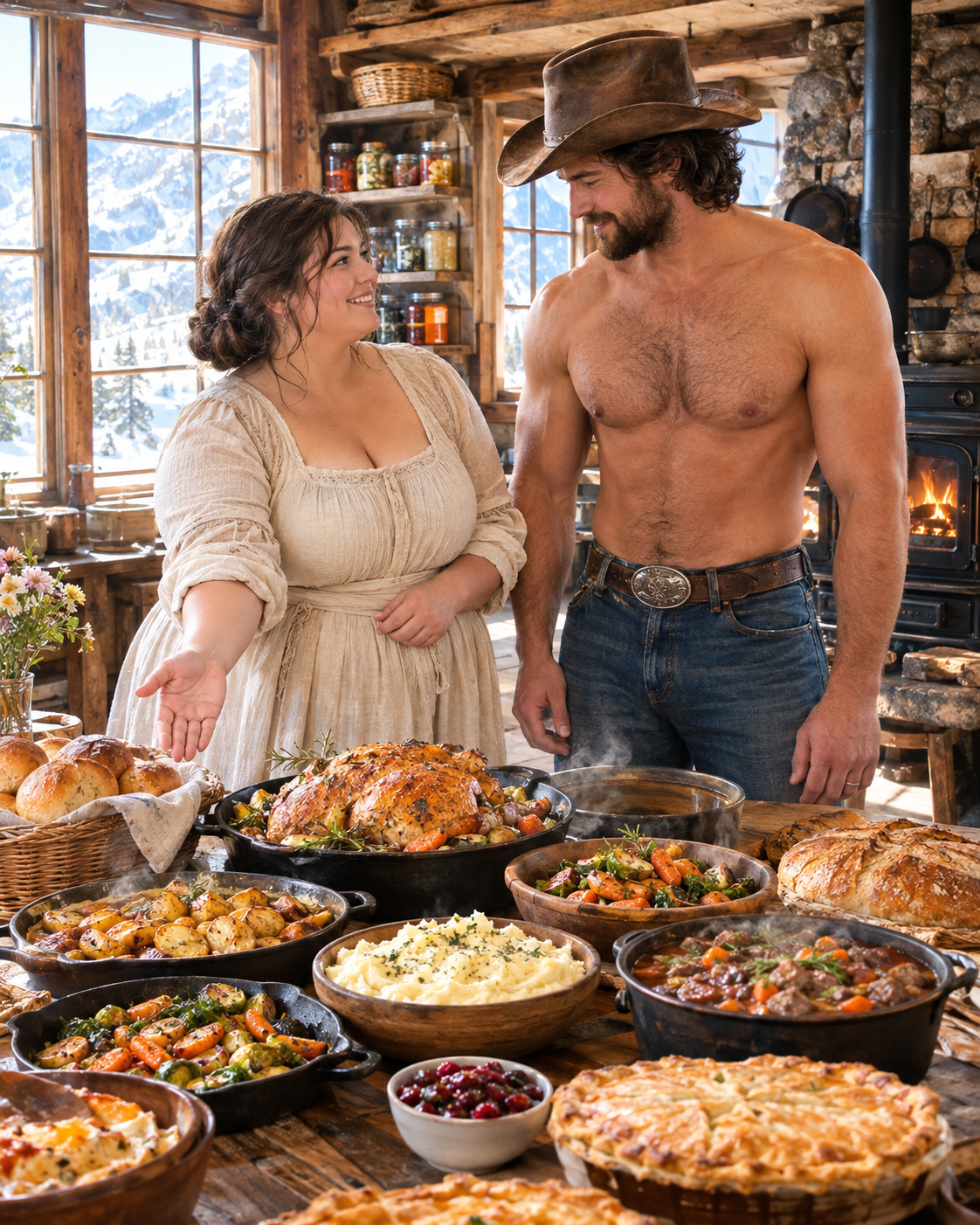
That night, we ate together at the long wooden table we had built from discarded boards.
The same table that had once stood in a forgotten line-camp kitchen.
The same place where I had arrived feeling unwanted.
The same place where I had learned that belonging isn’t something another person gives you.
Sometimes, you build it yourself.
Sometimes, you find it in people who were strangers yesterday.
Sometimes, you discover that the family you thought you lost has been waiting for you in another form.
And sometimes, the greatest inheritance is not land, money, or a name.
It is the courage to refuse the fear that once controlled you.
Years later, people in the valley would still tell the story of how Samuel Wade lost everything.
But Caleb and I remembered a different story.
We remembered a broken kitchen.
A blue jar of wildflowers.
A blizzard.
A handful of men who decided to repair a place they didn’t own.
And a woman who arrived believing she had traveled three states to find work, only to discover she had traveled all that way to find home.
The old kitchen still stood when we grew old.
The shelves were crooked.
The table was scarred.
The stove smoked on rainy days.
But nobody ever tore it down.
Because every generation in the valley learned the same lesson there.
A home is not built from perfect walls.
It is built from people who choose to stay when leaving would be easier.
And love is not proved by how tightly you hold someone.
It is proved by whether you give them the freedom to become who they were meant to be.
I had arrived at Red Willow with one suitcase and a mother’s recipe book.
I left nothing behind.
Instead, I found something I had never known I was searching for.
A name I could finally carry without shame.
A home I had helped build.
And a love that had survived every attempt to control it.
For the first time in my life, I understood the truth my mother had written years before.
Home was never the place where someone decided I belonged.
Home was the place where I finally decided to stay.
Three years after the night I said yes to Caleb Mercer, Red Willow had become almost unrecognizable.
The old line-camp kitchen still stood at the edge of the ranch, but the sagging walls had been replaced, the roof was new, and the long wooden table had been polished so many times that the scars in the boards had become part of its beauty.
People still gathered there every Sunday.
Ranch hands.
Homesteaders.
Children.
Travelers passing through the valley.
Nobody cared anymore who had once owned what.
The kitchen belonged to everyone.
And perhaps that was why the letter frightened me so much.
It arrived on a warm September morning, carried by a stranger who refused to give his name.
He left the envelope on the kitchen table and rode away before I could ask him anything.
There was no seal.
No return address.
Only my name.
Rebecca Mercer.
I stared at it for a long time.
Caleb noticed from across the room.
“What is it?”
“I don’t know.”
He walked toward me.
Something in his expression changed when he saw the handwriting.
“That’s not Samuel Wade.”
“No.”
“Do you recognize it?”
I shook my head.
Then I opened the envelope.
Inside was a single sheet.
Rebecca,
You were told your father died because he disappeared.
You were told Elias Mercer believed he betrayed him.
You were told Samuel Wade was responsible for everything.
Most of that is true.
But not all of it.
Your father left something behind.
Something he never wanted the Mercers to find.
If you want the truth about what happened the night Thomas Dawson disappeared, come to the old chapel before sunset.
Come alone.
There was no signature.
Caleb read the letter twice.
“No.”
I looked at him.
“No?”
“You aren’t going.”
“Caleb—”
“I’ve spent years watching people use secrets to control you.”
He folded the letter.
“This ends here.”
I reached for it.
“You can’t decide that.”
His eyes met mine.
“I know.”
His voice softened.
“But I can ask you not to walk into a trap.”
I understood.
He wasn’t trying to control me.
He was afraid.
So was I.
But fear had ruled my life once.
I wouldn’t let it rule it again.
“I’m not going alone.”
He sighed.
“I knew you’d say that.”
By sunset, we were riding toward the abandoned chapel.
The old building stood beyond the northern ridge, hidden among cottonwood trees.
It had been abandoned for decades.
When we arrived, the door was open.
Inside, the air smelled of dust and damp wood.
There was no one there.
Then I heard a sound.
Footsteps above us.
Caleb drew his revolver.
“Who’s there?”
A man appeared at the top of the stairs.
He was old.
Thin.
His gray beard covered most of his face.
But I recognized his eyes.
I’d seen them before.
In an old photograph.
My father’s photograph.
The man looked at me.
“Rebecca?”
My breath stopped.
“Who are you?”
He slowly descended the stairs.
“My name is Harlan Pike.”
Caleb raised his gun.
I grabbed his arm.
“Wait.”
The old man looked at Caleb.
“I deserve that.”
“You worked for Samuel Wade,” Caleb said.
Pike nodded.
“I did.”
My heart began pounding.
“Then you know what happened to my father.”
“I know.”
“Tell me.”
He looked toward the broken window.
“Your father wasn’t killed by Wade.”
The room seemed to tilt.
“What?”
“He escaped.”
I couldn’t breathe.
Caleb lowered his weapon slightly.
“You expect us to believe Thomas Dawson survived?”
Pike nodded.
“He survived the attack.”
“Where is he?”
Pike’s eyes filled with sadness.
“Dead.”
I stared at him.
“You just said he survived.”
“He survived that night.”
The words came slowly.
“But he never survived what came after.”
Pike reached inside his coat and pulled out a small wooden box.
He handed it to me.
“This belonged to him.”
My hands trembled as I opened it.
Inside was a silver locket.
I knew it immediately.
My mother had owned one exactly like it.
I had thought it had been lost.
I opened the locket.
Inside was a tiny photograph.
A young man.
A young woman.
And a baby.
Me.
On the other side was an inscription.
For Rebecca.
So she will know we never left her willingly.
I covered my mouth.
Caleb put an arm around me.
“Where did you get this?”
Pike sat down.
“Your father gave it to me.”
“Why?”
“Because he knew he was dying.”
The old man’s voice cracked.
“After the attack, Thomas escaped into the mountains. He was badly injured. I found him three days later.”
“Why didn’t you take him home?”
“I was afraid.”
The confession seemed to cost him everything.
“Wade had men everywhere. He told me that if I helped Thomas, my family would disappear.”
I stared at him.
“And my mother?”
“She believed Thomas abandoned her.”
“Did he try to come back?”
Pike nodded.
“Twice.”
My knees nearly gave way.
“The first time, Wade intercepted him.”
“And the second?”
Pike looked at the floor.
“He came back too late.”
“What does that mean?”
“Your mother had already been told Thomas was dead.”
I felt tears running down my face.
“She left the valley?”
“She took you and disappeared.”
I closed my eyes.
All my life, I had believed my mother had simply wanted a different life.
Now I understood.
She had been running.
Not from my father.
From the people who had destroyed him.
Caleb knelt beside me.
“Why tell us now?”
Pike looked at him.
“Because I am dying.”
Silence filled the chapel.
“I’ve carried this guilt for thirty years.”
He handed me another folded paper.
“This is Thomas’s last letter.”
I opened it.
Rebecca,
If you ever read this, I failed to protect you.
But failure is not the same as abandonment.
Remember that.
You were loved before you ever understood the word.
And if the world ever tells you that your worth depends on where you come from, don’t believe it.
You are not the daughter of a broken man.
You are the daughter of a man who spent his final breath trying to make sure you would one day know the truth.
I pressed the letter against my chest.
Caleb held me until I stopped shaking.
But there was one question I couldn’t let go.
“Why did you keep this all these years?”
Pike looked toward the door.
“Because I was afraid of Wade.”
“He’s dead.”
“I know.”
“Then why are you still afraid?”
The old man gave a bitter smile.
“Because Wade wasn’t the only person who benefited from his secrets.”
Caleb’s expression hardened.
“What do you mean?”
Pike hesitated.
“Your father didn’t disappear because of the water deed alone.”
“What else was there?”
“Money.”
“How much?”
“Enough to buy half the valley.”
Caleb stepped closer.
“Where?”
Pike looked at me.
“Your father hid it.”
I stared at him.
“Why?”
“Because he discovered that Wade wasn’t working alone.”
The wind moved through the broken chapel windows.
“Who was helping him?”
Pike’s eyes met Caleb’s.
“Someone inside the Mercer family.”
Caleb went completely still.
“Who?”
Pike opened his mouth.
A gunshot exploded outside.
The old man jerked backward.
Blood spread across his shirt.
“Pike!”
He fell.
Caleb dragged me behind the stone wall as another shot shattered the window.
Someone was outside.
Waiting.
Pike struggled to breathe.
“Go…”
“We’re not leaving you.”
He grabbed my wrist.
“Listen.”
His fingers tightened.
“The money… isn’t money.”
I stared at him.
“What?”
“It’s proof.”
He pulled a key from his pocket.
“The old ranch bell.”
Then he went still.
I felt something inside me break.
Caleb closed Pike’s eyes.
Then he looked at me.
“We’re leaving.”
We ran through the back door.
The shooter had disappeared.
By the time we reached Red Willow, night had fallen.
The old ranch bell stood beside the main barn.
It had been there for generations.
Nobody used it anymore.
Caleb climbed the wooden ladder.
At the base of the bell was a rusted iron box.
The key fit.
Inside were dozens of documents.
Bank records.
Land transfers.
Letters.
Names.
And one ledger.
Caleb opened it.
His face turned white.
“What?”
He handed it to me.
The final pages contained payments made by Samuel Wade.
Most names were familiar.
County officials.
Surveyors.
Sheriffs.
Judges.
Then I saw a name that made my heart stop.
Elias Mercer.
Caleb’s father.
I looked at him.
“No.”
He shook his head.
“He knew.”
The ledger showed payments made years before Thomas disappeared.
Elias had not been innocent.
He had accepted money from Wade.
But the last entries revealed something even worse.
He had later tried to expose Wade.
That was when Thomas discovered everything.
Caleb sat heavily on the barn floor.
“My father betrayed him.”
“Then tried to fix it.”
“But failed.”
I sat beside him.
“Maybe that’s why he spent the rest of his life trying to protect Red Willow.”
Caleb stared at the pages.
“For years, I thought my father was a good man.”
“He was a man,” I said quietly.
“Those aren’t always the same thing.”
He looked at me.
I took his hand.
“People can do terrible things and still regret them.”
“Does that make them good?”
“No.”
I squeezed his fingers.
“But sometimes it makes them human.”
The next morning, we took the documents to the county courthouse.
The records triggered another investigation.
Not into Wade.
He was already gone.
Into everyone who had helped him.
Some people lost their positions.
Some lost land.
Some confessed.
And some never admitted anything.
But the truth was finally out.
For the first time, Red Willow no longer depended on secrets.
Months later, I planted a tree beside the old chapel.
It was small.
Fragile.
Easy to overlook.
Caleb stood beside me.
“Why here?”
“Because my father came here before he died.”
He looked at the tree.
“What will you call it?”
I smiled.
“Nothing.”
He laughed.
“Nothing?”
“Not everything needs a name.”
The wind moved through the branches.
I thought about my mother.
My father.
The life I had lost without knowing I had lost it.
Then I thought about the life I had built.
Caleb.
The ranch.
The kitchen.
The people who had become family.
For years, I had believed the truth would save me.
But I finally understood something deeper.
Truth doesn’t always heal the past.
Sometimes it only teaches you how to stop carrying it.
That evening, Caleb and I returned to the kitchen.
The long table was crowded.
Martha was arguing with one of the ranch hands about whether his biscuits were edible.
Children ran between the chairs.
Someone played a fiddle near the stove.
I stood in the doorway and watched.
Caleb slipped his arm around my waist.
“What are you thinking?”
I smiled.
“That I almost left this place.”
“You did.”
“I know.”
“And I chased you.”
“I remember.”
He kissed my forehead.
“Would you do it differently?”
I looked around the room.
At the blue jar.
At the scarred wooden table.
At the people laughing beneath the warm light.
“No.”
He looked surprised.
“Not even one thing?”
“Not one.”
“Why?”
“Because every wrong turn brought me here.”
He was quiet.
Then he smiled.
Outside, the first snow of the year began to fall.
I remembered the blizzard.
The ravine.
Caleb’s frozen hands wrapped around my mother’s letter.
The night I thought I had lost him.
The night I learned that love wasn’t about saving someone from every storm.
Sometimes it was simply refusing to leave them alone inside it.
I leaned against him.
“Do you ever wonder what would have happened if Martha hadn’t sent me to that kitchen?”
“Every day.”
“What do you think?”
He looked toward the room.
“I think you would have found another way to change the world.”
I laughed.
“That’s a dangerous amount of confidence.”
“I married you.”
“Engaged.”
He smiled.
“Still time.”
I looked at the ring on my finger.
Then I realized something.
For the first time in my life, I wasn’t waiting for the next disaster.
I wasn’t waiting for someone to take my home away.
I wasn’t afraid of discovering another secret.
I had spent too many years believing that happiness was temporary.
That every good thing came with a price.
That love could disappear the moment fear walked through the door.
But Red Willow had taught me otherwise.
A home could survive a fire.
A family could survive betrayal.
A heart could survive abandonment.
And a person could survive learning that the story they had believed about themselves was never the whole truth.
My father had not abandoned me.
My mother had not forgotten him.
Caleb’s father had not been a hero.
Samuel Wade had not been powerful forever.
And I was not the unwanted woman who had arrived at Red Willow with one suitcase.
I was Rebecca Mercer.
A daughter.
A wife.
A friend.
A woman who had finally stopped asking where she belonged.
The answer had never been written in a deed.
It had never been hidden inside a secret ledger.
It had never depended on blood.
It had been built, day after day, by people who chose one another.
Caleb took my hand.
“Come on.”
“Where?”
“There’s something I want to show you.”
He led me outside.
Behind the kitchen stood a small wooden sign.
I had never noticed it before.
He had carved it himself.
RED WILLOW COMMUNITY KITCHEN.
Underneath were three words.
NO ONE EATS ALONE.
I touched the letters.
“Caleb…”
He shrugged.
“Seems appropriate.”
Tears filled my eyes.
Because suddenly I understood why the old kitchen had mattered so much.
It had never really been about cooking.
It had never been about the roof or the stove or the flowers.
It had been the first place where I had learned that people could choose to make room for someone.
And maybe that was what home truly meant.
Not a place that promised nothing would hurt.
A place that promised you would not face the hurt alone.
I turned toward Caleb.
“I love you.”
“I know.”
I laughed.
“You could say it back.”
“I love you too.”
The snow fell around us.
Behind us, the kitchen doors opened and warm light spilled onto the ground.
Martha shouted that supper was ready.
Someone laughed.
Someone called Caleb a fool for standing outside in the cold.
And for the first time, the sound didn’t feel like something I was hearing from a distance.
It felt like mine.
I took Caleb’s hand and walked toward the light.
Behind us, the little tree beside the chapel stood against the winter sky.
It was still young.
Still fragile.
Still growing.
But it had roots.
And so did I.
I had spent half my life searching for the place where I belonged.
In the end, I discovered that belonging was not something you found waiting for you.
It was something you built with courage, forgiveness, truth, and love.
And sometimes, the place you enter as a stranger becomes the place where your story finally begins.
THE END.