The wolves were closing in when Mabel Foster heard a man shout from the darkness.
Grant stared at Pike for several seconds before answering.
“What business records?”
Pike opened a drawer and removed a folded document.
“Your employer borrowed a considerable sum from me last winter. Unfortunately, Mr. Whitaker hasn’t been particularly reliable about repayment.”
Grant took the document. His eyes moved slowly across the page.
Mabel watched the color drain from his face.
“How much?” she asked.
“Three thousand dollars,” Grant answered.
Pike smiled.
“And Broken Spur Ranch is the security.”
Grant dropped the document onto the desk.
“Samuel would never agree to those terms.”
“His signature suggests otherwise.”
Mabel leaned forward. Beneath Samuel Whitaker’s name was another signature belonging to a witness named Edgar Bell.
Something about the document bothered her, but she couldn’t immediately explain why.
Pike stood and adjusted his vest.
“The payment is due in eighteen days. After that, I intend to collect what’s mine.”
Grant’s jaw tightened.
“You’ve been waiting for this.”
“I’ve been conducting business.”
Mabel picked up her letter.
“Stealing from desperate women isn’t business.”
Pike’s smile disappeared.
“I suggest you find employment elsewhere, Mrs. Foster. Larksburg Crossing can be an unforgiving place for people who make accusations.”
Outside, Grant climbed into the wagon without speaking.
Mabel settled beside him.
“Who is Samuel Whitaker?”
“The owner of Broken Spur. He’s seventy-two. Been sick since October.”
“Does he know about this debt?”
“He’s never mentioned it.”
Grant flicked the reins.
For several miles, neither spoke.
Finally, Mabel asked, “What happens to everyone if Pike takes the ranch?”
Grant looked toward the distant mountains.
“Twelve men lose their jobs. June loses her home. Samuel loses everything he’s spent forty years building.”
“And you?”
He gave a humorless laugh.
“I suppose I’ll start walking.”
When they returned, Grant went directly to Samuel’s bedroom. Mabel followed with June, who had been waiting anxiously near the kitchen.
Samuel Whitaker was a thin man with white hair and trembling hands. He listened while Grant explained what had happened.
Then he closed his eyes.
“I borrowed eight hundred dollars,” he whispered.
Grant leaned closer.
“Not three thousand?”
“Eight hundred. We needed feed after the early snow last year. Pike said he’d give me twelve months.”
“Did you read the agreement?”
“Edgar Bell read it to me. My eyesight was already failing.”
June covered her mouth.
Edgar Bell was the town’s former bank clerk. He had disappeared six months earlier.
Samuel began coughing violently. Mabel poured him water and waited until he recovered.
“Mr. Whitaker,” she asked, “did Pike give you a copy of the agreement?”
“Should be in my desk.”
Grant searched every drawer.
The document was gone.
Samuel looked at him helplessly.
“I never thought he’d do something like this.”
Grant pulled a chair beside the bed.
“We’ll figure it out.”
But Mabel heard the uncertainty in his voice.
That evening, June offered Mabel the vacant cook’s room.
“We can’t promise much,” she admitted. “But there’s food and a roof. And Samuel would gladly pay you what he can.”
Mabel looked around the kitchen.
It wasn’t the future she had imagined when she left Missouri. Yet the warmth of the stove and the sound of men laughing over supper made something inside her soften.
“I’ll stay.”
Grant found her washing dishes later that night.
“You don’t owe us anything,” he said.
“Neither did you when you found me beside that wagon.”
“That was different.”
“Not particularly.”
For the first time since leaving town, Grant smiled.
Over the following week, Mabel transformed the ranch kitchen. She stretched flour, saved scraps for soup, and baked bread before sunrise. Men who had once complained about every meal began arriving early.
But behind the laughter, fear remained.
Everyone knew about Pike’s claim.
One afternoon, while sorting old newspapers to line the pantry shelves, Mabel discovered an advertisement.
COOK WANTED. PRIVATE ROOM. STEADY WAGES.
Applications directed to Russell Pike.
She searched through the remaining newspapers and found six similar advertisements.
Housekeepers. Seamstresses. Laundry workers.
All promising employment that didn’t exist.
Mabel carried the newspapers into Grant’s office.
“He’s been doing this longer than you thought.”
Grant examined them.
“What are you planning?”
“To find the women who answered these advertisements.”
“Mabel, Pike isn’t a man you want as an enemy.”
“He already decided I was worth five dollars and nothing more.”
She folded the newspapers.
“I’d like to correct his opinion.”
The following morning, Mabel accompanied June into town. At the general store, she asked the owner whether any women had arrived seeking employment.
Mrs. Agnes Turner glanced toward the windows.
“More than a dozen.”
“What happened to them?”
“Some went west. Some found work washing clothes. One woman arrived with two little boys. She had nowhere to sleep.”
“Where is she now?”
Agnes hesitated.
“Old Miller cabin. Beyond the creek.”
Mabel bought flour and beans before heading there.
She found a young woman named Clara Bennett struggling to light a fire with damp wood. Her two children sat beneath a single blanket.
Clara had paid Pike ten dollars for a housekeeping position.
When Mabel explained what had happened to her, Clara began crying.
“I thought I’d done something wrong.”
“You trusted someone who lied to you,” Mabel said. “There’s a difference.”
She brought Clara and her children back to Broken Spur.
June gave them a spare room, and Clara began helping with laundry.
Grant didn’t object, although their supplies were growing dangerously low.
That evening, he found Mabel calculating expenses at the kitchen table.
“How many more people are you planning to bring home?”
“As many as we can feed.”
“And how many is that?”
She looked at her figures.
“More if you stop eating four biscuits at breakfast.”
Grant laughed so loudly that June came running from the pantry.
For a moment, the ranch felt safe again.
Then a rider arrived carrying a notice from Russell Pike.
The debt would be collected in eleven days.
Attached was an offer.
Grant could remain as foreman after Pike acquired the ranch, provided he stopped interfering with Pike’s business.
Grant read it once and threw it into the stove.
Mabel watched the paper curl into flames.
“You could have kept your job.”
“I could have.”
“Why didn’t you?”
He looked toward Samuel’s bedroom.
“Because some things cost more than money.”
Two days later, a stranger appeared at the ranch just before supper.
He was poorly dressed, with a gray beard and a deep scar across his forehead.
“I’m looking for Samuel Whitaker.”
Grant stepped onto the porch.
“Who’s asking?”
“Edgar Bell.”
Grant seized him by the coat.
“You’ve got some explaining to do.”
Edgar didn’t resist.
“I know.”
Inside, Mabel placed coffee before him while Grant stood nearby.
Edgar’s hands shook.
“Pike changed the agreement after Samuel signed it. He threatened to accuse me of stealing from the bank if I spoke.”
“Did you steal?” Grant asked.
“No. But Pike had access to the accounts. He could make it look that way.”
“Where’s the original agreement?”
Edgar swallowed.
“I kept a copy.”
Grant leaned across the table.
“Where?”
“Hidden beneath the floorboards in my old office.”
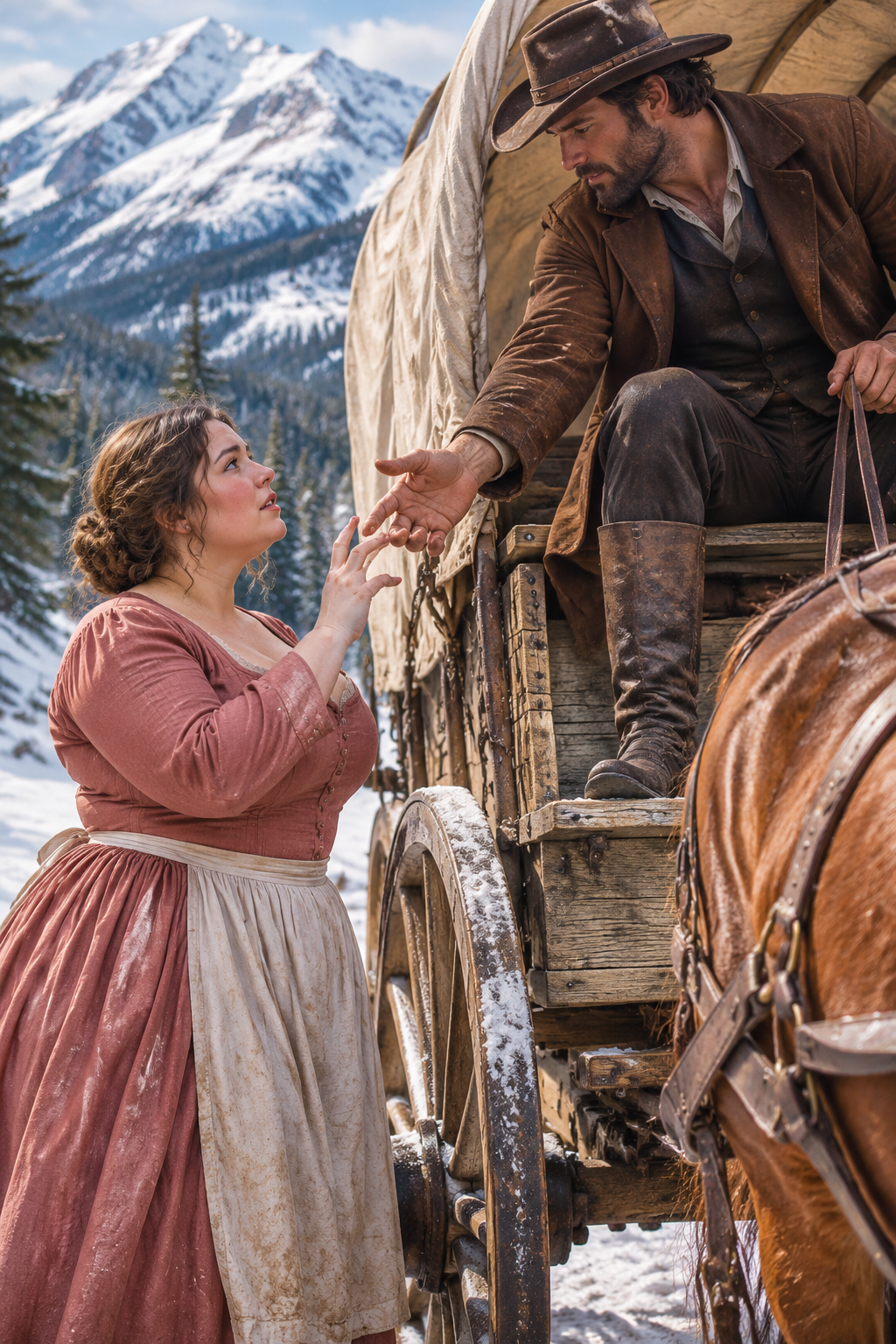
Mabel felt a surge of hope.
“Then we can prove what he did.”
Edgar shook his head.
“Pike owns that building now. He keeps his private records there.”
“Why come back?” Grant asked.
Edgar looked down.
“My wife died last month. Before she passed, she asked me what kind of man I wanted to be when I met my Maker.”
His voice broke.
“I didn’t have an answer.”
Grant released a long breath.
“We need that document.”
“And Pike needs to know we have it,” Mabel added, “only after it’s somewhere he can’t destroy it.”
They decided to speak with Sheriff Daniel Reeves.
But when Grant and Edgar reached the sheriff’s office the following morning, Pike was already there.
He stood beside the sheriff wearing a satisfied expression.
“Edgar Bell,” he announced. “What a fortunate surprise.”
The sheriff rose.
“Mr. Bell, there’s a warrant for your arrest.”
Edgar stepped backward.
“For what?”
“Embezzlement.”
Grant protested, but the sheriff insisted he had signed statements and bank records.
Pike watched as Edgar was taken away.
Then he approached Grant.
“You should have accepted my offer.”
Grant returned to Broken Spur furious.
Mabel listened without interrupting.
Finally, she asked, “Where exactly is Edgar’s old office?”
Grant looked at her sharply.
“Don’t even think about it.”
“I’m thinking about something else.”
The following afternoon, Mabel walked into Pike’s saloon carrying a basket of fresh pastries.
Pike raised an eyebrow.
“Have you reconsidered your attitude, Mrs. Foster?”
“I’ve reconsidered my circumstances.”
She placed the basket on his desk.
“I hear you’re acquiring Broken Spur. You’ll need a cook.”
Pike laughed.
“Finally developing some sense?”
“A woman has to survive.”
He examined her suspiciously.
“What do you want?”
“Twenty-five dollars a month. And my own room.”
“Twenty.”
“Then you can find someone else.”
Pike considered her for a moment.
“Twenty-five. Start by feeding the men repairing my storage building tomorrow.”
Mabel smiled.
“Of course.”
The next morning, she arrived at the former bank office with a large pot of stew.
Three workers were repairing the roof. Pike’s assistant, a nervous young man named Thomas, unlocked the building for her.
Mabel served the workers, asked questions about their families, and waited.
When they returned to the roof, she pretended to search for a missing spoon.
Edgar had described the hiding place precisely.
Third floorboard beneath the window.
She knelt and worked a kitchen knife into the narrow gap.
The board lifted.
Beneath it lay a packet wrapped in oilcloth.
Mabel slipped it into her apron.
“What are you doing?”
She turned.
Thomas stood in the doorway.
“Dropped something.”
His eyes moved toward the raised floorboard.
Before he could speak, Mabel asked, “How much does Pike pay you?”
Thomas frowned.
“Why?”
“Enough to go to prison for him?”
The young man’s face changed.
Mabel stood.
“You’ve seen the letters, haven’t you? The women who arrive expecting work?”
Thomas looked toward the stairs.
“My sister answered one of his advertisements,” he whispered.
Mabel stared at him.
“She died of fever last winter. Couldn’t afford a doctor after Pike took her money.”
“Then why do you work for him?”
“He said he’d have me arrested for helping with the accounts.”
Mabel stepped closer.
“You can help stop him.”
Thomas hesitated before unlocking a cabinet.
Inside were dozens of letters and a thick ledger.
“Take these,” he said.
Mabel had barely placed the records in her basket when footsteps sounded outside.
Pike’s voice echoed through the hallway.
“Thomas!”
The young man went pale.
“Back door. Hurry.”
Mabel ran.
She reached the alley just as Pike entered the office.
A shout followed.
Then another.
She climbed into her wagon and urged the horse forward.
Two riders appeared behind her before she reached the edge of town.
Mabel whipped the reins.
The wagon bounced violently over frozen ruts. Her basket nearly overturned.
One rider drew alongside.
“Stop that wagon!”
She recognized him as Pike’s saloon guard.
He reached for the reins.
Mabel swung her heavy iron ladle and struck his hand. He cursed and fell behind.
Ahead, the creek bridge appeared.
But a fallen tree blocked half the crossing.
Mabel pulled hard on the reins.
The wagon swerved, struck the bridge railing, and tipped.
She hit the ground.
Pain shot through her shoulder.
The basket slid toward the creek.
Ignoring the pain, she grabbed it before it disappeared beneath the broken railing.
The riders dismounted.
“Hand it over.”
Mabel backed away.
Then a rifle shot split the air.
Grant rode from the trees with two ranch hands behind him.
“Step away from her.”
The men hesitated.
Grant raised his rifle.
They mounted and fled.
He jumped from his horse and rushed toward Mabel.
“Are you hurt?”
“My shoulder.”
“What were you thinking?”
She held up the basket.
“That Samuel deserves to keep his home.”
Grant stared at her, then pulled her gently against him.
“You could have been killed.”
Mabel closed her eyes.
For the first time since her husband’s death, she allowed herself to feel the comfort of someone’s arms.
“I was frightened,” she admitted.
“So was I.”
They returned to Broken Spur and examined the documents.
The original agreement confirmed Samuel’s story.
Eight hundred dollars.
The ledger revealed something even worse. Pike had collected money from twenty-seven women and altered several other loan agreements.
Grant immediately sent a ranch hand to the county seat with the evidence and a request for the circuit judge to intervene.
But Pike wasn’t finished.
That night, Mabel awoke to the smell of smoke.
She opened her bedroom door.
Flames were spreading through the kitchen pantry.
“Fire!”
The ranch erupted into confusion.
Grant and the men formed a bucket line while June hurried Samuel outside.
Mabel helped Clara gather her children.
Then Clara screamed.
“Peter!”
Her youngest son was missing.
Mabel remembered seeing the boy playing beneath the kitchen table before bedtime.
Without waiting, she rushed back inside.
Smoke filled the hallway.
She dropped to her knees, calling Peter’s name.
A faint cry came from the pantry entrance.
The boy was crouched beneath a shelf, too terrified to move.
Mabel pulled him against her chest.
A burning beam crashed behind them, blocking the doorway.
She searched desperately for another exit.
The kitchen window.
She wrapped Peter in her apron and struck the glass with a chair.
Outside, Grant heard the breaking window.
“Mabel!”
“Take him!”
She pushed Peter through the opening.
Grant caught him and handed him to June.
Then he reached for Mabel.
Another beam collapsed.
Heat surged against her back.
Grant grabbed her wrists and pulled with all his strength.
They fell together into the snow.
Mabel coughed violently, unable to speak.
Grant held her until she could breathe.
By sunrise, the kitchen was destroyed, along with half the main house.
Samuel sat beneath a blanket, staring at the ruins.
“Forty years,” he whispered.
Mabel knelt beside him.
“The house is damaged. The ranch is still here.”
Grant approached carrying an empty kerosene container found near the pantry window.
“This wasn’t an accident.”
Before anyone could respond, riders appeared on the road.
Russell Pike arrived with the sheriff and four armed men.
He surveyed the damage.
“Unfortunate business.”
Grant stepped forward.
“You set that fire.”
“An ugly accusation.”
Pike handed the sheriff a document.
“I’m taking possession of this property today. The owner has failed to provide adequate security for my loan.”
The sheriff looked uncomfortable.
“Grant, I have an order authorizing seizure.”
“Signed by whom?”
Pike answered impatiently.
“That’s none of your concern.”
Mabel rose.
“Ask him about the original agreement, Sheriff.”
Pike’s expression changed.
“What agreement?”
“The one Edgar Bell kept. The one showing Samuel borrowed eight hundred dollars.”
Pike turned toward her.
“You stole private property.”
“And you falsified legal documents.”
He reached inside his coat.
Grant immediately moved between them.
The sheriff drew his pistol.
“Everybody stay where you are.”
For several terrible seconds, nobody moved.
Then another group of riders appeared.
At their head was the ranch hand Grant had sent to the county seat.
Beside him rode a United States deputy marshal and Circuit Judge Henry Wallace.
Pike stared in disbelief.
The judge dismounted.
“Russell Pike?”
Pike straightened his vest.
“There appears to be a misunderstanding.”
“I’ve spent most of the night examining your business records.”
The judge held up a leather case.
“Your misunderstandings are remarkably profitable.”
Pike looked toward the sheriff.
“Arrest these people. They’ve stolen from me.”
Instead, the deputy marshal stepped forward.
“Russell Pike, you’re under arrest.”
Pike suddenly drew his pistol.
Grant lunged.
The gun fired.
Mabel screamed as Grant stumbled backward.
The marshal struck Pike’s wrist, sending the weapon into the snow. Two ranch hands restrained him.
Mabel rushed to Grant.
Blood darkened his sleeve.
“Grant!”
He winced.
“Just my arm.”
She tore a strip from her skirt and pressed it against the wound.
Pike struggled as the marshal secured his wrists.
“You think this changes anything? You’re nothing! All of you!”
Samuel rose slowly from his chair.
“No, Russell. We’re people. That’s what you forgot.”
Pike was taken away.
Edgar was released that afternoon, and Thomas agreed to testify. The sheriff, ashamed of how easily he had accepted Pike’s accusations, began locating the women named in the ledger.
But victory didn’t rebuild the kitchen.
For several days, Mabel cooked outdoors over a makeshift stove while Grant recovered.
Then something extraordinary happened.
Wagons began arriving.
Agnes Turner brought flour, sugar, and blankets. Local carpenters offered their labor. Farmers delivered timber. Women who had lost money to Pike came carrying whatever they could spare.
Clara organized the volunteers.
Edgar offered to manage the rebuilding accounts without wages.
Within six weeks, a new kitchen stood where the old one had burned.
It was larger, brighter, and filled with sunlight.
Samuel watched Mabel prepare the first meal inside it.
“I’ve been thinking,” he said.
“About what?”
“Retirement.”
He explained that he intended to sell Grant a share of the ranch on generous terms.
“And you, Mrs. Foster, should have something of your own.”
He handed her a deed to a small house near the ranch entrance.
Mabel stared at it.
“I can’t accept this.”
“You saved my home. Let an old man help you build yours.”
She began to cry.
The following spring, Russell Pike was convicted of fraud, forgery, and several other offenses, including the burning of the ranch house after one of his hired men confessed. His properties were sold, and part of the proceeds went to those he had cheated.
Mabel received her five dollars back.
She framed the receipt and hung it in her new establishment.
FOSTER’S TABLE.
The little house Samuel had given her became a dining room and boarding house for travelers, ranch workers, and women seeking honest employment.
Clara managed the rooms. June helped with the accounts. No hungry child was ever turned away.
One evening, after the last customer departed, Grant appeared carrying a small wooden box.
Mabel smiled.
“Another complaint about the biscuits?”
“Never.”
He sat across from her.
“I’ve been trying to find the right words for months.”
“That sounds serious.”
“It is.”
He opened the box.
Inside lay a simple gold ring.
Mabel stopped smiling.
Grant took her hand.
“I know you’ve loved someone before. I’m not asking you to forget him.”
Her eyes filled with tears.
“I’m asking whether there’s room in your life for another man who intends to spend the rest of his days coming home to you.”
Mabel thought of her husband, the little home they had shared, and the lonely road she had traveled after burying him.
For so long, she had believed that loving again would somehow diminish everything she had lost.
Now she understood.
Love wasn’t something the heart had to surrender before accepting more.
“Yes,” she whispered.
Grant smiled.
“Yes?”
“Yes, you stubborn man.”
They married beneath a cottonwood tree in early summer.
Samuel walked Mabel down the aisle. Clara’s children scattered wildflowers, and the ranch hands cheered when Grant kissed his bride.
Years later, travelers passing through Larksburg Crossing often heard about the widow who had arrived with a broken wagon and almost nothing to her name.
Some said she had been fortunate that Grant Holloway found her before the wolves did.
Mabel never disagreed.
But whenever someone asked how she had managed to rebuild her life, she told them something different.
“Being rescued was only the beginning. What mattered was what we did for one another afterward.”
Above the entrance to Foster’s Table hung a wooden sign Grant had carved himself.
THERE IS ALWAYS ROOM FOR ONE MORE.
And whenever a frightened stranger appeared at their door, carrying everything they owned in a battered suitcase, Mabel remembered that freezing night beside the broken wagon.
She would open the door, offer a warm meal, and invite them inside.
Because she knew that sometimes the greatest thing one person could give another wasn’t money, shelter, or even protection.
It was the chance to believe that their story wasn’t over yet.
The winter Mabel turned forty-one, a young woman arrived at Foster’s Table carrying a sleeping infant beneath her threadbare coat.
Snow covered her hair. Her lips were nearly blue.
“Are you Mrs. Holloway?” she asked.
“I am.”
The woman reached into her pocket and produced a folded newspaper clipping.
“Someone told me you help women find work.”
Mabel recognized the advertisement Clara had placed in several newspapers throughout the territory.
“Come inside. We’ll talk after you’ve eaten.”
The woman hesitated.
“I don’t have any money.”
“Then it’s fortunate I haven’t asked for any.”
Her name was Eleanor Hayes. She was twenty-three, recently widowed, and traveling with her six-month-old daughter, Lucy.
Her husband’s family had taken possession of their farm after his death, leaving her with nothing.
As Eleanor explained her circumstances, Mabel felt an uncomfortable familiarity.
She remembered the humiliation of standing before Russell Pike, begging for the return of five dollars that had meant so much to her.
“You can stay here,” Mabel told her.
Eleanor began crying.
“Why would you do that for a stranger?”
Mabel glanced toward the wooden sign above the entrance.
“Because someone once did the same for me.”
Eleanor proved to be an excellent seamstress. Within weeks, she was repairing clothing for ranch hands and earning enough to support herself.
Little Lucy became everyone’s favorite visitor.
Even Grant, who insisted he knew nothing about babies, could frequently be found carrying her around the ranch.
“You’re spoiling that child,” Mabel told him one afternoon.
Grant looked down at Lucy, who was chewing on his shirt collar.
“She’s helping me inspect the fences.”
“Is that what you call it?”
“She’s a very demanding supervisor.”
Their laughter filled the kitchen.
But happiness at Broken Spur was soon interrupted by troubling news.
Samuel Whitaker’s health had deteriorated.
The old rancher could no longer walk without assistance, and some mornings he lacked the strength to leave his bed.
One evening, he asked Mabel and Grant to sit beside him.
“I reckon my time is getting close.”
Grant shook his head.
“Don’t talk like that.”
Samuel smiled weakly.
“Death doesn’t disappear because we refuse to mention it.”
He reached beneath his pillow and removed an envelope.
“I’ve made arrangements for the ranch. Everything is settled.”
Grant accepted the envelope reluctantly.
Samuel turned toward Mabel.
“You know, when my wife died, I thought this house would never feel like a home again. Then you arrived and started ordering everybody around.”
Mabel laughed through her tears.
“Somebody had to.”
“You brought life back into this place.”
He took her hand.
“Promise me you’ll keep that door open.”
“I promise.”
Samuel died peacefully three nights later.
The entire town attended his funeral.
Grant stood beside the grave long after everyone else had departed.
Mabel slipped her hand into his.
“He was like a father to me,” Grant whispered.
“I know.”
“I don’t know how to run this place without him.”
She leaned against his shoulder.
“The same way he taught you. One day at a time.”
Samuel had left his remaining share of Broken Spur to Grant, along with enough money to establish a permanent fund for women seeking a fresh start.
Mabel named it the Whitaker Fund.
Over the following years, it helped dozens of families.
Some women stayed only a few days. Others remained for months. Many eventually opened businesses of their own.
Foster’s Table became more than a boarding house.
It became a place where broken lives began to mend.
Then, on a rainy afternoon nearly twelve years after Mabel’s first arrival in Larksburg Crossing, a familiar face appeared outside the dining room.
Russell Pike.
Prison had changed him.
His expensive clothing was gone. His hair had turned gray, and he walked with a slight limp.
Mabel stopped wiping the counter.
Grant, sitting near the window, immediately stood.
“What are you doing here?”
Pike removed his hat.
“I’m looking for work.”
Grant stared at him.
“You’ve got some nerve coming back.”
“I know.”
Pike looked toward Mabel.
“Nobody in town will hire me.”
For a moment, she remembered the burning kitchen, Peter’s terrified cries, and Grant bleeding in the snow.
She remembered every woman whose suffering had filled Pike’s ledger.
“You expect us to help you?” she asked.
“No,” Pike answered quietly. “I don’t expect anything.”
He turned toward the door.
Mabel watched him take several steps before speaking.
“Have you eaten today?”
Pike stopped.
Grant looked at her in disbelief.
“Mabel.”
She placed a bowl of stew on an empty table.
“A meal doesn’t mean I’ve forgotten what you did.”
Pike slowly sat down.
His hands trembled as he lifted the spoon.
After eating, he reached into his pocket and placed three worn coins on the table.
“That’s all I have.”
Mabel pushed them back.
“Keep them.”
Pike lowered his head.
“I’m sorry.”
She studied him carefully.
“Being sorry is a beginning, Russell. What you do next will determine whether it means anything.”
Grant eventually offered Pike temporary work repairing fences under supervision. He was never given access to money or business records.
At first, the ranch hands resented his presence.
But Pike arrived before sunrise, worked without complaint, and gradually began repaying the people he had wronged whenever he could locate them.
Some accepted his apologies.
Others refused.
Mabel understood both decisions.
Forgiveness, she believed, could never be demanded from the people who had suffered.
Years passed.
Larksburg Crossing grew into a prosperous town. A railroad arrived, followed by a schoolhouse, a church, and several new businesses.
Eleanor opened a dressmaking shop. Clara’s eldest son became a teacher, while Peter, the little boy Mabel had rescued from the fire, studied medicine.
When Peter returned to town as a doctor, his first visit was to Foster’s Table.
He placed his medical diploma before Mabel.
“None of this would have happened without you.”
She shook her head.
“You did the studying.”
“You gave me the chance.”
Mabel couldn’t argue with that.
By then, silver streaked her hair, and Grant’s shoulders were no longer as strong as they had been.
They spent their evenings on the porch, watching the sunset spread across Broken Spur.
One evening, Grant reached for her hand.
“Do you ever wonder what would’ve happened if your mule hadn’t run away?”
Mabel smiled.
“I probably would have arrived in town, discovered Pike’s empty boarding house, and found another way to survive.”
“You wouldn’t have met me.”
“Perhaps not.”
He frowned.
“That’s a terrible thought.”
She laughed and rested her head against him.
“Then I suppose that stubborn mule deserves some gratitude.”
Grant kissed her forehead.
For a while, they listened to the wind moving through the cottonwood trees.
“Were you happy, Mabel?” he asked suddenly.
She lifted her head.
“Were?”
“Are,” he corrected. “After everything you’ve been through.”
Mabel looked toward the dining house, where lamplight spilled through the windows and strangers shared supper around her tables.
“I used to think happiness meant having a life where nothing terrible happened.”
She squeezed his hand.
“Now I think it means having something worth loving, even when terrible things happen.”
Grant smiled.
“Then we’ve done all right.”
“We’ve done more than all right.”
Many years later, Grant passed away quietly in his sleep, with Mabel beside him.
She buried him beneath the cottonwood tree where they had exchanged their wedding vows.
For weeks, grief made even the simplest tasks difficult.
But every morning, someone knocked on her door.
June brought coffee. Clara brought bread. Eleanor brought fresh flowers. Peter visited whenever his patients allowed.
The people Mabel had once helped were now helping her.
One morning, she stood before Grant’s grave carrying a small bouquet.
“You were right,” she whispered. “There was a warm kitchen waiting for me.”
Her voice trembled.
“I just never imagined how many people would find their way into it.”
Mabel lived another nine years.
On her eighty-second birthday, the entire town gathered at Foster’s Table.
Former ranch hands returned with their grandchildren. Women traveled hundreds of miles to thank her. Letters arrived from people whose names she could barely remember.
Peter, now a respected physician, stood before the crowd.
“Mrs. Holloway arrived here with a broken wagon, a cooking pot, and five dollars stolen from her. Today, there are hundreds of people whose lives are better because she refused to let hardship make her cruel.”
Mabel wiped her eyes.
When everyone asked her to speak, she rose slowly.
“I haven’t done anything extraordinary,” she began. “I’ve simply tried to remember what it feels like to be the person standing outside the door.”
The room grew quiet.
“Every person you meet is carrying something you cannot see. Sometimes it’s grief. Sometimes it’s shame. Sometimes it’s the fear that nobody will ever give them another chance.”
She looked around at the familiar faces.
“You cannot solve every problem. But you can make certain that your kindness never becomes another thing someone has to live without.”
That winter, Mabel died peacefully in the little house Samuel had given her.
Beside her bed rested Grant’s photograph, her wedding ring, and the framed receipt for the five dollars Russell Pike had once stolen.
She was buried beside Grant beneath the cottonwood tree.
Foster’s Table remained open.
Eleanor’s daughter Lucy eventually took responsibility for the establishment, preserving Mabel’s traditions and expanding the Whitaker Fund.
Decades later, travelers still stopped beneath the weathered wooden sign above the entrance.
THERE IS ALWAYS ROOM FOR ONE MORE.
Few knew the complete story behind those words.
They didn’t know about the wolves, the freezing storm, the dishonest businessman, or the brave ranch foreman who had refused to abandon a stranger.
But they understood the meaning when someone welcomed them inside.
And on cold winter nights, when the wind howled across the mountains and snow covered the lonely roads, a lantern always burned beside the entrance to Foster’s Table.
It was left there deliberately.
For the traveler who had lost his way.
For the mother who had nowhere to sleep.
For the frightened stranger who believed the world had forgotten them.
Mabel Foster had learned that a single act of kindness could change the direction of an entire life.
And when that kindness was passed from one person to another, it could continue changing lives long after the person who began it was gone.
She had arrived at Broken Spur believing she had lost everything.
Instead, she had found love, purpose, family, and a legacy that no fire, winter storm, or passing year could ever destroy.
Her greatest achievement had never been surviving the wolves.
It had been refusing to become like them.
And somewhere beyond the hardships of that long and remarkable life, perhaps beside another warm kitchen, Grant Holloway was waiting for her once more.
This time, there were no wolves.
No broken wagon.
No reason to be afraid.
Only the man she loved, standing beside an open door.
And Mabel was finally home.
THE END.