The rain had barely stopped over the narrow streets outside Chicago when the Ash convoy disappeared into the night, leaving behind a trail of unanswered questions—and one woman who was no longer willing to hide.
The passport remained inside the drawer.
Odette stood in the quiet bedroom of the Ash residence, staring at the thin leather case beneath a stack of old papers. Outside the tall windows, the American night stretched across the property in a silence that felt almost unnatural after everything that had happened.
For years, she had imagined this moment differently.
She had imagined taking the passport, collecting the money she had hidden away, and disappearing before sunrise.
No explanation.
No goodbye.
No looking back.
That had always been the rule.
Survive first.
Disappear second.
Never become attached.
But now her hand rested on the drawer without opening it.
Behind her, the door remained slightly ajar.
Gideon was waiting somewhere down the hall.
He had told her she was free.
Not free in the way people in his world used the word, with conditions hidden inside every promise. He meant it literally.
The money had been restored.
The passport was hers.
The road was open.
For the first time since she had entered his life, nothing was holding her there.
And somehow, that was the hardest part.
Odette slowly closed the drawer.
She turned away from it and walked downstairs.
Gideon was standing beside the large windows overlooking the grounds. He had removed his jacket, and the fatigue of the past several days was visible in the way he held himself.
He looked toward her when he heard her footsteps.
“You didn’t take it.”
Odette stopped.
“No.”
He waited.
“Why?”
She almost smiled.
“You gave me a choice.”
“I did.”
“You expected me to leave.”
“I expected you to do whatever you wanted.”
For a moment, neither spoke.
Then Odette walked toward him.
“I spent most of my life believing freedom meant having an exit,” she said. “A different name. A different city. A different car. A different door.”
Gideon said nothing.
“I was wrong.”
His expression changed slightly.
“Then what does freedom mean to you now?”
Odette looked toward the dark grounds beyond the glass.
“Being able to stay because I choose to.”
The words settled between them.
Gideon did not move closer.
He didn’t need to.
For perhaps the first time, neither of them needed to hide behind a bargain.
Their marriage had begun as an arrangement shaped by circumstances neither of them had fully understood. Debt, protection, obligation, survival—those things had brought Odette into the Ash household.
But they weren’t what kept her there.
That decision belonged entirely to her.
“I’ll stay,” she said.
Gideon looked at her carefully.
“As my wife?”
Odette shook her head.
“As your partner.”
A faint smile appeared on his face.
“That’s different.”
“It should be.”
For the first time in a long while, Odette laughed.
It was quiet, almost surprised, as though she had forgotten what it felt like to laugh without watching the door.
The next morning, the Ash residence was already moving again.
Cars arrived before sunrise. Men checked the perimeter. Phones rang. Documents changed hands.
But the atmosphere was different.
There was no longer an invisible question hanging over the family.
The traitor had been exposed.
Bram Kessler was in custody.
The immediate threat had collapsed.
Yet Gideon knew better than to believe danger simply disappeared because one enemy had been removed.
He called a meeting.
Everyone expected him to sit at the head of the table.
He did.
Then he looked toward Odette.
“Sit here.”
He indicated the chair beside him.
Several people exchanged glances.
Odette noticed.
She sat down anyway.
One of the older members of the organization cleared his throat.
“With respect, Gideon, perhaps this isn’t necessary.”
Gideon’s eyes lifted.
“Perhaps you should explain what you mean.”
The man hesitated.
Odette spoke before Gideon could.
“If you’re questioning whether I belong in this room, ask the question directly.”
Silence.
She leaned back.
“I’ve driven your people through an ambush while under fire. I’ve identified a compromised route system. I helped expose the leak. And I led Kessler’s men exactly where they needed to go to meet the police.”
Her voice remained calm.
“If you still believe I don’t belong here, at least be specific.”
Nobody answered.
Gideon looked around the table.
“This meeting isn’t about whether Odette has earned a seat.”
He paused.
“It’s about whether the rest of you are prepared to accept that she already has one.”
That ended the discussion.
Odette glanced at him.
He didn’t look back.
He didn’t need to.
Something had changed between them.
Not because Gideon had suddenly discovered her value.
He had known it for some time.
The difference was that he no longer treated her abilities as a secret to be protected.
And Odette no longer treated them as a secret to be ashamed of.
The days that followed were quieter.
But quiet didn’t mean simple.
The investigation into Foster Quill revealed how carefully the betrayal had been constructed.
Quill had not simply handed over one route.
He had studied patterns.
He had watched schedules.
He had learned which roads were preferred, which drivers were trusted, which locations were used when Gideon wanted to disappear from public view.
The betrayal had been built slowly.
That was what frightened Odette most.
Not the violence.
Not the ambushes.
The patience.
Someone had sat close enough to them for long enough to learn how they moved.
And that lesson stayed with her.
“People think danger announces itself,” she told Gideon one evening.
They were standing in the garage.
The cars were lined up beneath the overhead lights.
“Usually it doesn’t.”
Gideon looked at her.
“What does it do?”
“It watches.”
He nodded.
“That sounds like something you learned before you met me.”
“I did.”
“And did you ever stop watching?”
Odette looked at the car in front of them.
“No.”
Gideon waited.
She finally added, “I’m trying.”
It was perhaps the most honest thing she had said to him.
Weeks passed.
The newspapers moved on.
The city returned to its ordinary rhythm.
Chicago traffic filled the streets again. Restaurants reopened their patios. People hurried through train stations and carried coffee through cold mornings without knowing how close a much darker conflict had come to their neighborhoods.
To the outside world, the Ash family had survived another dangerous episode.
But inside the house, Odette was beginning to discover something unfamiliar.
Normality.
She learned which mornings Gideon drank coffee before speaking.
She learned which room received the afternoon light.
She learned that some of his men were terrible at remembering birthdays and surprisingly good at remembering small favors.
She learned that being part of a family wasn’t necessarily about blood.
Sometimes it was about people knowing when you were tired without asking.
Sometimes it was about leaving a plate of food outside someone’s office.
Sometimes it was simply knowing which chair they preferred.
And sometimes it was trusting someone enough to leave the door unlocked.
Yet there was one thing Odette couldn’t forget.
The observer.
During the chaos surrounding Kessler, she had noticed the same dark sedan more than once.
It had never approached.
It had never attacked.
It had simply appeared.
A vehicle parked across the street.
A silhouette behind tinted glass.
A presence at the edge of places where no one had reason to linger.
At first, she assumed it was part of Kessler’s network.
After Kessler’s arrest, however, the car remained.
One evening, Odette stood beside the upstairs window and saw it again.
The sedan was parked beneath a streetlamp two blocks away.
She didn’t tell Gideon immediately.
She watched.
The lights remained off.
The vehicle didn’t move.
Odette stepped away from the window.
Then she returned.
The sedan was gone.
She checked the clock.
Less than three minutes had passed.
Gideon found her there.
“You saw something.”
Odette turned.
“You always say that like it’s a question.”
“Usually it is.”
“There’s a car outside.”
“Police?”
“No.”
“Someone from Kessler?”
“I don’t think so.”
Gideon moved toward the window.
“Where?”
“Gone now.”
He looked at her.
“You’re sure?”
“Yes.”
He didn’t question her judgment.
That mattered.
“Tomorrow,” he said, “we’ll look into it.”
Odette nodded.
But she knew something Gideon didn’t.
She had seen that same vehicle once before.
Years ago.
On a different street.
In a different city.
Before she became Odette.
Before she became Marlowe again.
Before she saved Gideon’s life.
The memory returned with uncomfortable clarity.
Rain on asphalt.
A dark sedan.
A man sitting inside it.
And a feeling she had never been able to explain.
Someone had been watching her long before she entered the Ash family.
She spent the night thinking about it.
By morning, she had made a decision.
She would not run.
Instead, she would find out who was watching.
The next afternoon, she took one of the Ash cars without telling Gideon where she was going.
She didn’t choose the fastest vehicle.
She chose the one that attracted the least attention.
The city unfolded around her.
Traffic lights.
Delivery trucks.
Construction.
Pedestrians crossing against signals.
She drove without rushing.
The old instincts returned naturally.
Mirrors.
Distances.
Blind spots.
Patterns.
She changed routes twice.
The sedan did not appear.
Then, three blocks later, it did.
Same shape.
Same dark windows.
Same distance.
Odette’s pulse remained steady.
She continued toward the lake.
The roads became more open.
She knew the area.
There were places where a driver could disappear without making it obvious.
She turned.
The sedan followed.
Another turn.
Still there.
Odette smiled faintly.
“So,” she whispered, “you do want me to notice.”
She accelerated.
Not recklessly.
Precisely.
The sedan followed.
A few minutes later, Odette turned onto a narrow service road and stopped beside an old industrial building.
She got out.
The sedan stopped at the opposite end.
For several seconds, nothing happened.
Then the driver’s door opened.
A man stepped out.
He was older than she remembered.
Or perhaps time had simply changed the way she remembered him.
Odette remained beside her car.
The man stopped several yards away.
“Marlowe.”
The name sounded strange in the open air.
Odette’s expression hardened.
“Who are you?”
“You don’t remember me.”
“I remember people who follow me.”
He gave a quiet laugh.
“I suppose that’s fair.”
“Why are you here?”
The man looked toward the car.
“Because you were never supposed to survive that night.”
Odette didn’t move.
“Which night?”
“The one that made you disappear.”
A cold silence followed.
He continued.
“You were supposed to take the money, change your identity, and stay gone.”
“I did.”
“No.”
He looked directly at her.
“You became Odette Ash.”
She said nothing.
“And now you’re visible again.”
“I’m not hiding.”
“That is precisely the problem.”
The man reached into his coat.
Odette’s body shifted instinctively.
He stopped.
Slowly, he removed a small envelope.
He placed it on the hood of his car.
Then he stepped away.
“You should read it.”
Odette did not approach immediately.
“What is it?”
“An old record.”
“Of what?”
“Of the night Gideon’s brother died.”
Her eyes narrowed.
She finally crossed the distance.
She took the envelope.
Inside was a single photograph.
Odette stared at it.
The image was old.
Grainy.
Taken from a distance.
Gideon’s brother stood beside a vehicle.
And behind him, almost hidden in the darkness, was another car.
The same model.
The same shape.
The same vehicle she had seen outside the Ash residence.
Odette looked up.
“Who took this?”
The man didn’t answer.
“Who are you?”
Still nothing.
Then he said quietly, “Someone who knows that Kessler wasn’t the beginning.”
Odette’s fingers tightened around the photograph.
“Then what is?”
The man looked toward the road.
“That’s the question you should ask Gideon.”
Before she could respond, he returned to his sedan.
The vehicle pulled away.
Odette stood alone beside the industrial building.
For several minutes, she didn’t move.
Then she looked at the photograph again.
There was something else.
A detail in the background.
A street sign.
A building.
A route.
She recognized it.
She knew exactly where the photograph had been taken.
And suddenly, the memory of the night Gideon’s brother died wasn’t a memory anymore.
It was a map.
That evening, Gideon found Odette waiting in his office.
She placed the photograph on his desk.
He looked at it.
His face changed.
“You know this picture.”
“Yes.”
“Where did you get it?”
“Someone gave it to me.”
“Who?”
“I don’t know.”
Gideon picked it up.
For several seconds, he stared at the image.
Then he sat down.
Odette remained standing.
“What happened that night?”
Gideon looked up.
“I told you what I remembered.”
“You told me what you survived.”
His eyes narrowed.
“There’s a difference.”
“Yes.”
She placed another finger on the photograph.
“This vehicle was there.”
Gideon looked again.
“I don’t remember it.”
“You wouldn’t.”
“Why?”
“Because you were looking at the attack.”
He studied her.
“And you?”
“I was looking for the escape route.”
Silence.
Then Gideon asked, “What are you saying?”
Odette sat across from him.
“I don’t think your brother’s death was simply an ambush.”
Gideon didn’t answer.
“I think someone wanted you to survive.”
His expression became still.
“Why?”
“I don’t know.”
She pushed the photograph toward him.
“But whoever planned it knew your movements.”
Gideon looked at the image for a long time.
The room seemed to shrink around them.
Outside, the city continued as if nothing had happened.
Cars moved.
People walked.
Lights changed.
Life continued.
Inside the office, the past had opened its door again.
Gideon finally looked at Odette.
“Are you afraid?”
She considered the question.
Once, she would have answered immediately.
Now she didn’t.
“Yes.”
Gideon waited.
“But I’m not running.”
He nodded.
Neither of them knew what would come next.
Perhaps another enemy.
Perhaps another betrayal.
Perhaps simply another truth buried beneath years of silence.
But something important had already changed.
Odette no longer stood beside Gideon because she had nowhere else to go.
She stood there because she had chosen the life in front of her.
The passport remained locked in the drawer upstairs.
The money was untouched.
The road out of Chicago remained open.
She could leave whenever she wanted.
And that was precisely why staying mattered.
Freedom had once meant disappearing before someone could take her life away.
Now, freedom meant being able to remain without surrendering who she was.
Gideon reached across the desk and placed his hand over hers.
No bargain.
No debt.
No obligation.
Just a choice made by two people who had survived enough to understand its value.
Odette looked at him.
“We’ll find out who that was,” she said.
Gideon nodded.
“Together.”
Outside the window, somewhere beyond the city lights, another car moved slowly through the night.
For a moment, its headlights appeared between two buildings.
Then they vanished.
The story was not completely over.
But for the first time, Odette wasn’t afraid of what waited around the next corner.
She had spent her life learning how to escape.
Now she was learning something harder:
how to stay.
He had barely slept.
Neither had she.
The image had opened a door neither of them could close again, because behind it was a question that had followed Gideon for years.
Why had he survived?
For a long time, Gideon had believed his brother’s death was the result of a failed negotiation and a badly planned ambush. It was painful, but simple.
Now it wasn’t simple anymore.
At eight in the morning, he summoned the only two people he still trusted with old records.
They brought boxes from a locked storage room beneath the estate.
Paper files.
Old photographs.
Vehicle logs.
Bank records.
Names that had not been spoken in years.
Odette sat beside Gideon while they worked through everything.
For nearly three hours, nothing surfaced.
Then one of the older files fell open.
Odette froze.
“What is that?”
Gideon looked down.
A handwritten route sheet lay between two reports.
The date was the same as the night his brother had died.
Odette took it carefully.
There were three planned routes.
Route A.
Route B.
Route C.
But someone had crossed out Route A and written a fourth route by hand.
The handwriting belonged to Foster Quill.
Gideon stared at the page.
“Quill was already planning routes back then.”
Odette nodded.
“But he wasn’t the only one involved.”
She pointed to a small mark beside the final route.
A circle.
Then another.
Then a short line beneath them.
Gideon recognized the notation.
His brother had used it.
A private signal.
One that meant: do not trust the route.
Gideon leaned back slowly.
“My brother knew.”
Odette looked at him.
“Maybe he knew something was wrong.”
“Then why did he take the route?”
“Because someone convinced him it was safe.”
The room fell silent.
They searched again.
This time, they found something else.
A payment record.
Not from Kessler.
Not from any known rival.
The money had moved through three shell companies before reaching an account in Nevada.
The transaction had happened two days before the ambush.
Gideon stared at the amount.
“That’s too much for information.”
Odette studied the record.
“Then it wasn’t payment for information.”
“What was it?”
“A payment for silence.”
Gideon looked at her.
“Whose silence?”
Before Odette could answer, the phone rang.
It was one of Gideon’s men.
He sounded nervous.
“There was someone at the old garage.”
“What someone?”
“We don’t know.”
“Did you see a face?”
“No.”
“Then why call me?”
A pause.
“Because they left something.”
Gideon and Odette were there twenty minutes later.
The old garage stood near the industrial district, abandoned for years.
The place smelled of dust, oil, and rain.
On the concrete floor was a small metal box.
No lock.
No fingerprints that could be easily seen.
Inside was a cassette tape.
An old one.
Odette looked at Gideon.
“Who still uses these?”
“Someone who wants us to know this message is old.”
They found an old player in the office.
Gideon pressed play.
Static filled the room.
Then a man’s voice emerged.
It was weak.
Distorted.
But Gideon recognized it immediately.
His brother.
Gideon’s entire body stiffened.
“If you’re hearing this,” the recording said, “then I was right to be afraid.”
Odette said nothing.
The voice continued.
“I don’t know who I can trust anymore.”
A pause.
Then:
“Gideon, if this reaches you, don’t follow the route they give you. The person controlling the routes isn’t working for Kessler.”
The tape crackled.
“They’ve been inside our organization for years.”
Gideon’s eyes closed.
The recording continued.
“They don’t want the family destroyed. They want control of it.”
Then came a sentence that changed everything.
“And if Marlowe is still alive, find her.”
Odette stopped breathing for a moment.
Gideon turned toward her.
The recording continued.
“She knows what happened.”
Then the tape ended.
Silence filled the garage.
Gideon looked at Odette.
“You knew my brother?”
“Not personally.”
“Then why did he know your name?”
Odette swallowed.
“Because I was hired to protect him.”
Gideon stared at her.
“You never told me that.”
“I didn’t know it was him.”
“What do you mean?”
“Protection work was compartmentalized. We weren’t always given full identities. We were given photographs, routes, emergency codes.”
She looked at the dead cassette player.
“That night, I was assigned to a vehicle several minutes behind yours.”
“And you saved me.”
“Yes.”
“Why didn’t you tell me?”
“Because after the shooting, someone tried to kill me too.”
Gideon’s expression hardened.
“Who?”
“I never found out.”
The answer remained between them.
Then Odette remembered something.
A sound.
A voice.
A phrase from that night.
Something she had heard only once.
She walked to the garage door.
“Play it again.”
Gideon did.
The final words repeated.
She knows what happened.
Odette listened carefully.
Not to the words.
To the background.
There was a faint clicking sound.
Three clicks.
A pause.
Two clicks.
She turned.
“I know that signal.”
“What signal?”
“It was used by my old protection network.”
Gideon stood.
“What does it mean?”
“Abort.”
He looked at her.
“Then your brother was warning someone.”
“No.”
Odette shook her head.
“He was warning me.”
The realization was devastating.
Her entire understanding of that night shifted.
She had believed she had failed to protect someone.
She had believed she had simply been lucky enough to save Gideon.
But perhaps her real assignment had been something else.
Perhaps Gideon’s brother had discovered the betrayal and tried to warn her before he died.
And perhaps someone had spent years making sure she never learned why.
Gideon took her hand.
“We find them.”
Odette nodded.
This time, neither of them would do it alone.
Their investigation led them to an unexpected name.
Not a criminal.
Not a rival.
Not even someone currently involved with the Ash organization.
A former federal contractor named Elias Vane.
Vane had disappeared from public life more than a decade earlier.
His name appeared nowhere in the current files.
But when Odette searched her old records, she found him.
He had been one of the people who authorized protection assignments.
And beside his name was a code she remembered.
M-17.
Marlowe.
Her old identity.
They drove to a small town in Pennsylvania where Vane was believed to live.
The house was modest.
Almost painfully ordinary.
A garden.
A mailbox.
A porch with two chairs.
Odette knocked.
An elderly man opened the door.
He looked at her.
Then at Gideon.
His face changed.
“You finally came.”
Gideon stepped forward.
“You knew we would?”
“I knew she would.”
He looked at Odette.
“You were always stubborn.”
Odette’s eyes narrowed.
“You know me.”
“I knew you before you became Odette.”
The room went silent.
Vane invited them inside.
He told them the truth slowly.
Years earlier, a network of private security contractors had been used by several powerful organizations.
They were supposed to protect people.
But one group inside the network had begun selling information.
Routes.
Identities.
Protection schedules.
The group didn’t care who hired them.
They cared about leverage.
Gideon’s brother had discovered the network.
He had intended to expose it.
That was why he was targeted.
“And Kessler?” Gideon asked.
“Useful.”
“Nothing more?”
“Nothing more.”
Vane looked at Odette.
“You were assigned to protect Gideon that night because his brother specifically requested someone outside the network.”
“Why me?”
“Because he trusted you.”
Odette looked away.
She remembered the night again.
The rain.
The headlights.
The gunfire.
Gideon falling beside the vehicle.
Her hands on the wheel.
The decision to keep driving.
She had always thought it was instinct.
Now she understood.
It had been trust.
Vane reached into a drawer.
He removed another photograph.
This one showed a group of men standing outside a government building.
One face had been circled.
Odette recognized him immediately.
Foster Quill.
Gideon went still.
“Quill wasn’t the architect,” Vane said.
“He was a recruit.”
“Who recruited him?”
Vane hesitated.
Then he named the person.
A respected businessman who had quietly built influence across several American cities.
A man Gideon had met more than once.
A man who had publicly supported charitable causes and maintained an impeccable reputation.
He had never been considered an enemy.
Because he had never needed to look like one.
Gideon understood immediately.
The entire chain of events had been designed to create one outcome.
Kessler would attack.
Quill would leak the information.
Gideon would respond.
The rival network would collapse.
And the surviving Ash organization would become vulnerable to outside control.
It had never been about destroying Gideon.
It had been about isolating him.
Vane gave them one final warning.
“Don’t confront him with accusations.”
“Why?”
“Because men like that survive accusations.”
Odette looked at Gideon.
“Then we don’t accuse him.”
Gideon nodded.
“We let him expose himself.”
They returned to Chicago.
For the next week, they said nothing.
Instead, they quietly changed routes.
They fed different information to different people.
They watched.
One false schedule went to one contact.
Another went to another.
A third was given to someone else.
Within forty-eight hours, one of those routes was compromised.
Odette smiled when she saw the report.
“We found the leak.”
Gideon looked at her.
“Are you sure?”
“Absolutely.”
The trap was ready.
But this time, they didn’t wait for an ambush.
They built a situation where the enemy believed he was finally going to win.
A shipment was announced.
A meeting was arranged.
A route was leaked.
Everything appeared real.
Only one person knew the truth.
Odette.
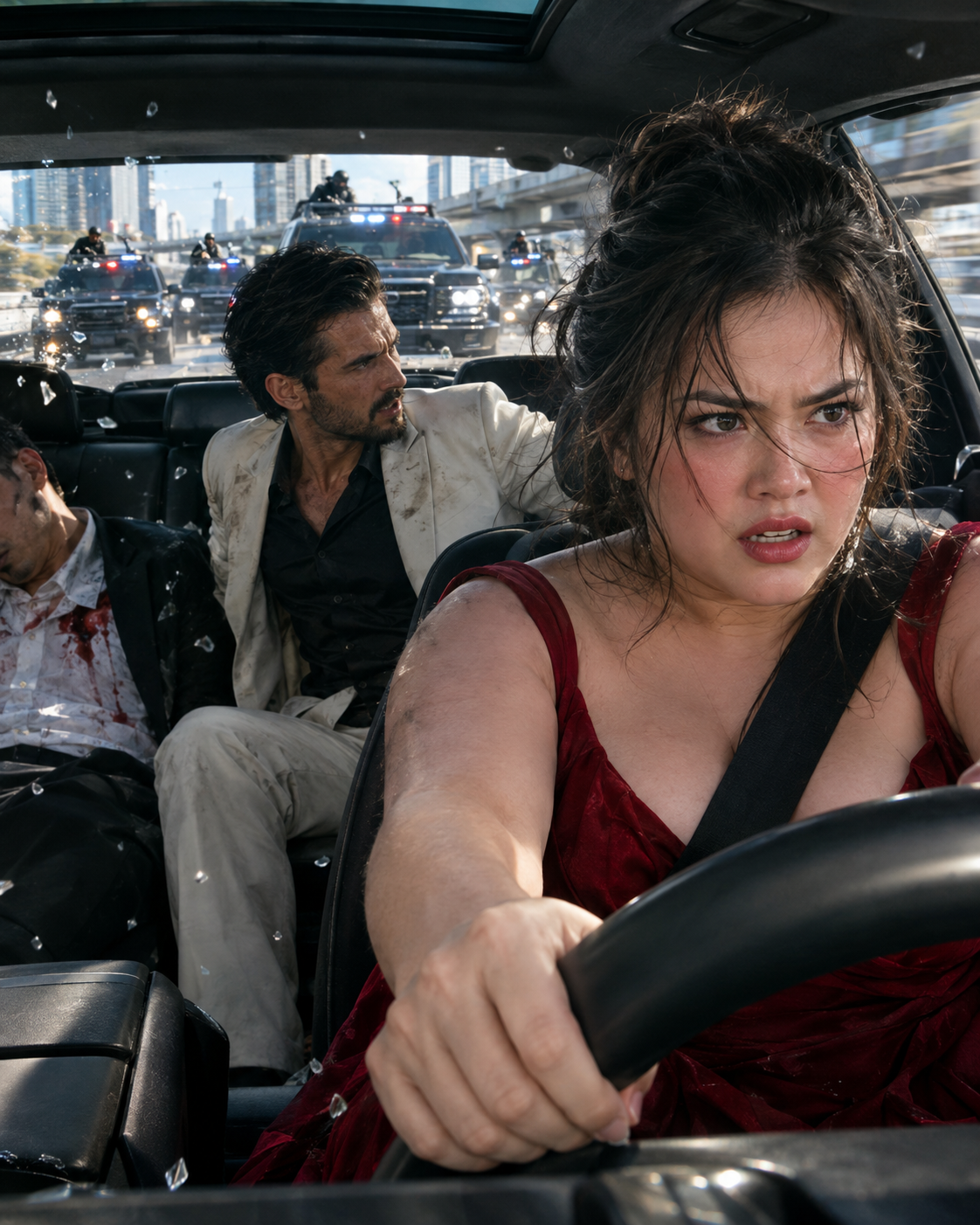
She drove the lead vehicle.
Gideon followed several minutes behind.
The trap closed exactly as expected.
Two vehicles appeared.
Then four.
Then six.
But they were not Ash vehicles.
They were police units positioned several blocks away.
The people waiting for the shipment realized too late that something was wrong.
Sirens filled the streets.
The operation collapsed within minutes.
The respected businessman who had orchestrated everything was arrested soon afterward.
His network unraveled quickly.
Quill agreed to cooperate.
The old protection network was finally exposed.
And for the first time in years, the story of Gideon’s brother could be told without secrets.
But Gideon did not celebrate.
He went to the cemetery alone.
Odette found him there later.
He was standing before his brother’s grave.
“He should have had more time,” he said.
Odette stood beside him.
“He wanted you to survive.”
“I know.”
“He trusted you.”
Gideon looked at her.
“And he trusted you.”
Odette looked at the grave.
“I wish I could have saved him.”
“You saved me.”
“That wasn’t enough.”
Gideon shook his head.
“Maybe it was.”
She looked at him.
“Why?”
“Because if you hadn’t, none of this would have been uncovered.”
The wind moved through the trees.
For a while, they stood without speaking.
Then Gideon said, “You know what my brother would probably say?”
“What?”
“He’d tell us to stop looking backward.”
Odette smiled.
“That sounds like him.”
They left the cemetery together.
Months passed.
The Ash organization changed.
Routes were rebuilt.
Old contacts were removed.
New security protocols were created.
But the biggest change happened inside the family itself.
Odette became a formal partner.
Not a symbolic title.
Not a favor.
A real position.
She oversaw transportation and security strategy.
She trained drivers.
She redesigned emergency routes.
She insisted on procedures that saved lives without requiring anyone to become a hero.
And whenever someone asked why she was so cautious, she gave the same answer.
“Because surviving once doesn’t mean you should keep gambling with your life.”
Gideon listened.
More importantly, everyone else did too.
The passport remained in the drawer.
The money remained untouched.
Odette could still leave.
But she no longer felt the need to.
One evening, months after everything ended, Gideon found her in the garage.
She was sitting behind the wheel of an old black sedan.
He leaned against the doorway.
“Planning another escape?”
Odette looked at him.
“No.”
“What are you doing?”
“Teaching myself how to stop driving.”
Gideon laughed.
“That’s impossible.”
She smiled.
“Maybe.”
He walked toward the car.
“Dinner?”
“Give me five minutes.”
“Five minutes means twenty.”
“Then you know me well.”
He smiled.
“I do.”
Odette turned off the engine.
For a moment, the garage became completely quiet.
She looked at the dashboard.
At the steering wheel.
At the place where so many memories had once lived.
Then she stepped out.
She closed the door.
And walked toward Gideon.
There was no enemy waiting outside.
No ambush.
No hidden route.
No desperate need to disappear.
Just an ordinary evening in America.
A life that was far from ordinary, but finally hers.
As they walked into the house, Odette glanced once toward the upstairs window.
She remembered the passport.
She remembered the woman she had once been.
Marlowe.
Odette.
The frightened wife.
The protection driver.
The woman who had spent years changing names because she believed staying meant surrender.
She finally understood the truth.
Leaving had saved her once.
But staying had given her something escape never could.
A home she had chosen.
A partner who knew the truth.
A place where her skills were no longer something she had to hide.
And most importantly, a life in which she didn’t have to become smaller just to feel safe.
That night, she went upstairs.
She opened the drawer.
The passport was still there.
She touched it once.
Then closed the drawer again.
She didn’t lock it because she was afraid someone might take it.
She locked it because it belonged to her.
The distinction mattered.
Freedom was not the absence of choices.
Freedom was having choices—and being able to make one without fear.
Odette turned off the light.
Downstairs, Gideon called her name.
She smiled.
“I’m coming.”
And she did.
Not because she owed him.
Not because she had nowhere else to go.
Not because the past had trapped her there.
She came because, after a lifetime of running, she had finally found something worth staying for.
And somewhere beyond the city, the last dark sedan disappeared into the night.
This time, Odette didn’t look back.