The morning Mabel Turner caught someone stealing from Black Ridge Ranch, she was standing in her kitchen holding a sack of flour. According to the receipt in her other hand, there should have been three more.
It belonged to Thomas Turner.
Her husband.
The man who had been buried beneath a cottonwood tree three years earlier.
Mabel stared at the signature until the letters blurred. Thomas had always written his capital T with a long, crooked stroke, and he had a peculiar habit of joining the last two letters of his surname. She had watched him sign hundreds of papers during their twenty-six years of marriage.
There was no mistaking it.
“Where did you get this?” she whispered.
The wagon driver shifted uneasily. “From the supply office, ma’am.”
“Who gave it to you?”
“A man named Harlan Pike.”
Wesley looked up sharply.
“Harlan Pike has been dead for eight months.”
The driver went pale.
For several seconds, nobody spoke. The only sound came from the horses stamping their hooves against the hard earth.
Then Mabel reached for the document.
“Thomas couldn’t have signed this,” she said. “He died three years ago.”
Wesley turned the paper over.
The date was from the previous Tuesday.
And beneath Thomas’s signature was a second name, written in smaller letters.
Elias Boon.
Wesley’s younger brother.
The same brother who had disappeared from Black Ridge Ranch eleven years earlier after being accused of stealing cattle.
Wesley folded the paper slowly.
“Driver,” he said, “you’re going to tell me everything you know.”
The man swallowed. “I just haul supplies. That’s all.”
“Then start with where you collect them.”
“An old warehouse outside Mercy Creek. About twelve miles east.”
“Who pays you?”
The driver hesitated.
Mabel stepped closer.
“Men on this ranch have been going hungry while somebody steals their food. If you know something, now would be a good time to remember it.”
The driver looked at her, then at Wesley.
“There’s a fellow who meets me every Thursday. Tall man. Gray coat. Scar across his chin. He gives me the delivery papers and tells me what to bring here.”
Wesley’s jaw tightened.
“Does he have a name?”
“Calls himself Mr. Cole.”
Wesley turned away, but Mabel had already seen the recognition in his eyes.
“You know him,” she said.
Wesley didn’t answer immediately.
Then he spoke a name she had not heard in over a decade.
“Elias.”
By noon, the ranch had changed.
Wesley ordered every supply delivery stopped until further notice. He sent two trusted hands to inspect the eastern fence line and told the others to remain close to the main buildings.
Mabel returned to her kitchen, but she couldn’t concentrate.
Thomas’s signature haunted her.
Her husband had been a quiet man, stubborn about his principles and careful with money. Before his death, he had worked as Black Ridge’s bookkeeper. He knew every account, every contract, and every dollar that passed through Wesley’s hands.
Three years earlier, Thomas had been found dead beside the creek after his horse returned without him.
The doctor called it a fall.
Mabel had accepted that explanation because grief had left her too exhausted to question anything.
Now she wondered whether she had been wrong.
Just before sunset, Wesley appeared at the kitchen door.
“We need to talk.”
He looked older than he had that morning.
They sat at the small table where Mabel usually kneaded bread.
“My brother didn’t leave because he stole cattle,” Wesley began.
Mabel frowned. “Everyone said he did.”
“I know. I let them believe it.”
“Why?”
Wesley stared at his hands.
“Eleven years ago, Elias discovered something about our father. He’d been selling land rights that didn’t belong to him. Some of the property had been promised to families who settled here before Black Ridge existed.”
Mabel listened carefully.
“When Elias threatened to expose him, Father accused him of theft. I knew Elias was innocent, but I was afraid of losing the ranch.”
“You let your own brother take the blame?”
“Yes.”
The admission seemed to cost Wesley more than any angry accusation could have.
“Our father died the following winter. I tried finding Elias, but he’d vanished.”
“And Thomas?”
Wesley looked toward the window.
“Thomas discovered the old contracts three years ago. He told me someone had been making inquiries about the land.”
Mabel felt cold.
“What kind of inquiries?”
“Someone wanted to know whether the original claims could still be enforced.”
“Did Thomas know who?”
“He said he had suspicions.”
“Why didn’t you tell me?”
Wesley’s voice broke.
“Because two days later, he was dead.”
Mabel pushed back her chair.
“You knew there was something wrong?”
“I knew there might be.”
“And you said nothing?”
“I had no proof.”
“You had a dead man and a secret, Wesley. That should have been enough.”
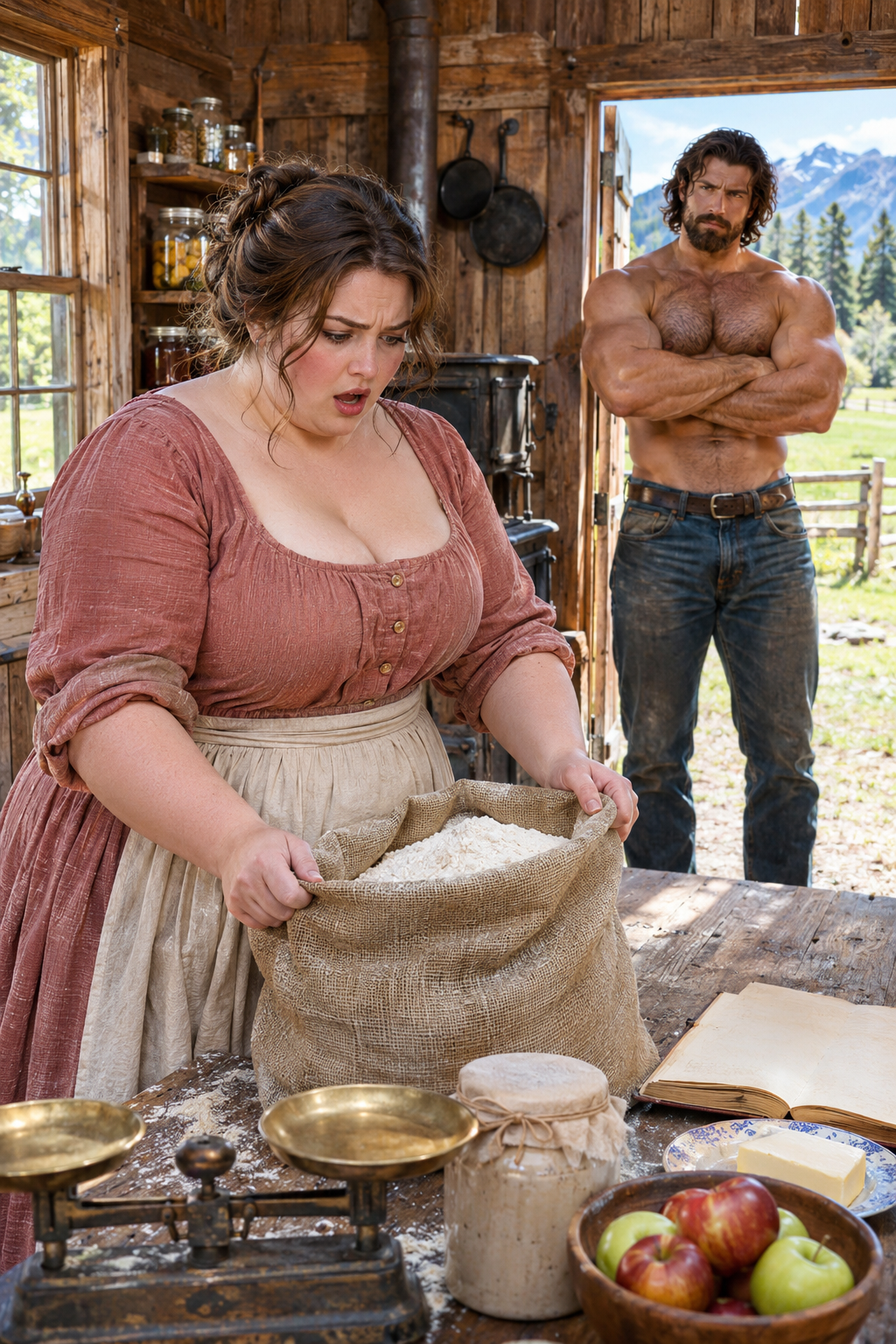
She walked outside before he could answer.
The evening wind carried the smell of dry grass and distant rain.
For three years, she had visited Thomas’s grave every Sunday, telling him about the ranch, the changing seasons, and the small things she missed.
Now she realized there might have been an entire part of his life she had never known.
That night, Mabel did not sleep.
She opened the old cedar trunk beneath her bed and searched through Thomas’s belongings.
There were shirts, a pocket watch, a Bible with worn leather corners, and a small wooden box containing letters from their courtship.
At the bottom lay his brown work coat.
She lifted it, remembering how he used to hang it beside the kitchen door.
Something crackled inside the lining.
Mabel examined the fabric.
A section near the collar had been stitched with dark thread instead of brown.
Thomas had never been skilled with a needle.
She fetched scissors.
Inside the lining was a folded piece of paper, yellowed with age.
It contained only six words.
The truth is beneath the bell.
Mabel read them three times.
Then she looked toward the window.
Beyond the ranch buildings stood an abandoned schoolhouse, its bell tower leaning slightly west.
Thomas had helped repair that schoolhouse years ago, before the settlement moved its children to Mercy Creek.
And he had insisted the old bell remain where it was.
At first light, Mabel saddled a horse.
She had almost reached the schoolhouse when she noticed another set of hoofprints in the dirt.
Fresh prints.
Someone had been there recently.
Inside, the building smelled of dust and rotten wood. Sunlight streamed through broken windows, illuminating rows of abandoned desks.
Mabel crossed to the narrow staircase leading into the bell tower.
The steps groaned beneath her.
At the top, the old bronze bell hung from a heavy beam.
She examined the floorboards.
One was newer than the others.
Mabel knelt and worked her knife beneath its edge.
The board lifted.
Inside the hollow space was a metal box.
She had just reached for it when a voice spoke behind her.
“I wouldn’t open that, Mrs. Turner.”
Mabel froze.
A tall man stood at the top of the staircase.
He wore a gray coat.
A pale scar crossed his chin.
Elias Boon.
He was older than she remembered, with silver threading through his dark hair, but the resemblance to Wesley was unmistakable.
Mabel rose slowly.
“You’ve been stealing from the ranch.”
Elias glanced at the box.
“That’s what Wesley told you?”
“I’ve seen the receipts.”
“Then you’ve seen only what someone wanted you to see.”
“Your name is on them.”
“So is your dead husband’s.”
Mabel tightened her grip on the knife.
Elias noticed but made no attempt to approach.
“I didn’t come here to hurt you.”
“Then why are you here?”
“To find what Thomas left behind.”
“You knew my husband?”
Elias’s expression changed.
“Better than you might think.”
The words struck harder than Mabel expected.
“Explain yourself.”
Elias looked toward the stairs.
“Thomas contacted me three years ago. He discovered that someone had been using the ranch accounts to conceal payments connected to stolen land.”
“Who?”
“That’s what he was trying to prove.”
“And you expect me to believe you weren’t involved?”
“No. I expect you to look inside that box.”
Mabel hesitated.
Then she opened it.
Inside were several documents, a small leather notebook, and an envelope addressed to her in Thomas’s handwriting.
Her hands trembled as she unfolded the letter.
My dearest Mabel,
If you are reading this, I have failed to bring the truth into daylight myself.
There are people who believe a man’s silence can be purchased, and others who believe fear will keep a widow from asking questions.
They do not know you as I do.
Trust the records. Trust what you have seen with your own eyes. And remember that a familiar face is not always an honest one.
Forgive me for keeping this burden from you. I wanted to protect our home, but I may have endangered it instead.
All my love,
Thomas.
Mabel pressed the letter against her chest.
For a moment, the schoolhouse disappeared around her.
She could almost hear Thomas speaking, gentle and deliberate, as he had when explaining something important.
Then she opened the leather notebook.
Its pages contained dates, names, amounts, and descriptions of transactions.
One name appeared repeatedly.
Silas Crowder.
The ranch’s longtime foreman.
A man Mabel had served breakfast to nearly every morning for fifteen years.
Elias pointed to an entry.
“Crowder was paying a land broker to transfer disputed property into a private company. The company planned to sell the mineral rights to a mining syndicate.”
Mabel turned another page.
“The money came from ranch accounts?”
“Some of it. The rest came from selling cattle that never appeared in the official records.”
“Why steal food?”
“Because Crowder needed cash, and the ranch’s supply account was easy to manipulate. He sold the missing goods through the warehouse in Mercy Creek.”
Mabel looked up.
“Then why are you signing his delivery papers?”
“I haven’t signed anything. Someone copied my name.”
“Why would Crowder do that?”
Elias gave a bitter smile.
“Because if Wesley discovered the theft, he’d suspect the brother he’d already accused once.”
Mabel studied him.
“And Thomas’s signature?”
“Crowder had access to years of his paperwork. He could copy it well enough to fool a merchant who wasn’t paying attention.”
Mabel wanted to believe him.
But wanting was not proof.
“Why didn’t you go to the sheriff?”
“I did. Two years ago.”
“What happened?”
“The sheriff told Crowder I was asking questions. That night, someone burned my cabin.”
A sound came from below.
Both turned.
A horse whinnied outside.
Elias moved to the window.
His face hardened.
“We have company.”
Three riders approached the schoolhouse.
At their head was Silas Crowder.
Mabel recognized his broad shoulders and battered black hat.
Beside him rode two men she had never seen.
Crowder dismounted and called upward.
“Mrs. Turner! I know you’re in there!”
Elias drew a revolver.
Mabel stepped back.
“How did he find us?”
“He may have been watching the schoolhouse.”
Crowder called again.
“Come down peacefully, Mabel. You don’t want to get mixed up in family business.”
Mabel looked at the notebook.
Then at the narrow staircase.
There was only one way out.
Unless they could create another.
Her eyes traveled to the bell.
“Can you shoot that rope?” she asked.
Elias frowned.
“The bell rope?”
“Yes.”
“What good would that do?”
“Thomas repaired this tower himself. He told me the bell was too heavy for the beam. If the support gives way, the whole upper floor could collapse.”
Elias stared at her.
“You’re suggesting we bring the tower down?”
“I’m suggesting we make those men think twice about climbing it.”
Footsteps sounded below.
Crowder had entered.
“Mabel,” he called, “you’ve got something that belongs to me.”
Mabel moved to the stairwell.
“Your stolen records?”
Silence.
Then Crowder laughed.
“You’ve always had a sharp tongue.”
“And you’ve always had a generous appetite, Silas. Apparently, fifteen years of my cooking wasn’t enough for you.”
Elias almost smiled.
Crowder’s voice hardened.
“Bring me the box.”
Mabel glanced at Elias and whispered, “When I say.”
Then she called down, “Did you kill Thomas?”
The question hung in the dusty air.
For several seconds, there was no answer.
Finally, Crowder said, “Your husband should’ve minded his own business.”
Mabel felt her knees weaken.
“That’s not an answer.”
“He found papers he wasn’t supposed to find. I warned him.”
“What happened at the creek?”
Crowder’s boots creaked against the stairs.
“He wouldn’t hand them over.”
Mabel closed her eyes briefly.
She had imagined Thomas falling from his horse a thousand times.
Now another image took its place.
A frightened man confronting someone he trusted.
Crowder climbed another step.
“It wasn’t supposed to end that way.”
Mabel opened her eyes.
“Did you push him?”
Crowder said nothing.
But the silence told her enough.
“Now!” she shouted.
Elias fired.
The bullet struck the iron bracket securing the bell’s support rope.
The old rope snapped, releasing the heavy bell.
It swung violently, smashing against the weakened wooden frame.
The tower shuddered.
Crowder shouted.
A beam cracked overhead.
Elias seized Mabel’s arm and pulled her toward a narrow maintenance opening behind the bell.
“There’s a ladder outside!”
Mabel climbed through first.
The ladder ran down the rear wall, hidden from the road by a thick stand of cottonwoods.
Behind them, the tower groaned.
A tremendous crash shook the schoolhouse as the bell tore loose and plunged through the floor.
Mabel scrambled downward.
Elias followed.
They reached the ground just as the upper portion of the tower collapsed inward.
Dust burst through the windows.
For a moment, everything disappeared behind a gray cloud.
Then someone screamed.
Mabel turned.
One of Crowder’s men was stumbling from the front door, clutching his shoulder.
The other ran toward the horses.
Crowder himself emerged coughing, blood running down his forehead.
He spotted Mabel.
“You miserable old woman!”
He raised his revolver.
Elias shoved her behind a tree.
A shot cracked through the morning air.
Bark exploded beside her face.
Elias returned fire.
Crowder ducked behind a wagon abandoned beside the schoolhouse.
“Run!” Elias shouted.
Mabel didn’t argue.
She raced toward her horse, still tied near the trees.
But before she could reach it, Crowder’s second man appeared in her path.
He grabbed her arm.
“Not so fast.”
Mabel swung the metal box into his face.
He staggered backward, cursing.
She struck him again, this time across the temple.
He collapsed.
Mabel mounted with difficulty and wheeled her horse toward Elias.
“Get on!”
Elias ran toward her.
Another shot rang out.
He stumbled.
For one terrible moment, Mabel thought he had fallen.
Then he caught the saddle and pulled himself up behind her.
“Go!”
They galloped through the cottonwoods as Crowder fired after them.
Only when the schoolhouse vanished behind the hills did Mabel realize Elias was bleeding.
His left sleeve had turned dark red.
“You’ve been shot.”
“Just the arm.”
“Men always say that when they’re bleeding on somebody else’s horse.”
Despite the pain, Elias laughed.
But the laughter quickly faded.
“Crowder knows you have the records. He won’t stop.”
Mabel looked toward the distant roofs of Black Ridge Ranch.
“Then neither will I.”
They reached the ranch shortly after noon.
Wesley came running from the stable when he saw them.
His expression changed when Elias slid from the saddle.
For eleven years, the brothers had not stood face-to-face.
Neither spoke.
Then Wesley noticed the blood.
“What happened?”
“Your foreman tried to kill us,” Mabel answered.
Wesley stared.
“Silas?”
“Yes. And he admitted he was there when Thomas died.”
Wesley looked as though someone had struck him.
Mabel handed him the notebook.
“Read this.”
While Wesley examined the entries, she cleaned Elias’s wound in the kitchen.
The bullet had passed through the flesh of his upper arm without striking bone.
He winced as she applied clean cloth.
“You haven’t lost your touch,” he muttered.
“I’ve spent twenty years patching up men who thought they were tougher than horses.”
Elias watched her work.
“Thomas spoke about you often.”
Mabel paused.
“What did he say?”
“That you were the bravest person he’d ever known.”
She swallowed.
“He should’ve told me what was happening.”
“He was afraid Crowder would hurt you.”
“And keeping secrets protected me?”
Elias lowered his eyes.
“No.”
Outside, a horse thundered into the yard.
One of the ranch hands shouted for Wesley.
Mabel hurried to the window.
A young rider named Ben Carter had returned from the eastern fence line.
His face was pale.
“Boss!” he shouted. “The north pasture’s burning!”
Wesley rushed outside.
Smoke rose beyond the hills.
Then another column appeared farther west.
Mabel understood immediately.
Crowder wasn’t merely trying to destroy evidence.
He was trying to destroy the ranch.
Wesley began shouting orders.
“Get the cattle toward the creek! Move the horses out of the north stable! Ben, ride to Mercy Creek and bring help!”
The men scattered.
Mabel grabbed Elias’s uninjured arm.
“Can you ride?”
“I can manage.”
“Then help Wesley.”
“What about you?”
She looked toward the kitchen.
The flour sacks sat against the wall, pitifully few.
The pantry shelves were nearly empty.
And beneath the table stood the metal box containing Thomas’s evidence.
“I have something else to do.”
Within minutes, Black Ridge became a battlefield against fire.
The wind had turned fierce, driving flames through the dry grass.
Ranch hands fought to move cattle through narrow gates while smoke swallowed the northern hills.
Wesley and Elias rode together toward the creek, shouting instructions over the roar.
Mabel carried the metal box to the small root cellar behind the kitchen.
She wrapped the documents in oilcloth and placed them inside a stone-lined storage compartment.
Then she returned to the yard.
Crowder had planned carefully.
The fires had been set in three separate locations, cutting off the main road to Mercy Creek and forcing the cattle toward a steep ravine.
If the herd panicked, hundreds of animals could be lost.
Mabel spotted Ben struggling to control his horse near the corral.
“Ben!”
He turned.
“The old irrigation ditch!” she shouted.
“What?”
“Thomas helped dig it years ago. It runs from the creek to the western pasture.”
Ben stared at her.
“The ditch is dry!”
“Because the gate’s been closed since spring. Open it!”
Understanding flashed across his face.
If water could be diverted through the ditch, it might soak the dry grass and create a barrier between the flames and the main ranch buildings.
Ben raced toward the creek.
Mabel followed on foot until she reached the wooden sluice gate.
The wheel controlling it had rusted almost solid.
Ben pulled.
Nothing happened.
He tried again.
The wheel moved an inch, then stopped.
“It’s stuck!”
Mabel seized a long iron bar from a nearby tool rack.
“Use this.”
Together, they forced the bar between the spokes.
The wheel groaned.
Then turned.
Water surged through the gate.
At first, it trickled into the dry channel.
Then it rushed forward, carrying mud, leaves, and years of accumulated debris.
The ditch began filling.
Mabel watched the water race toward the pasture.
For the first time that day, she allowed herself hope.
Then a voice spoke behind her.
“Clever woman.”
She turned.
Silas Crowder stood ten feet away.
His face was blackened with soot, and a strip of cloth covered the wound on his forehead.
He held a revolver.
Ben reached for his own gun.
“Don’t,” Crowder warned.
Ben froze.
Crowder pointed toward the ranch.
“Where are the papers?”
Mabel said nothing.
Crowder took a step closer.
“I know Thomas left something. He was always hiding little notes and records.”
“You killed him.”
His expression darkened.
“He forced my hand.”
“No,” Mabel said. “You made a choice.”
Crowder laughed bitterly.
“You think this ranch was built on honest work? Men like Wesley inherit land and call themselves respectable. Men like me do the dirty work and get scraps.”
“So you decided to steal from everyone?”
“I decided to take what I was owed.”
“You took food from men who trusted you.”
“They would’ve survived.”
“Thomas didn’t.”
Crowder’s jaw tightened.
For a moment, Mabel thought he might shoot her.
Instead, he pointed the revolver at Ben.
“Tell me where the papers are, or the boy dies.”
Ben was barely nineteen.
He had arrived at Black Ridge two years earlier with nothing but a saddle and a promise to work hard.
Mabel looked at his frightened face.
Then she made her decision.
“They’re in the root cellar.”
Crowder smiled.
“Show me.”
Mabel began walking toward the ranch.
Ben followed, Crowder’s gun trained on his back.
The smoke had thickened, turning the afternoon sun into a dull red circle.
As they approached the kitchen, Mabel noticed the irrigation ditch overflowing into the low ground beside the storage sheds.
The water was rising quickly.
And she remembered something Thomas had once told her.
The old root cellar had two entrances.
One behind the kitchen.
The other was a narrow drainage passage that opened near the irrigation ditch.
Thomas had built it to prevent flooding during spring storms.
Crowder knew nothing about it.
At the cellar door, Mabel stopped.
“The box is below.”
Crowder motioned with his gun.
“Go get it.”
“It’s heavy. I’ll need the boy.”
Crowder hesitated.
Then he shoved Ben forward.
“Both of you. And don’t try anything.”
They descended into the cellar.
The air was cool and damp.
Mabel led Ben toward the stone compartment.
She knelt, pretending to search for the box.
Then she whispered, “Behind the potato bins. There’s a drainage tunnel. Crawl through it and get Wesley.”
Ben’s eyes widened.
“What about you?”
“Go.”
She knocked over a stack of empty jars.
Glass shattered across the floor.
Crowder shouted from the stairs.
“What are you doing?”
“Trying to find the blasted box!”
While Crowder cursed, Ben slipped behind the bins.
Mabel heard a faint scraping sound as he entered the tunnel.
Then silence.
She retrieved the metal box and climbed the stairs.
Crowder snatched it from her hands.
He opened the lid.
Inside lay several folded papers.
He pulled one free.
It was a recipe for apple pie.
Crowder stared at it.
Then at Mabel.
“What is this?”
“My mother’s recipe.”
He threw the paper aside and grabbed another.
A list of kitchen supplies.
Another was an old church announcement.
His face twisted with rage.
“You think this is funny?”
Mabel stood straight.
“I think you’ve spent so long stealing from people that you’ve forgotten what honest work looks like.”
Crowder raised his gun.
A shot exploded.
Mabel flinched.
But she felt no pain.
Crowder staggered backward.
His revolver fell from his hand.
Behind him stood Wesley Boon, smoke curling from the barrel of his rifle.
Elias appeared beside him, his injured arm bound tightly against his chest.
Crowder collapsed against the cellar wall, clutching his wounded shoulder.
Wesley approached slowly.
“It’s over, Silas.”
Crowder glared at him.
“You think you’ve won? The mining company already has the contracts.”
“Contracts signed through fraud,” Elias said. “And we have the original records.”
Crowder laughed weakly.
“You can’t prove anything.”
Mabel stepped forward.
“Thomas can.”
She held up the leather notebook.
Crowder’s expression changed.
For the first time, genuine fear appeared in his eyes.
By evening, the fire had been contained.
The irrigation ditch saved the main buildings, and the ranch hands managed to move most of the cattle to safety.
Two storage sheds burned, along with a stretch of fencing, but Black Ridge survived.
Crowder was tied securely and placed under guard until the sheriff arrived.
Mabel refused to let him near her kitchen.
When Sheriff Daniel Mercer finally rode into the yard, he seemed surprised to find Crowder alive.
He was even more surprised when Wesley handed him the notebook.
The sheriff examined the pages.
“These are serious accusations.”
“They’re documented transactions,” Mabel replied.
Mercer closed the notebook.
“I’ll have to investigate.”
Elias stepped forward.
“Like you investigated when I told you about Crowder two years ago?”
The sheriff’s face reddened.
“That was different.”
“How?”
Mercer said nothing.
Wesley moved beside his brother.
“I’m taking copies of these records to the territorial judge myself. And if anything happens to the originals, I’ll know where to start looking.”
The sheriff looked from Wesley to Elias.
Then he nodded stiffly.
“Very well.”
Crowder was taken away under armed escort.
But Mabel knew the story wasn’t finished.
A man who had stolen for years had likely made powerful friends.
And powerful friends rarely surrendered without a fight.
Three days later, a stranger arrived at Black Ridge.
He wore a fine black suit and carried a leather briefcase.
He introduced himself as Arthur Bellamy, attorney for the Western Consolidated Mining Company.
Wesley received him in the office.
Mabel remained by the doorway.
Bellamy placed a document on the desk.
“My clients hold legal rights to several thousand acres surrounding this property.”
“Rights obtained through forged signatures,” Wesley answered.
Bellamy smiled.
“That’s a matter of interpretation.”
“Thomas Turner kept records.”
“So I’ve heard.”
The attorney glanced at Mabel.
“Mrs. Turner, I’m told your husband was a diligent man.”
“He was.”
“Then perhaps he understood the importance of protecting his family’s financial future.”
Mabel narrowed her eyes.
“What are you suggesting?”
Bellamy opened his briefcase.
Inside were bundles of banknotes.
“Twenty thousand dollars. Enough to purchase a comfortable home anywhere you choose. In exchange, you surrender the notebook and agree not to testify.”
Wesley rose from his chair.
“Get out.”
But Mabel raised her hand.
“Wait.”
She looked at the money.
Twenty thousand dollars.
More than Thomas had earned in his entire life.
Enough to leave Black Ridge forever.
Enough to escape the grief, the danger, and the endless work.
Bellamy watched her carefully.
“You deserve peace, Mrs. Turner.”
Mabel considered the offer.
Then she asked, “How much did you offer Thomas?”
The attorney’s smile disappeared.
“I beg your pardon?”
“You heard me.”
Bellamy closed the briefcase.
“I don’t believe this conversation is productive.”
Mabel stepped closer.
“My husband died because he wouldn’t sell his conscience. And you think I’ll sell mine for a stack of paper?”
Bellamy stood.
“You may regret this.”
“Perhaps,” Mabel replied. “But I won’t be ashamed of it.”
He left without another word.
The following week, Wesley, Elias, and Mabel traveled to the territorial courthouse.
They carried Thomas’s notebook, the original land documents, the forged delivery receipts, and statements from several ranch hands.
The hearing lasted four days.
Bellamy’s lawyers argued that Thomas’s records were unreliable.
They claimed Elias was a disgruntled relative seeking revenge.
They suggested Mabel had misunderstood ordinary accounting discrepancies.
But the evidence continued to grow.
The merchant from Mercy Creek admitted that Crowder had instructed him to bill the ranch for full deliveries while sending half the goods to a private warehouse.
The wagon driver confirmed the arrangement.
A bank clerk testified that money from the warehouse sales had been deposited into accounts connected to the mining company.
Then came the testimony nobody expected.
Sheriff Mercer took the stand.
Under questioning, he admitted that Crowder had paid him to ignore complaints about missing cattle and suspicious land transfers.
The courtroom erupted.
The judge ordered Mercer detained.
Bellamy’s face turned gray.
But the most important moment came when Mabel was called to testify.
She walked to the witness chair wearing her plain brown dress.
Her hands were rough from years of cooking and cleaning.
The mining company’s attorney studied her with thinly disguised contempt.
“Mrs. Turner,” he began, “you are employed as a cook, correct?”
“Yes.”
“You have no formal training in accounting?”
“No.”
“Then how can you claim to understand these complicated financial records?”
Mabel looked directly at him.
“Because I know the difference between four sacks of flour and one.”
A few people laughed.
The attorney frowned.
“Please answer seriously.”
“I am serious. Every week, I counted what came into my kitchen. Every week, I recorded what was missing. Your complicated records say we received food we never saw.”
“Perhaps you made mistakes.”
“Then perhaps you can explain why the merchant, the driver, and the bank all confirm my mistakes.”
The courtroom fell silent.
Mabel continued.
“You can hide theft behind contracts, signatures, and fine words. But eventually, somebody has to count what’s actually there.”
The judge leaned forward.
“Mrs. Turner, do you believe your husband was killed because of these records?”
Her throat tightened.
“Yes, Your Honor.”
“Why?”
“Because he believed the truth mattered, even when telling it cost him something.”
She paused.
“And because the man who threatened him admitted he was there when Thomas died.”
The judge nodded slowly.
“Thank you, Mrs. Turner.”
When Mabel stepped down, Wesley was waiting beside the aisle.
He offered his arm.
She took it.
For the first time in three years, she felt that Thomas had not been forgotten.
The court’s decision came two weeks later.
The disputed land transfers were declared fraudulent and suspended pending restoration of the rightful claims.
The mining company faced further investigation, and Bellamy was charged with attempting to obstruct the proceedings.
Crowder was convicted of fraud, theft, arson, and the murder of Thomas Turner after additional testimony and physical evidence established what had happened at the creek.
He received a long prison sentence.
Sheriff Mercer lost his badge and was convicted of accepting bribes.
But justice came with another revelation.
Several families whose land had been wrongfully absorbed into Black Ridge were still living in the territory.
Some had spent years believing their claims were worthless.
Wesley faced a difficult decision.
Returning their property would reduce the ranch considerably.
It would also mean admitting publicly that his family’s prosperity had been built, in part, on dishonesty.
One evening, he gathered the ranch hands beneath the cottonwood trees.
Elias stood beside him.
Mabel watched from the porch.
“My father took land that wasn’t his,” Wesley began. “And I spent years benefiting from it without asking enough questions.”
He looked at his brother.
“I also allowed an innocent man to carry the blame for something he didn’t do.”
Elias lowered his head.
Wesley continued.
“I can’t change what happened. But I can decide what happens next.”
He announced that the disputed land would be returned to the rightful families.
The ranch would become smaller.
There would be fewer cattle and less profit.
But Black Ridge would remain.
And from that day forward, every account would be open to inspection.
Nobody cheered immediately.
The men understood what the decision meant.
Then Ben Carter stepped forward.
“Boss, I’d rather work on a smaller honest ranch than a bigger crooked one.”
A few men nodded.
Others began clapping.
Soon the entire yard filled with applause.
Elias turned toward Wesley.
For a long moment, the brothers looked at one another.
Then Wesley extended his hand.
“I should’ve believed you eleven years ago.”
Elias took it.
“Yes,” he said quietly. “You should have.”
Wesley swallowed.
“Can you forgive me?”
Elias looked toward the fields, where the evening sun painted the grass gold.
“I don’t know if I can forget it.”
“I wouldn’t ask you to.”
“But I reckon we can start somewhere.”
They embraced.
Mabel turned away, wiping her eyes with the corner of her apron.
Spring arrived slowly that year.
The burned pastures began to recover, and new grass pushed through the blackened soil.
Wesley rebuilt the storage sheds.
Elias stayed at Black Ridge, helping repair fences and restore the ranch’s finances.
The families who reclaimed their land began working alongside the ranch rather than against it.
Some leased grazing rights.
Others planted crops.
For the first time in decades, old resentments began to soften.
Mabel’s kitchen changed too.
The pantry shelves were full again.
The ranch hands no longer went hungry.
And Wesley insisted she receive a proper salary increase, along with ownership of the small cottage near the orchard where she had lived with Thomas.
She accepted the cottage.
But she made him argue for three days before accepting the raise.
One Sunday morning, Mabel walked to the cottonwood tree where Thomas was buried.
She carried fresh wildflowers and a small loaf of bread.
The stone marker had been cleaned, and someone had placed a wooden bench nearby.
She sat beneath the branches.
For a while, she said nothing.
Then she took Thomas’s final letter from her pocket.
The paper had become soft from being unfolded so many times.
“I found your truth,” she whispered.
A breeze moved through the leaves.
“I wish you’d trusted me enough to tell me sooner.”
She looked toward the distant ranch buildings.
“Maybe we could’ve faced it together.”
Her voice trembled.
“But I understand why you were afraid.”
She placed the flowers beside the stone.
“Wesley is trying to make things right. Elias has come home. And the men have enough to eat.”
She smiled faintly.
“You would’ve liked that.”
For a long time, she watched the clouds drift across the blue sky.
Then she stood.
There was bread to bake, supper to prepare, and a dozen hungry men who would complain if she was late.
Life had not stopped because she had suffered.
And she no longer wanted it to.
As she turned toward the ranch, she noticed Ben Carter waiting beside the fence.
He held a small wooden sign.
“Mrs. Turner?”
“What is it, Ben?”
He looked embarrassed.
“The boys wanted to make something for the kitchen.”
He turned the sign around.
Carved into the wood were the words:
MABEL TURNER’S KITCHEN — WHERE EVERY SACK COUNTS.
Mabel stared at it.
Then she began to laugh.
It was a deep, unexpected laugh, the kind she had not heard from herself in years.
Ben grinned.
“Thought you might like it.”
“I do,” she said. “Though I expect you’ll still complain about my biscuits.”
“Only when they’re burned.”
“Then you’d better learn to cook your own.”
They walked back together beneath the bright spring sun.
That afternoon, Wesley hung the sign above the kitchen door.
And beneath it, at Mabel’s insistence, he placed a second, smaller board.
It read:
HONEST WORK. HONEST RECORDS. HONEST HEARTS.
Years later, people in Mercy Creek would still tell the story of the woman who uncovered a criminal conspiracy because three sacks of flour were missing.
Some called her brave.
Others called her stubborn.
Mabel preferred neither description.
When visitors asked how she had managed to expose men with money, influence, and powerful connections, she always gave the same simple explanation.
“I paid attention.”
But those who knew her understood there was more to it.
She had refused to ignore what was wrong simply because everyone else found it convenient.
She had questioned people she trusted, confronted people she feared, and followed the truth even when it led her toward painful answers.
She had also learned something Thomas never had the chance to understand.
Protecting the people you love does not always mean keeping danger hidden from them.
Sometimes it means trusting them enough to face it beside you.
And justice, she discovered, was not merely about punishing the guilty.
It was about repairing what could still be repaired, returning what had been taken, and refusing to build tomorrow on yesterday’s lies.
Black Ridge Ranch never became the largest ranch in the territory.
It never made Wesley Boon a wealthy man.
But its workers were paid fairly, its neighbors were treated with respect, and its accounts were kept in a ledger that anyone could examine.
Every autumn, when the first cold winds swept across the valley, Mabel baked a special loaf of bread and carried it to Thomas’s grave.
She would sit beneath the cottonwood tree, tell him about the year, and leave a few crumbs for the birds.
Then she would return to the kitchen, where laughter and conversation spilled through the open windows.
And whenever a supply wagon rolled into the yard, the driver knew exactly what to expect.
Mabel Turner would be waiting with her notebook.
She would count every sack, inspect every crate, and compare every number.
Not because she distrusted the world.
But because she had learned that trust was worth protecting, and truth was worth the trouble of finding.
In the end, the greatest legacy Thomas left behind was not the hidden notebook, the recovered land, or even the justice that finally came.
It was the courage his wife discovered within herself.
For sometimes the smallest questions uncover the greatest wrongs.
And sometimes the person who changes everything is not the richest, strongest, or most powerful person in the room.
Sometimes it is simply the one who notices that something is missing—and refuses to look away.
The story has already reached its conclusion, with Mabel uncovering the truth about Thomas’s death, bringing Crowder to justice, and helping Black Ridge Ranch begin a new chapter built on honesty.
The final message of her story was simple but powerful: Courage does not always come from strength or authority. Sometimes, it begins with an ordinary person who notices something wrong and refuses to look away.
And that was how Mabel Turner, a humble ranch cook with a notebook and an unwavering sense of right and wrong, changed Black Ridge Ranch forever.
THE END.