The moment I stepped into Broken Creek Ranch, Nathaniel Carter humiliated me before 27 cowboys, never suspecting I would uncover the betrayal destroying his empire.
“Rose.”
The whisper came again, so faint I thought the wind had spoken.
I stepped toward the locked kitchen door, holding the threatening note against my chest.
“Who’s there?”
“Someone who knew your father. Don’t light another lamp.”
My heart hammered.
“Tell me your name.”
A key scraped inside the lock.
The door opened just enough for Tommy to slip through, his face pale beneath his oversized hat.
“Tommy?”
He pressed a trembling finger to his lips.
“They’re watching the house, Miss Rose. I had to wait until they went toward the barns.”
I stared at the boy.
“You wrote this?”
“Not the threat. Just the words on the back.”
“How could you possibly know my father’s handwriting?”
Tommy reached into his coat and withdrew a small, yellowed envelope.
“Because my mother kept his letters.”
For a moment, the kitchen seemed to tilt beneath my feet.
“Your mother?”
“Her name was Margaret Bell. She worked at the railroad office in Helena. Before she died, she told me that if I ever met a woman named Rose Whitaker, I was to give her this.”
He placed the envelope in my hands.
Across its front, written in the unmistakable slant of my father’s handwriting, were three words.
For my Rosie.
I had not heard that name since I was nine years old.
My knees weakened.
I sat beside the stove and carefully opened the envelope.
Inside was a letter dated November 17, 1872, three days before my father disappeared.
My dearest Rose,
If this letter reaches you, then I have failed to return home. You must never believe what they say about me. I discovered men stealing money meant for railroad workers and using the accounts of dead employees to hide their crimes. I have gathered proof, but the men involved are powerful.
Trust the woman who carries this letter. Trust the numbers. And remember, the truth may be buried, but it cannot be made innocent by silence.
Your loving father,
Samuel Whitaker.
Tears blurred the final line.
For eleven years, I had carried the weight of his supposed disgrace.
Children had called me a thief’s daughter. Employers had turned me away when they learned my surname. Even my mother’s relatives had suggested we change our name.
But my father had been innocent.
And someone had known.
“Why didn’t your mother send this?” I whispered.
Tommy lowered his head.
“She tried. Twice. Both letters came back. Then a man warned her that if she kept asking questions, she’d end up like Mr. Whitaker.”
“Who was the man?”
“I never knew his name. But I saw him tonight.”
A cold sensation crept along my spine.
“Where?”
“Coming out of Mr. Carter’s office.”
Before I could ask another question, footsteps sounded across the porch.
Tommy seized my arm.
“Hide the letter.”
I slipped it inside my dress as the kitchen door swung open.
Nathaniel Carter stood in the doorway, holding a lantern and a revolver.
His gray eyes moved from my frightened face to Tommy’s.
“What in God’s name is happening here?”
I rose slowly.
“Someone locked me inside your kitchen and threatened to kill me.”
Nathaniel’s expression hardened.
“Who?”
“I don’t know. But I know someone has been stealing your supplies.”
For several seconds, he said nothing.
Then he placed the lantern on the table.
“Explain.”
I showed him the ledger, the missing deliveries, and the threatening note.
He examined everything without interrupting.
When he reached the crooked circle, his face drained of color.
“Where did you get this symbol?”
“It was on the warning.”
“Have you seen it before?”
“Yes. My father owned a pocket watch bearing that mark.”
Nathaniel took a step backward.
“What was your father’s name?”
“Samuel Whitaker.”
The lantern flame crackled.
Nathaniel’s hand tightened around the paper.
“Your father worked for the Northern Montana Railroad.”
I stared at him.
“How do you know that?”
He turned toward the dark window.
“Because eleven years ago, I testified against him.”
The words struck harder than any blow.
I could barely force air into my lungs.
“You what?”
Nathaniel closed his eyes.
“I was twenty-six. My father had died, and I was trying to save this ranch from debt. A railroad businessman named Silas Vane offered me a lucrative cattle transportation contract. In return, he asked me to confirm that I had seen your father carrying company money away from the railroad office.”
“Had you?”
“No.”
My hands began to shake.
“Then you lied.”
“Yes.”
The single word seemed to poison the room.
Nathaniel looked at me with an expression I had never seen before.
Shame.
“Vane told me Samuel had already confessed. He said my testimony was only a formality. I believed him because I wanted the contract.”
“You ruined an innocent man.”
“I know.”
“No, Mr. Carter. You don’t know.”
My voice rose until Tommy flinched.
“You don’t know what it was like watching my mother sew dresses until her fingers bled because no respectable household would employ a thief’s wife. You don’t know what it was like burying her in a cemetery where the preacher hesitated to speak our name.”
Nathaniel stood motionless.
“And you certainly don’t know what it was like waiting for a father who never came home.”
“I have regretted that testimony for eleven years.”
“Regret didn’t feed us.”
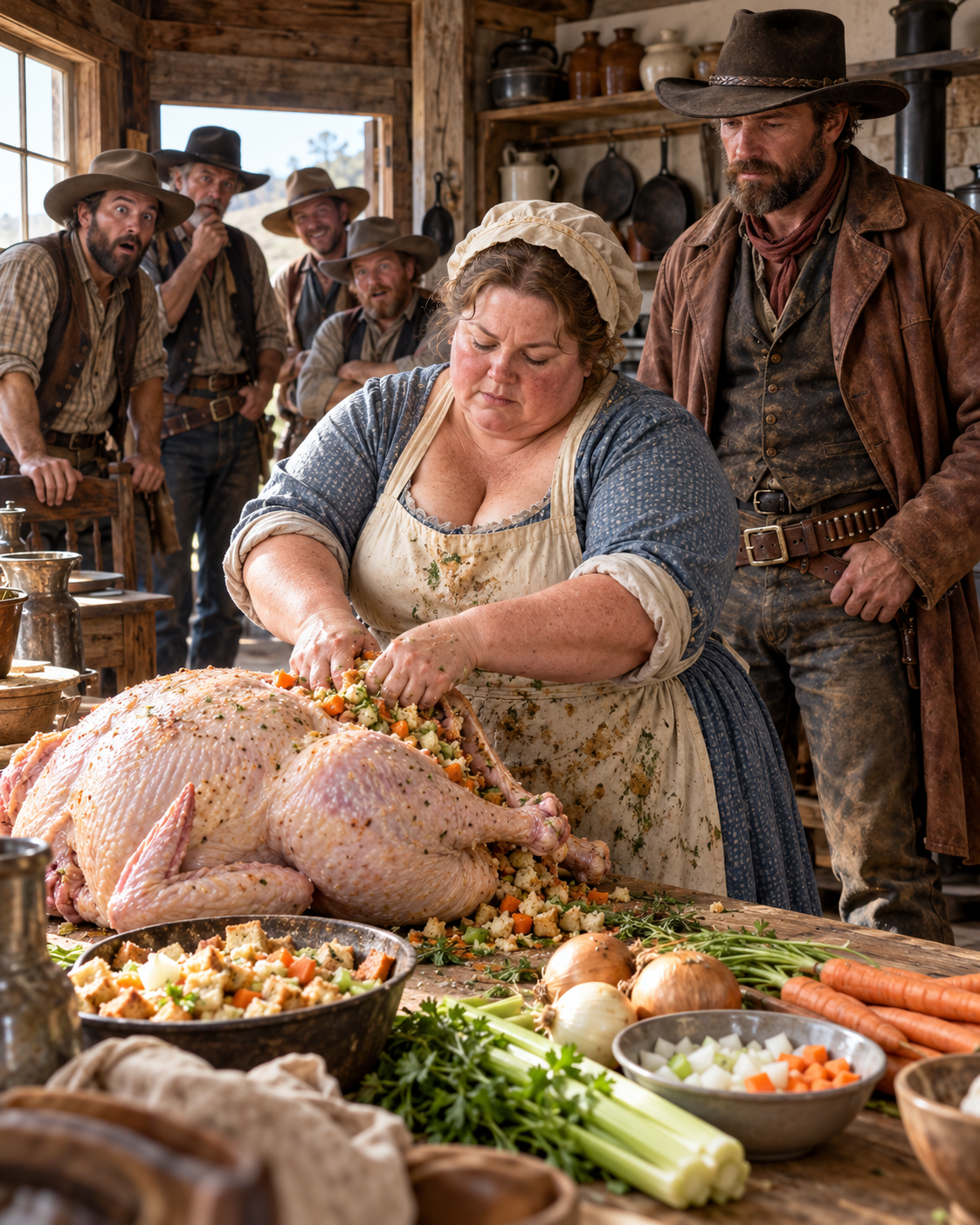
He lowered his eyes.
I had once thought Nathaniel Carter the cruelest man I had met because of the way he humiliated me on his porch.
Now I understood that his cruelty had reached into my childhood long before we met.
I took my father’s letter from my dress.
“Did Silas Vane kill him?”
Nathaniel read the letter.
When he finished, his face had become ashen.
“I don’t know. But Vane arrived in town three weeks ago.”
“Why?”
“He’s the principal investor behind the bank holding my mortgage.”
The truth settled over us like approaching thunder.
The missing supplies.
The borrowed money.
The threat.
Someone was draining Broken Creek until Nathaniel would be forced to surrender it.
And Silas Vane was waiting to collect.
Nathaniel reached for the ledger.
I pulled it away.
“You don’t get to take this from me.”
“Rose, if Vane knows who you are, you’re in danger.”
“I’ve been in danger since the moment my father trusted men like you.”
He accepted the accusation without defending himself.
Then he spoke quietly.
“I cannot undo what I did. But I can help you prove the truth.”
I looked at Tommy.
The boy’s frightened eyes reminded me that this was no longer only about my father.
Twenty-seven men depended on Broken Creek.
And winter was coming.
“Then we start with the man who signed these deliveries.”
I turned the ledger toward Nathaniel.
Every missing shipment bore the same signature.
Elias Boone.
Nathaniel’s longtime bookkeeper.
His closest adviser.
And the man who had encouraged him to borrow against the ranch.
By sunrise, Elias Boone was gone.
His room stood empty, his horse missing, and the cabinet containing Broken Creek’s financial records had been forced open.
Caleb discovered the theft before breakfast.
“He took the mortgage papers,” he told us, breathless. “And half the cash remaining in the office.”
Nathaniel struck the desk with his fist.
“That snake has worked for me for sixteen years.”
Caleb looked toward me.
“Sixteen years is long enough to learn where every weakness lies.”
We searched Boone’s room.
Beneath his mattress, I found a scrap of paper bearing three numbers.
Fourteen. Seven. Nine.
Beside them was the crooked-circle symbol.
Nathaniel frowned.
“What does it mean?”
I studied the paper, remembering my father’s instruction.
Trust the numbers.
“Not amounts,” I murmured. “Locations.”
Caleb leaned closer.
“Locations where?”
I glanced at the supply ledger.
The entries were arranged by date, but an older shipping record had a different system: warehouse numbers, storage sections, and crate positions.
“Warehouse fourteen. Section seven. Crate nine.”
Nathaniel shook his head.
“There isn’t a warehouse fourteen in town.”
“Not in town,” Caleb said suddenly.
He pointed toward the northern mountains.
“The old railroad depot at Blackstone Crossing. They numbered its storage buildings before the line was abandoned.”
Nathaniel’s expression changed.
“Vane owns that property.”
We rode out that afternoon.
Caleb insisted on accompanying me, while Nathaniel brought two trusted ranch hands, Isaac and Daniel.
Tommy remained behind under the protection of the oldest cowboys.
The ride took nearly four hours through freezing rain.
By the time we reached Blackstone Crossing, darkness had swallowed the valley.
The abandoned depot stood beside rusting railroad tracks, its windows black and broken.
Fourteen storage sheds stretched behind it.
Most had collapsed.
Warehouse fourteen remained standing.
Caleb tied our horses among the trees.
“We should wait until morning.”
I shook my head.
“Boone may already be inside.”
Nathaniel examined the muddy ground.
“Fresh wagon tracks. Someone arrived recently.”
We approached the building quietly.
Inside, lantern light shone between wooden boards.
I heard voices.
One belonged to Elias Boone.
“The ranch is nearly finished. Another month and Carter won’t have enough credit to purchase winter feed.”
A second man answered.
“Vane doesn’t pay for nearly finished.”
The voice was deep, smooth, and unfamiliar.
Boone sounded nervous.
“He’ll have the deed before Christmas.”
“And the woman?”
My blood turned cold.
“Rose Whitaker has the ledger,” Boone said. “She’s asking questions.”
The other man laughed softly.
“Her father asked questions too.”
I pressed closer to the wall.
“What happened to Samuel Whitaker?” Boone asked.
“Same thing that happens to every fool who believes honesty can protect him.”
A chair scraped.
“Vane wants the girl brought here alive. She may know where Samuel hid the original accounts.”
Nathaniel’s jaw tightened beside me.
Then Isaac stepped backward onto a rotten board.
It cracked like a pistol shot.
“Who’s there?”
A gun fired through the wall.
Caleb shoved me to the ground as splinters flew above my head.
“Run!” Nathaniel shouted.
The depot erupted in chaos.
Daniel returned fire while Isaac raced toward the horses.
Caleb pulled me behind a stack of railroad ties.
Two armed men burst from the warehouse.
One charged toward Nathaniel.
The other disappeared around the building.
I saw the second man’s shadow moving toward Caleb.
“Behind you!”
Caleb turned just as the attacker raised his revolver.
A shot rang out.
Caleb staggered.
For one terrible instant, I thought he had been killed.
Then he dropped to one knee and fired.
The attacker fell.
Blood spread across Caleb’s sleeve.
“Caleb!”
“Just my shoulder,” he gasped. “Get inside. Find the proof.”
Nathaniel had driven the first gunman behind the warehouse.
Boone was fleeing toward the tracks.
I slipped through a broken side door.
Inside, the air smelled of damp wood, lamp oil, and old secrets.
Seven storage compartments lined the rear wall.
I hurried to the seventh.
Nine crates stood stacked beneath a dusty tarpaulin.
My fingers trembled as I pried open the ninth.
Inside lay railroad account books, bundles of letters, and a small leather case.
I opened the case.
A silver pocket watch gleamed beneath the lantern light.
The crooked circle crossed by three lines was engraved on its cover.
My father’s watch.
I knew every scratch.
I remembered sitting on his knee while he let me listen to its ticking.
For a moment, I was nine years old again.
Then I opened the watch.
Inside, beneath the glass, was a tiny folded photograph of my mother and me.
And tucked behind the photograph was a narrow strip of paper.
Silas Vane. Elias Boone. Accounts transferred through Blackstone. Duplicate records held by Margaret Bell.
I nearly sobbed.
My father had left a trail.
A voice behind me said, “How touching.”
I turned.
Elias Boone stood in the doorway, aiming a revolver at my chest.
“Put everything down.”
I held the watch tightly.
“You helped destroy my father.”
Boone smiled.
“Your father destroyed himself by refusing to mind his business.”
“Did you kill him?”
“Not personally.”
The answer sickened me.
“Where is he buried?”
Boone’s smile faded.
“You’re asking the wrong questions.”
He stepped closer.
“Give me the watch.”
I looked past him.
The warehouse doors were partly open.
Outside, flames flickered near the old depot.
Nathaniel was shouting orders.
I needed time.
“The watch is worthless to you.”
“Then you won’t mind handing it over.”
I glanced toward the lantern hanging beside the doorway.
“No,” I said. “I think I’ll keep it.”
I hurled a handful of loose account papers into Boone’s face and kicked the lantern from its hook.
Glass shattered.
Flames raced across the oil-soaked floor.
Boone fired.
The bullet tore through my dress near my waist.
I scrambled behind the crates as the warehouse filled with smoke.
“You stupid girl!” Boone roared.
He lunged after me.
Before he could reach me, Nathaniel appeared through the smoke and slammed into him.
The revolver skidded across the floor.
The two men fought among the burning crates.
Boone struck Nathaniel across the temple with a piece of timber.
Nathaniel fell.
I seized the revolver.
“Stop!”
Boone turned toward me.
For the first time, fear appeared in his eyes.
“You haven’t the courage.”
I aimed at his chest.
“Try me.”
He froze.
Nathaniel struggled to his feet, blood running down his cheek.
“Rose, get out. The roof is going.”
I backed toward the door, keeping Boone covered.
Then a burning beam crashed between us.
Sparks exploded.
Boone stumbled backward into the smoke.
Nathaniel grabbed my arm and pulled me outside.
We fell onto the frozen mud as the warehouse roof collapsed behind us.
The sound shook the valley.
I scrambled upright.
“The records!”
Caleb came limping toward us, clutching a canvas sack.
“Daniel got them out through the rear window. Most of them, anyway.”
I stared at him.
“You went back inside?”
He managed a weary smile.
“Couldn’t let you do all the dangerous work.”
Behind us, the warehouse burned like a funeral pyre.
Elias Boone never emerged.
But victory felt distant.
The documents might expose the theft, yet Silas Vane remained free.
And the bank was preparing to claim Broken Creek.
We returned to the ranch just before dawn.
For two days, Nathaniel, Caleb, and I examined the recovered papers.
The truth was worse than we imagined.
Vane had stolen railroad wages, redirected company funds, bribed officials, and purchased struggling ranches through fraudulent debts.
Boone had duplicated supply invoices, sold half the deliveries, and used the stolen proceeds to deepen Nathaniel’s borrowing.
Once Broken Creek defaulted, Vane intended to purchase the land cheaply.
The reason lay beneath its northern pastures.
A recently surveyed railroad extension would cross that property.
Whoever owned Broken Creek would control the most practical route through the valley.
Nathaniel stared at the survey.
“He wasn’t after my cattle.”
“No,” I said. “He was after your land.”
Caleb placed another document on the table.
“And this says the railroad company owes compensation for Samuel Whitaker’s disappearance.”
I looked up.
“What?”
He pointed to a sealed memorandum.
My father’s final investigation had been quietly acknowledged by a railroad director who died before he could expose Vane.
The director had preserved copies of my father’s findings and instructed his attorney to release them if wrongdoing became public.
But the attorney’s name was missing from the damaged page.
Without an independent witness, Vane could argue that the documents were forged.
And on November first, the bank would demand payment.
We had eight days.
On the fourth morning, a black carriage arrived at Broken Creek.
Silas Vane stepped down wearing an expensive coat and a smile that made my skin crawl.
He was tall, silver-haired, and handsome in the polished manner of a man who had never expected consequences.
Nathaniel met him on the porch.
“You’re not welcome here.”
Vane glanced toward the ranch hands gathering behind us.
“Such an unpleasant greeting for a creditor.”
He produced a folded document.
“Your outstanding balance is due immediately under the contract’s acceleration clause.”
Nathaniel snatched the paper.
“You engineered this debt.”
Vane shrugged.
“An accusation is not evidence.”
His eyes settled on me.
“Miss Whitaker. How extraordinary that we should finally meet.”
I stepped forward.
“You knew my father.”
“Indeed. A talented accountant. Unfortunately, not a particularly wise one.”
“What did you do to him?”
Vane’s smile remained fixed.
“Your father had a habit of confusing curiosity with virtue.”
I took another step.
“Did you murder him?”
A murmur spread among the cowboys.
Vane glanced around as though enjoying the attention.
“Careful, young lady. Your family already possesses one unfortunate reputation.”
Nathaniel moved between us.
“Get off my property.”
Vane handed him a second document.
“Seven days, Carter. Then the sheriff will put your men on the road.”
He returned to his carriage.
Before climbing inside, he looked back at me.
“Some truths are expensive, Miss Whitaker. Ask yourself whether these people can afford yours.”
The carriage rolled away.
For the first time, I understood his true weapon.
It was not merely money.
It was fear of losing everything.
That evening, the ranch hands gathered in the dining room.
Nathaniel told them the truth.
He confessed his false testimony against my father, the fraudulent debts, and the danger facing Broken Creek.
No one spoke when he finished.
Finally, Isaac removed his hat.
“Boss, you’ve made mistakes.”
Nathaniel nodded.
“More than I can count.”
“But you’ve never sent one of us away hungry when you had food to share.”
Isaac looked toward me.
“And Miss Rose has done more for this place than anyone thought possible.”
One by one, the cowboys offered what little they possessed.
Savings.
Horses.
A wagon they could sell.
Caleb even offered his inherited land.
I watched Nathaniel’s face crumble beneath the weight of their loyalty.
But their generosity could not cover the debt.
We needed something stronger.
We needed a witness.
That night, Tommy entered the kitchen carrying a wooden box.
“I remembered something my mother told me.”
He placed it on the table.
“She said if anyone ever came looking for the truth, I should find the man who repaired clocks.”
I stared at him.
“What man?”
“Mr. Gideon Price. He used to have a shop in Helena.”
Nathaniel looked up sharply.
“Gideon Price is the county judge.”
My pulse quickened.
Tommy nodded.
“Mother said he was a lawyer before he became a judge.”
I turned toward the damaged memorandum.
The attorney’s missing name.
The preserved documents.
The clockmaker.
It could not be coincidence.
At sunrise, Caleb and I rode to Helena.
Judge Gideon Price lived in a modest brick house behind the courthouse.
He was nearly seventy, with trembling hands and eyes that sharpened when he saw the watch.
“Where did you get that?”
“It belonged to Samuel Whitaker.”
The old man slowly removed his spectacles.
“Samuel had a daughter.”
“I am that daughter.”
He sank into his chair.
“I prayed you would come one day.”
I placed the recovered documents before him.
“Then you know what happened.”
Price nodded.
“Your father uncovered Vane’s theft. He brought me the evidence because I was the railroad company’s outside attorney.”
“Why didn’t you expose it?”
“Before I could, Samuel vanished. Vane threatened my wife and children. I surrendered the originals.”
I felt anger rising.
“So you abandoned him.”
Price bowed his head.
“Yes.”
“Another man who knew the truth and chose silence.”
He accepted the words.
Then he opened a drawer and withdrew a sealed packet.
“But I made copies first.”
Inside were signed railroad payroll records, canceled checks, witness statements, and a confession from an employee who had helped falsify the books.
Most importantly, there was a sworn declaration identifying Samuel Whitaker as the investigator who uncovered the fraud.
“Why keep these hidden?” Caleb demanded.
Price looked toward the window.
“Because cowardice becomes easier the longer you practice it.”
I stood.
“Then you have one last chance to stop practicing.”
The old judge stared at me.
“What would you have me do?”
“Come to Broken Creek. Tell the truth where everyone can hear it.”
He hesitated.
I thought he would refuse.
Instead, he placed the packet inside his coat.
“God forgive me for taking eleven years.”
We returned on October thirty-first.
But Broken Creek was in chaos.
Smoke rose from the western pasture.
Cowboys raced between the barns.
Tommy ran toward us, screaming.
“Miss Rose! They’ve taken Mr. Carter!”
My blood froze.
“What happened?”
“Men came with guns. They said Mr. Carter had to sign over the property. He refused.”
“Where did they take him?”
“The old mine above the creek.”
Caleb drew his revolver.
I caught his arm.
“Not alone.”
Within minutes, twelve cowboys had saddled their horses.
Judge Price insisted on accompanying us.
“If Vane intends to force a signature, I can testify to what happens.”
We rode toward the mine under a sky heavy with snow.
At the entrance, two armed guards stood beside a wagon.
Caleb divided the men.
Half approached through the trees.
The others followed the creek bed.
I slipped behind an outcropping and heard Vane’s voice echoing from within.
“Sign the deed, Carter, and your people keep their homes until spring.”
Nathaniel answered through clenched teeth.
“You’ll have to kill me.”
“That can be arranged.”
I crawled closer.
Inside the mine, Nathaniel was tied to a wooden support.
Blood stained his shirt.
Vane stood before him holding a pistol.
Beside them lay a stack of documents.
“If you die,” Vane said pleasantly, “your creditors receive the land anyway.”
Nathaniel lifted his battered head.
“Then why do you need my signature?”
For the first time, Vane’s smile vanished.
“Because I prefer clean transactions.”
I stepped into the entrance.
“Then you’ll be disappointed.”
Both men turned.
Vane’s pistol swung toward me.
“Miss Whitaker. You really do share your father’s recklessness.”
“And you share his enemies.”
I held up the sealed packet.
“Judge Price has the original sworn statements. Your accounts, your bribes, the forged invoices. Everything.”
Vane stared at the papers.
Then he laughed.
“Do you think anyone will believe an old man and a cook?”
A voice answered from behind me.
“They might believe a judge.”
Gideon Price stepped into view.
Caleb and the cowboys emerged around the mine entrance, weapons drawn.
Vane looked from face to face.
His confidence faltered.
Then he seized Nathaniel by the collar and pressed the pistol against his temple.
“One more step and Carter dies.”
Every man stopped.
I could hear water dripping somewhere deep inside the mine.
Vane’s hand trembled.
He had spent his life purchasing obedience.
Now he faced people who could not be bought.
“Put down the papers,” he ordered.
I obeyed.
“Kick them toward me.”
I did.
He glanced downward.
And in that brief instant, Nathaniel drove his shoulder into Vane’s chest.
The pistol discharged.
The sound was deafening.
Nathaniel collapsed.
I screamed.
Caleb lunged forward and struck Vane with the butt of his revolver.
The weapon flew from Vane’s hand.
Two cowboys pinned him to the ground.
I fell beside Nathaniel.
Blood seeped through his coat.
“Stay with me,” I whispered.
His breathing was shallow.
He looked up at me.
“I’m sorry, Rose.”
“Don’t speak.”
“For your father. For your mother. For what I did.”
Tears slipped down my cheeks.
“You don’t get to escape your mistakes that easily.”
A faint smile touched his lips.
“I deserve that.”
I pressed both hands against the wound.
Outside, snow began falling.
Caleb knelt beside us.
“The bullet passed through his side. We need a doctor.”
The cowboys fashioned a stretcher from coats and wooden boards.
As they carried Nathaniel toward the horses, Vane struggled against his captors.
“You fools!” he shouted. “I’ll own this valley before winter!”
Judge Price faced him.
“No, Mr. Vane. Tomorrow morning, you’ll face the law.”
For the first time, Silas Vane had nothing to say.
Nathaniel survived.
The doctor later told me the bullet had missed his lungs by less than an inch.
For three days, I remained near his bedside, changing bandages and forcing him to drink broth.
On the fourth morning, he opened his eyes and found me reading my father’s letter.
“Rose?”
I looked up.
“You’re awake.”
He studied my face.
“Did we lose the ranch?”
I shook my head.
“Not yet.”
Judge Price had secured a temporary injunction against the foreclosure.
The recovered accounts proved that much of Nathaniel’s debt had been manufactured through fraudulent charges.
Vane and his accomplices faced prosecution, while the railroad company began examining eleven years of concealed records.
But there was one question I could not leave unanswered.
“What happened to my father?”
Nathaniel took my hand.
“Price found a witness.”
The following week, a retired railroad guard arrived at Broken Creek.
His name was Amos Reed.
He had been working at Blackstone Crossing the night Samuel Whitaker disappeared.
Reed confessed that Vane’s men had taken my father to a remote ravine after he refused to surrender his evidence.
Samuel had tried to escape.
He had been shot.
Reed had helped bury him beneath a pine tree, then spent eleven years drinking to forget.
I listened without moving.
There are moments when grief becomes so large that tears cannot contain it.
For eleven years, I had imagined my father wandering somewhere beyond the mountains.
Perhaps injured.
Perhaps unable to return.
Some foolish part of me had always hoped to hear his footsteps outside our door.
Now that hope was gone.
But something else had taken its place.
Certainty.
We found his resting place two days later.
It overlooked a narrow valley where golden grass still showed beneath the early snow.
Caleb dug the grave open carefully, and we brought my father’s remains home.
The burial took place on a clear November morning.
Twenty-seven cowboys stood beneath the cottonwoods, hats held against their chests.
Tommy placed wildflowers beside the new headstone.
Judge Price read the sworn declaration clearing my father’s name.
Then Nathaniel stepped forward.
He was still pale and moved with difficulty.
“Samuel Whitaker was an honest man,” he said. “I helped condemn him because I valued money more than truth. I cannot return his life or repair the years his family lost. But I will spend whatever years remain proving that I learned the cost of my cowardice.”
His voice broke.
No one mocked him.
No one looked away.
I stood beside my father’s grave, holding the silver watch.
For the first time since childhood, I felt free to remember him without shame.
The following months brought trials, testimony, and revelations that shook Montana’s railroad interests.
Vane was convicted of multiple financial crimes and conspiracy connected to my father’s murder. Further proceedings followed against surviving accomplices.
The railroad company formally restored Samuel Whitaker’s reputation and provided financial restitution to his surviving family.
With Judge Price’s testimony, Broken Creek’s fraudulent debts were canceled.
The ranch was saved.
But the greatest change was not written in any courtroom record.
It appeared in the kitchen.
Nathaniel began eating beside his men instead of above them.
He raised wages when the ranch recovered and opened the accounts to Caleb’s inspection.
No purchase could be approved without two signatures.
And when Tommy announced that he wanted to learn to read properly, Nathaniel hired a teacher for the ranch children.
One evening in early spring, I stood on the porch watching the mountains turn purple beneath the setting sun.
Nathaniel joined me.
He carried two cups of coffee.
“I remember the first day you arrived,” he said.
“So do I.”
He winced.
“I was a miserable fool.”
“You were.”
He laughed softly.
“I told you to prove yourself in two hours.”
“And you nearly lost the best cook in Montana.”
“Nearly?”
I accepted the coffee.
“That depends on whether you’ve learned to apologize without being shot first.”
His smile faded into something gentler.
“Rose, I owe you more than an apology. You saved this ranch when I had almost destroyed it.”
I looked toward the pasture where Tommy was racing a young horse beneath Caleb’s watchful eye.
“I didn’t save it alone.”
“No. That’s something else you’ve taught me.”
He reached into his coat and handed me a folded document.
It was a deed.
Ten acres of Broken Creek land, including the small cottage beside the orchard, had been transferred into my name.
I stared at him.
“Nathaniel, I can’t accept this.”
“You’re not accepting charity. It’s payment for what you uncovered, and it’s nowhere near enough.”
My throat tightened.
For years, I had traveled from household to household with everything I owned inside one suitcase.
Now someone had handed me a place where I could plant roots.
“Why the orchard?” I asked.
“Because you once told Tommy that your mother dreamed of having apple trees outside her window.”
I looked away before he could see my tears.
Nathaniel gently touched my hand.
“I don’t expect forgiveness because I’ve finally done something decent.”
I turned back toward him.
“I know.”
“And I don’t expect you to stay because you owe me anything.”
“I know that too.”
He hesitated.
“But I hope you’ll stay because this place has become your home.”
Below us, the ranch bell rang for supper.
Laughter rose from the bunkhouse.
The smell of freshly baked bread drifted through the open kitchen window.
I thought of my mother, who had died believing the world would never acknowledge her husband’s innocence.
I thought of my father, who had risked everything because he believed stolen money and ruined lives mattered.
And I thought of the frightened young woman who had arrived here carrying twelve dollars and a promise to herself.
Never let a cruel man decide what you’re worth.
“I’ll stay,” I said.
Nathaniel smiled.
“But not because you asked me to.”
“Then why?”
I looked across the ranch, at the people who had stood beside me when the truth became dangerous.
“Because I choose to.”
A year later, the orchard beside my cottage was filled with young apple trees.
Caleb had become a partner in Broken Creek’s operations, and Tommy was attending school in Helena during the winter months.
Nathaniel and I had begun building something neither of us would have believed possible on that bitter October day.
Not a love born of rescue.
Not forgiveness given cheaply.
But a quiet affection earned through honesty, patience, and the difficult work of becoming better.
We married beneath the cottonwoods in the spring of 1885.
I kept my father’s silver watch in a small wooden box beside my mother’s Bible.
Sometimes, when the kitchen was quiet, I opened it and listened to its steady ticking.
It reminded me that time cannot return what cruelty has stolen.
But truth can return a person’s dignity.
And courage can keep the same wrong from being done to someone else.
Years later, people would tell the story of how a poor cook arrived at Broken Creek Ranch and saved a wealthy cattleman’s empire.
I always corrected them.
I had not saved an empire.
I had helped save a home.
There was a difference.
An empire is built on what one person controls.
A home is built on what people are willing to protect for one another.
And whenever a hungry stranger arrived at our door, Nathaniel never asked whether they looked strong enough to earn their supper.
He simply called toward the kitchen.
“Rose, we’ve got another place to set.”
Because the greatest lesson Broken Creek ever taught us was this: a person’s worth is not measured by the clothes they wear, the money they possess, or the accusations others place upon their name.
It is measured by the courage to stand for what is right, the humility to admit when they are wrong, and the kindness they offer when no reward is promised.
My father had died defending that truth.
My mother had lived by it.
And I had finally found a place where it could grow.
Like apple trees after a merciless winter.
Like a broken heart learning to trust again.
Like a home that had nearly been lost, then rebuilt by hands that refused to let go.
THE END.