The first thing Eleanor noticed when she entered the drawing room was that the conversation had stopped.
Eleanor had been waiting long enough.
She placed the document back on the table and folded her hands quietly in front of her.
For several seconds, nobody spoke.
The silence felt different now.
It was no longer the polite silence that had followed Eleanor through countless dinners and receptions. This silence belonged to people who had just realized that something important had been happening without their permission or understanding.
Prince Etienne looked at Eleanor first.
Then he looked at Alistair.
“My lord,” he said carefully, “perhaps you should allow your wife to finish.”
Alistair did not answer immediately.
His eyes remained on Eleanor.
He had seen her hundreds of times before. At breakfast. In carriages. At formal dinners in New York. At charity events and diplomatic receptions in Washington. He knew the way she took her tea. He knew she preferred the library to the ballroom. He knew she rarely raised her voice.
But suddenly he realized he knew almost nothing about her.
“Eleanor,” he said at last, “what did you find?”
She glanced at the papers.
“The American shipping figures do not agree with the numbers in the French proposal.”
One of the American advisers frowned.
“They were verified twice.”
“I know.”
“Then perhaps you misunderstood the table.”
Eleanor looked up.
“I did not.”
The adviser stiffened.
Alistair almost expected her to retreat.
She did not.
Instead, she turned the document toward him and placed her finger beside three figures.
“This is the projected cost of transporting grain through Baltimore. This is the proposed insurance rate. And this is the tariff applied when the shipment crosses into the European market.”
She paused.
“The French delegation believes the increase is caused by the American tariff.”
Prince Etienne nodded.
“That is what we were told.”
“But it is not.”
Eleanor tapped the final number.
“The increase begins before the tariff is applied.”
The room became still again.
Alistair leaned closer.
He studied the figures.
Then he looked at his adviser.
“Is she correct?”
The man hesitated.
That hesitation was enough.
Prince Etienne exhaled slowly.
“If this is correct, then someone has given both sides incomplete information.”
“Not incomplete,” Eleanor said softly.
Everyone turned toward her.
“Selective.”
The word landed heavily.
Alistair felt something cold move through him.
Selective information meant someone had chosen which facts each side would see.
That could be a mistake.
It could also be deliberate.
And if Eleanor was right, the failed negotiation had never been failing for the reasons they believed.
It had been pushed toward failure.
“Who prepared these figures?” Alistair asked.
His adviser named a financial intermediary based in New York.
Eleanor nodded.
“I thought so.”
“You know him?”
“No.”
“Then how—”
“I know his pattern.”
Alistair stared at her.
“What pattern?”
Eleanor hesitated for the first time.
She looked toward the tall windows, where the lights of Manhattan stretched into the distance.
“My father used to receive shipping reports,” she said. “I read them when I was young.”
Alistair blinked.
“You studied shipping?”
“My father believed girls should understand household accounts. He did not realize I was reading the business reports beside them.”
Prince Etienne smiled faintly.
“And apparently your father underestimated you as well.”
Eleanor gave him a small look of amusement.
“He was not the first.”
The remark was gentle.
But Alistair felt it as if she had spoken directly into his chest.
He remembered every careless word.
Plain.
Quiet.
Unremarkable.
He had said them without cruelty because he had never believed they could hurt her.
Now he understood that indifference could wound more deeply than an argument.
“Continue,” he said.
Eleanor returned her attention to the documents.
“The intermediary has created a situation in which both sides believe the other is responsible for the rising cost.”
“And who benefits?” Alistair asked.
“Someone who owns interests in the alternative shipping route.”
His adviser suddenly stood.
“That would be impossible.”
Eleanor looked at him.
“Would it?”
The man said nothing.
Alistair’s expression hardened.
“Sit down.”
The adviser slowly obeyed.
For the next twenty minutes, Eleanor reconstructed the problem piece by piece.
She explained why the French delegation had rejected the American proposal, why the American representatives believed the French were acting in bad faith, and why the numbers had been arranged to make compromise appear impossible.
She did not dramatize anything.
She did not seek praise.
She simply followed the facts.
When she finished, Prince Etienne leaned back.
“I have spent three days arguing over this,” he said. “You found the problem in less than half an hour.”
Eleanor shook her head.
“I had the advantage of knowing that the numbers were wrong.”
“You knew that before you entered the room?”
“No.”
“Then when did you know?”
“When I saw which number everyone was arguing about.”
Prince Etienne laughed quietly.
Alistair did not.
He was thinking.
All those months, he had believed Eleanor’s silence meant she had nothing to contribute.
Perhaps it had meant she had been paying attention.
The negotiation continued until nearly midnight.
Eleanor remained at the table.
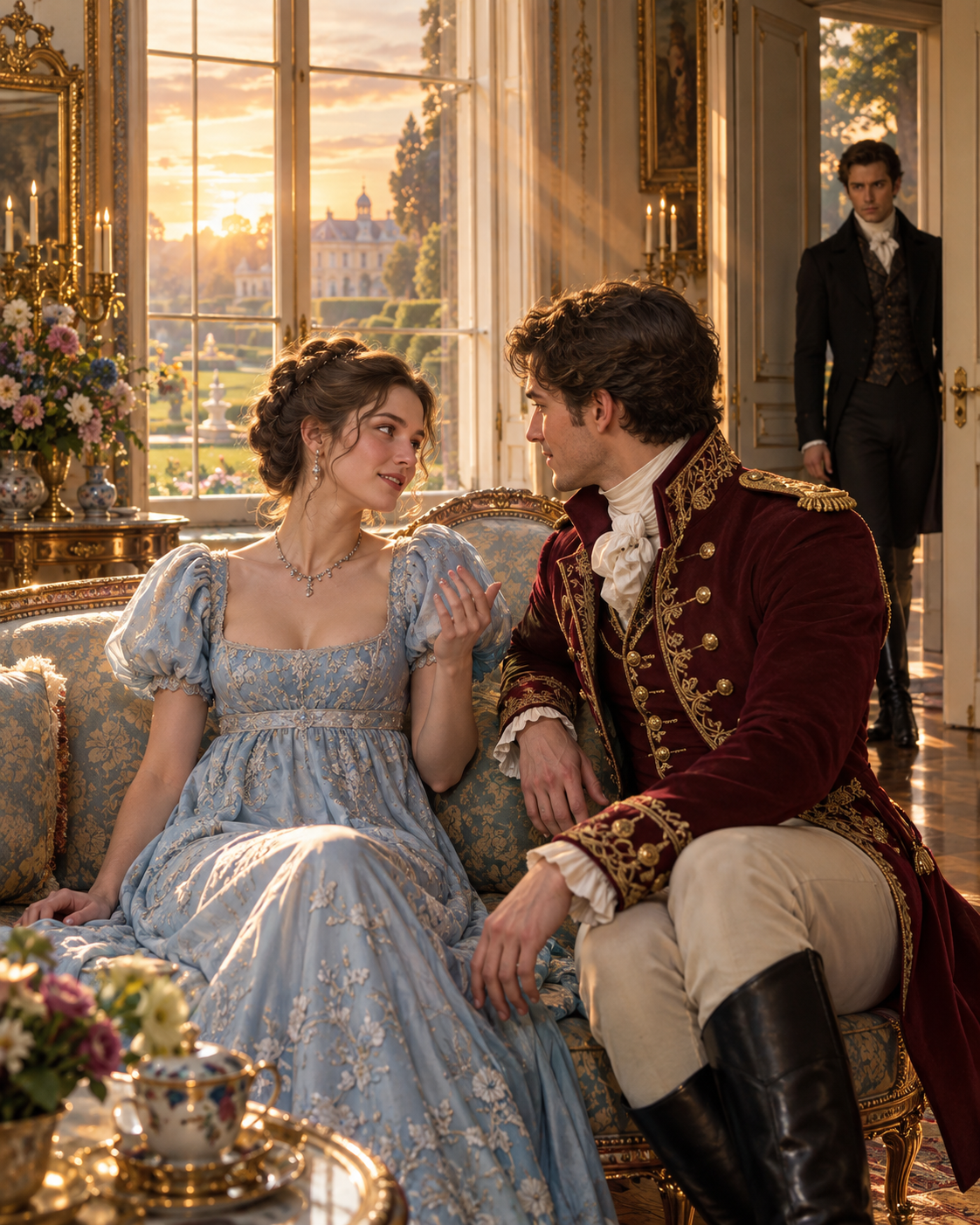
She translated when needed. She explained differences in terminology. She noticed an inconsistency in a French contract clause that three lawyers had overlooked.
By the time the first draft of a revised agreement was prepared, the tension that had filled the room earlier had almost disappeared.
The deal was not finished.
There were still disagreements.
There were still risks.
But now the two sides were arguing about real problems instead of manufactured ones.
When Prince Etienne finally stood to leave, he took Eleanor’s hand.
“Madame Ravensworth,” he said, “I hope we will have the opportunity to speak again.”
“I would be pleased.”
He looked toward Alistair.
“You have been hiding a formidable woman.”
Alistair lowered his eyes.
“No,” he said quietly.
“She was never hiding.”
Etienne paused.
Then he gave him a knowing look before leaving.
The door closed.
One by one, the advisers gathered their papers and departed.
Soon the drawing room was empty.
Only Eleanor and Alistair remained.
For the first time in their marriage, there was no audience between them.
No diplomats.
No servants.
No family expectations.
Just silence.
Alistair walked toward the fireplace.
“I owe you an apology.”
Eleanor remained near the table.
“You owe me several.”
He almost smiled.
Almost.
“I know.”
She studied him.
“I do not need you to praise me because you discovered I am useful.”
The words stopped him.
“I don’t think that is what I am doing.”
“Then what are you doing?”
Alistair looked at her.
Trying to find an answer was harder than he expected.
“I am realizing that I have been wrong about you.”
“That is a beginning.”
He nodded.
“I thought I understood what made a person valuable.”
“And now?”
“Now I think I confused visibility with importance.”
Eleanor’s expression softened, but she did not rescue him from the conversation.
Alistair continued.
“When we married, I looked at you and saw an arrangement. A responsibility. A name beside mine.”
He swallowed.
“I never asked what you wanted.”
“No.”
“I never asked what you knew.”
“No.”
“I never even asked what you enjoyed.”
A faint sadness crossed her face.
“No.”
He closed his eyes for a moment.
“I am ashamed of that.”
Eleanor’s voice remained calm.
“Being ashamed is not the same as changing.”
Alistair opened his eyes.
“I know.”
“Then change.”
It was the simplest thing she had said all evening.
And somehow, it frightened him more than any accusation could have.
Because changing meant more than apologizing.
It meant admitting that the version of himself he had trusted was incomplete.
It meant allowing Eleanor into places where he had never thought to make room for her.
It meant listening even when what she said challenged him.
“I want you beside me,” he said.
Eleanor was silent.
“Not as decoration. Not as an obligation. I want your judgment.”
She looked toward the papers on the table.
“Then you will have to accept that I may disagree with you.”
“I expect you to.”
“And that I may sometimes be right.”
Alistair finally smiled.
“I suspect tonight has already established that.”
For the first time, Eleanor smiled back.
It was small.
But it was real.
The next morning, Alistair did something that surprised everyone in his household.
He moved the morning meeting from his private office to the library.
Then he asked Eleanor to join it.
The first adviser arrived, saw her sitting beside Alistair, and stopped.
“Her Grace is attending?”
Alistair looked up.
“Yes.”
The adviser seemed uncertain.
“Is that necessary?”
Alistair’s voice remained calm.
“From now on, if Eleanor believes something is necessary, I will hear her reasoning before deciding.”
The man looked uncomfortable.
Eleanor said nothing.
She did not need to.
The change had begun.
It was not dramatic.
There was no grand announcement.
No public declaration.
Just a chair pulled closer to the table.
But over the following weeks, that chair became impossible to ignore.
Eleanor reviewed trade correspondence.
She helped prepare diplomatic dinners.
She translated letters.
She began attending selected meetings in Washington and New York.
At first, some people assumed she was there merely because Alistair wanted to display his newly discovered wife.
They soon stopped thinking that.
Eleanor asked questions nobody else asked.
She noticed when an ambassador’s written statement did not match his private remarks.
She understood when a disagreement was really about pride rather than money.
She could recognize the difference between a genuine objection and a negotiating tactic.
More importantly, she knew when to remain silent.
Alistair began to value that most of all.
One afternoon, after a difficult meeting at a government building in Washington, they walked down the steps together.
Snow had begun to fall.
“You were quiet in there,” Alistair said.
“I was listening.”
“To what?”
“The American delegate kept saying the contract was about cost.”
“And it wasn’t?”
“It was about control.”
Alistair stopped.
“How did you know?”
“He mentioned cost whenever someone questioned authority.”
Alistair stared at her.
“You hear things I don’t.”
“You listen for different things.”
He smiled.
“That may be the same thing.”
She looked at him.
“Not quite.”
They continued walking.
Their marriage changed slowly.
There were still awkward moments.
There were still arguments.
Sometimes Alistair became impatient.
Sometimes Eleanor withdrew when old habits resurfaced.
Once, after a particularly tense meeting, she left the room before he could finish speaking.
Alistair found her later in the library.
“I was wrong,” he said.
“You were.”
“I am trying.”
“I know.”
He stood by the door.
“Does that make a difference?”
She looked up from her book.
“It does.”
He smiled.
“Good.”
But the greatest change happened outside the conference rooms.
Alistair began asking Eleanor about things that had nothing to do with diplomacy.
He learned which books she loved.
He learned that she enjoyed walking through Central Park after rain.
He learned that she disliked crowded receptions but loved small dinners where people spoke honestly.
He learned that she had once dreamed of studying languages abroad.
When he asked why she had never told him, she answered simply.
“You never asked.”
The sentence stayed with him.
So he asked.
Again and again.
And slowly, Eleanor began answering.
Their conversations became longer.
Their silences became comfortable rather than empty.
One spring evening, months after the night of the failed negotiation, Alistair returned home from Washington later than expected.
He found Eleanor in the library, surrounded by books and correspondence.
She looked up.
“You’re late.”
“I know.”
“Was the meeting difficult?”
“Yes.”
“Did you listen?”
He laughed.
“I did.”
She raised an eyebrow.
“To whom?”
“To you.”
She smiled.
He walked over and placed a folder on the table.
“I brought something.”
Eleanor opened it.
Inside was a formal invitation to join an upcoming diplomatic delegation.
Her name was printed beside his.
She stared at it for several seconds.
“You are serious.”
“I am.”
“They may object.”
“They will.”
“You know that.”
“Yes.”
“Then why?”
Alistair looked at her.
“Because if I go without you, I will spend the entire journey wondering what you would have noticed.”
She laughed softly.
“That is not a very romantic answer.”
“It is the most honest one I have.”
She closed the folder.
Then she stood.
For a moment, neither spoke.
Alistair reached for her hand.
This time, Eleanor did not hesitate.
Their marriage had begun as an arrangement made by people who believed titles, family names, and obligations were enough to build a life.
They had been wrong.
A marriage could survive without affection.
It could even survive without understanding.
But it could not truly become a partnership until both people were willing to see each other as complete human beings rather than roles assigned by circumstance.
Alistair had once looked at Eleanor and seen a quiet wife.
Later, he saw an intelligent adviser.
Eventually, he understood that she was neither definition.
She was Eleanor.
A woman with her own ambitions, judgment, fears, humor, and dreams.
And she had been all of those things before he ever learned to notice.
The following summer, the revised American-European trade agreement was signed in Washington.
There were speeches.
Photographs.
Diplomats shaking hands.
Newspapers praised the negotiators.
Few knew how close the agreement had come to collapse months earlier.
Fewer still knew how one overlooked woman had found the flaw that changed everything.
After the ceremony, Eleanor stood on the steps of the building, looking out across the city.
Alistair joined her.
“You were right,” he said.
“About what?”
“The numbers.”
She smiled.
“I usually am.”
He laughed.
“That confidence is new.”
“No,” she said. “My confidence was always there.”
Alistair looked at her.
“I know.”
They stood together in the warm evening air.
For once, neither needed to fill the silence.
Then Eleanor reached for his hand.
Alistair held it.
Not because a title required it.
Not because society expected it.
Not because they had been married by arrangement.
But because, after everything they had learned, they had finally chosen each other.
And that was the part no contract could guarantee.
The lesson of their story was not that a man should suddenly discover that the quiet woman beside him is secretly brilliant.
It was something simpler.
People should not have to prove their worth before they deserve to be seen.
Eleanor had not become remarkable on the night of the negotiation.
She had always been remarkable.
Alistair had simply stopped looking through his assumptions long enough to notice.
And perhaps that was the most important change of all.
Because sometimes the person sitting quietly at the edge of the room is not waiting for permission to speak.
They are waiting to discover whether anyone in the room is worthy of hearing them.
Alistair finally was.
And from that night forward, he made certain Eleanor never again had to wait so long.
THE END.