The Duke of Dunore arrived at the grand ball with a woman who had been locked in her bedroom less than an hour earlier.
Lucian reached inside his coat and withdrew a second document bearing a broken red seal.
Rosamund stared at the familiar crest pressed into the wax.
It belonged to her father.
For six years, she had avoided looking at that crest whenever it appeared on the estate’s official papers. It reminded her of a man who had once promised that Vale House would always be her home, only to leave her at the mercy of people who treated her like an unwelcome stranger.
Now his seal rested in another man’s hand.
“What is that?” she asked.
Her stepmother, Lady Beatrice Vale, moved forward so quickly that her silk skirts brushed against the terrace doors.
“Your Grace, whatever that document contains, it is a private family matter.”
Lucian did not look at her.
“I believe Miss Vale has spent quite enough time being excluded from her own family matters.”
The night air carried the scent of damp roses from the garden below. Behind them, the orchestra began another waltz, its graceful melody floating through the open doorway.
Rosamund’s former suitor, Edmund Harcourt, stood against the stone balustrade.
His face had lost all its color.
“Edmund,” Rosamund said quietly, “you told me my father never signed the will.”
He swallowed.
“I should not have said that.”
“But you did.”
Beatrice caught his sleeve.
“Edmund, be sensible.”
Rosamund watched that small movement.
Six years ago, Edmund had refused to touch her hand when she begged him to believe in her innocence.
Yet now he allowed her stepmother to clutch his arm as though they shared a fear too terrible to face separately.
Lucian unfolded the document.
“This is a memorandum prepared by your father’s solicitor three weeks before his death,” he said. “It describes a new will that was to be executed in the presence of two witnesses.”
Rosamund took a step closer.
“And what did that will say?”
Lucian hesitated.
For the first time since meeting him, she saw uncertainty cross his face.
“It named you as the principal beneficiary of Vale House and its surrounding lands.”
The terrace seemed to fall silent.
Rosamund heard the scrape of Edmund’s shoe against the stone.
“That cannot be right,” Beatrice said.
Lucian turned a page.
“It also provided your stepmother with an annual allowance and secured marriage portions for her daughters.”
Rosamund looked toward Beatrice.
Even after everything, her father had made provisions for them.
He had not meant to cast anyone aside.
He had simply intended to place his estate in the hands of the daughter who understood it best.
“Where is the will?” Rosamund asked.
Lucian met her eyes.
“That is what I intend to discover.”
Beatrice’s expression changed.
The indignation disappeared, leaving something colder.
“You possess a memorandum, Your Grace. Not a signed will. There is a considerable difference.”
“Indeed,” Lucian replied.
“And until you produce something more substantial, I suggest you stop filling this girl’s head with fantasies.”
Rosamund turned toward her stepmother.
“Did my father intend to leave the estate to me?”
Beatrice pressed her lips together.
“Your father was very ill.”
“That was not my question.”
“You have always had an unfortunate talent for making yourself the center of every misfortune.”
Rosamund studied the woman before her.
For years, that voice had been enough to silence her.
It had made her lower her gaze at the dining table, retreat from visitors, and accept every humiliation as the price of keeping peace inside her father’s house.
Tonight, she found she could listen without obeying.
“Did he?” she repeated.
Beatrice looked away.
And Rosamund had her answer.
Edmund suddenly pushed himself away from the balustrade.
“I am leaving.”
Lucian stepped into his path.
“I would advise against it.”
“You have no authority to detain me.”
“No,” Lucian said evenly. “But there is a magistrate among the guests, and I imagine he would be interested in what you were saying about a missing will.”
Edmund glanced toward the ballroom.
His breathing grew uneven.
Rosamund watched his eyes move from Lucian to Beatrice.
Then he spoke.
“I never touched the will.”
Beatrice went rigid.
“Edmund.”
“I did what you asked, but I never touched the will.”
Rosamund felt a chill move along her arms.
“What did she ask you to do?”
Edmund stared at the floor.
“Answer her,” Lucian said.
A long silence followed.
Then Edmund raised his head.
“She asked me to deliver the letter.”
Rosamund remained perfectly still.
The forged letter had destroyed her engagement, ruined her reputation, and persuaded respectable society that she had been secretly corresponding with a married gentleman.
Its contents had been read aloud in a drawing room crowded with people who once called themselves her friends.
The supposed recipient, a neighboring landowner, had denied any involvement.
But the damage had already been done.
No one had cared whether Rosamund protested.
They had cared only that the letter appeared to bear her handwriting.
“You knew it was false,” she said.
Edmund closed his eyes.
“Yes.”
The word was scarcely audible.
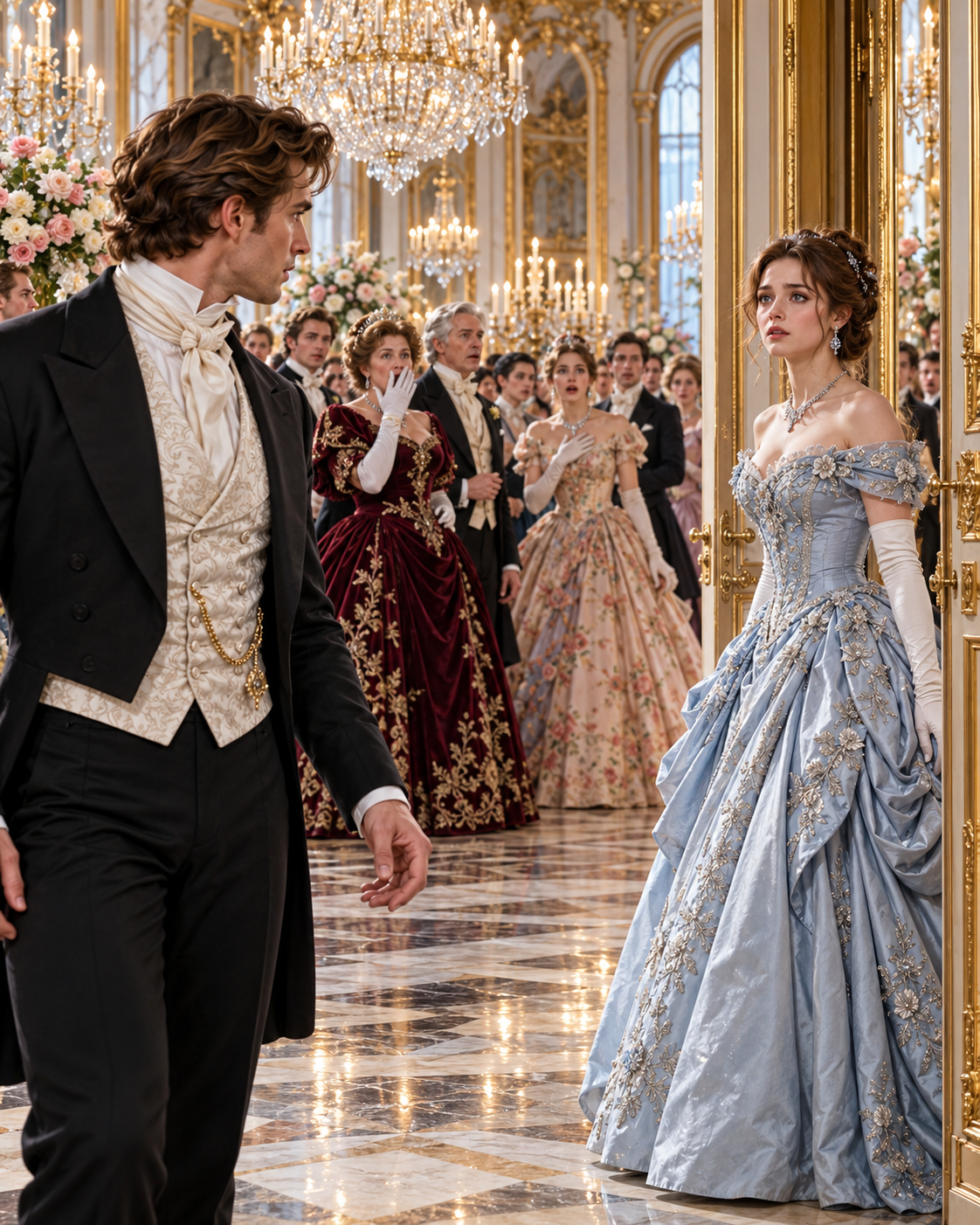
Rosamund looked at the man she had once loved.
She remembered waiting for him outside the drawing room on the afternoon of the accusation, certain that he would emerge and defend her.
Instead, he had walked past without speaking.
“What did she promise you?”
Edmund’s eyes flickered.
Beatrice took a sharp breath.
“Do not answer that.”
Rosamund turned toward her.
“You no longer decide which questions may be answered.”
Edmund’s shoulders sagged.
“Money,” he said. “Enough to settle my father’s debts.”
Rosamund absorbed the words without moving.
The Harcourt family had been struggling financially.
She had known that much.
She had even offered to postpone their marriage until Edmund’s affairs improved.
Instead, he had accepted money to ruin the woman who trusted him.
“And in exchange,” she said, “you destroyed my name.”
Edmund’s voice cracked.
“I thought the scandal would pass.”
“Then why did you not come back when it didn’t?”
He had no answer.
Rosamund looked at him for another moment.
There had been a time when she would have given anything to hear him explain himself.
Now his explanations seemed painfully small.
She turned away.
Behind her, Beatrice spoke sharply.
“You have no idea what your father intended, Rosamund. You were never present when the important decisions were made.”
Rosamund stopped.
A memory surfaced.
Her father sitting beside the library window, coughing into a handkerchief while she read aloud a report concerning the northern farms.
He had asked how she would manage the estate if the harvest failed.
She had explained her calculations.
He had listened until she finished.
Then he had smiled.
“You see what others overlook,” he had said.
Two days later, his solicitor had arrived.
And within a month, her father was dead.
Rosamund turned slowly.
“Who witnessed the will?”
Lucian consulted the memorandum.
“Mr. Nathaniel Price, your father’s solicitor, and Mr. Samuel Whitcomb, his estate steward.”
Rosamund frowned.
“Mr. Whitcomb died that winter.”
“Yes.”
“And Mr. Price?”
Lucian folded the paper.
“He disappeared from London shortly after your father’s death.”
Beatrice’s gloved hand closed around the balustrade.
For a moment, Rosamund thought the older woman might faint.
Instead, Beatrice straightened.
“You have no proof of anything.”
Lucian regarded her calmly.
“Not yet.”
The orchestra stopped inside the ballroom.
Someone was approaching the terrace.
Rosamund turned to see an elderly gentleman standing in the doorway, his silver hair neatly brushed and a thin walking stick resting against his palm.
He wore an unfashionable black coat.
His face was narrow and deeply lined.
But Rosamund recognized him.
“Mr. Price?”
The gentleman removed his hat.
“Miss Vale.”
For one extraordinary moment, no one moved.
Then Beatrice whispered, “Impossible.”
Mr. Price looked directly at her.
“I have been called many things, my lady. That is perhaps the kindest.”
Lucian stepped aside to allow him onto the terrace.
Rosamund looked between the two men.
“You found him.”
Lucian nodded.
“Three weeks ago.”
“Why didn’t you tell me?”
“Because I needed to know whether his evidence was genuine.”
The answer stung more than she expected.
Rosamund lowered her eyes to the document in Lucian’s hand.
“Did you believe I could not bear the truth?”
His expression softened.
“I feared giving you hope I could not justify.”
She looked up.
“Then you should have allowed me to decide whether the hope was worth having.”
Lucian bowed his head.
“You are right.”
It was a simple admission.
No excuses.
No wounded pride.
Rosamund had become so accustomed to powerful men defending their decisions that his response unsettled her more than an argument would have.
Mr. Price cleared his throat.
“Miss Vale, your father signed his will on the fourteenth of September. I witnessed it, as did Mr. Whitcomb.”
Rosamund gripped the edge of the stone balustrade.
“Then it existed.”
“It did.”
“What happened to it?”
The solicitor’s face tightened.
“That is a question I have been trying to answer for six years.”
Beatrice laughed softly.
“A convenient story from a man who abandoned his profession.”
Mr. Price turned toward her.
“I abandoned my office, Lady Beatrice, after two men entered my home and threatened my daughter’s life.”
The older woman’s laughter stopped.
“One of them carried a letter bearing Miss Vale’s forged signature,” he continued. “The other informed me that if I returned to the estate, my daughter would suffer the consequences.”
Rosamund’s breath caught.
“You knew I had been accused?”
“I learned of it two days later.”
“And you did nothing?”
The old man lowered his gaze.
“No.”
His fingers tightened around his walking stick.
“My daughter was twelve years old. Her mother had already died. I was afraid.”
Rosamund looked at the worn coat, the trembling hand, and the exhaustion beneath his eyes.
She could not pretend his silence had cost her nothing.
But neither could she dismiss the terror of a father who believed his child was in danger.
“Why have you returned?” she asked.
Mr. Price looked toward Lucian.
“Because His Grace found my daughter. She is grown now, married, and living safely in Bath. He made certain no one could use her against me again.”
Lucian said nothing.
Rosamund watched him from the corner of her eye.
For a man whose reputation rested upon privilege and rank, he seemed remarkably uninterested in receiving gratitude.
Mr. Price reached into his coat.
From a leather case, he withdrew a small folded paper.
“The original will was entrusted to your father’s steward after the signing. Mr. Whitcomb was to place it in the estate strongbox.”
“Then it must have been destroyed,” Beatrice said.
Mr. Price shook his head.
“Perhaps. But Mr. Whitcomb sent me a letter shortly before his death.”
He handed it to Rosamund.
The paper had yellowed along its folds.
She opened it carefully.
The message was brief.
The master anticipated interference. I have obeyed his final instruction. What belongs to his daughter remains where only she will think to look.
Rosamund read the words twice.
Only she would think to look.
Her father had known.
Somehow, he had anticipated that the will might be threatened.
She looked toward the distant windows of the estate.
The library.
The accounts.
The small things she had tended for years while everyone else ignored them.
Then she remembered a peculiar detail.
Her father’s desk had contained a shallow drawer that would never close properly.
She had repaired its brass handle herself.
But the drawer had always felt heavier than its size suggested.
“His desk,” she whispered.
Lucian watched her face.
“What about it?”
Rosamund folded the letter.
“We need to go to the library.”
Beatrice moved immediately.
“You will do no such thing.”
Rosamund looked at her.
“Then I suggest you call for someone to stop me.”
The older woman glanced toward the ballroom, where several guests had gathered near the doorway.
She said nothing.
Rosamund walked past her.
Lucian and Mr. Price followed.
Edmund remained on the terrace.
But as they reached the corridor, Rosamund heard hurried footsteps behind them.
“Rosamund, wait.”
Edmund caught up beside the staircase.
“There is something you should know.”
She kept walking.
“You have already told me enough.”
“No. Your father did not die as everyone believes.”
Rosamund stopped so abruptly that Lucian nearly collided with her.
The corridor seemed to narrow around them.
“What did you say?”
Edmund looked desperately toward Mr. Price.
“I heard Beatrice arguing with him the night before he collapsed.”
Rosamund felt her pulse beating beneath her collar.
“My father was ill.”
“Yes, but he had begun recovering. The physician said so.”
Beatrice appeared at the end of the corridor.
“Edmund!”
He turned.
For the first time that evening, he did not retreat from her voice.
“He told her he intended to change everything,” Edmund continued. “He said Rosamund would inherit whether she approved or not.”
Beatrice hurried toward them.
“That is a lie.”
Edmund swallowed.
“Perhaps. But I remember the medicine bottle.”
Rosamund stared at him.
“What bottle?”
“The one she ordered removed from his room the following morning.”
A heavy silence descended.
Mr. Price looked toward Lucian.
The Duke’s expression hardened.
Beatrice stopped several feet away.
Her face had gone very still.
“You would accuse me of murdering my husband because a frightened young man wishes to save himself?”
Edmund opened his mouth, but Rosamund spoke first.
“No one has accused you of murder.”
She looked directly at her stepmother.
“Why was that the first word you chose?”
Beatrice’s lips parted.
For several seconds, she seemed unable to answer.
Then she gathered her skirts and stepped back.
“I will not submit to this humiliation.”
She turned and walked away.
Lucian watched her disappear.
“Someone should ensure she does not leave the estate.”
Mr. Price nodded and went to find the magistrate.
Rosamund stood motionless beside the staircase.
The memory of her father’s final days pressed against her.
His weakened voice.
The shuttered windows.
The physician being dismissed earlier than expected.
Beatrice insisting that Rosamund remain outside the sickroom because her presence exhausted him.
And the morning when a servant had carried away a tray containing an untouched cup of medicine.
Rosamund closed her eyes.
She had been seventeen when her father first taught her to balance the household books.
He had never raised his voice when she made mistakes.
He simply pushed the ledger back across the desk and told her to look again.
Now she wondered how many things she had failed to see.
A light touch settled against her elbow.
Lucian.
“Rosamund.”
She opened her eyes.
“Do not tell me to be calm.”
“I wasn’t going to.”
“Then what?”
He looked toward the library doors at the far end of the corridor.
“I was going to ask whether you wished to continue.”
She drew a slow breath.
“Yes.”
They entered the library together.
The room smelled of old leather, beeswax, and the ashes of a fire that had burned low.
Moonlight lay across the carpet.
On the far wall hung her father’s portrait.
Rosamund had avoided looking at it for years.
Tonight, she walked directly beneath it.
The desk stood by the window, exactly where it had always been.
She knelt beside the lowest drawer.
Lucian brought a candle closer.
“The handle?” he asked.
Rosamund nodded.
“I repaired it myself. But I never understood why the drawer was so heavy.”
She pulled.
The drawer slid open, revealing old account books and a faded ribbon.
Rosamund removed them.
At the back lay a narrow strip of wood.
She pressed it.
Nothing happened.
Then she remembered her father’s habit of tapping twice on the desk before opening it.
She pressed the wood again, this time near the left corner.
A faint click sounded.
The bottom of the drawer lifted.
Beneath it lay a small iron box.
For several seconds, Rosamund could only stare.
Her father’s initials were engraved upon its lid.
Lucian set down the candle.
“Do you have a key?”
Rosamund shook her head.
Then she noticed a small inscription beneath the lock.
For the hand that knows the house.
She touched the words.
Her father had often said that a great estate was not built by the people who inherited it, but by those who understood every part of it.
Suddenly, she remembered the little brass key she carried on a chain beneath her dress.
It opened the old inventory cabinet in the estate office.
She had worn it for years.
Her father had given it to her when she first began managing the accounts.
She removed the chain.
The key slipped into the lock.
It turned.
Inside the box lay a sealed parchment, several letters, and a miniature portrait of Rosamund’s mother.
Rosamund picked up the portrait first.
Her mother had died when she was very young.
The painted woman had the same dark eyes, the same slight curve to her mouth.
Rosamund brushed a finger across the frame.
Then she set it carefully aside.
Lucian lifted the parchment.
The seal remained intact.
Her father’s signature was visible through the narrow opening where the outer wrapping had loosened.
Rosamund looked at the document.
After six years of living as a guest in her own home, she could scarcely bring herself to touch it.
“Open it,” she whispered.
Lucian shook his head.
“It belongs to you.”
She took the parchment.
Her hands trembled as she broke the seal.
The will was written in her father’s precise handwriting, with the formal clauses completed by his solicitor.
The names of the witnesses appeared beneath his signature.
And there, plainly stated, was her inheritance.
Vale House.
The farms.
The woodland.
The tenant cottages.
The income from the eastern mills.
All entrusted to Rosamund Vale.
Her stepmother would receive the allowance her father had intended.
Nothing more.
Rosamund sank slowly into the desk chair.
Lucian stood beside her, silent.
She had imagined this moment for years without realizing she was imagining it.
Not the discovery of a will, but the simple possibility of being believed.
She looked at the signature.
Her father’s hand had trembled slightly on the final letter.
A tear fell onto the parchment.
She wiped it away before it could spread.
Beneath the will lay another envelope.
Her name was written across it.
She opened it.
My dearest Rosamund,
If you are reading this, then I have failed to protect you as I hoped.
There are matters in this household that I have understood too late. I cannot know what will follow my death, but I know the strength of the daughter I leave behind.
You have never needed permission to be capable. Nor should you ever mistake another person’s cruelty for proof of your own unworthiness.
Keep the house if it brings you happiness. Change it if it does not. But never spend your life trying to earn a place that already belongs to you.
With all the love a father can leave behind.
Rosamund pressed the letter to her chest.
For a long moment, the only sound was the soft movement of the candle flame.
Lucian moved toward the window, giving her privacy without leaving the room.
She looked at his reflection in the glass.
“Why did you involve yourself in this?”
He turned.
“I discovered irregularities in the estate accounts when your stepmother approached me about purchasing the northern woodland.”
Rosamund frowned.
“She wanted to sell the woodland?”
“Yes. Your letters to the creditors suggested the estate was recovering, yet she claimed it was nearly bankrupt.”
“I never authorized a sale.”
“I suspected as much.”
“And so you began investigating?”
Lucian hesitated.
“At first.”
Rosamund waited.
He looked toward the account books scattered across her father’s desk.
“Then I discovered that every sensible decision made here bore your handwriting, while every public acknowledgment went to someone else.”
A faint smile touched his mouth.
“I became curious about the woman who could manage an estate better than most of the gentlemen I know, yet was supposedly too unwell to attend a ball.”
Rosamund lowered her eyes.
“And what did you discover?”
“Someone considerably more formidable than I expected.”
She almost smiled.
Then footsteps sounded outside.
The library doors opened.
Mr. Price entered with the magistrate, Sir Alistair Fenwick, and two household servants.
Behind them stood Beatrice.
Her face was pale, but her posture remained defiant.
“This is an outrage,” she announced.
Sir Alistair surveyed the desk.
“I understand a missing document has been recovered.”
Rosamund stood.
“Yes, sir.”
She handed him the will.
He examined the signatures carefully.
Mr. Price confirmed his own.
The magistrate asked several questions concerning the date, the witnesses, and the circumstances in which the document had been concealed.
Rosamund answered each one.
When he finished, he looked toward Beatrice.
“This document requires formal verification, but its contents and the solicitor’s testimony raise grave concerns about the administration of this estate.”
Beatrice folded her arms.
“My husband was confused when he signed it.”
Mr. Price stepped forward.
“He was perfectly lucid.”
“You were paid to say so.”
“Then I imagine the court will examine my evidence as carefully as yours.”
Beatrice’s eyes flashed.
For a moment, Rosamund saw the woman who had ruled Vale House through fear and humiliation.
But something had changed.
There were witnesses now.
Documents.
Questions she could not dismiss.
And Rosamund no longer stood alone.
Sir Alistair turned toward Edmund, who had followed them into the room.
“Mr. Harcourt, I understand you have information concerning a forged letter.”
Edmund looked at Beatrice.
She stared back at him.
The silence lasted several uncomfortable seconds.
Then he spoke.
“I helped circulate it.”
Beatrice closed her eyes.
Edmund continued, his voice shaking.
“Lady Beatrice provided the wording. I arranged for a copy to be placed among Miss Vale’s correspondence and ensured it would be discovered.”
Rosamund looked down at her father’s desk.
So much suffering had begun with something so deliberate.
A carefully written lie.
A frightened man.
A woman willing to destroy a young girl’s future to secure her own.
Sir Alistair asked Edmund to provide a formal statement.
Then he turned toward Beatrice.
“Lady Vale, you will remain available for further questioning. There is also the matter of your late husband’s final illness.”
Beatrice’s expression changed.
“His death had nothing to do with this.”
“That remains to be established.”
Two servants escorted her toward the door.
She stopped beside Rosamund.
For an instant, her expression softened into something almost pleading.
“I did what I had to do.”
Rosamund looked at her.
“No,” she said quietly. “You did what you believed you could get away with.”
Beatrice flinched.
“I had daughters to protect.”
“So did my father.”
The older woman said nothing more.
She left the library without looking back.
In the weeks that followed, the investigation moved beyond Vale House.
The recovered will was authenticated, and the estate’s financial records revealed years of concealed withdrawals and attempted transfers.
Edmund’s testimony established the conspiracy behind the forged letter.
Beatrice’s dealings with the estate were placed before the court, and her control over its finances came to an end.
The inquiry into Lord Vale’s death uncovered suspicious changes to his medication, though the evidence was insufficient to establish exactly what had caused his final decline.
Rosamund did not receive every answer she wanted.
But she learned enough to understand that her father had tried to protect her, and that the people who silenced her had never possessed the moral authority they claimed.
By early spring, the court had recognized her father’s final will.
Rosamund became the lawful mistress of Vale House.
On the morning the decision arrived, she stood in the library with the official papers spread across the desk.
Outside, sunlight touched the bare branches of the old elm trees.
Mrs. Bell, the housekeeper who had quietly defended Rosamund for years, entered carrying tea.
“Shall I have the blue drawing room prepared for you, miss?”
Rosamund looked up.
“Why?”
Mrs. Bell smiled.
“Because you may now sit wherever you please.”
Rosamund laughed.
It was a small sound, almost unfamiliar.
Then she rose and crossed to the window.
The tenants’ cottages were visible beyond the eastern meadow.
She thought of the people who had depended upon her decisions without ever knowing who made them.
“There are repairs overdue at the cottages,” she said.
Mrs. Bell nodded.
“And the west schoolroom needs a new roof.”
“Indeed, miss.”
Rosamund turned.
“Then let us begin there.”
Over the following months, Vale House changed.
The neglected cottages were repaired.
The estate workers received written agreements protecting their wages.
A small school was established for the children of tenants who had never been given the opportunity to read.
Rosamund introduced proper records, transparent accounts, and a system through which complaints could reach her without passing through the household’s senior staff.
Some neighboring gentlemen regarded her reforms with amusement.
Others called them unnecessary.
But the estate prospered.
And gradually, those same gentlemen began requesting her advice.
Lucian visited often.
At first, he arrived under the pretense of discussing land management.
Then he began bringing books he thought she might enjoy.
Occasionally, he brought nothing at all.
On one warm afternoon, Rosamund found him in the garden examining the roses her mother had planted.
“You have been staring at that bush for several minutes,” she said.
Lucian straightened.
“I was considering whether it required pruning.”
“You know nothing about roses.”
“Almost nothing.”
“Then perhaps you should leave them to someone who does.”
He smiled.
“I was hoping you might teach me.”
Rosamund folded her hands behind her back.
“That would depend upon the patience of the pupil.”
“I have been told I can be remarkably persistent.”
“By whom?”
“Several people who find it an unfortunate quality.”
She laughed.
He watched her with an expression she could not quite read.
Then he grew serious.
“Rosamund, there is something I have wished to ask you.”
She glanced toward him.
His hand rested against the garden gate.
For a man who could address a room full of noblemen without hesitation, he seemed unexpectedly uncertain.
“I know what people will say,” he continued. “They will insist that your restoration was made possible by my intervention.”
Rosamund waited.
“And they will be wrong.”
He looked directly at her.
“You maintained this estate long before I arrived. You endured what should never have been required of you. I merely helped open a door that others had locked.”
A breeze stirred the leaves overhead.
Lucian took a breath.
“I do not wish to be another person who claims the right to decide your future.”
He reached into his coat.
This time, there were no legal papers.
Only a small velvet box.
Rosamund stared at it.
“Lucian.”
He opened it.
Inside lay a simple ring set with a pale sapphire.
“I love you,” he said. “Not because you survived what was done to you, and not because you proved anyone wrong. I love the woman who remembers the names of her tenants, argues over figures until midnight, and refuses to allow me near her roses.”
Her eyes brightened.
He smiled faintly.
“I would be honored to share a life with her, if she wishes it.”
Rosamund looked at the ring.
For years, marriage had seemed like something that might either rescue her or condemn her.
She had once believed Edmund’s affection would protect her from cruelty.
Then she had learned how easily affection without courage could disappear.
But Lucian had never asked her to become smaller so that he might appear greater.
He had listened when she challenged him.
He had admitted when he was wrong.
And he had never treated her intelligence as something to be tolerated.
She stepped closer.
“If I accept, Vale House remains mine.”
“Naturally.”
“And I will continue managing it.”
“I would be disappointed if you did not.”
“And when we disagree?”
Lucian’s smile widened.
“I suspect we shall both survive.”
Rosamund held his gaze.
Then she offered him her hand.
“Yes.”
He slipped the ring onto her finger.
For a moment, neither spoke.
Then Rosamund leaned forward and kissed him.
The roses stirred in the breeze, and somewhere beyond the garden wall, the church bells began to ring.
Their wedding took place the following autumn.
It was not the grandest ceremony society had ever witnessed, but it was remembered for years.
The tenants filled the churchyard.
Mrs. Bell wept openly.
Mr. Price attended with his daughter, who embraced Rosamund afterward and thanked her for allowing her father the chance to set right what he could.
Rosamund wore a gown of ivory silk, with her mother’s miniature portrait tucked into a small pocket near her heart.
When she reached the altar, Lucian was waiting.
He did not look at the jewels or the gown.
He looked at her.
And she understood, with quiet certainty, that she was not walking toward a man who would give her a place in the world.
She had already reclaimed that place herself.
She was walking toward someone who wanted to stand beside her in it.
Years later, when young women came to Vale House seeking employment, education, or simply a chance to begin again, Rosamund often welcomed them into the library.
She taught some to manage accounts.
She helped others find apprenticeships.
And when one timid girl confessed that she was frightened of making mistakes, Rosamund opened an old ledger and placed it upon the desk.
The first pages were filled with corrections in a young girl’s handwriting.
Her own.
“My father taught me something when I was younger,” she said.
The girl looked up.
“What was it, Your Grace?”
Rosamund smiled.
“That an error is something you correct. It is not something that defines you.”
She closed the ledger gently.
“And that the people who insist you are incapable are not always the people qualified to judge.”
Outside the window, the estate stretched beneath the afternoon sun.
The house that had once been her prison had become a place where others could find opportunity.
Rosamund glanced toward the portrait of her father above the fireplace.
For the first time in many years, looking at it brought more gratitude than sorrow.
She had not recovered the six years stolen from her.
No court judgment could return them.
No marriage, title, or public apology could erase the nights she had spent wondering whether her innocence would ever matter.
But those years had not taken away her ability to choose what came next.
And she had chosen to build something better.
That evening, Lucian found her in the library, still surrounded by papers.
“You know,” he said from the doorway, “most people leave their work behind when the sun sets.”
Rosamund looked up.
“Most people have the good fortune not to be interrupted by visiting dukes.”
“One duke in particular, I hope.”
“The most persistent one in England.”
He crossed the room and offered his hand.
“There is music in the drawing room.”
She glanced at the unfinished accounts.
“These figures will not balance themselves.”
“No,” he agreed. “But they will remain here for another hour.”
Rosamund considered him.
Then she set down her pen.
“One dance.”
Lucian bowed.
“I shall endeavor to deserve another.”
She placed her hand in his.
As they entered the drawing room, the first notes of a waltz rose gently into the air.
There were no watching crowds, no whispered accusations, and no locked doors waiting upstairs.
Only lamplight, familiar music, and the steady hand of a man who had learned that loving her meant never standing in the way of who she wished to become.
Rosamund smiled as they began to dance.
Once, she had entered a ballroom determined to prove that she belonged.
Now she no longer needed to prove it.
She had discovered something far more enduring than society’s approval.
A person’s worth is not created by the praise of others, nor destroyed by their lies.
It lives in the choices made when no one is watching, in the courage to speak when silence would be easier, and in the refusal to let cruelty decide what kind of person one becomes.
And as the music carried them across the floor, Rosamund understood the quietest victory of all.
She had not simply reclaimed her father’s house.
She had made it a home worth inheriting.
THE END.