The Duke of Ashbourne had every reason to send Clara Bennett’s father to the gallows. Instead, he summoned his daughter and offered her his hand in marriage.
Arthur Pendleton stood motionless beside his desk, staring at the letter in Clara Bennett’s trembling hands.
For the first time that evening, the Duke of Ashbourne looked like a man who had lost control of his own house.
Clara watched the color drain from his face.
“Tell me why my mother believed you were responsible for her death.”
Arthur reached for the back of his chair but did not sit.
“Because she was told something that was not true.”
“By whom?”
He looked toward the portrait above the fireplace.
“My father.”
The answer left Clara strangely cold.
She had come expecting to discover the extent of her father’s disgrace. Instead, she was standing in a stranger’s study, holding a letter that threatened to overturn everything she remembered about her childhood.
Arthur approached slowly.
“Your mother died twelve years ago. I was twenty-three. My father was still the Duke, and I had only recently returned from the Continent.”
Clara tightened her grip on the paper.
“Then explain the letter.”
Arthur opened a drawer and removed a small leather journal.
“My mother kept this hidden until three weeks ago. She gave it to me when she became too weak to leave her bed.”
He placed it beside the letter.
Inside were dates, names, and payments recorded in the late Duchess’s careful handwriting.
One name appeared repeatedly.
Sir Edmund Bennett.
Clara’s father.
Another appeared beside several large sums.
Lord Frederick Vale.
Arthur’s uncle.
Clara recognized the name immediately. Lord Vale was a respected gentleman who had visited her family regularly when she was young, always bringing sweets and speaking kindly to her mother.
“Why is he here?”
Arthur turned to a page marked with a faded ribbon.
“Because twelve years ago, my father and Lord Vale were involved in a financial arrangement that should never have existed.”
He explained that the former Duke had secretly invested money belonging to several widows and minor heirs, promising extraordinary returns through overseas shipping ventures.
When the investments collapsed, the money disappeared.
Rather than admit the losses, the men altered accounts and transferred responsibility to others.
One of those people was Clara’s mother.
Clara shook her head.
“My mother knew nothing about investments.”
“She knew enough to recognize forged signatures.”
Arthur’s voice became quieter.
“She discovered that her name had been used to authorize transfers. She threatened to expose them.”
Clara looked again at the letter.
“And then she died.”
Arthur nodded.
“Three days after visiting Ashbourne.”
A log shifted in the fireplace.
Clara remembered her mother’s final winter: the closed bedroom curtains, the physician arriving after midnight, the bitter smell of medicine.
She remembered her father telling everyone that grief had weakened her mother’s heart.
She had never questioned him.
“Was she murdered?”
Arthur did not answer immediately.
“I don’t know.”
Clara closed the journal.
“Then why did she write that you were responsible?”
“My father told her I had delivered the documents that implicated her. He claimed I knew about the scheme and intended to protect him.”
“Did you?”
“No.”
His answer was immediate.
“I was abroad when the documents were prepared. By the time I learned what had happened, your mother was already dead.”
Clara searched his face.
“And you did nothing?”
Arthur lowered his eyes.
“I confronted my father. He denied everything. My mother begged me not to abandon the matter, but I had no proof.”
“You had twelve years.”
The accusation struck harder than she intended.
Arthur accepted it without protest.
“Yes.”
Outside, the rain continued falling.
Clara set the journal down.
“Then I have no reason to trust you.”
“No,” Arthur replied. “You don’t.”
He stepped away from the desk, leaving the papers within her reach.
“But you have every reason to discover the truth.”
Before Clara could answer, footsteps sounded in the corridor.
The door opened.
An elderly woman stood between two attendants, one hand gripping the frame.
Her silver hair was pinned beneath a lace cap, and her thin shoulders disappeared inside a dark velvet shawl.
Arthur crossed the room immediately.
“Mother, you should be resting.”
The Dowager Duchess ignored him.
Her eyes settled on Clara.
For a moment, the old woman’s expression seemed to soften with recognition.
“Margaret’s daughter,” she whispered.
Clara stood very still.
The Duchess extended a trembling hand.
“Come closer, child.”
Clara approached.
The old woman touched her cheek with cold fingers.
“You have her eyes.”
Something in the tenderness of those words nearly broke Clara’s composure.
“Your Grace, did you know my mother?”
The Duchess smiled sadly.
“She saved my life once. And I failed to save hers.”
Arthur guided his mother toward a chair.
“Please, Mother. Not tonight.”
“Tonight is precisely when she must hear it.”
The Duchess looked toward the closed door.
“Frederick knows she is here.”
Arthur stiffened.
“How?”
“He has people in this house.”
Clara remembered the unsigned warning and the servants who had avoided her gaze.
The Duchess reached beneath her shawl and withdrew a small brass key.
“Margaret gave me this before she died. I was too frightened to use it.”
She pressed it into Clara’s palm.
“Your mother left something behind.”
“Where?”
“At the old chapel on the eastern estate. Beneath the memorial stone.”
Arthur knelt beside his mother.
“Why have you never told me?”
“Because your father threatened to have you accused of the same crimes if I spoke.”
Her breathing became shallow.
“And because I was a coward.”
Clara closed her fingers around the key.
The Duchess caught her wrist.
“Do not trust Frederick. And do not trust the man who delivered tonight’s letter.”
Arthur rose sharply.
“Mother?”
But the old woman had begun coughing.
One attendant hurried forward while the other called for the physician.
Arthur lifted his mother carefully.
Clara stepped aside, the brass key cutting into her palm.
As the Duchess was carried from the room, she turned her head once.
“Margaret wanted you to be free.”
Then she was gone.
Arthur stood beside the open door, listening to the retreating footsteps.
Clara looked at the marriage agreement lying on the desk.
“Your mother did not arrange this marriage because she wanted grandchildren or a proper household.”
“No.”
“She wanted you to protect me.”
Arthur nodded.
“And perhaps she believed marriage would give me the legal standing and influence to do so.”
Clara studied him.
“Then you should have told me.”
“I intended to.”
“When? After I signed?”
Arthur had no answer.
She placed the agreement inside the fireplace.
The paper caught immediately.
Arthur watched it burn.
“I will not marry a man who believes protection requires deception,” Clara said.
Then she turned toward the door.
“Miss Bennett.”
She stopped.
Arthur’s voice was quiet.
“Your father is missing. My uncle may be involved. Until we understand what is happening, you are not safe.”
Clara looked back.
“Then help me discover the truth. But do not mistake that for permission to decide my future.”
A faint expression crossed his face.
Not amusement.
Respect.
“As you wish.”
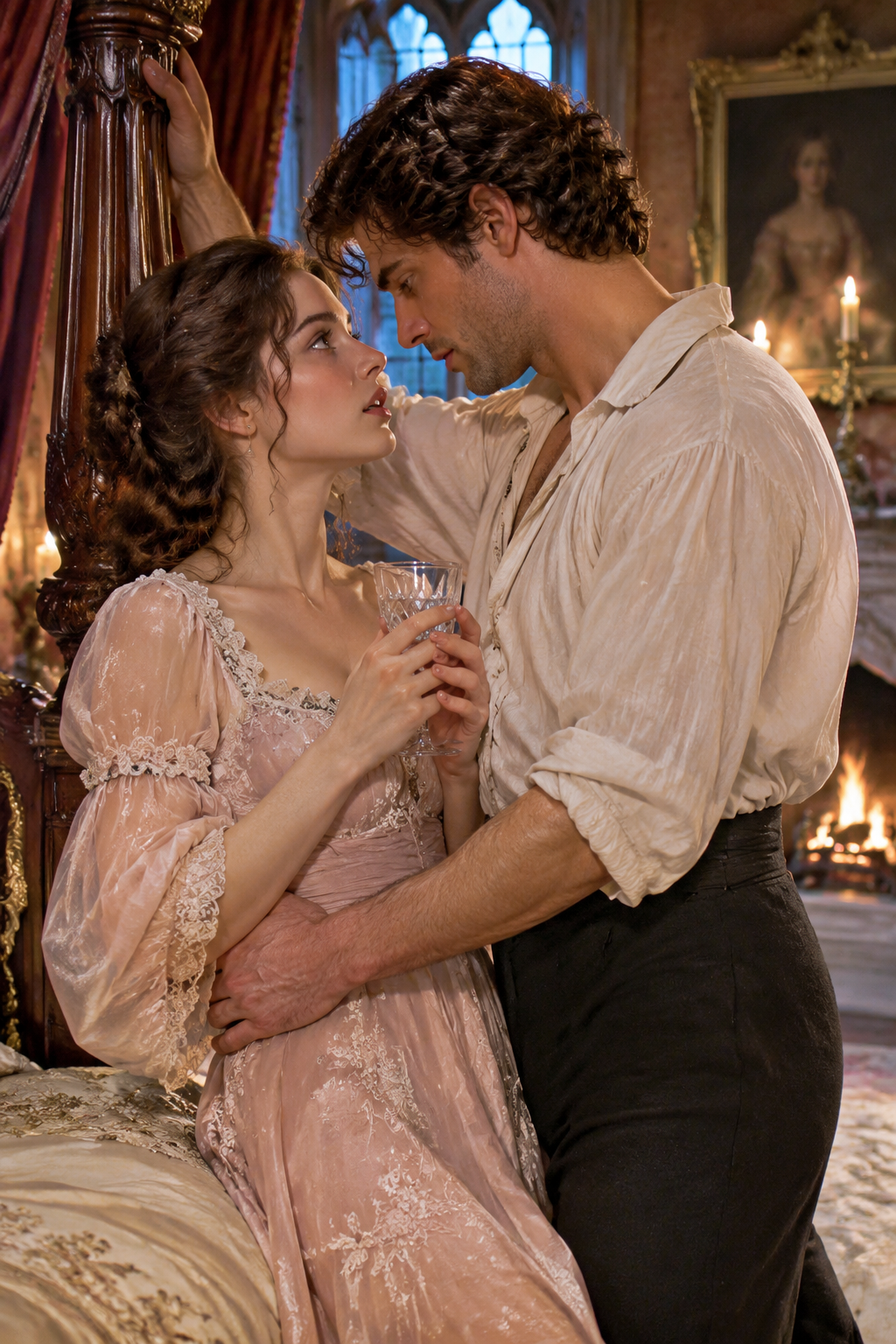
By morning, Ashbourne House had become a place of whispered conversations and locked doors.
Clara had slept little.
At breakfast, Arthur informed her that her father’s carriage had been discovered abandoned near the river.
There was blood on the seat.
No body had been found.
Clara set down her teacup.
“Who found it?”
“One of my men.”
“Then I want to see it.”
Arthur hesitated.
She raised an eyebrow.
He summoned the carriage.
An hour later, they stood inside a narrow stable yard where the damaged vehicle had been brought.
Clara examined the dark stain on the upholstery.
Something was wrong.
The blood had soaked into the fabric, but the surrounding cushions remained almost undisturbed.
Her father was a large man. If he had been attacked inside the carriage, there should have been signs of a struggle.
She bent closer.
A small piece of blue thread clung to a splinter beneath the seat.
Clara recognized the material.
Her father had worn a blue wool coat at breakfast.
But the thread was caught beneath a newly loosened wooden panel.
She pulled it aside.
Inside lay a folded receipt.
Arthur leaned forward.
The receipt bore the name of a lodging house near the docks.
It was dated that morning.
Clara looked up.
“My father wasn’t taken.”
Arthur examined the document.
“He arranged this.”
“Or someone arranged it for him.”
They visited the lodging house before noon.
The proprietor, a narrow-faced woman with flour on her sleeves, insisted she had seen no gentleman matching Sir Edmund’s description.
Clara noticed a fresh scratch on the woman’s wrist.
She also noticed that the woman kept glancing toward the staircase.
Arthur placed a sovereign on the counter.
“We require only the truth.”
The woman pushed it back.
“I have children, Your Grace.”
Clara stepped forward.
“So did my mother.”
The woman’s expression changed.
She looked toward the street, then leaned closer.
“Room seven. But he’s gone.”
“Who?”
“A gentleman with gray whiskers. He arrived with another man last night.”
“Lord Vale?” Arthur asked.
The woman shook her head.
“No. The other gentleman called himself Mr. Henshaw.”
Arthur went still.
Clara noticed.
“Who is Henshaw?”
“My uncle’s solicitor.”
The woman reached beneath the counter and produced a small parcel.
“The gentleman left this behind. I was told to burn it.”
Inside was a silver locket.
Clara recognized it instantly.
It had belonged to her mother.
She opened it.
A tiny portrait of Margaret Bennett rested beneath the glass.
Behind the portrait was a folded strip of paper.
Four words had been written in faded ink.
The eastern chapel remembers.
Clara looked at Arthur.
“We leave now.”
The eastern estate lay several hours beyond London, surrounded by woodland and fields silvered by autumn rain.
They arrived shortly before sunset.
The chapel stood on a low hill, its roof sagging beneath years of neglect.
Inside, dust covered the pews.
A cracked stained-glass window cast pale colors across the stone floor.
Clara walked toward the memorial plaques.
Her mother’s name appeared on a small brass plate near the altar.
Margaret Eleanor Bennett.
Beloved wife and mother.
Clara touched the inscription.
Arthur remained several steps behind her.
For a long time, neither spoke.
Then Clara noticed that one corner of the stone beneath the plaque was slightly raised.
She knelt.
The brass key fitted into a narrow opening concealed along the edge.
A mechanism clicked.
Together, they lifted the stone.
Beneath it lay a metal box wrapped in oilcloth.
Clara opened it.
Inside were account books, several letters, and a sealed statement bearing her mother’s signature.
She unfolded the statement with shaking hands.
The words confirmed much of what Arthur had told her.
The former Duke and Lord Vale had diverted enormous sums from charitable trusts and private estates.
Sir Edmund Bennett had assisted them in exchange for payments.
But the final pages contained something worse.
Margaret had discovered that the men were preparing to accuse innocent employees of theft.
When she threatened to expose them, Lord Vale arranged for her medicine to be replaced with a preparation that worsened her illness.
The physician who supplied it had been paid through a false account.
Clara covered her mouth.
Her mother’s death had not been an unfortunate illness.
It had been deliberate.
Arthur read the statement beside her.
His jaw tightened.
Then Clara reached the final paragraph.
Margaret had written that Arthur was not involved.
She had discovered his innocence shortly before her death, but had been unable to contact him.
The accusation in her earlier letter had been written while she still believed the former Duke’s lies.
Clara lowered the paper.
For twelve years, she had remembered her mother as a fragile woman defeated by sickness.
Now she understood that Margaret had spent her final days gathering evidence against powerful men.
“She knew they might kill her,” Clara whispered.
Arthur looked at the documents.
“And she still refused to remain silent.”
A sound came from outside.
Gravel shifted beneath a carriage wheel.
Arthur extinguished the lantern.
Through the cracked window, Clara saw three men approaching the chapel.
One carried a pistol.
Another held a lantern.
The third wore a familiar blue coat.
Her father.
Clara’s breath caught.
Arthur drew her behind a stone pillar.
The chapel door opened.
Lord Frederick Vale entered first.
He was a handsome older gentleman with silver hair and the relaxed manner of a man accustomed to being welcomed everywhere.
Sir Edmund followed him.
His face was pale.
“Arthur,” Lord Vale called pleasantly. “I know you’re here.”
Arthur stepped into view.
Clara remained concealed.
“Uncle.”
Lord Vale smiled.
“I had hoped we might settle this privately.”
“You attempted to have me murdered.”
“A regrettable misunderstanding.”
“And Margaret Bennett?”
The smile disappeared.
“That woman was determined to destroy families over matters she scarcely understood.”
Clara stepped forward.
“She understood enough to leave evidence.”
Her father turned sharply.
“Clara!”
She looked at him.
For one terrible moment, she remembered being six years old, sitting on his shoulders during a summer fair.
Then she remembered the blood in the carriage, the unpaid debts, and her mother’s final winter.
“Did you know?” she asked.
Sir Edmund opened his mouth.
Nothing came.
“Did you know they poisoned her?”
Lord Vale answered instead.
“Your father was a weak man, Miss Bennett. Weak men often find courage inconvenient.”
Sir Edmund lowered his eyes.
Clara felt something inside her settle into a terrible calm.
“You knew.”
Her father whispered her name.
She stepped away from him.
Lord Vale extended his hand.
“The documents, Arthur.”
Arthur did not move.
The armed man approached.
Lord Vale sighed.
“I have no desire for unnecessary unpleasantness.”
“Then dismiss your men.”
“Give me the box.”
Arthur glanced toward Clara.
She understood the warning in his eyes.
They were outnumbered.
Slowly, she lifted the metal box.
Lord Vale smiled.
“A sensible young woman.”
Clara stepped forward.
Then she dropped it.
The box struck the stone floor, scattering papers across the chapel.
The armed man instinctively looked down.
Arthur seized his wrist.
The pistol discharged into the ceiling.
Plaster fell.
Clara stumbled backward as the second man rushed forward.
Arthur struck him with the lantern, sending it crashing against a pew.
Flames caught the dry wood.
Lord Vale grabbed Clara by the arm.
“Enough!”
He dragged her toward the doorway.
Sir Edmund stood frozen.
“Father!” Clara cried.
For the first time, Sir Edmund moved.
He caught Lord Vale’s sleeve.
“Let her go.”
Lord Vale struck him across the face.
Sir Edmund fell against the altar.
Arthur wrestled the pistol away from the first man.
Smoke filled the chapel.
Clara drove her heel against Lord Vale’s foot and tore free.
She ran toward the scattered documents.
Arthur shouted for her to leave them.
But she had already seen the most important pages lying near the flames.
She snatched them from the floor.
A burning beam fell across the aisle.
Arthur reached her just as the roof began to crack.
They escaped through the side entrance.
Outside, several mounted men were racing toward the chapel.
For one terrible second, Clara believed Lord Vale had summoned reinforcements.
Then she recognized the Ashbourne crest.
Arthur’s steward had followed them with constables after receiving instructions before their departure.
Lord Vale emerged through the smoke, coughing and furious.
He stopped when he saw the officers.
The pistol lay in Arthur’s hand.
“Lord Frederick Vale,” the senior constable said, “you are required to accompany us.”
Lord Vale looked at Arthur.
“You would disgrace your own family?”
Arthur handed the weapon to the officer.
“My family has been disgraced for twelve years. Today, we begin correcting it.”
Sir Edmund was brought outside by two servants.
He had suffered a cut above his eye.
Clara watched as the constables approached him.
He looked at her desperately.
“Clara, please.”
She remembered every time she had defended him, every debt she had paid, every promise she had believed.
She also remembered her mother.
“I cannot save you from the truth,” she said.
Sir Edmund began to cry.
Clara turned away.
The investigation that followed shook London society.
The account books exposed years of fraud.
Former employees who had been dismissed in disgrace were located and questioned.
Several testified that they had been threatened into silence.
The physician implicated in Margaret Bennett’s death was found living under another name in Bath.
Faced with the records, he confessed that Lord Vale had paid him to alter her treatment.
Sir Edmund admitted that he had discovered the scheme shortly before his wife’s death.
He had remained silent because Lord Vale threatened to expose his own financial crimes.
Years later, when his debts became impossible to conceal, Sir Edmund had agreed to help arrange Arthur’s murder.
He had believed the Duke’s death would destroy certain records and allow him to escape his creditors.
Instead, it had brought every concealed crime into the open.
Lord Vale was convicted of conspiracy, fraud, and involvement in Margaret’s murder.
Sir Edmund received a prison sentence for his participation in the financial crimes and attempted murder plot.
The court also ordered the recovery of assets to compensate those who had been defrauded.
Clara attended the proceedings without speaking to her father.
On the final day, he asked to see her.
She agreed.
They met in a small room behind the courtroom.
Sir Edmund looked older than she remembered.
“I never meant for your mother to die,” he said.
Clara sat opposite him.
“But you knew she was in danger.”
He lowered his head.
“I was afraid.”
“So was she.”
He began to weep.
Clara waited until he looked up.
“She was afraid, and she still tried to protect innocent people. You were afraid, and you protected yourself.”
He reached across the table.
She did not take his hand.
“I hope one day you understand what you did,” she said.
Then she stood and left.
Winter arrived early that year.
Ashbourne House became quieter after the trials.
The Dowager Duchess survived long enough to hear that Margaret’s name had been cleared.
Arthur brought Clara to her bedside one December afternoon.
The old woman was resting beneath a white coverlet, her breathing shallow but peaceful.
Clara sat beside her.
“Your mother would have been proud of you,” the Duchess whispered.
Clara held her hand.
“I wish she could have seen this.”
“She did see something important.”
Clara looked up.
“She saw the woman you might become.”
The Duchess smiled faintly.
“Do not spend your life trying to repay the dead. Live well enough that their love was not wasted.”
She died three nights later.
Arthur received the news without speaking.
Clara found him in the library, standing before the fireplace with his mother’s final letter in his hand.
For several minutes, she remained beside him.
Then she quietly took his hand.
He did not look at her.
But his fingers closed around hers.
In the weeks that followed, Clara began organizing the recovered funds belonging to the victims of the fraud.
With Arthur’s assistance, she established a charitable trust providing legal help and financial support to widows and women whose property had been mismanaged by relatives or guardians.
She insisted on personally reviewing the first applications.
Arthur watched her work from the opposite side of the library one afternoon.
“You have transformed my household into an office.”
Clara looked up from a mountain of papers.
“Your household has excellent desks.”
“And apparently no remaining servants. You’ve recruited half of them.”
“They volunteered.”
Arthur smiled.
It was an unfamiliar expression on his face, but Clara had begun seeing it more often.
He approached her desk.
“May I ask you something?”
“You generally do.”
“Do you regret refusing my proposal?”
Clara set down her pen.
The question hung between them.
She remembered the first evening in his study, the documents, the threats, the terrible weight of her father’s crimes.
“No,” she answered.
Arthur nodded.
“I thought not.”
He turned toward the window.
“But I regret the way I made it.”
Clara watched him.
“I offered you security as though it were something I could purchase. I believed a practical arrangement would spare us both disappointment.”
“And now?”
He looked back at her.
“Now I find that practicality has become remarkably inconvenient.”
Clara smiled despite herself.
Arthur crossed the room and stood beside her chair.
“I have spent most of my life believing affection makes people vulnerable. My father used loyalty as a weapon. My uncle used friendship to conceal cruelty.”
He paused.
“Then you arrived and refused to be frightened into obedience.”
Clara’s smile faded into something softer.
“You frightened me considerably.”
“I know.”
“You still do, occasionally.”
“That is unfortunate.”
“Not always.”
Arthur took a slow breath.
“Clara, I would like to ask you to marry me again.”
She looked at him.
“But this time,” he continued, “there will be no agreement, no debt, no expectation that you must rescue anyone. Your work will remain yours. Your independence will remain yours.”
He reached into his coat and removed a small velvet box.
Inside lay a simple gold ring set with a single sapphire.
“It belonged to my mother.”
Clara stared at it.
Arthur did not kneel.
He stood before her as an equal, waiting.
“I cannot promise that I will always know how to make you happy,” he said. “But I can promise that I will never again mistake deciding for you with protecting you.”
Clara rose slowly.
For a moment, she thought of her mother.
Margaret had risked everything to expose men who believed wealth placed them beyond consequence.
The Dowager Duchess had spent her final strength trying to correct an old injustice.
And Arthur, who had inherited both privilege and shame, had chosen to confront the truth rather than bury it.
Clara looked at the ring.
Then at him.
“I have conditions.”
Arthur’s mouth curved.
“I would have been disappointed otherwise.”
“The trust continues.”
“Of course.”
“I retain control of my own income.”
“Naturally.”
“And when we disagree, you do not summon me to your study as though I were an unruly tenant.”
Arthur laughed.
It was a genuine, unexpected sound.
“I shall endeavor to remember.”
Clara stepped closer.
“One more condition.”
“Name it.”
“You must stop believing that loving someone means you can prevent every terrible thing from happening to them.”
Arthur’s expression softened.
“That may be the most difficult.”
“Then we shall both have something to learn.”
She held out her hand.
“Yes, Arthur.”
He slipped the ring onto her finger.
Then, very gently, he kissed her.
They married in the spring.
There were no extravagant celebrations, no crowds gathered to admire the union of a wealthy Duke and a disgraced gentleman’s daughter.
Only close friends, a few loyal servants, and the people who had helped uncover the truth attended the ceremony.
Clara wore a simple ivory gown.
Pinned near her heart was her mother’s silver locket.
When Arthur took her hand before the altar, he noticed that she was trembling.
“Are you frightened?” he whispered.
“A little.”
“So am I.”
She looked at him in surprise.
He smiled.
“Apparently courage is not the absence of fear.”
Clara squeezed his hand.
“No. It is deciding what matters more.”
Their marriage was not without difficulty.
Arthur remained stubborn, occasionally distant, and far too accustomed to giving orders.
Clara could be impatient, fiercely independent, and unwilling to surrender an argument merely because her husband possessed a title.
They disagreed over household expenses, charitable projects, and whether Arthur should continue working until midnight.
But they learned something neither had been taught by their families.
An argument did not have to become a battle.
An apology did not require humiliation.
And love did not demand that one person disappear into the wishes of another.
Within three years, the Margaret Bennett Trust had assisted hundreds of women in recovering property, securing employment, and protecting their children.
Clara established a school for girls on the eastern estate, near the restored chapel where her mother’s evidence had been discovered.
The building was modest, with large windows and a garden full of roses.
Above the entrance, a small stone inscription carried Margaret’s name.
On the day the school opened, Clara stood before the assembled students.
Arthur waited beside her, holding the hand of their young daughter.
Clara looked at the children’s eager faces.
Some came from wealthy families.
Others had arrived wearing carefully mended dresses.
All would receive the same education.
“My mother believed that knowledge could protect people who possessed very little power,” Clara told them.
“She was right. But knowledge alone is not enough. You must also learn to question what you are told, to recognize injustice, and to speak when silence would make you comfortable but someone else would suffer.”
Arthur watched her with quiet pride.
Their daughter tugged at his sleeve.
“Papa, was Grandmama Margaret very brave?”
Arthur knelt beside her.
“Yes, my darling.”
“Was she never afraid?”
He glanced toward Clara.
“Oh, I believe she was afraid many times.”
The little girl frowned.
“Then how was she brave?”
Arthur smiled.
“Because she did what was right even when she was frightened.”
That evening, after the guests had departed, Clara returned alone to the chapel.
The memorial stone had been repaired.
Fresh flowers rested beneath her mother’s name.
She knelt and placed the silver locket beside them for a moment.
For years, she had believed her mother’s death marked the beginning of her family’s ruin.
Now she understood that Margaret’s courage had planted something her enemies could never destroy.
The truth had survived.
It had waited patiently through years of silence, hidden beneath stone and carried in the hearts of those who refused to forget.
Footsteps sounded behind her.
Arthur entered carrying her shawl.
“The children are asking for you.”
Clara rose.
He draped the shawl over her shoulders.
“Are you all right?”
She looked once more at the memorial.
“Yes.”
Outside, the evening sky glowed softly above the fields.
Arthur offered his arm.
Clara took it.
As they walked toward the house, she thought about the frightened young woman who had once entered Ashbourne House believing her future would be decided by the crimes of her father.
That woman had expected punishment, humiliation, or another sacrifice demanded in the name of family duty.
Instead, she had discovered something far more difficult than obedience.
She had discovered the courage to choose.
And Arthur, who had once believed that power meant controlling every circumstance, had learned that the greatest strength sometimes lay in allowing another person to stand freely beside him.
Their daughter came running down the garden path, her little brother stumbling determinedly behind her.
Arthur caught the boy before he fell.
Clara lifted their daughter into her arms.
Together, they continued toward the warm lights of Ashbourne House.
The past had not vanished.
Nothing could restore Margaret’s stolen years or undo the suffering caused by men who valued reputation above human lives.
But the past no longer commanded their future.
Clara had learned that forgiveness was not an obligation, that loyalty without honesty could become a prison, and that a person’s worth was never determined by the failures of those who came before them.
Her father had left her debts, shame, and painful memories.
Her mother had left her something infinitely more valuable.
The example of a woman who refused to surrender her conscience.
And when Clara looked at the family walking beside her, she understood the lesson that had taken so many years to reach her.
True love does not purchase obedience, demand silence, or turn protection into possession.
It offers a hand without closing it into a fist.
It makes room for courage, truth, and the freedom to remain oneself.
And sometimes, the greatest inheritance a parent can leave a child is not wealth, land, or a distinguished name, but the strength to break a painful pattern and build a kinder life.
As the last sunlight faded over Ashbourne, Clara looked toward the restored chapel one final time.
Then she turned toward home.
For the first time in her life, she was not walking away from something she feared.
She was walking toward a future she had chosen.
Years passed, and Ashbourne House became a place Arthur Pendleton’s ancestors would scarcely have recognized. The great halls that had once echoed with cautious footsteps now carried children’s laughter, lively conversations, and the occasional sound of Clara arguing with her husband over some new charitable undertaking.
Their daughter, Eleanor, grew into a thoughtful young woman with her mother’s determination and her father’s observant eyes. Their son, Henry, possessed a gentler nature, preferring books and horses to the responsibilities that would one day accompany his title.
Clara never tried to make either child into a reflection of herself. She encouraged them to question, to choose, and to understand that privilege was meaningful only when used responsibly.
One autumn morning, a letter arrived bearing the seal of the prison where Sir Edmund Bennett had spent the previous years.
Arthur found Clara standing beside the library window, the unopened envelope resting between her fingers.
“Would you prefer that I remain?” he asked.
She looked at him for a moment.
“Yes.”
The letter was brief. Her father was gravely ill and had requested permission to see his daughter before his death.
Clara read the words twice.
She had imagined receiving such a letter many times. She had expected anger, perhaps satisfaction, or the relief of knowing that an unhappy chapter of her life was finally closing.
Instead, she felt only a quiet heaviness.
Arthur did not advise her.
He simply waited.
“I think I must go,” she said.
“Then I shall take you.”
Two days later, Clara entered the small infirmary where her father lay beneath a thin gray blanket.
Sir Edmund had become almost unrecognizable. His once-carefully groomed hair was white, his hands trembled, and his face had lost the arrogance that had governed so much of his life.
When he saw Clara, tears gathered in his eyes.
“You came.”
She sat beside the bed.
“Yes.”
For several minutes, neither spoke.
Then Sir Edmund reached beneath his pillow and produced a small folded paper.
“I have spent years trying to find words that might explain what I did.”
Clara looked at the paper but did not take it.
“There are no words that can undo it.”
“I know.”
His voice broke.
“I loved your mother, Clara. I want you to believe that.”
Clara studied his face.
“Perhaps you did. But when loving her required courage, you chose yourself.”
Sir Edmund closed his eyes.
A tear moved slowly toward his temple.
“You’re right.”
It was the first time Clara had ever heard him admit responsibility without offering an excuse.
He pushed the paper toward her.
It was a written confession, containing the names of several people who had helped conceal the financial crimes. He had also identified assets that investigators had not yet recovered.
“I cannot give back what I took from her,” he whispered. “But perhaps this will help someone.”
Clara accepted the document.
For a moment, her father’s hand rested beside hers.
She did not withdraw.
“I cannot promise forgiveness,” she said.
“I haven’t earned it.”
“But I hope you find peace.”
Sir Edmund looked at her with an expression she remembered from childhood, before debts and fear had consumed their household.
“Are you happy, Clara?”
She thought of Arthur, waiting outside. Of Eleanor reading beside the fire. Of Henry running through the gardens with mud on his boots.
“Yes,” she answered softly. “I am.”
Her father smiled.
“Then perhaps one thing in my life has ended better than I deserved.”
Clara remained with him until evening.
When she finally rose, he was sleeping.
She never saw him alive again.
Sir Edmund died six days later.
Clara arranged a modest burial and attended with Arthur beside her. There were no grand speeches, no attempts to disguise the truth of his life.
She placed a single white rose upon the grave.
Then she walked away.
That winter, the information in Sir Edmund’s final confession enabled the recovery of additional funds for families harmed by the old fraud.
Clara directed the money into the trust, ensuring that the victims received restitution wherever possible.
It was the last useful thing her father had given her.
And she chose to make it count.
Many years later, when Arthur’s hair had begun turning silver and Clara’s hands carried the fine lines of age, they returned together to the eastern chapel.
Their children were grown.
Eleanor had become involved in the administration of the schools, while Henry had begun assuming responsibilities on the estate.
The Margaret Bennett Trust had expanded into several counties, supporting education, legal assistance, and employment opportunities for women who had once been expected to endure hardship without complaint.
Arthur stood beside Clara beneath the old stained-glass window.
“Do you remember the first time we came here?” he asked.
Clara smiled faintly.
“You nearly got us killed.”
“I recall that you insisted on retrieving documents from a burning building.”
“And I recall that you told me to leave them.”
“An entirely reasonable instruction.”
“One I was fortunate enough to ignore.”
Arthur laughed softly.
Then he took her hand.
For a while, they stood in silence before Margaret’s memorial.
“I have wondered something for years,” Arthur said.
Clara turned toward him.
“What?”
“If my mother had never arranged that first meeting, if your father had never brought us into each other’s lives, do you think we would have found one another?”
Clara considered the question.
Outside, autumn leaves drifted across the chapel steps.
“I don’t know.”
Arthur nodded.
“Neither do I.”
She rested her head against his shoulder.
“But I know something else.”
“What is that?”
“We might have met a hundred different ways, Arthur. It would not have mattered unless we had chosen to remain.”
He looked down at her.
She smiled.
“Your mother opened a door. We were the ones who decided to walk through it.”
Arthur kissed her forehead.
As they left the chapel, the evening bells began ringing across the estate.
Their grandchildren were waiting near the garden, calling impatiently for them to join a family supper.
Arthur offered Clara his arm, just as he had done so many years earlier.
She took it.
Neither of them walked quickly anymore.
There was no need.
The great house stood ahead, its windows glowing against the approaching dusk.
Once, those walls had sheltered fear, pride, and secrets.
Now they sheltered a family that understood the value of truth.
Clara glanced toward Arthur, remembering the formidable Duke who had once offered her marriage as though it were a business transaction.
He had promised to clear her family’s debts and secure her independence.
He had kept those promises.
But the greatest gift he had given her was something neither of them had understood on that first evening.
He had learned to love her without asking her to surrender herself.
And she had learned that accepting love did not mean surrendering her freedom.
When they reached the garden gate, Arthur stopped.
“Clara?”
“Yes?”
“Would you marry me again?”
She turned, amused.
“After all these years, Your Grace, are you still uncertain?”
“Not in the least.”
“Then why ask?”
He smiled.
“Because I have never wished you to feel that your answer was taken for granted.”
Clara looked at the man who had stood beside her through grief, danger, parenthood, disagreement, and the quiet passing of years.
Then she slipped her hand into his.
“Yes, Arthur. I would choose you again.”
Together, they walked toward the waiting lights.
And that was how the story of the Duke of Ashbourne and Clara Bennett finally ended—not with a title, a fortune, or a marriage arranged to settle an old debt, but with two people who had spent a lifetime choosing each other freely.
For Clara, the deepest victory had never been becoming a Duchess.
It was becoming a woman who no longer feared the consequences of speaking the truth.
And for Arthur, the greatest legacy was not the estate he inherited, but the home they had built together.
Because love is not measured by what one person can give another, but by the freedom, dignity, and courage they help each other preserve.
THE END.