The Duchess of Ravensmere had spent four years saving her husband’s estate.
Edmund stared at the map spread across his desk, unable to understand how a boundary drawn in faded blue ink could threaten everything his family had possessed for generations.
Outside the study windows, the rain had stopped, but the sky remained the color of cold iron. Beyond the lawns, the distant chimneys of Ravensmere’s wool mill stood against the hills, their thin trails of smoke rising into the morning air.
For the first time in his life, Edmund looked at those chimneys and wondered who had kept them burning.
“Explain the document,” he said.
The solicitor, Mr. Ashford, placed his spectacles on the desk and carefully unfolded a second sheet.
“Thirty-two years ago, Your Grace, your grandfather separated the mill property from the principal estate. The land was placed in a family settlement, intended to protect the workers should Ravensmere encounter financial difficulties.”
Edmund frowned.
“My father controlled that property.”
“He administered it. He did not own it outright.”
Ashford paused before continuing.
“Upon your mother’s death, the beneficial interest passed according to her settlement. She appointed the duchess as trustee and provided that Helena would receive the property interest personally upon reaching the fourth anniversary of your marriage.”
Edmund’s fingers tightened around the edge of the desk.
Their fourth anniversary had passed six weeks earlier.
He remembered the date only because Helena had arranged a private dinner, and he had sent word that business required him in London.
He had returned two days later to find the flowers gone and the dining room restored to its usual appearance.
“Why was I never informed?”
“You were informed, Your Grace. The settlement was included among the documents presented to you following your mother’s funeral.”
Edmund remembered signing several papers without reading them.
He had been impatient with the solicitor, irritated by legal formalities, and eager to return to London.
Ashford placed another document before him.
“The duchess, however, read every provision.”
A sharp knock interrupted them.
The steward entered again, followed by a young man wearing a worn brown coat. Edmund recognized him as Thomas Bell, the mill foreman.
Thomas removed his cap but did not bow.
“Your Grace, the workers are waiting for an answer.”
Edmund straightened.
“The mill remains open. That should satisfy them.”
Thomas looked at the solicitor’s papers.
“With respect, sir, the mill was supposed to remain open last winter too. It would have closed if Her Grace hadn’t found the money.”
Edmund felt the familiar irritation rising.
“You presume too much.”
Thomas’s face reddened, but he held his ground.
“My father worked at that mill for forty years. My brothers work there now. My daughter eats because the duchess made certain our wages arrived when they were due.”
He swallowed.
“We aren’t here to cause trouble. We only want to know whether the woman who kept her word to us has been driven away.”
The question settled over the room.
Edmund opened his mouth, then closed it.
There was no answer he could give without admitting what had happened in the ballroom.
Thomas replaced his cap.
“If you see Her Grace, tell her the looms are running. She asked us not to stop working, whatever happened.”
He left before Edmund could respond.
The duke remained standing beside his desk.
It was a strange sensation, being dismissed in his own house by a man whose annual wages were less than the cost of one of his hunting horses.
Yet the anger he expected did not come.
Instead, he looked toward the empty doorway and felt something he could not name.
By afternoon, the gentlemen from the consortium had arrived.
Their leader, Sir Lionel Vane, entered the study with a polished smile and a silver-headed walking stick.
Two associates followed him, carrying contracts that Edmund had expected to sign before luncheon.
“Your Grace,” Vane said pleasantly, “I trust the unfortunate disturbance last evening has not affected our arrangement.”
Edmund glanced at Ashford.
“There are complications concerning the ownership of the mill land.”
Vane’s smile barely changed.
“We are aware.”
The words made Edmund look up.
“You’re aware?”
“Naturally. Our legal advisers discovered the settlement during their investigations.”
“Then why did you allow me to proceed?”
Vane rested both hands upon his walking stick.
“Because we believed your duchess could be persuaded to cooperate.”
Edmund’s eyes narrowed.
“Persuaded how?”
“Through you, of course.”
The room became very still.
Vane continued with the smooth confidence of a man accustomed to purchasing more than property.
“A wife in her position generally understands the importance of preserving her husband’s reputation. We assumed you would obtain her signature.”
Edmund remembered Helena standing beneath the chandeliers, her wedding ring resting beside his champagne.
He remembered three hundred witnesses.
And he understood, with sudden humiliation, that the consortium had known more about his wife’s position than he had.
“You intended to use my marriage as leverage.”
Vane gave a small shrug.
“We intended to complete a profitable transaction.”
Ashford stepped forward.
“The transaction cannot proceed without Her Grace’s consent.”
“Then obtain it,” Vane replied.
Edmund looked at the contracts.
For months, he had regarded the sale as an elegant solution to his debts. The money would preserve his London residence, settle his gambling obligations, and allow him to maintain the appearance of wealth without confronting the estate’s declining income.
He had told himself that the mill was outdated.
That the workers would find employment elsewhere.
That sacrifice was sometimes necessary.
But the sacrifice had never been his.
“What do you intend to do with the property?” Edmund asked.
Vane studied him.
“Develop it.”
“Into what?”
“Warehouses initially. The surrounding cottages would be cleared to improve access.”
Edmund felt his stomach tighten.
“Those cottages are occupied.”
“Naturally. Appropriate notices would be issued.”
“How many families?”
Vane’s expression cooled.
“I hardly think that relevant to our discussion.”
Edmund looked toward the window.
Beyond the gardens lay the village where Helena had spent so many afternoons. He could picture the stone cottages, the narrow streets, and the small schoolhouse whose roof she had repaired the previous spring.
He had never once asked how she had paid for it.
“Leave the contracts,” Edmund said.
Vane raised an eyebrow.
“Your Grace?”
“I will not sign them today.”
The consortium leader’s smile disappeared.
“You have outstanding obligations, Duke. We have been remarkably patient.”
“Then you must exercise that patience a little longer.”
Vane leaned closer.
“Your wife has made a fool of you before the entire county. I would advise you not to compound the embarrassment.”
Edmund looked directly at him.
“For once, Sir Lionel, I believe I shall decide what embarrasses me.”
Vane departed without another word.
But before sunset, his associates began contacting Ravensmere’s creditors.
By the following morning, three lenders had demanded immediate repayment.
A fourth threatened legal proceedings.
And Edmund discovered that the estate’s financial position was considerably worse than he had allowed himself to believe.
Ashford spent the next two days examining the accounts.
Helena’s records were immaculate.
Every payment had been documented.
Every obligation identified.
Every unnecessary expense marked in a neat column.
Edmund found his own signature beside expenditures he could scarcely remember: a London dinner costing more than a mill worker earned in a year, a racing horse purchased on credit, expensive furnishings for rooms he rarely occupied.
On another page, Helena had written a single observation.
“The estate cannot sustain the master’s habits indefinitely.”
There was no accusation.
Only arithmetic.
That made it harder to dismiss.
On the third morning, Edmund ordered his London residence closed.
He instructed Ashford to sell two horses, cancel the planned winter house party, and negotiate with the creditors using the remaining unencumbered estate assets.
The steward listened with visible surprise.
“Shall I inform Her Grace?”
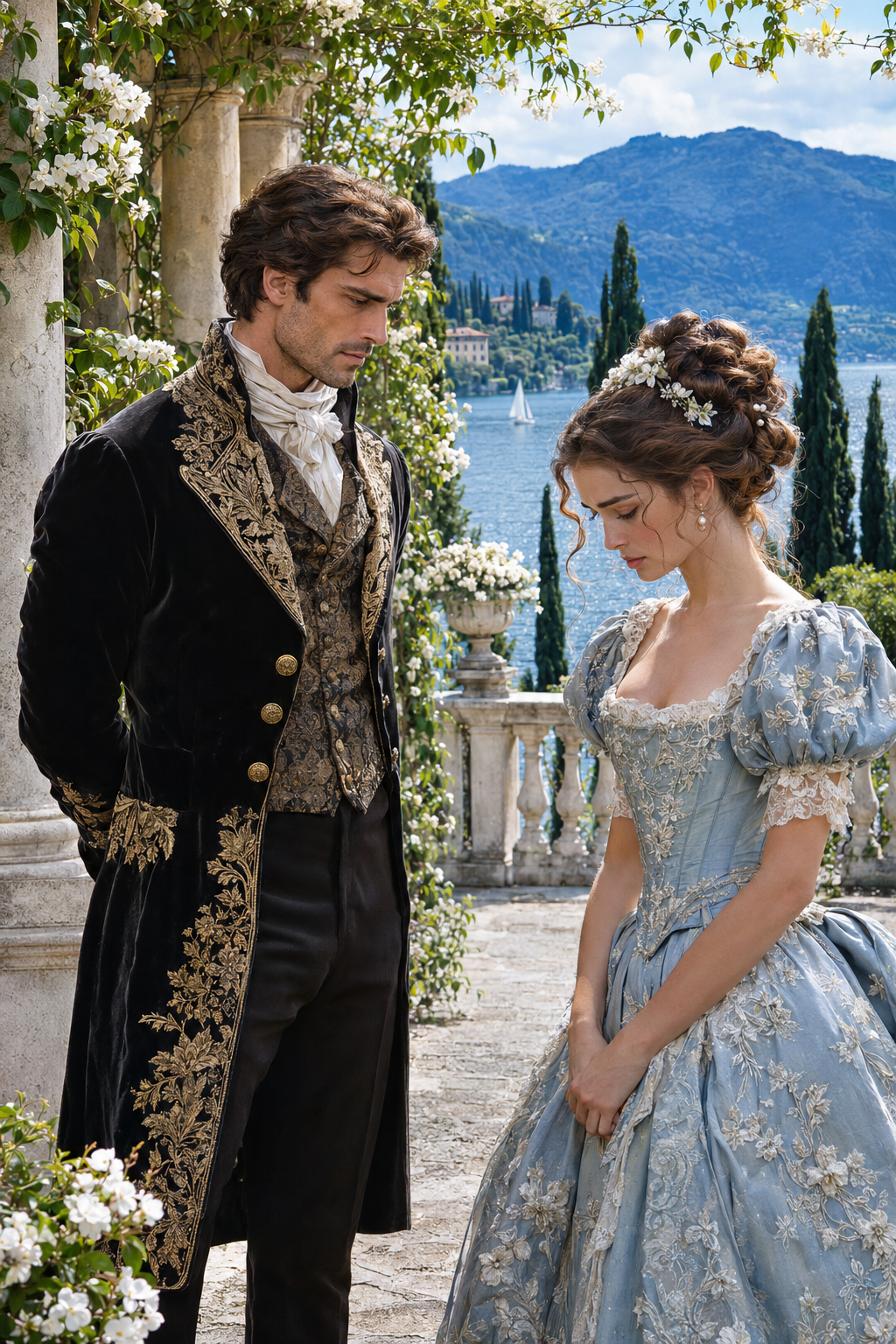
Edmund almost answered yes.
Then he remembered.
There was no duchess waiting in the morning room to receive his decisions.
“No,” he said quietly. “These are my responsibilities.”
That afternoon, he walked to the mill.
The workers fell silent when he entered.
The machinery continued its steady rhythm, filling the building with the smell of wool, oil, and damp timber.
Edmund had not visited the place in nearly seven years.
He found Thomas Bell beside a loom, examining a damaged belt.
“I need to understand what the mill requires,” Edmund said.
Thomas looked at him as though he had spoken in a foreign language.
“Her Grace left a report.”
“I’ve read it.”
“Then you know the eastern machinery needs replacing.”
“I know what the report says. I would like to see it.”
Thomas hesitated, then led him between the looms.
For two hours, Edmund listened.
He learned which machines failed most often, why coal deliveries had become unreliable, and how the proposed consortium purchase had frightened families who had worked there for generations.
At one point, an elderly woman approached carrying a folded shawl.
“Her Grace ordered this for Mrs. Bell,” she told Thomas. “The baby’s expected before Christmas.”
Thomas looked embarrassed.
Edmund stared at the shawl.
Helena had remembered the foreman’s unborn grandchild.
He had not known Thomas had children.
When Edmund returned to the manor, he found Mrs. Whitcomb supervising the removal of Helena’s remaining personal possessions.
A small portrait stood against the corridor wall.
It showed Helena seated in the garden, wearing a blue dress, her expression thoughtful rather than smiling.
Edmund stopped.
“Where is that going?”
“Her Grace requested it be sent to her new residence.”
“Where?”
Mrs. Whitcomb continued wrapping the frame.
“I was instructed not to disclose the address, Your Grace.”
He could have ordered her to answer.
A week earlier, he would have done so.
Instead, he stepped aside.
“Make certain it is properly protected.”
Mrs. Whitcomb looked at him for a long moment.
“She always liked that portrait.”
Edmund studied the painted face.
“I don’t believe I ever noticed it.”
“No, Your Grace.”
The housekeeper carried the portrait away.
That evening, Edmund sat alone at the long dining table.
The candles burned low.
Across from him stood the empty chair where Helena had once waited for him to finish speaking before offering an opinion.
He remembered the first year of their marriage, when she had attempted to discuss improvements to the estate.
He had laughed at her suggestions.
The second year, she had stopped asking permission.
By the third, she had stopped telling him what she was doing.
And in the fourth, she had stopped expecting him to care.
He had mistaken each retreat for an improvement in their marriage.
Now the silence he had demanded surrounded him completely.
A week later, Ashford arrived with unexpected news.
“Her Grace has agreed to meet with us.”
Edmund stood so quickly that his chair scraped across the floor.
“Where?”
“At the mill trustees’ office in Bellwick. Thursday morning.”
“She is returning?”
“No, Your Grace. She has agreed to discuss the estate’s financial obligations.”
Edmund’s expression changed.
“Only the estate?”
Ashford did not answer.
Thursday arrived cold and bright.
Edmund traveled to Bellwick in a modest carriage, having sold the grand black coach Helena once used for official visits.
The trustees’ office occupied the upper floor of a stone building overlooking the market square.
He climbed the stairs alone.
When Ashford opened the meeting-room door, Edmund saw Helena standing beside the window.
She wore a dark green traveling dress, her hair pinned simply beneath a small hat.
There were no pearls.
No elaborate jewels.
No wedding ring.
Yet she appeared more composed than she ever had beneath the chandeliers of Ravensmere.
Beside her sat a gray-haired solicitor and two mill trustees.
Helena turned when Edmund entered.
“Good morning, Your Grace.”
The formal address struck him harder than he expected.
“Helena.”
She indicated an empty chair.
“Shall we begin?”
He sat.
For the next hour, they discussed debts, property boundaries, maintenance obligations, and the future of the mill.
Helena spoke clearly, referring occasionally to documents arranged before her.
She proposed a restructuring agreement that would preserve the mill’s independence while allowing Ravensmere to repay its legitimate debts over several years.
The estate would relinquish certain privileges over the mill property.
The workers would receive representation on the governing board.
And no sale could occur without independent review and approval from the trustees.
Edmund listened.
The arrangement was sensible.
More than sensible.
It was the solution he should have sought years earlier.
When the others finished examining the documents, Helena looked toward him.
“Do you object to any provision?”
He studied her face.
“Why are you doing this?”
“Because the mill deserves a future.”
“I meant why are you still helping Ravensmere.”
Helena’s fingers rested lightly on the table.
“Because the people who live there should not suffer for decisions they did not make.”
Edmund lowered his eyes.
“I have been a fool.”
No one spoke.
He continued.
“I believed you were interfering in matters that belonged to me. I believed the estate survived because of my title and my family’s history.”
Helena waited.
“I was wrong.”
Her expression softened slightly, but she did not reach for him.
“I know.”
Those two words carried four years of unanswered conversations.
Edmund looked at the papers.
“Will you come home?”
Helena remained very still.
Then she closed the folder before her.
“Which home, Edmund?”
“Ravensmere.”
“Ravensmere was never a home to me.”
He flinched.
She continued quietly.
“It was a place where I worked, where people depended upon me, and where I spent years trying to earn kindness from a man who considered my presence an inconvenience.”
“Helena—”
“You asked me once why I was always occupied with estate affairs. Do you remember?”
He shook his head.
“You said that if I had been more interesting, perhaps you might have enjoyed my company.”
Edmund stared at her.
He remembered the remark now.
He had made it casually over breakfast, barely looking up from his newspaper.
She had said nothing.
He had forgotten it before luncheon.
Helena had carried it for years.
“I cannot undo what I said,” he whispered.
“No.”
“But I can change.”
“Perhaps.”
The answer was neither cruel nor encouraging.
It was simply true.
Helena stood.
“I hope you do, Edmund. The people of Ravensmere deserve a better duke.”
He rose as well.
“And you?”
She looked at him with a sadness so restrained that it was almost unbearable.
“I deserved a better husband.”
Then she gathered her papers and left.
Edmund remained in the meeting room long after the others had departed.
For the first time, he understood that an apology could be sincere and still arrive too late.
The following months tested every promise he had made.
Sir Lionel Vane attempted to force the estate into insolvency by purchasing several outstanding debts and demanding payment.
Edmund could have surrendered the mill’s access rights to settle the matter.
Instead, he sold his London residence.
The sale attracted considerable attention.
Society newspapers speculated that Ravensmere was ruined.
Former friends stopped sending invitations.
His creditors, however, began receiving payments.
When Vane discovered that Edmund had negotiated an independent refinancing agreement with Ashford’s assistance, he arrived at the manor in a fury.
“You are destroying your family’s standing,” Vane declared.
Edmund stood beside the study fireplace.
“My family’s standing has survived considerably worse than the loss of a London house.”
“You cannot maintain Ravensmere like a tradesman.”
“Then perhaps I should learn how a tradesman manages his accounts.”
Vane stared at him.
“You were easier to deal with when you cared about appearances.”
Edmund thought of Helena standing alone before three hundred guests.
“Yes,” he replied. “I was.”
The consortium abandoned its immediate attempt to acquire the mill.
But the estate still faced difficult years.
Edmund dismissed several unnecessary servants with generous compensation, reduced household expenses, and began attending the quarterly trustees’ meetings.
At first, the workers regarded him with suspicion.
Thomas Bell rarely concealed his doubts.
When Edmund suggested purchasing new machinery, Thomas demanded to know how the payments would be funded.
Edmund produced the figures.
Thomas examined them carefully.
Then, for the first time, he nodded.
“That might work, Your Grace.”
It was a small moment.
Edmund carried it home like an unexpected gift.
Winter arrived early.
Snow covered the hills, and the village roads became nearly impassable.
One evening, a boiler pipe burst at the mill, flooding the lower machinery room with freezing water.
Edmund received the message shortly after midnight.
He dressed without summoning a valet and rode to the mill through the snow.
By the time he arrived, Thomas and a dozen workers were struggling to contain the damage.
Edmund removed his coat and joined them.
For six hours, they carried equipment, cleared water, and helped the engineer isolate the damaged pipe.
His hands blistered.
His boots filled with icy water.
No one offered him special treatment.
At dawn, the emergency was under control.
Thomas handed him a mug of hot tea.
“You’ll ruin those boots.”
Edmund looked down at the mud and water.
“They were rather expensive.”
Thomas gave a tired laugh.
“Her Grace would have told you to buy better ones.”
Edmund smiled faintly.
“Yes. I believe she would.”
It was the first time her name had been spoken between them without bitterness.
By spring, the mill had returned to steady production.
A new contract with a northern textile merchant secured enough orders to keep the looms running through the following year.
The workers elected two representatives to the governing board.
The village school received repairs funded jointly by the trustees and the estate.
Edmund attended the opening of the restored schoolroom.
He stood near the back while children crowded around their teacher, proudly displaying books and slates.
On the wall hung a small brass plaque.
It thanked the Duchess of Ravensmere for her years of service to the village.
Edmund read it twice.
Then he asked the schoolmaster whether Helena had seen it.
“Not yet, Your Grace. We wrote to invite her, but she is traveling.”
“Traveling?”
“Yes. I believe she has been visiting several weaving communities in Yorkshire.”
Edmund imagined Helena walking through unfamiliar streets, speaking with workers, examining machinery, and discovering a world that did not require her to apologize for being capable.
The thought brought him pain.
But also something unexpectedly close to pride.
He did not ask where she was staying.
He had finally learned that knowing someone’s whereabouts did not give him the right to enter their life.
Nearly a year after the ballroom incident, Edmund received a letter bearing Helena’s handwriting.
He recognized it immediately.
For several moments, he simply held the envelope.
Then he opened it.
She wrote that the mill’s annual accounts had been approved and that the trustees wished to host a gathering celebrating the successful restructuring.
As a principal party to the agreement, Edmund was invited.
There was no personal message.
No expression of longing.
Only a courteous signature.
Helena Ravensmere.
He attended nonetheless.
The gathering took place in the renovated mill courtyard beneath strings of lanterns.
Workers arrived with their families.
Children ran between tables decorated with spring flowers.
The smell of fresh bread mingled with the familiar scent of wool.
Edmund stood near the entrance, watching the crowd.
Then he saw Helena.
She wore a simple blue gown and was laughing at something Thomas Bell’s granddaughter had said.
The sound stopped him.
He could not remember hearing her laugh so freely during their marriage.
She noticed him and approached.
“Your Grace. I’m glad you came.”
“Thank you for inviting me.”
Her gaze moved toward the newly repaired buildings.
“The place looks well.”
“Thomas deserves most of the credit.”
“Then you have learned something important.”
He smiled.
“I have learned several things.”
They walked slowly along the courtyard, speaking about the mill’s progress and the village.
Their conversation was almost easy.
Almost.
At the far end of the courtyard, they stopped beside an old stone wall overlooking the river.
Edmund took a folded letter from his pocket.
“I wrote this months ago. I wasn’t certain whether I should send it.”
Helena looked at the envelope.
“What is it?”
“An apology. Not an explanation.”
He offered it to her.
She accepted it without opening it.
“Thank you.”
He looked across the water.
“I used to think that losing you was the punishment for what I did.”
Helena remained silent.
“But I have come to understand that losing you was the consequence. The punishment was having to see myself clearly afterward.”
A breeze moved through the trees.
From the courtyard came the distant sound of laughter.
Helena turned the envelope between her fingers.
“I never wanted you to suffer, Edmund.”
“I know.”
“I wanted you to see me.”
He looked at her.
“I do now.”
She smiled sadly.
“That is what makes it difficult.”
For a moment, he allowed himself to hope.
Then Helena spoke again.
“I have accepted a position overseeing a charitable manufacturing trust in Yorkshire. We are establishing workshops where widows and women without family support can earn fair wages.”
Edmund felt the familiar ache return.
“Will you be happy there?”
“I believe so.”
He nodded slowly.
“Then I am glad.”
And this time, he meant it.
Several weeks later, Helena wrote to him again.
This letter was longer.
She thanked him for honoring the mill agreement and acknowledged the changes he had made at Ravensmere.
Then she explained that she intended to petition for a formal separation, with arrangements preserving her independent property and responsibilities.
She wished to end the uncertainty between them.
Edmund read the letter in the garden where she had once spent her afternoons.
The roses were blooming.
He remembered how often he had passed that garden without stopping.
For a long time, he considered asking her to reconsider.
He imagined writing of his loneliness, his regrets, and the life they might still build together.
But every version of the letter placed his wishes at its center.
Finally, he took a fresh sheet of paper.
He wrote that he would not oppose her petition.
He thanked her for the years she had given Ravensmere.
And he wished her the freedom and happiness she had been denied beneath its roof.
Before sealing the envelope, he added one final sentence.
“You owe me nothing, Helena, not even forgiveness.”
He sent the letter that afternoon.
The separation was completed quietly.
There was no public confrontation.
No dramatic announcement.
The same society that had once delighted in the ballroom scandal soon found other subjects to discuss.
Life continued.
At Ravensmere, Edmund gradually became a different kind of master.
He still made mistakes.
He sometimes spoke too sharply and had to apologize.
He occasionally approved expenditures without sufficient thought and endured Ashford’s disapproving silence.
But he listened.
He visited the cottages.
He learned the names of the people whose labor sustained his estate.
And when he discovered problems, he no longer expected someone else to solve them without his knowledge.
Three years passed.
The wool mill prospered.
Its workers received improved wages, and the village expanded around the renewed industry.
Helena’s workshops in Yorkshire became widely respected, providing employment and training for women who had once possessed few choices.
She traveled often, advised other charitable trusts, and purchased a modest house overlooking a river.
Its rooms were filled with books, flowers, and the small personal treasures she had never felt free to display at Ravensmere.
On a quiet autumn afternoon, she received an unexpected visitor.
Mrs. Whitcomb stood at her door, older and slightly stooped, carrying a parcel wrapped in brown paper.
Helena embraced her warmly.
They sat beside the fire, drinking tea and speaking of the village.
Eventually, Mrs. Whitcomb placed the parcel on the table.
“His Grace asked me to bring this.”
Helena hesitated before unwrapping it.
Inside lay the small portrait of her in the Ravensmere garden.
The frame had been carefully restored.
Beneath it was a short note.
“I found this in storage after your departure. It belongs with the person who taught me what stewardship means. I hope the garden in your new home is as beautiful as the one you once tended for us.”
Helena read the message without speaking.
Mrs. Whitcomb watched her.
“He has changed, my lady.”
“I know.”
“He asks after your work whenever I visit.”
Helena smiled faintly.
“That sounds like him now.”
The housekeeper leaned forward.
“Do you ever regret leaving?”
Helena looked toward the window.
Outside, the river moved beneath the pale afternoon sun. Beyond the garden wall stood the workshop buildings where dozens of women were finishing their day’s work.
She thought of the lonely dinners, the unanswered questions, and the years she had spent believing patience would eventually become love.
Then she thought of the life she had built.
“No,” she said gently. “I regret how long I believed I had to stay.”
Mrs. Whitcomb reached across the table and squeezed her hand.
They spoke no more of the marriage.
When the housekeeper departed, Helena carried the portrait into her study and placed it beside the window.
For a moment, she examined the younger woman in the painting.
The face was composed.
The posture elegant.
But the eyes seemed to be waiting for something.
Helena touched the edge of the frame.
She no longer recognized that waiting.
The following spring, Ravensmere hosted a celebration marking the fifth anniversary of the mill’s independence.
Helena received an invitation from the trustees and accepted.
She arrived on a clear morning when the hills were bright with new grass.
Edmund greeted her at the mill entrance.
His hair had begun to gray at the temples, and his hands bore faint marks from years of unfamiliar work.
He looked older.
But his expression was gentler.
“Helena.”
“Edmund.”
They stood together for a moment, looking at the building that had once nearly destroyed them both.
Then Thomas Bell approached with his granddaughter, now a lively young girl carrying a basket of flowers.
The child offered Helena a small bouquet.
“Grandfather says you saved our village.”
Helena knelt to accept it.
“Your grandfather and everyone here saved it together.”
The little girl considered this seriously.
“Then perhaps everyone should have flowers.”
Edmund laughed.
“I believe that is an excellent suggestion.”
The celebration continued beneath the spring sunshine.
There were speeches, music, and tables crowded with food.
When Edmund was invited to address the workers, he stood before them without prepared remarks.
“Five years ago,” he began, “I believed that owning Ravensmere meant I understood what made it valuable.”
He glanced toward the mill.
“I was mistaken.”
The courtyard grew quiet.
“I thought its worth lay in the land, the buildings, and the name carried above its gates. But none of those things would survive without the people who care for them.”
His eyes briefly found Helena.
“Someone tried to teach me that long before I was willing to listen.”
He paused.
“I cannot repay what was given. I can only try to honor it.”
The applause that followed was warm but restrained.
Helena joined it.
Edmund returned to his seat, and for the first time, he did not look toward her for approval.
He had spoken because the words were true.
Later, as the celebration ended, they walked together toward the old stone bridge.
The river flowed beneath them, carrying sunlight across its surface.
“Are you happy?” Edmund asked.
Helena considered the question.
“Yes.”
He nodded.
“Good.”
She looked at him.
“And you?”
He smiled thoughtfully.
“I am learning to be.”
They stood in comfortable silence.
There was no plea for another chance.
No promise of a reunion.
Only two people who had once shared a life and had finally learned how to stand before each other without demanding anything.
Before leaving, Helena reached into her handbag.
She withdrew a small silver key.
Edmund recognized it as the key from his mother’s wooden box.
“I’ve kept this for years,” she said. “I believe it belongs at Ravensmere.”
He shook his head.
“My mother gave it to you.”
“She entrusted me with a responsibility. That responsibility has been fulfilled.”
Edmund looked at the key resting in her palm.
Then he gently closed her fingers around it.
“Keep it. You understood its meaning before I did.”
Helena studied him for a moment.
Then she slipped the key back into her handbag.
“Take care of the place, Edmund.”
“I will.”
She turned toward her waiting carriage.
He watched her walk away, not with the desperate longing that had once consumed him, but with quiet gratitude for the person she had been and the lesson he had finally understood.
Helena climbed into the carriage.
As it moved down the road, she looked back once.
Ravensmere stood upon the hill, its windows shining in the afternoon light.
For four years, she had believed that leaving would mean losing everything she had worked to protect.
Instead, she had discovered that love for a place did not require surrendering herself to the person who owned it.
The mill remained.
The families remained.
The work she had begun continued without her constant presence.
And the man who had once dismissed her before three hundred guests had finally learned to recognize the worth of those who stood quietly beside him.
Edmund remained on the bridge until the carriage disappeared.
Then he returned to the mill, where Thomas Bell was struggling to carry several heavy baskets into the storage room.
Without hesitation, the duke removed his coat and took one of them.
Thomas glanced at him.
“Careful, Your Grace. Those are heavier than they look.”
Edmund smiled.
“I’ve discovered that most worthwhile things are.”
Far away, Helena’s carriage passed through fields bright with spring flowers.
She opened the window and let the cool air touch her face.
There was no ring upon her finger.
No title she needed to defend.
No husband whose approval she must earn.
Only a future that belonged to her.
And somewhere between Ravensmere and the life she had chosen, Helena understood something that had taken her years to learn.
A person’s worth is not measured by how much suffering they can endure in silence, nor by how completely they can sacrifice themselves for someone unwilling to see them.
True devotion does not demand the disappearance of the person who gives it.
And remorse, however genuine, cannot always restore what neglect has destroyed.
Sometimes love arrives too late to save a marriage, but just in time to make someone a better human being.
Sometimes forgiveness means releasing the past without returning to it.
And sometimes the bravest thing a person can do is walk away from a place they have spent years holding together, trusting that their own life deserves the same care they have so freely given to others.
Helena had entered Ravensmere as a duchess expected to obey.
She had left as a woman determined to live.
And that, at last, was the inheritance no one could ever take from her.
The years that followed did not bring Helena back to Ravensmere, but they gave her something she had once believed impossible: a life in which her happiness required no one’s permission.
Her house beside the river became a place of warmth and quiet purpose. In the mornings, sunlight crossed the wooden floors while she reviewed letters from the workshops. In the afternoons, she walked among the women whose livelihoods had grown from the trust she helped establish.
Some had arrived with nothing but a change of clothes. Others carried children, unpaid debts, or the painful memories of homes where they had never been valued.
Helena never asked them to explain more than they wished.
She offered employment, fair wages, and the opportunity to learn a trade.
One winter morning, a young widow named Margaret approached her after the workshop closed.
“My lady, may I ask you something?”
“Of course.”
Margaret twisted the edge of her shawl between her fingers.
“How did you know you could begin again?”
Helena looked through the window at the river, its surface silver beneath the winter sky.
“I didn’t,” she answered. “I was frightened for a very long time.”
Margaret seemed surprised.
“But you left.”
“Yes.”
“How did you find the courage?”
Helena considered the question before replying.
“I stopped waiting until I was no longer afraid.”
The young woman lowered her eyes, then nodded.
A month later, Margaret rented a small cottage of her own.
By spring, she had become one of the workshop’s most skilled weavers.
Helena watched her progress with quiet satisfaction, understanding that the most valuable thing she could offer another person was not rescue, but the means to stand independently.
At Ravensmere, Edmund continued the work he had begun.
The estate no longer hosted extravagant gatherings intended to impress people who scarcely cared whether it survived.
Instead, its halls welcomed agricultural meetings, charitable committees, and the families whose labor supported the surrounding countryside.
Edmund never married again.
It was not because he believed loneliness would prove his remorse. He simply found that the life he had built now held responsibilities he wished to fulfill, and he would not seek another marriage merely to escape solitude.
Sometimes, when passing the garden where Helena had once sat with her account books, he remembered their early years together.
He no longer imagined that one grand apology might have repaired everything.
He understood that love was made—or destroyed—through ordinary moments.
A question asked with genuine interest.
A kindness offered without calculation.
A promise remembered.
A person heard before silence became their only protection.
One autumn evening, Mrs. Whitcomb found him standing beside the roses.
“Her Grace would be pleased with the garden,” she remarked.
Edmund smiled faintly.
“I hope so.”
The housekeeper studied him.
“Do you still miss her?”
He looked toward the fading sunlight.
“Yes. But I no longer believe missing someone gives me a claim upon them.”
Mrs. Whitcomb said nothing.
After a moment, Edmund added, “I think that may be the first truly decent thing I’ve learned about love.”
Several years later, news arrived that Helena’s charitable manufacturing trust had opened its tenth workshop.
The announcement appeared in a London newspaper, accompanied by a modest portrait of Helena standing among the women she employed.
Edmund cut out the article and placed it inside his mother’s old wooden box.
He did not write to congratulate her.
He knew she would receive congratulations from people who shared her work and understood its importance.
Instead, he made a private donation to a school providing education for the children of mill workers.
When Ashford asked whether the gift should be made in Helena’s name, Edmund shook his head.
“No. Let the school decide how best to use it.”
The solicitor smiled.
“Very well, Your Grace.”
On Helena’s sixtieth birthday, her friends organized a small gathering in the garden beside the river.
There were flowers on the tables, freshly baked cakes, and children playing beneath the apple trees.
Margaret, now the manager of one of the largest workshops, stood to offer a toast.
“Many of us came here believing our lives had already been decided for us,” she said. “Lady Helena taught us that a difficult beginning does not have to determine the ending.”
Helena lowered her eyes, smiling as the guests raised their glasses.
Later, when the celebration had ended, she remained alone in the garden.
The evening air smelled of roses and rain-warmed earth.
On the table lay several letters from friends, a small handmade shawl, and a drawing given to her by Margaret’s youngest daughter.
Helena picked up the drawing.
It showed a house beside a river, surrounded by flowers and smiling figures.
Above the house, in a child’s uneven handwriting, were the words:
“A place where everyone belongs.”
Helena pressed the paper gently between her palms.
For a moment, she remembered the magnificent ballroom at Ravensmere.
The glittering chandeliers.
The watching faces.
The wedding ring she had placed beside Edmund’s glass.
Once, she had thought that moment marked the destruction of her life.
Now she understood that it had marked the beginning of her freedom.
She carried the drawing inside and placed it beside the old portrait from Ravensmere.
The two images stood together: one showing the woman she had been, the other representing the home she had created.
Helena looked at them for a long time.
Then she extinguished the lamp and opened the window to the evening breeze.
Across the river, the workshop lights glowed warmly against the gathering darkness.
Tomorrow there would be accounts to review, people to help, and problems requiring her attention.
But tonight, there was nothing she needed to prove.
She had loved deeply.
She had suffered quietly.
She had walked away when remaining would have meant losing herself.
And she had built a life in which her kindness was no longer mistaken for weakness.
Far away, the bells of Ravensmere’s village church rang across the hills.
Edmund heard them from his study, where the estate’s latest accounts lay neatly arranged before him.
For the first time in generations, the mill was financially secure, the cottages were maintained, and the workers’ children had opportunities their parents had never imagined.
He closed the ledger and looked toward the darkening garden.
The woman who had made it possible would never return to live beneath his roof.
But her influence remained in every repaired cottage, every working loom, and every family whose future had been protected.
Edmund turned down the lamp and left the study.
There was no bitterness in his expression.
Only the quiet acceptance of a man who had finally learned that gratitude sometimes requires letting go.
And Helena, miles away, slept peacefully in the home she had chosen.
She had once spent four years trying to become enough for a husband who refused to value her.
In the end, she discovered that she had always been enough.
The tragedy of their marriage was not that Helena had failed to love Edmund. It was that Edmund had mistaken her devotion for something he was entitled to receive without giving anything in return.
He learned to value her only after she had gone.
She learned to value herself when she finally chose to leave.
And although their paths never joined again, both carried the lesson into the lives that remained.
Love should never require someone to become invisible. Respect should never arrive only after loss. And sometimes the most meaningful happy ending is not being chosen by someone else, but finally choosing yourself.
THE END.