The day Thomas Whitaker threw my bread into the snow outside Silver Creek Ranch, he called me useless, but I already knew someone was stealing him blind.
I stared at him, the envelope trembling between my fingers.
“What do you mean, destroyed?”
Thomas did not answer at once.
The fire cracked behind us.
Outside, wind dragged dry snow against the windows, making the glass whisper.
He pulled out the chair across from me and sat down slowly, as though whatever lived inside that envelope weighed more than the ranch itself.
“Open it,” he said.
His voice had changed.
The warmth from a moment earlier was gone.
I broke the brittle seal.
Inside was a single folded sheet and a smaller scrap of paper, both yellowed at the edges.
The letter began with my mother’s name.
Margaret Hale.
I stopped breathing.
I had not seen that name written in another person’s hand since the day we buried her.
Thomas watched my face.
“You knew my mother?”
“My father did.”
I looked down again.
The letter was written by Samuel Whitaker, Thomas’s father.
Margaret,
If you ever receive this, then I have failed to repair what I helped destroy.
You were right about Holloway.
You were right about the land records.
And you were right to leave Montana before he realized how much you knew.
I have kept copies of the original deeds hidden at Silver Creek.
If anything happens to me, your daughter must be told.
What belongs to her should never become Holloway’s.
My hands went cold.
I read the lines twice, then a third time.
The smaller scrap contained only four words.
Beneath the north foundation stone.
I looked at Thomas.
“What belongs to me?”
He rubbed a hand across his jaw.
“My father never told me everything.”
“That isn’t an answer.”
“No.”
His eyes lifted to mine.
“But it’s the truth.”
I stood so quickly the chair scraped across the floor.
“You knew there was a letter with my name on it.”
“I knew a letter existed.”
“And you said it should have been destroyed.”
He flinched.
That hurt more than if he had shouted.
“My father burned most of his papers before he died,” Thomas said. “He was feverish near the end. He kept talking about old claims, land transfers, and a woman named Margaret. I thought it was grief or guilt. After his death, I found an empty envelope addressed to you among his things. I assumed whatever had been inside was gone.”
“But this wasn’t.”
“No.”
“Then why was it inside the ranch ledger?”
“I don’t know.”
I wanted to believe him.
That was the worst part.
A month earlier, Thomas Whitaker had been a bitter rancher who barely trusted himself.
Now his hand was the one I had reached for without thinking.
And suddenly a dead man’s secret stood between us.
I folded the letter carefully.
“We’re going to the north foundation.”
“Tonight?”
“Yes.”
“It’s nearly midnight.”
“So was the meeting where Holloway tried to steal your ranch.”
For the first time since the envelope appeared, something like the old stubborn Thomas returned to his eyes.
He stood.
“I’ll get lanterns.”
We woke Walter.
He complained until he saw the letter.
Then he stopped complaining.
The three of us crossed the frozen yard toward the oldest section of the house, where the original Whitaker cabin had once stood before the ranch expanded around it.
Snow reached our ankles.
The lantern light made the world beyond us disappear.
Walter found the northern wall.
“There,” he said.
One foundation stone was darker than the others.
We dug with a crowbar and two shovels.
The ground had frozen nearly solid, and each strike rang through the night.
After twenty minutes, Thomas knelt and cleared ice from the base of the stone.
His fingers touched metal.
A small iron box came loose from the earth.
No one spoke.
We carried it into the kitchen.
The lock had rusted through.
Walter broke it with the back of an axe.
Inside were three bundles of papers wrapped in oilcloth.
The first contained deeds.
The second contained letters.
The third contained a notebook.
Thomas opened the notebook.
I watched his face change.
“Father’s handwriting.”
We spent the rest of the night reading.
The truth emerged slowly, piece by piece.
Years before Thomas inherited Silver Creek, Samuel Whitaker and Charles Holloway’s father had invested in several neighboring parcels of grazing land.
One of those parcels had belonged to my grandfather.
When he died, my mother inherited it.
But she had been young, widowed, and living far from Montana.
She trusted Samuel Whitaker to manage the property until she could decide what to do.
Samuel had intended to buy it fairly.
Holloway had intended something else.
Using false filings and altered signatures, Holloway’s father transferred the land into a holding company he controlled.
Samuel discovered the fraud too late.
He confronted him.
Holloway threatened Margaret.
So Samuel helped my mother leave Montana and promised to restore the title quietly.
Then his wife became ill.
His cattle died in a winter storm.
His debts grew.
And restoring what was stolen became something he postponed year after year.
By the time he finally tried to act, Charles Holloway had inherited his father’s schemes.
The notebook contained names, dates, and land descriptions.
One entry made Walter swear aloud.
I read it twice.
The parcel stolen from my mother included the eastern grazing valley, the creek, and nearly a third of Silver Creek Ranch.
Legally, if the original deeds were accepted, part of the ranch belonged to me.
Thomas leaned back in his chair.
His face had gone gray.
I looked at him across the same table where he had asked me to stay.
Neither of us knew what to say.
Walter finally broke the silence.
“Well.”
Thomas gave him a tired look.
Walter cleared his throat.
“I’ll make coffee.”
He escaped to the stove.
I almost laughed.
Instead, I began to cry.
Quietly.
That surprised me more than anything.
I had survived my mother’s death without tears in front of strangers.
I had crossed half a country alone.
I had faced Holloway in the dark.
But suddenly I was holding proof that my mother had spent years knowing someone had taken something from her and had never recovered it.
Thomas came around the table.
He stopped a few feet away.
He did not touch me.
“I didn’t know,” he said.
“I know.”
“If you want the eastern valley, it’s yours.”
I wiped my cheek.
“You don’t even know whether these papers will hold up.”
“If they do, it’s yours.”
“And if taking it destroys Silver Creek?”
His jaw tightened.
“Then Silver Creek survives differently.”
I looked at him.
That answer mattered.
More than he knew.
By noon, we were in Harlon Garrett’s office.
He read every document twice.
Then he locked the door.
“These deeds are strong,” he said. “Very strong.”
Walter grinned.
Thomas didn’t.
I asked, “What happens now?”
Harlon tapped Samuel’s notebook.
“We file to correct the title.”
“And Holloway?”
His expression hardened.
“Holloway will know the moment we file.”
“He already withdrew his claims.”
“He withdrew the claims connected to the supply fraud,” Harlon said. “This is older. Bigger. If this land was acquired through forgery, he may lose more than Silver Creek.”
“How much more?”
“Possibly thousands of acres.”
The room went still.
Thomas looked toward the window.
“Holloway won’t walk away from that.”
“No,” Harlon said. “He won’t.”
We filed anyway.
For three days, nothing happened.
That was worse than a threat.
The ranch moved as though the danger had passed.
The men repaired fence.
Walter argued with a horse.
I baked bread.
Thomas rode the eastern boundary twice a day.
But every time the wind moved through the cottonwoods, someone looked toward the road.
On the fourth evening, a rider arrived.
Not Holloway.
Jim Pratt.
The men nearly dragged him from the saddle.
Thomas stepped between them.
“What are you doing here?”
Jim looked thinner than before.
His beard had grown wild.
“I came to warn you.”
Walter laughed without humor.
“You’re a little late for honesty.”
Jim ignored him.
“Holloway knows about the deeds.”
Harlon had warned us that might happen.
Still, hearing the words made my stomach tighten.
Thomas crossed his arms.
“What does he intend to do?”
Jim’s eyes found mine.
“He says if the records disappear, there is no case.”
“They’re already filed,” I said.
“Copies are.”
My heart stopped.
Jim nodded toward the house.
“He knows the originals are here.”
Thomas stepped closer.
“How?”
“I told him.”
Walter moved so fast I barely saw him.
Thomas caught his arm before his fist landed.
Jim didn’t run.
“I told him months ago,” he said quickly. “Before I knew what the box held. Your father once made me move it when we repaired the foundation. Holloway asked about old papers. I told him there was a box.”
“You expect us to thank you for coming now?” I asked.
“No.”
His voice broke.
“I expect you to hate me. But he’s coming tonight.”
Everything after that happened quickly.
Thomas sent two men toward town for the sheriff.
Walter moved the original deeds from the study.
Harlon had already taken some documents to his office, but the most important originals remained at Silver Creek because I had refused to let every piece of evidence sit in one place.
Now that decision might save us.
Or kill us.
“Where do we hide them?” Walter asked.
I looked toward the kitchen.
Thomas followed my eyes.
“No.”
“What?”
“You’re thinking something dangerous.”
“I’m thinking something useful.”
I carried the deeds into the pantry and opened an empty flour barrel.
Thomas stared.
“That’s your plan?”
“Holloway stole flour from this kitchen for months. I doubt he’ll think to look inside it.”
Walter almost smiled.
We wrapped the papers in oilcloth and buried them beneath forty pounds of flour.
Then we waited.
Darkness came early.
Snow began after sunset.
Thomas ordered the men into the bunkhouse with rifles nearby but told them not to fire unless fired upon.
“We need Holloway alive,” he said.
Walter nodded.
I understood why.
A dead criminal could not confess.
At nine, horses appeared on the southern road.
Six riders.
Too many.
Thomas stood beside the front door.
“You’re staying inside.”
“I’ve heard that tone before.”
“Evelyn.”
“You asked me to be an equal partner.”
“This isn’t a business meeting.”
“No. It’s my land.”
His expression tightened.
Then, unbelievably, he smiled.
“One day you’re going to make me regret those words.”
“One day?”
The smile vanished when the first shot hit the barn wall.
Men shouted.
Horses screamed.
The ranch yard erupted.
Thomas pulled me behind the stone corner of the house as another bullet cracked through the porch railing.
Holloway’s men had spread along the fence line.
They were not trying to kill everyone.
They were trying to frighten us away from the house.
Walter shouted from the bunkhouse.
Two ranch hands returned fire into the air.
For several minutes, confusion ruled.
Then Thomas saw it.
“They’re circling the back.”
We ran through the kitchen.
The rear door stood open.
Cold air rushed in.
A man was already in the pantry.
Jim tackled him before he could reach the shelves.
They crashed into a crate of potatoes.
Walter appeared behind us and swung the flat side of a shovel into the intruder’s shoulder.
The man collapsed.
“Useful thing, a kitchen,” Walter said.
Then the lamp went out.
Someone had smashed the window.
Glass scattered across the floor.
A voice came from the darkness.
“Enough.”
Holloway.
He stood in the kitchen doorway holding a revolver.
Snow melted across the shoulders of his black coat.
His face looked different from the night in the Miller barn.
No confidence.
No polish.
Only desperation.
Thomas stepped in front of me.
Holloway laughed.
“Still protecting things that aren’t yours, Whitaker?”
Thomas’s hand hovered near his holster.
“Put the gun down.”
“You think a county clerk changes history?”
“No,” I said.
Holloway looked at me.
I moved around Thomas despite his hand reaching for my arm.
“Evidence changes history.”
Holloway’s eyes narrowed.
“You should have stayed wherever you came from.”
“My mother didn’t.”
That shook him.
Only slightly.
But I saw it.
“So Samuel finally told you.”
“He tried.”
“He was a coward.”
“No,” I said. “He was a man who made a mistake and spent years regretting it. There’s a difference.”
“Not to the dead.”
Holloway raised the gun.
Thomas moved.
The shot exploded.
For one terrible second, I thought Thomas had been hit.
Then Holloway cried out.
His revolver struck the floor.
Jim stood behind him holding the broken leg of a chair.
He had smashed Holloway’s wrist.
Thomas lunged forward.
They hit the floor together.
Holloway fought like a trapped animal.
Walter pinned his arm.
Jim kicked the revolver away.
I grabbed it.
Then someone shouted from outside.
“Sheriff!”
The fight stopped almost instantly.
Holloway lay on the floor, breathing hard, Thomas’s forearm across his shoulders.
Snow blew through the broken window.
The sheriff entered with three deputies.
His eyes moved from Holloway to Jim, then to me holding the revolver.
“I suppose there’s an explanation.”
Walter leaned against the pantry door.
“Long one.”
By sunrise, Holloway was in chains.
Two of his men confessed before noon.
Another led the sheriff to a hidden office where records from more than twenty fraudulent land transfers had been stored.
Harlon spent weeks sorting through them.
Families from across the county came forward.
Widows.
Farmers.
Small ranchers.
Men who had spent years believing they had lost land because of bad luck, bad loans, or their own foolishness.
They had not.
They had been robbed.
The case against Charles Holloway became larger than Silver Creek.
By spring, he was sentenced to prison.
Jim Pratt testified against him.
Thomas did not forgive Jim.
Neither did I.
Some wounds are too deep for quick forgiveness.
But when Jim left Montana, Thomas gave him a horse.
“Why?” I asked afterward.
Thomas watched the rider disappear along the road.
“Because justice doesn’t require cruelty.”
I remembered that.
The land case took longer.
When the judge finally recognized my mother’s original claim, I legally became the owner of the eastern valley and the creek that fed Silver Creek Ranch.
Thomas was waiting outside the courthouse.
He held his hat in his hands.
“Well,” he said, “Miss Hale.”
I raised an eyebrow.
“Miss Hale?”
“Landowner.”
“You sound worried.”
“I am.”
“About what?”
“You owning the best water on my ranch.”
I smiled.
“Your ranch?”
He looked at me.
I let him suffer for a moment.
Then I handed him a document.
He opened it.
I had formed a partnership.
The eastern valley would remain connected to Silver Creek, but ownership would be shared under new terms.
Not because I owed Thomas anything.
Not because his father had tried to repair the wrong.
Because I wanted the land to become something better than a weapon passed between greedy men.
Thomas read the last page.
“You’re giving half of this to the ranch.”
“No.”
I shook my head.
“I’m investing it.”
His eyes lifted.
“There is a difference.”
A slow smile crossed his face.
“Yes,” he said. “There is.”
We rebuilt Silver Creek that summer.
Not just the fences.
Not just the barns.
We changed the books.
Every worker could see what was purchased and sold.
Every debt was recorded plainly.
No man controlled the accounts alone.
I hired a widow from town to help with the kitchen, then taught her the ledgers.
Thomas taught two young ranch hands how to judge cattle.
Walter taught everyone how to complain while doing more work than any three men.
By autumn, Silver Creek was profitable.
Not rich.
Not grand.
But honest.
That mattered more.
One evening, almost exactly a year after I arrived, the first snow fell.
I stood on the porch watching it cover the road.
Thomas came beside me.
He carried something wrapped in cloth.
“What is that?”
“An apology.”
“That seems unusually large.”
He handed it to me.
Inside was a loaf of bread.
Badly shaped.
Burned on one side.
Heavy enough to use as a weapon.
I stared at it.
Thomas looked uncomfortable.
“I made it.”
“I can see that.”
“I threw your bread into the snow the week you arrived.”
“You did.”
“I called it hard enough to shoe a horse.”
“It was not.”
“It was.”
I laughed.
He looked wounded.
“I have been trying for three hours.”
“That explains the smell.”
He leaned against the porch post.
“I thought I should learn.”
“To bake?”
“To understand the difference between criticizing something and knowing how difficult it is to make.”
That silenced me.
He glanced toward the snowy yard.
“When you first came here, I thought strength meant carrying everything alone.”
“And now?”
“Now I think that’s usually how things get dropped.”
I looked down at his terrible loaf.
“That’s almost wise.”
“Almost?”
“You still can’t bake bread.”
He laughed.
Then he reached into his coat.
This time he held a small ring.
Simple silver.
No jewel.
No grand speech waiting behind it.
He did not kneel.
I was grateful.
He simply held it between us.
“I asked you once to stay as an equal partner.”
“You did.”
“I meant the ranch.”
“I know.”
“This time I mean the rest of it.”
The snow fell softly around us.
Inside the house, Walter was loudly insisting that someone had ruined the coffee.
A cow bawled from the barn.
One of the younger hands shouted back.
Silver Creek was not quiet.
It was alive.
Thomas looked at me.
“No ownership,” he said. “No debts. No saving each other. Just choosing.”
I thought of my mother.
Of Samuel Whitaker.
Of the land buried beneath lies.
Of Holloway believing that if he controlled the papers, he controlled the truth.
He had been wrong.
Truth could be delayed.
Hidden.
Ignored.
Even buried under stone.
But someone only had to care enough to dig.
I held out my hand.
“Yes.”
Thomas slipped the ring onto my finger.
Then I handed him the burned loaf.
“What am I supposed to do with this?”
“Eat it.”
His face fell.
I smiled.
“Partners share the consequences of their decisions.”
Years later, people would tell the story of Silver Creek differently.
Some said Thomas Whitaker saved the ranch.
Some said I did.
Walter claimed he had saved everyone at least twice and demanded free whiskey whenever he told the tale.
The truth was less dramatic.
No single person saved Silver Creek.
A ranch hand marked supply crates.
An attorney kept copies.
A sheriff listened.
A guilty man eventually told the truth.
A dead father left behind evidence.
A woman who had once lost her land gave her daughter enough courage to recognize when something was wrong.
And a grieving rancher finally learned that trusting another person was not weakness.
Silver Creek survived because enough people chose honesty before dishonesty became permanent.
That became the rule we followed afterward.
Not just in business.
In everything.
We kept clear books.
We paid people fairly.
We never allowed one man’s pride to become everyone else’s burden.
When disputes came, we spoke before resentment hardened.
When mistakes happened, we named them.
When people failed, we judged what they did next, not only what they had done before.
I kept Samuel Whitaker’s letter in the first ledger I ever used at Silver Creek.
Not because I wanted to remember Holloway.
Because I wanted to remember the danger of silence.
Samuel had known the truth for years.
His greatest mistake was not greed.
It was waiting.
Waiting for the right moment.
Waiting until he had more money.
Waiting until the danger passed.
Waiting until doing the right thing became easier.
It never did.
By the time he acted, much had already been lost.
That lesson stayed with me longer than the court case, longer than the fear, longer even than the anger I once felt toward him.
Doing what is right rarely becomes easier by delay.
It usually becomes more expensive.
Sometimes in money.
Sometimes in land.
Sometimes in years.
And sometimes in the trust of people we love.
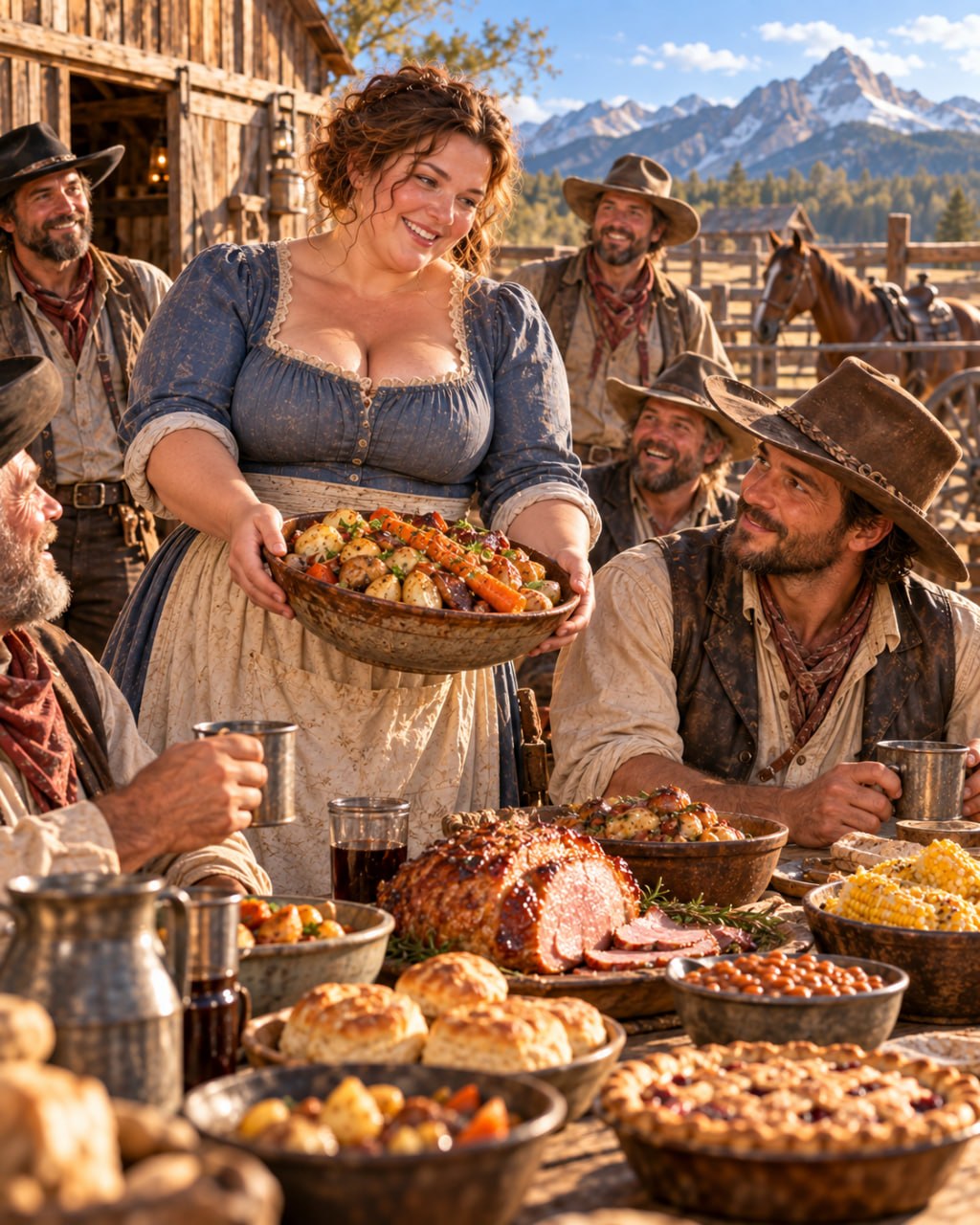
On winter evenings, when the kitchen smelled of fresh bread and the ranch hands crowded around the long table, I would sometimes remember the first meal I cooked there.
Back then, Silver Creek had seemed like a dying place.
Empty shelves.
Tired men.
A bitter owner.
Accounts that did not add up.
But broken things are not always finished things.
Sometimes they are simply waiting for someone to notice where the damage began.
Thomas eventually learned to make bread.
It took him almost two years.
His first successful loaf came out of the oven on a February morning while snow covered the valley.
He set it on the table with the pride of a man who had conquered a continent.
I cut a slice.
He watched anxiously.
“Well?”
I chewed slowly.
“Edible.”
He frowned.
“That is all?”
I took another bite.
“Almost good.”
He laughed.
Then he kissed my forehead and went outside to help Walter with a broken gate.
I watched him cross the yard toward the barn.
Beyond him, the eastern valley stretched white beneath the winter sky.
My mother’s land.
My land.
Our ranch.
Not because someone had given it to us.
Not because we had won it from someone else.
Because, in the end, we had learned what ownership truly meant.
It was not possessing something so tightly that no one else could touch it.
It was accepting responsibility for what had been placed in your hands.
Land.
Money.
Truth.
Trust.
Love.
Every one of them could be stolen.
Every one of them could be wasted.
And every one of them could be rebuilt, if people were brave enough to stop hiding from what was broken.
That was how Silver Creek survived.
And that was how, without realizing it at first, I did too.
Years passed.
Silver Creek changed with them.
The old kitchen was rebuilt first.
I insisted on wider shelves, two flour bins, a proper iron stove, and windows large enough to let morning light reach the worktable.
Thomas objected to the expense.
Naturally.
Then he spent twice as much repairing the cattle barn.
Naturally.
Some things never changed.
Other things did.
Walter’s hair turned completely white.
He still denied being old.
Whenever someone suggested otherwise, he lifted something unnecessarily heavy just to prove them wrong and complained about his back for the next two days.
Harlon Garrett became county judge.
He protested that the position required too much patience and too little whiskey.
Nobody believed him.
Jim Pratt never returned to Silver Creek.
But once every few years, a letter arrived.
The first came from Oregon.
He was working at a sawmill.
The second came from California.
He had married.
The third contained only a few sentences and a small amount of money.
For what I took.
It isn’t enough.
But I mean to keep sending it.
Thomas read the letter twice.
Then he placed the money into an envelope.
“What are you doing?” I asked.
“Returning it.”
“Why?”
“Because he already paid what the court required.”
I watched him seal the envelope.
“And the rest?”
Thomas glanced at me.
“He’ll have to live with that.”
There are debts money cannot settle.
There are also debts people should not be forced to pay forever.
I learned the difference slowly.
So did Thomas.
By our fifth year together, Silver Creek employed twenty-three men, six women, and more seasonal workers during the summer cattle drives.
Families began building small houses near the creek.
Children appeared.
At first, only two.
Then five.
Then so many that Walter complained the ranch sounded like a schoolhouse.
Eventually, that gave me an idea.
“We should build one,” I said.
Thomas looked up from the breakfast table.
“One what?”
“A schoolhouse.”
He lowered his coffee.
“We run cattle.”
“And?”
“Cattle don’t read.”
“Your employees do.”
“Some of them badly.”
“Exactly.”
He stared at me.
I stared back.
Walter, sitting at the far end of the table, whispered to one of the younger ranch hands, “He’s lost already.”
Thomas heard him.
“I have not.”
“Yes, you have,” Walter said.
We built the schoolhouse the following spring.
At first, only the ranch children attended.
Then children came from neighboring homesteads.
Then from town.
We hired a teacher named Miss Clara Bell, who was twenty-four, fearless, and capable of silencing twenty children with one raised eyebrow.
Walter fell in love with her immediately.
Not romantically.
He was terrified of her.
Which was nearly as entertaining.
One afternoon, I stood outside the schoolhouse and listened through the open window.
Miss Bell was teaching arithmetic.
“Numbers,” she told the children, “are useful because numbers tell the truth.”
I smiled.
Then I heard Thomas behind me.
“You’ve corrupted her.”
“I improved her.”
He stood beside me.
Our daughter, Margaret, sat in the front row.
She was six years old and had inherited Thomas’s stubbornness and my unfortunate relationship with silence.
She raised her hand.
“If numbers always tell the truth, why did bad men use numbers to lie to Mama?”
The room went still.
Even through the wall, I could feel Miss Bell struggling.
Thomas covered his mouth to hide a smile.
I elbowed him.
Miss Bell finally answered, “Numbers tell the truth. People sometimes arrange them dishonestly.”
Margaret frowned.
“Then you have to check them.”
“Yes.”
“And check the person too.”
Thomas whispered, “Definitely your daughter.”
I smiled.
“Our daughter.”
A year later, we had a son.
Samuel.
I hesitated before agreeing to that name.
For months, I resisted it.
Thomas never pressured me.
One winter night, while our newborn slept beside the stove, I opened Samuel Whitaker’s old letter again.
The paper had grown fragile.
The guilt inside it had not.
But something in me had changed.
Thomas’s father had failed.
That remained true.
He had waited too long.
That remained true too.
But a human life cannot always be reduced to its worst delay.
He had also tried.
Poorly.
Late.
Fearfully.
But he had tried.
So when Thomas asked once more whether I could live with naming our son after him, I said yes.
Not as forgiveness.
Not entirely.
As remembrance.
A reminder that people can love goodness and still fail to practice it when courage is required.
Years after Holloway’s conviction, his name returned to Silver Creek in a way none of us expected.
A woman arrived in a black carriage during a spring rain.
She introduced herself as Anna Holloway.
Charles’s daughter.
Thomas’s expression hardened immediately.
Mine nearly did too.
Anna was perhaps thirty.
She had her father’s dark eyes.
That was enough to make me dislike her for several seconds.
Then I noticed the worn gloves.
The plain dress.
The exhaustion.
“I came to speak with Evelyn Whitaker,” she said.
Thomas moved beside me.
“You already are.”
Anna looked at him.
“I mean alone.”
“No.”
I touched Thomas’s arm.
“It’s all right.”
“It isn’t.”
“Thomas.”
He knew that tone.
He stepped back.
Not far.
Never far.
Anna followed me into the kitchen.
She remained standing.
I offered coffee.
She refused.
“My father died last month.”
I had not known.
I waited for grief.
Satisfaction.
Anger.
Nothing came.
Only a strange emptiness.
“I’m sorry,” I said.
Anna looked surprised.
“You don’t have to be.”
“No.”
I poured coffee for myself.
“But death is still death.”
She studied me for a long moment.
Then she reached into her bag and removed a packet wrapped in cloth.
“I found these among his belongings.”
My stomach tightened.
More papers.
Always papers.
She placed them on the table.
Inside were letters.
Some were written by Holloway’s father.
Others by Charles himself.
Several named families we did not recognize.
One mentioned Samuel Whitaker.
Another mentioned my mother.
“These weren’t used at the trial,” Anna said.
“I know.”
“They prove more land was taken.”
“How much?”
“I don’t know.”
“Why bring them here?”
Her eyes lowered.
“Because my father told me to burn them.”
The room became very quiet.
“When?”
“Three days before he died.”
“And you didn’t.”
“No.”
“Why?”
Anna looked toward the window.
Rain streaked the glass.
“When I was a child, my father told me our family built everything through intelligence. Discipline. Courage.”
Her mouth tightened.
“I believed him.”
She touched one of the letters.
“Then I learned what he called courage was often simply taking from people too frightened or too poor to fight him.”
I said nothing.
“He died still believing everyone else was to blame.”
Anna finally looked at me.
“I don’t want to.”
That sentence mattered more than the documents.
I called Harlon.
The investigation reopened.
More land was restored.
More families received compensation.
Not all.
Time had erased too much.
Some rightful owners had died.
Some records could not be repaired.
Justice, I learned, was not a machine.
You did not insert truth and receive perfect balance.
Sometimes justice arrived incomplete.
Sometimes it arrived after the person who needed it was gone.
Sometimes all you could do was prevent the next wrong.
Anna stayed in Montana.
Not at Silver Creek.
That would have been too difficult for everyone.
She moved to town and worked with Harlon to settle the remaining land claims.
People distrusted her.
Some insulted her.
One man spat near her feet.
She stayed.
I respected that.
Not because she owed us suffering.
Because leaving would have been easier.
Years later, when Harlon retired, Anna became one of the county’s first women to handle legal property records.
Thomas found this deeply amusing.
“Your greatest victory,” he said, “may be turning Holloway’s daughter into a guardian of honest paperwork.”
“Not mine.”
“Whose?”
“Hers.”
He nodded.
That was another lesson Silver Creek taught us.
You cannot inherit guilt.
But you can inherit a choice about what to do with the truth.
By the time Margaret turned sixteen, she could ride better than half the men on the ranch.
By seventeen, she could manage accounts better than most of them too.
That frightened Thomas far more.
“She adjusted the winter feed budget,” he told me one night.
“Was she wrong?”
“No.”
“Then what’s the problem?”
“She didn’t ask me.”
I stared at him.
His face changed.
Slowly.
“Oh.”
“Yes.”
He leaned back.
“This is revenge.”
“This is parenthood.”
Margaret had heard enough stories about Holloway, Samuel, my mother, and the stolen land that the past lived beside her like an invisible relative.
One evening, she asked me something I had never expected.
“Do you hate Charles Holloway?”
I thought about it.
“No.”
She looked surprised.
“You did.”
“Yes.”
“What changed?”
“Time.”
“That sounds boring.”
“Most true answers do.”
She waited.
I folded the towel in my hands.
“Hating him kept him important.”
Margaret frowned.
“He hurt Grandmother.”
“Yes.”
“He nearly destroyed Silver Creek.”
“Yes.”
“He tried to kill Father.”
“Yes.”
“Then why shouldn’t you hate him?”
“Because hatred is another form of carrying someone.”
She became quiet.
“I remember what he did,” I continued. “I remember the consequences. I would stop him again. I would testify again. I would fight him again.”
“But you don’t hate him.”
“No.”
“Why?”
“Because he doesn’t get to live inside me after death.”
Margaret considered that for a long time.
Then she nodded.
She understood.
Or perhaps she would later.
Children sometimes store an answer for years before life gives them the question.
Time continued.
Walter died in his sleep during the winter of 1902.
He was seventy-one, though he had spent the last ten years insisting he was sixty-five.
We buried him on a hill overlooking the creek.
The entire county seemed to come.
Ranchers.
Town merchants.
Former hands.
Children he had taught to ride.
Women whose roofs he had repaired without telling anyone.
Men he had insulted with extraordinary creativity.
Miss Bell cried harder than anyone.
After the service, Thomas stood beside the grave until nearly everyone had gone.
“He was here before me,” he said.
“I know.”
“He knew my father.”
“I know.”
“He knew what this place looked like when I was a boy.”
I slipped my hand into his.
“And he knew what it became.”
Thomas looked across the valley.
“He should have seen more.”
“He saw enough.”
That night, we found something beneath Walter’s mattress.
A small notebook.
Inside, he had recorded the names of every person who had ever worked at Silver Creek.
Beside each name, he had written something.
Good rider.
Terrible cook.
Talks too much.
Honest.
Lazy unless watched.
Smart kid.
Saved my life in ’94.
Owes me two dollars.
Probably never paying.
Beside my name, he had written:
Evelyn Hale Whitaker.
Arrived with one trunk.
Fed everybody.
Not afraid enough.
Keep her.
Beside Thomas:
Thomas Whitaker.
Hard head.
Good heart.
Took years to notice both.
Margaret laughed until she cried.
Thomas did not laugh.
Not at first.
He closed the book and held it for a long time.
Then he said, “He left instructions.”
“What instructions?”
Thomas opened the cover.
Written there in large letters were three words.
Don’t get stupid.
That became Silver Creek’s unofficial motto.
By 1910, the ranch had changed beyond anything I could have imagined on the October day I arrived.
A rail spur passed within twelve miles.
The town had electricity.
Automobiles occasionally appeared on the road, frightening horses and delighting children.
Thomas hated them.
Naturally.
“They smell,” he said.
“So do horses.”
“Horses have dignity.”
“You’ve met horses.”
Margaret married a doctor from Helena.
Thomas disliked him for almost an entire year because the man had the audacity to marry his daughter.
Samuel took over much of the cattle operation.
He was quieter than his sister.
More patient than either of his parents.
Probably an evolutionary correction.
I continued keeping the books.
Not because no one else could.
Because I liked them.
Clean columns.
Clear totals.
Evidence that effort could become something visible.
One November afternoon, I found the first ledger from 1887 in an old trunk.
The cover was cracked.
The pages smelled of dust.
I sat by the window and turned through them.
Flour.
Coffee.
Salt.
Beans.
Missing deliveries.
False totals.
Tiny calculations written in the margins.
At the back lay Samuel Whitaker’s letter.
The paper almost came apart when I unfolded it.
Thomas entered quietly.
He had gone gray by then.
His shoulders were still broad, but age had softened the sharpness that once made him look angry even when he wasn’t.
“Found the old evidence?” he asked.
“The beginning.”
He sat beside me.
We looked at the ledger together.
“I was awful to you,” he said.
“You were.”
He smiled.
“You could disagree.”
“I could lie.”
“I threw your bread in the snow.”
“You have spent twenty-three years apologizing for that loaf.”
“It was a very good loaf.”
“I know.”
He touched the page.
“Do you ever wonder what would have happened if you hadn’t kept these records?”
“Yes.”
“What?”
“Silver Creek would probably belong to someone else.”
“And us?”
I looked at him.
“We probably wouldn’t exist.”
He nodded.
That thought settled between us.
A life can turn on something very small.
A number.
A question.
A letter no one managed to destroy.
A woman deciding that missing flour mattered.
People often imagine great change begins with great courage.
Usually it begins with irritation.
Something does not add up.
Someone says, that is strange.
Someone looks again.
Then they discover the world beneath the surface.
Thomas leaned his head back against the chair.
“We were lucky.”
“Yes.”
He opened one eye.
“Only lucky?”
“No.”
“Good.”
“What else?”
“We were stubborn.”
“Very.”
“And suspicious.”
“You.”
“Mostly.”
“And annoying.”
“Definitely you.”
He laughed.
Then his expression softened.
“Would you do it again?”
I knew what he meant.
The danger.
The marriage.
The ranch.
The years.
The mistakes.
The grief.
The long winter nights.
Walter’s death.
The children leaving home.
All of it.
“Yes.”
“Even the beginning?”
“Especially the beginning.”
“Why?”
“Because you threw the bread.”
He stared at me.
I smiled.
“If you had been kind, I might never have become angry enough to prove I belonged here.”
“That is a terrible defense of my behavior.”
“It isn’t a defense.”
“Good.”
“It is an observation.”
He took my hand.
For a while, neither of us spoke.
Outside, snow began to fall.
Not heavily.
Just enough to whiten the fence rails.
A young ranch hand crossed the yard carrying firewood.
Two children ran behind him.
Someone shouted from the barn.
A dog barked.
Life continued.
That evening, the entire family gathered for supper.
Margaret had come from Helena with her husband and three children.
Samuel’s wife brought a pie.
Anna Holloway, now Anna Bennett, joined us too.
She had married the county clerk.
Thomas claimed this proved paperwork had become hereditary.
At the table sat Whitakers, Hales, Bennetts, ranch hands, children, and people who had once begun as strangers.
I looked around at them.
A thought came to me then.
Silver Creek had never really been saved.
Not once.
It had been saved repeatedly.
Every season.
Every decision.
Every time someone chose honesty instead of convenience.
Every time someone admitted a mistake before it grew.
Every time a person shared responsibility instead of protecting pride.
We like stories with one villain, one hero, and one victory.
Life rarely gives us that.
Villains can leave damage behind after they are gone.
Heroes can fail.
Good people can delay doing good.
Bad people can tell the truth.
Children can correct their parents.
The person who needs saving can become the one who saves someone else.
Nothing remains finished.
That is both frightening and hopeful.
After supper, my youngest granddaughter climbed into my lap.
Her name was Evelyn.
Margaret had done that without asking me.
I had pretended to object.
Little Evelyn pointed toward the old ledger sitting on the shelf.
“What is that?”
I looked at Thomas.
He smiled.
“That,” I told her, “is how this family learned to count.”
She frowned.
“They didn’t know?”
“Not properly.”
“Did you teach them?”
“Some of them.”
Thomas coughed dramatically.
I ignored him.
The child looked at the ledger.
“Can I see?”
I took it down.
The cover was nearly falling apart.
She traced the faded writing with one finger.
“What does it say?”
I opened to the first page.
Flour.
Twenty sacks ordered.
Thirteen received.
Seven missing.
Such a small thing.
Seven sacks of flour.
I told her the story.
Not all of it.
She was too young.
But enough.
I told her about coming to Montana alone.
About the cold.
About the broken ranch.
About a man who thought I was useless.
Thomas protested.
I continued.
I told her about numbers that did not add up.
About watching.
About asking questions.
About discovering that powerful people sometimes depend on everyone else believing they are too powerful to challenge.
She listened with enormous eyes.
“Were you scared?”
“Yes.”
“But you still did it?”
“Yes.”
“Why?”
That was the question.
The one beneath everything.
Why had I stayed?
Why had I investigated?
Why had I opened the letter?
Why had I fought for land that could have made me wealthy if I had simply sold it?
Why had Thomas trusted me?
Why had Walter helped?
Why had Jim finally confessed?
Why had Anna refused to burn the documents?
I looked around the room.
At my husband.
My children.
My grandchildren.
The ranch hands laughing near the doorway.
The warm kitchen.
The shelves filled with food.
“Because being afraid doesn’t tell you what to do,” I said.
My granddaughter tilted her head.
“What does?”
I smiled.
“What you know is right.”
Thomas watched me across the table.
For one moment, I saw him as he had been in 1887.
Young.
Grieving.
Angry.
Standing on the porch of a dying ranch.
Then the years returned.
His silver hair.
The lines around his eyes.
The peace he had fought so hard to learn.
He lifted his coffee cup toward me.
I lifted mine.
The next morning, snow covered Silver Creek.
I woke before everyone else.
Old habits.
The house was quiet.
I walked into the kitchen.
For the first time in years, I decided to make the bread myself.
I mixed flour, water, salt, and yeast.
My hands had become slower.
The knuckles were stiff.
But they remembered.
Thomas appeared while the dough was rising.
“What are you doing?”
“Baking.”
“That seems dangerous.”
“Go away.”
He sat down instead.
Naturally.
When the loaf finally came from the oven, I placed it on the table between us.
Golden.
Crusted.
Perfect.
Thomas looked at it.
Then at the window.
Snow covered the ground outside.
“No,” I said.
“I wasn’t going to.”
“You were thinking about it.”
“I was remembering.”
“So was I.”
I cut the loaf.
Steam rose from the center.
Thomas took a piece.
He tasted it.
“Better than the first one.”
I stared at him.
He smiled.
“Much better.”
I laughed.
Then he reached across the table and took my hand.
We sat there together as the sun rose over Silver Creek.
No gunshots.
No hidden riders.
No stolen ledgers.
No secrets beneath the foundation.
Only morning.
For many years, I had believed the greatest thing I had done was expose Holloway.
Later, I thought it was saving the ranch.
Later still, I believed it was building a family.
Age taught me something different.
The greatest thing we had done was create a place where the truth no longer needed to hide.
A place where people could speak before fear silenced them.
Where accounts were open.
Where mistakes could be admitted.
Where children learned that courage was not the absence of fear but the refusal to let fear make every decision.
Silver Creek was never perfect.
Neither were we.
That was never the lesson.
The lesson was that broken things do not heal because people pretend they were never broken.
They heal because someone notices.
Someone names the damage.
Someone accepts the cost of repairing it.
And then, when the next crack appears, someone chooses not to look away.
Years after Thomas and I were gone, the ranch remained.
The original house did not.
A fire took part of it during a dry summer.
The old barn eventually collapsed.
The cottonwoods grew enormous.
The creek shifted its course slightly after a flood.
But the schoolhouse remained.
So did the eastern pasture.
So did the records.
Margaret preserved the old ledger.
Her daughter preserved Samuel’s letter.
Eventually, both were placed behind glass in the county building beside a small plaque.
It did not mention wealth.
It did not mention victory.
It did not call anyone a hero.
The plaque said only:
THE SILVER CREEK LEDGER
1887
These records exposed one of the largest land frauds in the county’s early history.
Their preservation led to the restoration of property to multiple families.
Below that, someone later added a sentence attributed to me.
I do not remember saying it exactly that way.
But perhaps memory improves people.
It read:
When something does not add up, do not be afraid to count again.
That was enough.
Because in the end, Silver Creek was never a story about cattle.
It was not even a story about stolen land.
It was a story about attention.
About noticing what others ignore.
About understanding that injustice often survives not because it is invisible, but because everyone assumes someone else will confront it.
Sometimes the first act of courage is very small.
You look at an empty shelf.
You look at a full invoice.
And you say:
Something is wrong.
Then you refuse to stop looking.
That is where change begins.
That is where truth begins.
And sometimes, if you are fortunate and stubborn enough, that is where a new life begins too.
THE END.