The day Pritchard tore my father’s debt notice across the church steps, he smiled at my humiliation, unaware I’d discovered his forged signature.
For one terrible moment, I forgot about the men outside, the broken window, and the deputy bleeding on my kitchen floor.
I knew that voice.
It belonged to Samuel Finch, my father’s oldest friend, a man I had watched lower his head beside Father’s grave eleven months earlier.
“Samuel?” I whispered.
“Don’t say my name,” he answered from beneath the floorboards. “Pritchard believes I’m dead, and I’d prefer to disappoint him a little longer.”
Thaddius stared at the floor, then at me.
“There’s a cellar beneath this kitchen?”
“There was,” I said. “Father sealed it when I was sixteen.”
Another gunshot tore through the window frame.
Pritchard’s voice rang across the yard.
“You have thirty seconds, Adeline!”
Samuel tapped urgently beneath our feet.
“Lift the third board beside the stove. Your father left you a way out.”
I dropped to my knees, ignoring the pain that shot through my injured wrist.
The third board had a narrow groove along its edge, almost invisible beneath years of wear.
Thaddius wedged the deputy’s knife into it and pulled.
A trapdoor opened onto a black staircase.
The smell of wet earth rose from below.
And standing at the bottom, holding a lantern, was Samuel Finch.
He looked twenty years older than the last time I’d seen him.
“Where is my father?” I demanded.
Samuel’s expression crumpled.
“Alive. But if we don’t move, neither of you will ever see him again.”
Thaddius helped the wounded deputy toward the opening.
I couldn’t move.
For eleven months, I had carried flowers to a grave beneath the oak tree.
I had worn black until the fabric faded.
I had spoken to an empty chair because I couldn’t bear forgetting the sound of Father’s voice.
And now a frightened old man was telling me that every tear had been shed for someone who still breathed.
“You’re lying.”
“I wish I were.”
Samuel reached into his coat and produced a pocket watch.
Its silver case was scratched, and the chain had been repaired with blue thread.
I recognized it immediately.
Father had carried that watch every day since my mother died.
Inside the lid, she had engraved five words.
Every season brings us home.
My breath caught.
“Where is he?”
Samuel looked toward the trapdoor.
“Under the first apple tree.”
Before I could ask another question, the farmhouse door splintered beneath a violent blow.
Thaddius grabbed my shoulder.
“Adeline, now!”
We descended into the darkness just as another impact shook the kitchen.
Samuel pulled the trapdoor shut above us.
A moment later, boots thundered across the floor.
Through the narrow cracks, I heard Pritchard enter my home.
“Find the girl,” he ordered. “And don’t damage the kitchen any more than necessary. There’s something underneath it.”
The deputy leaned against the cellar wall, breathing through clenched teeth.
Blood soaked his coat.
“He’s got men at the road,” he whispered. “Sheriff Bellamy’s coming by morning.”
Samuel shook his head.
“Bellamy won’t help. He’s the one who signed the warrant against Whitmore.”
Thaddius stiffened.
“Then we have no law to turn to.”
Samuel lifted his lantern.
“We have something better.”
He led us into a narrow tunnel reinforced with beams blackened by age.
I recognized the craftsmanship.
My father had built those supports.
“Your father dug this during the winter before your mother died,” Samuel explained. “He used it to reach the old spring when the well froze. Later, he extended it beneath the orchard.”
“Why didn’t I know?”
“Because he intended to tell you when it was safe.”
I stopped walking.
“Safe from what?”
Samuel’s silence answered before his words did.
“From the men who buried him.”
Above us, something heavy crashed.
Pritchard’s men were tearing through the kitchen.
We hurried deeper into the tunnel.
The deputy nearly collapsed twice, and Thaddius supported him with one arm while holding the revolver in the other.
At last, the passage widened into a chamber beneath the roots of the oldest apple tree.
There stood an iron door.
And behind it, someone coughed.
The sound struck me harder than any gunshot.
I knew that cough.
The dry, stubborn cough that had echoed through the farmhouse during Father’s final winter.
I ran toward the door.
“Father?”
Silence.
Then a voice answered, thin as winter sunlight.
“Addie?”
My knees gave way.
Only my father had ever called me that.
Samuel took the brass key from my trembling hand and fitted it into the lock.
The door opened with a groan.
And there, sitting on a narrow bed beneath a wool blanket, was Jonathan Barlo.
His beard had grown white.
His cheeks were hollow.
One leg was bound in a wooden splint.
But his eyes were the same warm brown eyes that had watched me take my first steps between the orchard rows.
“Addie,” he whispered again.
I fell into his arms.
I couldn’t breathe.
Couldn’t speak.
I could only hold him while eleven months of grief broke apart inside my chest.
His hands trembled against my hair.
“My brave girl,” he murmured. “My beautiful, stubborn girl.”
I pulled away just far enough to look at him.
“I buried you.”
Tears filled his eyes.
“I know.”
“I watched them lower your coffin.”
“I know, sweetheart.”
“Then why?”
His face twisted with shame.
“Because I thought pretending to die was the only way to keep you alive.”
I stood so abruptly that pain flashed through my wrist.
“You let me believe you were dead?”
“Adeline—”
“I sold Mother’s silver. I slept beneath a leaking roof. I nearly lost the orchard!”
“I know.”
“You don’t know!” I cried. “You weren’t there!”
The chamber fell silent.
Father lowered his head.
And somehow, seeing him accept my anger hurt more than if he had argued.
Samuel stepped forward.
“Jonathan was poisoned.”
I turned.
“What?”
“Pritchard learned that your father was helping Eleanor Whitmore uncover his land fraud. He sent medicine through the town physician. Within days, Jonathan couldn’t walk.”
Father closed his eyes.
“Samuel discovered the bottle contained arsenic. Small doses, carefully administered.”
Thaddius went pale.
“My wife found evidence of poisoned medicines in Pennsylvania.”
Father looked at him sharply.
“Your name?”
“Thaddius Whitmore.”
For a moment, neither man moved.
Then Father covered his mouth.
“Eleanor’s husband.”
Thaddius nodded.
Father’s voice broke.
“She was the bravest woman I ever knew.”
Thaddius looked away.
“And she died because of it.”
“No,” Father said firmly. “She died because evil men feared the truth.”
He reached beneath his blanket and produced a sealed envelope.
“Eleanor sent me this three days before the fire.”
Thaddius stared at it.
“What fire?”
Father’s expression changed.
“You don’t know?”
“My wife and daughter died of fever,” Thaddius whispered. “That’s what the physician told me. Then I was accused of poisoning them.”
Father shook his head.
“Eleanor discovered the fraud. Pritchard’s men set fire to the house where she was hiding her records. The physician falsified the deaths afterward.”
Thaddius gripped the bedframe.
“And Clara?”
Father’s eyes filled with tears.
“Clara was inside.”
The sound Thaddius made was scarcely human.
For three years, he had wandered beneath the weight of believing he should have recognized their illness, should have saved them, should have done something differently.
Now he knew there had been no fever to cure.
Only murder.
I reached for his hand.
He held it so tightly that my injured wrist throbbed, but I didn’t pull away.
Father broke the envelope’s seal.
Inside was a letter written in delicate blue ink.
Thaddius recognized the handwriting immediately.
He read silently until his hands began shaking.
Then he handed the letter to me.
Eleanor had written that Pritchard controlled a network of fraudulent loans across three counties.
He purchased legitimate debts, forged additional balances, and used corrupt judges to seize valuable farmland.
But the document contained something far more dangerous than an accusation.
It named the men who helped him.
Sheriff Bellamy.
Judge Mercer.
Dr. Havel.
And five wealthy merchants whose reputations depended upon their respectable appearances.
At the bottom, Eleanor had written one final sentence.
If anything happens to me, the evidence will be where Jonathan promised the truth would take root.
I looked toward the iron door.
“The first apple tree.”
Father nodded.
“The records are buried beneath its roots. Samuel has the key to the compartment, but we needed Pritchard to believe the evidence was destroyed.”
“Why?”
“Because we needed him to expose himself.”
A cold feeling settled in my stomach.
“Was this your plan?”
Father hesitated.
“Not entirely.”
Samuel stepped between us.
“Jonathan was supposed to remain hidden until the circuit investigator arrived. I sent letters months ago, but Bellamy intercepted them. Yesterday, I finally reached a federal marshal traveling through the valley.”
“When will he arrive?”
“Tomorrow afternoon.”
Above us came a dull boom.
Dust drifted from the ceiling.
Thaddius raised his revolver.
“They’ve found the cellar.”
Samuel shook his head.
“Worse. They’re trying to collapse the tunnel.”
The deputy, whose name I had finally learned was Daniel Keene, struggled upright.
“There’s another passage?”
Samuel pointed toward a low opening behind the bed.
“It leads to the orchard’s northern drainage ditch.”
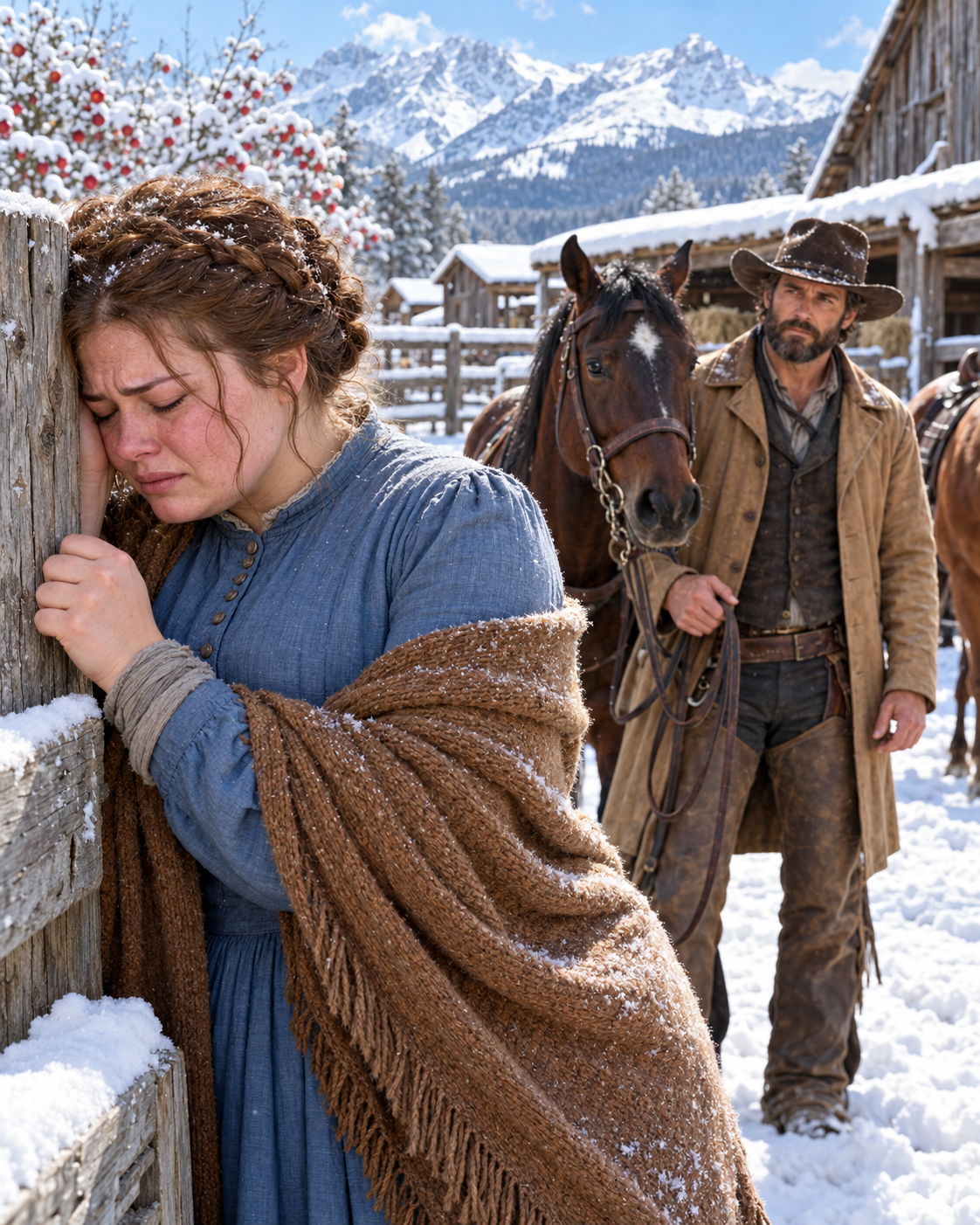
Father caught my hand.
“Go, Addie.”
“I’m not leaving you.”
“You must.”
“No.”
He looked at me with an expression I remembered from childhood, when he had patiently waited for me to learn something the hard way.
“Stubborn as your mother.”
“Then you should know arguing won’t help.”
A faint smile crossed his face.
But it vanished when the iron door shuddered.
Someone had reached the chamber.
A voice echoed through the tunnel.
“Jonathan Barlo! I know you’re breathing down there!”
Pritchard.
Father went rigid.
Samuel whispered, “He must have followed the ventilation shaft.”
Pritchard laughed.
“You were always clever, Jonathan. But you forgot one thing.”
The door shook again.
“Dead men don’t own property.”
Thaddius checked the revolver.
Two cartridges remained.
I looked around the chamber.
A lantern.
A rusted shovel.
Father’s bed.
Two crates of preserved apples.
And a bundle of old mining tools.
An idea formed.
“Samuel, how far does the drainage passage run?”
“To the creek.”
“And the creek feeds the old millpond?”
“Yes.”
I remembered something Father once taught me about the orchard’s irrigation channels.
The underground sluice gate had been sealed years earlier, but its mechanism still connected to the northern ditch.
“If we open the sluice, water will flood the tunnel.”
Samuel stared at me.
“It’ll drown everyone inside.”
“Not if we reach the drainage passage first.”
Thaddius looked toward the iron door.
“Pritchard’s men could follow.”
“Then we make certain they don’t.”
Another blow rattled the hinges.
Father gripped my arm.
“Addie, the sluice controls are beneath the first tree. But the gate is rusted. It may take more strength than you’ve got.”
I glanced at Thaddius.
He was already looking at me.
For the first time since his arrival, I saw something in his eyes beyond grief.
Trust.
“We’ll manage,” he said.
We helped Father into the drainage passage.
Daniel followed, supported by Samuel.
Thaddius remained behind long enough to wedge the shovel through the iron door’s handle.
Then he hurried after us.
We crawled through freezing darkness while the sound of splintering wood echoed behind us.
At one point, Father cried out as his injured leg struck a stone.
I turned to help him.
He caught my sleeve.
“Keep moving.”
“No more leaving people behind,” I whispered.
He looked at me for a long moment.
Then he nodded.
We emerged into the drainage ditch beneath a curtain of dead vines.
Snow fell silently across the orchard.
The farmhouse stood less than a hundred yards away, its windows glowing with stolen lantern light.
Men moved between the barn and the kitchen.
Pritchard had surrounded everything Father and I had ever loved.
Samuel pointed toward the oldest apple tree.
“The compartment is beneath that stone.”
A flat granite marker rested between its roots.
I remembered sitting on it as a little girl, eating warm bread while Mother pruned the branches.
I had never imagined that beneath my childhood hiding place lay evidence capable of destroying powerful men.
Thaddius and I hurried toward it.
He used the shovel to loosen the frozen soil.
I dug with my good hand until my fingernails split.
Beneath the stone stood a small iron cylinder.
Samuel’s second key opened it.
Inside were ledgers wrapped in oilcloth.
Dozens of them.
Each contained signatures, payments, property transfers, and carefully recorded bribes.
Father had copied everything.
Pritchard hadn’t merely stolen farms.
He had built an empire from other people’s desperation.
I lifted the first ledger.
And froze.
On the opening page was my mother’s name.
Margaret Barlo.
Beside it appeared a payment made seventeen years earlier.
A payment to Dr. Havel.
I stared at the amount.
“Father?”
He had reached the tree with Samuel’s help.
When he saw the page, his face changed.
“Adeline, don’t.”
“What is this?”
His silence frightened me.
“What did Mother pay him for?”
Father closed his eyes.
“She didn’t.”
I turned the page.
There was another entry.
A second payment.
Then a note written in Pritchard’s narrow handwriting.
Subject weakened. Final treatment authorized.
The world seemed to narrow around those words.
My mother had died when I was fourteen.
Everyone said it was pneumonia.
I remembered her burning forehead, the bitter medicine, and the doctor refusing to let us open the windows.
“Mother was poisoned too?”
Father couldn’t answer.
That was answer enough.
For years, I had believed misfortune had taken everything from our family.
Now I understood that much of our suffering had been deliberately arranged.
I looked toward the farmhouse.
Pritchard stood on the porch, shouting orders.
For one terrible instant, I wanted to walk directly toward him and end his life with my father’s revolver.
Thaddius saw the thought cross my face.
“Adeline.”
“He killed her.”
“I know.”
“He killed your family.”
His jaw tightened.
“I know.”
“Then why shouldn’t we kill him?”
Thaddius looked at the ledger in my hands.
“Because he has spent his life deciding who deserves to live. We don’t become free of him by learning to do the same.”
A shout rose from the farmhouse.
One of Pritchard’s men had found the open trapdoor.
“We’ve got them!” someone yelled.
Thaddius seized my hand.
“Now.”
We ran toward the old sluice mechanism beside the tree.
The iron wheel protruded from the frozen ground, half-hidden by roots.
Thaddius put his shoulder against it.
Nothing happened.
He tried again.
The metal groaned but refused to move.
From the farmhouse, a lantern swung toward us.
“Over there!”
A gunshot cracked.
Bark exploded from the tree above my head.
Thaddius threw himself against the wheel.
“Help me!”
I braced my good shoulder beside his.
Together, we pushed.
The wheel shifted an inch.
Then another.
A deep rumble rose beneath the frozen earth.
Water began surging through the old stone channels.
We heard a distant crash as the tunnel supports gave way.
Pritchard’s men shouted from inside the farmhouse.
But Pritchard himself remained outside.
He had seen the ledgers.
And he understood.
“DROP THEM!” he roared.
He advanced through the snow with a pistol raised.
Samuel dragged Father toward the drainage ditch.
Daniel staggered after them, clutching his wounded shoulder.
Thaddius stepped in front of me.
Pritchard smiled.
“Whitmore. I should’ve known a rat like you would crawl back.”
Thaddius said nothing.
“Your wife was equally troublesome. Pretty woman. Too curious for her own good.”
Thaddius’s hand tightened around the revolver.
Pritchard watched with satisfaction.
“She begged me to spare the little girl.”
Something inside Thaddius seemed to stop breathing.
I reached for his sleeve.
“Don’t.”
Pritchard raised his weapon higher.
“Go on, Whitmore. Give me one more murder to put beneath your name.”
Thaddius’s revolver trembled.
Then slowly, deliberately, he lowered it.
Pritchard laughed.
“Coward.”
“No,” Thaddius answered. “I’ve spent three years being afraid of you. That ends tonight.”
A second shot rang out.
Thaddius jerked backward.
Blood darkened his coat beneath the shoulder.
I screamed.
He fell against the tree, dropping the revolver into the snow.
Pritchard turned his gun toward me.
“Give me the books, Adeline.”
I stepped backward.
My heel struck the sluice wheel.
Beyond Pritchard, I saw water beginning to spill over the frozen banks.
The ground beneath us had softened.
An idea flashed through my mind.
I raised the ledgers.
“You want these?”
“Every page.”
“Then come take them.”
I threw the first ledger toward the flooded ditch.
Pritchard lunged.
For a heartbeat, his eyes left mine.
I seized the shovel and swung it into the wooden support beside the sluice.
The rotten beam shattered.
A wall of icy water burst through the weakened bank.
Pritchard stumbled.
The earth beneath his boots collapsed.
He disappeared into the drainage channel with a scream.
His pistol vanished beneath the current.
I fell to my knees beside Thaddius.
He was conscious, but his face had gone gray.
“That,” he whispered, “was a terrible idea.”
I laughed through tears.
“You taught me to repair things. You never said I couldn’t break them.”
He tried to smile.
Then his eyes closed.
I pressed my hand against his wound.
“Thaddius?”
No answer.
“Thaddius, look at me!”
The water thundered beneath the orchard.
Behind us, Pritchard struggled against the rushing current.
His hands caught the exposed roots of the old apple tree.
“Help!” he screamed.
I looked from him to Thaddius.
Everything in me wanted to leave him there.
He had poisoned my mother.
Destroyed families.
Murdered an innocent child.
And now the river had come to collect what justice had been denied.
But I heard my father’s voice behind me.
“Adeline!”
He stood at the edge of the ditch, holding Samuel’s arm.
“Don’t let him make the choice for you.”
I stared at Pritchard.
His fingers were slipping.
I snatched the broken fence rope caught around the sluice post and threw one end toward him.
“Take it!”
He grabbed it desperately.
“Pull me out!”
“Drop the knife in your coat.”
His eyes widened.
I had noticed its silver handle when he reached for his pistol.
For a moment, he hesitated.
Then he threw it onto the bank.
Samuel and Daniel hurried forward and helped me drag him from the water.
Pritchard collapsed in the snow, coughing violently.
Before he could stand, Daniel forced his wrists behind his back and tied them with the rope.
“You’re under arrest,” the deputy said.
Pritchard spat blood onto the snow.
“On whose authority?”
Daniel looked toward the ledgers.
“On the authority of every person you thought couldn’t fight back.”
I wanted to feel triumphant.
Instead, I turned and ran toward Thaddius.
His breathing had become shallow.
Samuel knelt beside him and examined the wound.
“The bullet passed through,” he said. “But he’s lost too much blood.”
Father removed his coat and wrapped it around Thaddius.
“We need a doctor.”
I looked toward the farmhouse, where smoke had begun rising through the roof.
Dr. Havel was one of Pritchard’s accomplices.
Sheriff Bellamy was coming.
The nearest honest physician lived twenty miles away.
And the man who had repaired my home was dying beneath the tree my mother planted.
I refused to accept it.
“Samuel, harness the mules.”
He hesitated.
“The roads are covered.”
“Then we’ll make our own road.”
I looked at Daniel.
“Can you keep Pritchard here?”
He nodded grimly.
“Even if I have to tie him to the tree.”
Father caught my hand.
“Addie, your wrist—”
“My wrist can heal.”
I glanced at Thaddius.
“But he needs to live long enough for his heart to remember how.”
We carried him to the wagon.
The mules stood patiently in the barn, their breath rising in the freezing air.
Samuel covered Thaddius with every blanket we possessed.
Then we started toward the mountain road.
Father insisted on coming.
I protested, but he settled beside Thaddius with the same stubborn expression I knew too well.
“Apparently,” he murmured, “it runs in the family.”
For hours, we fought the storm.
Snow swallowed the wagon tracks almost as quickly as the wheels made them.
Twice, the mules stumbled.
Once, a wheel sank into a frozen rut, and Samuel had to pry it free while I held the reins.
Thaddius drifted in and out of consciousness.
At one point, he opened his eyes.
“Adeline?”
“I’m here.”
“Did we save the orchard?”
I swallowed.
“Yes.”
“Good.”
His eyes fluttered.
“Your mother would’ve liked that.”
I gripped his hand.
“You haven’t met her.”
He smiled faintly.
“From everything you’ve told me, I think I have.”
Then he whispered something I barely heard.
“Eleanor always said a home isn’t where you stop wandering.”
I leaned closer.
“It’s where someone notices you’ve returned.”
His hand went limp.
I shouted his name into the storm.
Father pressed two fingers against his throat.
For several seconds, he said nothing.
Then he looked at me.
“Keep driving.”
Those two words carried me through the darkness.
We reached Dr. Miriam Calder’s house shortly before dawn.
She was an elderly physician who had retired from the county hospital after refusing to cooperate with Sheriff Bellamy.
Samuel pounded on her door until she appeared with a lantern.
One look at Thaddius was enough.
“Bring him inside.”
For the next three hours, I sat beside Father’s chair while the physician worked behind a closed door.
Neither of us spoke much.
There were too many words between us.
Too much anger.
Too much love.
Finally, I asked the question that had been burning inside me.
“Did you ever intend to come home?”
Father stared at his hands.
“Every day.”
“Then why didn’t you?”
“Because I convinced myself you were safer without me.”
I looked toward the closed door.
“And were you right?”
His eyes filled.
“No.”
For a long time, he said nothing.
Then he continued.
“I thought protecting you meant carrying every danger alone. But I left you to carry everything else.”
I felt the old pain rise again.
The funeral.
The empty chair.
The nights spent wondering whether I had failed him.
“I can’t forgive you all at once,” I whispered.
Father nodded.
“I wouldn’t ask you to.”
“But I want you home.”
His face crumpled.
“More than anything.”
I moved beside him and rested my head against his shoulder.
For the first time since opening the cellar door, I allowed myself to feel grateful without pretending I wasn’t still hurt.
When Dr. Calder finally emerged, her apron was stained with blood.
I stood.
“Is he alive?”
“Yes.”
My knees nearly buckled.
“But he’s weak,” she warned. “The next few days will tell us whether infection takes hold.”
I went into the room.
Thaddius lay beneath clean blankets, his shoulder heavily bandaged.
His face looked strangely peaceful.
I sat beside him and placed the silver locket in his palm.
“You don’t get to leave,” I whispered. “Not after teaching me how to fix a roof.”
His fingers didn’t move.
But his chest rose and fell.
And for that morning, it was enough.
Three days later, Marshal Elias Reed arrived in the valley with six federal officers.
Samuel’s letters had finally reached someone Pritchard couldn’t purchase.
The marshal secured the ledgers, arrested Sheriff Bellamy and Judge Mercer, and began tracing the stolen properties across state lines.
Dr. Havel attempted to flee before sunrise.
He was captured at the railway station with a bag of money and enough forged medical certificates to condemn himself.
Pritchard demanded that his arrest be overturned.
He threatened witnesses.
He offered bribes.
He insisted the ledgers were fabricated.
But the evidence was stronger than his influence.
My father testified about the poison.
Samuel described the false burial and the attempted murder.
Daniel identified the men who had attacked the farmhouse.
And Eleanor’s letter connected Pritchard to the deaths of the Whitmore family.
The investigation uncovered something none of us expected.
Pritchard had kept copies of the forged death certificates, believing he could use them to blackmail his accomplices.
Those documents ultimately destroyed his defense.
By spring, the case had reached the state court.
Pritchard was convicted of murder, conspiracy, fraud, and attempted murder.
His property was seized to compensate the families he had robbed.
The false warrant against Thaddius Whitmore was formally withdrawn.
But justice did not arrive without its own cruelty.
It couldn’t bring Eleanor back.
It couldn’t restore Clara’s childhood.
It couldn’t return the years my father had spent hidden beneath the earth or the months I had spent mourning him.
One evening, as the snow began melting from the orchard, Thaddius stood beneath the first apple tree.
His shoulder had healed enough for him to work again, though Dr. Calder had forbidden him from lifting anything heavier than a watering can.
He ignored that instruction twice.
I caught him the third time.
“If you tear those stitches, I’ll sew you to the porch myself.”
He chuckled.
“You sound like my wife.”
I stopped.
For a moment, guilt passed between us.
Then Thaddius reached for his locket.
“Eleanor would’ve liked you.”
I looked down.
“How can you be sure?”
“Because she never mistook kindness for weakness.”
We stood together while the evening sun warmed the branches.
Then he handed me a folded document.
“What is this?”
“The deed to my wagon. And the mules.”
I frowned.
“Why?”
“I’m leaving.”
The words struck harder than I expected.
“Leaving?”
“My name is cleared. There are people in Pennsylvania who deserve to know what happened to their land. Eleanor started something, and I need to finish it.”
I looked toward the farmhouse.
The roof was repaired.
The barn stood straight.
The fence shone with fresh paint.
Everything he had touched seemed stronger.
Except the place inside me that had quietly begun depending on his presence.
“Then take your wagon,” I said.
He shook his head.
“I thought you could use it.”
“I don’t want your wagon.”
He looked at me.
“What do you want, Adeline?”
I had faced armed men.
Dug through frozen earth.
Watched my father return from the dead.
Yet somehow, answering that question frightened me more than anything else.
“I want you to have somewhere to return.”
His expression softened.
I stepped closer.
“You told me that every house felt like somewhere you didn’t belong.”
He said nothing.
“Well, this one isn’t just a house anymore.”
A breeze stirred the apple branches.
“And I don’t think it has been since you arrived.”
Thaddius reached for my hand.
“I can’t promise I’ll stop missing them.”
“I would never ask you to.”
“Or that some days won’t be difficult.”
“I know.”
His thumb brushed the scar on my wrist.
“Then perhaps,” he whispered, “I’ll return when the work is done.”
I smiled through tears.
“You’d better. The barn door still sticks in winter.”
He laughed, and the sound carried through the orchard like something finally set free.
Thaddius left the following morning.
For the first time, I watched someone depart without believing that departure meant abandonment.
He wrote every week.
His letters described families reclaiming their farms, children returning to familiar schoolhouses, and widows receiving deeds they had believed lost forever.
Some stories ended happily.
Others did not.
But every letter reminded me that justice was not a single courtroom victory.
It was the patient work of making things right, one life at a time.
My father moved back into his bedroom that spring.
We argued.
We laughed.
Sometimes we sat together without speaking, learning how to share ordinary days again.
He never asked me to forget what had happened.
And I never demanded that he become the father I remembered before his disappearance.
We were different people now.
But we were still family.
That summer, I planted twelve new apple trees along the eastern fence.
Each tree honored a family whose land had been returned.
For Eleanor and Clara Whitmore, I planted two beside the farmhouse.
I placed a small wooden marker between them.
Its inscription was simple.
Love does not end where a life does.
In September, exactly one year after Thaddius first appeared with his weary mules and battered wagon, I heard wheels turning beyond the orchard.
I looked up from the cider press.
A familiar figure stood beside the gate.
His coat was dusty.
His hat was crooked.
And behind him stood two mules looking deeply offended by the journey.
Thaddius surveyed the farmhouse.
“That roof still holding?”
I folded my arms.
“Depends. Are you looking for charity?”
His smile widened.
“I’m looking for somewhere to sleep.”
I walked toward him.
“What can you do?”
“Fix a few things. Mend that fence. Keep the barn standing.”
“And what do you want?”
He looked toward the house, where Father was setting three places at the kitchen table.
Then he looked back at me.
“Space for my mules. Three meals a day. And perhaps a little more time than one week.”
I took his hand.
“How much more?”
He hesitated only a moment.
“As long as you’ll have me.”
I didn’t answer with words.
I simply stepped into his arms.
Above us, the apple leaves rustled in the autumn wind.
The farmhouse windows glowed with warm evening light.
And for the first time in longer than I could remember, I wasn’t afraid of winter.
Years later, people would tell our story as though it were a tale about a wicked merchant, a hidden cellar, and a father who returned from the grave.
They would speak of forged signatures, buried ledgers, and the night the orchard nearly washed away.
But those were never the parts I remembered most clearly.
I remembered a stranger measuring rotten boards twice because he didn’t want to waste a single nail.
I remembered my father admitting that love had not made him wise.
I remembered throwing a rope to a man who would never have done the same for me.
And I remembered learning that courage was not the absence of fear, but the decision not to let fear choose the person I became.
Pritchard had believed that taking away someone’s land would take away everything that made them strong.
He never understood that a home wasn’t merely timber, stone, or soil.
It was the people willing to stand beside one another when all those things were threatened.
My mother had planted an orchard because she believed good things required patience.
My father had nearly lost it because he believed protection meant silence.
Thaddius had wandered for years because he believed grief had taken away his right to belong.
And I had nearly lost myself because I believed asking for help was the same as surrendering.
We had all been wrong in different ways.
The truth was simpler.
A broken roof could be repaired.
A stolen field could be reclaimed.
A wounded heart could learn to welcome joy without betraying the people it had loved before.
Not every loss could be undone, and not every wrong could be made right.
But we could decide what grew from the ground where sorrow had once taken root.
Every autumn, when the first apples ripened, Thaddius and I carried a basket beneath the two trees planted for Eleanor and Clara.
We left the first fruit there before bringing the rest inside.
Not because we believed the dead needed gifts.
But because the living needed to remember why they had survived.
And whenever a traveler appeared at our gate, cold, hungry, or uncertain where to go, we offered a meal before asking what they could give in return.
For I had learned something worth more than the orchard itself.
Sometimes the person who arrives with nothing is carrying exactly what your life has been missing.
And sometimes, when you open your door to a stranger, you are not merely giving someone shelter.
You are giving hope a place to come home.
THE END.