The day I arrived at the Montana ranch, a wealthy neighbor laughed at my battered suitcase, unaware I was about to uncover the secret he’d buried.
“Because I helped his father escape that night, and yesterday someone came looking for him again.”
The elderly woman’s words seemed to freeze the blood inside my veins.
I pressed the telephone closer to my ear while Wyatt stood beside the kitchen table, watching me with frightened eyes.
“Who is this?” I whispered.
“My name is Margaret Collins, and I worked at the county courthouse when Daniel Holloway disappeared.”
Before I could respond, she began coughing, and I heard something heavy scraping across the floor behind her.
“Margaret, are you safe?”
There was a long silence.
Then she whispered, “Don’t come to my house, Clara, because someone is watching me.”
The telephone went dead.
I stood motionless, listening to the empty line while the winter wind rattled the kitchen windows.
Wyatt stepped closer, his face pale.
“What did she say?”
I told him everything, watching thirty years of grief and anger rise slowly into his expression.
For a moment, he looked like a little boy waiting for someone who had never returned.
“My father wouldn’t have abandoned me,” he whispered.
I reached for his hand.
“Then maybe it’s time we found out why everyone wanted you to believe he did.”
That evening, we spread Daniel Holloway’s old journal across the kitchen table.
Outside, snow fell heavily over the pastures, burying the fences beneath a blanket of white.
Wyatt traced his father’s handwriting with one trembling finger.
“He used to read to me beside this fireplace,” he said softly.
“I remember falling asleep against his shoulder while he told me stories about the mountains.”
His voice cracked.
“Then one morning, my mother told me he was gone.”
I felt an ache deep inside my chest.
I knew what it meant to lose someone, but Wyatt had spent thirty years mourning a man who might still be alive.
We examined every page, looking for something we might have missed.
Near the back, I discovered several numbers written beneath a sketch of the northern pasture.
At first, they looked like ordinary measurements.
Then I noticed the same numbers repeated beside an old photograph of the abandoned well.
“Wyatt, these might be coordinates.”
He leaned over my shoulder, studying the faded ink.
“That well hasn’t been used since I was a child.”
“Then why would your father write its location three different times?”
Wyatt looked toward the dark window.
“I don’t know, but tomorrow we’re going to find out.”
Neither of us slept much that night.
Around midnight, I heard him moving downstairs and found him standing beside the fireplace.
He held a small wooden horse in his hands.
“My father carved this for my seventh birthday,” he said.
“He promised we’d build a real stable together when spring came.”
I noticed the carefully carved initials beneath the horse’s belly.
D.H.
“Did you ever finish that stable?” I asked.
Wyatt shook his head.
“After he disappeared, I stopped asking anyone to help me build things.”
I stood beside him without speaking.
Sometimes grief doesn’t need comforting words.
Sometimes it only needs another person willing to stay.
The next morning, the temperature had dropped so low that ice glittered along the inside edges of the barn windows.
I insisted Wyatt eat breakfast before going outside.
He complained that I treated him like a child, but he finished every bite.
We carried shovels, a lantern, and Daniel’s journal toward the northern pasture.
The abandoned well stood beyond a line of cottonwood trees, half-hidden beneath tangled branches.
Its stone walls were cracked, and an old wooden cover rested crookedly across the opening.
Wyatt lifted the cover while I held the lantern.
Cold darkness stretched beneath us.
“Careful,” I warned.
He nodded, then noticed something carved into the inner stone wall.
Three small marks formed the shape of an arrow.
They pointed toward the ruins of an old pump house.
We searched the building until I discovered a loose floorboard beneath a rusted iron stove.
Underneath lay a narrow metal cylinder wrapped in oilcloth.
Inside was a roll of survey documents and a photograph of two men standing beside a drilling rig.
One was Daniel Holloway.
The other was Richard Vale.
But a third man stood between them.
His face was younger, his shoulders broad, and his smile strangely familiar.
Wyatt stared at the photograph.
“That’s Sheriff Bennett.”
My stomach tightened.
“The sheriff who’s still in office?”
Wyatt nodded slowly.
“He told my mother he’d searched every road in the county after my father disappeared.”
A terrible thought entered my mind.
“What if he wasn’t searching for your father?”
Wyatt looked at me.
“What if he was helping someone hide him?”
We hurried back toward the farmhouse, carrying the documents beneath Wyatt’s coat.
Halfway across the pasture, an engine growled behind us.
Marcus Vale’s black truck appeared along the fence line.
He stopped beside the gate and stepped out, his polished boots sinking into the snow.
“You’re making a mistake, Holloway.”
Wyatt stood beside me.
“I think I’ve made enough mistakes listening to your family.”
Marcus glanced at the documents in Wyatt’s hand.
His expression changed.
“Where did you find those?”
“On my property.”
Marcus approached slowly.
“You don’t understand what you’re dealing with.”
“Then explain it,” Wyatt demanded.
For a moment, Marcus looked genuinely frightened.
Then his face hardened.
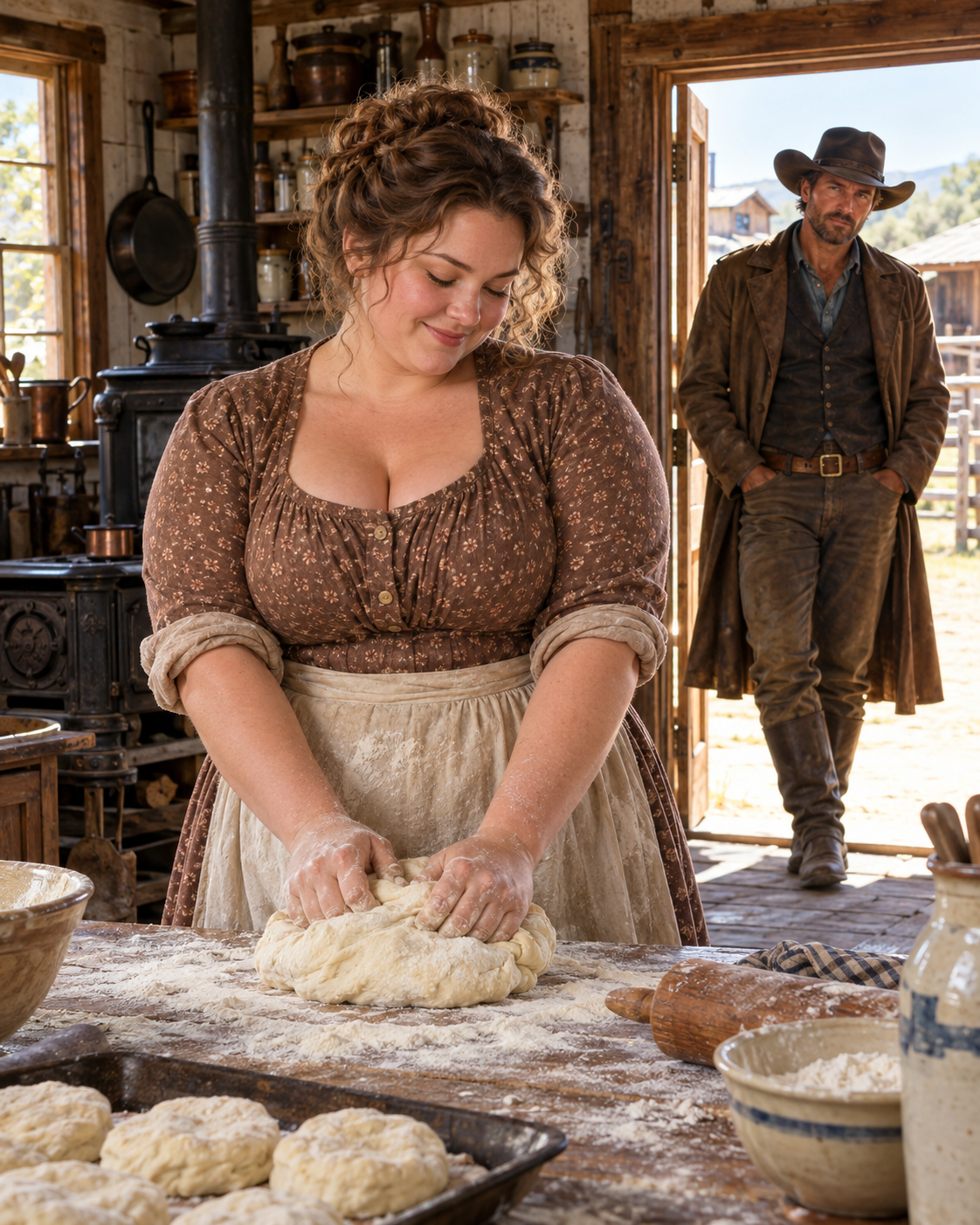
“My father spent his whole life protecting what belongs to us.”
Wyatt stepped forward.
“This land belonged to my grandfather before your father ever came here.”
Marcus’s jaw tightened.
“Ownership isn’t always as simple as what’s written on paper.”
I remembered the threatening letters and the desperate offers to buy the ranch.
“That’s why you wanted Wyatt to sign away the mineral rights, isn’t it?”
Marcus looked directly at me.
“You should’ve taken the cooking job somewhere else.”
Wyatt moved between us.
“Don’t threaten her.”
Marcus gave a humorless laugh.
“You think this is about some minerals under your frozen pasture?”
He shook his head.
“You have no idea what your father found.”
Before we could stop him, he climbed into his truck and drove away.
I watched the taillights disappear.
For the first time, I wondered whether Marcus was protecting a fortune or something far more dangerous.
That afternoon, I called the county courthouse and asked about Margaret Collins.
The receptionist hesitated.
“Margaret hasn’t worked here in twenty years.”
“I know, but I need to speak with her.”
Another pause followed.
Then the woman lowered her voice.
“Someone broke into her house last night.”
My fingers tightened around the receiver.
“Is she hurt?”
“She’s at St. Catherine’s Hospital in Helena.”
I closed my eyes, remembering her warning.
Someone was watching her.
When I told Wyatt, he immediately reached for his coat.
“We’re going.”
“The roads are covered in ice.”
“Then we’ll drive slowly.”
I recognized the determination in his eyes.
The exhausted man I had found beneath a thin quilt was disappearing.
In his place stood someone who finally believed his life was worth fighting for.
We left before sunrise the following morning.
The highway wound through frozen valleys, where distant mountains rose beneath a gray sky.
For the first hour, Wyatt barely spoke.
Then he said something that surprised me.
“Emily used to tell me I was too proud to ask for help.”
I turned toward him.
“She sounds like a smart woman.”
“She was.”
A faint smile crossed his face.
“She would’ve liked you.”
I looked out the window before he could see my expression.
Somewhere between the warm meals, the cold mornings, and the quiet conversations beside the fireplace, Wyatt had become important to me.
That frightened me more than Marcus Vale ever could.
After my husband’s death, I had promised myself never to build my happiness around another person again.
But love doesn’t always arrive with grand promises.
Sometimes it arrives as a tired man asking whether you’ve eaten.
Sometimes it waits quietly while you remember how to trust.
We reached the hospital shortly before noon.
Margaret Collins lay in a narrow bed beside a window overlooking the parking lot.
She was a small woman with silver hair and bruises along one arm.
When Wyatt entered, she covered her mouth.
“Oh, Daniel,” she whispered.
Wyatt stopped walking.
“My name is Wyatt.”
Tears filled her eyes.
“I know, sweetheart, but you look so much like your father.”
He pulled a chair beside her bed.
“Please tell me what happened to him.”
Margaret closed her eyes for several seconds.
“When your father discovered those survey results, Richard Vale wanted to sell the mineral rights to a private company.”
“But Daniel refused because the old drilling site was dangerously close to the creek feeding several ranches.”
I leaned forward.
“What kind of minerals?”
“Rare-earth elements were suspected, but the early survey was incomplete.”
She swallowed painfully.
“Daniel demanded independent testing before anyone dug into that mountain.”
Wyatt frowned.
“Why would that make him disappear?”
“Because Richard had already taken money from investors and promised them access to the land.”
Margaret looked toward the door.
“When Daniel threatened to expose the forged contracts, Richard arranged a meeting at the old pump house.”
Her hands began trembling.
“Sheriff Bennett was there.”
Wyatt stared at her.
“Was my father killed?”
Margaret shook her head.
“Daniel escaped, but Bennett told Richard he would arrest Daniel for theft and make sure he never saw his family again.”
I felt tears gather in my eyes.
“What happened next?”
“Daniel came to me because I worked with the county property records.”
She reached beneath her pillow and pulled out a folded piece of paper.
“I helped him contact a lawyer in another state.”
Wyatt’s breathing became uneven.
“Why didn’t he come home?”
“Because Richard threatened your mother and you.”
A tear slipped down her cheek.
“Daniel believed leaving was the only way to keep you alive.”
Wyatt rose abruptly and walked toward the window.
His shoulders shook.
Thirty years of believing himself unwanted had become thirty years stolen by fear.
Margaret continued softly.
“Your father wrote letters, Wyatt.”
He turned around.
“What letters?”
“Dozens of them, but they never reached your family.”
“Why?”
“Because someone intercepted them.”
Silence settled over the room.
Then Margaret took my hand.
“I kept one.”
From inside her purse, she removed an envelope worn thin along its edges.
Across the front, in careful handwriting, were the words:
To my little boy, Wyatt, on his tenth birthday.
Wyatt accepted the envelope as though it might crumble beneath his fingers.
He opened it slowly.
His father’s words filled the quiet hospital room.
“My precious boy, I hope you’re growing tall and strong, and I hope you still remember how much your daddy loves you.”
Wyatt covered his eyes.
I held his hand while he continued reading.
“Every morning, I think about the stable we promised to build together.”
“If I cannot come home, please know that leaving you was the hardest thing I have ever done.”
“Nothing in this world could make me stop being your father.”
When Wyatt finished, he folded the letter against his chest.
And then he cried.
Not quietly.
Not politely.
He cried like the seven-year-old boy who had waited beside a window for someone to return.
I wrapped my arms around him.
He held on to me, trembling.
“I thought he didn’t want me,” he whispered.
“I know.”
“All those years, Clara.”
“I know.”
There were no words that could return his childhood.
But perhaps the truth could give him back something of himself.
Margaret wiped her cheeks.
“There’s something else you need to know.”
Wyatt looked up.
“Your father is alive.”
The room seemed to stop breathing.
“Where?”
Margaret hesitated.
“He has lived under another name in northern Idaho for many years.”
“Then why hasn’t he returned?”
“Because until recently, he believed Richard’s threats were still being carried out through Bennett.”
She looked toward me.
“Last month, Daniel learned that Richard had died and began asking questions about the ranch.”
A cold sensation traveled down my spine.
“That’s why someone came looking for him again.”
Margaret nodded.
“Marcus found out his father had hidden important records, and Bennett is terrified Daniel can prove what happened.”
Wyatt stood slowly.
“Tell me where he is.”
Margaret handed him a small card.
Written on it was a name and an address outside Coeur d’Alene.
Before she could say another word, someone knocked on the hospital room door.
Sheriff Bennett stood in the hallway.
He wore a dark coat and a pleasant smile that never reached his eyes.
“Well, Wyatt, I heard your old friend wasn’t feeling well.”
Margaret went completely still.
Wyatt stepped in front of her bed.
“We were just leaving.”
Bennett looked at me.
“You must be the new cook.”
I felt my skin crawl.
“That’s right.”
“Funny how a stranger can stir up so much trouble.”
He smiled again.
“Drive carefully on your way home.”
We walked past him without answering.
Only when the elevator doors closed did I realize Wyatt was shaking.
“He knows,” Wyatt whispered.
“Yes.”
“And he knows where we’re going.”
I took his hand.
“Then we’re not going straight there.”
Instead, we drove to a state police office and requested to speak with an investigator.
We presented Daniel’s journal, the hidden survey documents, Margaret’s statement, and the photographs.
At first, the investigator listened with cautious disbelief.
Then he examined the old signatures beside the property transfers.
His expression sharpened.
“These documents may establish a pattern of fraud.”
He made copies and asked us to leave the originals in secure custody.
“Do not confront Sheriff Bennett or Marcus Vale again,” he warned.
“We’ll coordinate with the appropriate authorities.”
For the first time, I felt that someone outside the ranch might actually help us.
But the danger had not disappeared.
That evening, as we returned along the mountain highway, Wyatt noticed a familiar black truck following several cars behind us.
Marcus.
I watched the headlights in the side mirror.
“He knows we spoke to the police.”
Wyatt kept both hands on the steering wheel.
“Call the investigator.”
I reached for my phone.
Before I could finish dialing, the truck accelerated.
Its headlights filled our rear window.
“Hold on!” Wyatt shouted.
The impact came suddenly.
Our pickup lurched sideways across the icy road.
I screamed as the tires lost their grip.
For one horrifying second, the world became spinning headlights, snow, and darkness.
Wyatt fought the steering wheel.
The truck struck a snowbank, throwing me against my seat belt.
Then everything stopped.
We sat frozen, listening to the engine ticking beneath the hood.
“Clara?”
Wyatt’s voice sounded distant.
“I’m okay.”
He touched my cheek.
“Are you hurt?”
I shook my head, though my entire body trembled.
Through the cracked windshield, I saw Marcus’s truck stopped along the shoulder.
A shadow moved beside it.
Then Marcus climbed back inside and sped away.
Wyatt reached for his phone.
“He’s not getting away with this.”
We called emergency services and reported everything.
A highway patrol officer arrived and photographed the damage.
By midnight, state investigators had been notified, and Marcus’s truck was being sought.
We spent the night at a small roadside motel.
Wyatt sat beside the bed, staring at the birthday letter.
I knew he was frightened.
Not only of Marcus, but of discovering that hope could be taken away again.
I sat beside him.
“You don’t have to pretend you’re strong every minute.”
He lowered his head.
“I nearly lost you tonight.”
His words caught me off guard.
“You didn’t.”
“But I could have.”
He turned toward me, his eyes wet.
“When you arrived at my ranch, I wanted the whole world to leave me alone.”
I smiled sadly.
“I noticed.”
“Then you started a fire, fed my cattle, and argued with me about soup.”
Despite everything, I laughed.
He took my hand.
“Somewhere along the way, you made that house feel like home again.”
My throat tightened.
“I was looking for a home, too.”
He leaned forward and kissed my forehead.
It was gentle, almost hesitant.
And somehow, it meant more than every beautiful promise I’d ever heard.
The following morning, investigators called with news.
Marcus had been located and detained for questioning about the collision.
Bennett had also been suspended pending an investigation into the historical property records.
But one detail troubled me.
Investigators had discovered that the old survey files were incomplete.
Someone had deliberately removed the pages documenting the environmental hazards.
Without them, proving the original motive would be difficult.
Wyatt listened quietly.
Then he reached for Daniel’s journal.
“My father might know where the missing pages are.”
The investigator agreed to arrange a protected meeting.
Two days later, we traveled to Idaho with a state investigator.
The address Margaret had given us led to a modest wooden cabin beside a quiet lake.
Smoke rose from the chimney.
An old red pickup sat near the porch.
Wyatt stopped walking.
Through the front window, we could see an elderly man seated beside a workbench.
He was carving something from a small piece of wood.
Wyatt’s hand tightened around mine.
“That’s him.”
I looked at the man inside.
His hair was white, his shoulders bent, but there was no mistaking the resemblance.
The investigator knocked.
Footsteps approached.
The door opened.
Daniel Holloway stood before us.
For several seconds, nobody spoke.
His eyes moved from the investigator to me, then settled on Wyatt.
The wooden carving slipped from his hand.
“Wyatt?”
His voice was barely audible.
Wyatt swallowed.
“Dad?”
Daniel staggered backward, gripping the doorframe.
“Oh, my boy.”
Wyatt stepped forward.
For thirty years, he’d imagined what he might say if he ever saw his father again.
He had imagined anger, questions, accusations, and answers.
But when the moment finally arrived, he simply wrapped his arms around him.
Daniel held his son with the desperation of a man afraid of waking from a dream.
“I’m sorry,” he sobbed.
“I’m so sorry.”
Wyatt buried his face against his father’s shoulder.
“I waited for you.”
Daniel’s knees nearly gave way.
“I know, son.”
“I thought you left because I wasn’t enough.”
Daniel pulled back and held Wyatt’s face between his hands.
“Listen to me carefully.”
His voice shook.
“You were the reason I kept living.”
I stepped away, wiping tears from my cheeks.
Some reunions are too sacred for strangers to interrupt.
Inside the cabin, we sat around a small kitchen table while Daniel told us everything.
He had fled Montana with evidence of the forged contracts, believing he could expose Richard Vale from a safe distance.
But his first lawyer died unexpectedly, and the documents were stolen during a break-in.
Soon afterward, Daniel received photographs of Wyatt walking to school.
Someone had written threats across the backs.
He tried contacting his family through intermediaries, but the messages never reached them.
Years passed.
Fear became habit.
Habit became a prison.
And shame eventually convinced him that returning would only reopen wounds.
“I should’ve found another way,” Daniel said.
“I know that now.”
Wyatt studied his father.
“You missed my wedding.”
Daniel closed his eyes.
“I know.”
“You never met Emily.”
A tear rolled down his cheek.
“And Mom died believing you abandoned her.”
Daniel covered his mouth.
There was no comforting answer.
Some mistakes cannot be erased, even when they were made out of love.
Wyatt looked down at his hands.
For a moment, I feared anger would swallow the fragile peace between them.
Then he spoke.
“I can’t give you back those years.”
Daniel nodded.
“I don’t deserve to ask.”
“But I don’t want to spend whatever time we have left hating you.”
Daniel reached across the table.
Wyatt took his hand.
The investigator quietly cleared his throat.
“Mr. Holloway, we also need to discuss the missing survey records.”
Daniel nodded.
“I kept copies.”
He stood and walked toward his workbench.
From beneath a hidden drawer, he removed a sealed folder.
Inside were laboratory reports, correspondence, and copies of agreements bearing Richard Vale’s signature.
The reports showed that potentially valuable mineral deposits had been identified, but also warned that careless extraction could contaminate the creek supplying several neighboring properties.
Richard had concealed those warnings while promising investors easy access to the land.
Daniel had refused to cooperate.
And Bennett had helped fabricate evidence making him appear responsible for stolen company funds.
“These papers could change everything,” the investigator said.
Daniel looked at Wyatt.
“Your grandfather didn’t leave you that ranch so someone could destroy it for money.”
Wyatt nodded slowly.
“I know.”
When we returned to Montana, the story spread through the county.
State investigators uncovered additional records connecting Richard’s company to the forged transfers.
Marcus faced charges related to the highway collision and financial misconduct after further evidence emerged.
Bennett was charged in connection with alleged obstruction and falsified records, although the courts would still have to determine responsibility.
For once, the Holloway family had evidence strong enough to challenge the lies.
But saving the ranch was not as simple as exposing its enemies.
Wyatt still owed money.
The barn needed repairs.
The cattle required feed.
And winter had not finished with us.
One evening, I found Wyatt sitting at the kitchen table beneath a pile of unpaid bills.
He looked exhausted again.
“What’s wrong?”
He pushed an envelope toward me.
A lender had demanded overdue payments.
“Even if we win the legal fight, Clara, I might still lose this place.”
I sat across from him.
“Then we need a plan.”
He gave a tired smile.
“You make everything sound possible.”
“No,” I said gently.
“I just refuse to call something impossible before we’ve tried.”
Over the following weeks, we met with agricultural advisers, a local credit union, and neighboring ranchers.
The investigators’ findings helped establish that the disputed mineral documents should not be used to pressure Wyatt into selling.
A nonprofit land conservation group expressed interest in protecting the creek and helping preserve the ranch.
Several neighbors offered equipment, supplies, and temporary labor.
Some had known Wyatt his entire life.
Others remembered Daniel.
One elderly rancher arrived with a truck full of hay.
“Your daddy helped my family through the blizzard of ’82,” he told Wyatt.
“Been waiting a long time to return the favor.”
Another neighbor repaired the damaged barn doors without charging a cent.
A young couple offered to help rebuild the fence.
And the woman who owned the grocery store delivered enough food to fill our empty pantry.
I watched Wyatt struggle to accept their kindness.
One afternoon, he stood in the barn doorway, overwhelmed.
“I can’t repay all these people.”
I slipped my hand into his.
“Maybe kindness isn’t always a debt.”
He looked at me.
“Then what is it?”
“Sometimes it’s a gift we pass along when someone else needs it.”
He stared at the busy yard, where neighbors worked beneath the pale winter sun.
Then he smiled through tears.
For the first time, Holloway Ranch no longer felt like one man’s impossible burden.
By early spring, Daniel returned to Montana.
He stepped out of Wyatt’s truck carrying a battered suitcase and the wooden carving he’d been making when we found him.
It was a small horse.
He handed it to Wyatt.
“I never stopped making these,” Daniel said.
“I guess I kept hoping someday you’d come back for one.”
Wyatt held the carving against his palm.
Then he led his father toward the barn.
“There’s something I want to show you.”
Behind the old building stood a small wooden stable.
It wasn’t finished.
Fresh boards lay stacked beside the doorway.
Wyatt turned toward his father.
“I thought maybe we could finish what we started.”
Daniel’s eyes filled with tears.
“I’d like that, son.”
That afternoon, I watched them work side by side beneath the warming sky.
Two men who had lost thirty years were building something that might outlast them both.
Not because they could recover the past.
But because they finally understood that the future was still theirs to shape.
Several weeks later, the conservation agreement was approved, providing funding to protect the creek while allowing Wyatt to keep ranching.
With a manageable repayment plan and help from the community, the ranch finally had a realistic chance of surviving.
There was no sudden fortune.
No buried treasure that magically erased every hardship.
Only truth, hard work, and people who refused to let one another fall.
One evening, I stood on the porch watching the sun disappear behind the mountains.
The air smelled of damp earth and fresh grass.
Behind me, the farmhouse glowed with warm light.
Dinner simmered on the stove.
Daniel and Wyatt were laughing in the barn.
I remembered arriving with one battered suitcase, believing I had nothing left to offer the world.
I had come to cook meals in exchange for a room.
Instead, I had found a family wounded in ways I understood.
Wyatt stepped onto the porch beside me.
“Thinking about leaving?”
I smiled.
“Why would you ask that?”
“Your contract ended last week.”
I laughed softly.
“I suppose you’ll have to find another cook.”
He looked genuinely distressed.
“Clara…”
I turned toward him.
He held a small wooden box in his hands.
Inside was a simple silver ring.
My breath caught.
“I’m not asking because you saved my ranch,” he said.
“And I’m not asking because I need someone to cook my supper.”
He took my hand.
“I’m asking because every morning, I wake up grateful that you stayed.”
Tears blurred my vision.
“Wyatt…”
“I know we’ve both lost people we loved.”
His voice trembled.
“I know we can’t promise life won’t hurt us again.”
He glanced toward the open fields.
“But I’d rather face whatever comes next with you than spend another lifetime hiding from happiness.”
I thought about my husband.
About the grief I had carried like a locked door.
And about the strange, beautiful truth that loving again did not mean forgetting the love that came before.
I nodded through tears.
“Yes.”
Wyatt laughed, almost disbelieving.
Then he pulled me into his arms.
Behind us, someone cleared his throat.
Daniel stood in the doorway, smiling.
“Well, are you two planning to kiss, or should I go finish supper myself?”
We burst into laughter.
Wyatt kissed me beneath the fading Montana sky.
And for one beautiful moment, the past finally felt quiet.
That summer, we held our wedding beside the finished stable.
There were no expensive decorations, no grand ballroom, and no elaborate promises.
Just wildflowers, homemade food, neighbors, and a father standing proudly beside the son he’d once believed he would never hold again.
Margaret attended in a blue dress, crying before the ceremony even began.
Daniel walked beside Wyatt to the small wooden archway.
When he reached me, he whispered, “Thank you for bringing my boy home.”
I looked at the man standing before me.
“No,” I whispered back.
“He found his own way home.”
As the sun lowered behind the mountains, Wyatt took both my hands.
“I used to think this ranch was everything I had left,” he said.
“But when I was sick and alone, I learned that a house can still be empty even when you own every acre around it.”
He smiled through his tears.
“You taught me that home isn’t something we hold on to by ourselves.”
I squeezed his hands.
“And you taught me that losing someone doesn’t mean we have to stop living.”
We kissed as our friends and family applauded.
Months later, I hung an old photograph above the fireplace.
It showed Daniel holding seven-year-old Wyatt beside an unfinished wooden stable.
Next to it, I placed a new photograph of the two men standing proudly beside the completed building.
Thirty years separated those pictures.
Thirty years of heartbreak, deception, and missed birthdays.
But between them was something no lie had managed to destroy.
Love.
I still think about the night I first arrived at Holloway Ranch.
I remember Marcus laughing at my battered suitcase.
I remember the cold kitchen, the empty pantry, and the lonely man upstairs who believed there was nothing worth saving.
If I had listened to that cruel stranger, I would have turned around and walked away.
I would never have known the truth about Daniel.
I would never have seen Wyatt learn to smile again.
And I would never have discovered that the very place I thought would shelter me from the world was where my life would begin again.
Sometimes the people who appear to have nothing left are carrying treasures nobody else can see.
Sometimes the strongest thing we can do is admit we need help.
And sometimes, when life has broken our hearts, healing begins with something as ordinary as a warm meal, an open door, and someone who chooses to stay.
Because the greatest riches hidden beneath Holloway Ranch were never the minerals buried in its soil.
They were the years we still had to love one another.
And every winter, when snow gathers against our farmhouse windows, I remember the words Wyatt spoke on our first night together.
“There’s nothing here worth saving.”
Then I look around our warm kitchen, at Daniel laughing beside the fire and Wyatt reaching for my hand, and I know how wrong he was.
Sometimes, the most beautiful chapters of our lives begin at the very moment we believe our story is over.
THE END.