The day Edwin Hargrave nailed an eviction notice to my Colorado stage station, he laughed at my tears, unaware his own signature concealed a crime.
The second stranger stepped into the lantern light, and Deputy Marshal Elias Crowe suddenly looked like a man who had seen his own grave.
“Drop the gun, Crowe,” the stranger ordered, his voice echoing through the abandoned mine.
But I barely heard him.
My eyes were fixed on Thomas.
My husband stood less than ten feet away, his face scarred, his clothes hanging loosely from shoulders that had once been strong enough to carry me across a flooded river.
For eleven months, I had mourned him.
For eleven months, I had whispered prayers beside an empty grave.
And now he was standing before me, breathing the same cold mountain air.
“Thomas?” I whispered.
He took one trembling step forward.
“Margaret, sweetheart, I’m so sorry.”
Something inside me broke.
I wanted to run into his arms, but another part of me wanted to scream.
I had buried my happiness with that coffin.
I had spent countless nights crying into his pillow, begging God to let me hear his voice just once more.
And all this time, he had been alive.
Crowe suddenly twisted toward the darkness, raising his revolver.
A gunshot exploded through the tunnel.
Silas threw himself against me, sending us crashing behind a pile of broken timber.
The stranger fired back.
Crowe cried out as his pistol struck the ground and disappeared beneath the rocks.
“Don’t move!” the stranger shouted.
When the smoke cleared, Crowe was kneeling against the wall, clutching his bleeding shoulder.
Thomas hurried toward me.
“Margaret, are you hurt?”
I stared at him through tears.
“Don’t ask me that.”
He stopped.
“Please, let me explain.”
“Eleven months, Thomas.”
My voice shook so badly I could hardly speak.
“Eleven months believing you were dead.”
He lowered his head.
“I know.”
“No, you don’t.”
I stepped backward, pressing one hand against my chest.
“You didn’t have to stand beside your own grave and wonder how you were supposed to survive another winter.”
Thomas closed his eyes.
And for the first time since I had known him, I saw my husband unable to find a single word.
The stranger approached, keeping his weapon trained on Crowe.
“My name is Daniel Mercer,” he said quietly.
“I’m an investigator working under the territorial authorities, and your husband has been helping me uncover a serious crime.”
I looked between the two men.
“What crime could possibly be worth destroying our lives?”
Mercer glanced toward the darkness beyond the tunnel.
“Murder, Mrs. Wickham, and a conspiracy involving land titles, stolen silver, and several powerful men.”
Before I could respond, Crowe began laughing.
His wounded shoulder was bleeding through his coat, but his expression remained strangely confident.
“You think you’ve won?” he muttered.
Mercer stepped closer.
“Be quiet.”
Crowe smiled at Thomas.
“Tell your wife what happened to the miners.”
Thomas went pale.
A terrible silence followed.
I had never seen that particular look in my husband’s eyes.
It was the expression of a man who had spent too long carrying something unbearable.
“What miners?” I asked.
Thomas slowly turned toward me.
“Seven men disappeared from the Black Raven Mine last winter.”
I remembered the rumors.
Hargrave had claimed the miners abandoned their claims after a tunnel collapse made the workings worthless.
Some townspeople believed they had gone west.
Others said they had died in the mountains.
Nobody knew for certain.
Thomas swallowed.
“They didn’t leave, Margaret.”
The coldness in his voice made my skin tighten.
“They were trapped inside.”
I stared at him.
“Trapped?”
“Hargrave ordered the entrance sealed after the men discovered a rich vein of silver beneath land he didn’t own.”
Mercer continued the story.
“The miners had filed claims before Hargrave could purchase the surrounding property, which meant he couldn’t legally seize their discovery.”
“But if those men disappeared,” I whispered, “there would be nobody left to challenge him.”
Mercer nodded.
Crowe spat blood onto the ground.
“Those fools should have taken the money.”
Thomas turned on him.
“They begged you to open the tunnel.”
Crowe’s smile disappeared.
Thomas’s voice rose.
“You heard them pounding behind the boards, and you walked away.”
I felt suddenly sick.
Seven men.
Seven families waiting for husbands, fathers, and sons who would never return.
And somewhere beneath the mountain, their last cries had gone unanswered.
“How did you discover it?” I asked Thomas.
He looked toward the old mining tracks.
“One of the miners escaped through a ventilation shaft.”
His name was Samuel Reed.
He had reached Wickham Station half-frozen, with blood on his hands and a notebook hidden inside his coat.
Thomas had given him food and shelter.
Then Samuel told him everything.
The notebook contained mining records, names, dates, and payments connecting Hargrave to the sealed tunnel.
But Samuel disappeared the following evening.
Three days later, Thomas was attacked while traveling toward Red Creek with the evidence.
“Crowe and two hired men stopped my wagon,” Thomas said.
“They beat me until I couldn’t stand, then threw me into a ravine.”
I covered my mouth.
“They told everyone you’d died in a carriage accident.”
Thomas nodded.
“Mercer found me before the storm finished what they started.”
Mercer had been investigating missing freight shipments and fraudulent mining claims.
He hid Thomas at a remote cabin while gathering enough evidence to prosecute the men responsible.
“But why didn’t you send word?” I asked.
My voice was no longer angry.
It was something worse.
It was exhausted.
Thomas looked at Crowe.
“Because they knew where you lived.”
Crowe chuckled.
“We knew exactly where.”
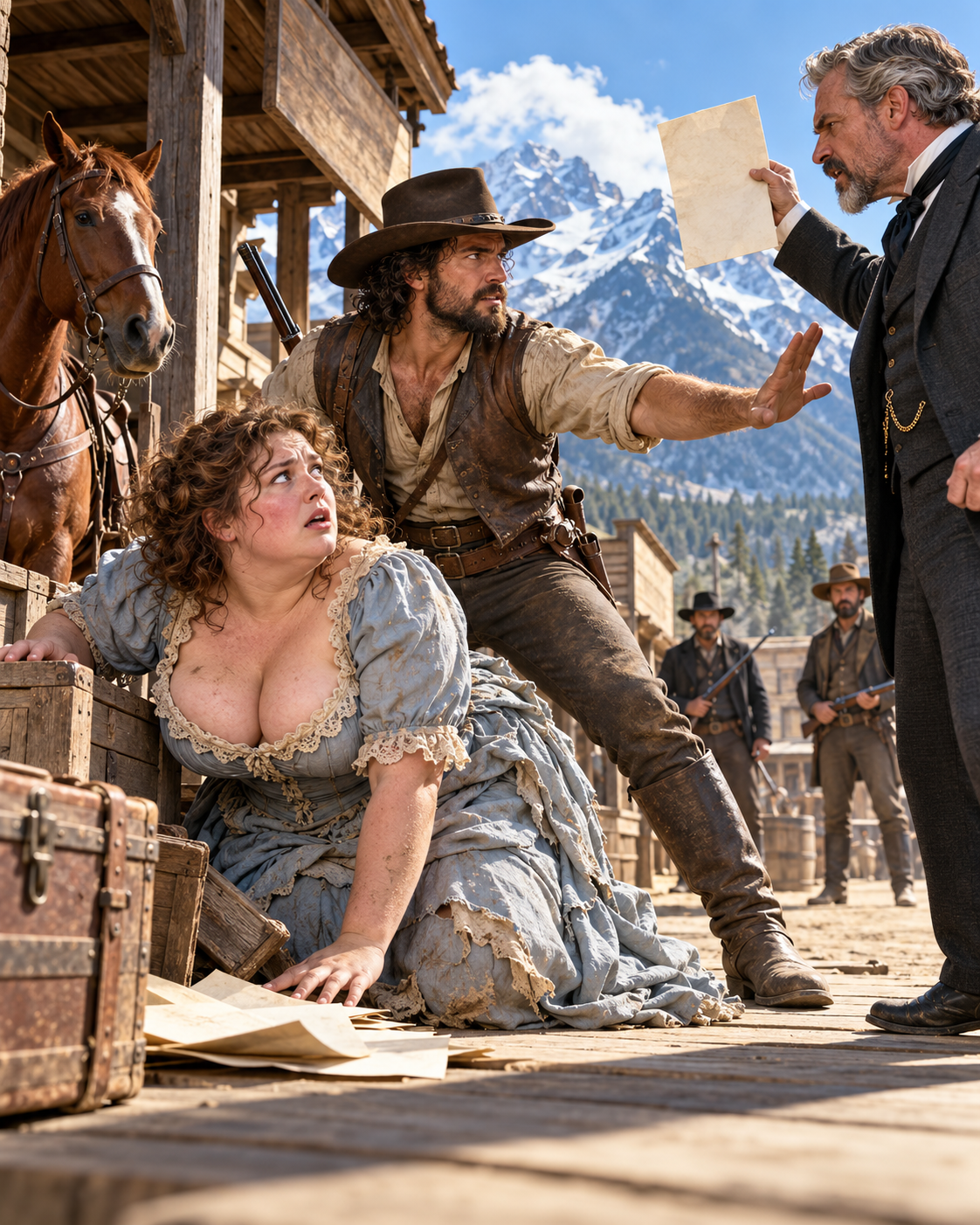
Thomas’s hands curled into fists.
“Hargrave told me that if Margaret learned I was alive, she’d be buried beside me before morning.”
I stepped away from him.
For eleven months, I had survived the hardest season of my life.
I had fought creditors, repaired broken fences, fed stranded travelers, and carried wood through storms that nearly killed me.
But nobody had trusted me with the truth.
Not even the man who loved me.
“You should have let me decide whether I was brave enough,” I whispered.
Thomas flinched.
“I thought I was protecting you.”
“You were protecting me from a choice that belonged to me.”
He said nothing.
And somehow, his silence hurt more than his explanation.
Mercer broke the moment.
“We need to leave before Hargrave’s remaining men discover Crowe hasn’t returned.”
Silas retrieved Crowe’s revolver and bound his wrists with a length of rope.
But as we turned toward the entrance, a low rumble traveled through the ground.
Dust fell from the ceiling.
Mercer raised his lantern.
“Everyone move.”
Another rumble shook the tunnel.
Then came the unmistakable thunder of an explosion.
The entrance vanished behind a wall of collapsing stone.
For several seconds, nobody moved.
The mountain seemed to groan around us.
Silas rushed toward the fallen rocks, searching for an opening.
Nothing remained except shattered timber and tons of earth.
“They’ve sealed us in,” he said.
Crowe’s laughter echoed through the darkness.
“Hargrave doesn’t leave witnesses.”
I looked at Thomas.
His face had gone gray.
And suddenly I understood something worse than our danger.
Hargrave hadn’t merely wanted the station.
He had wanted the northern valley because the original mine tunnel crossed beneath our land.
If he owned Wickham Station, he could control the only remaining access to whatever evidence lay underground.
“There’s another way out,” Thomas said.
He pointed deeper into the mine.
“The old ventilation shaft.”
Crowe stopped laughing.
“No.”
Thomas looked at him.
“You know where it is.”
Crowe shook his head.
“That passage isn’t safe.”
Silas tightened the rope around Crowe’s wrists.
“Neither is staying here.”
We moved into the darkness.
The tunnel narrowed until the walls scraped against our shoulders.
Water dripped from overhead, and the air smelled of old smoke and rotting wood.
Every step stirred dust that burned my throat.
Thomas walked beside me, holding the lantern low.
Once, he reached for my hand.
I pulled away.
He didn’t try again.
After nearly an hour, we reached a chamber supported by thick wooden beams.
Seven rusted mining picks lay scattered across the ground.
Against the far wall stood a row of small crosses fashioned from broken planks.
There were seven of them.
I stopped.
Thomas removed his hat.
“These are the men,” he whispered.
My eyes filled with tears.
Someone had carved their names into the wood.
Henry Walsh.
Peter Donnelly.
Joseph Mills.
Benjamin Carter.
Andrew Price.
William Dawson.
Samuel Reed.
I stared at the last name.
“Samuel died too?”
Thomas nodded slowly.
“He survived long enough to tell us where the others were buried.”
Then I noticed something written beneath his name.
A small inscription had been scratched into the stone.
“TELL MY DAUGHTER I TRIED.”
My chest tightened.
I thought of a little girl somewhere, perhaps still waiting beside a window for her father to come home.
I knelt before the crosses.
“I promise,” I whispered.
“I’ll make sure they know.”
Behind me, Crowe suddenly lunged.
He slammed his shoulder into Silas, sending him against a support beam.
The old timber cracked.
Before anyone could react, Crowe seized a fallen pick and struck Thomas across the head.
Thomas collapsed.
I screamed.
Mercer raised his pistol, but Crowe dragged me against him, pressing the sharp end of the pick beneath my chin.
“Drop it,” he hissed.
Mercer froze.
Silas struggled to his feet.
“Let her go.”
Crowe tightened his grip.
“You people have no idea how much money is buried beneath this mountain.”
I could feel his breath against my ear.
His hands were shaking.
For the first time, I understood that he wasn’t merely cruel.
He was terrified.
Men like Crowe could frighten helpless people.
But they couldn’t survive the thought of losing control.
I looked toward Thomas, lying motionless on the ground.
Blood was spreading across his forehead.
My fear became something cold and steady.
“You’re right,” I said quietly.
Crowe hesitated.
“What?”
“You’ve killed men for silver, betrayed your oath, and destroyed families.”
I swallowed.
“But you forgot something.”
His grip tightened.
“What?”
“Thomas taught me how to defend this station.”
I drove my heel into his injured foot and twisted away.
Crowe cried out.
Silas struck him with the wooden handle of a mining shovel.
The pick fell from his hand.
Mercer caught Crowe before he could reach another weapon.
When the struggle ended, I was kneeling beside Thomas.
His eyes remained closed.
“Thomas, please.”
I pressed my fingers against his neck.
There was a pulse.
Weak, but steady.
He opened his eyes several moments later.
“Margaret?”
My tears fell onto his coat.
“Don’t you dare die on me again.”
A faint smile touched his lips.
“I’ll do my best.”
We found the ventilation passage behind the chamber.
It rose steeply through the mountain, twisting around narrow shelves of rock.
Silas went first, testing each foothold.
Mercer followed with Crowe.
Thomas struggled behind them, one arm around my shoulders.
Every few minutes, he stopped to catch his breath.
I could feel how much weight he had lost.
He was no longer the strong man who once lifted heavy trunks onto stagecoaches without help.
He was wounded.
Exhausted.
Human.
And despite everything, he was mine.
At last, cold night air touched my face.
We emerged onto a rocky ledge overlooking the northern valley.
Below us, three lanterns moved through the trees.
Men were searching the mountainside.
Silas crouched beside me.
“Hargrave’s riders.”
Then a voice called from below.
“Blackwood!”
I recognized the speaker immediately.
Edwin Hargrave.
He stood beside a black horse, holding a rifle across his saddle.
And next to him was Martha Bell.
Her hands were tied.
My breath caught.
Martha had helped me through every miserable month after Thomas’s supposed death.
She had fed my horses when I couldn’t afford grain.
She had held me when grief made breathing difficult.
Now Hargrave was using her to finish what he had started.
“Bring me the documents,” he shouted, “or the old woman dies.”
Silas looked toward Mercer.
“We can’t reach them without crossing that open slope.”
I studied the valley.
The trail below curved past a narrow bridge that crossed a frozen creek.
Thomas had repaired that bridge the previous spring.
I remembered every loose board.
Every weak railing.
Every dangerous turn.
And I remembered something else.
The old freight trail behind the ridge led directly toward Wickham Station.
“Silas,” I whispered, “can you reach the station by the upper trail?”
He followed my gaze.
“Maybe, if the horses are still where we left them.”
“Then go.”
Thomas caught my arm.
“Margaret, no.”
I faced him.
“For eleven months, I kept our home standing because I believed that was all I had left of you.”
My voice broke.
“But Martha helped me keep living.”
I looked down at Hargrave.
“I’m not leaving her.”
Silas studied my face, then nodded.
“I’ll bring help.”
He disappeared into the darkness.
Mercer remained above with Crowe and the evidence.
Thomas insisted on coming with me, though his legs trembled with every step.
We descended the slope slowly.
Hargrave watched us approach.
When he saw Thomas, his expression twisted.
“You should have stayed dead, Wickham.”
Thomas stopped beside me.
“You should have left those miners alive.”
Hargrave laughed bitterly.
“Do you know what that silver vein is worth?”
“Less than seven lives,” I answered.
He turned toward me.
“Mrs. Wickham, you have always misunderstood the world.”
His rifle shifted toward Martha.
“Nobody remembers the people who lose.”
I looked at the woman trembling beside him.
Then I looked back at the man who had tried to steal everything I owned.
“You’re wrong.”
My voice carried across the frozen creek.
“People remember who stood beside them when they had nothing.”
Hargrave’s eyes narrowed.
“Give me the notebook.”
Mercer stepped into view above us.
“It’s already on its way to the authorities,” he called.
Hargrave stiffened.
For one heartbeat, everything remained still.
Then Hargrave shoved Martha aside and fired toward Mercer.
The shot shattered against the rocks.
Thomas lunged toward him.
They crashed into the snow beside the bridge.
Hargrave struck Thomas with the rifle stock.
I heard a terrible cry.
Without thinking, I seized a loose fence rail and swung it toward Hargrave’s shoulder.
He stumbled backward.
His boot caught between two broken planks.
The old bridge groaned beneath his weight.
Suddenly, he was hanging over the frozen water.
His rifle vanished into the creek.
“Help me!” he screamed.
Thomas tried to rise, but fell to one knee.
I stepped toward the broken railing.
Hargrave stared at me.
For the first time since I had met him, there was no arrogance in his eyes.
Only fear.
“You can’t let me fall,” he whispered.
I thought of the seven crosses underground.
I thought of Martha’s frightened face.
I thought of the empty grave that had nearly swallowed my heart.
I could have stepped away.
Nobody would ever have blamed me.
Instead, I knelt and reached for his wrist.
“Take my hand.”
His fingers closed around mine.
The wood beneath me began cracking.
Thomas crawled forward and grabbed my coat.
Together, we pulled Hargrave onto solid ground.
He lay gasping in the snow.
I stood above him.
“Do you understand now?”
He looked at me without speaking.
“Mercy isn’t weakness, Mr. Hargrave.”
My voice trembled.
“It’s what keeps us from becoming people like you.”
Moments later, the sound of approaching horses filled the valley.
Silas returned with the sheriff, Martha’s son, and several armed townsmen.
Hargrave attempted to stand.
The sheriff pushed him back to his knees.
“Edwin Hargrave, you’re under arrest.”
For once, Hargrave had nothing to say.
By dawn, we returned to Wickham Station.
Martha sat beside the fireplace with a blanket around her shoulders.
Silas cleaned Thomas’s wounds while Mercer prepared the evidence for the territorial prosecutor.
Outside, snow covered the road in a quiet white blanket.
I stood at the kitchen window, watching the first stagecoach of the morning appear between the trees.
The world looked ordinary.
Yet nothing in my life would ever be ordinary again.
Thomas approached slowly.
“Margaret.”
I didn’t turn.
“Yes?”
“I know you may never forgive me.”
His voice was rough.
“I thought staying away would keep you safe, but I made you carry a grief you never deserved.”
I closed my eyes.
For months, I had dreamed of hearing his voice again.
Now that he was beside me, forgiveness felt more complicated than I had imagined.
“I loved you every day you were gone,” I whispered.
“I never stopped loving you.”
“That isn’t what hurts.”
He waited.
I turned toward him.
“What hurts is knowing you thought I was too fragile to stand beside you.”
Tears filled his eyes.
“I was afraid.”
“So was I.”
My voice softened.
“But courage doesn’t mean never being frightened, Thomas.”
I reached for his hand.
“It means trusting someone enough to face the fear together.”
He began to cry.
Not loudly.
Not dramatically.
Just a tired, broken man finally releasing eleven months of terror.
And for the first time, I held him without pretending everything was already healed.
The months that followed were difficult.
Hargrave and Crowe were held for trial, and the evidence uncovered a network of forged claims, bribed officials, and stolen mineral shipments.
Mercer’s investigation also established that Samuel Reed had died after guiding Thomas to the hidden burial chamber.
The seven miners’ families were finally told what had happened.
Their remains were recovered and laid to rest in the Red Creek cemetery.
I attended every funeral.
At Samuel’s service, a little girl named Clara stood beside her mother, clutching a ribbon that had once belonged to her father.
Afterward, I knelt beside her.
“Your father left a message,” I told her.
She looked at me with solemn brown eyes.
“What did he say?”
I swallowed against the ache in my throat.
“He wanted you to know he tried.”
Her lips trembled.
“Was he brave?”
I brushed a tear from her cheek.
“Braver than most people will ever understand.”
She threw her arms around me.
And in that moment, I knew the greatest treasure hidden beneath those mountains had never been silver.
It had been the truth those men had died trying to protect.
Spring eventually arrived.
The snow melted from the mountain trails, and wildflowers appeared beside Thomas’s old grave.
We removed the empty coffin and replaced the grave marker with a simple memorial to everyone who had suffered because of Hargrave’s crimes.
The stolen mining claims were brought before the courts, while our station’s winter routes remained officially recognized.
Our business slowly recovered.
Travelers returned.
The stable filled with horses again.
Martha reopened her little bakery across the road, and Silas continued carrying mail through the mountains.
Sometimes I caught him smiling at Martha’s widowed daughter, Elizabeth, whenever she delivered warm bread to the station.
I never mentioned it.
Some stories deserve the kindness of unfolding without interference.
Thomas and I learned to live together again.
It wasn’t easy.
There were nights when I woke terrified, reaching across the bed to make certain he was still there.
There were mornings when anger returned without warning.
And there were moments when he looked toward the mountains with an expression I knew I would never completely understand.
But we stopped keeping our fears hidden.
We spoke about the terrible days.
We spoke about trust.
And slowly, painfully, we began rebuilding something stronger than the marriage we had lost.
One evening in late summer, Thomas found me standing beside the station sign.
The sun was sinking beyond Widowmaker Gap, painting the mountains gold.
He placed a small wooden box in my hands.
Inside was a silver ring.
It was simple, with no expensive stone.
On the inside, he had engraved three words.
“BESIDE YOU ALWAYS.”
I looked up at him.
Thomas smiled through tears.
“I don’t want to promise that I’ll always be able to protect you.”
He took my hand.
“I want to promise that you’ll never have to face the truth alone again.”
I slipped the ring onto my finger.
Then I kissed him beneath the same Colorado sky where I had once believed happiness was buried forever.
Years later, people in Red Creek would tell stories about the widow who defeated Edwin Hargrave.
Some called me fearless.
Others said I was stubborn enough to argue with the mountains themselves.
But whenever I heard those stories, I remembered the woman who had stood outside a broken stage station, trembling beneath a cruel man’s laughter.
She had been afraid.
She had been lonely.
She had nearly surrendered.
And yet, she had opened her doors the next morning, fed the travelers, repaired the roof, and refused to disappear.
That was the woman who saved Wickham Station.
Not because she knew her husband was alive.
Not because she expected justice.
And certainly not because she believed the world would suddenly become kind.
She saved it because she understood something I would carry for the rest of my life.
Our worth does not disappear when someone leaves us, betrays us, or declares us powerless.
Love cannot survive on protection alone.
It requires truth, respect, and the courage to let another person stand beside us, even when the road ahead is dangerous.
And sometimes, the greatest victory is not watching an enemy fall.
It is discovering that their cruelty never managed to turn our hearts into something cruel.
On the first anniversary of Thomas’s return, we stood together outside Wickham Station as a fresh stagecoach rolled into the yard.
A small girl climbed down and handed me a folded letter.
It was from Clara Reed.
Inside, she had written only a few careful sentences.
“Dear Mrs. Wickham, Mama says my father was a good man, and you helped everyone remember him. When I grow up, I want to be brave like you.”
I read the letter twice before pressing it against my heart.
Thomas wrapped his arm around my shoulders.
Beyond the station, the mountains stood quiet beneath the evening sun.
They still held old tunnels, buried scars, and memories that would never entirely fade.
But the road through our valley was open again.
And this time, when the next stagecoach arrived, I wasn’t standing at the door waiting for someone to save me.
I was standing there because I had built a life worth welcoming people into.
Thomas squeezed my hand.
“Are you happy, Margaret?”
I looked at the station, at the travelers gathering around our porch, and at the man whose return had taught me that love could be both wounded and renewed.
Then I smiled.
“Yes, Thomas, but not because everything turned out the way I prayed.”
He watched me curiously.
“Then why?”
I leaned my head against his shoulder.
“Because when everything I loved was taken from me, I finally discovered what could never be taken away.”
The wind moved softly through the pines, carrying the sound of laughter from the station yard.
And I understood that a home is not merely the land beneath our feet or the walls that shelter us.
It is the place where truth is welcomed, kindness is remembered, and people are allowed to begin again.
For the first time in a very long while, I no longer feared tomorrow.
I had learned that even after the darkest winter, a heart that refuses to surrender can still find its way home.
THE END.