The adoption officer pushed me away from the crowded table at Refuge 7 while Daniel Cross watched in disgust, but neither of us knew the truth hidden beneath my ruined wings.
“Lyra was never orphaned.”
For several seconds, neither of us moved.
The engines hummed beneath the floor, Earth glowing blue beyond the forward glass, but I could hear only Daniel’s breathing.
He read the message again.
Then again.
As if the words might rearrange themselves into something less dangerous.
“What does that mean?” I asked.
Daniel didn’t answer.
I stepped closer.
“Daniel.”
He reached for the console and killed the main display.
Too late.
I had already seen the insignia above the message.
A black circle split by three silver lines.
Military intelligence.
The same symbol stitched faintly into the inside of Daniel’s old jacket.
My stomach tightened.
“You know who sent it.”
He turned toward me.
“I know the system.”
“That’s not what I asked.”
His jaw flexed.
For the first time since meeting him, Daniel looked like the man he must have been before Refuge 7.
Not tired.
Not gentle.
Trained.
Alert.
Dangerous.
“I need you to sit down.”
“I hate when adults say that.”
“Lyra.”
“I hate it even more when they use my name like a warning.”
Something broke across his face.
Fear, maybe.
Then he whispered, “Your parents may still be alive.”
The words entered me slowly.
Not because I didn’t understand them.
Because I understood them too well.
For years, I had imagined my parents as shadows.
Dead before I could remember them.
Victims of a transport accident, according to Refuge 7.
No surviving family.
No claim.
No history.
A clean tragedy.
I had hated them sometimes for dying.
I had loved them because dead people couldn’t reject you.
Now Daniel was telling me they might have done exactly that.
“Alive where?”
“I don’t know.”
“Did they abandon me?”
“I don’t know.”
“Did Refuge 7 know?”
“I don’t know.”
My voice rose.
“You don’t know anything!”
He flinched.
I immediately hated myself for noticing.
Daniel had spent months teaching me that fear did not always mean weakness.
Now his hands were shaking again.
“I’m sorry,” I muttered.
“No.” He swallowed. “You get to be angry.”
Another alert flashed.
This one was worse.
UNAUTHORIZED ACCESS DETECTED.
NAVIGATION LOCK ENGAGED.
Daniel moved instantly.
He slammed his palm onto the manual override and pulled the emergency controls.
The ship lurched.
I grabbed the nearest seat.
“What happened?”
“Someone is trying to take control of the ship.”
“Who?”
“The people who sent that message.”
The stars outside shifted as our approach vector to Earth changed.
We were no longer heading toward the civilian landing corridor.
The ship was turning toward a dark cluster of orbital structures beyond the Moon.
Daniel cursed under his breath.
“I need the maintenance key.”
“Where?”
“Under the med case.”
I ran.
My wings struck the narrow walls as the ship rolled, pain shooting through the ruined joints, but I kept moving.
The battered medical case had fallen open.
Bandages, injectors, surgical clamps, and sealed vials covered the floor.
Beneath them was a small metal key.
I grabbed it and ran back.
Daniel took it, opened a panel under the console, and exposed a row of manual relays.
“Can they make us land?”
“If they own the military navigation channel, yes.”
“Do they?”
He looked at me.
“They used to.”
That answer frightened me more than anything else.
He ripped three wires free.
The lights went black.
For one terrible second, the ship became silent.
Then emergency power returned in red pulses.
The navigation lock vanished.
Daniel exhaled.
“So now what?”
“Now we don’t go to Earth.”
My chest tightened.
“But you said home was there.”
“It is.”
He looked toward the dark orbital structures.
“But first we find out why someone buried your past.”
We landed six hours later on an abandoned medical platform orbiting the Moon.
Daniel said it had been used during the war.
No civilian records.
No active traffic.
No questions.
The station smelled of dust and recycled air.
I followed him through narrow corridors painted with faded emergency markings.
“How do you know this place?”
“I worked here.”
“When you were a medic?”
He nodded.
“During the Kestrel Campaign.”
I had heard of it.
Everyone had.
Humans and Quillvin soldiers had fought together against the Veyr Dominion nearly fifteen years earlier.
Entire colonies had disappeared.
Refuge 7 had been built afterward to process displaced children.
I stopped walking.
“Daniel.”
He turned.
“How old am I?”
His face changed.
“Twelve. That’s what your records say.”
“And the war ended thirteen years ago.”
Silence.
My pulse began to hammer.
“You knew.”
“No.”
“You knew something.”
“I knew the dates didn’t make sense after I got that message.”
“You were a military medic during the war. I’m a Quillvin child with false records from after the war, and your military system knows my name.”
I stepped away from him.
“What aren’t you telling me?”
Daniel looked exhausted.
Not the exhausted expression I knew from Refuge 7.
This was deeper.
Ancient.
“There was a Quillvin evacuation near the end of the Kestrel Campaign,” he said.
“A place called Aster Vale.”
The name did something to me.
Not memory.
More like pain without an image.
My damaged wings twitched violently.
Daniel noticed.
“So you do know it.”
“No.”
But I could hear something in my head.
A bell.
A woman singing.
Light through blue glass.
I pressed my hands against my temples.
Daniel came closer, then stopped before touching me.
“Lyra?”
“I’ve heard that name before.”
“Where?”
“I don’t know.”
Then an alarm sounded somewhere inside the station.
Not loud.
One sharp tone.
Daniel’s eyes hardened.
“We’re not alone.”
He pulled a compact pistol from the back of his jacket.
I stared at it.
“You brought a weapon to adopt me?”
“I brought a weapon because I’ve learned the universe doesn’t care about good intentions.”
“Comforting.”
“Stay behind me.”
“I hate that too.”
“I know.”
Footsteps echoed down the corridor.
Daniel raised the pistol.
A figure emerged from the darkness.
Tall.
Thin.
Winged.
Quillvin.
The stranger wore a gray cloak around one shoulder, the other wing folded close against her body.
Her feathers were black at the edges and silver near the bone.
When she saw me, she stopped.
Then her face crumpled.
“Lyra.”
I froze.
No one said my name like that.
Not like a label.
Not like a question.
Like something they had spent years praying to say again.
Daniel aimed the pistol.
“Identify yourself.”
The woman ignored him.
She looked only at me.
“My name is Serai Venn.”
Her voice trembled.
“I knew your mother.”
My knees almost gave out.
Daniel caught my arm.
This time I let him.
Serai slowly raised both hands.
“I sent the message.”
Daniel’s expression sharpened.
“You tried to hijack my ship?”
“No.”
“Someone did.”
“Then they know I contacted you.”
“Who’s they?”
Serai’s eyes moved toward the ceiling, as if the station itself might be listening.
“The people who made Lyra an orphan.”
We barricaded ourselves inside the abandoned surgical theater.
Serai activated an old privacy field while Daniel watched her like he expected betrayal.
I sat on an examination table, my wings aching behind me.
“Tell me everything.”
Serai looked at Daniel.
I snapped, “Not him. Me.”
Her eyes softened.
“Your mother was named Elian Venn. She was my sister.”
The room tilted.
“You’re my aunt?”
“Yes.”
I wanted to feel joy.
Instead I felt fury.
“If you’re my aunt, where were you?”
Daniel lowered his eyes.
Serai didn’t.
“Searching.”
“For twelve years?”
“Yes.”
“That’s a convenient answer.”
“I know.”
She reached into her cloak.
Daniel raised his weapon.
Serai stopped.
“It’s a memory seal.”
She slowly withdrew a crystal pendant.
The moment I saw it, my lungs stopped working.
Blue glass.
The bell.
The woman’s song.
I knew the shape.
I knew the crack running through one edge.
I had held it before.
My hand reached toward it without permission.
The instant my fingers touched the crystal, the surgical theater vanished.
I was somewhere else.
Warm sunlight.
Tall silver grass.
Hundreds of Quillvin children running between white stone buildings.
My wings—
My wings were whole.
Strong.
Bright.
I was younger.
Maybe three.
A woman knelt in front of me.
She had my eyes.
She touched her forehead to mine.
“If they ever tell you that broken means worthless, don’t believe them.”
Then explosions shook the valley.
The memory changed.
Soldiers.
Smoke.
Daniel.
Younger.
Blood across his face.
A medic’s insignia on his chest.
He carried me through burning ruins.
I screamed for my mother.
He handed me to another soldier beside an evacuation transport.
“Get her off-world!”
The soldier nodded.
Daniel ran back into the fire.
The memory shattered.
I tore my hand away from the crystal.
Daniel had gone white.
“You were there.”
His pistol lowered.
“I…”
“You were there!”
His eyes filled with horror.
“I didn’t know.”
“Don’t lie to me!”
“I didn’t know it was you.”
Serai stepped between us.
“He’s telling the truth.”
I rounded on her.
“How would you know?”
“Because none of us knew what happened to the children from Aster Vale.”
She placed the memory crystal on the table.
“The evacuation convoy never reached its destination.”
Daniel stared at the floor.
“I was told the transport was destroyed.”
“It wasn’t.”
Serai’s voice hardened.
“It was redirected.”
“By whom?”
“The Continuance Directorate.”
Daniel looked up sharply.
I recognized the name.
A hidden branch of military intelligence rumored to have existed during the war.
“They were shut down,” Daniel said.
“They changed names.”
Serai looked at me.
“Aster Vale wasn’t just a civilian settlement. Quillvin researchers there were studying regenerative genetics.”
My wings tightened.
“No.”
Serai’s silence answered before she did.
I felt sick.
“What did they do to me?”
“Not to you.”
She came closer.
“Because of you.”
She explained slowly.
My mother had led a research team studying a rare Quillvin genetic trait.
Some children carried cells capable of rebuilding damaged nerve tissue at extraordinary rates.
The trait was believed to be dormant.
Unusable.
Until I was born.
My blood showed something no one had seen before.
Active regeneration.
The potential to heal spinal injuries.
Organ failure.
Possibly even reverse cellular degeneration.
Daniel stared at my crooked wings.
“Then why is she sick?”
Serai’s expression became unbearable.
“Because they suppressed it.”
My stomach turned.
“The Refuge?”
“Before the Refuge.”
She looked at the scars along the base of my wings.
“Lyra, the degeneration was induced.”
Everything inside me went silent.
I had spent years hating my body.
Hating my feathers when they fell out.
Hating the tremors.
Hating the pain.
Hating the looks.
I had thought I was born wrong.
But someone had broken me on purpose.
“Why?”
“To hide what you were.”
Daniel’s voice came out rough.
“No. That’s not the whole reason.”
Serai looked at him.
He had understood before I did.
“If they wanted to hide her, they could’ve changed her identity. Why damage her?”
Serai’s eyes filled with grief.
“Because they were testing whether the regenerative trait would survive suppression.”
I stopped breathing.
Daniel crossed the room in two steps and slammed his fist against the wall.
Metal dented.
He turned away from me.
I had never seen rage control him so completely.
I whispered, “How many?”
Serai didn’t answer.
“How many children?”
“Twelve were taken from the convoy.”
“And how many survived?”
Her voice broke.
“You.”
The word destroyed something in the room.
Daniel sat down.
His hands covered his face.
I looked at my wings.
For years, I had considered them evidence that I was unwanted.
Now they were evidence of a crime.
An experiment.
A graveyard I had been carrying on my back.
The station lights flickered.
Daniel stood immediately.
Serai looked toward the door.
“They found us.”
The first blast tore through the outer corridor.
Emergency shutters slammed down.
Daniel pushed the old surgical table against the entrance.
“Is there another way out?”
“Maintenance shaft,” Serai said. “Behind the sterilization chamber.”
Another explosion.
Closer.
I stared at the memory crystal.
“Do they know you have proof?”
“Yes.”
“Is that why they want us?”
“They want you alive. The proof destroyed.”
Daniel checked the pistol.
“That’s not happening.”
I looked at him.
“You can’t fight an entire military unit.”
“No.”
He gave me the same sad smile he had at Refuge 7.
“But I can be inconvenient.”
The door began to bend inward.
Serai opened the maintenance shaft.
“Go!”
Daniel pushed me toward it.
I stopped.
“What about you?”
“I’ll follow.”
“You said you’d stay.”
“I am staying.”
“That’s not what this looks like!”
Gunfire struck the other side of the door.
Daniel grabbed my shoulders.
“Listen to me. You are not something they get to own.”
His voice shook, but his eyes did not.
“You are not a cure. You are not evidence. You are not a failed experiment.”
Another impact.
“You are Lyra.”
My throat closed.
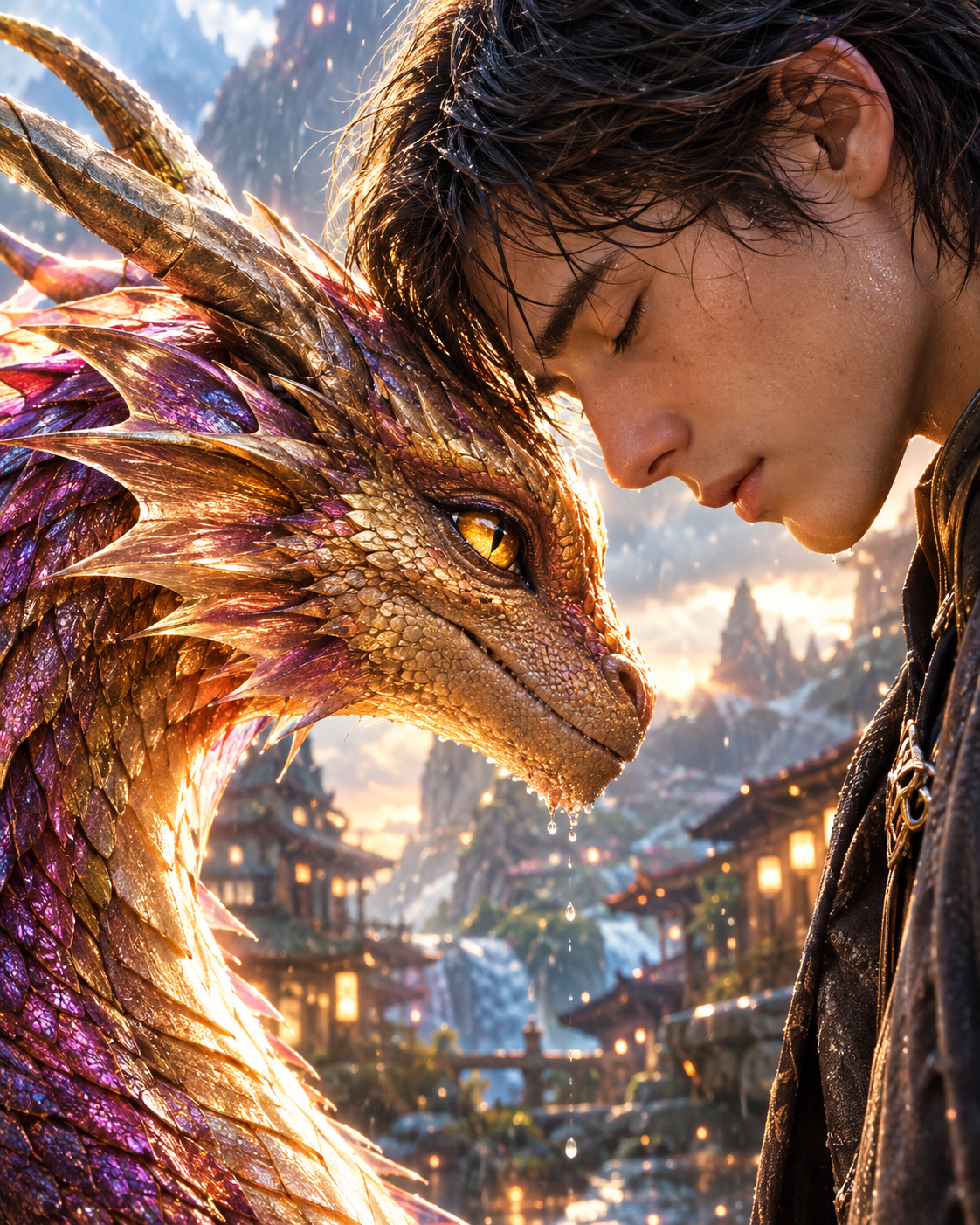
He pressed his forehead against mine.
“And whatever happens next, make them say your name.”
Then he pushed me into the shaft.
Serai crawled behind me.
The door exploded open.
We heard Daniel fire.
I screamed.
Serai pulled me forward.
“Keep moving!”
“I can’t leave him!”
“If you go back, everything he did becomes meaningless!”
Shots echoed behind us.
Then silence.
I stopped crawling.
“No.”
Serai grabbed my ankle.
“Lyra!”
I kicked free.
“I spent my whole life being moved from place to place because adults decided what was best for me.”
I turned around in the narrow shaft.
“I’m done.”
I crawled back.
Serai cursed and followed.
We dropped into the surgical theater through smoke.
Three soldiers lay unconscious.
One was bleeding.
Daniel was on his knees.
A man in black armor stood behind him with a weapon pressed against his neck.
Daniel’s pistol was across the room.
The armored man looked at me.
“Subject L-7.”
I felt something cold move through my body.
“That’s not my name.”
“You will come with us.”
“No.”
He tilted the weapon.
Daniel winced.
“You don’t understand the value of what you are.”
For the first time in my life, I understood exactly what someone meant when they said value.
Not love.
Not dignity.
Price.
Usefulness.
The ability to become something for someone else.
I looked at my ruined wings.
Then at Daniel.
Then at Serai.
“You want my cells because they heal?”
The soldier said nothing.
“Then you need me alive.”
His silence confirmed it.
I stepped closer.
“That means I’m the one person in this room you can’t shoot.”
“Lyra,” Daniel whispered.
I ignored him.
“Let him go.”
The soldier almost laughed.
“You are a child.”
“Yes.”
I opened my damaged wings as far as I could.
Pain screamed through every nerve.
“But you built an entire secret program around being afraid of what my body can do.”
His expression changed.
Only slightly.
Enough.
I lunged.
Not at him.
At the emergency decontamination switch behind him.
The room filled with white chemical vapor.
The soldier cursed.
Daniel moved.
There was a struggle.
A gunshot.
Serai dragged me down.
When the vapor cleared, Daniel was standing over the soldier.
Blood ran down Daniel’s arm.
But he was alive.
He looked at me.
“You are never doing that again.”
I started laughing.
Maybe from fear.
Maybe relief.
“You sound like a parent.”
His face broke.
“Yeah.”
He swallowed.
“I was hoping to.”
We didn’t escape the station.
Instead, we took control of it.
Serai accessed the old communications array.
Daniel locked the surviving soldiers inside quarantine rooms.
And I made a decision neither of them liked.
“We broadcast everything.”
Serai shook her head.
“If we release the research records, governments will come after you.”
“They already are.”
Daniel said, “Lyra, once this is public, your life will never be private again.”
I looked at him.
“My life was never mine to begin with.”
That hurt him.
I reached for his hand.
“I want it to be now.”
So we did it.
We transmitted the records across civilian networks, Quillvin channels, Earth news systems, medical archives, legal databases, and every refugee organization Serai could access.
Names.
Dates.
Transport logs.
Experiment records.
My medical history.
The names of the eleven children who died.
And one video.
Mine.
I sat in front of the camera with my wings visible.
No bandages.
No attempt to hide the missing feathers.
“My name is Lyra Venn Cross.”
Daniel looked at me when I added the last name.
I kept speaking.
“I was listed as an orphan at Refuge 7. That was a lie. I was taken from Aster Vale and used in a medical program without consent.”
My voice trembled.
I let it.
“I am alive because other children were not.”
I read all eleven names.
Slowly.
Carefully.
I refused to let them become numbers.
Then I looked into the camera.
“If what is inside my blood can help people, then one day I may choose to help.”
Daniel’s eyes filled with tears behind the camera.
“But no cure is worth creating victims to obtain it.”
I opened my wings.
“They told me these made me defective.”
I swallowed.
“They were actually proof that someone else had failed to see me as a person.”
The broadcast ended.
Three hours later, the entire system knew.
Within a day, the Continuance Directorate was exposed.
Within a week, arrests began.
Some officials denied everything.
Others blamed wartime necessity.
Several claimed they had only followed orders.
I learned quickly that adults could build enormous machines of cruelty and then hide inside the gears.
But the records were too complete.
Serai had spent twelve years collecting them.
Refuge 7’s director was charged with falsifying identities.
Military officers were investigated.
Medical corporations were forced to surrender research archives.
Families of missing children came forward.
Not everyone got answers.
But enough did.
Daniel and I finally reached Earth under legal protection.
Our home was smaller than I imagined.
A little house near a coastal town where the wind smelled like salt and rain.
The first night, I couldn’t sleep.
Daniel found me sitting on the kitchen floor.
He sat beside me without asking questions.
Just like Refuge 7.
After a while, I said, “What if they fix my wings?”
He looked at me.
“Do you want them fixed?”
“I don’t know.”
“Then you don’t have to know yet.”
“But what if I can fly?”
“Then maybe you’ll fly.”
“And if I can’t?”
“Then we’ll find a very tall hill and complain about gravity.”
I laughed.
He smiled.
Then I became serious again.
“Did you really not remember me?”
His eyes dropped.
“I remembered the evacuation. I remembered carrying children.”
“But not me.”
“No.”
I nodded.
I thought it would hurt more.
Instead, I understood.
Sometimes you can save someone and never know their name.
Sometimes they can save you years later without knowing they were returning the favor.
Daniel looked at me.
“I need to tell you something else.”
“What?”
“After Aster Vale, I was the medic who signed the report saying the evacuation transport had been destroyed.”
I stared at him.
“You signed it?”
“I believed it.”
“Still.”
“I know.”
His voice cracked.
“That report helped bury what happened to you.”
He looked ready for me to hate him.
Maybe part of me did.
But I remembered what he had once said.
Some days, I still hear the ones I couldn’t save.
Now I knew who some of those voices had been.
“What do you want me to say?”
“Nothing.”
“Good.”
I leaned my head against the cabinet.
“Because I don’t forgive you.”
He nodded.
“I understand.”
“Not yet.”
His eyes lifted.
I looked at him.
“But you stayed.”
A tear rolled down his face.
I continued.
“And you told me the truth when it hurt.”
I reached for his hand.
“So maybe forgiveness isn’t one big thing.”
I squeezed his fingers.
“Maybe it’s a lot of small things people keep choosing.”
Two years passed.
Doctors discovered that my regenerative trait had survived.
The damage to my wings could be partially reversed.
Not perfectly.
I would never have the full span I once had.
I would never fly long distances like most Quillvin.
For several weeks, everyone asked whether I was disappointed.
I wasn’t.
I had stopped measuring my life by what other people thought I should be able to do.
My first successful flight lasted eight seconds.
Daniel stood in a field below me screaming like an idiot.
I rose barely three meters from the ground.
My left wing shook.
My right wing folded too early.
I crashed into the grass.
Daniel ran toward me.
I rolled onto my back and laughed until I couldn’t breathe.
“You flew!” he shouted.
“I fell!”
“You flew before you fell!”
“That’s just falling with ambition!”
He dropped into the grass beside me.
We laughed until sunset.
Serai eventually moved to Earth too.
She didn’t try to become a mother to me.
I was grateful for that.
She became my aunt slowly.
Awkwardly.
Honestly.
She told me stories about my mother.
Some beautiful.
Some embarrassing.
Apparently, my mother sang badly, cooked worse, and once punched a military governor during a peace conference.
That was my favorite story.
Years later, the Aster Vale Children’s Protection Act was passed jointly by Earth and the Quillvin Assembly.
It banned involuntary genetic experimentation on displaced minors and created independent guardians for children in interspecies refugee systems.
Refuge 7 was closed.
A new facility replaced it.
No cages.
No observation rooms where families walked past children like they were choosing animals.
Every child had an advocate.
Every medical condition was treated before adoption decisions were made.
And nobody was permitted to describe a child as a “practical candidate.”
I visited once when I was seventeen.
The old adoption hall was empty.
Dust covered the floor where families used to stand.
I found the spot where Daniel had first asked if my wing hurt.
For a long time, I stood there alone.
Then a little girl entered.
Human.
Maybe six.
She wore mechanical braces around both legs.
She stared at my wings.
People still did that.
I smiled.
“Does that brace hurt?”
She narrowed her eyes.
“Only when people stare.”
I laughed so suddenly she looked offended.
“Sorry.”
“Why are you laughing?”
“Someone said something like that to me once.”
“Was he annoying?”
“Extremely.”
Daniel’s voice came from the doorway.
“I can hear you.”
The girl giggled.
I looked back at him.
He was older now.
More gray in his hair.
Still wearing the same battered jacket.
Still carrying too much guilt in his eyes.
But less than before.
Maybe because guilt, like pain, changes when someone helps you carry it.
The girl looked between us.
“Is he your dad?”
I turned toward Daniel.
Years ago, I would have hesitated.
Not because I didn’t love him.
Because I had thought words like father, mother, daughter, family had to be proven by blood.
Now I knew better.
“Yeah,” I said.
“He’s my dad.”
Daniel looked away quickly.
“You’re crying,” I told him.
“Allergies.”
“In a sealed station?”
“Very aggressive allergies.”
The girl laughed again.
I walked toward him.
My wings were still uneven.
Still scarred.
Still mine.
Before we left, I looked back at the empty hall one last time.
For most of my childhood, I believed being chosen was the greatest thing that could happen to a person.
I had been wrong.
Being chosen mattered.
Being loved mattered.
But there was something even more important.
Learning that your worth existed before anyone recognized it.
I had been valuable before Daniel saw me.
Before Serai found me.
Before doctors discovered what lived inside my cells.
Before anyone called me survivor, evidence, miracle, daughter, or cure.
I had been valuable when I was sitting alone beside a station window with broken wings and no one coming for me.
That was the truth nobody had taught me.
So I carried it with me.
For the children still waiting.
For the eleven names that had almost disappeared.
For my mother.
For Daniel.
For myself.
Sometimes healing means repairing what was broken.
Sometimes it means exposing who broke it.
And sometimes healing simply means reaching the day when you can look at every scar you were once ashamed of and understand that surviving did not make you damaged.
It made you the owner of a story no one else had the right to define.
Daniel held the exit door open.
“Ready?”
Years ago, he had asked me the same question before we left Refuge 7.
Back then, I thought I was ready because someone had finally chosen me.
This time, I understood something more.
I looked at the sunlight beyond the doorway.
Then I opened my imperfect wings.
“Ready.”
And together, we walked outside.
And together, we walked outside.
For a while, I believed that was the end of the story.
I believed monsters had names, courts had doors, truth had consequences, and once the guilty people were exposed, the rest of life became simple.
I was wrong.
Truth can win and still leave ruins behind.
Three years after my visit to the old Refuge 7, I was nineteen and studying regenerative medicine on Earth.
Not because anyone expected me to.
Not because my blood had made me famous.
And definitely not because governments kept offering scholarships with uncomfortable amounts of money attached.
I studied medicine because I remembered what it felt like to be a child while adults discussed my body as if I weren’t inside it.
I wanted to become the kind of person who never forgot the patient while staring at the disease.
Daniel pretended he wasn’t proud.
He failed badly.
He kept every exam score I sent him.
Even the terrible ones.
Especially the terrible ones.
“If you only keep the good ones,” he once told me, “you start thinking love is a reward.”
That sounded wise until I discovered he had framed my first failed chemistry test and hung it beside the kitchen.
I threatened to burn it.
He said arson was not appropriate behavior for a medical student.
Serai sided with me.
For several years, life became almost ordinary.
Ordinary turned out to be beautiful.
We argued over dishes.
Daniel complained about my music.
Serai planted herbs that died no matter how carefully she cared for them.
I learned to fly short distances without crashing into fences.
I learned to cook one meal that Daniel could eat without pretending.
I learned that sometimes a quiet morning was not the pause before something terrible.
Sometimes it was only a quiet morning.
Then, on a rainy evening in October, everything changed again.
I was in a university laboratory examining nerve-growth samples when every screen in the room went black.
A second later, a face appeared.
Mine.
Not my current face.
My face at twelve.
The recording from the station.
“My name is Lyra Venn Cross.”
The students around me went silent.
I felt my stomach drop.
Then the image changed.
Medical diagrams appeared.
Cellular models.
Genetic sequences.
Restricted sequences.
My sequences.
Someone had leaked the complete Aster Vale regenerative genome.
A message appeared beneath them.
THE GIFT BELONGS TO EVERYONE.
Professor Tal Ren, my supervisor, rushed toward the console.
“Kill the network.”
“It isn’t local,” someone said.
“It’s everywhere.”
My communicator began vibrating.
Daniel.
Serai.
Government security.
News agencies.
Numbers I didn’t recognize.
Then another message filled the screen.
LYRA VENN CROSS HAS DENIED HUMANITY A CURE FOR SEVEN YEARS.
A cure.
That word again.
I stared at it until the letters blurred.
Within an hour, crowds formed outside the university.
Some carried signs supporting me.
Some demanded access to my cells.
Some called me selfish.
Some called me sacred.
Some called me a murderer because people were dying from diseases my biology might someday help treat.
None of them knew me.
Yet once again, everyone believed they had a claim.
Daniel arrived before security could lock down the campus.
He was sixty-three by then.
His hair had gone almost completely gray, and an old battlefield injury had made his left leg stiff in cold weather.
He still entered the room like someone half his age whenever he thought I was in danger.
“We’re leaving.”
“No.”
“Lyra.”
“I have work here.”
“Someone released your genome.”
“I noticed.”
“The Directorate is gone, but people like them aren’t.”
“They’ll always be there.”
“Exactly.”
“So where am I supposed to run?”
He stopped.
I knew I had hurt him.
Not because I was wrong.
Because he had spent half his life trying to find places where people could survive.
Serai arrived minutes later.
She shut the laboratory door behind her.
“This isn’t just a leak.”
She threw a data slate onto the table.
“Someone is using the genome.”
I looked at her.
“How?”
“Illegal clinics.”
My blood went cold.
She continued.
“They’ve been synthesizing versions of the regenerative sequence for at least eighteen months.”
Daniel stared at her.
“You knew?”
“I suspected.”
“You didn’t tell us?”
“I didn’t have proof.”
“That’s never stopped you before.”
“Daniel.”
“No.”
His voice hardened.
“You disappear for weeks, you bring danger home, and then you decide what Lyra should know?”
I stepped between them.
“Stop.”
They did.
Barely.
I picked up the slate.
The files showed clinics on seven worlds.
Patients paying fortunes for experimental treatments based on corrupted versions of the Aster Vale research.
Some had improved.
Others had developed uncontrolled tissue growth.
Tumors.
Nerve storms.
Organ failure.
People were dying.
At the bottom of the report was a name.
Dr. Cael Orin.
I knew it.
Everyone connected to Aster Vale knew it.
Orin had been one of the young medical officers assigned to the original Continuance program.
He had disappeared before the arrests.
Presumed dead.
Apparently, he had spent the last decade hiding.
Daniel read the name over my shoulder.
“I remember him.”
“From the war?”
“From the station.”
His face darkened.
“He wasn’t a doctor then. He was an assistant researcher.”
Serai folded her wings tightly.
“He was obsessed with your mother.”
That caught my attention.
“Why?”
“Because she rejected his work.”
“What work?”
Serai hesitated.
Then she answered.
“Artificial activation of regenerative cells.”
I felt something awful settle into place.
“He didn’t want to heal damaged tissue.”
“No.”
“He wanted to make anyone regenerate.”
“Yes.”
Daniel’s expression twisted.
“Which means he doesn’t need Lyra anymore.”
Serai looked at me.
“He needs people to believe he does.”
By morning, Orin released a public statement.
He appeared on every major network.
Older now.
Thin.
White hair.
Kind eyes.
That was the frightening part.
He looked kind.
“Millions suffer while one woman and a handful of institutions control biological knowledge that could transform civilization,” he said.
He never mentioned the dead children.
He never mentioned forced experimentation.
He never mentioned that my genome had been obtained through torture disguised as research.
Instead, he called it “shared inheritance.”
And people listened.
Because desperation makes bad arguments sound moral.
Three days later, one of Orin’s clinics exploded.
Thirty-two people died.
The treatment had caused accelerated bone growth inside the patients.
Orin blamed corrupted government copies of the research.
Then he made his demand.
He wanted me.
Not secretly.
Publicly.
“Lyra Venn Cross possesses the only complete living expression of the regenerative sequence,” he said.
“If she cooperates, lives can be saved.”
I watched the broadcast at home.
Daniel switched it off halfway through.
“You are not going.”
“I didn’t say I was.”
“You were thinking it.”
“I always think.”
“That’s exactly the problem.”
I stared at him.
He sighed.
“Bad sentence.”
“Very.”
Serai stood near the window.
“He wants you to respond emotionally.”
“Then why do I feel so calm?”
Daniel looked at me.
Because he knew.
I was calm because I had made a decision.
“I want to meet him.”
“No,” Daniel said immediately.
Serai said nothing.
I looked at her.
“You think I should.”
“I think you will.”
“That’s not the same.”
“No.”
She turned toward me.
“But if you go, you don’t go as bait.”
Daniel laughed bitterly.
“That’s exactly what she’d be.”
“No,” I said.
“I go as a doctor.”
Daniel stared at me.
I continued.
“Orin’s treatments are killing people because his sequence is unstable. He needs access to something he doesn’t understand.”
“Your body.”
“My research.”
Daniel stood.
“Absolutely not.”
“I’m not giving him my cells.”
“He won’t ask politely once you’re there.”
“Then we make sure he never gets the chance.”
For six hours, we argued.
For the first time in years, I almost felt twelve again.
Daniel wanted to protect me.
Serai wanted to destroy Orin’s network.
I wanted something neither of them understood at first.
I wanted the research to survive.
Not Orin’s version.
Not the Directorate’s.
My mother’s.
Mine.
The work itself was not evil.
The way people had pursued it was.
That distinction mattered.
“If we bury the science because terrible people abused it,” I finally said, “then the terrible people still decide what it becomes.”
Daniel sat silently.
I moved closer.
“I don’t want them to own what happened to me forever.”
His eyes lifted.
That was when he understood.
We contacted Orin.
The meeting took place aboard an independent medical station in neutral space.
No military.
No government delegation.
Only medical observers, legal monitors, Daniel, Serai, and me.
Orin entered the conference room alone.
He smiled when he saw me.
“Lyra.”
I hated the way he said my name.
Like we belonged to the same story.
“We’ve never met,” I said.
“No.”
“But I watched you grow.”
Daniel moved before I could stop him.
He crossed half the room.
Security barriers activated between them.
Orin didn’t flinch.
“Still angry, Medic Cross?”
Daniel stared at him.
“You experimented on children.”
“I assisted a program during wartime.”
“Eleven died.”
“And countless millions might live because of what we learned.”
Daniel’s fist struck the transparent barrier.
I stood.
“That’s enough.”
Both men looked at me.
I faced Orin.
“You wanted me here. I’m here.”
He smiled.
“Then you understand.”
“I understand that your therapy is unstable.”
His smile faded slightly.
“You’ve reviewed it?”
“I’ve reviewed every version you’ve released.”
“And?”
“Your sequence triggers regeneration without a functional stop mechanism.”
He leaned forward.
“That can be corrected.”
“Not with the model you’re using.”
“Then help me.”
There it was.
Simple.
Almost reasonable.
He spread his hands.
“You’ve seen the suffering.”
“Yes.”
“Children dying of nerve disease.”
“Yes.”
“Soldiers without limbs.”
“Yes.”
“People losing organs faster than synthetic replacements can be made.”
“Yes.”
“And you have the knowledge to help them.”
I held his gaze.
“So did my mother.”
His expression changed.
Barely.
I noticed.
“You knew her.”
“She was brilliant.”
“She thought you were dangerous.”
Silence.
Then he smiled again.
“Elian was idealistic.”
“She was right.”
“No.”
For the first time, anger entered his voice.
“She was afraid.”
“Of you?”
“Of possibility.”
He stood.
“Do you know how many people die every day because nature made one mistake in their cells? One damaged gene. One broken nerve. One failing organ. And you stand there carrying proof that biology can be rewritten.”
He came closer to the barrier.
“Do you know what you are?”
The question echoed across years.
Subject L-7.
Practical candidate.
Cure.
Evidence.
Miracle.
I smiled.
“Yes.”
That unsettled him.
“I know exactly what I am.”
I activated the console.
The station screens came alive.
Files began uploading.
Orin looked around.
“What is this?”
“The complete regenerative research archive.”
Daniel turned toward me sharply.
Serai didn’t move.
She knew.
Orin stared at the screens.
“You wouldn’t.”
“I already did.”
The archive transmitted to every accredited medical institution in the allied systems.
But not raw.
Every protocol had safeguards.
Ethics requirements.
Independent review.
Patient consent frameworks.
Open peer verification.
No private ownership.
No military exclusivity.
No genetic patents.
Orin’s face twisted.
“You released it.”
“Yes.”
“Do you understand what you’ve done?”
“I removed you from the center of the story.”
His expression became almost feral.
“This knowledge will be abused.”
“Probably.”
“Then you’re a hypocrite.”
“No.”
I stepped closer.
“Because I’m not pretending knowledge can be controlled by one perfect person.”
I looked around the room.
“Not me. Not you. Not a government.”
I met his eyes again.
“The answer to dangerous knowledge isn’t secret ownership.”
“It’s responsibility.”
Orin laughed.
“Responsibility?”
He reached into his coat.
Daniel shouted.
Security moved.
Too late.
Orin held a small injector against his own neck.
A red liquid glowed inside.
Serai whispered, “No.”
Orin smiled.
“My corrected sequence.”
He pressed it into his skin.
For three seconds, nothing happened.
Then he screamed.
His veins turned black beneath his skin.
He collapsed.
Medical teams rushed into the room.
I was already moving.
Daniel grabbed me.
“Don’t.”
“He’s dying.”
“He tried to destroy you.”
“I know.”
“Lyra.”
I looked at him.
“I’m a doctor.”
He let go.
We worked for forty minutes.
Orin’s cells were regenerating too quickly.
His liver doubled in mass.
Bone formed along damaged vessels.
His nervous system fired uncontrollably.
We slowed the reaction.
Then slowed it again.
For one brief moment, I thought we might save him.
Then his heart failed.
I held the defibrillator paddles while another physician called the rhythm.
We shocked him once.
Twice.
Three times.
Nothing.
Orin died at 18:42 station time.
Afterward, I sat alone in the decontamination room.
My hands would not stop shaking.
Daniel entered.
He didn’t say anything.
He sat beside me.
Exactly like he had at Refuge 7.
After a while, I whispered, “I wanted him to live.”
“I know.”
“I hated him.”
“I know.”
“I still tried.”
“I know.”
I looked at him.
“Why does that hurt?”
Daniel thought for a long time.
“Because mercy doesn’t always feel good.”
I leaned my head against his shoulder.
“Did I do the right thing?”
“I don’t know.”
That surprised me.
He continued.
“I spent most of my life thinking the right choice was supposed to feel clear afterward.”
He looked down at his hands.
“It rarely does.”
That night, something changed in me.
Not dramatically.
Not beautifully.
I simply understood that becoming different from the people who hurt you is not a single decision.
It is something you choose again and again.
Especially when hatred would be easier.
The open research changed medicine slowly.
Not overnight.
There were failures.
Arguments.
Scandals.
Several governments tried to classify parts of the work again.
Medical corporations attempted to patent modified sequences.
They lost.
Serai made sure of that.
She had become terrifyingly good at public testimony.
Daniel claimed she frightened three senators into retirement.
She denied it.
Unconvincingly.
Nine years later, the first safe regenerative nerve treatment was approved.
Not immortality.
Not instant healing.
Nothing miraculous.
It helped damaged spinal tissue reconnect.
The first patient was an eleven-year-old boy named Tomas.
He had been injured in a transport crash and had not moved his legs in three years.
I was part of the surgical team.
Afterward, we waited.
Days passed.
Then weeks.
One morning, Tomas moved his left foot.
His mother screamed.
His father fell to his knees.
The nurses cried.
I walked into a supply room and locked the door.
Then I cried too.
Not because we had cured everything.
Because we hadn’t.
We had done one thing.
Carefully.
With consent.
Without sacrificing anyone.
For the first time, the science born from Aster Vale had healed a child without harming another child first.
I called Daniel.
He answered after six rings.
“Lyra?”
“It worked.”
Silence.
Then I heard him breathe.
“The boy?”
“He moved his foot.”
Daniel started crying.
He didn’t even pretend it was allergies.
“Your mother would’ve been proud.”
I closed my eyes.
“I hope so.”
“She would.”
“You can’t know that.”
“No.”
His voice softened.
“But I’m old enough to lie with confidence.”
I laughed through my tears.
Daniel lived another eleven years.
His heart weakened gradually.
Nothing dramatic.
Nothing heroic.
That bothered him.
“I survived wars, orbital sabotage, secret intelligence units, and raising you,” he complained from his hospital bed.
“And apparently cholesterol wins.”
“You ate fried food like you were personally insulting medicine.”
“It was cultural.”
“It was stupidity.”
“Same thing at my age.”
I sat beside him during his final week.
Serai came every day.
Former soldiers visited.
Children from Refuge 7 sent messages.
So did patients I had treated.
Daniel pretended the attention embarrassed him.
It didn’t.
One night, the room became very quiet.
He looked toward the window.
“Lyra.”
“I’m here.”
“I know.”
His voice was weak.
“Do your wings hurt?”
The question destroyed me.
I laughed and cried at the same time.
“Only when people stare.”
He smiled.
Even near the end, he remembered.
I took his hand.
“Are you scared?”
“Yes.”
He looked at me.
“So are you.”
I bent forward and pressed my forehead to his.
“For the first time in years,” I whispered, “I’m not ready.”
His fingers tightened around mine.
“You don’t have to be.”
“You promised you’d stay.”
“I did.”
“You’re leaving.”
“No.”
His eyes were tired, but peaceful.
“Staying doesn’t always mean your body stays in the room.”
I shook my head.
“I hate wise dying-person speeches.”
“I’ve been saving that one.”
“Terrible timing.”
“Excellent timing.”
Then his expression changed.
Fear moved through him.
I saw it.
The same fear he had carried at Refuge 7.
The same fear he had admitted to a broken-winged child beside a station window.
I climbed carefully onto the edge of the bed and held him.
“You couldn’t save everyone,” I whispered.
His breathing trembled.
“I know.”
“But you stayed.”
A tear slid down his cheek.
“So did you.”
Daniel Cross died before sunrise.
For a long time afterward, I thought grief would eventually become smaller.
It didn’t.
My life became larger around it.
There is a difference.
I kept his military jacket.
I kept the ridiculous framed chemistry test.
I kept his medical case, though the hinges barely worked.
I kept the first adoption document that had our names together.
Daniel Cross.
Guardian.
Lyra Venn.
Child.
Years later, I became director of the Aster Vale Institute for Ethical Regenerative Medicine.
The building was constructed near the same coastline where Daniel had raised me.
Its central hall had no statues.
I refused them.
Instead, eleven names were carved into the entrance wall.
The children who never came home.
Every researcher passed those names before entering the laboratories.
Not as guilt.
As a boundary.
Science was allowed to be ambitious inside those walls.
Never cruel.
On the opening day, reporters filled the courtyard.
Students gathered beneath banners.
Officials gave speeches that were far too long.
Serai sat in the front row, older and smaller now, pretending not to cry.
Behind the podium, the wind pulled at my feathers.
My wings had improved over the years.
Still uneven.
Still scarred.
I could fly farther now.
Not like other Quillvin.
Enough.
When it was my turn to speak, I looked at the crowd.
For a moment, I saw Refuge 7 again.
Metal tables.
Cold lights.
Families looking through cages.
A human medic walking toward a broken-winged child.
I had spent half my life believing that was the moment my story began.
It wasn’t.
My story began before anyone chose me.
Before anyone saved me.
Before anyone understood what I could become.
And perhaps that was the most important thing I had learned.
I stepped toward the microphone.
“When I was a child, people used many words for me.”
The courtyard became silent.
“Defective. Orphan. Subject. Survivor. Cure.”
I opened my wings.
“Eventually, people used better words.”
“Daughter. Doctor. Family.”
I paused.
“But even those words do not create a person’s worth.”
I looked toward the eleven names.
“Worth is not something society grants when it discovers you are useful.”
I thought of Orin.
Of my mother.
Of Daniel.
Of the children I had known at Refuge 7.
“It exists first.”
My voice shook.
I didn’t hide it.
“Before achievement.”
“Before healing.”
“Before anyone chooses you.”
I looked toward Serai.
She smiled through tears.
“The greatest mistake we make is believing that saving a life gives us ownership over it.”
I placed one hand over my heart.
“It doesn’t.”
“Love doesn’t own.”
“Medicine doesn’t own.”
“Family doesn’t own.”
“To truly save someone is to help return their life to them.”
The wind rose.
For a second, my damaged left wing trembled.
Years ago, I would have folded it away.
I left it open.
When the ceremony ended, I walked alone toward the cliffs behind the institute.
There was a small memorial there.
Daniel’s name had been engraved into a simple stone.
No rank.
No medals.
Only:
DANIEL CROSS
HE STAYED
I sat beside it.
“I opened the institute today.”
The ocean answered below.
“Serai cried.”
I smiled.
“She’ll deny it.”
The sky was clear.
I touched the old medic insignia I had sewn onto my jacket.
“I still miss you.”
There was no answer.
There never was.
That no longer felt like abandonment.
Some silences are empty.
Others are full of everything someone already gave you.
I stood at the edge of the cliff.
The drop was longer than anything I would have attempted as a child.
Wind pushed upward from the sea.
My wings opened.
One silver.
One scarred.
Both strong enough.
I thought of the first time Daniel asked me if I was ready.
I thought of every answer I had given since.
Then I ran.
For one frightening second, there was nothing beneath my feet.
Only sky.
My left wing dipped.
I corrected.
The wind caught beneath me.
And I rose.
Not high.
Not perfectly.
But I flew.
Below me, waves broke against the cliffs.
Ahead, the institute shone in the morning light.
Behind me were graves, mistakes, crimes, grief, and people I could never bring back.
Ahead were patients I could not promise to save.
Questions I could not promise to answer.
A future no one could control.
And for once, I didn’t need certainty.
I had spent too many years thinking survival meant escaping the past.
Now I understood.
Survival meant carrying the truth without letting it decide the shape of your future.
My wings had once been used to prove I was broken.
Later, people treated them as proof that I was extraordinary.
They were neither.
They were simply mine.
And that was enough.
I climbed higher.
The wind became colder.
Somewhere inside me lived the little girl from Refuge 7.
The girl beside the window.
The girl nobody wanted.
I wished I could return to her for one minute.
Not to tell her someone was coming.
Not to promise she would become important.
Not to tell her that one day she would fly.
I would tell her something simpler.
You do not have to become extraordinary to deserve a life.
You do not have to turn your suffering into greatness to justify surviving it.
You do not owe the universe a miracle because it hurt you.
You are allowed to live simply because you are alive.
That was the lesson Daniel had given me without ever saying it.
He had not adopted a cure.
He had not chosen a symbol.
He had chosen a frightened girl with damaged wings and an attitude problem.
And then, when saving me became impossible, complicated, dangerous, painful, and uncertain—
he stayed.
I finally understood why that mattered more than rescue.
Anyone can love the version of you they hope to save.
The rare people are those who remain when they discover that love does not guarantee a happy ending.
Love does not guarantee healing.
Love does not guarantee that broken things become what they were before.
Sometimes love simply says:
I am here.
Your pain does not frighten me away.
Your scars do not reduce your worth.
Your life belongs to you.
And I will walk beside you for as long as I can.
The sunlight broke across the horizon.
I turned toward it.
For the first time, I did not think of Refuge 7.
I did not think of Aster Vale.
I did not think of the Directorate.
I did not think of the people who had once decided whether I was valuable.
I thought only of the sky.
Then I flew toward home.
And this time, I finally understood the difference.
I was not being rescued.
I was not being chosen.
I was not being sent away.
I was choosing where to go.
And the life ahead of me—
imperfect, unfinished, and entirely my own—
was enough.
THE END