“Take off your boots,” the official ordered. “If you want to accuse the king’s suppliers of treason, you can walk home without them.”
The official’s face went pale for the briefest moment. Then he smiled, the same cold, confident smile Torun remembered from the supply office.
“Your Majesty,” he said, stepping forward, “I believe your soldiers have brought us a thief.”
The courtyard fell silent.
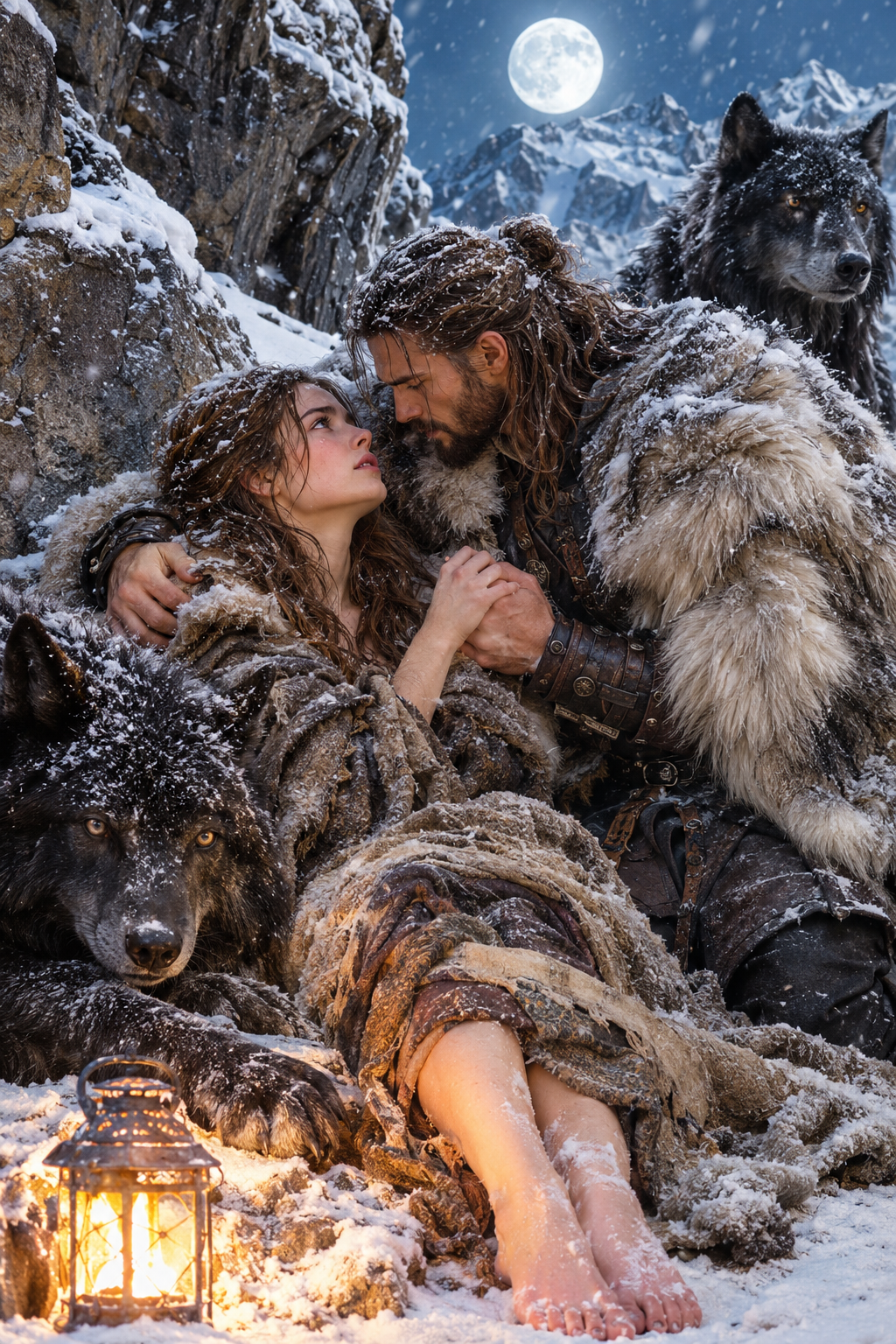
Torun lay wrapped in a soldier’s cloak, her swollen feet resting on a stretcher. She could barely lift her head, but she recognized the voice immediately.
“He’s lying,” she whispered.
The official ignored her.
“This girl broke into the royal supply warehouse yesterday. When my men caught her stealing military property, she fled into the mountains. I ordered the guards to pursue her, but apparently she escaped.”
Captain Eirik, the officer who had rescued Torun, stepped forward.
“With respect, Minister Varrick, we found her nearly frozen to death. She was barefoot.”
Varrick spread his hands.
“Thieves rarely prepare properly for winter journeys.”
A few courtiers chuckled nervously.
King Brander did not.
He was a tall man with silver beginning to appear in his dark beard. A long scar crossed his left eyebrow, and his eyes carried the exhaustion of someone who had spent too many years defending a troubled kingdom.
He looked at Torun.
“Can you stand?”
She tried.
Pain shot through her feet so fiercely that she cried out.
Before anyone could move, the largest gray wolf pushed through the soldiers and stood beside her stretcher.
A murmur swept across the courtyard.
“Fenrir,” the king said quietly.
The wolf ignored him.
Instead, it lowered its massive head onto Torun’s shoulder.
King Brander’s expression changed.
For twelve years, Fenrir had refused to approach anyone outside the royal household. Even decorated generals kept their distance from the legendary animal.
Yet here he was, protecting a shoemaker’s daughter.
“Bring her inside,” the king ordered.
Varrick’s smile disappeared.
“Your Majesty, the expedition—”
“Can wait.”
“But the border troops are already assembled!”
“Then they can remain assembled.”
The king’s voice hardened.
“I will not send five hundred men into the mountains while someone stands before me claiming their equipment has been deliberately weakened.”
Varrick bowed.
“As you command.”
But as Torun was carried past him, she noticed his right hand moving beneath his cloak.
Two fingers tapped against his belt.
Across the courtyard, a guard wearing a black feather on his helmet gave an almost invisible nod.
Torun’s stomach tightened.
Whatever Varrick had planned, it was not finished.
Inside the fortress, royal physicians examined her feet. They rubbed them gently with warm cloths, applied medicinal ointment, and wrapped them in clean wool.
“The frostbite is serious,” the oldest physician warned. “She must not walk for several weeks. Even then, recovery may be painful.”
Torun barely heard him.
Through the chamber window, she could see soldiers gathering beneath blue banners.
Five hundred men.
Five hundred pairs of boots.
Five hundred families waiting for sons, husbands, and fathers to return.
A knock sounded at the door.
Captain Eirik entered.
“The king will hear your accusation in the council chamber.”
“Has he stopped the expedition?”
“For now.”
Torun gripped the leather pouch.
“Then help me stand.”
“You heard the physician.”
“And you heard what I said about those boots.”
Eirik studied her for a moment.
Then he pulled a chair beside her stretcher.
“You won’t stand,” he said. “But you won’t face them alone.”
The council chamber was filled with generals, merchants, noblemen, and royal advisers.
Minister Varrick stood beside a long table covered with military documents. Behind him waited three representatives of the Iron Crown Trading Company, the kingdom’s largest military supplier.
King Brander sat beneath a carved wooden banner depicting a wolf beneath the northern stars.
Torun was carried before him.
“Tell us everything,” the king said.
She explained how her father had been asked to inspect a damaged shipment. How she had noticed the unusual weight of the heels. How she had cut one open and discovered cardboard concealed beneath carefully stitched leather.
Then she emptied her pouch.
Fragments of damp cardboard fell onto the table.
Varrick laughed softly.
“Your Majesty, this proves nothing. She could have taken those scraps from any rubbish heap.”
Torun looked directly at him.
“Then bring me one pair from the expedition.”
Varrick’s expression stiffened.
“Royal equipment is not subject to destruction on the whim of a child.”
“One pair,” she repeated. “Choose it yourself.”
The king turned toward Eirik.
“Bring three pairs. From three different crates.”
Varrick opened his mouth.
“Immediately,” Brander added.
Twenty minutes later, three pairs of military boots lay on the table.
Torun examined the first.
She pressed her thumb against the heel, feeling the slight give beneath the leather.
“May I have a knife?”
Varrick stepped forward.
“Your Majesty, surely—”
“Give her the knife.”
Torun cut through the stitching.
The heel split open.
Inside lay compressed cardboard, already softening from moisture.
Someone gasped.
She opened the second boot.
The same.
Then the third.
Again, cardboard.
The chamber erupted.
One general slammed his fist onto the table.
“My men would have lost their feet before reaching the northern ridge!”
Another shouted, “This is murder!”
Varrick raised both hands.
“An unfortunate manufacturing error! Nothing more!”
Torun shook her head.
“No.”
Everyone turned toward her.
“An error might happen in one boot. Perhaps ten. But these were constructed to fail after exposure to snow. The outer leather is expensive enough to pass inspection, while the inside has been replaced with worthless material.”
She lifted a heel.
“And the stitching is sealed with dark resin. That isn’t how mountain boots are made. It keeps the cardboard hidden until water breaks it apart.”
The king leaned forward.
“Are you saying someone designed these boots to fail?”
“Yes, Your Majesty.”
“Why?”
Torun hesitated.
She had asked herself that question throughout the night.
Then she remembered something her father had said while examining the original shipment.
A good boot could survive years in the mountains.
A bad boot might survive long enough to kill its owner.
“Because someone wants your soldiers trapped in the snow.”
The silence that followed was terrible.
King Brander slowly turned toward Varrick.
“Who authorized this shipment?”
Varrick swallowed.
“The procurement council, Your Majesty.”
“Who approved the final inspection?”
“The inspectors.”
“Who appointed those inspectors?”
Varrick said nothing.
The king rose.
“Arrest Minister Varrick.”
Steel rang as guards drew their swords.
For one glorious moment, Torun believed it was over.
Then the fortress bells began ringing.
Not the slow bells of ceremony.
The frantic, uneven bells of an attack.
A soldier burst through the doors.
“Your Majesty! Fire in the western supply yard!”
Another appeared behind him.
“The northern gate has been opened!”
Eirik turned sharply.
“Opened by whom?”
The soldier’s face was white.
“Men wearing our own uniforms.”
Varrick suddenly laughed.
“You should have let the expedition leave, Brander.”
The king stared at him.
“What have you done?”
“Something your father should have done twenty years ago.”
Varrick drew a concealed dagger.
Before he could reach the king, Fenrir lunged.
The enormous wolf struck him like a falling tree.
Varrick crashed against the table, his dagger skidding across the floor.
Guards seized him.
But outside, the bells continued screaming.
Eirik hurried to the window.
Beyond the northern wall, dark figures were emerging from the forest.
Hundreds of them.
Their shields bore the red serpent of Lord Halvard, the exiled nobleman who had sworn to reclaim the northern territories.
“The enemy is inside the outer defenses,” Eirik said.
King Brander reached for his sword.
“Sound the battle horns.”
Torun watched soldiers race through the courtyard.
Then she noticed something strange.
The enemy troops approaching the fortress wore thick, fur-lined boots.
Not the ordinary leather boots issued to Brander’s soldiers.
They had been prepared for the mountains.
Prepared for the storm.
Prepared for a battle that the king’s army had been deliberately equipped to lose.
Varrick had not simply stolen money.
He had sold the kingdom’s survival.
The council chamber emptied as commanders rushed to their posts.
Torun remained on her stretcher, listening to the distant clash of steel.
Eirik returned moments later.
“The king has ordered everyone who cannot fight into the lower chambers.”
“Where are the supply crates?” Torun asked.
“The western yard.”
“The one that’s burning?”
“Yes.”
She struggled upright.
“Then you must save the leather.”
Eirik stared at her.
“The fortress is under attack, and you’re worried about leather?”
“The soldiers still need boots.”
“We need swords.”
“Swords won’t help if they cannot stand in the snow.”
Eirik looked toward the window.
The blizzard had begun again.
Outside the walls, the ground was already disappearing beneath fresh snow.
Torun grabbed his sleeve.
“Listen carefully. The enemy planned for your men to march north. They expected the boots to fail in the mountain pass. But now they’re attacking here because their plan was exposed.”
“What are you suggesting?”
“That we make sure your soldiers can fight in the snow.”
Eirik hesitated.
Then he nodded.
“What do you need?”
“Every shoemaker, saddler, and leatherworker in the fortress. Every piece of spare leather. Every needle and length of waxed thread.”
“And then?”
Torun looked down at her bandaged feet.
“Then we work faster than we’ve ever worked before.”
Within an hour, the fortress’s old dining hall had become a workshop.
Women from the kitchens arrived carrying sewing needles. Stable boys dragged in leather harnesses. Elderly craftsmen brought knives and awls from their homes.
Even children helped by sorting thread and cutting strips of wool.
Torun sat at the head of a long table, directing them.
“Don’t rebuild the whole boot,” she instructed. “Remove the false heel, reinforce the sole, and stitch a leather strap beneath the arch. We need them strong enough to survive the battle.”
An old saddler frowned.
“That will take too long.”
“Then use double needles and shorter stitches.”
A woman held up a boot.
“The leather is too stiff.”
“Warm it beside the hearth, but keep it away from the flames.”
The room filled with the sounds of hammering, cutting, and urgent voices.
Outside, arrows struck the fortress walls.
The enemy had captured the northern watchtower.
By afternoon, the defenders were losing ground.
Captain Eirik returned with blood running down his temple.
“We’ve held the inner gate,” he said, “but Halvard’s men have seized the eastern passage.”
Torun looked up from a half-finished boot.
“How many soldiers remain?”
“Three hundred able to fight. The rest are guarding civilians or tending the wounded.”
“And the king?”
“Still on the walls.”
Eirik lowered his voice.
“Halvard has brought siege ladders. If he reaches the central courtyard, the fortress falls.”
Torun glanced at the growing pile of repaired boots.
Only ninety pairs.
Not nearly enough.
Then a terrible thought struck her.
“Captain, where does the eastern passage lead?”
“To the old water channel.”
“Does it run beneath the frozen river?”
“Yes.”
Torun remembered her father’s stories about the fortress’s foundations.
Long ago, before the northern river had changed course, water had flowed through a narrow stone tunnel beneath the eastern wall.
In winter, the channel froze solid.
But during spring thaws, it became a rushing underground stream.
“How thick is the ice inside?” she asked.
Eirik frowned.
“Why?”
“Because if Halvard’s men are using that passage, they’re walking above a frozen channel.”
“Yes.”
“And what lies beneath the ice?”
“Water.”
Torun leaned forward.
“Then we don’t need to defeat them with swords.”
Eirik stared at her.
“We need to break the ice.”
For several seconds, neither spoke.
Then Eirik shook his head.
“The channel is reinforced with stone. We cannot reach it from outside.”
“Not from outside.”
Torun pointed toward the floor.
“From the old drainage chamber beneath the kitchens.”
The captain’s expression changed.
He knew the chamber.
It had been sealed years earlier after flooding damaged the lower storerooms.
“If we open the drainage gates,” he whispered, “the river water could rush beneath the eastern passage.”
“And weaken the ice supporting the enemy.”
“It could also flood the fortress.”
Torun swallowed.
“Then we must make sure everyone is above the lower level.”
Eirik looked at her for a long moment.
Finally, he said, “I’ll take this to the king.”
But before he could leave, a scream came from the workshop entrance.
A young apprentice staggered inside, clutching his shoulder.
An arrow protruded from his back.
Behind him stood three armed men wearing royal uniforms.
Their helmets carried black feathers.
Torun recognized the symbol.
Varrick’s men.
The first soldier raised his sword.
“Nobody moves.”
The workers froze.
The soldier’s eyes settled on Torun.
“Minister Varrick sends his regards.”
Eirik reached for his weapon.
A second soldier pressed a blade against the nearest child’s throat.
“Drop it.”
Eirik obeyed.
The leader approached Torun.
“You caused a great deal of trouble, little shoemaker.”
He lifted a glowing coal from the hearth with iron tongs.
“Perhaps you’ll tell us where you hid the rest of your evidence.”
Torun’s heart pounded.
She had nothing left.
The pouch was empty.
But the soldier did not know that.
“It’s beneath the table,” she lied.
He bent to look.
Torun seized a bowl of hot pitch and threw it into his face.
He screamed.
Eirik moved instantly.
He struck the second soldier with a wooden stool, knocking him away from the child.
The third man lunged toward Torun.
A gray shape exploded through the doorway.
Fenrir.
The wolf slammed into the soldier, driving him backward into a stack of timber.
Two more wolves followed.
Within seconds, the attackers were disarmed.
The workshop erupted in frightened cries.
Torun stared at Fenrir.
The great wolf stood over the fallen soldier, his silver-marked fur bristling.
Then he turned toward her.
His amber eyes seemed almost familiar.
She reached out.
“Thank you,” she whispered.
Fenrir pressed his head against her palm.
Eirik retrieved his sword.
“That settles it. You’re coming with me.”
“Where?”
“To the king. He needs to hear your plan himself.”
They carried Torun through corridors shaking with distant impacts.
The fortress smelled of smoke, blood, and wet stone.
At the western wall, King Brander stood beside a shattered ballista.
His cloak was torn. His sword was stained.
When he saw Torun, his face tightened.
“You should be somewhere safe.”
“There is nowhere safe if the fortress falls,” she answered.
Eirik explained the drainage channel.
The king listened without interrupting.
Then he turned toward the eastern passage.
Enemy soldiers were pouring through it, their torches glowing beneath the falling snow.
“If we release the water,” Brander said, “we risk destroying our own foundations.”
Torun nodded.
“But if we do nothing, Halvard takes the fortress.”
The king looked at his commanders.
“Can we evacuate the lower chambers?”
“Within half an hour,” one replied.
“We don’t have half an hour,” Eirik warned.
Brander studied the girl before him.
She was pale, exhausted, and wrapped in blankets. Her feet might never fully recover.
Yet she had already saved his soldiers from a disaster no general had foreseen.
“How certain are you?” he asked.
Torun’s voice trembled.
“I’m not certain the plan will work.”
The king’s eyes narrowed.
“Then why should I risk my fortress?”
“Because I know what happens when people refuse to act until they’re certain.”
She glanced toward the burning supply yard.
“My father always said that a small weakness ignored becomes a great disaster. The first loose stitch seems harmless. Then the seam opens, water enters, and the whole boot falls apart.”
Her eyes filled with tears.
“Your Majesty, the enemy found the loose stitch in your kingdom. Now they’re pulling it apart.”
Brander remained silent.
Then he turned to Eirik.
“Evacuate the lower chambers. Open the drainage gates.”
The next twenty minutes passed like a nightmare.
Soldiers carried wounded men upstairs. Servants dragged children through narrow staircases. The royal wolves raced along the corridors, barking whenever anyone lagged behind.
Torun was taken to a balcony overlooking the eastern passage.
From there, she watched the final civilians emerge from the lower chambers.
Eirik stood beside the drainage mechanism.
A rusted iron wheel controlled the ancient floodgates.
“Ready!” he shouted.
The king raised his sword.
“Open them!”
Six soldiers strained against the wheel.
It refused to move.
They pushed harder.
Metal groaned.
Then the wheel turned.
Deep beneath the fortress, something thundered.
Water surged through the forgotten channels.
The stone floor trembled.
At first, nothing happened.
Halvard’s soldiers continued advancing.
Then a sharp cracking sound echoed across the eastern passage.
One enemy soldier stopped.
He looked down.
A black line spread beneath his boots.
Another crack followed.
Then another.
The frozen surface collapsed.
Men screamed as icy water swallowed the center of the passage.
Those behind them turned and fled.
But the flood had already reached the outer gate.
The entire eastern approach buckled, cutting Halvard’s army in two.
A roar rose from the defenders.
King Brander lifted his sword.
“Now!”
The fortress gates opened.
Royal soldiers charged into the snow, their newly reinforced boots gripping the frozen ground.
Fenrir and his pack raced ahead, scattering enemy horses and driving attackers away from the wounded.
Halvard’s remaining men tried to regroup.
But their commander had lost his route into the fortress.
His forces were divided.
And the defenders were no longer trapped.
By sunset, the battle was over.
Lord Halvard was captured while attempting to escape through the northern forest.
More than a hundred enemy soldiers surrendered.
The fortress still stood.
But victory had come at a terrible cost.
Dozens of defenders lay dead.
The western supply yard had burned to ashes.
And the lower chambers were flooded with freezing water.
Torun watched the survivors carry their fallen comrades through the courtyard.
She had imagined victory would feel like joy.
Instead, it felt heavy.
Every life saved mattered.
But every life lost left an emptiness no celebration could fill.
That evening, King Brander visited her in the infirmary.
Fenrir followed him.
The wolf immediately settled beside Torun’s bed.
Brander looked down at the animal.
“He has never done that before.”
Torun smiled faintly.
“Perhaps he likes shoemakers.”
The king gave a tired laugh.
Then his expression grew serious.
“Minister Varrick has confessed.”
Torun’s smile vanished.
“He admitted everything?”
“Enough. Halvard promised him control of the northern trade routes. In return, Varrick arranged for our troops to receive defective equipment. Once the expedition was stranded, Halvard intended to destroy it and march on the capital.”
Brander paused.
“When you exposed the boots, they attacked early.”
Torun looked toward the window.
“So the battle happened because of me.”
“No.”
The king’s voice was firm.
“The battle happened because greedy men chose betrayal. You prevented their plan from succeeding.”
He sat beside her.
“Varrick also confessed that he ordered your father arrested.”
Torun’s breath caught.
“My father?”
“He discovered the fraud before you brought the evidence to the supply office. Varrick’s men took him yesterday morning.”
“Where is he?”
Brander hesitated.
Torun felt the blood drain from her face.
“Your Majesty?”
“He was held in the old northern prison. During the fighting, a fire spread through that building.”
Torun gripped the blanket.
“No.”
“We have sent men to search the ruins.”
She tried to rise.
Pain tore through her feet.
“Please. I have to find him.”
Brander placed a hand on her shoulder.
“You cannot walk.”
“He’s all I have.”
Her voice broke.
“My mother died when I was seven. My father taught me everything. He taught me how to sew, how to work, how to tell the difference between strong leather and weak leather.”
Tears streamed down her cheeks.
“He always said that even the poorest person deserves shoes that will carry them home.”
The king lowered his head.
For the first time that day, he seemed unable to find an answer.
Then Fenrir suddenly stood.
His ears pricked toward the door.
A moment later, distant barking echoed through the corridor.
One of the royal wolves appeared at the entrance, its muzzle covered in soot.
It barked again.
Fenrir rushed toward it.
Torun stared.
“What is it?”
The king rose.
The soot-covered wolf ran several steps down the corridor, then turned back.
As though waiting.
Brander called for Eirik.
“Follow them.”
The wolves led the soldiers through the ruined northern quarter.
Snow hissed against smoldering beams.
The old prison had collapsed into a heap of blackened timber and stone.
Rescuers had searched the upper cells without finding survivors.
But Fenrir ignored the entrance.
He circled the ruins and began digging beside a narrow drainage opening.
The other wolves joined him.
Eirik knelt.
Beneath the rubble, he heard something.
Three faint knocks.
Then silence.
“Someone’s alive!”
The soldiers tore away the debris.
Behind a collapsed wall, they discovered a narrow maintenance tunnel.
Inside lay an elderly man with burned hands and a broken leg.
He had survived by crawling beneath the prison floor before the roof collapsed.
When the rescuers lifted him into the open air, he whispered one name.
“Torun.”
An hour later, the infirmary doors opened.
Torun saw her father being carried inside.
For a heartbeat, she could not move.
Then she began crying.
“Papa!”
“Little sparrow,” he whispered.
He reached for her.
She held his burned hand against her cheek.
“I thought I’d lost you.”
Her father smiled through tears.
“Not yet.”
He looked at the bandages around her feet.
“What happened?”
Torun tried to explain.
The boots.
The minister.
The storm.
The wolves.
The battle.
But the words tangled together.
Her father simply held her.
Finally, he whispered, “You did what was right.”
“I was so afraid.”
“Being brave doesn’t mean you aren’t afraid.”
He brushed a strand of hair from her forehead.
“It means you refuse to let fear decide who you become.”
The following weeks brought a different kind of struggle.
Torun’s feet healed slowly.
Some mornings, the pain was so severe that she could not bear the weight of a blanket.
Her father recovered from his injuries, but his hands remained scarred.
The kingdom mourned its dead.
Varrick and his accomplices were tried before the royal court. Their stolen wealth was confiscated to compensate the families of fallen soldiers and the workers they had cheated.
Lord Halvard was imprisoned, and the remaining conspirators were removed from positions of power.
King Brander ordered every military supply contract reviewed.
For the first time, craftsmen were invited to inspect equipment before it reached the soldiers.
But the king had one final decision to make.
On the first clear morning of spring, he summoned Torun and her father to the great hall.
Hundreds of soldiers stood beneath the royal banners.
Many wore boots repaired during the siege.
Captain Eirik stood among them, his injured temple marked by a thin scar.
Fenrir lay beside the throne.
When Torun entered on crutches, the soldiers began applauding.
She stopped in astonishment.
The applause grew louder.
Men who had faced death in the snow bowed their heads to a shoemaker’s daughter.
King Brander stepped forward.
“Torun Carlsrud,” he announced, “you came to this fortress carrying scraps of cardboard and a truth no powerful man wished to hear.”
He looked across the hall.
“We nearly lost five hundred soldiers because those entrusted with their safety valued gold more than human lives.”
His voice strengthened.
“But one young woman refused to remain silent.”
He turned back to Torun.
“For your courage, I offer you a noble title, a house in the capital, and enough gold to live comfortably for the rest of your life.”
The hall erupted in cheers.
Torun looked at her father.
He smiled.
But she did not answer immediately.
Instead, she glanced down at her crutches.
Then at the soldiers’ boots.
“Your Majesty,” she said softly, “may I ask for something different?”
The king raised an eyebrow.
“Name it.”
“I don’t want a noble title.”
Whispers spread through the hall.
“I want a workshop.”
Brander looked surprised.
“A workshop?”
“A royal workshop where honest craftsmen can make and inspect boots for every soldier. Where apprentices from poor families can learn a trade without paying for their training.”
She swallowed.
“And I want the families of soldiers who never came home to receive proper support. Not just today, while everyone remembers the battle, but for as long as they need it.”
The king studied her.
“Is that all?”
Torun hesitated.
“One more thing.”
“Speak.”
“Never again punish someone merely because the truth they bring is inconvenient.”
The hall fell silent.
King Brander slowly removed the golden ring from his right hand.
It bore the royal seal.
He placed it on the table before her.
“Then let this be the first decree of a wiser kingdom.”
He turned toward his council.
“From this day forward, every royal supplier shall answer to an independent council of craftsmen and soldiers. Any citizen who brings evidence of corruption shall be protected until the truth is examined.”
He looked at Torun.
“And the workshop shall be yours.”
Her father covered his face, overwhelmed.
Captain Eirik smiled.
Even the sternest generals began applauding.
But Torun’s eyes filled with tears for another reason.
She remembered the frozen mountain road.
The official’s cruel smile.
The moment her boots had been torn from her feet.
She had believed she was powerless.
Yet the very thing meant to silence her had led her to the wolves, to the king, and to the chance to save hundreds of lives.
Months passed.
The royal workshop opened beside the southern gate.
Its doors remained open to apprentices from every village in the kingdom.
Torun supervised the work from a sturdy wooden chair while her feet continued to recover.
Her father taught the youngest apprentices how to cut leather and strengthen seams.
Captain Eirik visited often, usually carrying some ridiculous excuse about needing his boots inspected.
And every winter, when snow covered the mountains, seven gray wolves appeared outside the workshop.
The workers learned not to fear them.
Fenrir always entered first.
He would walk straight to Torun, rest his enormous head on her lap, and close his eyes while she scratched the silver fur behind his ears.
One winter evening, a young apprentice asked her a question.
“Master Torun, why do you always keep that old leather pouch hanging above your workbench?”
Torun looked up.
The pouch was worn and faded.
Inside lay a single piece of cardboard.
The last surviving fragment from the boots that had nearly destroyed the kingdom.
“To remember,” she answered.
“Remember what?”
Torun watched snow falling softly beyond the window.
Then she smiled.
“That something worthless can reveal something priceless.”
The apprentice frowned.
“I don’t understand.”
She picked up a newly finished pair of boots and placed them in his hands.
“Look at these.”
He examined the stitching.
“They’re strong.”
“How do you know?”
“Because I made them carefully.”
“And why did you make them carefully?”
The boy considered.
“Because someone will wear them.”
Torun nodded.
“Someone you may never meet. Someone who trusts that your work will protect them when the road becomes difficult.”
She touched the leather gently.
“That is what responsibility means. Doing your work honestly, even when nobody is watching.”
Outside, Fenrir lifted his head as the wind stirred.
Torun continued.
“Power can command obedience. Gold can purchase silence. Fear can make good people turn away.”
She looked into the boy’s eyes.
“But none of those things can make a weak foundation strong.”
The apprentice glanced again at the boots.
“And what can?”
“Truth,” Torun said. “And the courage to stand beside it.”
Years later, travelers passing through the northern mountains would tell a remarkable story.
They spoke of a king who changed his laws because of a shoemaker’s daughter.
Of soldiers who survived because one girl understood the difference between real leather and hidden cardboard.
Of seven legendary wolves who protected a stranger when powerful men had abandoned her.
But the people of the mountain villages remembered something simpler.
They remembered that Torun Carlsrud had entered the royal fortress barefoot, wounded, and nearly frozen.
And she had left it having changed the fate of a kingdom.
Above the entrance to her workshop, carved into a broad piece of mountain oak, were words that every apprentice learned by heart:
“The worth of a person is not measured by the shoes upon their feet, but by the path they choose when doing what is right becomes difficult.”
And beneath those words, almost hidden in the wood, was the carving of a great gray wolf.
For Torun never forgot the night when the world had turned its back on her.
Nor did she forget the creatures who had chosen to stay.
She had learned that cruelty could strip a person of possessions, comfort, and even dignity in the eyes of others.
But it could not take away the truth they carried.
And sometimes, when a person refuses to surrender that truth, even the coldest road can lead somewhere extraordinary.
And so, as the years passed, Torun’s name became more than a story told beside winter fires. It became a promise that no honest voice, however small, should ever be dismissed simply because it challenged the powerful.
King Brander kept his word. The royal workshop grew into a network of schools where orphaned children, wounded soldiers, and struggling families could learn useful trades. Every pair of boots carried a small mark beneath its heel: a wolf surrounded by seven stars.
It was not a symbol of royalty.
It was a reminder of loyalty.
One evening, many years after the battle, Torun stood outside her workshop watching the first snow settle over the mountains. Her father had passed away peacefully the previous spring, leaving behind his tools, his teachings, and a lifetime of kindness.
She missed him most on evenings like this.
Beside her, Fenrir rested his graying head against her leg. The great wolf had grown old, and his steps were slower now, but his amber eyes remained as watchful as ever.
Torun knelt carefully and stroked his fur.
“We’ve come a long way, haven’t we?”
Fenrir closed his eyes.
Beyond the village, warm lights glowed through cottage windows. Children laughed in the streets, soldiers returned safely from patrol, and smoke rose from chimneys beneath the peaceful winter sky.
Torun remembered the terrified girl who had once collapsed beneath a frozen pine, believing nobody would ever hear her warning.
If someone had told that girl she would one day stand here, surrounded by everything she had helped protect, she would never have believed them.
A small hand tugged at her sleeve.
It belonged to a young apprentice carrying a pair of freshly finished boots.
“Master Torun,” the child asked, “how can I know whether I’ll ever do something important?”
Torun looked at the boots, then at the child’s hopeful face.
“You already have.”
The child blinked.
“But I’ve only made shoes.”
Torun smiled.
“Somewhere, someone will wear those shoes through a storm. Perhaps they’ll be carrying medicine to a sick neighbor, bringing food to a hungry family, or returning home to someone who loves them.”
She gently placed her hand over the child’s.
“You may never know whose life your work will touch. That doesn’t make it any less important.”
The child looked down at the boots with newfound pride.
As the evening bells rang, Torun watched the apprentice hurry back inside.
Then she turned toward the mountains one final time.
The wind was cold, but it no longer frightened her.
She understood now that the greatest victories were not always won with swords, crowns, or armies. Sometimes they began with an ordinary person who noticed something wrong and refused to look away.
And the most meaningful legacy was not the power someone gained, but the suffering they prevented and the hope they left behind.
Torun rested her hand on Fenrir’s head as the snow continued falling.
Long ago, seven wolves had saved one barefoot girl from the winter.
In return, that girl had helped save a kingdom.
And somewhere between those two acts of kindness, a truth had been born that would outlive them all:
No act of courage is ever too small, no honest life is ever without value, and no darkness is so complete that one person, choosing to do what is right, cannot become the beginning of the light.
THE END.