Rebecca threw a bloodstained glove onto the dinner table, and six grown cowboys suddenly stopped eating. Her husband, Benjamin, recognized it before she said a word.
Rebecca had seen her husband face charging bulls, prairie fires, and armed cattle thieves without trembling. But the sight of Benjamin standing on their porch, holding a single sheet of paper as though it weighed a hundred pounds, frightened her more than anything she had witnessed in twelve years of marriage.
“What does it say?” she demanded.
Benjamin swallowed.
“They have Andrew.”
“Who?”
He looked toward the dark northern hills.
“Someone who knows what happened at Blackwater Creek.”
Thomas dropped his hat.
For a moment, the entire porch went silent.
Rebecca looked from one man to the other. “What happened at Blackwater Creek?”
Benjamin folded the paper so quickly that she barely caught the words written across its bottom.
Bring what you stole, or the boy dies at sunrise.
“Benjamin.”
“Inside,” he ordered.
“Don’t you dare give me orders without explaining what’s happening.”
He turned toward her, his expression a mixture of fear and desperation.
“Please, Rebecca. Just this once, trust me.”
She stared at him.
Then she stepped aside and let the men enter.
But she made herself a promise.
Whatever secret had returned from Blackwater Creek, she would uncover it before another man disappeared.
Inside, Benjamin spread the letter across the dining table.
The six cowboys gathered around him, their unfinished supper forgotten.
Andrew was only twenty-two, the youngest man on the ranch. He had come to work for Benjamin three years earlier after losing his parents to fever. He was quiet, hardworking, and hopelessly fond of Rebecca’s peach pie.
She could still hear him laughing that morning when she warned him not to eat the last slice.
Now someone was threatening to kill him.
Benjamin read the note aloud.
“Midnight. Old Blackwater mill. Bring the iron box you took twelve years ago. Come alone. No lawmen. No tricks. The boy lives only if you obey.”
Rebecca watched Thomas carefully.
At the mention of the iron box, the old cowboy’s face turned pale.
“You know something,” she said.
Thomas lowered his eyes.
Benjamin answered before he could speak.
“It’s something from before you came here.”
“Then it’s time I heard about it.”
Her husband rubbed a hand across his face.
“Twelve years ago, a freight wagon overturned near Blackwater Creek. There were three dead men and one survivor. Thomas and I found them.”
“And?”
“We found a locked iron box beneath the wagon.”
Rebecca waited.
Benjamin stared at the table.
“It belonged to a land agent named Silas Mercer.”
Thomas made a small, uncomfortable sound.
Rebecca recognized the name immediately.
Silas Mercer had once controlled enormous stretches of grazing country throughout the territory. He had been accused of forcing settlers off their land before disappearing under mysterious circumstances.
“Mercer was a thief,” Benjamin continued. “He bought judges, forged deeds, and hired gunmen to frighten families away from their homesteads.”
Rebecca glanced at the note.
“What was in the box?”
Benjamin hesitated.
“Records. Payments. Deeds. Enough evidence to put half the county’s powerful men in prison.”
“Then why didn’t you take it to the sheriff?”
Thomas finally spoke.
“Because the sheriff was one of the names inside.”
Rebecca felt the room growing colder.
Benjamin continued.
“The survivor was Mercer’s bookkeeper, Elias Voss. He begged us to hide the box until he could find a federal marshal willing to investigate. We agreed.”
“What happened to him?”
“He disappeared two nights later.”
“And the box?”
Benjamin looked toward the floor.
“I buried it.”
Rebecca stood motionless.
For twelve years, her husband had kept evidence of terrible crimes hidden beneath their land.
“Where?”
“Under the old smokehouse.”
Rebecca stared at him.
“You let families lose their homes while you sat on proof that could have saved them?”
“It’s not that simple.”
“Then make it simple.”
Benjamin’s jaw tightened.
“Mercer’s men killed people who asked questions. They threatened Thomas’s family. They threatened my father. I thought if I kept the records hidden, eventually someone honest would come looking.”
“But nobody did.”
“No.”
“And you never went looking for them.”
Benjamin said nothing.
Rebecca stepped back from the table.
Suddenly, the man she had trusted more than anyone seemed like a stranger.
Then Thomas cleared his throat.
“There’s something else, ma’am.”
Benjamin shot him a warning look.
Thomas ignored it.
“Elias Voss didn’t disappear because he ran away.”
Rebecca turned.
“What do you mean?”
Thomas’s voice trembled.
“He came back here three days after the wreck. He wanted the box. He said he had proof that Mercer was still alive.”
Benjamin’s face hardened.
“Thomas.”
“I should’ve told her years ago.”
“Told me what?”
Thomas looked directly at Rebecca.
“Elias Voss was shot outside this very house.”
Rebecca felt her stomach drop.
“By whom?”
Nobody answered.
Benjamin slowly lowered himself into a chair.
“By my brother.”
Rebecca’s breath caught.
Benjamin’s older brother, Caleb, had supposedly died in a cattle accident eleven years earlier. Benjamin rarely spoke of him, and Rebecca had always believed the subject was too painful.
“Caleb shot Elias?”
Benjamin nodded.
“He claimed Voss had drawn first. I didn’t see it happen.”
“And you believed him?”
“He was my brother.”
Rebecca looked at the man she loved.
Sometimes she had wondered why Benjamin refused to discuss the past. Now she understood that silence had become his way of surviving it.
“Where was Elias buried?”
Benjamin lifted his eyes.
“Near Blackwater Creek.”
“Who buried him?”
“I did.”
A terrible possibility began forming in Rebecca’s mind.
“Did you actually see Caleb die?”
Benjamin frowned.
“The wagon went over a ravine. We found the wreckage.”
“That wasn’t my question.”
His expression changed.
“No,” he whispered. “We never found his body.”
Before anyone could respond, three sharp knocks sounded against the kitchen window.
Every man reached for his gun.
Rebecca turned.
A young woman stood outside, soaked from the evening rain, her dark hair plastered against her cheeks.
She raised both hands.
“Please,” she called. “Don’t shoot. I’m Andrew’s sister.”
Rebecca hurried to open the door.
The woman stumbled inside.
“My name is Clara Voss.”
Benjamin went still.
“Voss?”
Clara nodded.
“Andrew isn’t my brother by blood. My father raised him after his parents died. And I know who’s holding him.”
She looked directly at Benjamin.
“Your brother Caleb.”
The silence that followed seemed to swallow the whole house.
Benjamin gripped the table.
“That’s impossible.”
“I saw him,” Clara replied. “He took Andrew at the northern ridge. I followed their horses until they reached the abandoned mill.”
Rebecca pulled a chair toward her.
“Sit down. Tell us everything.”
Clara sat, trembling.
“My father was Elias Voss.”
Benjamin looked as though someone had struck him.
“But Elias—”
“Wasn’t killed twelve years ago,” Clara interrupted. “He survived the shooting. Someone found him near the creek and carried him to a cabin in the mountains. He lived another eight years.”
Thomas closed his eyes.
“He was alive?”
Clara nodded.
“He never recovered completely. The bullet damaged his shoulder, and the winter fever left him weak. But he remembered everything.”
Rebecca crouched beside her.
“Why has nobody heard of you?”
“Because my father spent the rest of his life hiding from Caleb.”
Benjamin stepped closer.
“Why would Caleb want him dead?”
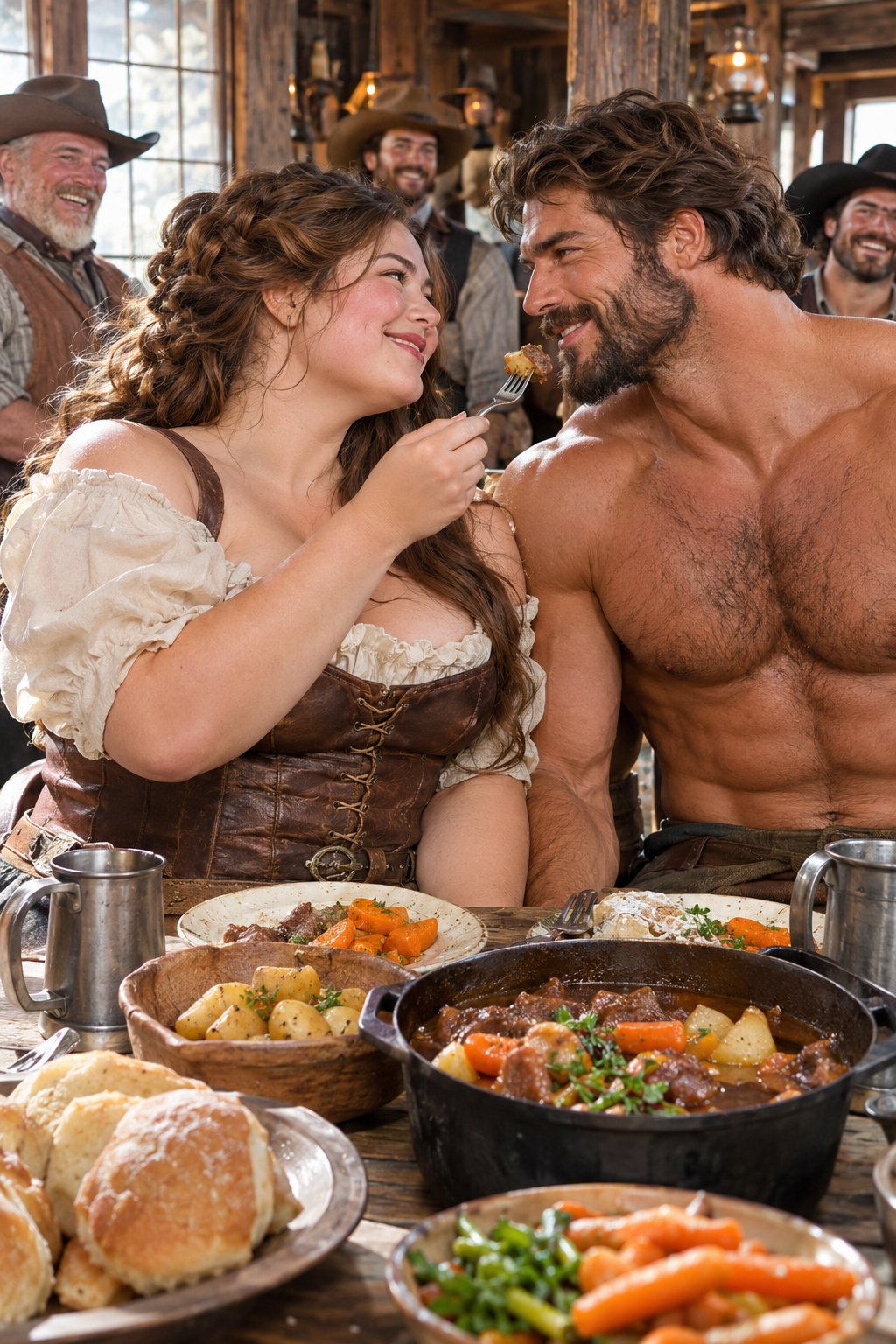
Clara looked at him with undisguised bitterness.
“Because your brother wasn’t helping Silas Mercer. He was Silas Mercer’s partner.”
Benjamin shook his head.
“No.”
“Your brother arranged the threats, the stolen cattle, the burned homesteads. Mercer handled the paperwork. Caleb handled the violence.”
Rebecca saw something collapse behind her husband’s eyes.
For years, Benjamin had defended his brother’s memory.
Now that memory was turning into something monstrous.
Clara reached into her coat and produced a small leather journal.
“My father wrote down everything he remembered. Names, places, payments. He knew there was more evidence in that iron box.”
She opened the journal to a page marked with a faded ribbon.
“Your brother is back because somebody has offered him a fortune to recover those records.”
“Who?” Rebecca asked.
Clara’s voice dropped.
“Judge Nathaniel Crowe.”
Thomas swore under his breath.
Judge Crowe had been the most powerful man in the county for nearly twenty years.
He owned the courthouse, influenced the bank, and attended church every Sunday with the confidence of a saint.
Rebecca remembered something.
Three months earlier, Crowe had offered Benjamin an extraordinary sum for the northern grazing land.
Benjamin had refused.
Two weeks later, cattle began disappearing.
Then the fence was cut.
And now Andrew had been kidnapped.
“This was never just about old records,” Rebecca said.
Benjamin looked at her.
“Crowe wants our ranch.”
Clara nodded.
“The box contains the original ownership documents for this valley. My father said Crowe and Mercer forged dozens of deeds, including one that would let Crowe claim this land.”
Benjamin’s face darkened.
“Then he’s not getting it.”
Rebecca rose.
“He’s already willing to murder for it. We need more than determination.”
Benjamin reached for his rifle again.
“I’ll go to the mill.”
“And what happens when Caleb takes the box and kills you both?”
“He’s my brother.”
“He’s the man who kidnapped Andrew.”
Benjamin turned away.
Rebecca followed him.
“Look at me.”
He stopped.
She stood in front of him, barely reaching his chest.
“For twelve years, you’ve tried to carry every burden yourself. You thought protecting people meant keeping them outside the truth. And now Andrew is out there because he believed you wouldn’t listen.”
Benjamin’s eyes filled with pain.
“I know.”
“Then do something different.”
He looked at the cowboys.
Six men waited silently.
For once, Benjamin did not issue an order.
Instead, he removed his hat.
“I’ve failed every one of you,” he said.
Nobody moved.
“I made you afraid to bring me bad news. I mistook obedience for respect. And because I wouldn’t listen, a good young man is in danger.”
Thomas wiped his weathered face.
“Boss—”
Benjamin shook his head.
“I’m sorry.”
The apology seemed to change the air inside the room.
Thomas straightened.
“Then let’s bring our boy home.”
Rebecca studied the men.
“First, we need to know exactly what we’re facing.”
Clara explained that Caleb had at least eight armed men at the mill. He had positioned watchers along the western trail, expecting Benjamin to approach from the ranch.
“And Andrew?” Rebecca asked.
“He’s tied inside the lower storage room. His leg is injured, but he was alive when I left.”
Benjamin closed his eyes briefly.
Rebecca reached for Clara’s hand.
“Did you see another way inside?”
“There is an old water channel behind the mill. It runs beneath the building.”
Thomas nodded.
“I remember that channel. We used to drive cattle past it.”
Rebecca considered the distance.
The channel could provide access without crossing the main trail.
But another problem remained.
“Even if we rescue Andrew, Crowe will still control the county. He’ll send more men.”
Clara opened her father’s journal again.
“My father wrote about a federal investigator in Fort Stanton. Marshal Daniel Pierce. He was gathering evidence against Crowe before being transferred.”
Rebecca remembered the marshal’s name.
He had visited the ranch once during the spring cattle auction, asking questions about missing land deeds.
Benjamin had refused to speak with him.
“How far is Fort Stanton?” she asked.
“Five hours if the horse is fast,” Thomas replied.
Rebecca looked at the clock.
It was nearly seven.
Midnight was five hours away.
There was no time for a rider to reach the marshal and return before the exchange.
But Rebecca noticed a detail in the journal.
“Pierce has a deputy stationed at the telegraph office in Millhaven.”
Thomas leaned forward.
“That’s only ninety minutes south.”
Rebecca pointed toward the youngest cowboy, Daniel.
“Can you ride there?”
He nodded.
“Fast as anybody.”
“Then take this journal. Find the deputy. Tell him Crowe’s men have kidnapped Andrew and that evidence of land fraud is hidden on our property. Have him send word to Pierce immediately.”
Daniel glanced toward Benjamin.
For a moment, Rebecca feared he would wait for permission.
But Benjamin nodded.
“Do exactly as she says.”
Daniel was out the door within seconds.
Rebecca turned toward the remaining men.
“Now we make sure Andrew survives long enough to see that marshal.”
An hour later, Benjamin stood beside the old smokehouse with a lantern in one hand and a shovel in the other.
Rebecca watched as he dug beneath the northern foundation.
The earth was hard and packed with stones.
After several minutes, metal struck metal.
Benjamin stopped.
Slowly, he uncovered a small iron chest.
Rust had eaten through its hinges, but the lock remained intact.
He carried it into the barn.
Thomas brought a hammer.
One heavy blow shattered the lock.
Inside lay bundles of yellowed documents, a ledger, several signed contracts, and a silver pocket watch.
Benjamin lifted the watch.
His face went white.
Rebecca leaned closer.
“What is it?”
“My father’s watch.”
She frowned.
“Why would it be here?”
Benjamin opened its cover.
Inside was an inscription.
To Samuel, for the truth you were brave enough to defend.
Below it were the initials E.V.
“Elias gave this to my father,” Benjamin whispered.
Clara looked up sharply.
“My father told me Samuel was helping him.”
Benjamin stared at her.
“My father died after falling from his horse.”
Clara’s eyes filled.
“No. My father said Samuel discovered Caleb’s involvement. He planned to bring the evidence to a marshal.”
Benjamin staggered against the barn wall.
Rebecca caught his arm.
“Benjamin?”
He shook his head.
“Caleb was with Father the day he died.”
The realization devastated him.
His brother had not merely betrayed strangers.
He had murdered their own father.
For years, Benjamin had blamed himself for failing to prevent an accident that had never happened.
Rebecca held him while he struggled to breathe.
Then Benjamin straightened.
Something in his expression had changed.
The anger was still there, but beneath it was a clarity she had never seen before.
“We get Andrew,” he said quietly. “And we make sure Caleb answers for all of it.”
Rebecca divided the documents into two bundles.
She sealed the original ledger and deeds inside an oilcloth packet for the authorities. A second packet contained harmless ranch accounts and loose papers.
Benjamin watched her.
“You’re making a decoy.”
“Yes.”
“What if Caleb opens it?”
“Then we’ll have to keep him talking long enough for the others to reach Andrew.”
Benjamin frowned.
“Rebecca, you’re not going near that mill.”
She looked at him.
“Are we starting this again?”
He sighed.
“I don’t want you hurt.”
“And I don’t want to bury you.”
For a long moment, they stood facing each other.
Then Benjamin reached for her hands.
“I’ve spent twelve years believing love meant keeping danger away from you.”
Rebecca squeezed his fingers.
“Sometimes love means trusting someone enough to face danger beside you.”
Benjamin lowered his forehead against hers.
“Then we do this together.”
By ten-thirty, their plan was ready.
Thomas and two ranch hands would approach the abandoned water channel. Another cowboy would remain with the horses on the eastern ridge, prepared to help them escape.
Rebecca and Benjamin would approach the mill openly with the decoy box.
Their goal was not to fight Caleb’s men.
It was to draw their attention while Thomas reached Andrew.
If Daniel succeeded in reaching Millhaven, federal officers would be coming.
But nobody could guarantee when.
The moon hung low over the prairie when Rebecca and Benjamin reached Blackwater Mill.
The building stood beside a dried creek bed, its wooden wheel frozen in place and its roof sagging beneath years of neglect.
Lanterns glowed behind broken windows.
Six horses were tied outside.
Rebecca counted three men standing in the shadows.
There were almost certainly more inside.
Benjamin dismounted first.
“Caleb!” he shouted.
A man stepped onto the upper balcony.
He was tall, broad-shouldered, and dressed in a dark coat.
Even from the ground, Rebecca could see the resemblance.
Caleb possessed Benjamin’s height and powerful build, but his expression carried a coldness that made her skin crawl.
“Well,” Caleb called. “My little brother finally came home to Blackwater.”
Benjamin stood motionless.
“I thought you were dead.”
Caleb laughed.
“Convenient, wasn’t it?”
“Where’s Andrew?”
“Alive. For now.”
Rebecca stepped forward.
“Let us see him.”
Caleb’s gaze settled on her.
“And you must be Rebecca.”
She hated the familiarity in his voice.
“I’ve heard about you,” he continued. “My brother always did have excellent taste.”
Benjamin moved slightly in front of her.
Caleb smiled.
“Still pretending you’re everyone’s protector?”
“Bring Andrew out.”
“First, the box.”
Benjamin lifted the iron chest.
“Here.”
Caleb gestured toward the doors.
Two armed men emerged.
“Put it on the ground and step away.”
Benjamin obeyed.
One man collected the chest and carried it inside.
Rebecca watched the upper windows.
A brief movement caught her eye near the rear wall.
Thomas.
He had reached the water channel.
She forced herself not to look again.
Caleb descended the stairs and emerged through the main entrance.
Up close, he appeared older than Benjamin, with a scar running from his temple to his jaw.
“You grew into quite a giant,” Caleb said.
Benjamin ignored him.
“Did you kill Father?”
Caleb’s smile faded.
Rebecca felt the air tighten.
“What an unpleasant question.”
“Answer me.”
Caleb shrugged.
“Samuel should’ve minded his own business.”
Benjamin’s hands curled into fists.
Rebecca touched his wrist.
The small gesture reminded him why they were there.
Caleb noticed.
“Ah. The wife keeps the beast on a leash.”
Rebecca met his eyes.
“No. He simply knows the difference between strength and cruelty.”
For the first time, Caleb looked annoyed.
He opened the chest.
His expression changed.
He lifted a stack of ranch accounts.
“What is this?”
Benjamin said nothing.
Caleb threw the papers into the mud.
“You think I’m a fool?”
“No,” Rebecca replied. “I think you’re a man who has spent twelve years running from the truth.”
Caleb drew his revolver.
Benjamin moved instantly, placing himself between them.
“Don’t.”
Caleb pointed the weapon toward his brother’s chest.
“Where’s the real box?”
“Safe,” Benjamin answered.
“Then your boy dies.”
From inside the mill came a sudden crash.
Everyone turned.
A shout followed.
Then another.
Rebecca’s heart hammered.
Thomas had reached Andrew.
Caleb understood immediately.
He fired into the dirt beside Benjamin’s boots.
“Your men are inside!”
Benjamin lunged forward and struck Caleb’s gun arm.
The revolver flew across the yard.
Both brothers crashed against a wooden support post.
Rebecca moved toward the mill entrance, but one of Caleb’s men grabbed her coat.
She twisted free, striking his hand with the heavy lantern she carried.
He stumbled backward.
The lantern shattered on the wet ground, extinguishing its flame.
Rebecca ran.
Inside, the mill smelled of rotting grain and damp timber.
She heard footsteps overhead.
Then Andrew’s voice.
“Mrs. Rebecca!”
She followed it toward the lower storage room.
Thomas was kneeling beside Andrew, cutting the ropes around his wrists.
Blood darkened the young man’s trouser leg.
Rebecca dropped beside him.
“Can you stand?”
“Think so.”
“You’re going to have to prove it.”
Andrew tried to smile.
Thomas supported him beneath one arm while Rebecca took the other.
They staggered toward the rear door.
Then a voice rang through the darkness.
“Stop right there.”
A man stood at the end of the corridor, blocking their escape.
He held a shotgun.
Thomas raised his empty hands.
“Easy.”
The man stepped closer.
Rebecca recognized him.
Sheriff Walter Briggs.
He had eaten at their table only two weeks earlier.
“Sheriff?” she whispered.
Briggs smiled.
“I’m afraid you’ve wandered into something larger than a missing ranch hand.”
Rebecca felt a flash of anger.
“You were working for Crowe.”
“For twenty years.”
Andrew leaned heavily against Thomas.
Briggs glanced at the young man’s injured leg.
“Leave him. Walk away. You might live.”
Rebecca stared at the weapon.
Then she looked beyond Briggs toward the rear doorway.
A faint whistle sounded outside.
Three short notes.
The signal they had agreed upon.
Their fourth cowboy had reached the escape route.
Rebecca swallowed.
“You’re going to shoot an unarmed woman in front of witnesses?”
Briggs sneered.
“Witnesses don’t matter much when they’re buried.”
A second voice came from behind him.
“They matter to federal marshals.”
Briggs spun.
A rifle clicked in the darkness.
Deputy Marshal Henry Cole stood in the doorway with Daniel beside him.
Two other armed officers emerged from the shadows.
“Drop it, Briggs,” Cole ordered.
For an instant, Rebecca thought the sheriff would fire.
Then he slowly lowered the shotgun.
Daniel rushed forward.
“I got to Millhaven,” he gasped. “The deputy was already meeting a federal escort near town.”
Rebecca could have wept.
But outside, Benjamin was still fighting his brother.
She turned toward the yard.
A gunshot cracked through the night.
“Benjamin!”
Rebecca ran.
She burst through the mill doors just as Caleb staggered backward beside the old water wheel.
Benjamin stood several feet away, one hand pressed against his shoulder.
Blood seeped between his fingers.
Caleb had recovered a second pistol.
Now he pointed it toward his brother’s head.
“Stay back!” Caleb shouted when he saw the officers.
Rebecca stopped.
Benjamin’s face was pale, but he remained standing.
“It’s over, Caleb,” he said.
Caleb laughed wildly.
“You think so? Crowe owns half the territory. He’ll bury every charge before sunrise.”
“Not this time,” Deputy Marshal Cole replied.
He stepped forward carefully.
“We have the original ledger, signed deeds, and sworn testimony from Elias Voss’s daughter.”
Caleb’s eyes shifted toward Clara, who had arrived with the officers.
She stood near the gate, holding her father’s journal.
For the first time, real fear crossed Caleb’s face.
“You little liar,” he hissed.
Clara did not move.
“My father spent eight years waiting for someone brave enough to listen. I’m finished hiding.”
Caleb tightened his grip on the pistol.
Benjamin took a cautious step forward.
“Brother, listen to me.”
“Don’t call me that.”
“You still have a choice.”
Caleb’s expression twisted.
“You’d let them hang me?”
Benjamin’s eyes filled with tears.
“I would let the truth decide what happens to you.”
For a moment, Caleb seemed to hesitate.
Rebecca saw the slight movement of his eyes toward the horses.
He was looking for a way to escape.
Then he suddenly swung the pistol toward Clara.
Benjamin moved before anyone else.
He seized Caleb’s arm and forced it upward.
The gun discharged into the night.
Both men stumbled against the rotten wooden railing.
The timber broke.
Caleb fell backward toward the abandoned wheel pit.
Benjamin caught his wrist.
Rebecca screamed.
For several terrible seconds, Caleb hung above the dark opening while Benjamin struggled to hold him with his wounded shoulder.
“Help me!” Benjamin shouted.
The marshals rushed forward.
Together, they dragged Caleb back onto solid ground.
He lay gasping, his face gray with shock.
Benjamin collapsed beside him.
Rebecca dropped to her knees.
“Why?” Caleb whispered.
Benjamin stared at him.
“Why what?”
“Why save me?”
Benjamin looked toward the approaching officers.
“Because I won’t become the man you became.”
Nobody spoke.
Then Cole placed Caleb under arrest.
Rebecca turned all her attention to Benjamin.
His shirt was soaked around the shoulder.
“Stay with me,” she whispered.
Benjamin managed a weak smile.
“Hard to go anywhere with you holding on so tight.”
She pressed a cloth against the wound.
“You are the most stubborn man I’ve ever known.”
“Learned from the best.”
She laughed through her tears.
Then she kissed his forehead.
“Don’t ever frighten me like that again.”
Benjamin closed his eyes briefly.
“I’ll do my best.”
By dawn, the mill was surrounded by federal officers.
Sheriff Briggs and seven of Caleb’s men were in custody. Two others had fled during the confusion, but their horses and supplies were recovered before noon.
Andrew was carried back to the ranch in a wagon.
The bullet wound in his leg was painful but not life-threatening.
Benjamin’s shoulder required stitches and several weeks of rest.
Rebecca insisted on supervising every part of his recovery.
He complained exactly once.
She threatened to hide his boots.
After that, he became remarkably cooperative.
But the danger did not end with Caleb’s arrest.
Three days later, Judge Nathaniel Crowe attempted to leave the territory aboard a westbound stagecoach.
Federal marshals intercepted him outside Millhaven.
Inside his luggage, they found thousands of dollars in banknotes, forged land certificates, and letters connecting him to the Blackwater operation.
The evidence revealed something worse than anyone had imagined.
For nearly two decades, Crowe had used fraudulent claims to steal land from struggling settlers. Families who resisted were threatened, ruined financially, or driven from their homes.
The records also connected Caleb to Samuel’s death.
Rebecca stayed beside Benjamin when Marshal Pierce delivered that news.
The truth broke something inside him.
For a long time, he sat on the porch without speaking.
Finally, he whispered, “I spent eleven years missing a brother who murdered our father.”
Rebecca sat beside him.
“You missed the man you believed he was.”
Benjamin looked at her.
“How do you live with something like that?”
“You don’t pretend it didn’t happen,” she answered. “And you don’t carry guilt for choices someone else made.”
He stared toward the northern hills.
“I should have known.”
“Maybe. But the question now is what you’ll do with what you know.”
Benjamin remained quiet.
Rebecca took his hand.
“Your father tried to protect innocent people. You can finish what he started.”
Those words stayed with him.
Over the following weeks, federal investigators reviewed every document recovered from the iron box.
Dozens of fraudulent transactions were uncovered.
Several influential businessmen were charged.
Families who had lost their homesteads began filing claims to recover them.
Some properties had changed hands so many times that the legal battles would take years.
But for the first time, the victims possessed something they had never been allowed before.
Evidence.
And a chance.
Rebecca helped Clara organize the records, writing letters to families scattered across the territory.
Thomas volunteered to accompany elderly settlers to hearings.
Andrew, recovering with his leg propped on a chair, spent afternoons copying names from the ledger.
And Benjamin, still unable to lift his injured arm properly, began making visits he had avoided for years.
He went to the families who had complained about damaged fences, missing cattle, and suspicious riders.
He apologized for dismissing their warnings.
Some accepted immediately.
Others did not.
One elderly rancher named Joseph Miller looked Benjamin straight in the eye and said, “Your apology won’t bring back my son.”
Benjamin lowered his head.
“No, sir. It won’t.”
Joseph’s son had been killed during a confrontation with men later connected to Caleb.
Benjamin had known about the death but had never understood its true cause.
He stood silently while Joseph described the young man’s final days.
When the old rancher finished, Benjamin said, “I can’t give you back what you’ve lost. But I can make sure the men responsible don’t escape what they’ve done.”
Joseph studied him.
Then he nodded once.
It was not forgiveness.
But it was a beginning.
Months passed.
The first snow fell over the northern pasture, covering the old fence line where Rebecca had found Andrew’s glove.
The ranch slowly returned to its familiar rhythm.
Cattle needed feeding.
Water troughs froze.
Horses required tending.
And Rebecca’s kitchen once again filled with the smell of fresh bread.
But something fundamental had changed.
Every Sunday evening, Benjamin gathered the ranch hands around the dinner table.
Not to issue orders.
To listen.
Each man was expected to speak freely about problems, mistakes, and concerns.
At first, the meetings were awkward.
Thomas would clear his throat and say everything was fine.
Daniel would nod.
Andrew would stare at his plate.
But Rebecca refused to let the old habits return.
“One of the horses has been limping,” she announced during the first meeting. “And nobody told Benjamin because they thought he’d be angry.”
Benjamin looked around the table.
“Which horse?”
“Copper,” Daniel admitted.
“Why didn’t you say something?”
Daniel hesitated.
Benjamin caught himself.
Then he spoke more gently.
“I’m not angry. I want to know so we can help him.”
The young cowboy looked surprised.
“I’ll check his hoof after supper,” Benjamin said.
Thomas smiled into his coffee.
Over time, the conversations became easier.
The men began suggesting new grazing routes, discussing repairs, and admitting mistakes before those mistakes became disasters.
Benjamin discovered that his ranch hands had ideas he had never considered.
And something unexpected happened.
The ranch became more successful.
Not because Benjamin worked harder.
Because everyone finally felt responsible for its future.
One bitter February morning, a letter arrived from Fort Stanton.
Caleb had been convicted of murder, kidnapping, conspiracy, and numerous other crimes.
Judge Crowe had also been convicted.
Several families were preparing to reclaim their land.
Benjamin read the letter beside the fireplace.
Rebecca watched his expression.
“Are you all right?”
He folded the paper.
“I thought I’d feel happy.”
“And?”
“I feel tired.”
She sat beside him.
“Justice doesn’t always feel like celebration.”
Benjamin nodded slowly.
“I keep thinking about Father. About how different things might’ve been if I’d listened when Thomas first warned me.”
Rebecca touched his cheek.
“You cannot change twelve years ago.”
“I know.”
“But you can change tomorrow.”
He smiled faintly.
“You always make things sound simple.”
“They’re rarely simple. That doesn’t mean they’re impossible.”
Benjamin pulled her close.
For a while, they listened to the fire crackle.
Then he reached into his pocket and placed something in her hand.
It was his father’s silver watch.
Rebecca opened it.
The inscription gleamed beneath the firelight.
“To Samuel, for the truth you were brave enough to defend.”
“I want you to keep it,” Benjamin said.
“Why me?”
“Because I spent years thinking strength meant never admitting fear. Never making mistakes. Never asking for help.”
He took a breath.
“You taught me something my father probably tried to teach me a hundred times.”
Rebecca waited.
“That a man isn’t measured by how loudly he speaks or how many people obey him.”
He closed her fingers around the watch.
“He’s measured by whether people feel safe enough to tell him the truth.”
Rebecca’s eyes filled.
She leaned forward and kissed him.
Outside, the winter wind rattled the shutters.
Inside, the house was warm.
And for the first time in years, Benjamin seemed truly at peace.
Spring arrived slowly that year.
The first green shoots pushed through the soil beside the barn, and the creek swelled with melting snow.
Andrew recovered completely, although he walked with a slight limp whenever the weather turned cold.
Clara had remained nearby to help with the land hearings.
During those months, she and Andrew grew close.
Rebecca noticed the way the young man straightened whenever Clara entered a room.
And she noticed how Clara always saved the last biscuit for him.
One evening, Andrew approached Benjamin beside the corral.
“Sir, I’d like to ask you something.”
Benjamin turned.
“What is it?”
Andrew swallowed.
“I want to marry Clara.”
Benjamin studied him.
Then he smiled.
“Have you asked her?”
“Not yet.”
“Then why are you asking me?”
Andrew blinked.
“I thought I should get your permission.”
Benjamin laughed.
“Son, the only permission you need is hers.”
Andrew grinned.
“Yes, sir.”
He started to leave.
“Andrew?”
The young man turned.
Benjamin’s expression softened.
“You’re a good man. But make sure you listen to her. Especially when she tells you something you don’t want to hear.”
Andrew laughed.
“I’ve seen what happens when a man doesn’t.”
Benjamin smiled.
“Then you’re already wiser than I was.”
Clara said yes beneath the blooming apple trees three evenings later.
Their wedding took place in June, in the meadow behind the ranch house.
Neighbors traveled from miles around.
Several families whose property had been restored attended, bringing pies, bread, flowers, and homemade gifts.
Joseph Miller came too.
He approached Benjamin before the ceremony.
For a moment, neither man spoke.
Then Joseph held out a weathered photograph.
It showed his son standing beside a young horse.
“I found this while cleaning the house,” he said.
Benjamin accepted it carefully.
“He looks happy.”
“He was.”
Joseph looked toward the wedding preparations.
“My boy always said a good neighbor was worth more than a hundred acres of land.”
Benjamin swallowed.
“He was right.”
Joseph placed a hand on his shoulder.
“I still miss him every day.”
“I know.”
“But I’m glad somebody finally listened.”
Benjamin could not speak.
He simply nodded.
Later, Rebecca watched her husband help Joseph to a seat near the front.
The sight meant more to her than any grand speech.
During the ceremony, Andrew stood beneath an arch of wildflowers, holding Clara’s hands.
Thomas wiped away tears without bothering to hide them.
Daniel dropped the wedding rings and spent an embarrassing moment searching through the grass.
Everyone laughed.
Even Benjamin.
When Andrew kissed his bride, the meadow erupted in cheers.
Rebecca leaned against her husband’s side.
“Look at them,” she whispered.
Benjamin smiled.
“They’ve been through more than most people twice their age.”
“And they still chose happiness.”
He looked down at her.
“So did we.”
That evening, as the celebration continued beneath strings of lanterns, Rebecca stepped onto the porch for a moment of quiet.
Benjamin followed her.
The ranch spread before them in the golden light.
Cattle grazed peacefully.
Children chased each other near the apple trees.
Laughter floated across the yard.
Rebecca slipped her hand into his.
“Do you remember the night I brought Andrew’s glove into the dining room?”
Benjamin nodded.
“I remember thinking you were about to start the biggest argument of our marriage.”
She laughed.
“I was.”
“You frightened me more than any outlaw ever could.”
“Good.”
He shook his head, smiling.
Then his expression grew thoughtful.
“That night, I thought I was the strongest man in the room.”
Rebecca looked up at him.
“And now?”
Benjamin watched Thomas laughing with the other ranch hands.
He watched Andrew holding Clara close.
He watched neighbors who had once been strangers sharing food beneath the summer sky.
“Now I know strength isn’t about standing above everyone else.”
He wrapped his arm around her shoulders.
“It’s about making sure nobody has to stand alone.”
Rebecca rested her head against his chest.
The same enormous man who once believed every problem required his strength had learned to depend on the strength of others.
He was still nearly seven feet tall.
He could still lift a fallen fence post by himself.
And when danger came, he would still be the first to protect those he loved.
But he no longer needed to be the loudest voice at the table.
Sometimes, he was the quietest.
Because he had finally learned that listening could accomplish what anger never would.
Years later, the people of the valley would remember the Blackwater affair as the scandal that exposed a corrupt judge and brought justice to dozens of families.
They would remember the kidnapped ranch hand, the abandoned mill, and the brothers who faced each other beneath the midnight sky.
But the men who worked at Benjamin’s ranch remembered something different.
They remembered a dinner table.
A bloodstained glove.
And a woman who had stood before a powerful man and told him a truth he desperately needed to hear.
They remembered how that man had finally listened.
And how his decision changed every life beneath his roof.
Because the greatest danger to a family is not always the enemy waiting beyond the fence.
Sometimes, it is the silence growing between people who love one another but are afraid to speak.
And the greatest act of courage is not always facing a gun, fighting an outlaw, or rescuing someone from danger.
Sometimes, it is admitting you were wrong.
Sometimes, it is asking for help.
And sometimes, it is listening when the truth hurts.
Benjamin spent the rest of his life remembering that lesson.
And whenever a new ranch hand joined the family, he made sure to tell him one thing before the first day’s work began.
“If something is wrong, you come straight to me. I don’t care how small it seems, and I don’t care if you think I’ll be disappointed.”
Then he would smile.
“Because around here, nobody gets punished for telling the truth.”
And every time Rebecca heard those words, she would touch the old silver watch she wore on a chain beneath her dress.
It reminded her that courage was not something people were simply born with.
It was something they chose, again and again, especially when choosing it meant changing themselves.
The iron box had once held the secrets of men who believed power gave them the right to destroy others.
But in the end, those secrets had done something none of them intended.
They had helped one stubborn rancher become a better husband, a better leader, and a better man.
And that was the legacy Benjamin and Rebecca passed on to everyone who called their ranch home.
Not wealth.
Not power.
Not fear.
But trust.
Because a home is not made safe by the strength of the person who rules it.
It is made safe by the love, honesty, and courage of the people who are finally free to speak within it.
The years that followed brought changes to the valley that Rebecca and Benjamin could never have imagined on the night Andrew’s bloodstained glove appeared on their dinner table.
The Blackwater trials became a turning point for the entire county. Families who had spent decades living in fear of powerful landowners gradually reclaimed their homes. New officials were elected, dishonest deputies were dismissed, and the courthouse that once served Judge Crowe’s interests began serving the people it had neglected.
But peace did not arrive without challenges.
Three years after the trials, a devastating drought struck the northern valley. Wells dried up, grass turned brown, and neighboring ranchers began selling their cattle for a fraction of their value.
One afternoon, Thomas brought Benjamin a troubling report.
“Boss, the eastern creek has stopped flowing. If we don’t move the cattle soon, we’ll start losing them.”
Benjamin studied the map spread across his desk.
The only remaining reliable water source lay beyond the southern pasture, across land belonging to several smaller families.
Years earlier, Benjamin might have ordered his men to move the herd without asking permission.
This time, he looked at Thomas.
“What do you think we should do?”
Thomas considered the question.
“We could speak to the neighbors. Perhaps work out an agreement that helps everybody.”
Benjamin nodded.
“Then that’s what we’ll do.”
The following morning, Rebecca and Benjamin invited the surrounding families to the ranch.
Some arrived suspiciously, remembering the days when wealthy ranchers made decisions without considering anyone else.
Benjamin welcomed them into the same dining room where he had once frightened his own men into silence.
“I won’t pretend this drought isn’t dangerous,” he began. “We’re all facing the same problem. But I believe we have a better chance of surviving if we face it together.”
An elderly farmer raised his hand.
“And what happens when your cattle drink our water?”
Benjamin looked directly at him.
“Then we’ll limit the number of animals, share the costs, and make sure your families have what they need first.”
Another neighbor asked, “And if we refuse?”
Benjamin answered without hesitation.
“Then I’ll respect your decision.”
Rebecca watched the surprise move around the room.
It was a small answer, but it meant everything.
After hours of discussion, the families agreed to establish shared watering schedules, repair an abandoned irrigation channel, and distribute hay to the households most in need.
Throughout that terrible summer, Benjamin’s ranch became a gathering place for people who might otherwise have struggled alone.
Andrew and Clara, now raising their first child, helped organize supplies. Thomas supervised the irrigation repairs. Rebecca turned the kitchen into a place where exhausted workers could find hot meals and encouragement.
There were difficult days.
Some cattle were lost. Crops failed. Families worried about the approaching winter.
Yet something remarkable happened.
Not one participating household was forced to abandon its land.
When the autumn rains finally arrived, the valley celebrated with a harvest supper beneath the old apple trees.
Benjamin stood beside Rebecca, watching neighbors share food and laughter.
“We couldn’t have done this alone,” he said.
Rebecca smiled.
“No. And this time, you were wise enough not to try.”
Benjamin chuckled.
“I suppose I’ll never live down how stubborn I used to be.”
“Not a chance.”
He kissed her forehead.
“Then I hope you keep reminding me.”
Many years later, Benjamin’s hair had turned silver, and the great strength that once made him seem invincible had begun to fade. Thomas had retired to a small cottage near the creek, Andrew managed much of the ranch, and Clara’s children filled the house with laughter.
One winter evening, Benjamin sat beside the fireplace while his eldest grandson, Samuel, examined the old silver pocket watch.
“Grandpa,” the boy asked, “why do you keep this watch when it doesn’t even work anymore?”
Benjamin smiled.
“Because it reminds me of something more important than time.”
Samuel climbed onto his knee.
“What’s that?”
Benjamin looked across the room at Rebecca.
She was older now, her dark hair threaded with silver, but her eyes still carried the same fierce kindness that had challenged him all those years ago.
“It reminds me that being strong doesn’t mean you’re always right.”
Samuel frowned thoughtfully.
“But you’re the strongest man I know.”
Benjamin laughed softly.
“Maybe once. But your grandmother has always been stronger than me in the ways that matter most.”
Rebecca looked up from her sewing.
“Benjamin, don’t fill that child’s head with nonsense.”
“It’s the truth, my dear.”
Samuel turned toward her.
“Grandma, were you really stronger than Grandpa?”
Rebecca smiled.
“Well, sweetheart, your grandfather could lift a hundred-pound sack of grain without breaking a sweat.”
The boy’s eyes widened.
“But sometimes,” she continued, “he needed someone to help him put down the things he shouldn’t have been carrying.”
Samuel considered that for a moment.
Then he nodded solemnly.
“I think I understand.”
Benjamin hugged him.
“I hope you do, son. And I hope you remember it long after I’m gone.”
Outside, snow drifted softly across the northern ridge.
Inside, the ranch house glowed with warmth.
The dining table was surrounded by children, grandchildren, old friends, and neighbors whose lives had become connected through years of hardship and kindness.
Benjamin looked around the room.
Once, he had believed his greatest achievement would be building the largest ranch in the territory.
Now he understood that his greatest achievement was something no surveyor could measure and no bank could value.
He had helped build a place where people were heard, where mistakes could be admitted, where kindness was never mistaken for weakness, and where nobody had to face hardship alone.
Rebecca reached for his hand beneath the table.
He squeezed it gently.
Neither needed to speak.
They had already learned the most important lesson their long life together could teach.
A person’s true legacy is not the power they hold over others, but the courage, compassion, and trust they leave behind in the hearts of those they love.
And on that snowy evening, surrounded by the family they had protected and the community they had helped rebuild, Benjamin finally understood that he had become the kind of man his father would have been proud to call his son.
THE END.