“Nobody wants a dead man’s debts, Grace. Not even his furniture.”
Henry Cole stared at the ledger on his counter as though it were a loaded gun.
For the first time since Grace Miller had known him, the storekeeper seemed unable to find the right words.
“These figures don’t prove anything,” he finally said, forcing a smile. “Prices change. Supplies get lost. That’s how business works.”
Grace rested both hands on the counter.
“Then you won’t mind explaining why Sullivan Ridge paid for forty sacks of flour when only twenty-six were delivered.”
Henry’s smile disappeared.
“Or why you charged Mr. Sullivan twice for the same shipment of nails,” she continued. “And why the prices on these invoices don’t match the prices you promised him last spring.”
Several customers stopped talking.
Henry glanced toward them before lowering his voice.
“Mrs. Miller, I suggest you remember your position.”
“My position?” Grace asked.
“You work for Mr. Sullivan. That’s all. You have no business questioning how I run my store.”
Jack Sullivan stepped forward.
“Actually, Henry, she has every right.”
Henry turned toward the tall rancher.
“Jack, surely we can settle this privately.”
“We could have,” Jack replied. “If you’d been honest when she first asked.”
A woman standing near the fabric shelves slowly set down the ribbon she had been examining.
Grace recognized her as Mrs. Bennett, whose husband operated a small dairy outside town.
“Are you saying Henry has been charging people for things they never received?” the woman asked.
Henry’s face reddened.
“Absolutely not! This is a misunderstanding.”
Grace closed the ledger.
“Then I’m sure you’ll be happy to check your records against ours.”
For a moment, nobody moved.
Then Henry leaned close enough that only Grace and Jack could hear him.
“You’re making a serious mistake, widow.”
Jack’s expression hardened.
“Don’t threaten her.”
Henry straightened immediately.
“I wasn’t threatening anyone.”
“Good,” Jack said. “Because if you have something to say to Mrs. Miller, you’ll say it respectfully.”
Grace felt something unfamiliar rise in her chest.
For months, people had spoken about her as though she were a burden, a failure, or a warning to other women.
Now someone had defended her without treating her like a helpless child.
But she wasn’t finished.
“We’ll be purchasing our supplies elsewhere until these accounts are settled,” she said.
Henry laughed bitterly.
“Elsewhere? There’s no other general store within twenty miles.”
“Then we’ll travel twenty miles.”
Jack looked at her.
Grace held his gaze, suddenly wondering whether she had gone too far.
Instead, he nodded.
“Sounds reasonable.”
They left the store with nothing but the ledger and a long list of supplies they still needed.
Outside, Grace stopped beside Jack’s wagon.
“I’m sorry,” she said.
Jack frowned.
“For what?”
“I may have made your business more difficult.”
“Did you tell the truth?”
“Yes.”
“Then you haven’t made anything difficult that wasn’t already wrong.”
Grace looked down at the ledger.
“My husband used to say I asked too many questions.”
Jack adjusted the reins with his right hand.
“Maybe he didn’t like the answers.”
She looked up sharply.
Jack seemed almost embarrassed by his own words.
“Come on,” he said. “We’ve got a long ride home.”
They were halfway to Sullivan Ridge when Grace noticed Jack struggling to tighten the leather strap around a loose crate.
His injured left hand wouldn’t close properly.
He tried twice before turning away in frustration.
“Let me,” Grace offered.
“I can manage.”
“I know you can.”
She waited.
Jack finally stepped aside.
Grace secured the strap without another word.
For several minutes, the wagon rolled along in silence.
Then Jack spoke.
“Three winters ago, a horse went through the ice at Miller’s Crossing.”
Grace turned toward him.
“I remember hearing about that.”
“A young ranch hand was riding him. The boy got trapped underneath.”
Jack stared at the road.
“I pulled him out. My hand got caught between the horse and the ice.”
“Was the boy all right?”
“He’s married now. Has a daughter.”
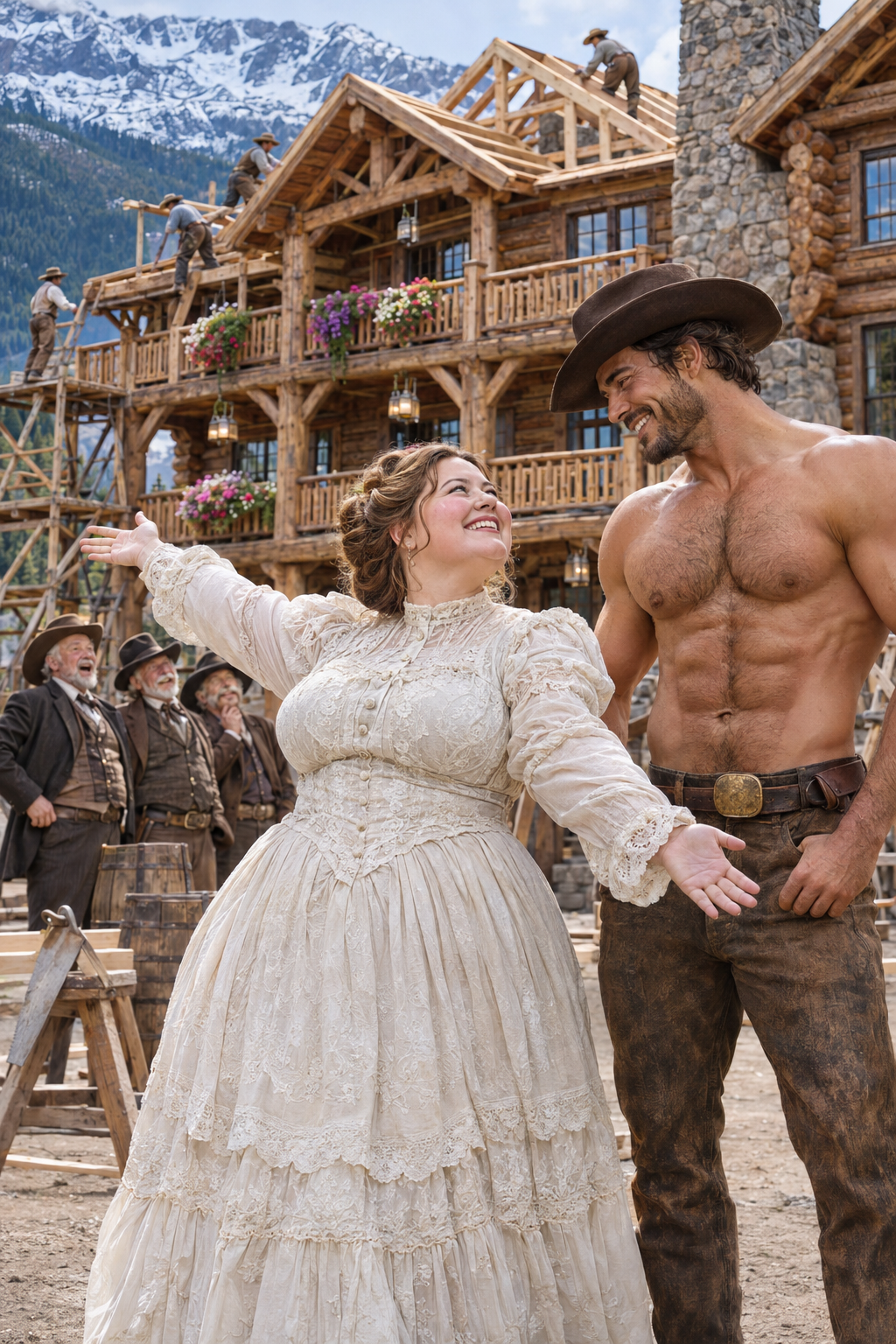
Grace smiled softly.
“And your hand?”
Jack flexed his stiff fingers.
“Doctor did what he could.”
“Does it hurt?”
“Some days.”
She considered that.
“You never told anyone.”
“People notice what a man can’t do faster than what he can.”
Grace understood that feeling better than he knew.
For the rest of the journey, they spoke very little.
But the silence between them had changed.
It no longer felt like two strangers sitting together.
It felt like two people who had finally found someone who understood the weight they carried.
Over the next several weeks, Sullivan Ridge began to change.
Grace reorganized the storerooms, repaired the accounting system, and arranged deliveries from a merchant in the neighboring county.
She discovered that Jack had been paying unnecessary fees on equipment, losing money through careless recordkeeping, and ordering supplies months before they were needed.
Every corrected mistake put a little more money back into the ranch.
The ranch hands noticed the difference.
Meals arrived on time. Broken tools were replaced. Missing supplies stopped disappearing.
Even the old cook, Martha, who had ruled the kitchen for fifteen years, admitted that things were running better.
One evening, Martha found Grace sitting at the kitchen table, surrounded by papers.
“You’re going to wear yourself down,” the older woman warned.
Grace smiled.
“Just one more column.”
“That’s what you said an hour ago.”
Martha placed a cup of tea beside her.
“Mr. Sullivan’s been standing outside that door for ten minutes.”
Grace looked up.
“Why?”
“Probably trying to figure out how to ask you to supper without sounding like he’s ordering another sack of grain.”
Grace laughed.
But when she glanced toward the doorway, she saw Jack walking quickly away.
That night, they ate together at the small dining table rather than in separate rooms.
It became a habit.
Jack would ask about the accounts. Grace would ask about the cattle, the weather, or the men working the distant pastures.
Sometimes they argued.
Jack wanted to buy another team of horses.
Grace insisted they should first repair the south fence.
“The horses will help us move cattle faster,” Jack said.
“And the fence will keep those cattle from wandering onto someone else’s property.”
“The fence can wait.”
“Then so can the horses.”
Jack stared at her.
Grace stared back.
Finally, he laughed.
It was such an unexpected sound that Martha nearly dropped a plate in the kitchen.
Two days later, Jack ordered lumber for the south fence.
But their peaceful routine didn’t last.
One rainy afternoon, a letter arrived from Silver Creek.
Grace recognized the handwriting immediately.
Henry Cole.
The letter stated that several unpaid obligations connected to her late husband’s estate had recently been discovered.
Unless she paid the remaining balance within thirty days, legal action would follow.
The amount was more than six months of her wages.
Grace read the letter three times.
Her hands began to shake.
She had sold nearly everything she owned to settle her husband’s debts.
She had endured the auction, the whispers, and the humiliation.
She had believed that terrible chapter of her life was finally over.
Now Henry was demanding more.
Jack found her sitting alone in the office after supper.
“Grace?”
She quickly folded the letter.
“I’m fine.”
Jack looked at her face.
“No, you’re not.”
She hesitated before handing him the paper.
He read it carefully.
Then he read it again.
“Did your husband owe Henry money?”
“He owed several people money,” Grace answered. “But I thought every claim had been settled at the auction.”
“Do you have the receipts?”
“Most of them.”
“Where?”
“In my trunk.”
Jack placed the letter on the desk.
“Then tomorrow we’ll go through every one.”
Grace shook her head.
“This isn’t your responsibility.”
“I know.”
“Jack, I can’t keep bringing trouble to your door.”
He looked at her steadily.
“You didn’t bring trouble here. You brought order.”
Her eyes filled unexpectedly.
She turned away before he could see.
But Jack noticed.
And for once, he didn’t pretend otherwise.
The following morning, Grace opened the small wooden trunk she had brought from her old home.
Inside were a few dresses, her mother’s Bible, a faded photograph, and a bundle of papers tied with blue ribbon.
She spread the documents across the office table.
Jack examined them while Grace organized them by date.
Most were ordinary receipts.
But one caught her attention.
It was a payment made to Henry Cole shortly before her husband’s death.
The amount matched one of the debts listed in Henry’s new letter.
Grace checked the date again.
Then she checked the signature.
“This was paid,” she whispered.
Jack leaned closer.
“Are you sure?”
“Yes. Henry signed the receipt himself.”
She reached for another document.
Then another.
By noon, they had found three claims that appeared to have been settled already.
Grace stared at the papers.
“He knows,” she said quietly.
Jack didn’t answer.
“He knows these were paid. He was there when the money changed hands.”
“Then we need someone else to examine the records.”
Grace looked at him.
“Who?”
“Judge Whitmore.”
The retired judge lived outside Silver Creek and occasionally helped settle property disputes.
He had a reputation for being careful, stubborn, and difficult to intimidate.
Jack suggested they visit him before confronting Henry again.
But when they arrived at the judge’s home two days later, they discovered Henry had already been there.
Judge Whitmore sat behind his desk with a troubled expression.
“Mrs. Miller,” he said, “Mr. Cole came to see me yesterday.”
Grace felt her stomach tighten.
“What did he say?”
“He claimed your husband concealed several debts before his death.”
“That isn’t true.”
“He also suggested that some of the receipts from the estate may have been altered.”
Grace stood so quickly her chair scraped the floor.
“Altered?”
Jack placed a steadying hand against the back of her chair.
The judge raised one hand.
“I haven’t accused you of anything, Mrs. Miller. I’m telling you what was brought to my attention.”
Grace slowly sat down.
Judge Whitmore examined the receipts she had brought.
For nearly an hour, he compared signatures, dates, and amounts.
Finally, he removed his glasses.
“These deserve a proper review.”
Grace leaned forward.
“Does that mean you believe me?”
“It means the documents raise serious questions about Mr. Cole’s claims.”
He paused.
“And there’s something else.”
Jack looked up.
The judge opened a drawer and removed a thin folder.
“Your husband’s estate was handled rather quickly, Mrs. Miller.”
Grace nodded.
“Henry said creditors were demanding payment.”
“Did anyone provide you with a complete inventory of the property sold?”
“I received a list after the auction.”
“Was it signed by an independent witness?”
Grace searched her memory.
“I don’t remember.”
The judge frowned.
“Then I’d like to see that list.”
On the ride home, Grace barely spoke.
Jack finally broke the silence.
“Whatever we find, we’ll deal with it.”
She looked toward the hills.
“You keep saying we.”
Jack’s hands tightened slightly around the reins.
“Does that bother you?”
“No,” Grace said softly.
“That may be what frightens me.”
Jack turned toward her, but she was already looking away.
For the first time in years, Grace had begun to imagine a future that wasn’t built entirely around surviving the next disaster.
She was afraid to hope for more.
Three days later, Judge Whitmore sent word that he wanted to meet them in town.
When they arrived, Henry Cole was already waiting in the judge’s office.
His face darkened when Grace entered.
“This is ridiculous,” he announced. “I’ve run an honest business for twenty years.”
Judge Whitmore remained calm.
“Then answering a few questions shouldn’t trouble you.”
Henry crossed his arms.
The judge placed two documents on the desk.
“One is the inventory from Mrs. Miller’s estate auction. The other is a record of the proceeds.”
Grace leaned forward.
She recognized the first document.
But the second was unfamiliar.
“Where did that come from?” she asked.
“From the county records.”
Henry shifted in his chair.
The judge pointed to a line near the bottom.
“According to this document, the sale brought in considerably more money than Mrs. Miller was told.”
Grace felt the room tilt.
“How much more?”
The judge told her.
It was enough to cover nearly all the remaining claims Henry had presented.
Grace stared at Henry.
“You told me there wasn’t enough.”
Henry’s mouth tightened.
“There were expenses.”
“What expenses?”
“Storage. Transportation. Auction fees.”
Judge Whitmore tapped the paper.
“Those expenses are already listed.”
Henry said nothing.
The judge continued.
“I also found a payment credited to a creditor who says he never received it.”
Grace’s heart pounded.
Henry stood abruptly.
“This is becoming an attack on my character.”
“Sit down, Mr. Cole,” the judge said firmly.
For several seconds, Henry remained standing.
Then he lowered himself into the chair.
Grace looked at the man who had laughed while her furniture was carried away.
The man who had made her feel ashamed of being poor.
The man who had spoken as though her husband’s debts proved she was worthless.
Now he couldn’t meet her eyes.
Judge Whitmore closed the folder.
“I intend to request a formal examination of these transactions.”
Henry’s face went pale.
“You can’t be serious.”
“Very serious.”
The judge turned toward Grace.
“Mrs. Miller, I believe you may have been treated unfairly in the settlement of your husband’s estate.”
Grace swallowed.
“Can any of it be recovered?”
“That depends on what the investigation finds.”
Henry suddenly pointed at Jack.
“This is all because of him!”
Jack remained still.
“You hired her to turn my business upside down,” Henry snapped.
Grace looked from Henry to Jack.
Something in Henry’s words caught her attention.
“Hired me?” she repeated.
Henry gave a bitter laugh.
“Don’t tell me you think it was an accident that Sullivan came to your auction.”
Jack’s expression changed.
“Henry,” he warned.
But Henry kept talking.
“He’d been asking about you for months.”
Grace turned slowly toward Jack.
“What?”
Henry leaned back, clearly pleased to have found a new way to hurt her.
“Ask him why he was so interested in a widow who had nothing left.”
Jack looked at Grace.
For the first time since she’d met him, he seemed genuinely uncertain.
The judge ordered Henry to leave while the records were reviewed.
But Grace barely heard the rest of the conversation.
Outside, she stopped beside the wagon.
“Is it true?”
Jack didn’t pretend to misunderstand.
“Yes.”
Grace’s throat tightened.
“You were asking about me?”
“Yes.”
“Why?”
Jack looked toward the street.
“Last spring, I came into town to settle a dispute over a grain shipment.”
Grace waited.
“The merchant claimed his figures were correct. I couldn’t make sense of the charges.”
“And?”
“You were there with your husband. You looked over the invoice and found the mistake in less than five minutes.”
Grace remembered the afternoon.
She had nearly forgotten it.
Her husband had been irritated that she’d spoken up in front of the men.
Jack continued.
“I watched the merchant argue with you. You didn’t raise your voice. You just kept pointing to the numbers until he admitted you were right.”
Grace stared at him.
“That was months before the auction.”
“I know.”
“You remembered me?”
Jack nodded.
“After your husband died, I heard things were difficult. Then I learned you were selling your possessions.”
Grace’s voice trembled.
“So you hired me because you felt sorry for me.”
“No.”
“Jack—”
“I hired you because I needed someone who could do the work.”
He paused.
“And because I knew you could.”
Grace looked away.
For so long, people had seen only what she had lost.
Her house. Her husband. Her money. Her place in town.
Jack had noticed something else.
Her ability.
Her determination.
The part of her that had survived.
“Why didn’t you tell me?” she asked.
“Because you would have thought I was offering charity.”
She gave a small, broken laugh.
“I probably would have.”
Jack smiled faintly.
“I know.”
Grace wiped her eyes.
“Thank you.”
Jack shook his head.
“You’ve earned every dollar I’ve paid you.”
Then, after a moment, he added, “And probably several I haven’t.”
The weeks that followed were difficult.
Judge Whitmore’s investigation uncovered irregular payments, missing auction proceeds, and several invoices that could not be supported by delivery records.
Other families began reviewing their own accounts.
Mrs. Bennett discovered that her husband had been charged twice for equipment.
A young farmer found that Henry had collected payment for seed he never delivered.
Soon, the questions surrounding Henry’s business grew beyond Grace’s case.
Henry tried to blame careless bookkeeping.
Then he blamed his former assistant.
But the records told a different story.
Eventually, he agreed to repay several customers rather than face a longer legal fight over the disputed accounts.
Grace received money that should have been credited to her husband’s estate.
It wasn’t enough to restore everything she had lost.
But it was enough to settle the remaining legitimate debts and leave her with a modest amount of savings.
For the first time since her husband’s death, she owed no one anything.
When Judge Whitmore handed her the final papers, Grace stared at them for a long time.
“It’s finished?” she asked.
“The estate accounts are settled,” he replied. “You can put this behind you.”
Grace nodded.
But when she stepped outside, she began to cry.
Jack stood beside the wagon, uncertain whether to approach.
Then Grace walked straight toward him.
“I thought I’d feel happy,” she whispered.
Jack gently took the papers from her trembling hands.
“Maybe you will.”
“Why does it hurt so much?”
“Because you carried it for a long time.”
Grace covered her face.
Jack waited.
He didn’t tell her to stop crying.
He didn’t remind her to be grateful.
He simply stood beside her until she was ready to go home.
That evening, Martha prepared a special supper at Sullivan Ridge.
The ranch hands offered congratulations.
Someone brought out a fiddle.
For the first time in months, the house filled with laughter.
But Grace noticed Jack was unusually quiet.
After supper, she found him standing on the porch.
“Something wrong?” she asked.
He shook his head.
“Just thinking.”
“About what?”
Jack looked across the dark fields.
“About how much this place has changed.”
Grace smiled.
“It needed changing.”
“It did.”
He turned toward her.
“And now that your debts are settled, you don’t have to stay.”
Grace’s smile faded.
“Are you asking me to leave?”
“No.”
“Then what are you saying?”
Jack struggled for words.
“You have choices now. You could buy a little place in town. Start a business. Go somewhere nobody knows what happened.”
Grace studied him.
“Is that what you want?”
“No.”
The answer came so quickly that both of them fell silent.
Jack looked embarrassed.
Grace stepped closer.
“Then what do you want?”
He looked at his injured hand.
“I’ve spent most of my life thinking I could manage everything alone.”
Grace waited.
“When my hand was hurt, I hated needing help. I hated people looking at me differently.”
She nodded.
“Then you came here and started fixing things I didn’t even know were broken.”
Jack swallowed.
“And you never once made me feel less of a man.”
Grace’s eyes softened.
“You were never less of a man, Jack.”
He looked at her.
“I know that now.”
For a moment, the only sound was the wind moving through the grass.
Then Jack spoke again.
“I don’t want you to stay because you need a job.”
Grace felt her heart begin to race.
“I want you to stay because this place feels like home when you’re here.”
She looked down, fighting a smile.
“Jack Sullivan, are you trying to tell me something?”
He gave a nervous laugh.
“I’m trying.”
“Then perhaps you should say it plainly.”
Jack took a breath.
“I love you, Grace.”
She stood completely still.
He continued before she could answer.
“I don’t expect you to feel the same. And I don’t want you thinking you owe me anything. You’ve earned your independence. I’d never ask you to give it up.”
Grace’s eyes filled with tears.
Jack looked suddenly worried.
“I’m making a mess of this.”
“No,” she whispered.
“You’re doing just fine.”
She reached for his left hand.
He hesitated.
Then he let her take it.
Grace held it gently between both of hers.
“I spent so long believing my life was over,” she said. “I thought everything good had already happened, and all that remained was finding a way to survive.”
Jack listened without moving.
“Then I came here. And little by little, I started feeling like myself again.”
She smiled through her tears.
“You gave me work, Jack. But more importantly, you gave me room to remember who I was.”
“You did that yourself.”
“Maybe. But you helped.”
She stepped closer.
“And somewhere along the way, I fell in love with you too.”
Jack stared at her.
“Are you sure?”
Grace laughed.
“Very sure.”
He smiled, and she had never seen him look so young.
Then he leaned down and kissed her.
It was a gentle kiss, full of everything neither had known how to say.
When they finally stepped apart, Martha was standing in the doorway.
“Well,” the older woman announced, “it’s about time.”
Grace burst out laughing.
Jack closed his eyes.
“Martha.”
“What? I’ve been waiting six months for one of you to get some sense.”
The following spring, Grace and Jack were married in a small ceremony beneath the cottonwood trees near Sullivan Ridge.
Judge Whitmore attended.
So did Mrs. Bennett, Martha, and nearly every ranch hand.
Grace wore a simple cream-colored dress she had sewn herself.
Jack wore his best suit and looked more nervous than he had during any cattle drive.
When the minister asked them to join hands, Jack instinctively offered his right.
Grace gently reached for his left instead.
He looked at her.
She smiled.
And he understood.
She wasn’t choosing only the strong parts of him.
She was choosing all of him.
After the wedding, Grace continued managing the ranch accounts.
Jack insisted that her name be added to the business records as an equal partner.
Some people in town found that unusual.
Grace didn’t care.
Neither did Jack.
Together, they expanded Sullivan Ridge, hired more workers, and helped several struggling families find steady employment.
Grace also began teaching basic bookkeeping to women who wanted to manage their own money.
She knew how dangerous it could be to depend entirely on someone else’s understanding of the numbers.
One afternoon, a young widow came to the ranch asking for work.
Her husband had died the previous winter, leaving her with two children and almost nothing.
She stood nervously in Jack’s office, twisting the edge of her shawl.
“I don’t have much experience,” she admitted. “But I’m willing to learn.”
Grace looked at the woman’s worn shoes and tired eyes.
She remembered standing in an auction yard while strangers laughed.
She remembered feeling that the world had already decided what she was worth.
“Can you read and write?” Grace asked.
“Yes, ma’am.”
“Are you willing to work hard?”
“Very.”
Grace smiled.
“Then we can teach you the rest.”
The woman began to cry.
“I don’t want charity.”
Grace’s smile grew warmer.
“Neither did I.”
Years later, people in Silver Creek still talked about the day Jack Sullivan hired Grace Miller for twenty-two dollars a month.
Some remembered the auction.
Others remembered the confrontation with Henry Cole.
But Grace remembered something different.
She remembered a quiet man standing beside a fence, offering her a chance to work when everyone else saw only her misfortune.
And Jack remembered a woman who stood before an entire town, refused to surrender her dignity, and answered cruelty with courage.
They never forgot what those days had taught them.
A person’s worth is not measured by the money they have, the possessions they lose, or the mistakes other people make.
Real kindness does not make someone feel small.
It gives them the chance to stand tall again.
And sometimes, the most beautiful love stories don’t begin with flowers, promises, or grand declarations.
Sometimes they begin when one person looks at another during the hardest moment of their life and sees not what has been broken, but what is still strong.
Grace had lost her home, her security, and nearly everything she believed made her life valuable.
But she had never lost her intelligence, her courage, or her ability to begin again.
Jack had believed his injured hand made him less capable, less independent, and somehow less worthy of love.
Grace showed him that strength wasn’t the absence of weakness.
It was having the courage to let someone stand beside you.
And together, they built something neither could have created alone.
Not simply a successful ranch.
Not simply a comfortable home.
But a life where respect came before pride, honesty mattered more than appearances, and love never required either person to become smaller.
Because the right person doesn’t rescue you by taking away your strength.
They remind you that you still have it.
And sometimes, that reminder changes everything.
As the years passed, Sullivan Ridge became more than a successful ranch. It became a place where people who had lost their way could find another chance.
Grace never forgot the humiliation of standing in that auction yard, and Jack never forgot how it felt to believe that an injury had taken away part of his worth.
When their first child was born, they named her Hope.
One evening, many years later, little Hope found an old account book tucked inside her mother’s desk.
“Why do you keep this, Mama?” she asked. “It’s all worn out.”
Grace smiled as she recognized the ledger from her first days at Sullivan Ridge.
“Because that book changed our lives.”
Hope turned its yellowed pages.
“Was it worth a lot of money?”
“Not when I found it.”
“Then why is it special?”
Jack, sitting nearby, looked up from his newspaper.
“Because your mother saw something in those pages that everyone else had missed.”
Grace laughed softly.
“And your father was wise enough to listen.”
Hope looked between them.
“Is that why you fell in love?”
Jack smiled.
“That’s part of it.”
Grace pulled her daughter onto her lap.
“Your father gave me a job when I needed one. But he never made me feel ashamed for needing help. And when I discovered problems, he trusted me to solve them.”
Hope thought about that.
“So he was kind?”
“Yes,” Grace said. “But kindness wasn’t the whole story.”
She glanced at Jack.
“He respected me. Even when we disagreed.”
Jack chuckled.
“Especially when we disagreed.”
Hope giggled, then pointed to the old figures.
“Did you ever get all your money back?”
Grace shook her head.
“Not all of it.”
“Were you sad?”
“For a while.”
“Then what made you happy again?”
Grace looked across the room at her husband.
Jack’s injured left hand rested on the arm of his chair. The fingers were still stiff, and some winter mornings they still caused him pain.
But he no longer tried to hide them.
Grace smiled.
“I learned that losing something doesn’t mean you’ve lost everything.”
Hope leaned against her shoulder.
“And sometimes,” Grace continued, “life gives you something better than what you thought you needed.”
Outside, the evening sun settled behind the hills of Silver Creek.
The ranch hands were returning from the fields. Supper was cooking in the kitchen. Laughter drifted through the open windows.
Grace looked around the home she and Jack had built together.
There had been difficult winters, failed harvests, sickness, disagreements, and days when nothing seemed to go right.
Their marriage hadn’t been perfect.
But through every hardship, they had kept the promise they made beneath the cottonwood trees.
They faced life together.
Years earlier, Grace had stood before an entire town believing she had nothing left.
Now she understood something she wished she could have told that frightened woman.
A home could be lost and rebuilt.
Money could disappear and be earned again.
People could judge, laugh, and turn away.
But none of those things could decide a person’s true worth.
Jack reached across the table and offered Grace his left hand.
She took it without hesitation, just as she had on their wedding day.
Hope watched them and smiled.
“Do you still love each other?”
Jack looked at Grace.
“More than ever.”
Grace squeezed his hand.
“Even when he leaves his boots in the doorway.”
Jack laughed.
“And even when she tells me I’m wrong.”
“Which is often,” Grace teased.
Their daughter burst into laughter.
And in that ordinary, beautiful moment, Grace realized that the greatest reward of her life wasn’t the money she had recovered, the ranch she had helped save, or even the respect she had finally earned from the town.
It was the peace of knowing she was loved for who she truly was.
Not for what she owned.
Not for what she could provide.
Not because someone felt sorry for her.
But because she was Grace.
And that was enough.
The lesson Grace carried for the rest of her life was simple:
Never let your hardest season convince you that your story is over. Sometimes losing what you thought you needed is the beginning of discovering what truly matters. And the people worth keeping are the ones who recognize your value even when the world has stopped seeing it.
THE END.