London had always been a city where a young woman could be judged before she ever had the chance to speak. In glittering ballrooms filled with silk gowns, polished shoes, whispered fortunes, and carefully arranged smiles
The ballroom did not truly become quiet after Arthur Pendleton asked Beatrice to dance.
It only became quieter around them.
Music continued beneath the high ceiling. Glasses still chimed. Silk skirts brushed against polished floors. Yet Beatrice could feel hundreds of eyes following every movement she made.
Arthur seemed to notice.
He leaned slightly toward her as the orchestra began the next piece.
“If you would rather leave,” he said quietly, “say so.”
Beatrice looked at him.
“That would disappoint everyone.”
A faint smile touched his mouth.
“Precisely why I offered.”
For the first time that evening, Beatrice laughed.
It was not the delicate, rehearsed laugh her mother preferred. It was genuine, brief, and completely unplanned.
Arthur’s expression softened.
“There,” he said.
“There what?”
“That.”
“I am afraid you will have to be more specific, Your Grace.”
“You laughed as though nobody was watching.”
Beatrice glanced around the ballroom.
“Unfortunately, everybody is.”
“Then perhaps they should learn.”
The words stayed with her long after the dance ended.
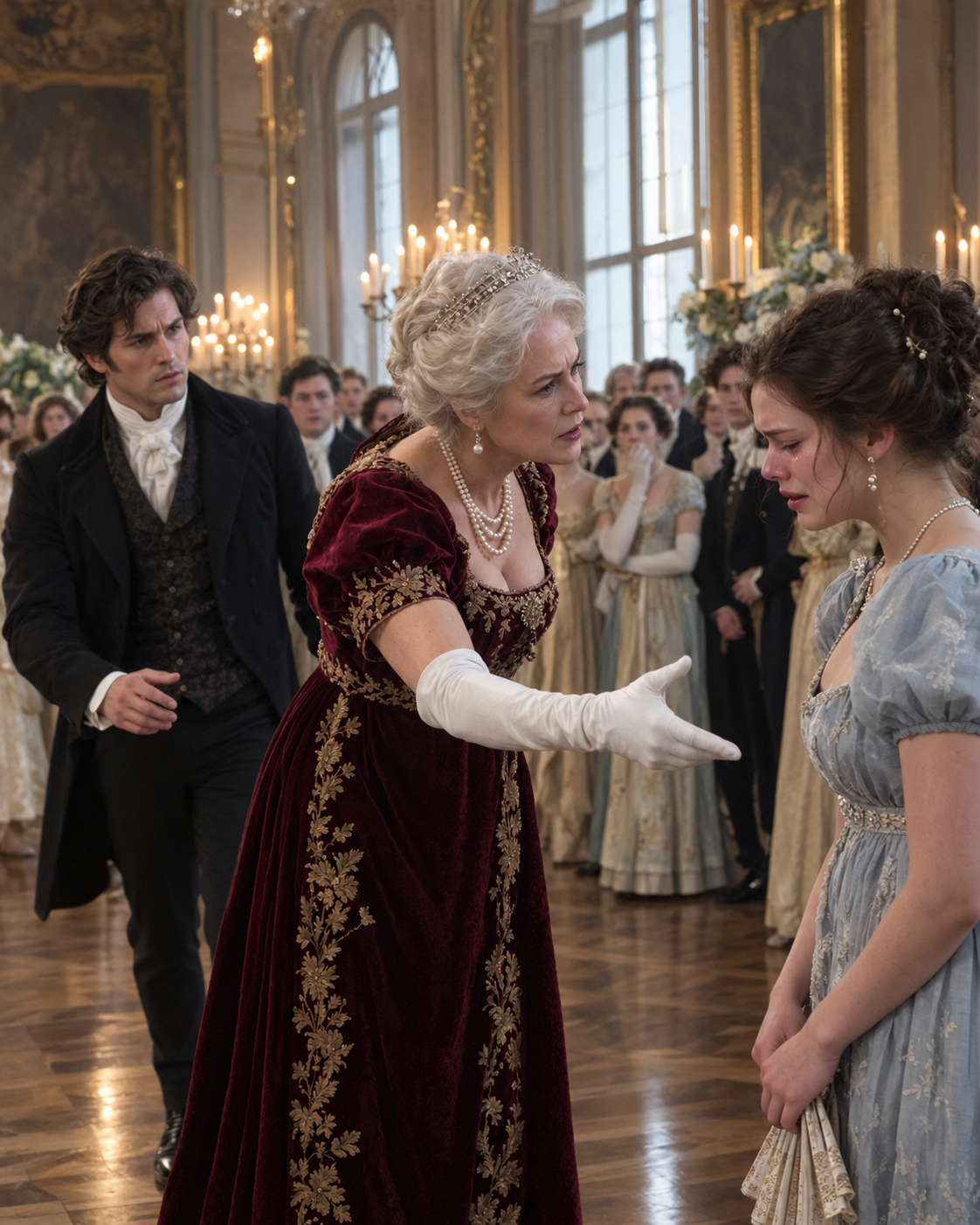
When Arthur returned her to her mother’s side, the room seemed to inhale all at once.
Her mother did not wait.
“What have you done?”
Beatrice lowered her eyes.
“I danced.”
“With the Duke of Westford.”
“Yes.”
Her mother’s voice dropped into a furious whisper.
“Do you have any understanding of what people will say?”
Beatrice looked across the ballroom.
“They have already said everything they possibly could about me.”
Her mother stared at her.
Beatrice had never answered her so calmly before.
That was the first sign that something inside her had changed.
The second came the following morning.
Three invitations arrived before breakfast.
Two were from families who had never previously shown Beatrice the slightest interest.
The third was from Arthur.
He requested permission to call upon her family that afternoon.
Her mother nearly dropped the letter.
“He cannot possibly be serious.”
Beatrice folded the paper carefully.
“Then we shall know soon enough.”
“He is a duke.”
“I am aware.”
“And you are—”
Her mother stopped.
For once, even she seemed to realize how cruel the next word would sound.
Beatrice finished the sentence for her.
“Plain?”
Her mother said nothing.
Beatrice smiled without warmth.
“I have heard it often enough.”
That afternoon, Arthur arrived precisely on time.
He entered the drawing room without the theatrical confidence Beatrice had expected from a man of his rank. He was reserved, almost uncomfortable, as though he would have preferred facing a battlefield to facing three people discussing marriage.
Beatrice noticed the scar running along his jaw.
She had seen it the night before, but under daylight it seemed more severe.
Arthur caught her looking.
“You may ask.”
“Does it hurt?”
Her mother made a small sound of disapproval.
Arthur, however, answered honestly.
“Sometimes.”
Beatrice nodded.
“I thought so.”
He studied her.
“You are not frightened by it.”
“No.”
“Why?”
“Because it is a scar, not a character.”
Silence followed.
Arthur looked away for a moment.
When he looked back, something in his expression had changed.
“I should like to speak with you privately.”
Her mother immediately objected.
“There is no need for—”
“There is,” Arthur said.
His tone was quiet.
It was also final.
A few minutes later, Beatrice found herself walking beside him in the winter garden.
Outside, London was gray beneath a pale sky. Carriages passed beyond the gates, wheels striking the damp streets. The city continued moving as though nothing extraordinary had happened.
Arthur stopped beside a stone fountain.
“I will not waste your time.”
Beatrice waited.
“I intend to ask you to marry me.”
She had expected many things.
That was not one of them.
“You barely know me.”
“I know enough.”
“You know that I can dance without stepping on your feet.”
“I know that.”
“And that I have a habit of saying exactly what I think.”
“I am counting on it.”
“You know almost nothing about my family.”
“I know more than enough about families.”
She studied him carefully.
“And why me?”
Arthur did not answer immediately.
Then he said, “Because you were the only person in the ballroom who looked as though you wished to be somewhere else.”
“That cannot be the only reason.”
“No.”
He took a breath.
“You did not look at me as though I were a title.”
Beatrice said nothing.
“I have spent years being introduced before I have been seen,” he continued. “People know my estate, my name, my inheritance, my rank. They decide what they want from me before I finish saying hello.”
“And you think I am different?”
“I know you are.”
The certainty in his voice unsettled her more than flattery would have.
“What happens if you discover you are wrong?”
“Then I will admit it.”
She almost laughed.
“Society would be shocked.”
“Society is frequently shocked by honesty.”
Beatrice looked down at her gloved hands.
A duke was asking her to marry him.
The woman her own mother considered a failure was being offered a place beside one of the most powerful men in England.
Yet strangely, the offer did not make her feel powerful.
It made her feel afraid.
Not of Arthur.
Of hope.
Because hope could be much more painful than disappointment.
“You should know,” she said softly, “that I have no intention of becoming an ornament in your household.”
“I have no intention of keeping one.”
“I will not smile politely while people insult me.”
“Good.”
“I will not spend my life pretending to admire people I dislike.”
“I would consider that a considerable improvement.”
She finally looked up.
“And I will not marry you simply because you are a duke.”
Arthur’s eyes held hers.
“That,” he said, “is exactly why I am asking.”
Beatrice accepted.
The announcement created precisely the storm Arthur had expected.
Newspapers began mentioning the engagement in carefully worded society columns. Some described Beatrice as “unexpected.” Others referred to her as “the obscure Hastings daughter.” A few were less restrained.
Her mother became suddenly attentive to every detail of Beatrice’s appearance.
New dresses were ordered.
A jeweler was summoned.
Portraits were discussed.
Everything that had supposedly been impossible for Beatrice became strangely affordable once she became a duchess-to-be.
Beatrice found the transformation almost amusing.
One afternoon, her mother held up a necklace.
“This will make you look more distinguished.”
Beatrice examined the diamonds.
“I thought I was unsuitable.”
“You must learn not to dwell on old misunderstandings.”
Beatrice placed the necklace back in its box.
“They were not misunderstandings.”
Her mother stiffened.
But Beatrice walked away.
For the first time, she understood that she did not need to win her mother’s approval.
She only needed to stop letting its absence define her.
Arthur, meanwhile, faced resistance from an entirely different direction.
Several members of his family considered the engagement reckless.
His aunt, Lady Margaret, requested a private conversation.
“I hope you understand what you are doing.”
“I do.”
“Do you?”
Arthur looked out through the tall window.
“I have never been more certain.”
“She has no fortune.”
“I have enough for both of us.”
“She has no important connections.”
“I have enough connections for ten families.”
“She is inexperienced.”
“So was everyone before they learned.”
Lady Margaret sighed.
“You are making an emotional decision.”
Arthur turned toward her.
“Perhaps.”
That answer surprised her.
He continued.
“But for once, I am not ashamed of that.”
The wedding was set for early spring.
As the day approached, Beatrice became increasingly aware that her new position would not protect her from cruelty.
It would simply give cruelty a larger audience.
At a luncheon held by one of Arthur’s relatives, she met Lady Charlotte Vale, a beautiful and wealthy young widow whose family had once hoped she might become Duchess of Westford.
Charlotte smiled warmly enough to fool anyone who did not look closely.
“I must congratulate you.”
“Thank you.”
“How fortunate you are.”
Beatrice recognized the tone.
“Perhaps.”
Charlotte tilted her head.
“I imagine it must feel rather like stepping into someone else’s life.”
Beatrice met her gaze.
“Does it?”
“You tell me.”
Arthur appeared before the conversation could continue.
His expression changed the moment he saw Charlotte.
Not anger.
Recognition.
The sort of recognition that suggested history.
Later, Beatrice asked him about it.
“Were you expected to marry her?”
“Yes.”
“Did you refuse?”
“Yes.”
“Why?”
Arthur was silent for a moment.
“Because I never wanted to.”
Beatrice nodded.
“And she has never forgiven you.”
“No.”
Beatrice smiled faintly.
“Then we have something in common.”
Arthur looked at her.
“What?”
“We have both disappointed people by refusing to become what they wanted.”
He laughed quietly.
“That may be the most accurate description of our engagement.”
The wedding day arrived beneath a clear spring sky.
Beatrice stood before the mirror in her room and hardly recognized herself.
Not because the gown had transformed her.
Not because diamonds rested at her throat.
She looked different because she was no longer waiting for someone else to tell her whether she belonged.
When she entered the church, Arthur was waiting.
He did not look at the guests.
He looked only at her.
The ceremony was brief.
The vows were traditional.
But when Arthur took her hand, his fingers tightened slightly around hers.
Beatrice understood.
Whatever came next, they would face it together.
The first months of marriage were not as simple as either of them had imagined.
Arthur’s estate was vast, but its rooms were often cold.
He had spent years living alone, and the habits of solitude did not disappear because he had married.
Beatrice learned quickly that he needed silence after difficult days.
Arthur learned that Beatrice needed conversation when she was troubled.
They argued.
They misunderstood one another.
They occasionally retreated to opposite ends of the same house.
But neither walked away.
One evening, after a particularly bitter disagreement, Beatrice found Arthur sitting alone in the library.
“You were unfair,” she said.
“I know.”
She stopped.
“You admit it?”
“Yes.”
“That was unexpectedly easy.”
“I have been thinking.”
“Dangerous.”
He smiled.
She sat opposite him.
Arthur looked exhausted.
“I spent years believing that being alone meant being safe.”
Beatrice listened.
“It was easier,” he continued. “Nobody could disappoint me if nobody was close enough to matter.”
“And now?”
“Now you matter.”
Her anger disappeared.
Beatrice crossed the room and sat beside him.
“You matter to me too.”
Arthur took her hand.
Neither apologized immediately.
They simply remained there.
Sometimes love did not arrive as a grand declaration.
Sometimes it appeared as the decision to remain seated when leaving would have been easier.
Months later, London society had largely stopped whispering about the marriage.
Not because everyone approved.
Because Beatrice had stopped reacting.
She attended dinners when she wished.
Declined invitations when she did not.
Supported charities that mattered to her.
Spoke her mind.
And gradually, people began seeking her company for reasons that had nothing to do with Arthur.
She had become exactly what her mother had once insisted she could never be:
a woman with influence.
But Beatrice never forgot what it had felt like to stand alone at the edge of the ballroom.
So she began doing something unexpected.
Whenever she saw another young woman being ignored because she lacked wealth, beauty, or the right family name, Beatrice invited her into the conversation.
Sometimes it was only a seat at a table.
Sometimes it was an introduction.
Sometimes it was simply a question:
“What do you think?”
Arthur noticed.
“You are changing the rules,” he told her one evening.
“No.”
She smiled.
“I am reminding people they were never rules.”
Years later, when someone asked Beatrice what had changed her life, she could have spoken about the duke, the title, the marriage, or the night he crossed the ballroom.
Instead, she spoke about the moment before he approached her.
“The important part,” she said, “was not that a duke chose me.”
The person listening waited.
Beatrice continued.
“It was that I finally realized I did not need to be chosen by anyone to have value.”
Arthur, standing nearby, heard every word.
He said nothing.
He simply reached for her hand.
And Beatrice understood that the greatest surprise of her life had never been becoming a duchess.
It had been discovering that the woman she had spent years trying to prove worthy was worthy all along.
The ballroom had taught her something society never intended to teach.
A person’s value cannot be measured by how quickly a room notices them.
Sometimes the quietest person in the room is carrying the strongest story.
And sometimes the life everyone else overlooks is the one waiting to begin.
But the story of Beatrice Hastings did not truly end when she became Duchess of Westford.
In some ways, that was when the more difficult chapter began.
For several years, Beatrice and Arthur built a life that looked effortless from the outside. Their London residence became known for its unusual atmosphere. Guests expected stiff dinners, formal conversation, and endless discussions about estates and marriages. Instead, they found books scattered across tables, musicians invited for their talent rather than their family names, and young people from families of modest means sitting beside aristocrats without being treated as lesser guests.
Beatrice had quietly changed the house.
Arthur had quietly allowed her to.
Yet beneath the calm, one unresolved shadow remained.
Beatrice’s mother.
Their relationship had never truly healed.
Lady Hastings had become increasingly dependent upon the social importance of her daughter’s marriage. She began appearing at events beside Beatrice, speaking proudly of the very daughter she had once described as hopeless.
Beatrice tolerated it.
She did not encourage it.
She understood that forgiveness did not require pretending the past had never happened.
One autumn afternoon, a letter arrived from her mother.
The handwriting was unusually hurried.
Beatrice read it twice before walking into Arthur’s study.
He looked up from his papers.
“What is it?”
“My mother wants me to come to London immediately.”
Arthur set down his pen.
“Is she ill?”
“I don’t know.”
“Then you should go.”
Beatrice hesitated.
“You would come with me?”
“If you want me there.”
She smiled faintly.
“I think I do.”
That evening, they traveled to London.
When Beatrice entered her mother’s drawing room, she immediately noticed how much smaller it seemed than she remembered.
Or perhaps she had simply grown.
Lady Hastings was sitting beside the fireplace.
She looked older.
Much older.
For several seconds, neither woman spoke.
Then her mother said quietly, “You look well.”
“So do you.”
It was a polite beginning.
Perhaps that was all either of them could manage.
Her mother looked down at her hands.
“I owe you an apology.”
Beatrice remained silent.
“I have spent years telling myself that I was preparing you for the world.”
“You were preparing me to fear it.”
Her mother closed her eyes.
“I know.”
That answer surprised Beatrice.
Her mother continued.
“I thought if I criticized you first, other people could not hurt you as badly.”
“But they did.”
“I know.”
“And sometimes your words hurt more than theirs.”
Her mother nodded.
“I know that too.”
The room became quiet.
Beatrice had imagined this conversation many times.
In those imagined versions, she had delivered perfect speeches.
She had finally said everything she had swallowed for years.
But now, sitting across from an aging woman who seemed suddenly less powerful than she remembered, Beatrice discovered she did not want victory.
She wanted peace.
“I cannot change what happened,” Beatrice said.
“No.”
“But I don’t want to carry it forever.”
Her mother looked at her.
“I am proud of you.”
Beatrice’s eyes filled with tears.
It was strange how three simple words could hurt when they arrived years too late.
“Thank you,” she whispered.
Her mother reached toward her.
Beatrice hesitated only a moment before taking her hand.
They did not erase the past.
They simply stopped allowing it to control the future.
When Beatrice returned home, Arthur was waiting.
“How did it go?”
“She apologized.”
Arthur nodded.
“And?”
“I forgave her.”
“Do you feel better?”
Beatrice thought about it.
“Not because she apologized.”
Arthur waited.
“Because I finally understood that I do not need her approval anymore.”
He smiled.
“That sounds like you.”
Winter arrived soon afterward.
Snow covered the grounds surrounding Westford House, turning the estate into a landscape of white fields and bare trees.
One morning, Beatrice received unexpected news.
A young woman from a neighboring family had been threatened with being sent away because she refused an arranged marriage.
Her father believed she had become rebellious.
Beatrice immediately asked to meet her.
The young woman arrived frightened and angry.
She expected another aristocratic lecture.
Instead, Beatrice asked, “What do you want?”
The girl stared at her.
“No one has asked me that.”
“Then I am asking.”
“I want to study.”
“What?”
“Medicine.”
Beatrice smiled.
“Then perhaps we should begin there.”
Arthur learned about the situation later that evening.
“You realize her father will be furious.”
“I imagine so.”
“He may blame you.”
“He may.”
Arthur leaned against the desk.
“And you are going to help her anyway.”
“Yes.”
A small smile appeared on his face.
“Good.”
Beatrice looked at him.
“You sound remarkably pleased.”
“I married a woman who was never going to behave sensibly.”
She laughed.
“You knew that before the wedding.”
“I did.”
“And you still proposed.”
“I did.”
“Then you have only yourself to blame.”
Arthur walked toward her.
“I have discovered that some mistakes are worth repeating.”
She raised an eyebrow.
“Was marrying me a mistake?”
“Absolutely.”
Her expression changed.
Arthur immediately added, “One I would make again every morning for the rest of my life.”
She struck his shoulder lightly.
“You are impossible.”
“And yet you remain.”
“Unfortunately.”
He kissed her forehead.
“Fortunately.”
Years passed.
The young woman Beatrice had helped eventually left England to pursue her education.
Other young women followed.
Beatrice never considered herself a reformer.
She simply remembered what it had felt like to be told that her future had already been decided by people who barely knew her.
Her influence grew slowly.
Not through speeches.
Not through grand declarations.
Through doors opened.
Through introductions made.
Through opportunities offered.
Through the simple refusal to judge someone before hearing them speak.
Arthur remained by her side.
His scars faded with time, but they never disappeared.
Neither did the memories behind them.
Sometimes he still woke in the night from dreams he refused to describe.
On those nights, Beatrice never forced him to speak.
She simply reached for his hand.
And eventually, he learned that silence could be shared without becoming loneliness.
One spring morning, many years after the night they first met, Arthur and Beatrice returned to London for a charity gathering.
The ballroom was almost unchanged.
The same chandeliers.
The same polished floor.
The same orchestra playing beneath the high ceiling.
Beatrice stood near the entrance and looked around.
Arthur noticed.
“Memories?”
“Yes.”
“Bad ones?”
“Not anymore.”
They walked into the room together.
A group of young debutantes whispered nearby.
One of them glanced at Beatrice.
Another whispered something.
Beatrice smiled.
Arthur leaned closer.
“Do you want to leave?”
She laughed.
“No.”
“Why not?”
“Because I think I finally like this room.”
He looked at her.
“Why?”
“Because once, I thought it was a place where people decided whether I was worthy.”
“And now?”
“Now I know it is only a room.”
Arthur smiled.
Then the orchestra began another dance.
He extended his hand.
“May I?”
Beatrice looked at him with amusement.
“After all these years?”
“Especially after all these years.”
She placed her hand in his.
They stepped onto the dance floor.
For a moment, Beatrice was twenty-four again.
But this time, she was not standing at the edge.
She was not wondering whether someone would notice her.
She was not measuring herself against women with prettier faces, richer fathers, or more impressive names.
She simply danced.
When the music ended, Arthur did not immediately release her hand.
“I remember that night,” he said.
“So do I.”
“I almost didn’t ask you.”
Beatrice looked surprised.
“You didn’t?”
“No.”
“Why?”
“Because everyone was watching you.”
“And that stopped you?”
“For a moment.”
“What changed your mind?”
Arthur looked at her.
“You looked lonely.”
Beatrice smiled.
“And you were lonely too.”
“Yes.”
“Perhaps that is why you came over.”
“Perhaps.”
She squeezed his hand.
“I am glad you did.”
Arthur’s expression softened.
“So am I.”
Outside, London continued to move.
Carriages crossed the streets.
People hurried beneath umbrellas.
Shopkeepers opened their doors.
Families made plans.
Young women dreamed of futures they could not yet see.
And somewhere among them were people who believed they were too ordinary, too poor, too damaged, too late, or too different to be chosen by life.
Beatrice wished she could speak to every one of them.
She wished she could tell them what it had taken her years to understand.
That being overlooked was not the same as being worthless.
That rejection was not a final judgment.
That another person’s inability to recognize your value did not erase it.
And that sometimes the most important transformation was not becoming beautiful enough, wealthy enough, or powerful enough to enter the room.
It was realizing you deserved to enter before anyone invited you.
Arthur and Beatrice left the ballroom together.
At the carriage, he opened the door for her.
She paused before stepping inside.
“Arthur?”
“Yes?”
“Do you ever wonder what would have happened if you had chosen someone else that night?”
He thought for a moment.
“Probably.”
“And?”
“I don’t like the thought.”
She smiled.
“Neither do I.”
He climbed into the carriage beside her.
As they disappeared into the London evening, Beatrice rested her head against his shoulder.
There had been no magical moment when society suddenly became kind.
There had been no perfect transformation that erased every cruel word.
There had been no guarantee that life would always be gentle.
There had simply been a choice.
Again and again.
To remain honest.
To remain curious.
To refuse bitterness.
To love without pretending.
To forgive without forgetting.
And most importantly, to stop allowing other people’s judgments to become the measure of her existence.
Beatrice Hastings had once believed her greatest fortune would be finding someone who could see her worth.
She eventually discovered something greater.
Her worth had never depended on being seen.
Arthur had not created it.
Marriage had not created it.
Her title had not created it.
It had been there before the ballroom, before the proposal, before the diamonds, before the Duke of Westford ever knew her name.
He had simply been the first person powerful enough to make the rest of the world notice what had always been there.
And perhaps that was the real beginning of their love story.
Not when a duke chose an overlooked woman.
But when an overlooked woman finally stopped believing she needed to be chosen.
The carriage disappeared into the busy streets of London.
Behind them, the ballroom lights continued to shine.
But Beatrice no longer needed their approval.
She had found something brighter.
A life she had chosen for herself.
And beside her sat the man who had not rescued her from that life, but had walked into it willingly and stayed.
Sometimes, the greatest love story is not about being discovered.
It is about discovering yourself—and finding someone who is wise enough to recognize the person you already are.
THE END.