In the United States, where power rarely announces itself before it arrives, Dante had learned one rule early: never bring a weakness into a room full of people waiting to exploit it.
Bruno’s finger tightened around the trigger.
Dante stood against the cold brick wall of the alley, his hands raised just enough to show that he understood the situation. Around him, the men who had once sworn loyalty to him formed a silent circle. Their faces were familiar, but the expressions were not.
For the first time that night, Dante understood how completely the betrayal had spread.
Bruno smiled.
“You always did make things more complicated than they needed to be.”
Dante said nothing.
His eyes moved briefly across the alley before returning to Bruno.
There was no safe exit.
No obvious advantage.
And Bruno was holding Dante’s own custom pistol.
That detail should have mattered more than anything else.
Instead, Clara was watching the weapon.
Not Bruno.
Not the men.
The weapon.
Her eyes followed its outline with the quiet concentration of someone examining a familiar machine.
Bruno noticed.
“You finally understand what happens when you trust the wrong people,” he said.
Clara looked at him.
“No,” she answered softly. “I understand what happens when people believe they understand something they don’t.”
Bruno’s smile disappeared.
He raised the pistol slightly.
Dante turned toward Clara.
For a fraction of a second, neither spoke.
But something passed between them.
It was not fear.
It was recognition.
Dante had spent the evening discovering that his wife had secrets.
Now he realized there was another secret he had not yet understood.
Clara wasn’t looking for a way to overpower Bruno.
She was looking for the weakness in what he was holding.
The weapon had been designed for Dante.
He knew its history.
He knew why it had been commissioned.
He knew how much it meant to him.
But Clara knew something else.
She knew the design.
Years earlier, long before Dante had ever heard her name, Clara had worked in a world where weapons were not judged by appearance or reputation. They were judged by tolerances, failures, stresses, and the tiny imperfections that could turn confidence into catastrophe.
That was why the weapon in Bruno’s hand did not frighten her.
It told her exactly what she needed to know.
Bruno stepped closer.
“You should have stayed the quiet wife,” he said.
Clara’s expression barely changed.
“I tried.”
One of the men laughed.
Bruno didn’t.
Something about her answer bothered him.
Perhaps it was the absence of fear.
Perhaps it was the certainty in her voice.
Or perhaps some buried instinct was finally warning him that the woman standing in front of him was not trapped at all.
Dante suddenly moved.
Not toward Bruno.
Toward Clara.
The motion distracted the men for one brief moment.
Clara used it.
She reached the weapon.
Bruno jerked it away.
A sharp metallic sound echoed through the alley.
Everyone froze.
Clara looked at the pistol.
Then at Bruno.
“You really should have asked where he got it.”
Bruno’s eyes narrowed.
“What?”
Dante’s expression changed.
He finally understood.
The weapon was not merely Dante’s.
It carried Clara’s fingerprints in its design.
Not literally.
Something far more significant.
Its engineering belonged to a language only she could read.
Clara stepped backward.
“Dante,” she said.
He understood the warning immediately.
He dropped.
The next instant became chaos.
The weapon failed in Bruno’s hands with a violent mechanical rupture.
The men around him scattered instinctively.
Bruno stumbled backward, dropping the pistol as confusion overtook him.
Dante moved through the opening.
Clara moved faster.
Together, they broke the circle that had been built around them.
The alley filled with footsteps, shouted orders, and the sudden realization among Bruno’s men that the balance had changed.
They had expected a frightened wife.
They had expected a cornered boss.
Instead, they had created a battlefield where neither of those things existed.
Within moments, the conspirators were no longer standing together.
Some fled.
Others surrendered.
The rest were forced to confront the consequences of choosing Bruno over Dante.
When the alley finally became quiet, Bruno was gone from the center of it.
His coup had ended before it could become the victory he imagined.
Dante looked at Clara.
For several seconds, neither said anything.
Then he asked the question that had been waiting behind every other question that night.
“Who are you?”
Clara looked toward the end of the alley.
For the first time, her confidence softened.
“Someone who spent a long time trying not to be found.”
“That doesn’t answer me.”
“It answers more than you realize.”
Dante walked closer.
“You designed that weapon.”
Clara nodded.
“And others.”
“How many?”
“I stopped counting.”
Dante stared at her.
The woman who had sat quietly through his family’s insults had designed weapons for people whose names were never spoken in public.
The woman who had seemed uncomfortable around violence had understood violence at its most technical level.
The woman he believed he needed to protect had just saved him.
And suddenly, the events of the dinner looked different.
The sniper.
The trap.
The betrayal.
Bruno’s timing.
None of it had been random.
Someone had known Clara was with Dante.
Someone had known enough about her past to understand that her presence could change the balance of power.
Dante’s expression hardened.
“Bruno didn’t organize all of this alone.”
“No,” Clara said.
“Who else?”
Clara shook her head.
“We don’t have enough information yet.”
Dante almost smiled.
After everything that had happened, she was still thinking like an engineer.
Not emotionally.
Not impulsively.
Systematically.
“What do we do now?”
Clara looked at him.
“We stop reacting.”
That sentence became the beginning of everything that followed.
They returned to the organization before sunrise.
The remaining members were summoned.
Nobody was told every detail.
Nobody needed to know.
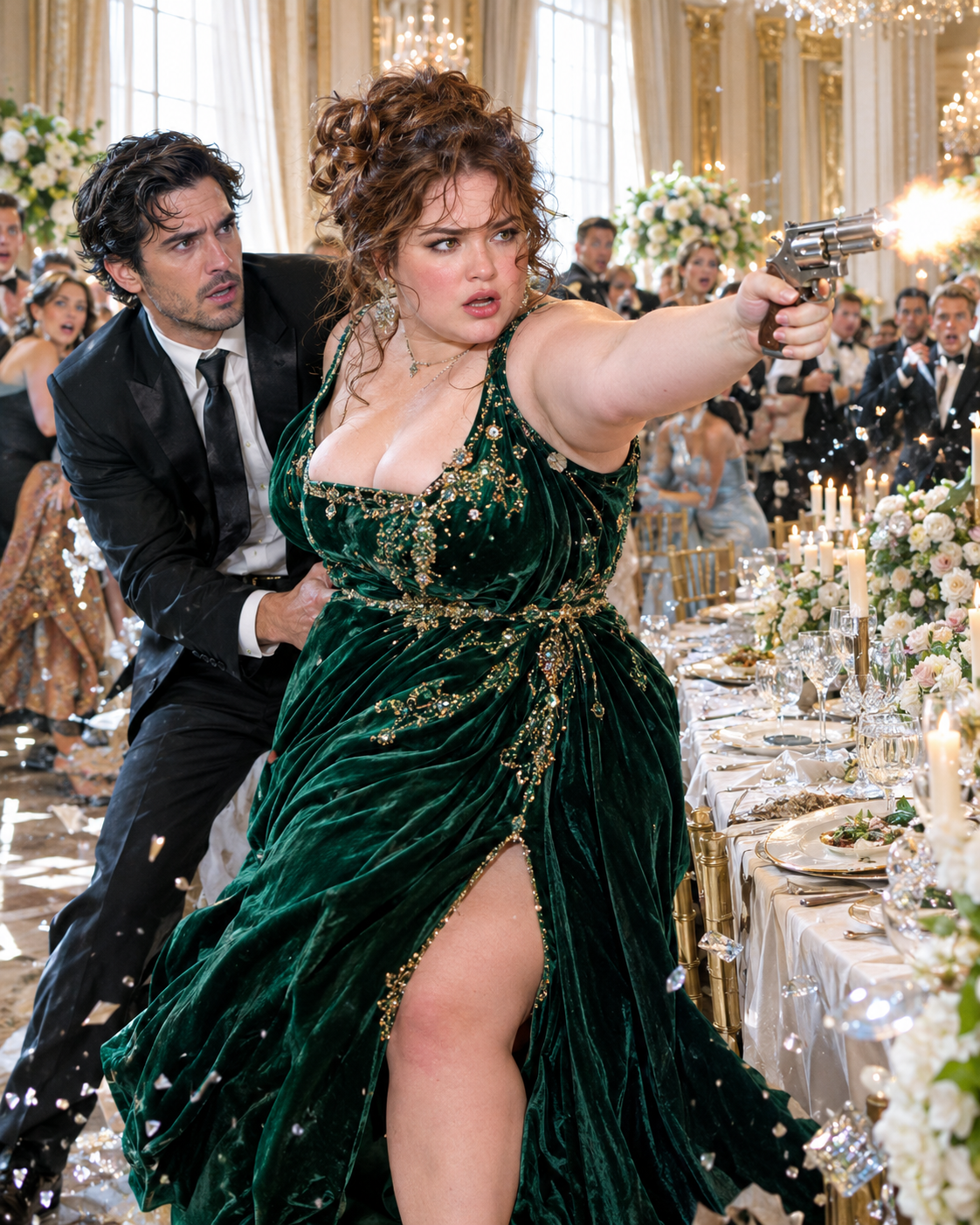
Dante entered the room first.
Clara followed behind him.
The room fell silent.
Everyone had heard rumors already.
They had heard that Bruno had betrayed Dante.
They had heard that the coup had failed.
They had heard that Dante’s new wife had somehow survived the ambush.
But rumors became meaningless when Clara walked into the room.
She did not look like a conqueror.
She did not need to.
Dante stood at the head of the table.
For years, his authority had depended on fear, loyalty, and the belief that he could see betrayal coming before it arrived.
Now he understood something more important.
Power based entirely on fear was always vulnerable to the person who was willing to become more frightening.
So Dante changed the rules.
No celebration.
No revenge speeches.
No unnecessary bloodshed.
He ordered an investigation into every person connected to Bruno’s network.
Records were examined.
Messages were traced.
Accounts were reviewed.
Old alliances were reconsidered.
And Clara became involved in the process.
Not as Dante’s wife.
Not as a symbol.
As an expert.
She recognized patterns others missed.
Connections that looked meaningless individually began forming a picture when viewed together.
A shipment that had disappeared months earlier.
A meeting that had been canceled without explanation.
A change in security procedures.
A weapon order placed through a name nobody remembered.
Each detail was small.
Together, they told a story.
Someone had been preparing for a change in leadership long before Bruno stepped into the alley.
The conspiracy was larger than one man.
But it was not as strong as its creators believed.
Because conspiracies depended on secrecy.
And Clara had spent her entire life learning how systems failed.
She knew that every structure, no matter how carefully designed, contained pressure points.
Dante began to understand why the underworld had given Clara a name she had never told him.
The Ghost Architect.
She had not built an empire.
She had built the tools used by people who thought they owned empires.
That distinction mattered.
A weapon could be powerful.
But the person who understood why it worked possessed a different kind of power.
Weeks passed.
The organization stabilized.
Bruno’s remaining allies disappeared from positions of influence.
Some left voluntarily.
Others were removed.
Dante refused to let the organization descend into uncontrolled retaliation.
That surprised many of his people.
They had expected rage.
Instead, they saw discipline.
Clara encouraged it.
“You don’t need to destroy everything that threatens you,” she told him one evening.
“You need to understand why it threatens you.”
Dante looked at her.
“You say that like it’s simple.”
“It isn’t simple.”
“Then why does it sound simple when you say it?”
“Because I’ve already made the mistakes you’re trying not to make.”
He studied her face.
There were still parts of her past she refused to explain.
Dante knew better than to demand them.
Trust, he was learning, was not the same thing as possession.
He had spent years treating loyalty as something that could be demanded.
Clara taught him that real loyalty was something people chose.
The lesson changed him.
It also changed her.
For the first time in years, Clara no longer needed to hide behind the identity she had constructed.
She could have disappeared again.
Dante knew that.
He also knew she had stayed.
Not because she was trapped.
Not because she needed protection.
Because she had made a choice.
One night, they returned to the same diner where Clara had finally revealed the truth.
The place was nearly empty.
The neon sign outside flickered against the glass.
Dante sat across from her.
“You know,” he said, “when we first came here, I thought you were about to tell me something terrible.”
“I was.”
He smiled.
“You did.”
Clara looked down at the table.
“I expected you to leave.”
“I considered it.”
She raised an eyebrow.
“For how long?”
“About three seconds.”
That made her laugh.
It was quiet, but genuine.
Dante had rarely heard it.
“You married a dangerous woman,” Clara said.
“No.”
He shook his head.
“I married a woman who was pretending she wasn’t dangerous.”
She looked at him for a long moment.
“That distinction matters.”
“It does.”
Outside, the city continued moving.
Cars passed.
People walked beneath the streetlights.
The United States had no idea what had happened inside that small diner weeks earlier.
It didn’t need to.
Some battles never appeared in newspapers.
Some turning points happened in rooms nobody remembered.
And some of the people who changed the balance of power never received credit for doing it.
Clara had once believed disappearing was the only way to survive.
Dante had once believed control was the only way to remain powerful.
They had both been wrong.
Survival was not always about becoming invisible.
Power was not always about making everyone afraid.
Sometimes survival meant knowing when to reveal yourself.
Sometimes power meant knowing when not to use it.
And sometimes the strongest partnership was not between two people who had nothing to hide, but between two people who finally understood that trust did not require complete possession of the truth.
Dante reached across the table.
Clara placed her hand in his.
For a moment, there were no weapons.
No conspiracies.
No enemies waiting outside.
Just two people who had entered the night believing they understood each other far less than they actually did.
The empire would remain.
The threats would not disappear.
There would always be someone willing to test the walls around them.
But the next person who tried would face something Bruno never understood.
Dante no longer stood alone.
And Clara no longer needed to pretend she was weak.
Her greatest weapon had never been a machine, a blueprint, or a hidden mechanism.
It was the knowledge of exactly who she was.
And after years spent hiding from her own past, she finally stopped running from it.
The Ghost Architect had returned.
But this time, she was not building weapons for someone else’s war.
She was building a future on her own terms.
And that was the one thing no enemy had ever learned how to take from her.
For three months, the city believed Dante’s organization had finally become quiet.
It had not.
Silence, Clara knew, was rarely proof that danger had disappeared.
Sometimes it was proof that danger was waiting.
The first warning came on a cold Tuesday morning.
A single envelope appeared on Dante’s desk without a return address.
There was no name on the front.
No fingerprints.
No message from the person who delivered it.
Inside was a photograph.
Clara stared at it for several seconds.
It showed an old warehouse on the outskirts of Chicago.
The building had been abandoned for years.
But Clara recognized it immediately.
She had designed her first experimental weapons system there.
Twenty years earlier.
Before she became the Ghost Architect.
Before anyone in Dante’s world knew her name.
Dante watched her face.
“What is it?”
Clara turned the photograph over.
There was a single sentence written on the back.
You never finished what you started.
For the first time since Bruno’s betrayal, Clara looked genuinely unsettled.
Dante noticed.
“Who knows about that place?”
“Almost nobody.”
“Almost?”
She hesitated.
“One person.”
“Who?”
Clara placed the photograph on the desk.
“My father.”
Dante said nothing.
Clara had never mentioned him.
Not once.
She had spoken about laboratories, clients, engineers, weapons designers, and people who had betrayed her.
But never her family.
“My father disappeared when I was twenty-two,” she finally said.
“Disappeared?”
“Everyone assumed he was dead.”
Dante looked at the photograph again.
“Do you?”
Clara’s eyes remained fixed on the image.
“No.”
That evening, they drove north.
They did not take the usual route.
They did not tell anyone where they were going.
The warehouse stood beyond a row of empty industrial buildings, surrounded by rusted fences and tall grass moving beneath the winter wind.
From the outside, it looked abandoned.
Clara knew better.
She walked toward the main entrance.
Dante followed.
“You’ve been here before.”
“Every important mistake I ever made started here.”
She pushed open the door.
Dust covered the floor.
Broken equipment remained beneath sheets.
Old monitors hung from walls.
A long workbench sat beneath a layer of grime.
But there was one thing that did not belong.
A fresh cup of coffee.
Dante stopped.
Clara’s eyes narrowed.
“Someone is here.”
The lights came on.
One by one.
A man stepped from the darkness.
He was older, thinner, and carried the exhaustion of someone who had spent years living without being found.
Clara froze.
“Father.”
The man smiled sadly.
“You became exactly what I was afraid you would become.”
Dante stepped forward.
Clara raised a hand.
“Don’t.”
The man looked at Dante.
“So this is him.”
“Don’t involve him.”
“I already did.”
The words hung in the room.
Clara’s father walked toward the old workbench.
He placed a metal case on it.
“You think Bruno was the end of it.”
Clara looked at the case.
“It wasn’t.”
“No.”
He opened it.
Inside were documents, photographs, old designs, and records that stretched back decades.
Dante realized the conspiracy had existed long before either of them understood it.
Her father had once designed systems for powerful organizations across the country.
Then he discovered that his work was being used to create an underground network far larger than any individual syndicate.
He tried to leave.
They tried to erase him.
He survived by disappearing.
Clara had inherited his talent without ever knowing the full story.
“That night at the dinner,” her father said, “wasn’t about Dante.”
Clara’s expression changed.
“It was about you.”
Dante looked at her.
“What does that mean?”
“They wanted to know whether the Ghost Architect was still alive.”
Clara stepped closer.
“And Bruno?”
“Bruno was useful.”
“Who was controlling him?”
Her father looked toward the dark windows.
“The people who have been watching you for years.”
A long silence followed.
Dante reached for one of the documents.
There were names.
Organizations.
Financial records.
Photographs of meetings.
And at the center of everything was a symbol Clara recognized immediately.
It had been carved into the first machine she ever built.
Her father’s organization had used it as a signature.
She touched the page.
“I thought you were dead.”
“I wanted you to believe that.”
“Why?”
“Because if they knew you could find me, they would use you to reach me.”
Clara’s eyes filled with anger.
“You let me believe I was alone.”
“I let you survive.”
She looked away.
For years, Clara had believed her past was a collection of choices she had made alone.
Now she understood that some of those choices had been shaped by people trying to protect her.
It did not make the pain disappear.
But it changed its meaning.
Dante stepped beside her.
“We can end this.”
Her father shook his head.
“No.”
He looked directly at Clara.
“You can.”
The next several weeks became a quiet war.
No dramatic announcements were made.
No public confrontation followed.
Instead, Clara and Dante dismantled the network piece by piece.
Every financial connection.
Every hidden alliance.
Every compromised member.
Every person who had spent years believing they were untouchable.
Clara understood the architecture.
Dante understood the people.
Together, they became something the network had never anticipated.
A partnership.
Not based on fear.
Not based on obligation.
Not based on blood.
Trust.
One by one, the hidden structure collapsed.
People who had once believed they controlled Dante began disappearing from the board.
Not physically.
They simply lost access.
Money stopped moving.
Orders stopped arriving.
Alliances dissolved.
Secrets surfaced.
And when the final connection was severed, Clara returned to the warehouse alone.
Her father was waiting.
“You won,” he said.
She shook her head.
“No.”
He looked confused.
“I survived.”
There was a difference.
Winning meant defeating someone else.
Surviving meant refusing to become the person they wanted you to become.
Her father smiled.
“Then you’re finally free.”
Clara looked around the old laboratory.
For years, she had believed this place represented the beginning of her darkness.
Now she understood that it represented something else.
A beginning.
Not an ending.
She left the warehouse just before sunrise.
Dante was waiting outside.
He did not ask what she had decided.
He simply opened the passenger door.
She got in.
They drove toward the city as morning light spread across the horizon.
For once, Clara did not look behind her.
Months later, Dante’s organization was almost unrecognizable.
The old hierarchy was gone.
The men who had survived Bruno’s coup had learned that loyalty could not be demanded forever.
Dante changed the way the organization operated.
He stopped surrounding himself with people who were afraid to disagree with him.
He began listening.
He delegated.
He trusted.
It was not weakness.
It was the opposite.
A leader who needed everyone to fear him had to remain awake every second.
A leader who earned genuine loyalty could finally breathe.
Clara changed too.
She stopped designing weapons.
At least, weapons for other people.
Instead, she opened a private engineering workshop under a new name.
The first project had nothing to do with the underworld.
It was a medical device.
Something designed to help people rather than hurt them.
Dante visited her one evening.
He found her surrounded by blueprints.
“You really left it all behind.”
Clara looked up.
“Not all of it.”
“What did you keep?”
She smiled.
“The lessons.”
He sat beside her.
Outside the workshop, the city was beginning to glow beneath the evening sky.
“You ever regret meeting me?”
Clara thought about it.
“The dinner was terrible.”
Dante laughed.
“You’re avoiding the question.”
“No.”
She closed the blueprint.
“I don’t regret you.”
Dante reached for her hand.
“And the Ghost Architect?”
“She doesn’t exist anymore.”
He raised an eyebrow.
“That’s what you tell yourself?”
Clara smiled.
“No.”
She looked toward the window.
“She exists.”
Dante waited.
“But she doesn’t belong to anyone anymore.”
That was the real ending.
Not Bruno’s defeat.
Not the collapse of the conspiracy.
Not the night Clara revealed who she was.
The real ending was the moment she realized that her identity did not have to be defined by the people who had used her talent.
She had spent years believing that power meant controlling the machine.
Then she believed it meant controlling the people around her.
Eventually, she learned something much harder.
Power was being able to walk away.
The world outside would never know the entire story.
Newspapers would never print the names.
No history book would describe the night in the Chicago warehouse.
People would remember Dante as a powerful man who survived an attempted coup.
They would never understand how close everything had come to collapsing.
And they would certainly never know that the quiet woman beside him had once been the mind behind some of the most feared designs in the American underworld.
That was exactly how Clara wanted it.
One spring morning, she received a final letter.
There was no address.
No signature.
Only one sentence.
Are you still afraid of the past?
Clara read it twice.
Then she folded the paper.
Dante watched from across the room.
“What does it say?”
She smiled.
“Nothing important.”
She walked to the fireplace.
The letter disappeared into the flames.
Dante did not ask again.
He had learned that some secrets were not meant to be extracted.
They were meant to be respected.
Clara returned to her workshop.
She placed a blank sheet of paper on the table.
For the first time in her life, she was not designing something because someone had demanded it.
She was not trying to survive.
She was not preparing for an enemy.
She was simply creating.
Outside, the American city moved forward.
Cars crossed the streets.
People opened stores.
Children walked to school.
Millions of lives continued without knowing how close one hidden war had once come to reaching them.
Clara looked through the window.
Then she began drawing.
Not a weapon.
Not a mechanism.
Not a device meant to give one person power over another.
Something entirely different.
Something that could protect without destroying.
Dante entered quietly.
“You look happy.”
Clara did not look up.
“I am.”
He smiled.
“Good.”
She finally turned toward him.
“You know what the strange part is?”
“What?”
“For years, I thought disappearing would make me safe.”
“And now?”
“Now I think being seen by the right person can be safer than hiding from everyone.”
Dante understood.
He had spent his entire life believing that love made people vulnerable.
Clara had taught him otherwise.
Love had not weakened either of them.
It had given them something neither had possessed before.
A reason to stop fighting every battle.
They stood together beside the window.
No guards.
No weapons.
No enemies waiting in the shadows.
Just silence.
Peaceful silence this time.
And somewhere far behind them, buried beneath years of secrets, the legend of the Ghost Architect finally came to an end.
Not because she had been defeated.
Because she had chosen a different life.
That was the part no one in the underworld ever understood.
The most dangerous person in the room was not always the one holding the weapon.
Sometimes it was the person who knew she no longer needed one.
And Clara had finally become that person.
She had survived the betrayal.
She had faced her past.
She had refused to let other people’s fear define her future.
In the end, she did not inherit Dante’s empire.
She did not build one of her own.
She built something far more difficult.
A life that belonged entirely to her.
And for the first time, that was enough.
The Ghost Architect was gone.
Clara remained.
And that was her greatest victory.
THE END.