In the quiet heart of an American city, behind the polished doors of a private estate where powerful men have gathered, a family decision is about to become something far more dangerous than anyone expected.
The archive was hidden beneath the oldest section of Clara’s greenhouse.
It was not large.
It did not contain stacks of documents or rows of evidence.
There was only one metal box, sealed with a combination lock, wrapped in a layer of black cloth that had faded with age.
Clara stood in front of it long after Arthur and Leo had left the greenhouse that evening.
Outside, rain tapped softly against the glass roof.
The city beyond the greenhouse was still awake. Cars moved along the distant streets of Chicago, their headlights slipping through the rain like pale ribbons.
Clara entered the combination.
The lock clicked.
For several seconds, she did not lift the lid.
She already knew what was inside.
She had known for three years.
But knowing something existed was different from being willing to face it.
Finally, she opened the box.
Inside was a photograph.
A small silver pendant.
A flash drive.
And an old federal evidence envelope bearing a case number Clara had spent years trying to forget.
She picked up the photograph first.
Two women stood outside a government laboratory in Washington, D.C.
One was Clara.
The other was Elena Moretti.
Leo’s mother.
They were younger then, before either of them understood how expensive the truth could become.
On the back of the photograph, Elena had written six words.
“If anything happens, trust no one.”
Clara closed her eyes.
Three years earlier, Elena had contacted her because she suspected someone inside Arthur Moretti’s organization was using legitimate shipping companies to move something far more dangerous than weapons.
Clara had not been working for Arthur.
She had been working for the federal government.
Her specialty was toxicology and chemical tracing, particularly the kind of evidence that could disappear if investigators arrived too late.
Elena had found a pattern.
Unusual solvents.
Repeated shipments.
False delivery records.
And one compound that had appeared in several unrelated deaths without being recognized at first.
Aconite.
Elena believed the compound was being used by someone close to the Moretti family.
She wanted Clara to help prove it.
Instead, Elena died.
The official report called it a tragic consequence of a violent criminal conflict.
Clara had never believed that explanation.
She had found one piece of evidence afterward.
A trace of the same cleaning solvent she had seen in the shipping records.
It had been inside the Moretti residence.
The evidence disappeared before she could submit it.
That was when Clara realized the conspiracy was not simply outside Arthur’s organization.
It had reached into the machinery surrounding him.
So she vanished.
She left federal service.
She opened a greenhouse.
And she promised herself she would never go near the Moretti family again.
Until Leo looked at her and signed a question no one else had thought to ask.
“Are you safe?”
That was what broke her promise.
Now, standing beneath the warm lights of the greenhouse, Clara placed the photograph on the table.
Then she picked up the flash drive.
She had never opened it.
Elena had given it to her hours before she died, telling her only one thing.
“If they ever come for Arthur, this is what they will be looking for.”
Clara connected the drive to an old laptop.
One folder appeared.
No title.
Only a date.
Three years ago.
She opened it.
There were photographs of delivery manifests.
Bank transfers.
Shipping containers.
And finally, a scanned laboratory report.
Clara stared at the final page.
Her breathing slowed.
The signature at the bottom belonged to Dominic Vale.
Arthur’s underboss.
The same man whose ring had carried the faint aconite residue in the mansion.
Dominic had not merely known about the conspiracy.
He had been documenting it.
But there was something else.
At the bottom of the file was a second name.
A name Clara recognized immediately.
Arthur Moretti.
She froze.
For the first time, doubt entered her mind.
Had Arthur known?
Had he ordered Elena’s death?
Had he allowed Leo’s mother to be sacrificed to protect his empire?
Or had Elena discovered something Arthur himself never knew?
Clara closed the laptop.
She needed answers before she showed anyone the archive.
Especially Arthur.
The next morning, Arthur arrived at the greenhouse alone.
He left his security team outside.
No weapons.
No black SUVs surrounding the property.
Just one man in a dark coat standing beneath the glass roof while sunlight moved across the flowers.
Leo was already inside.
He was sitting near the koi pond, watching a yellow butterfly land on a leaf.
Arthur looked at Clara.
“I owe you an explanation.”
Clara folded her arms.
“You owe me several.”
“I know.”
“Did you know Elena suspected Dominic?”
Arthur’s expression changed.
Not anger.
Pain.
“No.”
“Did you know she was investigating chemical shipments?”
“No.”
“Did you know she contacted federal authorities?”
Arthur looked toward Leo.
“I knew she was afraid.”
“That isn’t what I asked.”
“No,” he said quietly. “I didn’t know.”
Clara studied him.
She had spent years learning how to read people through tiny inconsistencies.
Arthur Moretti was difficult to read.
But grief was not.
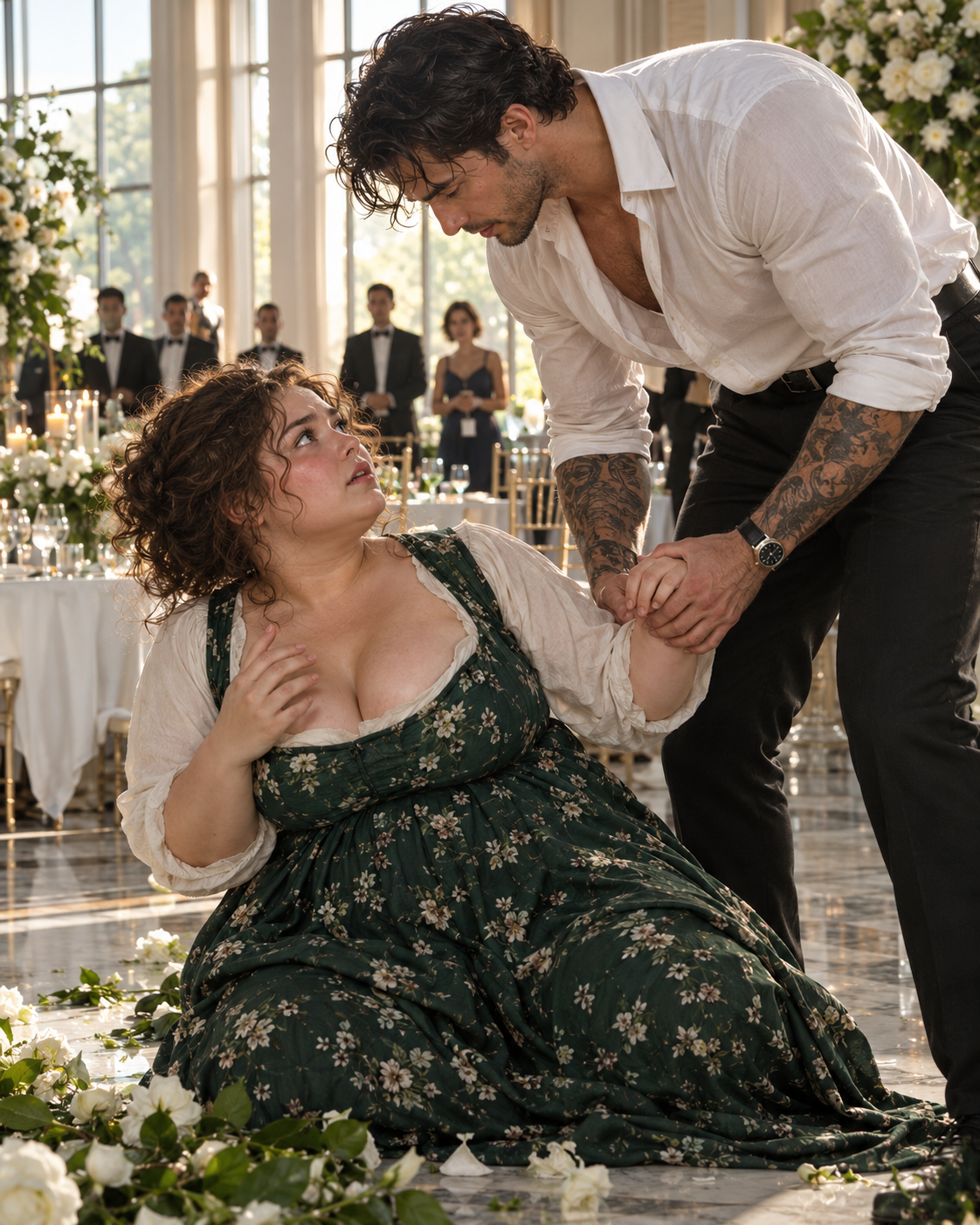
She saw it in his eyes when Elena’s name was spoken.
“You loved her,” Clara said.
Arthur looked down.
“She was the only person who ever told me I was becoming someone I hated.”
For a moment, neither spoke.
Then Leo approached.
He held out a small card.
Clara read the words he had written.
“Did my mother know Clara?”
Arthur looked at him.
Clara felt the room become colder.
“Yes,” she said.
“Your mother trusted me.”
Leo looked at her for a long time.
Then he signed something.
Clara translated aloud.
“She wanted you to protect me?”
Arthur frowned.
“What?”
Clara looked at the boy again.
“He says his mother told him about a woman who could find poison when nobody else could.”
Arthur stared at Clara.
“Leo remembers that?”
“Maybe not everything,” Clara said. “Trauma doesn’t erase every memory. Sometimes it buries them.”
Leo suddenly touched the silver pendant hanging from Clara’s neck.
His face changed.
He knew it.
Clara took it off.
“Elena gave this to me.”
Leo held it in his palm.
Then he began signing rapidly.
Clara’s eyes widened.
“What is he saying?”
Arthur asked.
“He remembers the night his mother died.”
The words seemed to stop the air.
Leo’s hands trembled.
Clara crouched in front of him.
“You don’t have to tell us.”
But Leo continued.
Three years earlier, he had been hiding beneath a staircase.
He remembered his mother arguing with Dominic.
He remembered Arthur shouting from another room.
He remembered a glass breaking.
Then he remembered Dominic saying something that had stayed inside his mind ever since.
“Your father will never know what happened.”
Clara felt her pulse rise.
“What else?”
Leo looked toward Arthur.
He hesitated.
Then he signed.
“Dad was not there.”
Arthur’s face drained of color.
“Where was I?”
Leo pointed toward the floor.
Then toward the door.
Then he made a gesture Clara recognized.
Car.
Someone had taken Arthur away from the house that night.
Someone had deliberately separated him from Elena.
Arthur closed his eyes.
For three years, he had believed he arrived too late.
Now he realized someone had made sure he would.
Clara returned to the archive that afternoon.
This time, Arthur came with her.
She showed him the files.
He read every page without speaking.
When he reached the laboratory report bearing his own name, he stopped.
“This isn’t my signature.”
Clara looked closer.
She had assumed it was.
But Arthur was right.
The signature looked similar.
Not identical.
A forged authorization.
Someone had fabricated documents to make it appear that Arthur had approved Elena’s investigation.
Dominic had created a paper trail designed to turn Arthur into the villain if the truth ever surfaced.
Arthur’s hand tightened around the report.
“He wanted me to destroy my own family.”
“No,” Clara said.
“He wanted you to believe you were responsible for destroying it.”
Arthur looked at her.
“And now?”
“Now he knows we have this.”
As if summoned by the words, the greenhouse lights went out.
Leo froze.
Arthur immediately moved toward him.
Clara heard the sound of glass breaking outside.
Then another.
Arthur looked at Clara.
“Take Leo through the rear door.”
“What about you?”
“I’ll buy you time.”
“No.”
Arthur turned.
Clara’s voice was calm.
“But you’re not doing this alone.”
A shadow crossed the glass roof.
Then another.
The greenhouse erupted into chaos.
Arthur knocked over a metal table to block the entrance while Clara grabbed Leo’s hand.
They ran between rows of orchids and roses.
A door slammed open behind them.
Clara knew the property better than anyone.
She led them through the irrigation room and into an underground service tunnel that connected to the old heating system.
Leo stayed close.
Arthur followed.
Behind them came shouting.
Then silence.
They reached the end of the tunnel.
A steel door opened onto the alley behind the greenhouse.
An American city night surrounded them.
Sirens sounded in the distance.
Rain continued to fall.
Arthur stopped.
“Where do we go?”
Clara looked at him.
“For the first time, somewhere Dominic doesn’t expect.”
They drove to an old federal storage facility outside the city.
Clara still had one contact from her former life.
Agent Miriam Cole.
A woman she trusted because Miriam had once warned her that certain people inside federal agencies were being compromised.
When Miriam saw the evidence, she understood the scale immediately.
“This isn’t just a murder conspiracy,” she said.
Clara nodded.
“It goes back three years.”
Miriam examined the files.
“Then we don’t leak everything at once.”
Arthur frowned.
“Why?”
“Because if Dominic knows what we have, he’ll destroy every remaining witness.”
Clara looked at Leo.
Miriam followed her gaze.
“We protect the child first.”
Arthur nodded.
For the first time in his life, he accepted an order from someone outside his own organization without questioning it.
They spent the night building a case.
Shipping records were matched with laboratory reports.
Forged signatures were compared.
Phone records placed Dominic’s men near Elena’s house on the night she died.
Most importantly, the aconite residue found on Dominic’s ring connected him to the same chemical compound identified in Elena’s preserved evidence.
But one question remained.
Who had helped Dominic?
At dawn, Miriam found the answer.
A bank transfer.
Repeated every month.
From an offshore account to a private security company.
The company’s director was someone Arthur knew.
His own chief of security.
Arthur stared at the name.
“Samuel.”
The man had protected the Moretti family for twelve years.
He had carried Leo as a baby.
He had stood beside Arthur at Elena’s funeral.
And he had been present on the night Elena died.
Arthur felt something inside him break.
“Call him,” Clara said.
Arthur looked at her.
“What?”
“Call him and tell him we’re going back to the mansion.”
Miriam shook her head.
“That could be dangerous.”
“It will be,” Clara replied.
“But if Dominic believes he still controls the house, he’ll reveal the rest of his network.”
Arthur understood.
They needed to make Dominic think he had won.
That evening, Arthur returned to the mansion.
Alone.
Samuel greeted him at the entrance.
“You should not have come back.”
Arthur looked at him.
“You’re right.”
Samuel reached inside his coat.
Arthur did not move.
“Why?” Arthur asked.
Samuel hesitated.
“Because people like you never understand when the game is over.”
Arthur’s voice became quieter.
“Did you kill Elena?”
Samuel looked away.
“I didn’t give the order.”
“Did Dominic?”
Silence.
That was enough.
Arthur stepped closer.
“Where is he?”
Samuel smiled bitterly.
“Waiting for you.”
The lights in the mansion turned on.
One by one.
The entire room filled with armed men.
Dominic stepped from the shadows.
He wore the same ring.
The ring Clara had examined.
“You were always difficult to kill, Arthur.”
Arthur looked around.
“You forged my signature.”
Dominic smiled.
“I protected your empire.”
“You murdered my wife.”
“I protected your son.”
Arthur’s expression hardened.
“Don’t say his name.”
Dominic laughed softly.
“You still don’t understand. Elena was going to expose everything. She wanted to destroy the organization. She wanted to take Leo away from you.”
“That was a lie.”
“It didn’t matter.”
Dominic walked closer.
“People don’t need the truth. They need a story they can believe.”
Then Clara’s voice came through the hidden speaker system.
“Good speech.”
Dominic froze.
Arthur smiled for the first time.
The mansion doors locked.
Miriam had already arrived with federal agents.
Samuel looked around in panic.
Dominic reached for his weapon.
Before he could raise it, federal agents entered from every corridor.
The room erupted.
But this time, there was nowhere for Dominic to run.
His men surrendered one after another.
Samuel dropped to his knees.
Dominic stood alone.
He looked at Arthur.
“You think this changes anything?”
Arthur walked toward him.
“No.”
Dominic smiled.
Arthur continued.
“It changes me.”
Dominic’s smile disappeared.
“You built everything I became.”
Arthur looked at the mansion.
Then at the men being led away.
“That’s why I’m going to end it.”
Dominic was arrested.
Samuel cooperated with investigators and later confirmed what had happened three years earlier.
He had helped isolate Arthur from Elena on the night of her death.
Dominic had arranged the rest.
But there was one final truth.
Arthur had not known.
Elena had been trying to save him, not destroy him.
She had planned to take Leo and disappear.
Not because she hated Arthur.
Because she believed he was still capable of becoming someone better.
Clara read the final letter Elena had left behind.
It was addressed to Arthur.
She hesitated before giving it to him.
He read it alone.
When he finished, he cried.
Not loudly.
Not dramatically.
Just a man finally allowing himself to mourn the life he had spent years avoiding.
Weeks passed.
The Moretti empire began to collapse.
Assets were frozen.
Old alliances disappeared.
People who had once feared Arthur stopped answering his calls.
Arthur did not fight it.
He sold what could be sold.
He gave what could be given to victims’ families.
And he walked away from the world that had taught him power was the only form of safety.
One morning, he brought Leo to Clara’s greenhouse.
There were no bodyguards inside.
No weapons.
No black cars.
Just sunlight.
Leo walked slowly between the flowers.
He touched the leaves.
Then he looked at Clara.
“Is this yours?”
It was the first complete sentence he had spoken in three years.
Clara smiled.
“It is.”
Leo looked at Arthur.
Arthur knelt beside him.
“You can stay here as long as you want.”
Leo looked at the flowers again.
Then he whispered,
“I want to stay.”
Arthur closed his eyes.
For years, he had believed protecting his son meant building higher walls.
More guards.
More weapons.
More control.
Now he understood something Elena had known all along.
A child did not need an empire.
He needed somewhere safe enough to become himself.
Months later, the greenhouse changed.
Arthur helped repair the roof.
Leo planted sunflowers.
Clara taught him how to care for orchids.
Sometimes Leo asked about his mother.
Sometimes Arthur answered.
Sometimes he could not.
And that was okay.
Healing did not mean forgetting.
It meant learning how to remember without allowing the past to control the future.
One evening, Leo stood beside the pond.
Arthur watched him from a distance.
Clara joined him.
“He’s different,” Arthur said.
“He feels safe,” Clara replied.
Arthur looked at her.
“Why did you come that night?”
Clara knew what he meant.
Why had she accepted the flower delivery?
Why had she entered the mansion?
Why had she risked everything?
She looked at the greenhouse.
“Because once, your wife asked me to protect someone.”
Arthur lowered his eyes.
“You protected my son.”
“No,” Clara said.
“He protected me too.”
Arthur looked confused.
Clara smiled.
“Leo reminded me that surviving isn’t the same as living.”
For a long moment, they stood silently.
Then Leo called from across the greenhouse.
“Clara!”
She turned.
He held up a flower.
“Look!”
She laughed.
Arthur laughed too.
It was a small sound.
Almost ordinary.
But for a man who had spent most of his life surrounded by fear, ordinary was more precious than anything he had ever owned.
Clara eventually placed Elena’s photograph inside the greenhouse.
Not hidden.
Not locked away.
She put it beside the entrance where the morning sunlight reached it.
Underneath, she wrote a simple sentence:
“Love does not always save us from pain. Sometimes it gives us the courage to walk through it.”
The archive was no longer locked.
The empire was gone.
The secrets had finally been spoken.
And Leo, once a silent child surrounded by men who wanted to decide his future, now had a place where nobody told him who he had to become.
He could choose.
He could speak.
He could grow.
Years later, people would remember the Moretti name for many different reasons.
Some would remember the violence.
Some would remember the empire.
Some would remember the scandal that brought it down.
But those who knew what happened inside the greenhouse remembered something else.
They remembered a frightened boy finding his voice.
A woman choosing compassion over fear.
And a powerful man discovering, far too late but not too late to change, that protecting the people you love does not mean controlling their world.
Sometimes it means having the courage to leave that world behind.
And on the first warm morning of spring, Leo stood beneath the glass roof with dirt on his hands and sunlight across his face.
He looked at Clara.
Then at Arthur.
And smiled.
For the first time, there was no empire behind him.
No locked room.
No secret waiting in the dark.
Only a garden.
Only a family built by choice.
And an entire future that finally belonged to him.
For the first few weeks, Leo spoke only when he absolutely needed to.
A word here.
A sentence there.
Sometimes nothing at all.
Clara never pressured him.
Arthur never asked him to repeat himself.
They simply allowed the silence to exist without fear.
That was something Leo had never experienced before.
Silence had once been the thing everyone feared.
Now it became a place where he could rest.
The greenhouse slowly became the center of their new life.
Every morning, Clara opened the glass doors just after sunrise.
The smell of wet soil filled the air.
Birds gathered near the roof.
Leo would arrive before breakfast, usually carrying a small notebook filled with drawings of plants, insects, and strange little creatures he invented himself.
Arthur began spending less time in the city.
The first time he showed up wearing an old sweater instead of a tailored suit, Clara almost laughed.
“You look different,” she said.
Arthur glanced down at himself.
“I don’t remember the last time I dressed like this.”
“You should try it more often.”
He smiled.
“I might.”
It was strange watching him learn ordinary things.
How to repair a broken irrigation pipe.
How to carry bags of soil.
How to make coffee without burning it.
How to sit quietly without constantly checking his phone.
For most of his life, Arthur had measured time through meetings, threats, deals, and funerals.
Now he measured it through seasons.
Spring became summer.
Summer became autumn.
And Leo changed with them.
He began speaking more.
Not because anyone demanded it.
Because he wanted to.
One afternoon, he stood beside Clara while she repotted a young maple tree.
“Do you think my mother would like this place?” he asked.
Clara stopped moving.
“Yes,” she said.
“She would.”
Leo looked at the tree.
“She liked quiet places.”
“She did.”
“Did she like flowers?”
Clara smiled.
“She loved flowers.”
Leo thought about that.
“Then maybe this is why you found me.”
Clara’s hands became still.
She looked at him.
“What do you mean?”
Leo shrugged.
“Maybe she knew.”
Clara wanted to tell him that his mother had never known exactly what would happen.
That life was not a carefully written story.
That Elena had simply tried to protect the people she loved with the information she had.
But sometimes children needed hope more than explanations.
So Clara touched his shoulder.
“Maybe she did.”
That evening, Arthur found Clara standing alone near the old archive.
The metal box was open.
Inside were the photograph, the pendant, and Elena’s final letter.
Arthur stopped several feet away.
“You never told me what else was in there.”
Clara looked at him.
“There was one more file.”
Arthur waited.
“It wasn’t about Dominic.”
His expression changed.
“What was it about?”
“You.”
Arthur’s face became serious.
Clara picked up a thin envelope.
“Before Elena died, she had been investigating something else.”
Arthur said nothing.
“She discovered that several members of your organization were secretly planning to replace you.”
Arthur gave a humorless laugh.
“That isn’t exactly surprising.”
“It wasn’t just about money.”
Clara opened the envelope.
“They wanted to turn your empire into something completely different. They believed you had become too unpredictable because of Elena and Leo.”
Arthur stared at the papers.
“And Dominic?”
“He was supposed to become the new leader.”
Arthur looked down.
“So Elena discovered the coup.”
“Yes.”
“And she was going to expose it.”
“Yes.”
He swallowed.
“Then why didn’t she tell me?”
“Because she didn’t know who she could trust.”
Arthur closed his eyes.
For years, he had blamed himself for Elena’s death.
Now he understood that guilt had protected Dominic.
As long as Arthur believed he had failed his wife, he never looked closely enough at the people who had manipulated him.
Clara placed the papers back into the envelope.
“There’s something else.”
Arthur looked up.
“The last page was written by Elena herself.”
She handed it to him.
Arthur read it slowly.
It contained only a few lines.
If Arthur ever learns the truth, don’t let him rebuild the empire to punish the people who hurt us.
Let him choose Leo.
Let him choose a life that doesn’t require fear.
Arthur read it twice.
Then he folded the page carefully.
“I failed her,” he whispered.
Clara shook her head.
“You can’t change what happened.”
“No.”
He looked toward the greenhouse.
“But I can change what happens next.”
That was the moment Arthur made his final decision.
He would not rebuild.
He would not retaliate.
He would not create another organization under another name.
He would not spend the rest of his life hunting every person who had once betrayed him.
Instead, he began dismantling everything that remained.
Properties were sold.
Accounts were surrendered.
Illegal operations were reported.
Victims who had been ignored for years finally received compensation.
Some people called Arthur a coward.
Others called him a traitor.
A few said he had lost his power.
Arthur never answered them.
Power had once been the language he understood best.
Now he understood another language.
Responsibility.
Months later, federal investigators asked Clara to testify about Elena’s case.
She agreed.
It was difficult.
There were questions she had spent years avoiding.
Dates.
Names.
Evidence.
Memories.
But when the hearing ended, Clara walked outside into the cold Washington morning and realized something.
She was no longer running.
The past had not disappeared.
It simply no longer owned her.
Arthur waited outside.
“You didn’t have to come,” Clara said.
“I know.”
“Then why did you?”
He looked at her.
“Because you shouldn’t have to walk out of that building alone.”
Clara smiled.
“You’re learning.”
“I have a good teacher.”
She laughed softly.
For a moment, neither of them spoke.
Then Arthur asked,
“What happens now?”
Clara looked toward the street.
“Now we go home.”
The word surprised both of them.
Home.
Not the mansion.
Not the Moretti estate.
Not the old world.
The greenhouse.
That was home.
When they returned, Leo was waiting.
He ran toward them.
Not walked.
Ran.
He stopped just before Arthur and Clara.
“I have something to show you.”
“What is it?” Arthur asked.
Leo smiled.
He took them around the back of the greenhouse.
There, beneath the glass roof, stood a wooden sign.
It had been painted by hand.
The letters were uneven.
But clear.
MORETTI GARDENS.
Arthur stared at it.
“You named it?”
Leo nodded.
“Why?”
Leo looked at him.
“Because you helped build it.”
Arthur’s eyes became wet.
He turned away for a moment.
Clara pretended not to notice.
That night, they ate dinner together at a small wooden table inside the greenhouse.
Nothing expensive.
Nothing formal.
Soup.
Bread.
Fresh vegetables.
Leo talked about school.
Clara talked about a new shipment of orchids.
Arthur complained about a broken chair.
It was almost absurdly normal.
And that was why it mattered.
After dinner, Leo asked Arthur a question.
“Dad?”
Arthur looked at him.
“Yes?”
“Are you still dangerous?”
Clara almost dropped her cup.
Arthur stared at his son.
Then he laughed.
A real laugh.
“No.”
Leo studied him.
“How do you know?”
Arthur thought for a long moment.
“Because I don’t need people to be afraid of me anymore.”
Leo nodded.
“That sounds good.”
“It is.”
Later that night, Arthur stood alone outside the greenhouse.
The city lights stretched across the horizon.
Clara joined him.
“You okay?”
Arthur nodded.
“I think so.”
“You’ve been staring at the city for ten minutes.”
“I was thinking about how badly I wanted everything in it once.”
“And now?”
He looked at the greenhouse behind them.
“Now I only want what’s inside.”
Clara smiled.
“You know that’s not a very convincing declaration.”
“Why?”
“Because you’re looking at me when you say it.”
Arthur smiled.
“Maybe I finally know what I want.”
Clara looked away.
Neither of them rushed the moment.
There had been too much violence in their lives already.
Anything worth building would have to be built slowly.
Trust.
Family.
Love.
They could wait.
A year passed.
Then another.
Leo became a confident young boy with an extraordinary memory and a fascination with plants.
He learned sign language fluently.
He learned to speak without fear.
He even began teaching younger children who visited the greenhouse.
Arthur became almost unrecognizable to people from his former life.
He spent mornings repairing equipment.
Afternoons helping Leo with homework.
Evenings reading books he once would have considered useless.
Clara expanded the greenhouse.
Part of it became a small counseling and education center for children affected by violence.
She never named it after herself.
She named it Elena’s Garden.
When people asked why, Clara always gave the same answer.
“Because some people leave the world before they get to see what their courage creates.”
One autumn afternoon, Leo found the old metal archive box in Clara’s office.
He carried it carefully outside.
“Do you still keep this?”
Clara looked at it.
“Yes.”
“Why?”
“Because forgetting isn’t healing.”
Leo sat beside her.
“Do you still miss my mom?”
“Every day.”
Leo nodded.
“So do I.”
They sat together beneath the trees.
After a while, Leo asked,
“Do you think she’s proud of me?”
Clara didn’t hesitate.
“Yes.”
“How do you know?”
“Because you chose to become kind in a world that gave you every reason to become cruel.”
Leo looked down.
A tear rolled quietly down his cheek.
Clara put an arm around him.
“You don’t have to be strong all the time.”
“I know.”
He wiped his face.
“I just wish she could see me.”
Clara held him closer.
“Maybe part of her does.”
That evening, Leo placed the silver pendant beneath Elena’s photograph.
Then he added a new photograph.
It showed three people standing beneath the glass roof of the greenhouse.
Arthur.
Clara.
Leo.
No suits.
No guards.
No weapons.
Just three people smiling.
The final piece of the archive was never published.
Clara kept it private.
Not because she was afraid.
Because some truths belonged to the people who had survived them.
She had learned something important over the years.
Not every secret needs to be shouted.
Not every wound needs an audience.
Sometimes closure is simply knowing that the people responsible can no longer control your life.
Dominic spent the rest of his life in prison.
His network disappeared.
The Moretti name faded from the criminal world.
And the empire that had once terrified an entire city became nothing more than a story told by people who remembered another era.
But the greenhouse remained.
Every spring, flowers covered its walls.
Every summer, children filled its paths.
Every autumn, Leo planted new trees.
And every winter, Clara hung small lights beneath the glass roof.
Years later, Leo would remember the night he first spoke again.
He would remember Arthur kneeling beside him.
He would remember Clara signing patiently when he could not find the words.
But he would not remember the fear as clearly as he remembered what came after.
The garden.
The sunlight.
The sound of laughter.
The freedom to choose who he would become.
One evening, as the sun disappeared beyond the city skyline, Leo stood beside the pond and looked at the reflection of the greenhouse lights.
Arthur approached him.
“Ready to go home?”
Leo smiled.
“This is home.”
Arthur smiled back.
“You’re right.”
They walked inside together.
Clara was waiting by the door.
She looked at them and smiled.
For a moment, none of them said anything.
They didn’t need to.
The story had begun in a mansion where powerful men tried to decide the future of a silent child.
It ended in a greenhouse where that child had finally learned that his future belonged to him.
That was the difference between power and love.
Power asks, “How much can I control?”
Love asks, “How safe can I make it for you to become yourself?”
Arthur had spent most of his life answering the first question.
It took losing almost everything for him to understand the second.
Clara had spent years believing she survived because she had learned how to recognize danger.
Leo taught her something different.
Sometimes survival begins when you finally recognize safety.
And sometimes the bravest thing a person can do is not to fight harder, but to walk away from the world that taught them fighting was the only way to live.
The old empire was gone.
The archive was closed.
The weapons were gone.
The fear was gone.
What remained was something much quieter.
A father learning to be a father.
A woman who no longer needed to run from her past.
A boy who had found his voice.
And a garden that kept growing.
Because in the end, the greatest victory was never defeating Dominic.
It was refusing to become him.
The greatest revenge was never destruction.
It was building a life so peaceful that the past could no longer reach it.
And the greatest inheritance Leo received was not money, property, or power.
It was the freedom to choose a different life.
Under the warm lights of the greenhouse, Leo looked at Clara and Arthur one last time that evening.
“Tomorrow,” he said, “I want to plant something new.”
Arthur smiled.
“What?”
Leo looked toward the empty patch of earth near the entrance.
“I don’t know yet.”
Clara laughed softly.
“That’s okay.”
Leo nodded.
Because for the first time in his life, not knowing the future was not frightening.
It was freedom.
And beneath the glass roof, surrounded by flowers and the people who had chosen him, Leo finally understood something his mother had wanted for him all along.
The future was not something inherited.
It was something you grew.
One choice at a time.
One brave step at a time.
And sometimes, if you were lucky, you grew it in a garden.
THE END.