In the old-money circles of America’s East Coast, marriages were not always made for love.
Nathaniel stood outside Eleanor’s door with one hand raised, as though he had been about to knock and had suddenly forgotten how.
For nearly a year, he had entered rooms assuming they belonged to him. His house. His staff. His land. His wife.
That morning, however, Eleanor noticed something unfamiliar in his face.
Uncertainty.
“May I come in?” he asked.
Eleanor remained seated at the writing desk beside the window. The document lay open before her, held flat beneath a silver letter opener.
“You may speak from there.”
His jaw tightened.
Once, that small sign of irritation would have made her wonder whether she had gone too far. Now she merely waited.
Nathaniel stepped inside and closed the door.
“Where did you find it?”
“In the estate correspondence.”
“You had no reason to examine those files.”
“I manage the estate.”
“They concern matters from before our marriage.”
“They concern Ashborne Hall. That makes them very much my concern.”
Nathaniel’s eyes moved toward the papers.
The document was not a love letter.
Eleanor almost wished it had been.
Love, however inconvenient, could at least be understood.
What she had found was an agreement signed three years earlier between Nathaniel and Vivian’s late father, Lord Harkort, whose American investments had once intertwined with the Ashborne holdings.
The agreement showed that Harkort had secretly advanced Nathaniel a considerable sum of money when Ashborne Hall itself had been close to insolvency.
The Ashbornes, Eleanor realized, had not been rescuing the Whitmores when Nathaniel married her.
They had been rescuing themselves.
Her dowry had been used to repay part of that hidden debt.
The rest remained outstanding.
And if certain conditions in the agreement were enforced, a substantial portion of Ashborne land could pass under Harkort control.
Nathaniel had married Eleanor while allowing her entire family to believe that he was their salvation.
In reality, both families had been drowning.
“You knew,” Eleanor said quietly.
Nathaniel did not answer.
“You knew Ashborne was in difficulty before you proposed.”
“Yes.”
“And you allowed my father to believe we had no leverage.”
“We didn’t.”
“We had money.”
“Your family had liquid assets. Mine had land, standing, and influence.”
“And you needed both.”
“Yes.”
The word landed between them with brutal simplicity.
Eleanor leaned back.
She was not angry because he had been poor.
Money rose and fell. Fortunes vanished. Estates suffered.
She was angry because he had demanded gratitude while concealing his own desperation.
“You stood in my father’s drawing room and behaved as though marrying me were an act of mercy.”
Nathaniel looked away.
“I did what was necessary.”
“For whom?”
“For Ashborne.”
There it was again.
The answer to everything.
Ashborne.
Not Eleanor.
Not truth.
Not even Vivian.
The estate.
The name.
The obligation inherited from men long dead.
Eleanor folded her hands.
“Does Vivian know?”
A pause.
“Yes.”
That hurt more than Eleanor expected.
Not because Vivian had shared Nathaniel’s confidence.
Because Eleanor had not.
“You trusted your mistress with the truth about this household before you trusted your wife.”
Nathaniel’s expression sharpened. “Do not call her that.”
Eleanor almost laughed.
“There is the famous Ashborne honor.”
“That is unfair.”
“No, Nathaniel. Unfair was marrying a woman for her money and then informing her that affection would be reserved for someone else.”
His face hardened.
“I never lied about my feelings.”
“You lied about everything surrounding them.”
He took a step toward the desk.
“The agreement cannot become public.”
“Why?”
“You know why.”
“I would like to hear you say it.”
His voice lowered. “Because every bank from here to New York would question our credit. Tenants would panic. Investors would withdraw. The trustees would intervene. The estate could be broken apart.”
Eleanor looked at the document again.
“And Vivian?”
“What about her?”
“If the Harkort claim is valid, she could enforce it.”
“She won’t.”
“You seem certain.”
“I know her.”
Eleanor lifted her eyes.
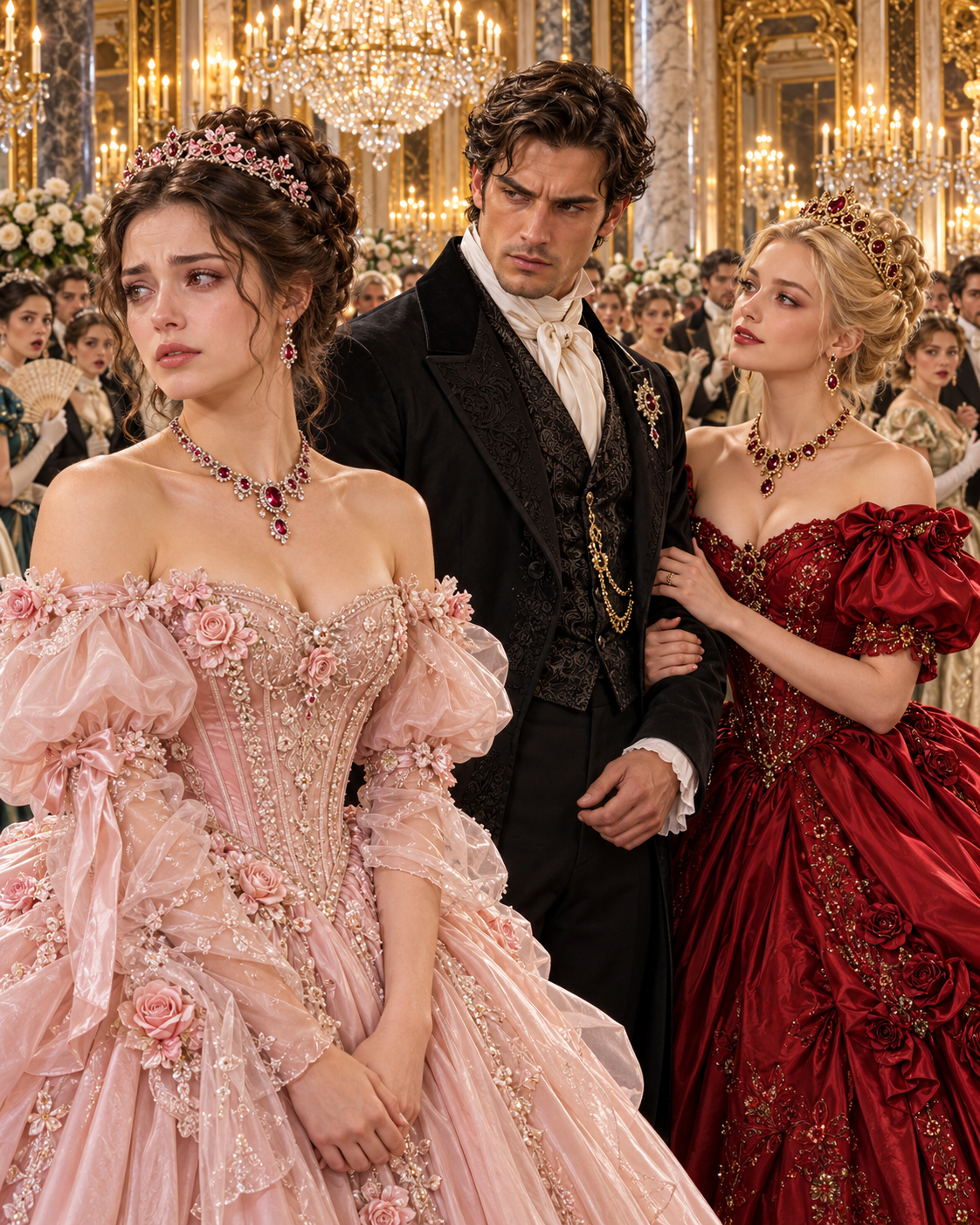
“So did you know she would appear at our ball?”
Silence answered for him.
Something in Eleanor’s chest went still.
“You invited her.”
Nathaniel said nothing.
“Nathaniel.”
“She had every right to attend.”
“That was not my question.”
His silence became confession.
Eleanor rose.
For the first time, anger truly entered her voice.
“You brought her into my home.”
“Our home.”
“No. You surrendered the right to use that word carelessly.”
He flinched.
Good, she thought.
At last, something reached him.
“I needed to speak to her about the debt,” he said.
“You could have met her privately.”
“That would have created worse gossip.”
“So instead you humiliated me publicly.”
“I did not intend—”
“Intent is a luxury enjoyed by people who never have to live with the consequences.”
Nathaniel stared at her.
Eleanor had surprised him many times since their marriage, but this was different.
He was looking at her as though the person standing before him had become impossible to place inside the small box he had prepared for her.
“What are you going to do?” he asked.
Eleanor picked up the document.
“I haven’t decided.”
His face changed.
It was almost imperceptible.
But Eleanor saw it.
Fear.
Not fear that she would leave him.
Fear that she now possessed power.
That realization followed her through the next several days.
Nathaniel became attentive in ways that would once have pleased her.
He asked whether she needed anything.
He appeared at breakfast.
He requested her opinion on repairs to the south cottages.
He even accompanied her during a meeting with the estate steward.
Eleanor found it almost insulting.
A year of neglect had taught her independence.
One document had taught Nathaniel manners.
She did not reward the transformation.
Instead, she studied the Ashborne accounts more carefully than ever.
The deeper she looked, the worse the situation became.
Nathaniel had inherited an estate rich in appearance and poor in cash. His father had borrowed against future income. Several investments had failed. Repairs had been delayed. Agricultural revenue had declined.
Ashborne Hall survived because everyone assumed Ashborne Hall could never fail.
Reputation had become collateral.
The same was true of many families who moved through drawing rooms pretending prosperity was permanent.
Eleanor had grown up among them.
She understood the performance.
But she also understood numbers.
Within two weeks, she prepared a restructuring plan.
Sell two unproductive parcels of land.
Renegotiate leases.
End several extravagant household expenses.
Convert an unused northern property into a commercial orchard.
Establish direct agreements with local merchants rather than relying on expensive intermediaries.
Nathaniel read the proposal in silence.
When he finished, he placed it on the desk.
“My father would never have agreed to this.”
“Your father left you the debts.”
His eyes flashed.
Eleanor continued.
“Tradition is not valuable merely because it is old.”
“You would sell Ashborne land?”
“I would sell land that costs more to maintain than it earns.”
“It has belonged to the family for generations.”
“And if you do nothing, it may belong to the Harkorts next year.”
Nathaniel walked toward the window.
“You make everything sound simple.”
“No. I make it sound solvable.”
He turned.
For a moment, the distance between them felt different.
Not smaller.
More honest.
“You enjoy this,” he said.
“Enjoy what?”
“Being necessary.”
Eleanor considered the accusation.
“No.”
She closed the account book.
“I enjoy being useful. There is a difference.”
Nathaniel said nothing after that.
Three days later, Vivian arrived at Ashborne Hall.
This time, she came in daylight.
No orchestra.
No crowded ballroom.
No room full of witnesses.
Only a black carriage rolling across the gravel as Eleanor stood near the front steps speaking with the estate steward.
Vivian stepped down wearing dark blue and an expression too calm to be casual.
“I would like to speak with you,” she told Eleanor.
Nathaniel was away in Boston.
Eleanor suspected Vivian knew that.
They met in the morning room.
Vivian declined tea.
“You found the agreement.”
It was not a question.
Eleanor regarded her carefully.
“Nathaniel told you.”
“No.”
“Then how do you know?”
“Because Nathaniel has spent the last ten days avoiding me.”
Vivian’s mouth curved without humor.
“He only becomes silent when he is afraid.”
Eleanor had expected arrogance from her.
Instead she saw exhaustion.
It complicated things.
“Will you enforce the claim?” Eleanor asked.
Vivian looked toward the window.
“My father wanted me to.”
“Why?”
“He hated Nathaniel by the end.”
That answer surprised her.
“I thought your father supported your relationship.”
“At first.”
Vivian took off her gloves slowly.
“My father believed Nathaniel would eventually marry me. Nathaniel believed so too.”
“What changed?”
“My father’s business began failing. Nathaniel’s father died. Ashborne became Nathaniel’s responsibility.”
Vivian’s voice remained composed, but Eleanor heard the wound beneath it.
“Nathaniel decided he could not afford to marry a woman whose fortune was uncertain.”
Eleanor stared at her.
“He left you for money.”
Vivian smiled faintly.
“And married you for it.”
For several seconds, neither woman spoke.
The symmetry was almost cruel.
Eleanor had imagined Vivian as the woman Nathaniel loved too much.
Vivian had imagined Eleanor as the woman Nathaniel valued more.
Both had been wrong.
Nathaniel had chosen Ashborne.
Again.
“Then why continue seeing him?” Eleanor asked.
Vivian’s expression closed.
“Because knowing a man has failed you does not immediately make you stop loving him.”
It was the most honest thing Eleanor had ever heard about Nathaniel.
She understood it even though she had never loved him.
Perhaps because some part of her had once hoped she might.
“My father discovered Nathaniel’s marriage negotiations with your family before I did,” Vivian continued. “He confronted him. Nathaniel insisted it was duty.”
“And your father lent him money anyway?”
“He had already done so.”
Vivian’s fingers tightened around her gloves.
“The agreement was his revenge. If Nathaniel failed to repay the debt, my father wanted the power to take enough of Ashborne that the family would never pretend superiority again.”
Eleanor exhaled slowly.
“And now the claim belongs to you.”
“Yes.”
“Will you use it?”
Vivian looked directly at her.
“I came here to ask you the same question.”
Eleanor frowned.
Vivian continued.
“Nathaniel believes you may expose the agreement. If you do, the estate could collapse before either of us receives anything.”
“Why would I expose it?”
“To punish him.”
“That would also punish every tenant and employee here.”
Vivian studied her for a long moment.
Then she laughed softly.
“I understand now.”
“What?”
“Why everyone in this house speaks about you as though you were born here.”
Eleanor did not know how to answer.
Vivian rose.
“My father’s lawyers are pressing me to enforce the claim before the end of the year.”
“How long?”
“Six weeks.”
That changed everything.
Eleanor stood as well.
“If Ashborne repays a substantial portion?”
“The lawyers might accept revised terms.”
“Might?”
“If I instruct them.”
“And would you?”
Vivian hesitated.
“Yes.”
“Why?”
This time the other woman’s composure broke.
Only slightly.
“Because I am tired of arranging my life around a man who always finds a grand word for choosing himself.”
Duty.
Family.
Legacy.
Ashborne.
Eleanor understood.
They were different women, wounded differently by the same man.
Neither owed the other friendship.
But they did not need to be enemies.
“I have a plan,” Eleanor said.
Vivian’s brows rose.
“Of course you do.”
Six weeks became five.
Eleanor worked from dawn until after midnight.
Properties were valued.
Contracts were examined.
Expenses were cut.
Nathaniel resisted nearly every decision until Eleanor began placing two columns before him: pride and survival.
Survival usually won.
The largest obstacle was the northern tract.
Selling it would cover nearly half of what was immediately owed, but the best offer came from a railway company intending to build through nearby farmland.
Nathaniel hated the idea.
Eleanor hated the terms.
Then she discovered something else.
The proposed railway route would pass dangerously close to several tenant homes while increasing the value of adjacent Ashborne property.
The company expected Nathaniel to accept because he needed cash.
Eleanor refused.
The representative stared at her across the library table.
“Mrs. Ashborne, with respect, your husband has already indicated—”
“My husband is not conducting this negotiation.”
The man glanced at Nathaniel.
Nathaniel’s face darkened.
For one terrible second, Eleanor thought he would contradict her.
Instead he said, “You heard my wife.”
It was the first time he had used those words in public without making them sound like a technical fact.
Eleanor noticed.
She wished she had not.
They renegotiated.
The railway company purchased a narrower strip, agreed to relocate the route, funded improvements to local access roads, and paid significantly more.
It was the kind of victory society never celebrated because no champagne accompanied it.
But two dozen families kept their homes.
Ashborne gained time.
And Eleanor discovered that power felt very different when used for people who could not return it.
Then, four days before the Harkort deadline, everything nearly collapsed.
A New York society paper published a short column suggesting that Ashborne Hall was experiencing “unusual financial pressures.”
No source was named.
By noon, two creditors had sent inquiries.
By evening, a banker requested an immediate meeting.
Nathaniel stormed into Eleanor’s office holding the paper.
“Vivian.”
Eleanor stood.
“You don’t know that.”
“Who else?”
“Anyone who has seen land transfers. A clerk. A creditor. A servant. A banker.”
“She wants leverage.”
“No. You want someone to blame.”
His eyes narrowed.
“You always defend her.”
“I am defending evidence.”
“She came here behind my back.”
“To solve the problem you created.”
Nathaniel went still.
Eleanor regretted the sentence only because it was cruel.
Not because it was false.
“Do you know what I find extraordinary?” he asked.
“What?”
“You think you are above all of this.”
“I have never said that.”
“You judge every choice I made as though you would have behaved perfectly.”
“No.”
Eleanor moved closer.
“I judge the fact that you never allowed anyone else to make an informed choice.”
Nathaniel’s anger faltered.
She continued.
“You decided Vivian should wait for you. You decided I should marry you without knowing the truth. You decided your tenants should trust a name instead of accounts. You decided everyone would carry the consequences because only you were entitled to the information.”
“I was trying to protect this estate.”
“You were protecting your control of it.”
The words struck harder than shouting could have.
Nathaniel looked at her as though the room had shifted beneath him.
Perhaps it had.
That evening, he disappeared into his father’s study.
The following morning, he asked Eleanor to join him there.
On the desk rested a collection of letters.
Old letters.
Some bore Vivian’s handwriting.
Others belonged to Nathaniel’s father.
One was addressed to Eleanor’s father.
Unsent.
“I wrote that before our engagement was announced,” Nathaniel said.
Eleanor did not touch it.
“What does it say?”
“The truth.”
She looked at him.
“I intended to tell your father everything.”
“But you didn’t.”
“No.”
“Why?”
“My father’s former solicitor came to see me that morning. He told me exactly what would happen if the Whitmore agreement failed.”
Nathaniel sat down slowly.
“I told myself thousands of people depended on me. That my feelings were irrelevant. That yours would be protected because you would have position and security.”
He gave a bitter laugh.
“I had become very skilled at calling cowardice responsibility.”
Eleanor looked at the unsent letter.
There was no satisfaction in hearing the confession.
Only sadness.
“What do you want from me?”
“Nothing.”
Nathaniel pushed the letters toward her.
“That is the first thing I have understood.”
She waited.
“I am transferring authority over the estate accounts to a joint trust. You will be one trustee. The steward will be another. I will be the third.”
Eleanor stared at him.
“You would give up sole control?”
“Yes.”
“Why?”
“Because you were right.”
He struggled with the words.
“About control.”
It was not redemption.
But it was something rarer from Nathaniel.
Surrender without applause.
The financial crisis reached its peak the next day.
The banker from Boston arrived.
So did Vivian’s lawyer.
The drawing room became a battlefield of papers, valuations, repayment schedules, and carefully restrained threats.
Nathaniel sat at one side of the long table.
Eleanor sat beside him.
Vivian sat opposite.
For three hours, the future of Ashborne Hall was reduced to numbers.
At last, the banker removed his spectacles.
“With the railway payment, the property sale, and the revised operating structure, the estate is viable.”
Nathaniel’s shoulders lowered slightly.
“But,” the banker continued, “only if the Harkort claim is deferred.”
Everyone looked at Vivian.
Her lawyer whispered to her.
Vivian listened.
Then she turned to Nathaniel.
Years seemed to pass inside that silence.
“You once asked me to wait for you,” she said.
Nathaniel’s face tightened.
“I did.”
“I waited while you chose your family name. I waited while you married someone else. I waited while you told me that circumstances would someday change.”
Nathaniel said nothing.
Vivian’s eyes shone, but her voice never broke.
“I will not wait anymore.”
She turned to her lawyer.
“Restructure the debt.”
Her lawyer blinked.
“Lady Vivian—”
“Extend the term. Reduce the immediate payment according to Mrs. Ashborne’s proposal.”
Nathaniel stared at her.
“Vivian.”
She raised a hand.
“This is not for you.”
Her gaze shifted to Eleanor.
“It is for the people who did not create our mistakes.”
The agreement was signed before sunset.
Ashborne survived.
Not untouched.
Not unchanged.
But honestly.
The society column faded within days when creditors confirmed that payments continued normally.
By spring, the orchard project had begun.
Road improvements were underway.
Tenant repairs that had been postponed for years were finally completed.
Vivian left for Europe.
Before she departed, she sent Eleanor one note.
It contained a single sentence:
Do not mistake being needed for being loved.
Eleanor kept it.
Not because she feared making that mistake with Nathaniel.
Because she realized she had made it with Ashborne itself.
The estate needed her.
The staff respected her.
The tenants trusted her.
Society had begun praising her competence.
But usefulness, no matter how satisfying, could become another kind of cage.
So Eleanor did something no one expected.
She created a school fund for daughters of estate employees and neighboring farming families.
Not a finishing school.
A real one.
Accounting.
Literature.
History.
Science.
Commercial law.
Subjects society often considered unnecessary for women who were expected to marry.
Nathaniel read the proposal over breakfast.
“You intend to teach them law?”
“I intend to pay someone qualified to teach them.”
“What will farmers’ daughters do with commercial law?”
Eleanor looked at him.
“Perhaps avoid marrying men who conceal financial agreements from them.”
Nathaniel nearly smiled.
Nearly.
Then, to her surprise, he signed the funding authorization.
Months passed.
Their marriage changed slowly.
Not into the love story society preferred.
Nathaniel did not wake one morning transformed into a romantic hero.
Eleanor did not discover that suffering had secretly been a path toward winning his heart.
Life was less convenient than that.
They learned to speak.
Actually speak.
Sometimes they argued.
Sometimes they ate dinner in silence.
Sometimes Nathaniel asked Eleanor’s opinion and disliked the answer.
Sometimes Eleanor realized she had assumed the worst of him before he had finished explaining.
Trust returned in inches.
Affection arrived more cautiously.
One evening nearly two years after their wedding, Eleanor found Nathaniel standing on the terrace overlooking the fields.
The orchard trees were young, thin against the sunset.
“They look unimpressive,” he said.
“They are trees.”
“They look like sticks.”
“Give them time.”
Nathaniel glanced at her.
“I was not very good at that.”
“At trees?”
“At giving things time.”
Eleanor leaned against the stone railing.
Below them, workers were returning home along the newly repaired road.
Nathaniel spoke again.
“Vivian wrote to me.”
Eleanor looked at him.
“She is engaged.”
Eleanor waited for pain.
Jealousy.
Anything.
What she felt instead was relief.
“For love?”
“I believe so.”
“Good.”
Nathaniel nodded.
“Yes.”
They stood quietly.
Then he said, “I owe you an apology that cannot be completed by saying the words once.”
“That is true.”
“I know.”
Another silence.
“I thought providing security was enough.”
“For a wife?”
“For anyone.”
Eleanor watched the horizon.
“My father taught me that love made people weak. My mother taught me duty was what remained when affection became inconvenient.”
He swallowed.
“I believed them.”
“And now?”
“Now I think duty without honesty becomes another word for control.”
Eleanor turned toward him.
It was the lesson she had been trying to force into his understanding for two years.
Hearing him say it did not erase the past.
But it changed the future.
Nathaniel faced her.
“I will not ask you to forgive what I did.”
“Good.”
“I would like to ask something else.”
Eleanor raised an eyebrow.
“What?”
“Whether the life we have now is one you would choose if you were free to choose again.”
There was no safe answer.
Nathaniel knew it.
That was why the question mattered.
Eleanor considered Ashborne Hall behind them.
She considered her father’s desperation, Nathaniel’s cruelty, Vivian’s humiliation, the hidden debt, the long nights of accounts and negotiations.
She considered the school, now filled with girls carrying books through doors that had once been closed to them.
She considered herself.
The woman who had arrived believing dignity meant enduring quietly.
The woman standing there now understood differently.
Dignity was not silence.
It was the freedom to know the truth and still decide who you wished to become.
“I would not choose the marriage we began with,” Eleanor said.
Nathaniel accepted the words without flinching.
“No.”
“But I might choose the life we built after it broke.”
His eyes met hers.
There was no triumph in them.
Only gratitude.
“That is more than I deserve.”
“Perhaps.”
Nathaniel laughed softly.
It was the first time Eleanor had heard him laugh at himself.
She smiled.
Years later, society would tell the story differently.
Some would claim Eleanor had eventually won her husband’s love through patience.
Others would insist Nathaniel had always loved her and merely needed time to understand it.
Those stories pleased people because they made the world simple.
They were also wrong.
Eleanor had never won Nathaniel.
She had stopped trying to.
What she won was authority over her own life.
Nathaniel, forced at last to live without hiding behind inheritance and duty, learned that love was not possession, sacrifice made on someone else’s behalf, or protection offered without consent.
Love required truth.
Vivian learned that devotion did not become noble merely because it lasted a long time.
And Ashborne Hall survived not because one proud family preserved everything exactly as it had been, but because someone finally had the courage to change what no longer deserved preserving.
The orchard eventually grew tall.
The school expanded.
Families who once depended entirely on the estate began opening businesses of their own.
Eleanor’s name appeared on charitable boards in Boston and New York, though she accepted only the causes she actually intended to work for.
Nathaniel remained beside her, not ahead of her.
On the tenth anniversary of their marriage, they attended a dinner where a young woman asked Eleanor what had made her marriage successful.
Nathaniel nearly choked on his wine.
Eleanor looked at him.
He looked back.
Then she answered.
“Failure.”
The young woman stared.
Eleanor smiled.
“Our first version of marriage failed completely. Fortunately, we were eventually sensible enough not to rebuild the same thing.”
Nathaniel lifted his glass.
“To failure, then.”
“To learning from it,” Eleanor corrected.
He inclined his head.
“To learning from it.”
Later that night, as their carriage returned toward Ashborne Hall, Eleanor watched the lights of the estate appear beyond the dark fields.
Once, those lights had represented everything she feared losing: reputation, security, belonging.
Now she understood that none of those things mattered if maintaining them required a person to disappear inside the life others had chosen.
Ashborne had not saved Eleanor Whitmore.
Nathaniel had not saved her either.
In the end, Eleanor had saved herself—not by escaping the life she had been given, but by refusing to remain the woman that life expected her to be.
And perhaps that was the most valuable inheritance Ashborne Hall would ever leave behind.
Not its land.
Not its wealth.
Not even its name.
But the quiet proof that a life built on obligation could still be transformed by truth, provided someone was brave enough to stop pretending first.
The years that followed did not turn Ashborne Hall into a place without sorrow.
No house that old, and no family that complicated, could ever become entirely free of ghosts.
But the ghosts lost their authority.
That was the difference.
Eleanor discovered it gradually.
At first, she still felt the old tension whenever a letter arrived bearing an unfamiliar seal. She still noticed when Nathaniel became too quiet during discussions about money. She still remembered how easily truth had once been withheld beneath the excuse of protection.
Trust, she learned, did not return simply because people apologized.
It returned because, day after day, they chose not to repeat the betrayal.
Nathaniel began leaving account books open on the library table.
He discussed investments before making them.
He invited contradiction.
Sometimes Eleanor almost wished he would not.
“You cannot possibly think purchasing that mill is sensible,” she told him one rainy afternoon.
Nathaniel looked up from the proposal.
“I thought you wanted me to consult you.”
“I wanted you to consult me before making wise decisions.”
“I see.”
“This is not one of them.”
He leaned back in his chair.
“Then explain.”
Years earlier, he might have ended the discussion there with a cold refusal.
Now he listened while Eleanor dismantled the proposal line by line.
When she finished, Nathaniel sighed.
“You enjoy proving me wrong.”
“No.”
“You smiled three times.”
“I enjoy accuracy.”
“That is worse.”
Eleanor laughed.
It still surprised her sometimes, how easily laughter had entered rooms that once seemed built entirely for silence.
Ashborne itself began changing with them.
The girls’ school, which had started in two converted estate cottages, quickly outgrew its original building.
At first, several neighboring families objected.
Some argued that daughters did not need advanced education.
Others claimed the school would make young women dissatisfied with domestic life.
Eleanor considered that argument especially revealing.
“If education makes someone dissatisfied with a life,” she told the school board, “perhaps the problem is not the education.”
The statement traveled farther than she expected.
A newspaper in Boston printed it.
Then another in New York.
Within months, Eleanor began receiving letters from women she had never met.
Some asked how to establish similar schools.
Some described daughters who wanted to study bookkeeping, medicine, law, agriculture, or teaching.
A few letters contained only one sentence.
I did not know women were allowed to want more.
Eleanor kept those letters in a wooden box.
Not because she believed herself responsible for changing the world.
She had become suspicious of people who imagined themselves saviors.
But she understood the importance of opening a door and then refusing to close it behind you.
Nathaniel supported the school more openly as time passed.
At first, society assumed he did so merely to please his wife.
Then he began attending meetings without her.
One evening, Eleanor found him reviewing scholarship applications.
She stood in the doorway.
“You know,” she said, “ten years ago you asked what a farmer’s daughter would do with commercial law.”
Nathaniel did not look up.
“I was hoping you had forgotten.”
“I remember nearly everything.”
“That has always been one of your more terrifying qualities.”
He lifted one application.
“This girl wants to become an attorney.”
Eleanor took the page.
The applicant was seventeen.
Her father repaired wagons in a town twelve miles from Ashborne.
“She has excellent marks.”
“She does.”
Nathaniel hesitated.
“Do you think anyone will allow her to practice?”
“Perhaps not immediately.”
“Then why fund the education?”
Eleanor looked at him.
“So that the people saying no will eventually have someone standing in front of them whom they can no longer dismiss.”
Nathaniel nodded slowly.
He approved the scholarship.
The girl’s name was Clara Bell.
Years later, she became one of the first women in the state to build a legal practice serving widows, small farmers, and working families.
Whenever newspapers credited Ashborne for helping educate her, Eleanor corrected them.
Ashborne had supplied money.
Clara had supplied everything difficult.
That distinction mattered.
Meanwhile, Vivian’s life unfolded far beyond the estate.
For several years, Eleanor heard about her only indirectly.
She married a widowed diplomat named Adrian Mercer, a patient man with two young daughters and a reputation for finding society exhausting.
Vivian spent time in France, then Washington, then Boston.
Rumor claimed she had become happier.
Rumor also claimed she had become eccentric.
Eleanor suspected the two were sometimes the same thing when applied to women.
Then, one autumn afternoon, nearly twelve years after the Ashborne financial crisis, Vivian returned.
She did not arrive in secrecy.
She sent a letter first.
I will be in Massachusetts next month. If it would not inconvenience you, I would like to visit the school.
Eleanor read the note twice.
Nathaniel was across the breakfast table.
“Is that from Vivian?”
“Yes.”
He did not tense.
That, more than anything, showed Eleanor how much had changed.
“What does she want?”
“To visit the school.”
Nathaniel folded his newspaper.
“And?”
“And nothing.”
“You are going to invite her?”
“Yes.”
He nodded.
“Good.”
Eleanor raised an eyebrow.
“That is all?”
“What were you expecting?”
“Something awkward.”
“I am capable of growth.”
“Occasionally.”
When Vivian arrived, she looked different.
Not older exactly, though of course she was.
Lighter.
The woman who had once entered Ashborne Hall wearing tension like armor now carried herself without constantly measuring the room.
She embraced Eleanor.
It surprised them both.
“I wasn’t sure whether to do that,” Vivian admitted.
“Neither was I.”
They laughed.
Nathaniel greeted her later in the library.
Eleanor considered leaving.
Vivian stopped her.
“No.”
She smiled faintly.
“Stay.”
So Eleanor did.
Nathaniel and Vivian stood facing one another with more than a decade between who they had been and who they had become.
“You look well,” Nathaniel said.
“So do you.”
Another pause.
“My husband sends his regards.”
Nathaniel smiled.
“Tell him I am sorry for never meeting him.”
“He thinks that is probably for the best.”
Nathaniel laughed.
And with that, the last tension broke.
There were no lingering declarations.
No secret regret.
No suggestion that an old passion had merely been waiting for another opportunity.
What had existed between Nathaniel and Vivian had been real.
It had also ended.
People often struggled to understand that both things could be true.
Vivian toured the school the following morning.
She listened to a mathematics lesson.
She watched two young women debate a case involving property inheritance.
She visited the library and ran her fingers along shelves filled with books Eleanor once had to order secretly because several donors considered them inappropriate.
At lunch, Vivian became unusually quiet.
“What is it?” Eleanor asked.
Vivian looked toward the windows.
Girls crossed the courtyard carrying books.
“If this place had existed when we were young,” she said, “do you think our lives would have been different?”
Eleanor understood immediately.
“Yes.”
Vivian smiled sadly.
“That was quick.”
“It would not necessarily have made them easier.”
“No.”
“But different.”
Vivian watched the students for another moment.
“My father taught me everything about being desirable and nothing about being independent.”
“My father taught me to survive financial disaster without ever telling me the truth about money.”
Vivian turned.
“We were both beautifully educated for lives that did not exist.”
Eleanor laughed softly.
“That may be the most accurate description of our generation I have ever heard.”
Before leaving, Vivian made a donation large enough to fund the school’s law and civic studies program for ten years.
She asked that her name not appear on the building.
Eleanor agreed.
But she insisted on placing it inside the school records.
“Why?”
“Because anonymous generosity is admirable,” Eleanor said. “Invisible women are not.”
Vivian looked at her for a long moment.
Then she nodded.
“All right.”
Nathaniel died first.
Not young.
Not suddenly.
But earlier than Eleanor expected.
He was sixty-eight.
For several months, a weakness in his heart had slowly limited him.
Doctors advised rest.
Nathaniel treated the recommendation as a philosophical suggestion rather than medical instruction.
Eleanor treated it as law.
Their final argument took place because he attempted to walk into town during a winter storm.
“You are not going.”
“I am not an invalid.”
“You can be both stubborn and ill.”
“The meeting matters.”
“The meeting will survive your absence.”
Nathaniel stared at her.
“You have become very authoritarian.”
“You trained me.”
He smiled.
That ended the argument.
In his final weeks, Nathaniel spent most afternoons in the library.
Eleanor often joined him.
They did not spend those hours discussing regret.
They had already said what needed to be said over many years.
Instead, they spoke about ordinary things.
The orchard.
The school.
A leaking roof.
A nephew with terrible judgment.
The possibility of expanding scholarships.
One afternoon, Nathaniel asked Eleanor a question she had not expected.
“Were you ever happy with me?”
She looked up from her book.
“Frequently.”
He smiled.
“That is not very romantic.”
“You asked an accurate question.”
“Was there a more romantic answer available?”
Eleanor closed the book.
“Yes.”
He waited.
She moved her chair closer.
“I became happy because you eventually stopped asking me to disappear.”
Nathaniel’s expression changed.
That sentence reached somewhere deeper than praise could have.
“And you?” she asked.
“Was I ever what you wanted?”
Nathaniel looked toward the fire.
“No.”
Eleanor laughed.
“Wonderful.”
He took her hand.
“You became someone I had not been intelligent enough to want.”
Her smile faded.
Nathaniel continued.
“I wanted comfort. Obedience. admiration without accountability.”
“That sounds unpleasant.”
“It was.”
He squeezed her hand.
“You gave me none of those things.”
“You are welcome.”
He laughed, then coughed.
Eleanor waited until his breathing settled.
“You gave me truth,” he said.
“And apparently repeated arguments about budget discipline.”
“Those too.”
His eyes returned to hers.
“I think, Eleanor, that being loved by someone who refuses to lie to you may be the rarest kindness there is.”
Nathaniel died six days later.
Eleanor was beside him.
His final moments were quiet.
No dramatic confession.
No sudden revelation.
Just his hand in hers and winter light across the floor.
For a long time after he stopped breathing, Eleanor remained where she was.
She did not cry immediately.
People would later find this strange.
People always expected grief to perform on command.
The tears came that night when she found his spectacles resting beside an unfinished book.
Not because spectacles were meaningful.
Because grief often attached itself to ordinary things.
The chair someone would not sit in again.
The coat still hanging near a door.
The cup placed automatically at breakfast.
Eleanor mourned Nathaniel without rewriting him.
She did not turn his early cruelty into romance simply because he was dead.
She did not erase Vivian.
She did not pretend their marriage had always been loving.
She honored him by remembering the entire man.
The proud young husband who wounded her.
The frightened heir who lied.
The stubborn landowner who resisted change.
The older man who learned to apologize.
The partner who eventually stood beside her.
That whole truth was enough.
After Nathaniel’s death, several relatives expected Eleanor to withdraw from estate affairs.
One cousin arrived from New York within three weeks.
He spoke gently, as men often did when preparing to say something insulting.
“You have done admirable work, Eleanor.”
She looked up from the estate report.
“Thank you.”
“But perhaps now the burden should pass to the next generation of Ashborne men.”
Eleanor removed her spectacles.
“The next generation of Ashborne men currently consists of one boy studying philosophy in Vermont and another who lost two hundred dollars gambling on a horse named Divine Providence.”
The cousin reddened.
“That is beside the point.”
“I thought competence was the point.”
“Traditionally—”
“No.”
The word was calm.
He stopped.
Eleanor had learned years earlier that refusing politely could be more powerful than arguing loudly.
“The estate charter Nathaniel and I created does not place authority in the hands of whichever male relative arrives first after a funeral.”
“You cannot intend to manage forever.”
“No.”
She returned to the report.
“That is why I spent thirty years building institutions that do not require one person to be indispensable.”
The conversation ended shortly afterward.
Eleanor was seventy-two when she finally stepped down from daily management.
By then, Ashborne was governed by a board that included tenant representatives, financial trustees, agricultural managers, and graduates of the school.
The estate still belonged to the Ashborne family.
But it no longer existed merely to preserve the prestige of that family.
Land was leased on transparent terms.
Workers participated in certain profit-sharing agreements.
A cooperative fund helped families survive poor harvests.
The school had expanded into a college for women.
Eleanor resisted putting her name on it.
Everyone ignored her.
The Eleanor Whitmore Ashborne College opened its new main building in September.
At the ceremony, Eleanor stood before several hundred students, faculty members, farmers, merchants, teachers, and guests.
She had prepared a speech.
She abandoned it halfway through.
“I was told when I was young that a woman needed three things,” she said.
“A respectable family, a good marriage, and the wisdom not to ask too many questions.”
Laughter moved through the crowd.
Eleanor smiled.
“I acquired the first two.”
More laughter.
“The third was beyond me.”
She looked out at the students.
Some were daughters of wealthy families.
Others were daughters of shopkeepers, laborers, farmers, immigrants, widows.
Many were the first women in their families to receive advanced education.
“When I first came to Ashborne, I believed independence meant never needing anyone.”
She paused.
“I was wrong.”
The courtyard became quiet.
“Independence means being able to enter a relationship without surrendering the right to remain yourself.”
Several women in the front row leaned forward.
“It means knowing enough to ask questions before signing papers placed in front of you. It means earning enough to leave when staying requires you to become smaller. It means having the courage to stay when staying is truly your choice.”
Eleanor’s voice softened.
“And it means understanding that love without truth is not safety.”
She glanced toward the old house visible beyond the trees.
“I learned that lesson painfully.”
The audience remained silent.
“But painful lessons should not be wasted. They should become easier lessons for the people who come after us.”
That was all.
The applause lasted several minutes.
Eleanor hated every second of it.
She also secretly enjoyed it.
Her final years were peaceful.
Not empty.
Peaceful.
There was a difference.
She traveled.
She visited Vivian twice.
They became something resembling friends, though neither woman ever used the word.
They wrote regularly.
Vivian died at eighty-one.
Her last letter to Eleanor arrived three weeks before her death.
Do you remember when we thought Nathaniel was the center of both our stories?
Eleanor laughed aloud when she read it.
Vivian continued:
How embarrassing.
Eleanor kept that letter beside the earlier one.
Do not mistake being needed for being loved.
Together, the two sentences seemed to contain an entire lifetime.
Eleanor lived until eighty-seven.
On her final morning, sunlight entered Ashborne Hall through the eastern windows.
She asked to be moved into the library.
The same library where she had discovered debts.
Where she had fought with Nathaniel.
Where she had planned the restructuring that saved the estate.
Where he had eventually learned to listen.
A young student from the college had been visiting her.
Her name was Margaret.
She was studying economics and intended to work in public finance.
Eleanor found this extremely amusing.
“What?” Margaret asked.
“Nothing.”
“You’re smiling.”
“I was once told women had no natural understanding of money.”
Margaret frowned.
“Who told you that?”
“Several men who later needed me to explain their accounts.”
Margaret laughed.
Eleanor closed her eyes for a moment.
Then Margaret asked, “Mrs. Ashborne, may I ask you something?”
“You already have.”
The girl rolled her eyes.
Eleanor liked her immediately.
“Do you regret marrying him?”
There it was.
The question Eleanor had been asked in different forms for more than sixty years.
She opened her eyes.
Outside, the orchard stretched across land that had once nearly been lost.
Students crossed a distant path.
A delivery wagon moved toward the college.
Life continued without needing permission.
“Yes,” Eleanor said.
Margaret looked surprised.
“And no.”
“That doesn’t make sense.”
“Most truthful answers do not fit neatly.”
She shifted against the chair.
“I regret the deception. I regret the humiliation. I regret how long I believed endurance was the same thing as strength.”
Margaret listened carefully.
“But if you are asking whether I wish I could erase everything that followed, then no.”
“Because you loved him?”
Eleanor smiled.
“Eventually.”
She looked toward Nathaniel’s old chair.
“But that is not the important part.”
“What is?”
Eleanor thought for a moment.
“That I learned never to build my worth around being chosen.”
Margaret said nothing.
Eleanor continued.
“If someone chooses you, wonderful. If they love you, treasure it. But do not hand them the authority to decide whether your life matters.”
The young woman swallowed.
“I’ll remember that.”
“Good.”
Eleanor closed her eyes.
“Then I have saved you several unpleasant years.”
Margaret laughed through tears.
Eleanor died that evening.
Her funeral drew people from across the state.
Politicians attended.
Business leaders came.
Society families filled the front rows.
Eleanor would have found all of them less interesting than the women standing farther back.
Teachers.
Farmers.
Accountants.
Lawyers.
Doctors.
Shop owners.
Widows who had learned to manage estates.
Girls whose mothers had attended the Ashborne school.
Women who had never met Eleanor but had lived differently because institutions she helped build had given them an opportunity.
Her will contained few surprises.
Most of her personal wealth went to the college.
Some went to tenant welfare funds.
A smaller sum established legal assistance for women facing financial disputes.
Her jewelry was divided among nieces, friends, and several former students.
Nathaniel’s wedding gift to her—a diamond necklace she had always disliked—was sold.
The money funded mathematics scholarships.
Eleanor would have considered that an excellent improvement.
Years later, a portrait of her hung in the college library.
It showed Eleanor in her sixties.
No jewels.
No grand dress.
No husband standing behind her.
Just a woman seated beside an open ledger, one hand resting on a book.
Visitors often asked why the portrait did not identify her primarily as Duchess, wife, or widow.
Beneath the frame were only the words:
Eleanor Whitmore Ashborne
She asked questions.
The phrase became something of a joke among students.
Before signing a contract:
Ask questions.
Before accepting a job:
Ask questions.
Before marrying someone:
Definitely ask questions.
But over time, it became more than a joke.
It became the philosophy Eleanor had spent her life learning.
Questions disturbed comfortable lies.
Questions revealed hidden debts.
Questions forced love to become honest.
Questions gave people information.
And information gave them choices.
Ashborne Hall remained standing long after everyone who remembered Eleanor personally was gone.
The old ballroom still existed.
So did the staircase she had descended the morning after Nathaniel told her she would never truly be his wife.
Tour guides sometimes told visitors that story.
They usually expected the audience to feel sorry for her.
The better guides corrected them.
Eleanor Whitmore did not become remarkable because a man failed to love her properly.
She became remarkable because she refused to let that failure define the rest of her life.
Nathaniel’s rejection was not the beginning of her tragedy.
It was the beginning of her awakening.
Vivian was not her rival.
She became another woman who learned the cost of allowing someone else’s choices to govern her future.
Nathaniel was not simply a villain or a hero.
He was a man shaped by pride, fear, inheritance, and eventually accountability.
And Ashborne itself was never merely a house.
It was proof that old structures could survive change only when people stopped confusing tradition with truth.
Long after Eleanor’s death, on a spring morning much like the ones she had once spent reviewing accounts, a class of young women gathered beneath the portrait in the library.
Their professor told them the story.
At the end, one student raised her hand.
“So did Eleanor win?”
The professor considered the question.
“Win what?”
“Her husband. The estate. Her freedom.”
The professor smiled.
“I think that is the wrong question.”
The student frowned.
“What should we ask?”
The professor looked toward Eleanor’s portrait.
“Who did Eleanor become when she stopped waiting to be chosen?”
No one answered immediately.
Outside, bells rang from the college courtyard.
Students began crossing the lawn toward lectures, carrying books, papers, ambitions, plans.
Lives that belonged to them.
The professor closed the history volume.
“That,” she said, “is the part of the story that mattered.”
And perhaps Eleanor would have agreed.
Because in the end, she had not been remembered as the woman Nathaniel Ashborne refused to love.
She had not even been remembered primarily as the woman he eventually did.
She was remembered as the woman who discovered that dignity did not come from being wanted, protected, married, admired, or forgiven.
It came from refusing to abandon yourself.
That truth outlived Nathaniel.
It outlived Vivian.
It outlived Eleanor.
It outlived the gossip that once filled American drawing rooms from Boston to New York.
And generation after generation, whenever another woman walked through the doors of the college carrying a future no one had chosen for her, Eleanor’s story quietly began again.
Not as a warning.
Not as a romance.
But as permission.
Permission to ask.
Permission to know.
Permission to choose.
And, when necessary, permission to walk away from any life that required her to disappear in order to remain inside it.
That became Eleanor Whitmore Ashborne’s real inheritance.
And unlike land, titles, fortunes, or family names, it could never be taken away.
THE END.