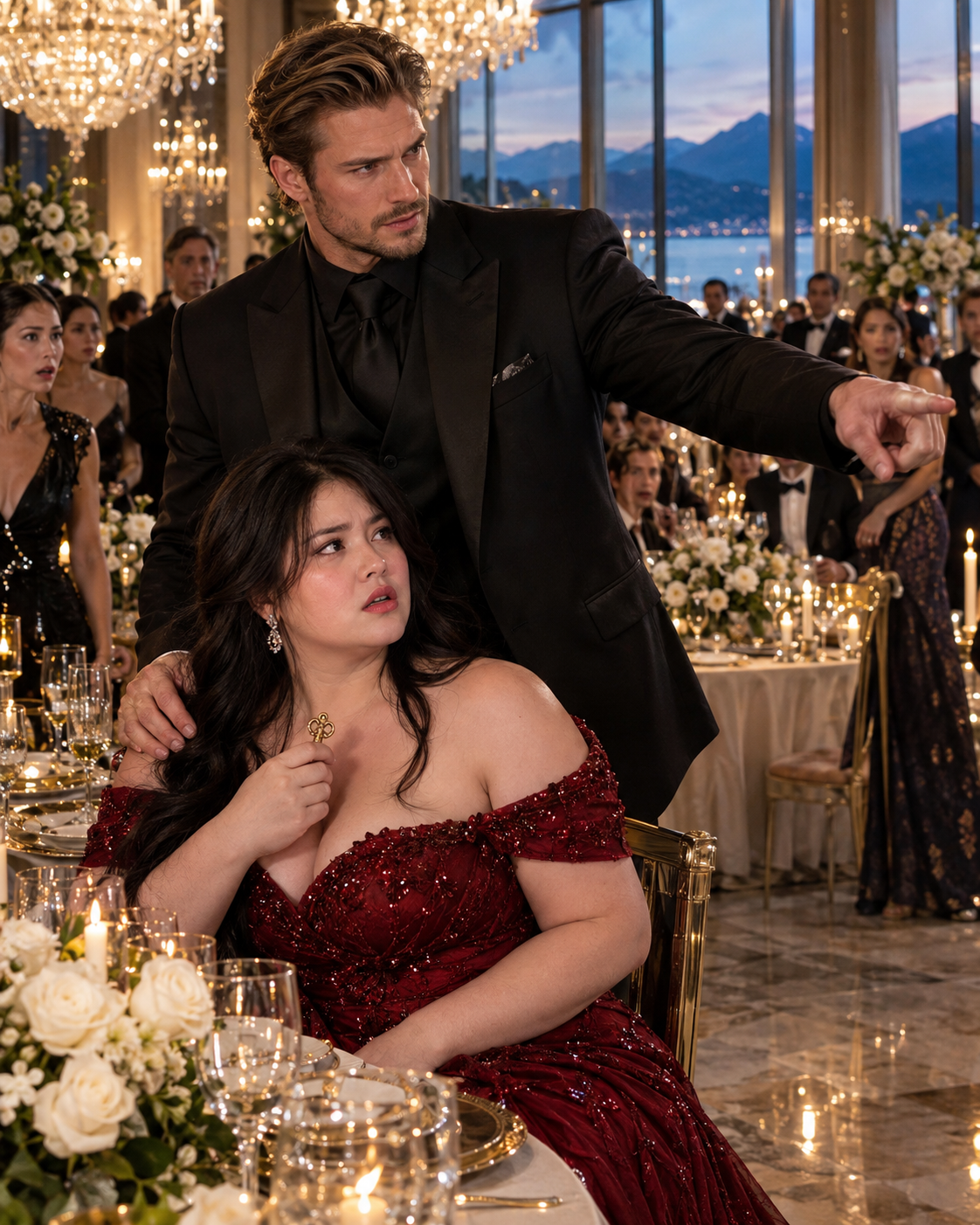
In the heart of Manhattan, beneath the glittering chandeliers of a private Upper East Side mansion, Norah Bennett sat at the one table her own family had decided she was worthy of—the servants’ table.
Norah stared at the signature at the bottom of the document.
For several seconds, she couldn’t breathe.
The name was unmistakable.
Evelyn Bennett.
Her mother.
The woman who had spent years telling Norah that Eleanor’s estate had been complicated, that the family trust had been distributed fairly, and that Norah simply needed to accept what had been decided.
Norah slowly lowered the document onto the table.
“No,” she whispered.
Adrien stood across from her, his expression unusually restrained.
He had seen enough financial documents in his career to understand what she was looking at, but even he seemed unsettled by the implications.
“Read the date,” he said.
Norah looked again.
Three days after Eleanor Bennett’s funeral.
Three days after the entire family had gathered in the same house and promised one another that Eleanor’s wishes would be honored.
Three days after Norah had stood beside her grandmother’s coffin, believing she had lost the only person in the family who had ever truly understood her.
Her fingers tightened around the edge of the paper.
“This says my mother transferred control of the trust.”
“Temporarily,” Adrien said.
Norah looked at him.
“That word doesn’t make it better.”
“No.”
He pointed to another paragraph.
“It makes it worse.”
Norah followed his finger.
The transfer wasn’t temporary in the ordinary sense.
It had been structured through a series of shell companies and holding entities, making it appear that the assets remained within Eleanor’s original corporate structure while effective control moved somewhere else.
Norah read the names one by one.
Companies she had never heard of.
Addresses in Delaware.
A registered office in Nevada.
An account connected to a financial institution in New York.
And then she saw Vanessa’s name.
Her sister wasn’t listed as an owner.
She was listed as a beneficiary.
Norah sat down.
The room suddenly felt too small.
“Vanessa knew.”
Adrien didn’t answer immediately.
“We don’t know what she knew or when she knew it.”
“She knew about the key.”
“Yes.”
“She knew about the vault.”
“Possibly.”
“She knew enough to panic when she saw it.”
Adrien remained silent.
Norah pushed the papers away.
For years, she had tried to understand why Vanessa treated her with such casual cruelty.
She had blamed jealousy.
Sibling rivalry.
Their mother’s favoritism.
Now those explanations seemed painfully incomplete.
Maybe Vanessa hadn’t simply wanted Norah out of the family business.
Maybe she had needed Norah away from the truth.
A metallic click sounded from the far side of the vault.
Norah froze.
Adrien immediately turned toward the door.
The sound came again.
Someone was trying to open the outer lock.
“Did anyone know we were coming here?” Norah whispered.
“No.”
“Are you sure?”
“Yes.”
Another click.
Then silence.
Adrien moved toward the entrance.
Norah grabbed his sleeve.
“Wait.”
He looked back.
Her grandmother’s warning suddenly returned to her.
Keep this somewhere they can’t find it.
She reached into her coat pocket and touched the brass key.
“Maybe the key wasn’t meant to open this vault,” she said.
Adrien frowned.
“What do you mean?”
“Maybe it was meant to tell me where to look.”
She turned toward the wall.
The vault had shelves on three sides and an old wooden cabinet beneath the main filing system.
Norah remembered the tiny engraving on the key.
She had noticed it years ago but never understood it.
A crescent.
Two parallel lines.
And a number.
17.
She walked toward the cabinet.
Adrien followed.
“Norah, we don’t have much time.”
“I know.”
She knelt and examined the cabinet’s locks.
There were twelve drawers.
The seventeenth mark wasn’t on the outside.
But beneath the third drawer, she found a narrow brass plate.
Seventeen.
She inserted the key.
The lock turned.
A hidden compartment opened behind the drawer.
Inside was a small envelope.
Her grandmother’s handwriting was on the front.
NORAH.
OPEN ONLY WHEN THEY HAVE ALREADY LIED TO YOU.
Norah stared at the words.
Then she opened it.
My dearest Norah,
If you are reading this, then the family has already told you that I made decisions I never made.
Do not confront them yet.
Do not accuse anyone.
And above all, do not tell them what you have found.
Truth is most powerful when it is documented.
Norah’s eyes filled with tears.
She continued reading.
I discovered the fraud almost eighteen months before my death.
At first, I believed it was a mistake.
Then I found the transfers.
Then the altered signatures.
Then the accounts.
I confronted the person I trusted most.
That was my mistake.
The letter continued for several pages.
Eleanor explained that she had suspected someone inside the family was manipulating the company’s financial records.
She had hired an independent auditor.
Before the audit was completed, several files disappeared.
The auditor resigned.
And Eleanor began receiving anonymous warnings.
Norah swallowed hard.
There was one final paragraph.
I could not protect you by fighting them openly. So I protected you by making them believe you had nothing.
The trust was never lost.
It was hidden.
Norah stopped reading.
She looked at Adrien.
“Hidden.”
He nodded.
“Then the seventy-four million may still legally belong to you.”
“May?”
“We need to prove the chain of ownership.”
She looked down at the letter.
“Then that’s what we’ll do.”
The outer lock clicked again.
This time the sound was followed by a voice.
“Norah?”
Her mother’s voice.
Norah’s blood ran cold.
Adrien looked at her.
“How did she find us?”
Norah folded the letter and slipped it inside her coat.
“I don’t know.”
Her mother spoke again from outside.
“Open the door.”
Norah didn’t move.
“I know you’re in there.”
Adrien whispered, “We need another exit.”
There was one.
A narrow service passage behind the filing shelves.
Norah had never noticed it.
Together they moved quickly.
Before leaving, Norah took photographs of every document she could reach.
She didn’t take the originals.
That was important.
Her grandmother had been clear.
Documentation mattered more than possession.
They slipped through the service passage just as the vault door began to open.
From the darkness beyond the shelves, Norah heard her mother’s voice.
“She found it.”
Another voice answered.
Vanessa.
Norah closed her eyes.
Her sister whispered, “Then we have to move faster.”
Norah and Adrien escaped through the rear corridor and emerged several blocks away into the cold Manhattan night.
For several minutes, neither spoke.
Yellow taxis streamed through the avenue.
People hurried past them carrying shopping bags, coffee cups, briefcases.
New York continued as if nothing had happened.
But Norah knew her life had changed.
“They’re going to come after me,” she said.
Adrien looked at her.
“They already have.”
The next morning, Norah woke to headlines.
NOTORIOUS SOCIALITE ACCUSED OF THREATENING FAMILY.
BENNETT HEIRESS ALLEGEDLY DEMANDS MILLIONS.
POLICE INVESTIGATE EXTORTION CLAIM.
The photographs beneath the headlines were carefully chosen.
Norah outside her mother’s home.
Norah leaving the restaurant where she had met Adrien.
Norah carrying a handbag.
None showed the vault.
None showed the documents.
None showed the people who had spent years moving money behind closed doors.
Adrien called her before she finished reading.
“Don’t respond.”
“I wasn’t going to.”
“They’re trying to make you emotional.”
“They’re trying to make me look guilty.”
“Exactly.”
Norah looked out over Manhattan from her apartment window.
She could see the Empire State Building in the distance.
For the first time, she understood something Eleanor had tried to teach her without ever saying it directly.
Power wasn’t always about having more money.
Sometimes it was about controlling the story.
And her family had controlled the story for years.
Until now.
Norah contacted the attorney whose name Eleanor had left in the letter.
His name was Samuel Reed, a retired New York attorney who had once represented Eleanor in corporate matters.
He agreed to meet that afternoon.
The meeting took place in a quiet office near Madison Avenue.
Samuel was in his seventies, with silver hair and the patient manner of someone who had spent his life listening before speaking.
When Norah placed the letter on his desk, he didn’t appear surprised.
“I wondered when you would come.”
Norah stared at him.
“You knew?”
“I knew Eleanor suspected something.”
“Why didn’t you tell me?”
“Because Eleanor specifically instructed me not to.”
Samuel opened a locked drawer.
Inside was a sealed file.
He placed it on the desk.
“Your grandmother left this with me six months before she died.”
Norah’s hands trembled.
“What’s inside?”
“Everything she could legally preserve.”
He opened the file.
There were audit reports.
Bank records.
Corporate resolutions.
Copies of emails.
Meeting notes.
And one document that made Norah stop breathing.
A revised trust agreement.
Dated nine months before Eleanor’s death.
Norah read the first paragraph.
The controlling interest in Bennett Holdings had been transferred into a protected trust.
The beneficiary was Norah Bennett.
Not Vanessa.
Not her mother.
Norah.
Samuel pointed to the final page.
“Your grandmother signed it in front of witnesses.”
“Then how did they take it?”
“They didn’t.”
Norah looked up.
Samuel’s voice became quieter.
“They created the appearance that they had.”
The next two weeks became a battle of documents.
Norah did not give interviews.
She did not post angry statements online.
She did not confront Vanessa.
Instead, Samuel and Adrien helped her build a chronological record.
Every transfer.
Every altered document.
Every corporate filing.
Every suspicious withdrawal.
Every signature.
The deeper they went, the more disturbing the pattern became.
The $74 million trust had never simply disappeared.
It had been divided.
Some money had moved into investment vehicles.
Some had been transferred through companies controlled by people connected to Norah’s mother.
Some had been used to purchase property in Florida and California.
But the most important discovery involved Bennett Holdings itself.
Norah’s mother had quietly issued new shares after Eleanor’s death.
Those shares diluted Norah’s supposed ownership.
Except the issuance was based on a corporate resolution that appeared to have been signed by Eleanor after the date of her death.
Samuel stared at the document.
“That alone could unravel everything.”
Norah looked at the signature.
“Can you prove it?”
“Not by looking at the signature.”
He placed another document beside it.
“We prove it with the timeline.”
Eleanor had been in hospice care on the date shown.
Medical records confirmed she was physically incapable of attending the corporate meeting.
The meeting minutes claimed she had signed in person.
A hotel security log placed her elsewhere.
A witness confirmed she had been receiving treatment.
The pieces were finally forming a complete picture.
Then came the attack Norah had been expecting.
Police arrived at her apartment.
They said they were investigating a complaint alleging theft and extortion.
Norah listened calmly.
“I have nothing to hide.”
She handed them copies of the documents her attorney had prepared.
The officers reviewed them.
One of them exchanged a look with his partner.
“Ms. Bennett, we’re not here to determine who owns the money.”
“I understand.”
“We’re asking about an alleged demand for payment.”
“I never demanded money.”
“I know.”
The officer paused.
“That’s why this may become complicated for the people who filed the complaint.”
After they left, Norah stood silently in the doorway.
Adrien was waiting in the living room.
“You handled that well.”
“I was terrified.”
“You didn’t look terrified.”
Norah gave him a tired smile.
“Maybe that’s what courage is.”
He nodded.
“Maybe.”
The final confrontation came at a Bennett family board meeting.
Norah arrived wearing a simple black suit.
No dramatic entrance.
No entourage.
No cameras.
Her mother sat at the head of the table.
Vanessa sat beside her.
Several board members avoided Norah’s eyes.
Norah placed a single folder on the table.
Her mother smiled coldly.
“You shouldn’t be here.”
“I am a controlling beneficiary of this company.”
“You have no proof.”
Norah opened the folder.
“I do.”
She placed the first document down.
Then the second.
Then the third.
No one spoke.
She explained each transaction calmly.
She showed the altered resolution.
The impossible date.
The hidden accounts.
The transfers.
The shell companies.
The revised trust.
And finally, the letter from Eleanor.
Vanessa’s face had gone pale.
Her mother didn’t move.
“You forged these documents,” Norah said.
Her mother finally spoke.
“You have no idea what you’re accusing us of.”
“I know exactly what I’m accusing you of.”
“You think money makes you powerful?”
“No.”
Norah looked around the room.
“Evidence does.”
Silence followed.
Then one of the independent directors reached for the file.
He read the documents carefully.
After several minutes, he looked toward Norah’s mother.
“Is this your signature?”
Her mother said nothing.
The director looked again.
“We need an independent investigation.”
Another director agreed.
Then another.
The balance of the room shifted—not because Norah demanded it, but because the documents made it impossible to ignore what was in front of them.
Vanessa suddenly stood.
“You don’t understand!”
Norah looked at her.
“Then explain it.”
Vanessa’s lips trembled.
“I didn’t know everything.”
“I believe you.”
The room became still.
Vanessa looked surprised.
Norah continued.
“But you knew enough to be afraid of that key.”
Vanessa lowered her eyes.
“I saw it once before.”
“When?”
“Grandmother gave it to you at the hospital.”
Norah froze.
Vanessa swallowed.
“She told me you would understand someday.”
“And you said nothing.”
“I was scared.”
Norah looked at her sister for a long moment.
“So was I.”
That was the moment Norah realized she no longer needed Vanessa to confess everything.
The truth had already begun speaking for itself.
Months later, the investigation was still unfolding.
The courts would determine the legal consequences.
Financial institutions would trace the missing assets.
Corporate authorities would review the questionable filings.
Norah didn’t pretend she could control how every chapter ended.
But she could control what she did next.
She restored Eleanor’s trust structure.
She established an independent foundation in her grandmother’s name.
And she made one decision that surprised everyone.
She refused to become like the people who had betrayed her.
When asked by a reporter why she hadn’t publicly destroyed her family, Norah gave a simple answer.
“Because the truth doesn’t need cruelty to be powerful.”
She paused.
“My grandmother taught me that.”
Years later, Norah would still keep the old brass key.
Not because she needed it anymore.
The vault had been opened.
The documents had been found.
The truth had finally come into the light.
She kept it because it reminded her of the person she had been before she discovered everything.
A woman who believed family meant safety.
A woman who confused silence with peace.
A woman who thought losing everything meant losing herself.
She had been wrong.
Sometimes, what looks like the end of your inheritance is actually the beginning of your independence.
Sometimes, the people who push you to the edge unknowingly give you the clearest view of what lies beyond it.
And sometimes, the most valuable thing hidden behind an old locked door isn’t money at all.
It is the truth.
Norah had spent years waiting for someone to give her permission to claim her place.
In the end, she didn’t need permission.
She only needed the courage to turn the key.
For the first time in years, Norah Bennett walked into Bennett Holdings without feeling like an unwanted guest.
The marble lobby looked exactly as it always had.
Polished floors.
Tall glass walls.
The enormous brass letters spelling BENNETT HOLDINGS behind the reception desk.
Employees hurried through the building carrying folders and coffee, unaware that the company they worked for had nearly collapsed beneath a secret their own executives had tried to bury.
Norah stopped in front of those letters.
Her grandmother’s name had once been attached to every corner of this company.
Eleanor Bennett had built the business from a small investment firm into one of Manhattan’s most respected private investment groups.
But after Eleanor’s death, Norah had slowly been erased from the story.
Her family had made sure of it.
Now she was standing there again.
Not as someone’s daughter.
Not as Vanessa’s younger sister.
Not as the quiet granddaughter people could push aside.
She was there because the documents had finally established what Eleanor had intended.
A member of the legal team approached her.
“Ms. Bennett, the board is ready.”
Norah nodded.
“Thank you.”
As she walked toward the elevator, she noticed something she had never noticed before.
Her grandmother’s portrait hung in the hallway.
For years, the painting had seemed almost invisible to her.
Today, Norah stopped.
Eleanor was smiling in the portrait.
Not the formal smile she used for business magazines.
It was the small smile Norah remembered from childhood.
The smile she wore whenever Norah asked too many questions.
Norah whispered, “I finally understand.”
The elevator doors opened.
She stepped inside.
The board meeting lasted nearly four hours.
There were no dramatic accusations.
No shouting.
No slammed doors.
Instead, there were lawyers, accountants, investigators and stacks of documents.
The independent review had confirmed what Norah’s evidence suggested.
A series of unauthorized transactions had moved assets away from the trust.
Several corporate filings contained irregularities.
The trust had been deliberately obscured through layers of entities.
And the attempted dilution of Norah’s interest had been based on documents whose authenticity was now being formally challenged.
But there was one final question.
Where had the remaining money gone?
The answer arrived three days later.
A forensic accountant called Norah early in the morning.
“We found another account.”
Norah sat upright in bed.
“Where?”
“Switzerland.”
She stared at the phone.
“How much?”
There was a pause.
“Enough to change the recovery picture.”
Norah closed her eyes.
For months, she had prepared herself to recover only part of what Eleanor had intended for her.
She had told herself that justice did not necessarily mean getting everything back.
But the account changed the situation.
The money had been transferred shortly after Eleanor’s death.
It had passed through two holding companies before being deposited into an account connected to a private investment vehicle.
The account holder was not Vanessa.
It wasn’t Norah’s mother either.
It belonged to a company.
But the beneficial ownership records eventually led back to someone Norah had never suspected.
Her mother’s longtime business adviser.
The man who had attended every Bennett family meeting.
The man who had publicly defended the family when rumors about Norah began circulating.
The man who had told everyone that Eleanor’s estate was too complicated to understand.
Norah felt a strange calm when she heard his name.
“So he was the one behind it?”
Samuel shook his head.
“Not alone.”
Norah looked at him.
Samuel placed another file on the table.
“Your mother authorized the transfers.”
“And Vanessa?”
“We found evidence that she received benefits from several of the transactions.”
Norah said nothing.
“And the adviser?”
“He designed the structure.”
Norah looked down at the documents.
The betrayal suddenly felt larger than one person.
It had been a system.
A chain of people who had each convinced themselves they were only doing one small thing.
One signature.
One transfer.
One altered record.
One lie.
One silence.
Until the entire truth became almost impossible to see.
That was how Eleanor had lost control of her company.
Not in one dramatic moment.
But through hundreds of small betrayals.
Norah finally understood why her grandmother had written that truth was most powerful when documented.
Because lies could survive an argument.
They could survive accusations.
They could even survive reputation.
But they struggled to survive a timeline.
The timeline was now complete.
Within weeks, the investigation became public.
News outlets reported on the financial dispute.
Some described it as a family inheritance battle.
Others focused on the corporate implications.
Norah refused to give interviews.
She didn’t want to become a headline.
She wanted the record to speak for itself.
Meanwhile, Vanessa disappeared from social events.
The engagement was quietly called off.
The photographs that had once filled society pages vanished.
For the first time, Vanessa’s life was no longer protected by the Bennett family name.
One afternoon, Norah received a message.
It was from Vanessa.
Can we talk?
Norah stared at the screen for a long time.
She almost deleted it.
Then she remembered the night of the engagement dinner.
The servants’ table.
The laughter.
The brass key.
Her sister’s terrified expression.
She replied with one word.
Where?
They met at a small café downtown.
No photographers.
No lawyers.
No family members.
Vanessa looked different.
Not physically.
Emotionally.
The confidence she had once carried everywhere was gone.
She sat across from Norah and folded her hands.
“I don’t know where to start.”
“Start with the truth.”
Vanessa looked down.
“I was told you were trying to take everything.”
“Who told you?”
“Mom.”
Norah didn’t react.
“She said Grandmother had changed her mind about you. She said you were unstable. She said you would destroy the company if you ever got control.”
Norah listened silently.
“And I believed her.”
“Why?”
Vanessa’s eyes filled with tears.
“Because I wanted to believe her.”
That answer hurt more than Norah expected.
Vanessa continued.
“I was afraid that if you became the controlling beneficiary, there wouldn’t be anything left for me.”
“So you helped them.”
“I didn’t know how much they were doing.”
“But you knew something.”
Vanessa nodded.
“I knew the documents weren’t right.”
Norah looked at her.
“Why didn’t you tell me?”
Vanessa wiped her eyes.
“Because I was selfish.”
For a moment, neither spoke.
Then Vanessa reached into her purse.
She placed an old photograph on the table.
Norah picked it up.
It showed Eleanor sitting between the two sisters when they were children.
Norah remembered the day.
It had been taken in Martha’s Vineyard during one of Eleanor’s summers there.
They had spent the afternoon running along the beach.
Vanessa had been twelve.
Norah had been eight.
Their grandmother had told them that money could buy beautiful things but could never buy a peaceful heart.
Norah had forgotten those words.
Vanessa hadn’t.
“I kept this,” Vanessa said.
“Why?”
“Because it was the last time I remember us being happy together.”
Norah looked at the photograph.
She wanted to hate her sister.
For a long time, she had believed that would make everything easier.
But hatred required energy.
And Norah had spent too many years giving her family pieces of herself.
She pushed the photograph back.
“I can’t fix what happened.”
“I know.”
“I can’t pretend it didn’t.”
“I know.”
“And I can’t promise we’ll ever be sisters the way we were.”
Vanessa nodded through tears.
“But I don’t want to spend the rest of my life carrying this either.”
Vanessa looked up.
“What does that mean?”
“It means I hope someday you learn to live without lying to yourself.”
Vanessa began crying.
Norah stood.
She didn’t hug her.
Not yet.
Some wounds needed distance before they could become scars.
Outside, Manhattan was beginning to turn gold beneath the late afternoon sun.
Norah walked down the street alone.
For the first time, being alone didn’t feel like being abandoned.
It felt like freedom.
Months passed.
The legal proceedings continued.
Some assets were recovered.
Others remained tied up in litigation.
The courts would determine individual responsibility.
Norah did not interfere with that process.
She had learned that justice was not the same as revenge.
Revenge wanted people to suffer.
Justice wanted the truth established.
She chose the second.
When the final audit was completed, Bennett Holdings underwent a complete restructuring.
Norah became the controlling beneficiary her grandmother had intended her to be.
But she didn’t move into her mother’s old office.
She chose a smaller room on another floor.
When someone asked why, she smiled.
“Because I don’t need her office to prove I’m here.”
She also changed the company’s structure.
Independent oversight became mandatory.
Financial records were reviewed by outside auditors.
Family members could no longer move company assets without documented approval.
And a portion of the recovered funds was placed into a foundation supporting financial education for young women.
The foundation carried Eleanor’s name.
Norah wanted it to teach something her grandmother had learned too late.
Knowing how money works can protect you from people who hope you never learn.
One evening, almost a year after the engagement dinner, Norah returned to Eleanor’s old house.
The property was quiet.
The garden was covered in autumn leaves.
She walked into her grandmother’s study.
Everything was still there.
The old desk.
The bookshelves.
The brass lamp.
And the chair where Eleanor had spent countless evenings reading financial reports.
Norah opened the desk drawer.
Inside was an empty velvet box.
She knew what had once been inside it.
The brass key.
Norah smiled.
She had kept the key for a year.
Now she understood that she no longer needed to carry it.
She placed it inside the box.
Then she closed the drawer.
A soft knock came from the doorway.
Adrien stood there.
“You ready?”
Norah turned.
“Yes.”
He smiled.
They walked outside together.
The sky above Manhattan was turning dark.
Lights appeared one by one across the city.
Adrien looked at her.
“You never told me what you thought when you first found the key.”
Norah smiled.
“I thought it was useless.”
“And now?”
She glanced back at the house.
“Now I think it saved me.”
Adrien shook his head.
“No.”
Norah looked at him.
“You saved yourself.”
She smiled.
Maybe he was right.
The key had opened a vault.
The documents had opened a case.
The investigation had opened the truth.
But none of those things had given Norah her freedom.
She had chosen it.
That was the part Eleanor could never have left inside a vault.
No document could give someone courage.
No inheritance could give someone self-respect.
And no amount of money could repair the years lost to fear.
Those things had to be claimed.
Norah had spent most of her life believing that family was something you protected at any cost.
Now she understood something different.
Family was supposed to protect you too.
And when it didn’t, walking away from betrayal wasn’t cruelty.
Sometimes it was survival.
She looked across the city.
Millions of windows glowed against the night.
Somewhere inside that enormous city, people were falling in love.
Others were breaking up.
Some were starting businesses.
Some were losing everything.
Some were discovering truths they had spent years avoiding.
New York continued moving.
So did Norah.
She never changed her surname.
She never erased the Bennett name.
Instead, she changed what it meant.
It would no longer represent the family that had tried to silence her.
It would represent the woman who refused to stay silent.
Years later, when young employees asked her about the famous brass key, Norah always laughed.
They expected some dramatic story.
They expected a secret code.
A hidden treasure.
A mysterious inheritance.
Instead, she would tell them:
“The key was never the important part.”
“What was?”
She would look toward Eleanor’s portrait hanging in the main hallway.
“Knowing when to stop believing the people who keep telling you that you don’t deserve the truth.”
And that became the lesson Norah carried for the rest of her life.
Not every betrayal comes from an enemy.
Sometimes it comes from the people whose names you know by heart.
Not every locked door is meant to keep you out.
Sometimes it is protecting something until you are strong enough to face what is behind it.
And not every loss is truly a loss.
Sometimes losing the approval of the people who hurt you is the first step toward finding yourself.
Norah had once sat alone at a servants’ table while her family celebrated a future they believed belonged to them.
They thought they had humiliated her.
They thought they had made her smaller.
They thought they had reminded her of her place.
They never realized that night would become the beginning of the end of their carefully constructed lie.
The brass key had opened the first door.
But Norah had opened the rest.
And in the end, she discovered something worth more than the seventy-four million dollars hidden behind Eleanor’s carefully guarded trust.
She discovered that her life did not belong to the people who had tried to control it.
It belonged to her.
Norah looked once more at the lights of Manhattan and smiled.
Then she walked forward.
She didn’t look back.
THE END.