In New York, people knew better than to stare when Dennis “Denny” Barlow entered a room.
The message left the mountain safehouse at 5:17 in the morning.
It traveled through an encrypted relay, bounced twice through servers overseas, and landed on a prepaid phone sitting on a kitchen counter in Queens.
Victor Rossi read it before the coffee beside him had finished dripping.
BARLOW HAS THE DRIVE.
Victor did not move for several seconds.
Then he smiled.
Not because the news pleased him, but because fear had finally become useful.
He deleted the message, removed the phone’s battery, and dropped both pieces into separate drawers.
Across the city, New York was beginning to wake beneath a gray winter sky, unaware that two criminal empires had just shifted toward war.
At the safehouse, Bridget stood over the dining table with Denny, studying warehouse schedules, delivery logs, and the fake catering order she had designed herself.
The plan was simple enough to explain and dangerous enough to fail in a hundred different ways.
Victor believed Bridget was frightened, isolated, and desperate to save her bakery.
So Bridget would give him exactly what he expected.
She would contact one of his men and claim she wanted to return the flash drive in exchange for being left alone.
The exchange would happen through a catering delivery at Victor’s warehouse near the Brooklyn waterfront.
Inside the van would be no explosives, no stolen money, and no original flash drive.
Instead, Denny’s people would place trackers inside the catering crates and use Victor’s response to identify the remaining compromised men inside his network.
Denny hated the idea immediately.
“You’re not going inside that warehouse.”
Bridget kept writing on the order sheet without looking up.
“I never said I was.”
“You were thinking it.”
“I was calculating.”
“That’s worse.”
She finally looked at him.
“You trusted me five minutes ago when I found the route problem.”
“I trust your brain.”
“Then trust the rest of me.”
Denny’s jaw tightened.
He was used to men obeying when his voice changed.
Bridget had never been one of those people.
That, more than anything else, was probably why he had fallen for her.
Before either could say more, one of Denny’s guards entered the room.
His name was Calvin Mercer, a broad-shouldered man in his forties who had worked for Denny for nearly fifteen years.
“We have a problem,” Calvin said.
Denny turned immediately.
“What?”
Calvin placed a phone on the table.
“Someone transmitted from the property.”
Every trace of warmth vanished from Denny’s face.
Bridget felt the room change.
The guards outside had been loyal for years.
Some had grown up with Denny.
One of them had just betrayed him.
Calvin pulled up a signal map showing the transmission had come from somewhere inside the safehouse grounds.
“We blocked outgoing traffic after we brought Bridget in,” he said, “but somebody used an old emergency channel.”
Denny looked toward the hallway.
“How many people knew that frequency?”
“Eight.”
Bridget studied the names Calvin had written down.
One of them stopped her.
Marcus Vale.
She had seen that name on Victor’s payroll.
Not prominently.
Not under security.
It had been buried beneath a consulting company in one of the encrypted spreadsheets.
“Wait.”
She pointed to the page.
“That one.”
Denny followed her finger.
“Marcus?”
Bridget nodded.
“He’s on the drive.”
Calvin swore under his breath.
Marcus had been with Denny for nine years.
He handled vehicle security, warehouse access, and safehouse communications.
More importantly, he had been in the building all night.
Denny reached for his phone.
Bridget stopped him again.
This time he looked irritated.
“What?”
“If Marcus knows we have the drive, Victor knows too.”
“Yes.”
“Then changing the plan tells Victor exactly how afraid we are.”
Denny stared at her.
“You want to continue?”
“I want Victor to believe nothing changed.”
Calvin looked between them.
“That means letting Marcus keep feeding him information.”
“For a few hours,” Bridget said.
Denny shook his head.
“No.”
She stepped closer.
“Victor thinks he has someone inside this house.”
“He does.”
“Then give him what he expects.”
Denny’s eyes narrowed.
Bridget could almost see him testing the idea.
A traitor was dangerous.
A traitor who believed he had not been discovered could be useful.
Finally Denny turned to Calvin.
“Watch Marcus.”
Calvin nodded.
“Quietly.”
“And if he runs?”
Denny’s expression became unreadable.
“He won’t get far.”
By seven in the morning, the fake catering order had been confirmed.
Victor’s man requested twelve insulated food crates, two coffee urns, and one locked document case.
The meeting would take place at ten that night.
Bridget was supposed to arrive alone.
Denny planned to make certain that requirement meant nothing.
The day unfolded slowly.
Too slowly.
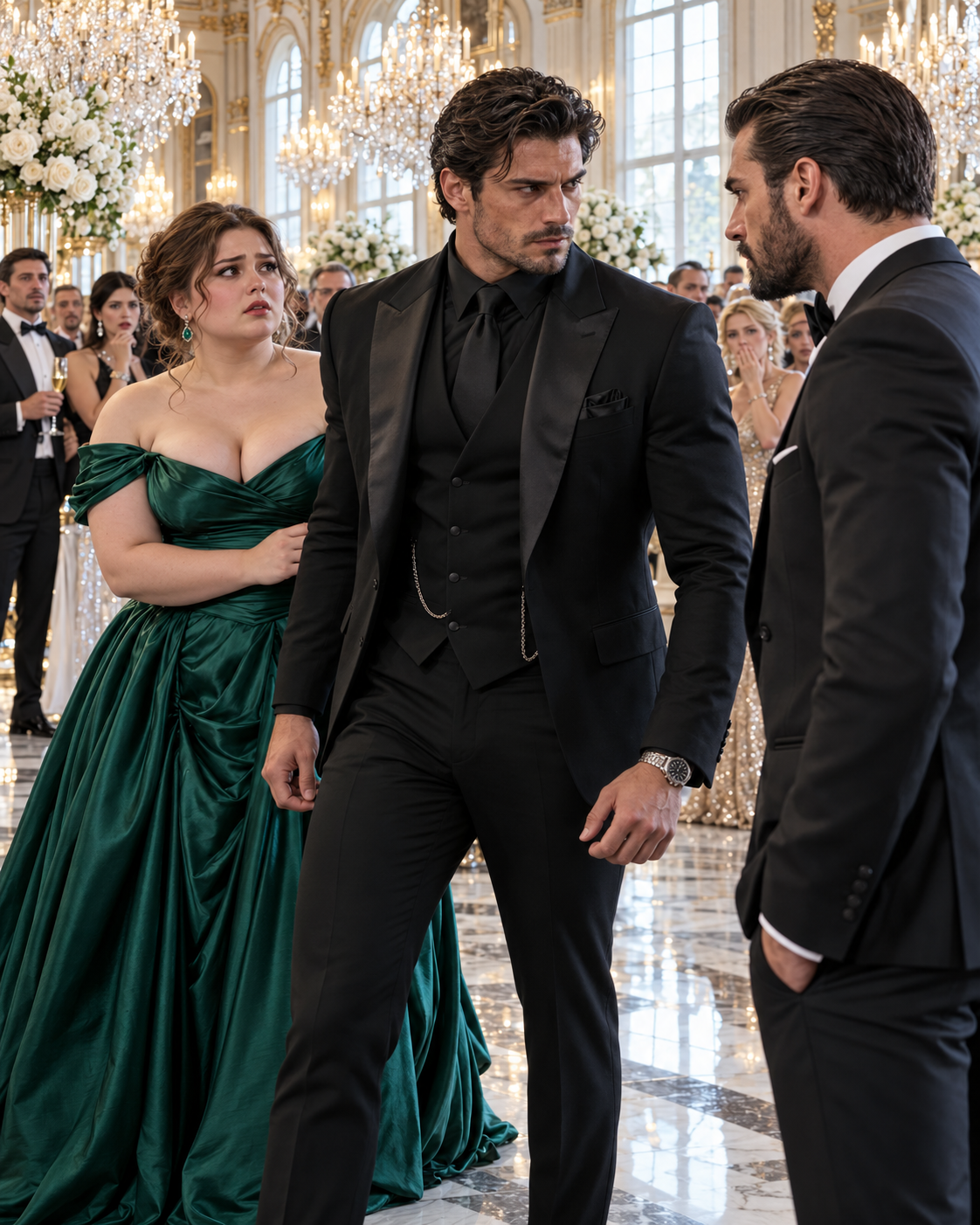
The safehouse sat deep in the Catskills, surrounded by bare trees and snow-packed roads.
Bridget tried to sleep and failed.
She tried to eat and managed only half a sandwich.
Every sound from the hallway made her wonder whether Marcus had realized they knew.
Around noon, Denny found her standing beside the kitchen window.
“You’re thinking too loudly,” he said.
Bridget gave him a tired look.
“That sounds medically impossible.”
“For you, maybe not.”
He handed her coffee.
It was made exactly the way she served his at the bakery.
One sugar.
A little cream.
She noticed.
Of course she noticed.
“You remembered.”
“I remember everything you give me.”
The answer landed more heavily than either expected.
For a moment, the war outside the walls seemed very far away.
Bridget looked down at the cup.
“Why did you really keep coming to the bakery?”
Denny leaned against the counter.
“At first?”
“Yes.”
“Because the coffee was terrible.”
She looked offended.
“It was not.”
“It was.”
“You drank it every morning.”
“I was committed to the experiment.”
Despite herself, Bridget laughed.
Denny smiled.
Then his voice softened.
“After the second week, it wasn’t the coffee.”
Bridget knew she should not ask.
She did anyway.
“What was it?”
“You.”
The word was simple.
That made it worse.
Or better.
She could not tell anymore.
Denny looked toward the window.
“Everyone in my world wants something.”
“Money?”
“Money, protection, access, fear.”
“And I wanted?”
“You wanted me to stop stealing the table near the outlet because your college customers needed it.”
Bridget smiled.
“You were there for three hours.”
“I was reading.”
“You were intimidating nineteen-year-olds.”
“They were loud.”
“They were studying.”
“They were losing.”
Her laugh faded into something gentler.
Denny looked at her again.
“You treated me like a man.”
“Were you expecting applause?”
“No.”
He paused.
“That was the problem.”
Before Bridget could answer, Calvin entered.
“Marcus moved.”
The moment was gone.
They followed Calvin into the surveillance room.
A monitor showed Marcus crossing the rear garage and entering a storage building.
He stayed inside for four minutes.
Then he returned carrying nothing.
Calvin had already sent two men to search the structure.
They found a second phone taped beneath a workbench.
On it was a draft message.
SHE WILL BE AT THE WAREHOUSE TONIGHT.
Denny read it once.
“Send it.”
Calvin looked at him.
“You sure?”
Bridget answered first.
“Yes.”
Calvin sent the message.
Victor’s reply arrived three minutes later.
GOOD.
BRING BARLOW TOO IF YOU CAN.
Denny’s expression hardened.
Bridget felt a chill.
Victor was not only expecting the exchange.
He wanted Denny there.
Which meant the warehouse was probably another trap.
At four in the afternoon, Bridget opened the encrypted drive again.
She searched Victor’s notes for the warehouse number.
This time she found something she had missed.
The bombing plan had two phases.
The bakery vans were only the first.
The second involved fuel storage near Denny’s shipping terminals.
If the vans exploded, emergency crews would be drawn toward the wrong side of the waterfront.
During the confusion, Victor’s men would ignite the fuel tanks.
The resulting fire would spread through three neighboring piers.
Hundreds of workers could be there.
Not criminals.
Dockworkers.
Truck drivers.
Security guards.
People who had nothing to do with Victor or Denny.
Bridget’s stomach turned.
“Denny.”
He came over.
She showed him the file.
For the first time since she had known him, Denny looked genuinely shaken.
“My night crew starts at nine.”
“Can you clear the terminals?”
“Not without Victor knowing.”
“Then make it look normal.”
Denny called his operations chief.
A freezing-pipe inspection was invented within minutes.
Workers would be sent home early.
Fuel shipments would be delayed.
No alarms.
No public evacuation.
Just an ordinary maintenance problem on an ordinary winter night.
By eight, the waterfront was nearly empty.
At nine-thirty, Bridget was inside the catering van.
Denny sat beside her.
Calvin drove.
Two more vehicles followed at a distance.
Marcus remained at the safehouse under silent observation, still believing he had fooled everyone.
The Manhattan skyline glowed beyond the river as they approached Brooklyn.
Bridget looked at the familiar streets passing outside.
For years, this city had been her whole world.
Her bakery.
Her customers.
Her apartment above the laundromat.
Now every block seemed connected to something darker.
Denny noticed her hands.
“You’re shaking.”
“So are you.”
He looked down.
She was right.
Only slightly.
But enough.
“You can still turn around,” he said.
“So can you.”
“I asked first.”
“I answered first.”
He exhaled through his nose.
“You’re impossible.”
“You’ve been buying muffins from me for six months.”
“They were good muffins.”
“That sounds like consent to the consequences.”
At 9:58, the van entered Victor’s warehouse.
The loading doors closed behind them.
Too quickly.
Bridget heard metal locks engage.
Calvin muttered something under his breath.
Denny’s hand moved toward the weapon beneath his coat.
“Not yet,” Bridget whispered.
They stepped out.
Victor stood beneath the warehouse lights with ten armed men.
He wore a charcoal suit and the same pleasant expression he had worn at the gala.
“Bridget.”
His voice echoed through the enormous building.
“You look tired.”
“I’ve had a difficult week.”
Victor smiled.
“Business ownership is stressful.”
Denny moved beside her.
“Enough.”
Victor’s eyes shifted toward him.
“Dennis.”
No one else called Denny that way.
It sounded deliberately disrespectful.
Victor spread his hands.
“I’m glad you came.”
“You asked.”
“I assumed Bridget would bring you.”
Bridget held up the document case.
“You want this or not?”
Victor looked at the case.
“Set it down.”
She did.
One of his men retrieved it and carried it to a table.
He opened it.
Inside was a duplicate flash drive.
Victor plugged it into a laptop.
For three seconds, nothing happened.
Then the screen went black.
Bridget smiled.
Victor looked at her.
“What did you do?”
“Locked your network.”
His calm finally cracked.
“You think this is funny?”
“No.”
She stepped forward.
“I think it’s finished.”
Victor laughed once.
“You have no idea what you walked into.”
He raised his hand.
Every armed man in the warehouse shifted.
Denny’s people responded instantly.
Weapons appeared from behind crates, catwalks, and loading bays where they had entered minutes earlier through a maintenance corridor.
Victor’s smile disappeared.
He had expected Denny to arrive with guards.
He had not expected the building itself to be compromised.
Then the lights went out.
Everything exploded into motion.
Bridget dropped behind a forklift as gunshots cracked through the darkness.
Emergency lights flashed red.
Someone shouted near the loading doors.
Calvin tackled one of Victor’s men.
Denny moved toward Bridget.
Then a figure stepped from behind the crates.
Marcus.
Bridget froze.
He had not stayed at the safehouse.
He had escaped.
And he was holding a gun aimed directly at Denny.
“Don’t,” Bridget shouted.
Denny turned.
Marcus fired.
The shot struck Denny high in the shoulder.
He fell hard.
Bridget moved before she thought.
She grabbed a metal baking tray from one of the catering crates and slammed it into Marcus’s wrist.
The gun hit the concrete.
Marcus spun toward her.
“You stupid—”
Bridget drove the tray into his face.
He stumbled backward.
Calvin reached them seconds later and took Marcus down.
Bridget dropped beside Denny.
Blood soaked through his shirt.
“I’m fine,” he said.
“You are bleeding on my shoes.”
“I’ll buy you new ones.”
“You’re unbelievable.”
Victor’s voice suddenly came through the warehouse speakers.
“Bridget.”
She looked up.
The office above the floor was lit.
Victor stood behind the glass.
“Come upstairs.”
Denny grabbed her wrist.
“No.”
Victor continued.
“If you don’t, the fuel tanks burn.”
Bridget went still.
Victor held up a remote detonator.
“He has a backup,” she said.
Denny tried to stand.
Pain forced him back down.
Bridget looked toward Calvin.
“Can you stop the signal?”
“Maybe.”
“How long?”
“Too long.”
Victor’s voice came again.
“Thirty seconds.”
Denny tightened his grip on Bridget.
“You are not going up there.”
She looked at him.
“For six months, you came into my bakery because I treated you like a man.”
His face changed.
“Bridget.”
“Now treat me like a woman who gets to choose.”
Then she stood.
She climbed the metal stairs slowly.
Victor waited inside the office.
When she entered, he locked the door behind her.
“You’ve caused me a great deal of trouble.”
“You started it.”
“I gave you opportunity.”
“You used my business.”
“I used what was available.”
Bridget looked at the detonator.
“You won’t press it.”
Victor smiled.
“You sound confident.”
“You need the ports.”
“I need Denny’s ports gone.”
“No.”
She shook her head.
“You need everyone to believe he destroyed himself.”
Victor’s expression shifted.
That was enough.
Bridget continued.
“The explosions were supposed to come from my bakery vans, not your people.”
Victor said nothing.
“You wanted police, federal agents, newspapers, everyone in New York to connect Denny to a bombing operation using a small local business.”
Victor’s eyes narrowed.
“And?”
“And if you detonate those tanks now, after the workers have been evacuated and your warehouse is surrounded, the story changes.”
For the first time, uncertainty appeared in his face.
“You’ll become the story.”
Victor looked through the glass.
Denny’s men had regained control of the warehouse floor.
Marcus was restrained.
Several of Victor’s men had surrendered.
Police sirens were audible in the distance.
Not bought officers.
Not Victor’s men.
Federal investigators.
Bridget had arranged that too.
Before leaving the safehouse, she had scheduled the encrypted payroll files to send automatically to three federal offices and one investigative journalist if she failed to cancel the transmission by ten-thirty.
Victor understood.
“You sent the drive.”
“Copies.”
His face hardened.
“You think the government will save you?”
“No.”
Bridget stepped closer.
“I think evidence will.”
Victor raised the detonator.
“You’re gambling with lives.”
“So are you.”
“I can still press this.”
“Then do it.”
The words shocked even Bridget.
Victor stared.
She forced herself not to move.
“If you press it, you prove every file is real.”
Victor’s thumb hovered.
“If you don’t, the authorities take you alive.”
“You think that’s a choice?”
“Yes.”
Her voice softened.
“Because one of those choices leaves innocent people breathing.”
Something in Victor’s face changed then.
Not remorse.
Men like him did not discover morality in the final minute.
But they understood survival.
He lowered the remote slightly.
That was when Denny appeared at the office door.
Pale.
Bleeding.
Furious.
“Step away from her.”
Victor turned.
Bridget moved.
She grabbed the remote with both hands.
Victor fought her for it.
The device fell.
Denny kicked it beneath the desk.
Victor lunged.
Denny struck him once.
Then again.
Years of rivalry, betrayal, fear, and rage seemed to gather in that single moment.
Denny raised his hand a third time.
Bridget caught his arm.
“Stop.”
He looked at her.
Victor lay on the floor, stunned and bleeding.
“You don’t need to become him to defeat him,” she said.
Denny breathed heavily.
Sirens grew louder outside.
For several seconds, Bridget did not know which man would win inside him.
Then Denny lowered his hand.
By eleven, federal agents had control of the warehouse.
Victor Rossi was arrested along with eleven associates.
Marcus survived and agreed to cooperate within forty-eight hours.
The encrypted drive exposed bribery networks, shell companies, money laundering accounts, and the entire waterfront attack plan.
Several city employees resigned before they could be charged.
Others were not fast enough.
Denny spent two days in a private hospital under a different name.
Bridget spent most of those two days arguing with him about pain medication.
“You are not qualified to make medical decisions,” he said.
“I run a bakery.”
“That proves my point.”
“I work with temperatures, measurements, and chemistry.”
“You decorate cupcakes.”
“And yet I’m still smarter than you.”
He smiled.
It hurt his shoulder.
She told him that served him right.
The war everyone had feared never came.
Without Victor’s network, his organization broke apart.
Some men fled.
Others surrendered.
A few tried to take control and discovered that New York had already changed around them.
Denny changed too.
Slowly.
Not dramatically.
Not cleanly.
But deliberately.
He began shutting down the parts of his business that depended on fear, extortion, and silence.
It cost him money.
It cost him allies.
It nearly cost him his life twice.
Bridget never pretended transformation erased history.
She made that clear.
“You don’t get a medal for becoming less terrible.”
“I wasn’t expecting one.”
“Good.”
“What about a muffin?”
“We’ll discuss it.”
Six months later, Bridget reopened her bakery.
The old sign had been replaced.
The kitchen was larger.
The ovens were new.
The catering business was now legitimate, audited, insured, and so obsessively documented that Bridget’s accountant occasionally begged her to relax.
She refused.
On opening morning, a line stretched halfway down the Brooklyn block.
Neighbors came first.
Then former customers.
Then reporters.
Then people who had heard some wildly exaggerated version of the story.
By ten, Bridget was exhausted.
By noon, she was happy.
At twelve-fifteen, the bell above the door rang.
Denny walked in.
No guards.
No expensive suit.
Just a dark coat and the expression of a man hoping the coffee had improved.
Bridget pointed toward the table near the outlet.
“Don’t even think about it.”
Denny stopped.
“Still reserved for students?”
“Yes.”
“They’re loud.”
“They’re paying customers.”
“So am I.”
“You haven’t ordered anything.”
He stepped to the counter.
“One coffee.”
“One sugar?”
“A little cream.”
“And?”
Denny looked at the display case.
“A muffin.”
Bridget raised an eyebrow.
“Blueberry?”
He shook his head.
“Surprise me.”
She chose cinnamon.
He paid.
Actually paid.
Bridget stared at the bills.
Denny sighed.
“You’re going to frame that, aren’t you?”
“Possibly.”
He moved toward a smaller table near the window.
Bridget watched him sit.
Months earlier, she had believed strength meant surviving whatever people forced upon you.
Victor had taught her how dangerous that belief could become.
Denny had taught her something different, though not intentionally.
Protection was not the same as possession.
Love was not someone standing in front of you forever.
Sometimes love meant standing beside you when you chose to face something yourself.
And courage was not the absence of fear.
Bridget had been terrified in that warehouse.
She had been terrified at the gala.
She had been terrified every time Victor’s name appeared on a document connected to her bakery.
But fear had never made her weak.
Silence would have.
She poured herself a coffee and walked over to Denny’s table.
“Move.”
He looked up.
“I thought this was my table.”
“You lost ownership rights years ago.”
He shifted his chair.
Bridget sat across from him.
Outside, Brooklyn moved past the window in all its noisy, impatient life.
Delivery trucks double-parked.
A bus driver leaned on the horn.
Someone shouted across the street.
A dog barked at absolutely nothing.
It was ordinary.
Beautifully ordinary.
Denny broke the muffin in half.
“You know,” he said, “I think the coffee actually got better.”
Bridget stared at him.
“Leave.”
He laughed.
She did too.
For a while, neither of them spoke.
They did not need to.
The city outside would always contain men like Victor.
People who mistook intimidation for power and control for respect.
There would always be systems that rewarded silence.
There would always be moments when looking away seemed easier.
But Bridget had learned something she would carry for the rest of her life.
Being underestimated could become an advantage.
Being afraid could coexist with being brave.
And no one, no matter how powerful, had the right to decide what role another person would play in their story.
Victor had looked at Bridget and seen a convenient bakery, an obedient woman, and a disposable piece in someone else’s war.
Denny had once looked at her and seen someone he needed to protect.
In the end, they had both been wrong.
Bridget was never a piece on the board.
She was the person who changed the game.
And sometimes, the most dangerous thing in a city built on fear is not a louder threat or a bigger army.
Sometimes it is one ordinary person who finally decides that fear will no longer make their choices.
Bridget lifted her coffee toward Denny.
“To terrible coffee.”
Denny raised his cup.
“To dangerous bakers.”
She smiled.
And outside the bakery window, New York kept moving.
This time, Bridget Hill was moving with it.
Three weeks after the bakery reopened, Bridget began to believe the worst was finally behind them.
She was wrong.
It started with a letter that arrived without a return address.
There was no threat inside.
Only a photograph.
It showed Bridget leaving the bakery the previous evening.
On the back, someone had written three words.
ROSSI WASN’T ALONE.
Bridget read the sentence twice.
Then a third time.
Her hands did not shake.
That frightened her more than if they had.
She locked the bakery office door and called Denny.
He arrived twelve minutes later.
No coat.
No smile.
No argument about traffic.
He took the photograph from her and studied it beneath the office light.
“Where was this?”
“In the morning mail.”
“Who touched the envelope?”
“Me, the delivery guy, probably half of Brooklyn.”
Denny looked at her.
“That was almost funny.”
“It wasn’t meant to be.”
He flipped the photograph over again.
For months, federal investigators had claimed Victor Rossi’s organization was collapsing.
Most of his senior people had been arrested.
Several financial pipelines had been frozen.
His remaining crews were fighting among themselves.
But criminal organizations did not disappear neatly.
They fractured.
And fractures could be dangerous.
Bridget leaned against her desk.
“So who’s left?”
“I don’t know.”
“That’s not comforting.”
“I’m not trying to comfort you.”
“Good.”
Denny looked toward the bakery floor beyond the office glass.
Customers were laughing near the window.
A mother was cutting a cupcake in half for her son.
Two teenagers were arguing over a laptop charger.
Normal life continued ten feet away.
Denny lowered his voice.
“Close for the day.”
“No.”
“Bridget.”
“No.”
“Someone photographed you.”
“And if I close every time someone wants me afraid, then this place belongs to them again.”
Denny stepped closer.
“This isn’t pride.”
“Neither is this.”
She tapped the photograph.
“It’s leverage.”
He studied her for a long moment.
“What do you see?”
“I see someone who wants us to react.”
“You think they’re watching the bakery?”
“I think they want us to think they are.”
A slow understanding came over Denny’s face.
Bridget continued.
“If they wanted me dead, they wouldn’t mail a photograph.”
“They want attention.”
“Or movement.”
Denny nodded once.
“So we don’t move.”
“Exactly.”
For the rest of the day, they did nothing.
At least publicly.
Privately, Denny contacted Calvin.
Federal investigators were informed.
The photograph was scanned.
Traffic cameras were reviewed.
Mail routes were checked.
By evening, they had their first lead.
The photo had been printed at a twenty-four-hour pharmacy in New Jersey.
The security footage showed a woman in a gray coat using the machine just after midnight.
She wore a baseball cap pulled low.
But the cameras caught her face for less than two seconds.
It was enough.
Her name was Elena Rossi.
Victor’s younger sister.
Bridget had never heard of her.
Denny had.
“She stayed out of the business.”
“Apparently not far enough.”
“She was a lawyer.”
“That sounds useful for a criminal family.”
“She handled legitimate companies.”
Bridget folded her arms.
“Does anyone in your world know what legitimate means?”
Denny almost smiled.
“Occasionally.”
Elena Rossi had disappeared two days before Victor’s arrest.
Her apartment was empty.
Her bank accounts untouched.
Her phone disconnected.
No warrants had ever been issued against her because there was no evidence tying her directly to Victor’s crimes.
Until now.
The next message came forty-eight hours later.
This time it was an email sent to Bridget’s bakery account.
COME ALONE IF YOU WANT THE TRUTH.
Beneath the sentence was an address.
An abandoned church in Queens.
Denny stared at the screen.
“No.”
Bridget sighed.
“We’ve done this conversation.”
“And I’m still right.”
“You were shot the last time.”
“That improves my argument.”
“It proves you’re terrible at timing.”
Denny stood.
“You are not meeting Victor Rossi’s sister alone.”
“She knows we won’t let me.”
“Exactly.”
“So we don’t give her what she expects.”
Denny looked wary.
Bridget smiled faintly.
“Relax.”
“I dislike that word when you say it.”
The plan was less dangerous than the warehouse.
That did not make Denny happier.
Bridget would enter the church alone.
Denny, Calvin, and federal agents would remain close enough to intervene.
She would wear a recorder.
The building would be monitored from three sides.
At eight that evening, Bridget stepped through the church doors.
Dust floated through shafts of moonlight.
Old pews stood beneath a cracked ceiling.
The altar had been stripped years ago.
Elena Rossi waited in the second row.
She looked nothing like Victor.
She was smaller.
Younger.
Tired.
There was no theatrical smile.
No expensive suit.
Only a dark coat and a face that looked as if sleep had become unfamiliar.
“You came.”
“You invited me.”
Elena gestured toward the pew.
Bridget remained standing.
“I prefer exits.”
“That’s smart.”
“You photographed me.”
“Yes.”
“Less smart.”
Elena gave a humorless laugh.
“You think I’m here to threaten you.”
“I think you wanted me to think that.”
For the first time, Elena looked impressed.
“My brother underestimated you.”
“He wasn’t the only one.”
Elena looked down at her hands.
“I need your help.”
Bridget said nothing.
Elena reached inside her coat slowly and placed a folder on the pew.
“Victor kept insurance.”
“On what?”
“Everyone.”
She opened the folder.
Inside were account numbers, coded names, photographs, and shipping records.
Bridget recognized some immediately.
Denny’s former associates.
City officials.
Business owners.
Two federal employees.
One judge.
Elena’s voice dropped.
“Victor knew he might lose.”
“So he prepared leverage.”
“Yes.”
“Why give this to me?”
“Because he prepared something else too.”
Elena removed a small black notebook.
“My brother believed prison was temporary.”
Bridget felt the air change.
“He has people outside.”
“Not many.”
“Enough?”
Elena met her eyes.
“Enough to finish one last operation.”
Bridget’s throat tightened.
“What operation?”
Elena hesitated.
Then she said the word that made everything else disappear.
“Your bakery.”
Bridget’s face hardened.
Elena continued quickly.
“Not to destroy it.”
“Then what?”
“To use it.”
Bridget understood before Elena finished.
The bakery had become famous after the trial leaks and media reports.
It had reporters, tourists, community leaders, politicians, and investigators passing through almost every week.
No one would suspect a delivery from Bridget Hill’s business anymore.
Because everyone believed that chapter was over.
Victor planned to turn the bakery into cover one final time.
Not for explosives.
For evidence.
Fabricated evidence.
Financial records.
Weapons.
Encrypted files.
All planted to make it appear that Bridget and Denny had engineered the entire operation from the beginning.
If successful, it would destroy their credibility and poison every case built from the original flash drive.
Victor would not need to escape prison.
He would only need to make everyone doubt the truth.
Bridget stared at Elena.
“When?”
“Tomorrow.”
“Who?”
“I don’t know.”
“You expect me to believe that?”
“I expect you to understand that Victor never trusted anyone with the whole plan.”
Bridget looked toward the broken stained-glass windows.
“Why help me?”
Elena’s voice changed.
“Because my brother destroyed every person who loved him.”
There was no anger in the statement.
Only exhaustion.
“My father covered for him.”
“He died owing money to people Victor betrayed.”
“My mother defended him.”
“She spent her last years afraid to answer the phone.”
“I cleaned his companies because I thought I could contain the damage.”
Elena swallowed.
“I was wrong.”
Bridget sat down slowly.
Elena looked at her.
“There comes a point when loyalty becomes cowardice.”
The words stayed between them.
Bridget thought about Denny.
About fear.
About choosing.
About the difference between standing beside someone and helping them avoid consequences.
“What do you want?”
“I want it to end.”
“Then testify.”
Elena looked away.
“They’ll destroy me.”
“Maybe.”
“That’s easy for you to say.”
“No.”
Bridget’s voice remained calm.
“It isn’t.”
Elena looked back.
Bridget leaned closer.
“I stood in a warehouse while your brother held a detonator.”
“I know what fear feels like.”
Elena said nothing.
“But if you want this to end, you can’t hand me a folder and disappear.”
“You have evidence.”
“I have paper.”
“Then what do you want?”
“The truth with a name attached to it.”
Elena stared at her.
“My name?”
“Yes.”
Outside the church, Denny listened through the recorder.
He understood exactly what Bridget was doing.
She was not threatening Elena.
She was offering her a choice.
The same choice Bridget had eventually made herself.
Silence or consequence.
Fear or truth.
Elena closed her eyes.
When she opened them, she looked older.
“I’ll testify.”
The next morning, federal agents quietly surrounded the bakery.
No uniforms.
No police tape.
No interruption to customers.
Bridget opened at six as usual.
At seven-fifteen, the delivery truck arrived.
It carried flour.
Sugar.
Butter.
And two sealed crates that were not on the invoice.
The driver claimed they had been added by the warehouse.
Bridget smiled.
“Leave them by the freezer.”
The man hesitated.
“Don’t you want to check them?”
“I trust my suppliers.”
She turned away.
The driver relaxed.
That was his mistake.
Agents arrested him two blocks later.
The crates contained unregistered weapons, falsified financial documents, and a laptop containing forged communications between Bridget and Denny.
It was enough.
The final remnants of Victor’s network were identified within days.
More arrests followed.
This time there was no dramatic confrontation.
No warehouse.
No gunfire.
No detonator.
Just evidence.
Testimony.
Records.
Names.
Sometimes the quiet ending was the strongest one.
Victor Rossi was convicted on additional conspiracy charges.
Elena testified for three days.
Her cooperation exposed networks that had survived for years because everyone involved assumed fear would keep people silent.
It did not.
Not anymore.
Denny attended the final hearing from the back row.
Bridget sat beside him.
When Victor was led away, he turned once.
His eyes found Bridget.
There was no smile.
No threat.
Only disbelief.
He still could not understand how a baker had beaten him.
Bridget did not need him to understand.
Outside the courthouse, reporters waited.
Cameras flashed.
Questions came from every direction.
“Ms. Hill, do you consider yourself a hero?”
“Were you afraid?”
“Do you believe organized crime in New York is changing?”
“What happens next?”
Bridget stopped.
For months, other people had told her story.
The victim.
The witness.
The baker caught between two criminal organizations.
The woman protected by Dennis Barlow.
She looked at the cameras.
Then she answered.
“I was afraid almost every day.”
The reporters quieted.
“Courage isn’t being fearless.”
“It’s deciding fear doesn’t get the final vote.”
Denny watched from behind her.
Bridget continued.
“And no one should have to become extraordinary just to deserve safety.”
“We should build places where ordinary people can tell the truth without being destroyed for it.”
That quote appeared in newspapers across the country the next morning.
Bridget hated the photograph they chose.
Denny bought six copies.
She threatened to ban him from the bakery.
He framed one.
A year passed.
Then another.
The bakery expanded into two more Brooklyn locations.
Bridget hired women rebuilding their lives after abusive workplaces, bad marriages, and financial hardship.
She created a small grant for local business owners who had been pressured or exploited by powerful people.
She named it The Open Door Fund.
No one knew Denny quietly supplied half the original money.
Bridget knew.
She made him sign legal documents proving it came from legitimate income.
He complained for two weeks.
She did not care.
Denny’s life changed more slowly.
He sold his remaining interests in the shipping operations that depended on intimidation.
He cooperated with investigators where he could.
He paid fines.
He lost friends.
He gained enemies.
He also discovered that sleeping without armed men outside his bedroom was surprisingly pleasant.
One rainy afternoon, three years after the gala, he entered Bridget’s original bakery.
She was behind the counter arguing with a supplier.
Nothing had changed.
Everything had changed.
Her hair was tied back.
Flour covered one sleeve.
There were laugh lines around her eyes that had not been there before.
Denny waited.
Bridget finished the call.
“You’re late.”
“For what?”
“My coffee break.”
“You never told me.”
“You should know.”
“That seems unfair.”
“Life is difficult.”
He walked toward the counter.
There was a small box in his coat pocket.
He had carried it for nine days.
He had nearly taken it out six times.
Bridget noticed immediately.
“What are you hiding?”
“Nothing.”
“You’re terrible at lying.”
“That is objectively false.”
“Denny.”
He sighed.
“You ruin everything.”
“I improve everything.”
“That’s debatable.”
He reached into his pocket.
Bridget’s expression changed.
The bakery suddenly seemed very quiet.
Denny placed the box on the counter.
He did not kneel.
Not yet.
Bridget looked at the box.
Then at him.
“Are you proposing during business hours?”
“I’ve survived gunshots with less criticism.”
“You chose three-thirty.”
“I panicked.”
That made her laugh.
And somehow, that made it possible for him to breathe.
Denny opened the box.
The ring was simple.
Elegant.
No enormous diamond.
No display of power.
Bridget appreciated that more than she could explain.
“I spent most of my life thinking love meant keeping people close enough that nothing could touch them,” he said.
Bridget listened.
“I was wrong.”
He took her hand.
“You taught me that loving someone means trusting who they are when you cannot control what happens.”
Her eyes filled.
Denny continued.
“I don’t want to protect you from your life.”
“I want to live it beside you.”
For once, Bridget had no clever response.
Denny smiled nervously.
“This is where you answer.”
“I know.”
“You’re taking a long time.”
“I’m enjoying it.”
“Bridget.”
“Yes.”
He blinked.
“Yes?”
“Yes.”
The bakery erupted.
Denny turned.
Every customer had apparently been listening.
Someone near the window started clapping.
One of Bridget’s employees screamed.
An elderly customer shouted, “About time.”
Bridget covered her face.
“You planned this.”
“I absolutely did not.”
“That somehow makes it worse.”
Denny laughed.
Six months later, they married in a small ceremony in Brooklyn.
No ballroom.
No Manhattan elite.
No men whispering in corners.
Just family, friends, bakery employees, dockworkers, neighbors, and a few people who had survived enough to understand why ordinary happiness mattered.
Calvin gave a speech that lasted too long.
Elena attended quietly.
She had entered witness protection after testifying and was building a new life under another name.
Bridget hugged her before she left.
Neither woman mentioned Victor.
They did not need to.
Some endings are not about forgiveness.
Some are about refusing to carry someone else’s darkness forward.
Years later, people still told the story of Bridget Hill and Dennis Barlow.
Most versions were wrong.
They made Denny larger.
More dangerous.
More heroic.
They made Bridget smaller.
More helpless.
More grateful to be rescued.
Bridget hated those versions.
Because the truth was better.
Denny had saved her life more than once.
Bridget had saved his too.
But neither had rescued the other from themselves.
They had done something harder.
They had expected each other to change.
They had allowed each other to remain accountable.
They had learned that love without freedom becomes control.
Protection without respect becomes possession.
Loyalty without truth becomes corruption.
And courage without compassion becomes another kind of violence.
One winter morning, years after everything ended, Bridget opened the bakery before sunrise.
Snow covered Brooklyn.
The street was quiet.
Denny sat at the window with coffee.
The same table.
The same ridiculous habit.
Bridget placed a cinnamon muffin in front of him.
“You didn’t order this.”
“I know.”
“Is it poisoned?”
“Possibly.”
He broke it in half and offered her a piece.
She sat beside him.
Outside, the city began to wake.
A delivery truck passed.
A bus stopped at the corner.
Someone raised the metal gate of a grocery store across the street.
Ordinary sounds.
Ordinary people.
Ordinary life.
Bridget had once thought ordinary meant small.
She knew better now.
Ordinary was what people fought to return to after chaos.
It was breakfast before work.
A door unlocked safely in the morning.
A business no one could steal.
A person allowed to say no.
A family allowed to sleep without fear.
There was nothing small about any of it.
Denny looked through the window.
“Do you ever think about that night?”
“The gala?”
“The warehouse.”
Bridget considered the question.
“Sometimes.”
“Do you regret any of it?”
“Yes.”
He turned toward her.
“What?”
“I regret not hitting Marcus harder with that tray.”
Denny stared at her.
Then he laughed so loudly a pedestrian outside looked through the glass.
Bridget smiled.
Some memories remained painful.
Some scars remained.
Healing had never meant pretending the past disappeared.
It meant the past stopped choosing the future.
That was the lesson Bridget carried with her.
Power was not the ability to make people fear you.
Power was the ability to choose what fear could not take away.
Your voice.
Your dignity.
Your kindness.
Your right to walk away.
Your right to begin again.
Victor Rossi had built his life believing fear could control everyone.
In the end, fear controlled only him.
Bridget built hers differently.
One honest choice at a time.
One open door at a time.
One morning at a time.
And as sunlight slowly spread across the snowy Brooklyn street, Bridget looked at the man beside her, the bakery around her, and the life she had fought to claim.
There were no gunshots.
No threats.
No enemies waiting in the shadows.
Only coffee.
Warm bread.
Snow on the windows.
And a future that belonged to no one else.
For Bridget Hill, that was not merely peace.
It was victory.
THE END.