In New York City, where loyalty can be bought, reputations can be destroyed overnight, and powerful men settle their differences behind closed doors, Kieran had survived enough betrayals to believe he knew exactly whom to trust.
The voice that emerged from the speakers was unmistakable, and for the first time that evening, Kieran’s carefully controlled expression began to change.
It belonged to Victor’s younger brother, Daniel Voss, a man who had supposedly disappeared from New York nearly eighteen months earlier.
But Daniel was not the person whose voice made Kieran’s blood run cold.
A second voice followed, calm and deliberate, issuing instructions about medication, surveillance cameras, and the precise moment Kieran was supposed to appear physically incapable of leading his organization.
Kieran recognized that voice immediately.
It belonged to Dr. Malcolm Reeves, the physician who had overseen his recovery after a devastating accident three years earlier.
The same physician who had assured him that his occasional dizziness, muscle weakness, and unexplained exhaustion were unfortunate consequences of an old injury.
The same man who had repeatedly insisted that Kieran needed to increase his medication whenever his condition seemed to improve.
Around the conference table, the assembled crime bosses remained utterly silent.
Even men accustomed to deception had difficulty concealing their shock.
Victor stared at the screen as though the glowing images might somehow disappear if he refused to acknowledge them.
Then the recording continued.
Daniel appeared beside Dr. Reeves inside a private medical office, carrying a leather folder filled with documents.
“We don’t need to destroy him,” Reeves said. “We only need everyone to believe he can no longer protect himself.”
Daniel hesitated before answering.
“And the board?”
“Victor will handle them. Once Kieran is declared unfit, the transition will look entirely legitimate.”
A quiet murmur spread through the room.
One of the older bosses, Anthony Moretti, slowly removed his glasses and placed them beside his untouched drink.
“Legitimate?” he repeated, his voice dangerously soft.
Nobody answered.
On the screen, Reeves opened the folder and removed a series of medical assessments bearing Kieran’s name.
Each document described a man suffering from progressive neurological deterioration.
Every report carried an official signature.
Every conclusion was false.
Poppy watched Kieran carefully.
She had expected anger, perhaps even an explosive confrontation.
Instead, something far more painful crossed his face.
Recognition.
For months, he had believed his own body was betraying him.
He had questioned his judgment, doubted his strength, and quietly wondered whether the powerful life he had built was finally slipping beyond his control.
He had trusted the physician.
And he had trusted Victor.
The betrayal was not merely political.
It was personal.
“Turn it off,” Victor demanded suddenly.
Poppy did not move.
Victor slammed his palm against the table.
“I said turn it off!”
Kieran finally looked at him.
“You’ve given enough orders tonight.”
His voice was barely louder than a whisper, yet everyone heard it.
Victor opened his mouth, then closed it again.
For the first time in years, he seemed unsure of what to say.
Poppy reached toward the controls and paused the recording.
“There is more,” she said.
Anthony Moretti leaned forward.
“Then we should hear it.”
But Poppy shook her head.
“Before I show the rest, everyone in this room needs to understand something.”
Victor gave a bitter laugh.
“You’re an archery instructor, sweetheart. You don’t understand how things work here.”
Poppy turned toward him.
“You’re right about one thing. I wasn’t raised in your world.”
Her voice steadied.
“My father worked in emergency medicine for thirty-two years. He taught me that when someone is hurt, you help them first and ask questions later.”
She glanced at Kieran.
“He also taught me that the people who appear strongest are sometimes the ones who need someone to notice they’re suffering.”
Kieran lowered his eyes.
Poppy continued.
“Three years ago, my father found Kieran after a highway accident outside Philadelphia. He was working with an emergency response team that night.”
She paused.
“Kieran was barely conscious. My father stayed with him until the ambulance reached the hospital, even when other people warned him that getting involved could bring trouble.”
Victor’s expression changed.
“And your point?”
“My father saved his life,” Poppy replied. “But he never told me the whole story of what happened afterward.”
She reached into her jacket and removed a folded letter.
“I found this among his belongings after he passed away last winter.”
Kieran immediately recognized the handwriting on the envelope.
Thomas Mercer.
The man he had spent years trying to thank properly.
The man who had refused every expensive gift Kieran offered.
Poppy unfolded the letter carefully.
“My father wrote that he was afraid someone would eventually try to finish what the accident had started.”
A subtle shift passed across Kieran’s face.
“What accident?” Anthony asked.
Poppy looked toward him.
“The one everyone believed was caused by a truck driver falling asleep.”
She turned the security monitor back on.
A photograph appeared.
It showed the wreckage of a black SUV on a rain-soaked Pennsylvania highway.
Beside it was a second image, taken from a traffic camera several miles before the collision.
Kieran’s vehicle was traveling in the right lane.
A silver sedan followed closely behind.
The sedan’s registration number was clearly visible.
Poppy clicked to the next image.
The vehicle belonged to a private security company controlled by Daniel Voss.
Victor went completely still.
Anthony Moretti rose halfway from his chair.
“Victor,” he said slowly, “tell me that isn’t what I think it is.”
Victor spread his hands.
“Anyone can fabricate photographs.”
Poppy nodded.
“That’s why I didn’t bring only photographs.”
She opened another file.
An insurance investigation appeared, including the original accident reconstruction report.
The report had been marked confidential and buried after a private settlement.
But one sentence had been highlighted.
The evidence suggested that the SUV had been deliberately forced off the road.
Kieran stared at the screen.
For three years, he had remembered only fragments of that night.
Rain against the windshield.
Headlights appearing suddenly beside him.
The terrible sound of breaking glass.
Then Thomas Mercer’s voice telling him to stay awake.
He had accepted the official explanation because recovering had seemed more important than revisiting the accident.
Now he understood why Victor had discouraged him from asking questions.
“You knew,” Kieran said.
Victor said nothing.
“You stood beside my hospital bed and told me it was an accident.”
Still, Victor remained silent.
Kieran took one step closer.
“You looked me in the eyes.”
Something in those words finally unsettled the room.
For all his reputation, Kieran had never demanded blind devotion from his associates.
He had demanded one thing above everything else.
If someone stood beside him, their word had to mean something.
Victor had violated that principle in the cruelest possible way.
But just as Kieran approached the table, Victor’s phone vibrated.
He glanced down instinctively.
Poppy noticed.
It was the briefest movement, almost invisible beneath the edge of his sleeve.
Yet she had spent years teaching athletes to recognize the difference between intentional movement and nervous reaction.
Victor wasn’t checking a message.
He was waiting for something.
Poppy looked toward the conference room doors.
Two security guards stood outside.
Neither had moved since the presentation began.
But one of them was now touching the communication device near his ear.
A warning tightened in her chest.
“Kieran,” she said quietly.
He turned.
“Don’t let him leave.”
Victor’s expression hardened.
Then the lights went out.
The conference room plunged into darkness.
Someone shouted.
A chair scraped violently across the floor.
Beyond the heavy doors, hurried footsteps echoed through the hallway.
For several seconds, nobody could distinguish one figure from another.
Poppy dropped behind the conference table as a glass shattered somewhere nearby.
Her heart hammered against her ribs.
She had expected Victor to deny the evidence.
She had expected him to threaten her.
But she had not expected him to have an escape plan prepared inside Kieran’s own building.
Emergency lights flickered on, bathing the room in a dim red glow.
Victor was already halfway to the side entrance.
Kieran moved after him.
But Poppy caught his arm.
“Wait.”
He looked at her sharply.
“He’s getting away.”
“That’s what he wants you to think.”
A second later, the side entrance opened.
A man in a security uniform appeared, holding a radio.
“Mr. Voss, this way.”
Victor rushed toward him.
Then a voice rang out from the opposite corridor.
“Nobody moves.”
A tall woman wearing a dark suit stepped through the main entrance, accompanied by several private security officers.
Kieran recognized her instantly.
Elena Ward.
His longtime head of security, who had been sent to Boston two days earlier on what Victor claimed was urgent business.
She looked directly at Victor.
“Your access has been revoked.”
Victor stopped.
For the first time, genuine fear appeared in his eyes.
“Who authorized that?”
“I did,” Kieran answered.
Victor turned slowly.
Kieran stood beside Poppy, his expression colder than the October rain striking the windows outside.
Elena approached the conference table and placed a sealed folder in front of Anthony Moretti.
“Before tonight’s meeting, Miss Mercer contacted me with evidence that our internal security system had been compromised.”
Poppy looked down, suddenly aware of every face watching her.
Elena continued.
“We began verifying the original files independently. We also discovered unauthorized changes to Mr. Kieran’s medical records and several financial transfers connected to Dr. Reeves.”
Victor stared at her.
“You were supposed to be in Boston.”
“I was,” Elena replied. “Until I learned that the order sending me there had been forged.”
Anthony slowly opened the folder.
Inside were bank statements, security reports, and authenticated copies of the original recordings.
He examined several pages before looking toward the other bosses.
“This isn’t a misunderstanding.”
Victor’s breathing grew heavier.
“All of you are being manipulated.”
“By whom?” Anthony asked.
Victor pointed toward Poppy.
“Her. She appears out of nowhere, gets close to Kieran, and suddenly everyone believes she has uncovered some grand conspiracy.”
Poppy felt the accusation strike harder than she expected.
She had known he would question her motives.
But hearing him reduce her father’s sacrifice to a convenient lie awakened something fierce inside her.
“I didn’t appear out of nowhere,” she replied.
She stepped closer to the table.
“Your people approached my father before he died.”
Kieran looked at her.
Poppy nodded slowly.
“He received anonymous calls asking what he remembered about the accident. Someone even offered him money to change his account.”
She swallowed.
“He refused.”
Victor’s eyes flickered.
“And three months later,” Poppy continued, “his medical clinic lost an important funding agreement.”
She placed another document beside the folder.
“The company that arranged the cancellation belonged to one of your business partners.”
Kieran’s jaw tightened.
“Why didn’t you tell me?”
“Because I didn’t know whom to trust.”
The answer hurt him more than he wanted to admit.
Poppy continued.
“When I started coaching you, I thought perhaps I could find out why my father had been so worried during his final year.”
Her eyes shone, but she refused to let her voice break.
“Then I saw what was happening to you.”
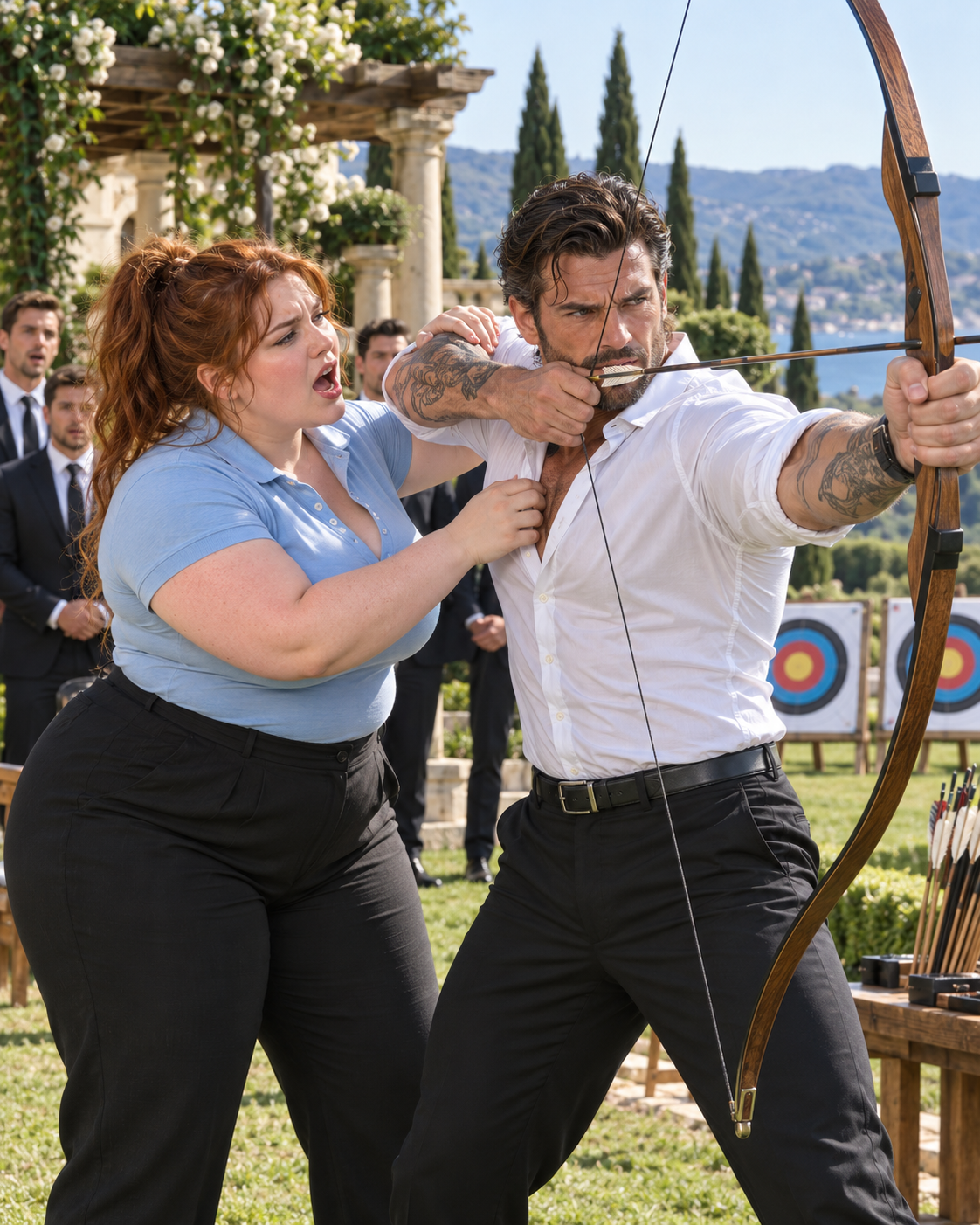
For a moment, the room seemed to disappear around them.
Kieran remembered the countless afternoons in his private training room.
Poppy standing beside him, correcting his posture.
Her patient instructions.
Her refusal to treat him like a fragile man simply because he struggled.
He had assumed she was unusually dedicated to her profession.
Now he understood that she had been carrying questions of her own.
“And you stayed,” he said softly.
Poppy nodded.
“I stayed.”
Victor suddenly laughed.
It was an ugly sound.
“How touching.”
Everyone turned toward him.
“You think this is about loyalty? You think the world rewards people for doing the right thing?”
He shook his head.
“Kieran built an empire while the rest of us did the work. I negotiated the deals. I kept enemies away. I cleaned up problems nobody wanted to acknowledge.”
His voice grew louder.
“And what did I get?”
Kieran watched him without interruption.
Victor spread his arms.
“A lifetime of standing one step behind him.”
Anthony Moretti’s expression darkened.
“So you decided to manufacture an illness?”
“I decided to correct an imbalance.”
“No,” Kieran said.
Victor stopped speaking.
“You decided that wanting something gave you the right to take it.”
For a moment, the two men looked at each other across fifteen years of shared history.
Then Kieran asked the question that had been haunting him since the recording began.
“Was the accident your idea?”
Victor’s confidence finally cracked.
He glanced toward the open doorway.
Elena stepped into his path.
“Answer him,” Anthony said.
Victor looked back at Kieran.
“It wasn’t supposed to happen that way.”
The room fell silent.
Kieran felt something inside him turn to ice.
“What wasn’t?”
Victor lowered his head.
“Daniel was only supposed to frighten you.”
The words seemed to hang in the air.
“He was supposed to force you to reconsider the expansion into Philadelphia. You were taking risks, making enemies, ignoring advice.”
Kieran stared at him.
“So you sent your brother after my car.”
Victor said nothing.
“And when I nearly died?”
Victor’s shoulders sagged.
“I panicked.”
Kieran waited.
“I knew that if you discovered the truth, everything was finished.”
“So you brought Reeves into it.”
Victor looked away.
“He owed me a favor.”
Poppy felt sick.
Months of unnecessary medication.
Months of fear.
Months of convincing Kieran that his own body could no longer be trusted.
The conspiracy had not started with a plan to take his position.
It had begun with a man’s refusal to admit responsibility for a terrible mistake.
And each lie had demanded another.
Kieran stepped away from Victor.
For years, he had imagined betrayal arriving with a threat, a weapon, or an open declaration of war.
He had never imagined it arriving with concerned expressions and reassuring words from people he called friends.
“Elena,” he said.
She nodded.
“The authorities have already received the evidence.”
Victor looked up sharply.
“What?”
Kieran faced him.
“I’m not turning tonight into another secret that follows us for twenty years.”
Elena confirmed that the documents had been provided to investigators through legal counsel earlier that evening.
The medical fraud, the financial misconduct, and the evidence surrounding the Pennsylvania crash would now be examined beyond the influence of anyone seated at the table.
Victor took a step backward.
“Kieran, you can’t do this.”
Kieran’s expression remained unchanged.
“I trusted you with my life.”
Victor opened his mouth.
But there was nothing left to say.
Security escorted him from the room without another confrontation.
As the doors closed behind him, the silence felt heavier than any argument.
Anthony Moretti slowly stood.
The other men followed.
For years, they had measured Kieran’s authority through influence, wealth, and the fear his name inspired.
Tonight, they had watched him choose accountability over revenge.
Anthony extended his hand.
“I owe you an apology.”
Kieran studied him.
“For what?”
“For believing a convenient story instead of asking whether it was true.”
Kieran shook his hand.
“Then remember that feeling the next time someone brings you a convenient story.”
Anthony gave a tired smile.
“I suspect I will.”
One by one, the guests departed.
Their expensive cars disappeared into the wet New York streets, leaving behind a building that felt strangely unfamiliar.
When the last elevator descended, Kieran remained standing beside the darkened conference table.
Poppy was gathering her documents when he spoke.
“You could have been hurt tonight.”
She stopped.
“I know.”
“You could have walked away the moment you realized what was happening.”
“I know that too.”
He approached her slowly.
“Then why didn’t you?”
Poppy looked through the tall windows toward the glowing Manhattan skyline.
For a long moment, she seemed to be searching for an answer she had never fully put into words.
“My father used to tell me that courage isn’t always about running toward danger.”
She smiled faintly.
“Sometimes it’s about refusing to abandon someone when everyone else has decided they aren’t worth helping.”
Kieran looked down.
“He was a remarkable man.”
“He was.”
Her voice softened.
“And he believed you were worth saving.”
Something tightened in Kieran’s throat.
He remembered Thomas Mercer leaning over him in the wreckage of the SUV.
The older man’s face had been streaked with rain and blood.
His voice had remained steady despite the chaos.
“Stay with me,” he had said. “You’ve still got things left to do.”
Kieran had spent three years wondering why those words had remained so vivid.
Now he understood.
Thomas had not simply been asking him to survive.
He had been reminding him that survival needed a purpose.
“I never thanked him properly,” Kieran said.
Poppy shook her head.
“You did.”
He looked surprised.
“My father told me you helped keep his clinic open during the pandemic when donations dried up.”
Kieran looked away.
“He saved my life.”
“And you helped him save other people’s lives.”
She folded the letter and placed it carefully in her bag.
“He considered that more than enough.”
Kieran remained silent for a long time.
Then he asked a question Poppy hadn’t expected.
“How much do I owe you?”
She frowned.
“For what?”
“For everything you’ve done.”
Poppy gave a quiet laugh.
“Your accounting department already pays me for the coaching sessions.”
“I’m not talking about the coaching.”
“I know.”
He studied her.
“Then name something.”
Poppy considered his offer.
With Kieran’s resources, she could have asked for almost anything.
A house.
A fortune.
A new career.
A life of comfort far away from New York.
Instead, she looked directly at him.
“I want you to get a second medical opinion.”
Kieran blinked.
“That’s your request?”
“From an independent specialist who has never worked for Victor or Dr. Reeves.”
He almost smiled.
“You negotiate harder than most of the men who were sitting here.”
“And I want you to follow the treatment plan, even when you get impatient.”
“Anything else?”
“Yes.”
She crossed her arms.
“Stop pretending you’re fine when you’re not.”
For the first time that evening, Kieran laughed.
It was quiet and exhausted, but genuine.
“Anything else, Coach Mercer?”
“Actually, yes.”
His smile widened slightly.
“I was afraid of that.”
“Our next lesson is Monday at seven.”
He stared at her.
“You’re staying?”
Poppy hesitated.
There was a time when she would have answered without thinking.
But the evening had changed more than she could explain.
She had seen the dangerous machinery surrounding Kieran’s life.
She had watched powerful men question his humanity.
And she had understood how easily loyalty could become a prison when people mistook obligation for affection.
Kieran seemed to recognize her hesitation.
He stepped backward.
“Poppy, listen to me.”
His voice became serious.
“You don’t owe me anything.”
She remained still.
“I can arrange whatever protection you need while the investigation continues. You can leave New York tomorrow if that’s what you want.”
He looked toward the door.
“Your father saved me because he was a good man. You helped me because you’re a good person. Neither of those things obligates you to spend another day in my world.”
Poppy felt an unexpected ache in her chest.
For months, she had wondered whether Kieran understood the difference between loyalty and possession.
Now he was giving her the one thing Victor had tried to steal from him.
A choice.
She took a slow breath.
“I know I can leave.”
He nodded.
“And?”
She lifted her chin.
“I don’t want to.”
Kieran said nothing.
Poppy continued.
“I came here because I wanted answers about my father. Then I stayed because something was wrong and nobody else seemed willing to see it.”
She glanced toward the security monitor.
“But somewhere along the way, I started looking forward to our lessons.”
His expression softened.
“Even when I complained about every exercise?”
“Especially then.”
She smiled.
“You’re terrible at accepting criticism.”
“I’m improving.”
“Very slowly.”
Their laughter dissolved some of the tension that had lingered since the meeting.
Then Poppy grew serious again.
“I don’t want to be part of your organization, Kieran. I won’t become involved in your business decisions or pretend to approve of everything you’ve done.”
“I wouldn’t ask you to.”
“But I will keep coaching you, if that’s what you want.”
He looked at her as though she had offered something more valuable than any fortune.
“I would.”
“Then Monday at seven.”
“Seven-thirty?”
“Seven.”
He sighed.
“You’re merciless.”
“And you need practice.”
Three days later, the first major development in the investigation reached Kieran’s office.
Dr. Reeves had been questioned by authorities, and independent medical specialists had begun reviewing his treatment records.
Preliminary findings raised serious concerns about medications that might have contributed to Kieran’s fatigue and coordination problems.
The doctors warned him that recovery would not be immediate.
Some symptoms might improve once the inappropriate treatment was discontinued under medical supervision.
Others would require time, careful monitoring, and rehabilitation.
For Kieran, the news brought both relief and anger.
He was not suffering from the progressive condition Reeves had described.
But the months of uncertainty had left their mark.
During his first legitimate medical consultation, Kieran admitted something he had never told anyone.
“I was afraid to wake up in the morning.”
The specialist listened without judgment.
“Because of the symptoms?”
“Because I didn’t know what part of myself I would lose next.”
The doctor explained that recovery involved more than physical measurements.
Being deceived by a trusted medical professional could undermine a person’s confidence in their body, decisions, and relationships.
Kieran left the appointment with a treatment plan.
And, for the first time, an understanding that accepting help did not make him weak.
The following Monday morning, Poppy arrived at the private archery facility carrying two cups of coffee.
Kieran was already waiting.
He stood beside the shooting lane, examining the bow she had selected for his training.
“You’re early,” she observed.
“So are you.”
“I’m the coach.”
“And I’m learning.”
She handed him a coffee.
“That might be the most surprising thing you’ve said all week.”
He smiled.
Outside, autumn sunlight filtered through the windows, illuminating the wooden floor and the targets at the far end of the range.
For months, Kieran had dreaded these lessons.
Every missed shot had seemed like evidence that his strength was disappearing.
Every trembling movement had reminded him of Reeves’s predictions.
But today felt different.
Poppy adjusted his stance.
“Feet shoulder-width apart.”
He complied.
“Relax your shoulders.”
He took a breath.
“Don’t rush the draw.”
Kieran lifted the bow.
His muscles protested almost immediately.
The movement was familiar, but his confidence was not.
He drew the string halfway and stopped.
Poppy noticed the hesitation.
“What’s wrong?”
He stared toward the target.
“What if I can’t do it?”
She stepped beside him.
“Then we work with what you can do today.”
He lowered the bow.
“I used to be better than this.”
“I know.”
The answer surprised him.
She didn’t offer false reassurance.
She didn’t pretend the struggle wasn’t real.
Instead, she placed a smaller training bow in his hands.
“Being better yesterday doesn’t mean you have to punish yourself today.”
Kieran looked at the lighter equipment.
“That feels like a step backward.”
“Only if you think progress is supposed to be a straight line.”
He considered her words.
Then he raised the bow again.
This time, he completed the draw.
The arrow traveled across the range and struck the outer ring of the target.
Far from perfect.
But it landed.
Poppy smiled.
“Good.”
Kieran stared at the arrow.
“That’s nowhere near the center.”
“I didn’t ask you to hit the center.”
“What did you ask?”
“To take the shot.”
For some reason, that simple distinction stayed with him.
The investigation continued through the autumn.
Victor’s financial transactions were traced through a network of shell companies, and additional evidence connected Daniel to the events surrounding the Pennsylvania crash.
The legal proceedings were complicated, and Kieran understood that accountability would take time.
But he refused offers from old associates who suggested handling the matter privately.
He had spent too many years believing that power meant controlling every outcome.
Now he was beginning to understand that real strength sometimes required allowing a process to unfold beyond his control.
One afternoon, Anthony Moretti visited him unexpectedly.
They sat in Kieran’s office overlooking Central Park.
Anthony studied the framed photographs lining the walls.
Among them was a newly displayed picture of Thomas Mercer outside his medical clinic.
“You’re changing things,” Anthony observed.
Kieran followed his gaze.
“Some things should have changed a long time ago.”
Anthony nodded toward a stack of documents on the desk.
“I heard you’re reviewing your investments.”
“Every one of them.”
“That won’t make everyone happy.”
Kieran smiled faintly.
“It never does.”
Over the following months, he began distancing himself from the illegal arrangements that had defined much of his influence.
The process was neither simple nor painless.
Old partnerships dissolved.
Former allies complained.
Some threatened to abandon him.
But for the first time, Kieran no longer measured his future solely by how many people feared losing his approval.
He began directing resources toward legitimate ventures and community programs, including medical outreach in neighborhoods where Thomas Mercer had once worked.
When Poppy learned about the project, she was suspicious.
“Please tell me you’re not doing this because you think it will impress me.”
Kieran raised an eyebrow.
“Would it?”
“No.”
He laughed.
“Then I’m doing it for the right reason.”
She examined the proposal.
The initiative would support emergency medical training, equipment grants, and rehabilitation services for people who could not afford specialized care.
At the bottom of the document was a proposed name.
The Thomas Mercer Community Medical Fund.
Poppy stopped reading.
For several seconds, she could not speak.
Kieran watched her carefully.
“If you’d rather we use another name—”
“No,” she interrupted.
Her voice trembled.
“It’s beautiful.”
He looked relieved.
“I wanted your permission before making it official.”
Poppy traced her father’s name with one finger.
“He would have been embarrassed.”
Kieran smiled.
“I remember.”
“He hated attention.”
“He also hated expensive coffee.”
She laughed through sudden tears.
“He used to say people who paid eight dollars for coffee needed someone to check their judgment.”
Kieran glanced at the cup on his desk.
“I suppose he’d have plenty to say about me.”
“He certainly would.”
That afternoon, they spent nearly an hour sharing memories of a man whose simple acts of kindness had shaped both their lives.
For Kieran, it was the first time he could remember discussing his past without measuring every word.
For Poppy, it was the first time since her father’s death that remembering him brought more warmth than sorrow.
Winter arrived early in New York.
Snow gathered along the edges of Central Park, and the Hudson River reflected the cold gray sky.
By December, Kieran’s physical condition had improved considerably.
His energy returned gradually, and his coordination became more reliable.
Still, Poppy insisted that he respect the limits established by his doctors.
One evening, after an especially successful training session, he surprised her with an invitation.
“There’s somewhere I’d like to take you.”
She narrowed her eyes.
“Does it involve another meeting with intimidating men in expensive suits?”
“No.”
“An uncomfortable conversation about business?”
“No.”
“A medical appointment you’ve been trying to avoid?”
He laughed.
“You’re impossible.”
“Experience has taught me to ask.”
He handed her an address.
It was in Philadelphia.
Two days later, they drove south along the interstate beneath a pale winter sky.
The journey was quiet.
Kieran seemed unusually thoughtful.
When they finally arrived, Poppy recognized the building immediately.
It was the emergency medical center where her father had worked for years.
But something had changed.
The entrance had been renovated.
New equipment could be seen through the windows.
A small group of doctors and nurses waited outside.
Above the doorway hung a temporary banner announcing the opening of an expanded rehabilitation wing.
Poppy turned toward Kieran.
“What is this?”
He stepped beside her.
“Your father’s old colleagues wanted to create something in his memory.”
She stared at the building.
“And you helped?”
“I helped them find the resources.”
Her eyes filled.
Inside, the director explained that the new wing would provide rehabilitation programs and emergency care assistance to underserved families.
Photographs of Thomas Mercer decorated a wall near the entrance.
In one picture, he stood beside a young patient holding a handmade thank-you card.
In another, he laughed with colleagues during a charity event.
Poppy approached the photographs slowly.
For months, she had carried the painful memory of her father’s final days.
Now she was surrounded by evidence of the lives he had touched long before she understood the full extent of his generosity.
The director handed her a small envelope.
“We found this while organizing his old office.”
Poppy recognized the handwriting immediately.
Her father had written her name across the front.
She opened it with trembling fingers.
Inside was a short letter.
“My dear Poppy,
If you’re reading this, there are probably things I didn’t get the chance to tell you.
I know you worry that being kind makes people vulnerable.
Sometimes it does.
But don’t let that convince you that kindness is a weakness.
The world already has enough people who know how to protect themselves.
What it needs are more people who remember how to protect one another.
Be brave, but don’t forget to be gentle.
And never confuse someone’s power with their worth.
Love,
Dad.”
Poppy pressed the letter against her chest.
For a moment, she could only stand there, struggling to breathe through her tears.
Kieran remained a respectful distance away.
He knew some moments belonged to the people who had earned them.
Eventually, Poppy turned toward him.
“He knew.”
Kieran frowned.
“Knew what?”
“That I was afraid of becoming like him.”
She laughed softly through her tears.
“Not because he was wrong, but because he cared so much. He gave pieces of himself to everyone.”
She looked around the rehabilitation wing.
“I used to think he never got enough in return.”
Kieran glanced at the photographs.
“Maybe he did.”
She followed his gaze.
Doctors moving through the corridor.
Patients beginning another day of recovery.
Families receiving help they could not otherwise afford.
A legacy measured not in wealth, but in lives made better.
Poppy smiled.
“Maybe he did.”
On their return to New York, the sky darkened and light snow began falling along the highway.
Kieran drove in thoughtful silence.
Eventually, Poppy turned toward him.
“Can I ask you something?”
“Of course.”
“That night in the conference room, when Victor offered me the chance to leave, were you hoping I’d take it?”
Kieran kept his eyes on the road.
“Part of me was.”
She looked surprised.
“Why?”
“Because staying near me has never been simple.”
He paused.
“And because I didn’t want you to feel responsible for saving me.”
Poppy considered his answer.
Then she smiled faintly.
“You still don’t understand.”
He glanced at her.
“Apparently not.”
“I’m not staying because I think you need rescuing.”
“Then why?”
“Because I like the person you’re trying to become.”
Kieran said nothing.
She continued.
“And because you’re finally learning to stop arguing with your archery coach.”
He laughed.
“I’m not sure about that last part.”
“Well, nobody changes overnight.”
Snow drifted quietly across the windshield.
For a while, neither spoke.
There was no dramatic confession.
No grand promise about the future.
Only the quiet comfort of two people who had discovered that trust could be rebuilt, not through beautiful speeches, but through consistent choices.
Several months later, Kieran stood at the same archery range where Poppy had first begun coaching him.
Spring sunlight poured through the windows.
The city outside was awakening from winter.
Poppy stood beside him, holding a clipboard.
“Three arrows,” she instructed.
“Same target?”
“Same target.”
Kieran drew the first arrow.
It struck just outside the center.
The second landed closer.
Then he lifted the third.
For an instant, his old doubts returned.
He remembered the false diagnosis.
The months of weakness.
Victor’s betrayal.
The terrible night when he had almost lost everything because he believed the wrong people.
But then he heard Poppy’s voice.
“Don’t fight the bow.”
He took a breath.
“Trust your training.”
He steadied his shoulders.
“Let go when you’re ready.”
The arrow flew.
It struck the center of the target.
Kieran lowered the bow slowly.
For several seconds, neither spoke.
Then Poppy smiled.
“Well done.”
He stared at the target.
“I finally did it.”
She nodded.
“You did.”
He turned toward her.
“Do you know what I was thinking about before that shot?”
“Your technique, hopefully.”
He laughed.
“No.”
“What, then?”
“How long I spent believing I had to prove I was stronger than everyone around me.”
Poppy listened.
“And?”
He looked toward the target again.
“I think I was aiming at the wrong thing.”
She smiled knowingly.
“That happens.”
Kieran placed the bow carefully on the rack.
“For years, I believed loyalty meant people would stay because they needed me, feared me, or owed me something.”
He glanced at her.
“Victor stayed because he wanted my position. Others stayed because they wanted my money.”
He paused.
“But your father helped me when he had nothing to gain.”
Poppy’s expression softened.
“And you stayed when I gave you every reason to leave.”
She shook her head gently.
“I stayed because I chose to.”
Kieran nodded.
“That’s what makes it different.”
Outside, church bells rang somewhere beyond the busy streets of Manhattan.
Poppy glanced at the clock.
“Ready for another round?”
Kieran looked at the target.
“Actually, I think I’d like to stop here.”
She raised an eyebrow.
“You’re ending a session early?”
“For once, I’d like to appreciate getting something right instead of immediately demanding more.”
Poppy smiled.
“Now that really is progress.”
He picked up their coffee cups and followed her toward the exit.
At the doorway, he stopped.
“Poppy?”
She turned.
“Yes?”
“Thank you.”
She tilted her head.
“For what?”
“For telling me the truth when everyone else found it easier to lie.”
Poppy looked at him for a long moment.
Then she answered with the same quiet certainty her father had carried into that rain-soaked highway years before.
“Just promise me you’ll do the same for someone else.”
Kieran nodded.
“I will.”
And this time, she believed him.
Because the greatest change in Kieran’s life had never been the recovery of his physical strength, the exposure of a conspiracy, or even the restoration of his reputation.
It was discovering that being powerful and being worthy of trust were two entirely different things.
Victor had spent years chasing a position he believed would make him important, only to lose everything because he could not accept standing beside another man without trying to rise above him.
Thomas Mercer had never sought power at all, yet his kindness continued shaping lives long after his death.
And Poppy, who could have walked away with her freedom and a generous reward, had chosen to stay—not from fear, obligation, or ambition, but because she believed that people deserved the opportunity to become better than their mistakes.
Kieran finally understood the lesson Thomas had tried to teach him on the darkest night of his life.
A person is not remembered for how many people they controlled, how much wealth they possessed, or how fiercely others feared them.
They are remembered for the lives they protected, the promises they kept, and the courage they showed when doing the right thing came at a cost.
And sometimes, the person who saves your life does not arrive carrying a weapon, a title, or a promise of power.
Sometimes, she arrives holding an ordinary bow, tells you to straighten your shoulders, and reminds you that even after everything has fallen apart, you can still learn how to aim toward something better.
THE END.