In Manhattan, New York, where charity galas glitter beneath crystal chandeliers and reputations can be worth more than fortunes, Clare Donnelly had learned how easy it was to become invisible.
The first clue was already sitting inside that glittering ballroom.
Clare Donnelly saw it in the reflection of a champagne glass.
Not the glass itself, but the name printed on the small card beside it.
Harkort Foundation.
Her eyes paused for less than a second.
To anyone else, it was just another charity sponsor at an expensive Manhattan gala. To Clare, it was a name she had already seen in a completely different set of documents.
She kept her expression neutral.
Across the ballroom, Blair Kensington was laughing.
Wesley Harkort stood beside her, one hand resting casually on the back of a chair while several guests listened to him talk about philanthropy, economic opportunity, and the importance of supporting American communities.
Clare almost smiled.
Not because anything was funny.
Because she had spent six months reading the paperwork behind those beautiful speeches.
She knew that the Harkort Foundation was connected to several companies that had received lucrative contracts involving redevelopment projects.
She knew some subcontractors had complained about unpaid wages.
She knew invoices had moved through multiple entities before reaching their final destinations.
And she knew certain names kept appearing at the center of the paperwork.
Blair Kensington.
Wesley Harkort.
The ballroom music changed.
Clare looked away before anyone could notice the calculation in her eyes.
That was when Leandro Vitali appeared beside her.
“You saw something,” he said.
Clare turned.
His voice was quiet enough that no one nearby could hear.
“I see a lot of things.”
“That wasn’t what I meant.”
For the first time that evening, Clare studied him properly.
The scars on his face were impossible to ignore, but there was something else about him that stood out more: he watched people without seeming to watch them.
He noticed hesitation.
He noticed changes in posture.
He noticed what people avoided saying.
Clare understood that immediately.
“That card,” she said.
Leandro glanced toward the sponsor table.
“Harkort Foundation?”
“You know it?”
“I know the name.”
Clare waited.
He did not elaborate.
Neither did she.
The orchestra began another song.
Around them, couples moved toward the dance floor.
Blair noticed them.
Her smile widened.
Apparently, the humiliation she had planned was still entertaining her.
“Go on,” Blair called from across the room. “You two should dance.”
A few nearby guests laughed.
Clare felt the old familiar heat rise in her chest.
For years, she had learned how to survive moments like this.
Ignore the laughter.
Pretend not to care.
Become smaller.
Disappear.
But that night, something inside her had changed.
Perhaps it was the documents hidden beneath the surface of her memory.
Perhaps it was the knowledge that she was no longer merely the woman people overlooked.
She had become the person who knew where to look.
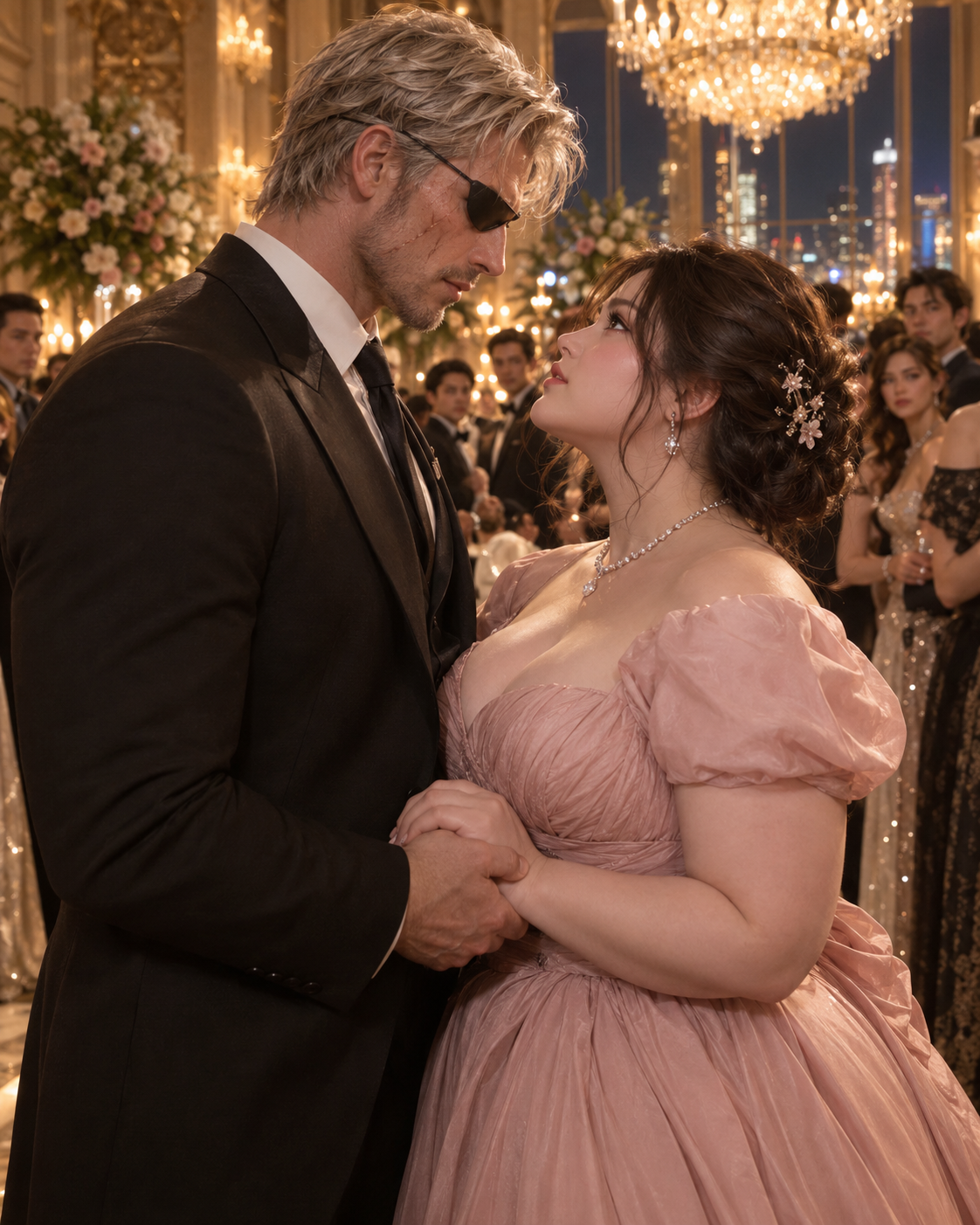
Clare extended her hand.
“Are you going to let them decide whether we dance?”
Leandro looked at her hand.
Then at Blair.
Then back at Clare.
“No.”
He took her hand.
The room seemed to shift.
They stepped onto the dance floor.
Clare expected awkwardness.
Instead, Leandro moved with surprising precision.
He gave her enough space to move comfortably and never once treated her as though she needed to be handled delicately.
That mattered.
More than he knew.
“You’re not embarrassed,” Clare said.
“Should I be?”
“Most people seem to think I should be.”
“Most people in this room seem concerned with appearances.”
She glanced at him.
“And you aren’t?”
“No.”
The answer was so simple that she laughed.
It was the first genuine laugh she had allowed herself that evening.
Leandro looked down at her.
“What?”
“Nothing.”
“You’re smiling.”
“I noticed.”
“And?”
“And I think you should do it more often.”
That surprised her.
Not because it was flirtatious.
Because it sounded sincere.
Across the room, Blair’s smile began to disappear.
Wesley noticed it too.
The prank was not producing the reaction they wanted.
Clare was not uncomfortable.
Leandro was not amused at her expense.
Instead, the two people they had expected to isolate were becoming the only pair in the room who seemed entirely at ease.
Then Leandro said something that made Clare’s smile vanish.
“You use another name.”
Her steps faltered.
Only slightly.
But Leandro noticed.
“Excuse me?”
“You publish research.”
Clare stared at him.
“Public records research is my job.”
“Not that research.”
The music continued around them.
Nobody else seemed to notice.
Clare’s heartbeat changed.
She had used an anonymous pen name for months.
Only a small circle knew about it, and none of them were connected to Leandro.
“What makes you think that?”
“Your question about the sponsor card.”
“That doesn’t prove anything.”
“No.”
He paused.
“But the way you looked at it did.”
Clare stopped moving.
Leandro did too.
“I don’t know who you are,” he said. “Not completely. I know what you notice. That’s different.”
She searched his face for mockery.
There was none.
Only recognition.
“You’ve read my work.”
“One article.”
Her throat tightened.
“Which one?”
“The one about the redevelopment contracts.”
For a moment, the noise of the ballroom seemed to disappear.
Clare had published that article under her anonymous name three weeks earlier.
It had attracted attention from several journalists, but nobody had connected it to her.
Nobody except him.
“You shouldn’t have been able to figure that out.”
“I didn’t.”
She frowned.
“I noticed a phrase.”
“What phrase?”
“Something you wrote in the article. Then I heard you use the same expression when you described the sponsor card.”
Clare stared at him.
One shared clue.
That was all it had taken.
She should have been frightened.
Instead, she felt something unexpected.
Relief.
Because for the first time, someone had recognized the person behind her work without demanding that she prove herself.
“I haven’t published everything,” she whispered.
“I assumed you hadn’t.”
“There are documents I haven’t released.”
“Why?”
“Because I wanted to be certain.”
Leandro’s expression hardened.
“Good.”
Clare blinked.
“Good?”
“If you’re going to accuse powerful people of financial misconduct, certainty matters.”
“I know.”
“I thought you would.”
The music ended.
Applause filled the room.
They stepped away from each other.
For several seconds, neither spoke.
Then Leandro said quietly, “Don’t publish anything tonight.”
Clare frowned.
“Why?”
“Because someone is already watching you.”
Her stomach tightened.
“Who?”
His eyes moved toward the far side of the ballroom.
Clare followed his gaze.
A man she had never seen before stood near the entrance, speaking into a phone.
When he noticed them looking, he turned away.
Clare’s pulse quickened.
“Do you know him?”
“No.”
“Then how do you know?”
“Because he has been watching you since you arrived.”
That was the moment Clare understood that the evening had changed.
This was no longer about Blair and Wesley.
Someone else had entered the story.
And someone had noticed her before she realized she was being watched.
By the time Clare returned home that night, the city had gone quiet beneath the glow of Manhattan streetlights.
She removed her coat, placed her shoes beside the door, and went directly to her desk.
Her apartment was modest.
Nothing about it resembled the world she had just left behind.
No crystal chandeliers.
No marble floors.
No expensive artwork.
Just a desk, two lamps, stacks of folders, and a computer surrounded by handwritten notes.
Clare opened the encrypted folder she had been building for months.
Inside were copies of contracts, property records, corporate registrations, payment records, correspondence, and public filings.
She opened the document containing the Harkort Foundation.
Then another.
Then another.
Her suspicion became harder to ignore.
There was a pattern.
Money moved through companies that appeared independent.
Contracts were awarded to entities connected through overlapping directors.
Subcontractors performed work.
Invoices were submitted.
Payments disappeared into layers of corporate structures.
And some workers were left waiting.
Clare had already known pieces of the story.
Now she began to see the shape of it.
She did not sleep.
At 4:17 a.m., she opened the anonymous publishing account.
Her fingers hovered over the keyboard.
She knew what publishing could do.
She also knew what it could destroy.
So she did what she had always done.
She checked every fact again.
Then again.
At sunrise, she had finished.
The article went live under her anonymous name.
It did not accuse anyone without evidence.
It did not rely on rumor.
It laid out documents, dates, corporate connections, contract figures, and unanswered questions.
By noon, the article had begun circulating.
By three, journalists were discussing it.
By evening, the Harkort Foundation had released a statement calling the allegations “misleading and incomplete.”
Clare expected that.
What she did not expect was the phone call.
“Ms. Donnelly?”
“Yes?”
“This is Leandro Vitali.”
She sat up.
“How did you get my number?”
“I have resources.”
“That isn’t reassuring.”
“I wasn’t trying to reassure you.”
She almost smiled.
“What do you want?”
“I want you to know that the article is being examined.”
“By whom?”
“By people who understand financial records.”
Clare went silent.
“Are you threatening me?”
“No.”
“Then what are you saying?”
“I am saying that your evidence is stronger than the people attacking it realize.”
Her expression changed.
“Why are you helping me?”
There was a pause.
“Because someone should.”
The next morning, Leandro called an emergency meeting with members of a corporate board connected to several of the entities named in the article.
He did not make accusations.
He did not threaten anyone.
He asked questions.
Simple questions.
Who approved the contracts?
Who authorized the payments?
Why were subcontractors still unpaid?
Why did several companies share directors?
Why had an independent audit never been commissioned?
The room became uncomfortable.
One executive attempted to dismiss the allegations as an anonymous internet story.
Leandro placed a printed copy of the article on the table.
“Then an independent audit will settle it.”
Nobody answered.
Within forty-eight hours, an outside forensic accounting firm was retained.
Clare watched the announcement from her apartment.
She had expected resistance.
She had expected lawyers.
She had expected someone to try to bury the story.
She had not expected the doors to open so quickly.
Then Blair called her.
Clare almost ignored it.
Almost.
“Why did you do this?”
Blair’s voice was different.
There was no laughter.
No polished social confidence.
Only anger.
“Do what?”
“You know exactly what.”
“I published information.”
“You embarrassed people.”
“I reported documents.”
“You think you’re better than us?”
Clare looked at the folders covering her desk.
“No.”
She paused.
“I think the records deserve to be read.”
Blair hung up.
The audit continued.
Days became weeks.
The findings grew increasingly difficult to dismiss.
The auditors identified irregular transactions and undisclosed relationships among several entities.
They also found evidence supporting the central issue Clare had raised: money intended for contracted work had not reached all of the subcontractors who had completed that work.
The consequences arrived one by one.
Certain contracts were suspended.
Several positions of influence were lost.
The Harkort Foundation faced intense scrutiny.
Blair’s carefully maintained social standing began to fracture.
Wesley was forced to answer questions he had spent years avoiding.
But the most important result came quietly.
Workers who had been waiting for payment began receiving what they were owed.
Not because they had become famous.
Not because they had powerful friends.
Because the records had finally been followed all the way to the people responsible for them.
Clare attended one of the meetings where several subcontractors received confirmation that their unpaid wages would be addressed.
She sat near the back.
As usual.
A construction worker named Miguel approached her afterward.
“I don’t know how you found all this,” he said.
Clare smiled.
“I just read what was there.”
Miguel shook his head.
“Most people don’t.”
That sentence stayed with her.
Later that evening, she found Leandro waiting outside.
“You look tired,” he said.
“I am.”
“Regret it?”
She looked back toward the building.
“No.”
“Good.”
They began walking.
Manhattan was bright around them, taxis moving through the streets and office windows glowing high above.
For once, Clare did not feel invisible.
Not because strangers were staring.
Not because she had become famous.
But because she had stopped measuring her worth by whether other people noticed her.
“You knew who I was before I knew you knew,” she said.
Leandro smiled slightly.
“I pay attention.”
“So do I.”
“I know.”
She looked at him.
“You know, when Blair and Wesley put us together, they thought they were humiliating us.”
“They were.”
Clare laughed.
“Not quite how they intended.”
“No.”
They continued down the sidewalk.
After a moment, Clare said, “Do you ever get tired of people being afraid of you?”
Leandro was quiet for several seconds.
“Sometimes.”
“Why don’t you correct them?”
“Some people prefer the story they have created.”
“That sounds familiar.”
He looked at her.
“It does.”
The silence between them was comfortable.
No performance.
No ballroom.
No audience.
Just two people walking through New York after a long season of secrets.
Months later, the story was still discussed.
But not for the reason Blair and Wesley had intended.
The gala itself became almost irrelevant.
What people remembered was what happened afterward.
An overlooked researcher had followed a paper trail.
A powerful businessman had chosen to support an independent investigation rather than bury uncomfortable questions.
And people who had been treated as invisible had finally been heard.
Clare never stopped researching.
Leandro never stopped asking questions.
Their relationship did not begin with a dramatic declaration or a perfect romantic moment.
It grew slowly.
Over coffee.
Over late-night conversations.
Over arguments about documents and ethics.
Over quiet walks through Manhattan.
They learned each other’s habits.
Clare learned that Leandro disliked crowded restaurants.
Leandro learned that Clare read contracts when she was stressed.
She learned that he kept old books beside his bed.
He learned that she always carried a pen even when she had no reason to write.
Neither of them needed to pretend.
That was what made it different.
One evening, nearly a year after the gala, they returned to the same ballroom for another charity event.
The chandeliers were the same.
The music was similar.
The room was filled with many of the same kinds of people.
But everything felt different.
Clare stood beside Leandro near the entrance.
“Do you remember this place?”
“Yes.”
“Do you remember what they did?”
“Yes.”
She looked around.
“Does it bother you?”
Leandro considered the question.
“No.”
“Why?”
“Because they thought they were deciding what happened that night.”
Clare smiled.
“They weren’t.”
“No.”
She looked at him.
“We were.”
The orchestra began playing.
Leandro held out his hand.
This time, Clare did not wait for anyone to invite her.
She took it.
They walked onto the dance floor.
No one laughed.
No one whispered.
No one dared suggest that either of them did not belong there.
But Clare realized something.
Their victory had never been becoming accepted by that room.
It had been realizing they did not need the room’s approval.
The world had tried to define them by appearance, reputation, money, and social position.
It had underestimated Clare because she was easy to overlook.
It had underestimated Leandro because people mistook fear for understanding.
Together, they discovered something far more durable than status.
Attention.
Integrity.
Courage.
And the willingness to keep looking when everyone else had decided there was nothing worth seeing.
As the music carried them across the floor, Clare rested her hand in Leandro’s.
She thought about the woman who had entered that ballroom believing she had to endure another humiliation.
She barely recognized her now.
Not because she had changed into someone else.
Because she had finally understood who she had been all along.
She had never needed permission to take up space.
Neither had he.
And perhaps that was the real lesson hidden beneath all the money, influence, secrets, and polished smiles.
People can underestimate you.
They can laugh at you.
They can decide what they think you are worth.
But none of those judgments becomes the truth simply because powerful people repeat them.
Sometimes strength is not being the loudest person in the room.
Sometimes it is quietly keeping the records.
Reading the fine print.
Asking the uncomfortable question.
Refusing to look away.
And sometimes, the person standing beside you when everyone else is trying to make you feel small is not there to rescue you.
They are there because they recognize your strength.
The song ended.
Clare looked at Leandro.
“Another?”
He smiled.
“Always.”
And beneath the same Manhattan chandeliers where someone had once tried to turn them into a joke, two people who had been underestimated for entirely different reasons stepped onto the dance floor again.
This time, nobody was choosing their place for them.
They chose it themselves.
For a while, Clare believed the hardest part of the story was behind them.
The audit had been completed.
The unpaid workers had received what they were owed.
Blair and Wesley no longer moved through Manhattan as though every room belonged to them.
And the ballroom where Clare had once been deliberately humiliated had become nothing more than another building in a city full of memories.
But peace, Clare would eventually learn, was not always the same thing as closure.
Three weeks after that charity gala, she received an envelope.
There was no return address.
No company logo.
No explanation.
Only her name, handwritten across the front.
Clare stared at it for several seconds before opening it.
Inside was a single photocopied document.
At first glance, it looked ordinary.
A property transfer.
A holding company.
A date.
A signature.
Then Clare noticed the address.
Her expression changed.
It was connected to one of the companies mentioned during the forensic audit.
But the transaction had never appeared in the original records.
She checked the date.
The transfer had occurred months before the first contract was awarded.
That meant the story was bigger than she had thought.
Clare immediately called Leandro.
He answered on the second ring.
“I have something.”
His voice became serious.
“What?”
“A document.”
“Where did it come from?”
“I don’t know.”
“Don’t open anything else.”
“I already opened it.”
“I know.”
There was a pause.
“Send me a photograph.”
She did.
Minutes later, he called back.
“Where are you?”
“At home.”
“Stay there.”
“Leandro—”
“Please.”
The word stopped her.
He rarely said please.
Twenty minutes later, he arrived.
Clare opened the door.
He looked at the document again.
“You recognize the company?”
“Yes.”
“It wasn’t supposed to exist.”
“That is what worries me.”
He sat at her desk.
Together, they examined the page.
The company had been registered in Delaware.
Its listed address led to a mailbox service.
Its director was an attorney who appeared in dozens of corporate filings.
And its beneficiary was hidden behind another entity.
Clare leaned back.
“This isn’t random.”
“No.”
“Someone sent this because they want me to find something.”
“Or because they want you to think you found something.”
She looked at him.
“You think it’s a trap.”
“I think we don’t assume anything.”
That was the difference between them.
Clare trusted documents.
Leandro trusted patterns.
Together, they checked everything.
They traced the corporate registration.
Then the property.
Then the attorney.
Then the bank references that appeared in several public filings.
For three days, they found nothing conclusive.
On the fourth morning, Clare discovered the connection.
The same attorney had once represented a company connected to the Harkort family.
But the connection was old.
Too old to prove anything.
Still, Clare knew better than to ignore coincidence.
She opened another database.
A name appeared.
Nathaniel Vale.
She recognized it immediately.
He had been the man near the entrance at the gala.
The man Leandro had noticed watching her.
Clare’s hands went still.
“You know him?” Leandro asked.
“No.”
“But you’ve seen him.”
“At the gala.”
Leandro looked at the screen.
“That changes things.”
“Who is he?”
“I don’t know yet.”
That answer frustrated Clare.
“You usually know more than that.”
“I know enough to know he doesn’t appear in the places he should.”
“What does that mean?”
“It means he’s good at staying outside the frame.”
Clare stared at the name.
Then she noticed something.
“Wait.”
She opened the gala guest list.
Nathaniel Vale wasn’t listed.
Leandro frowned.
“He was inside.”
“Yes.”
“Then someone brought him in.”
They spent the afternoon reconstructing the guest list.
Eventually, they found a handwritten addition on a scanned version of the event file.
Vale had been entered under a different organization.
A consulting firm.
Clare searched the firm.
It had dissolved two years earlier.
But one of its former directors was still active.
The trail led back to a group of investment companies.
Then to redevelopment projects.
Then to a network of contractors.
The same kind of network Clare had uncovered before.
But there was one difference.
This time, the money did not appear to be disappearing.
It was moving.
Quietly.
Legally.
Almost perfectly.
That frightened Clare more than obvious corruption.
Because someone had designed the structure carefully.
“This isn’t about Blair and Wesley,” she said.
“No.”
“Then who?”
Leandro didn’t answer.
He was looking at another document.
A document Clare had not seen.
“What is that?”
He turned the screen toward her.
It was a board resolution.
Several years old.
One name was highlighted.
Leandro Vitali.
Clare stared at him.
“You were involved?”
“Indirectly.”
“You never told me.”
“I didn’t think it mattered.”
“It matters now.”
He looked at her.
“I was a minority investor in one of the companies.”
Clare stood.
“How long ago?”
“Eight years.”
“Did you know about this structure?”
“No.”
“Are you sure?”
His expression changed.
“Clare.”
She shook her head.
“I need you to understand something.”
“I do.”
“No. You don’t.”
She pointed at the documents.
“If my name is attached to this story, I can survive people calling me difficult. I can survive them calling me dishonest. But I cannot publish something if I don’t know whether the person helping me is connected to it.”
Leandro remained silent.
She continued.
“I need the truth, even if the truth makes you look bad.”
For the first time since she had known him, he looked almost wounded.
Then he nodded.
“Good.”
He pushed a folder toward her.
“Then read everything.”
Inside were contracts, investment records, legal correspondence, and documents from eight years earlier.
Clare spent the night reading.
By dawn, she understood.
Leandro had invested in the company through a legitimate fund.
He had withdrawn when he discovered irregularities unrelated to the current investigation.
He had not known about the hidden corporate network.
But one document troubled her.
His withdrawal had occurred only weeks before the first major contract was awarded.
“Why did you leave?”
“Because I didn’t trust the people running it.”
“Who?”
He gave her a name.
Clare searched it.
Nathaniel Vale.
She looked up slowly.
“You knew him.”
“I knew of him.”
“That isn’t the same thing.”
“No.”
She closed the folder.
“Then we’re dealing with something much older than the gala.”
Leandro nodded.
“And this time, they’re not going to underestimate you.”
Clare looked at the documents.
“Maybe that’s worse.”
It was.
Within days, strange things began happening.
Her anonymous publishing account received login attempts.
A source stopped responding.
A public database suddenly became unavailable.
One of her research folders disappeared from a secure server.
None of it was dramatic.
That was what made it frightening.
Someone wasn’t trying to scare her.
Someone was trying to slow her down.
Clare refused to stop.
But Leandro insisted that she not work alone.
They moved their research into a small office in lower Manhattan.
For weeks, they worked side by side.
Clare built timelines.
Leandro reviewed corporate structures.
They cross-checked names.
They compared contracts.
They found connections.
And eventually, they found the missing piece.
The money was not simply being diverted.
Certain properties were being purchased before redevelopment plans became public.
That meant someone knew about projects before the public did.
The profits were enormous.
And several of the same people appeared repeatedly.
Nathaniel Vale was one of them.
But the most surprising name was not Vale.
It was someone neither of them expected.
Blair Kensington.
Clare stared at the screen.
“No.”
Leandro looked at her.
“What?”
“She wasn’t just protecting Wesley.”
“You’re saying she knew?”
“I’m saying she was closer to this than we thought.”
The evidence wasn’t enough to make an accusation.
So Clare did what she always did.
She kept digging.
Three days later, Blair requested a meeting.
Clare almost refused.
Then she accepted.
They met at a quiet restaurant in Midtown.
Blair arrived without her usual entourage.
No designer spectacle.
No social crowd.
Just a woman who looked exhausted.
“I know what you’re investigating,” Blair said.
Clare remained silent.
“I know about Vale.”
“Then tell me what you know.”
Blair looked down.
“Wesley thought he controlled everything.”
“Did he?”
“No.”
She swallowed.
“Neither did I.”
Clare waited.
Blair finally spoke.
“Years ago, my family invested in a development network. We thought it was legitimate. Then money started moving in ways I didn’t understand.”
“Why didn’t you report it?”
“I was afraid.”
“Of whom?”
“Vale.”
The name sat between them.
“He knew where everyone lived. He knew which businesses people owned. He knew which contracts mattered. He never threatened anyone directly.”
“That sounds convenient.”
“He didn’t need to.”
Blair looked at Clare.
“He made people understand what would happen if they became inconvenient.”
Clare wrote nothing down.
She simply listened.
“What about Wesley?”
“He knew more than I did.”
“How much?”
“I don’t know.”
“Where is he now?”
Blair hesitated.
“Trying to leave the country.”
That changed everything.
Clare immediately called Leandro.
But before he could answer, Blair’s phone rang.
She looked at the screen.
Her face went pale.
“It’s him.”
“Vale?”
Blair nodded.
The phone stopped ringing.
Then a message appeared.
Blair read it.
She didn’t speak.
Clare reached for the phone.
The message contained only one sentence.
“You should have stayed quiet.”
For the first time, Blair seemed to understand that the game had changed.
She looked at Clare.
“I’m sorry.”
Clare did not know whether she believed her.
But she knew fear when she saw it.
And she knew that whatever happened next was bigger than social revenge.
They left the restaurant together.
Leandro was waiting outside.
He took one look at Blair and understood.
“She’s involved.”
“Not willingly,” Clare said.
Leandro nodded.
“Then we protect her long enough to get the truth.”
The next forty-eight hours became a race.
Lawyers were contacted.
Documents were secured.
Copies were sent to independent investigators.
Clare prepared a new report.
This time, she refused to publish until every claim had been independently verified.
The report was longer than anything she had written before.
It showed how property information, corporate structures, investment funds, and redevelopment plans had intersected over years.
It named no one without documentation.
It distinguished proven facts from unresolved questions.
And it included something Clare had never included before.
Her own name.
When Leandro saw the final draft, he looked at her.
“You don’t have to do that.”
“Yes, I do.”
“You can remain anonymous.”
“I’ve spent too long hiding behind a name.”
“You don’t owe anyone your identity.”
“I know.”
She closed the laptop.
“That’s why I’m choosing to give it.”
The report was published on a Monday morning.
By lunchtime, it was everywhere.
Journalists began asking questions.
Regulators announced reviews.
Attorneys requested records.
Investors demanded explanations.
And for the first time, Clare was no longer an anonymous voice in the background.
She was sitting in front of cameras.
Answering questions.
Calmly.
Precisely.
Without shouting.
Without exaggeration.
When a reporter asked why she had continued despite the risks, Clare paused.
“Because records don’t become less important because powerful people dislike what they reveal.”
The statement spread across the country.
By the end of the week, investigators had opened formal inquiries.
Vale disappeared from public view.
Wesley was located by his attorneys.
Blair agreed to cooperate with investigators.
The network began to unravel.
Not all at once.
Not dramatically.
Piece by piece.
That was how real accountability often worked.
A document.
A witness.
A transaction.
A question.
Another document.
And eventually, the story became impossible to hide.
Months later, Clare stood outside a federal courthouse in Manhattan.
The investigation was still ongoing.
There would be more hearings.
More documents.
More questions.
But the central truth had finally emerged.
A system built on silence could survive for years.
It could survive wealth.
It could survive reputation.
It could even survive scandal.
But it became fragile the moment ordinary people began comparing the records.
Leandro joined her on the steps.
“You did it.”
Clare shook her head.
“No.”
He looked at her.
“We did.”
She smiled.
“That sounds dangerously sentimental.”
“I can live with that.”
She laughed.
Then she looked toward the city.
New York was moving around them as it always did.
Taxis.
Sirens.
People rushing to work.
Lights beginning to appear in office windows.
Nothing about the city had changed.
And yet, everything had changed for her.
She no longer wanted to be accepted by people who had once laughed at her.
She no longer wanted revenge.
She wanted something quieter.
A life where she could walk into a room without wondering whether she belonged.
A life where Leandro did not have to pretend he was less complicated than he was.
A life built on truth rather than appearances.
Months later, they returned to the ballroom one final time.
The building was being renovated.
The charity organization had changed leadership.
The old guest list was gone.
So were the familiar names.
Clare stood beneath the chandeliers.
Leandro stood beside her.
“Funny,” she said.
“What?”
“I used to think this room was enormous.”
“And now?”
She looked around.
“Now it just looks like a room.”
Leandro smiled.
“That’s because it is.”
She took his hand.
They did not dance.
They simply stood there.
For once, they didn’t need the symbolism.
They had already learned what the room had been trying to teach them.
Worth is not assigned by a guest list.
Character is not measured by a bank account.
And dignity does not become real only when powerful people finally recognize it.
Clare had spent years believing she was invisible.
Leandro had spent years allowing people to believe they understood him.
Together, they discovered something neither had expected.
Being underestimated could become a strange kind of freedom.
It meant you could work quietly.
You could observe.
You could build.
You could become stronger without announcing it.
And when the moment finally came, you could choose what to do with that strength.
Not revenge.
Not cruelty.
Not humiliation returned in kind.
Just truth.
Leandro looked at her.
“Ready?”
“For what?”
“To leave.”
Clare smiled.
“Yes.”
They walked out of the ballroom together.
Behind them, the chandeliers continued to glow.
But neither of them looked back.
Because the greatest thing they had gained was not wealth, influence, or recognition.
It was the freedom to decide who they were without asking anyone else for permission.
And somewhere in Manhattan, beneath the noise of a city that never stopped moving, two people who had once been placed together as a joke continued walking side by side.
Not because the world had finally decided they belonged together.
Because they had decided it for themselves.
And that was the one decision no ballroom, no social circle, and no powerful person could ever take away.
THE END.