“I’m asking you to marry me,” Rachel Foster said to the stranger standing in her doorway. “Just for one year. Nothing more.”
THE RANCHER’S ONE-YEAR MARRIAGE
Part 3 – The Promise That Changed Everything
“She’s not selling,” Benjamin said firmly, standing between Martin Crowley and Rachel. “And if you have something to say about this ranch, you can say it to both of us.”
Martin let out a cold laugh.
“Both of you? That’s interesting. How long do you think this little marriage arrangement is going to last? A month? Maybe two?”
Rachel felt her cheeks burn, but Benjamin didn’t move.
Martin stepped closer, lowering his voice.
“You should ask your new husband what happens when the bank comes to collect. Because no matter how many fences he fixes, this ranch is still drowning in debt.”
For a moment, Rachel couldn’t breathe.
She knew the ranch had debts. She knew her father’s final months had been difficult. But Martin spoke as if he knew something she didn’t.
Benjamin looked at him carefully.
“Is that supposed to be a threat?”
“It’s a fact,” Martin replied. “And when the time comes, don’t say I didn’t warn you.”
He climbed into his truck and drove away, leaving a cloud of dust behind him.
Rachel stood frozen.
Benjamin turned toward her.
“Tell me exactly how much trouble this place is in.”
She looked down at her hands.
“More than I wanted to admit.”
That evening, Rachel finally showed him the paperwork.
There were overdue property taxes, unpaid feed bills, a bank loan, and several other expenses her father had struggled to cover.
Benjamin studied every page.
He didn’t criticize her.
He didn’t ask why she hadn’t told him sooner.
He simply pulled a chair closer and started making a list.
“We need to know what has to be paid first,” he said. “Then we need to figure out what we can earn before winter.”
Rachel watched him write.
For months, every person who had come to the ranch had talked about what she should sell.
Benjamin was the first person who asked what they could save.
The next morning, they began working before sunrise.
Benjamin repaired the cattle pens, checked the water lines, and inspected the old barn. Rachel handled the accounts, organized the feed supplies, and contacted buyers about the autumn cattle sale.
They worked long days.
Sometimes they argued.
Benjamin believed they needed to spend money repairing the main barn roof. Rachel thought the money should go toward the overdue bank payment.
Neither enjoyed being told they were wrong.
But they learned to listen.
And slowly, the ranch began to look less like a place waiting to collapse and more like a business with a future.
There was something else changing, too.
Benjamin had a habit of leaving a cup of coffee beside Rachel’s paperwork every morning.
Rachel began preparing an extra plate at dinner without asking whether he would be staying.
When the weather turned cold, Benjamin quietly placed another blanket over her shoulders while she studied the accounts by the fireplace.
Neither mentioned these small things.
They had agreed their marriage would be business.
But sometimes, business was the last thing on their minds.
One afternoon, Rachel rode into town to buy supplies.
She had barely stepped inside the general store when she heard two women whispering.
“That’s her. The woman who married the drifter.”
“I heard he gets half the ranch after a year.”
Rachel stopped.
“Actually, you heard wrong,” she said calmly. “He gets an agreed share of the profits from his work. My land remains mine.”
The women looked embarrassed.
But before Rachel could walk away, Martin Crowley entered the store.
“Well, if it isn’t Mrs. Hayes.”
Rachel turned.
“Good afternoon, Martin.”
He placed a folder on the counter.
“I’ve brought something that might interest you.”
Rachel glanced at the papers.
It was an offer to purchase her ranch.
The amount was higher than his previous offers, but still nowhere near what the property was worth.
“I told you I’m not selling.”
Martin smiled.
“Think carefully. The bank isn’t going to wait forever.”
Rachel’s stomach tightened.
“How do you know what the bank is doing?”
“Small towns have a way of sharing information.”
He leaned closer.
“You should also know that your father and I had several conversations before he died. He understood that the ranch was becoming too expensive for him.”
Rachel felt anger rise inside her.
“Don’t use my father to pressure me.”
Martin shrugged.
“I’m simply trying to help you avoid losing everything.”
Rachel left without signing anything.
But his words followed her all the way home.
That night, she told Benjamin what had happened.
He listened quietly.
Then he asked a question that caught her off guard.
“Did your father ever mention a private agreement with Martin?”
Rachel shook her head.
“Never.”
Benjamin stared into the fire.
“Then I think we should find out why Martin is so confident the bank will take this ranch.”
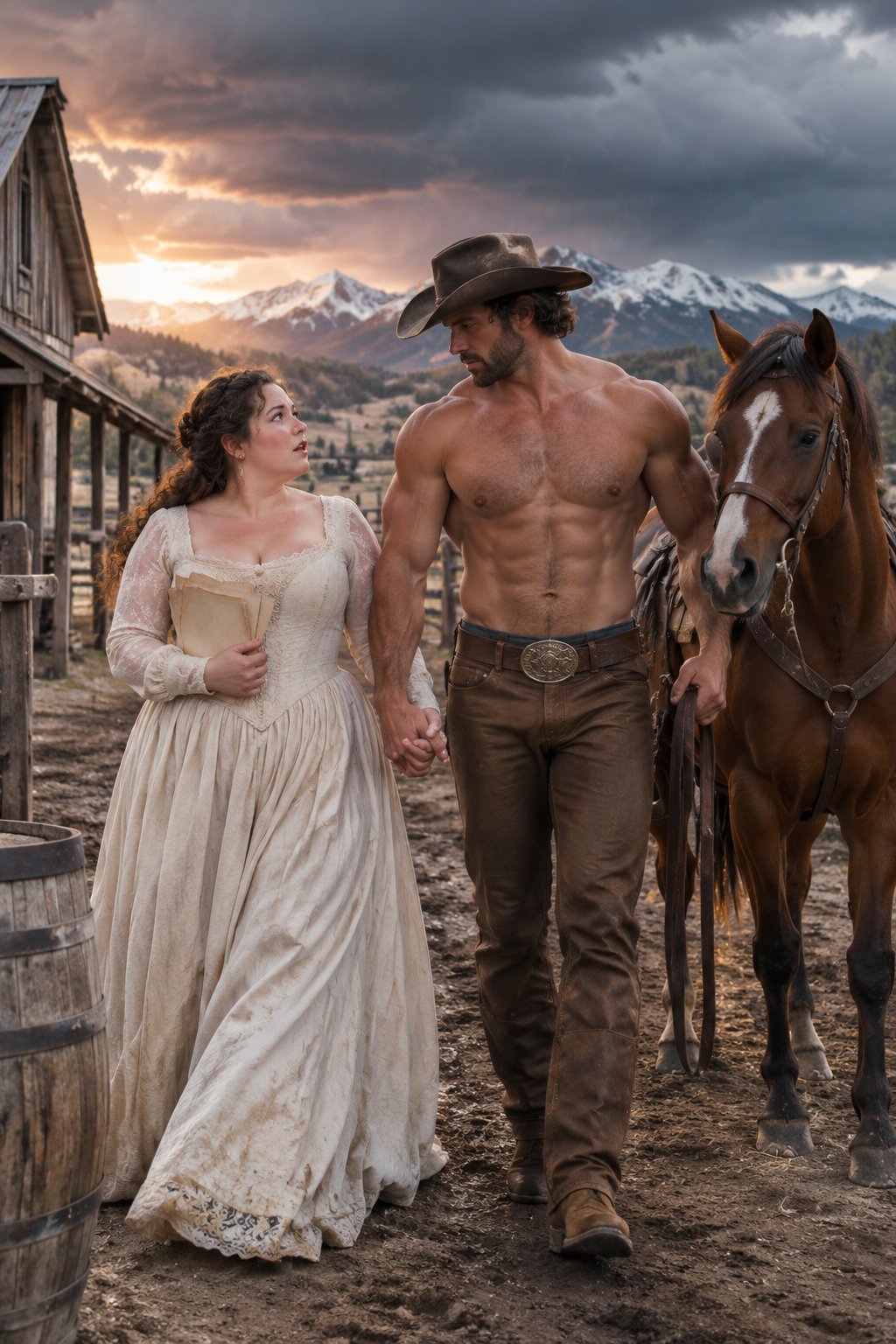
The following morning, Benjamin rode into town.
He went to the bank and asked to speak with the loan officer handling the Foster ranch account.
The man, Mr. Whitaker, looked uncomfortable when Benjamin explained why he was there.
“I’m afraid I can’t discuss another person’s financial records,” he said.
“I’m not asking you to give me private information,” Benjamin replied. “I’m asking whether there is any way Rachel can arrange a payment plan and keep her property.”
Mr. Whitaker considered him for a moment.
“Has Rachel seen the full loan agreement?”
Benjamin frowned.
“She showed me the paperwork she had.”
“Then she needs to come in herself. There are details in the original file that may be important.”
Benjamin returned to the ranch with more questions than answers.
Rachel immediately noticed his expression.
“What happened?”
“The bank wants to speak with you. Apparently, there are details in your father’s original loan agreement that you haven’t seen.”
Rachel felt a chill run through her.
They made an appointment for the following day.
At the bank, Mr. Whitaker brought out a thick folder.
He explained that Rachel’s father had taken out a loan several years earlier to repair the irrigation system and expand the cattle operation.
The loan had been manageable until a series of difficult seasons and rising expenses made the payments harder.
Rachel already knew most of that.
Then Mr. Whitaker opened another section.
“Your father made a request shortly before his death,” he explained. “He asked the bank to review the possibility of restructuring the loan rather than beginning foreclosure.”
Rachel leaned forward.
“Did the bank agree?”
“Not at the time. We needed additional documentation.”
He turned a page.
“However, your father also submitted a letter explaining the value of the property and the income potential of the ranch if certain improvements were completed.”
Benjamin looked at Rachel.
“Your father was trying to save it.”
Rachel swallowed.
“Why didn’t he tell me?”
Mr. Whitaker’s expression softened.
“He may have wanted to protect you from worrying while he was ill.”
Then he pointed to another document.
There was a signature Rachel recognized immediately.
Martin Crowley.
She stared at it.
“What is he doing in my father’s loan file?”
Mr. Whitaker hesitated.
“Mr. Crowley submitted a proposal to purchase a portion of the property. Your father rejected it.”
Rachel felt her hands tremble.
“What portion?”
“The northern section, including the creek access and the old pasture.”
That land was valuable.
It supplied water to the cattle during the dry months and connected the ranch to an important grazing area.
Benjamin’s expression hardened.
“Did Martin make any other offers?”
Mr. Whitaker nodded.
“Several. Your father refused all of them.”
Rachel looked at the signature again.
Suddenly, Martin’s interest in her financial difficulties seemed less like an ordinary business opportunity.
He wasn’t simply hoping to buy a struggling ranch.
He wanted something specific.
And he had been trying to get it for years.
On the ride home, Rachel barely spoke.
Benjamin finally broke the silence.
“Your father didn’t give up on this place.”
Rachel looked toward the mountains.
“I thought he had left me with a failing ranch and a pile of bills.”
“He left you with something worth fighting for.”
She wiped her eyes.
For the first time since her father’s funeral, she allowed herself to cry without feeling ashamed.
Benjamin didn’t try to stop her.
He simply rode beside her until she was ready to talk.
That evening, they sat at the kitchen table and examined the ranch map.
The northern pasture was larger than Rachel remembered. It included the creek, several acres of grazing land, and an old access road.
Benjamin pointed to a narrow strip along the eastern boundary.
“What’s this?”
“An old service road. My father used it when he brought supplies in.”
Benjamin studied the map.
“Does Martin own the land beyond it?”
Rachel nodded.
“His property borders ours on the east.”
Benjamin leaned back.
“Then the creek access is probably why he’s so interested.”
Rachel frowned.
“It’s just water and pasture.”
“Water is never just water to a cattle rancher.”
They spent the next two hours discussing ways to improve the property without taking on more debt.
Benjamin suggested dividing the cattle into smaller groups and rotating their grazing areas.
Rachel remembered that her father had once talked about doing the same thing.
They also considered repairing the old windmill, which could reduce their dependence on the damaged irrigation system.
It wasn’t going to be easy.
But for the first time, they had a plan.
The following weeks were exhausting.
Benjamin worked from dawn until dark, and Rachel handled the business side of the operation.
They repaired the old windmill and cleared the northern pasture.
They also found a way to reduce feed waste by changing how the cattle were grouped.
The improvements were small, but they made a difference.
One evening, Benjamin returned from town with an envelope.
“What’s that?” Rachel asked.
“A letter from the cattle buyer.”
She opened it.
The buyer had agreed to inspect the herd before the autumn sale and was willing to discuss a better price if the cattle met certain weight and health standards.
Rachel read the letter twice.
“This could save us.”
“It could give us a chance,” Benjamin corrected gently.
Rachel smiled.
“You always have to be realistic, don’t you?”
“Someone has to.”
She laughed.
It was the first time she had laughed like that in months.
Benjamin watched her for a moment before looking away.
He was beginning to realize that the ranch wasn’t the only thing he cared about protecting.
Then Martin made his next move.
A few days before the cattle inspection, a group of workers arrived near the northern boundary.
They carried surveying equipment and began placing markers along the creek.
Rachel rode out immediately.
“What are you doing?”
One of the men showed her a document.
“We’re conducting a boundary survey for Mr. Crowley.”
“This is private property.”
“Mr. Crowley says there’s a disagreement about the boundary.”
Rachel looked at the markers.
They were placed inside her land.
She demanded that the men stop, but they refused to leave until they had completed their work.
Benjamin arrived shortly afterward.
He examined the markers and the map.
“These aren’t where the property line should be.”
“That’s what I thought.”
Benjamin spoke calmly to the workers.
“Show us the survey document.”
The man handed it over.
Benjamin studied the measurements.
Something was wrong.
The survey appeared to use an outdated boundary description that did not match the deed Rachel had inherited.
“Where did you get this information?” Benjamin asked.
“From Mr. Crowley’s office.”
Benjamin returned the paper.
“Then he needs to explain why he’s using the wrong property description.”
The workers eventually packed up.
But before leaving, one of them said something that made Rachel uneasy.
“Mr. Crowley told us this would be settled before the first snow.”
Rachel watched their truck disappear.
“What does he mean by that?”
Benjamin looked toward the creek.
“It means we shouldn’t assume he’s finished.”
Two days later, a letter arrived from a lawyer in the county seat.
Martin Crowley was claiming that part of the northern pasture belonged to him.
The letter demanded that Rachel stop using the disputed section until the matter could be settled.
Rachel read it in disbelief.
“He can’t just take my land.”
“No,” Benjamin said. “But he can make it expensive for you to defend it.”
Rachel sat down heavily.
The legal costs alone could destroy the ranch.
Benjamin read the letter again.
Then he noticed something.
The lawyer’s claim referred to a survey conducted many years earlier.
Rachel went to the filing cabinet and searched through her father’s old documents.
After nearly an hour, she found a faded envelope.
Inside was an official survey from the year her father purchased the property.
The boundary was clear.
The northern pasture belonged to the Foster ranch.
Benjamin smiled for the first time that evening.
“That’s what we needed.”
Rachel held the document carefully.
“Will this be enough?”
“It gives us something solid to fight with.”
For the next several days, Benjamin helped Rachel organize every document connected to the property.
They collected tax records, deeds, maps, photographs, and old correspondence.
They also contacted a local attorney named Sarah Miller, who agreed to review the case.
Sarah was direct and practical.
“Martin Crowley has money,” she told Rachel. “That doesn’t mean he has a valid claim. But we need to be prepared.”
Rachel nodded.
“I don’t want to fight forever. I just want to keep what my father left me.”
Sarah looked at the papers.
“Then we’ll start with the facts.”
As the cattle inspection approached, the pressure increased.
Rachel was worried about the legal dispute.
Benjamin was worried about the herd.
The autumn weather was becoming unpredictable, and the cattle needed to be ready.
One morning, Rachel found Benjamin standing in the barn, staring at a broken section of the roof.
“What’s wrong?”
“Nothing we can’t fix.”
“You’ve been saying that about everything.”
He looked at her.
“Because most things can be fixed if you don’t give up too soon.”
Rachel folded her arms.
“And what if this one can’t?”
Benjamin was quiet for a moment.
Then he said, “Then we find another way.”
She studied his face.
“Why are you doing all this?”
He looked away.
“Because I agreed to the work.”
“That isn’t what I mean.”
Benjamin rested his hands on the workbench.
“I’ve spent a long time moving from place to place. Taking jobs, sleeping wherever I could, leaving before anyone expected me to stay.”
Rachel listened.
“I told myself I liked being free. But sometimes being free just means you have nobody waiting for you.”
His voice was calm, but Rachel heard the loneliness beneath it.
“I don’t want to see you lose this ranch,” he added. “And I don’t want to walk away from something that matters.”
Rachel looked down.
For a moment, neither spoke.
Then she quietly said, “You don’t have to keep proving yourself to me.”
Benjamin smiled faintly.
“Maybe I’m not trying to.”
The cattle inspection took place on a clear October morning.
The buyer arrived with two assistants and spent several hours examining the herd.
He checked their weight, health, and condition.
Rachel waited nervously.
When the inspection ended, the buyer removed his hat.
“Your cattle are in better shape than I expected.”
Rachel glanced at Benjamin.
The buyer continued.
“I can offer a fair price, provided you’re ready to deliver on schedule.”
Rachel’s heart began to race.
“How fair?”
He named a figure.
It wasn’t a fortune.
But it was enough to cover the most urgent debts and leave money for winter supplies.
Rachel nearly cried.
Benjamin shook the buyer’s hand.
“Then we have a deal.”
For the first time in months, Rachel believed the ranch might survive.
But their relief didn’t last long.
The following afternoon, Martin arrived with two men and a lawyer.
He carried another folder.
“I hear you’re preparing to sell cattle,” he said.
Rachel stood on the porch.
“That’s none of your business.”
“Actually, it may be.”
He handed her a document.
It claimed that a portion of the cattle sale proceeds should be held until the boundary dispute was resolved.
Rachel looked at Sarah Miller, who had come to the ranch to discuss the legal claim.
Sarah read the document carefully.
“This isn’t a court order,” she said.
Martin smiled.
“Not yet.”
Benjamin stepped beside Rachel.
“What exactly do you want?”
Martin looked directly at him.
“I want the northern pasture. And I want it before winter.”
“Then make a proper offer,” Benjamin replied.
“I have.”
Rachel shook her head.
“And I’ve refused.”
Martin’s smile disappeared.
“You may regret that.”
He turned and left.
Rachel watched his truck disappear down the road.
“Can he stop the cattle sale?” she asked.
Sarah shook her head.
“Not with that document. But I want to see the original deed and survey before we assume anything.”
Rachel nodded.
She had learned not to trust appearances.
That night, the first snow began to fall.
Benjamin and Rachel stood outside the barn, watching the flakes settle over the pasture.
“We made it through the inspection,” Rachel said.
“We did.”
“And the buyer is still interested.”
“That’s good.”
Rachel looked at him.
“Do you ever think about what happens when the year is over?”
Benjamin turned toward her.
“Sometimes.”
“And?”
He took a breath.
“I haven’t decided.”
Rachel felt a strange ache in her chest.
She had always assumed the arrangement would end exactly as planned.
One year.
A handshake.
A clean separation.
But the thought of returning to an empty house suddenly felt worse than it had before.
Benjamin noticed her silence.
“Rachel, I don’t want you to feel obligated to me.”
“I’m not.”
“I mean it. The agreement was supposed to give you a way to save the ranch. Nothing else.”
She nodded.
“I know.”
He looked toward the house.
“Let’s get through winter first.”
Rachel smiled sadly.
“Winter first.”
Winter arrived early.
The snow covered the northern pasture, and the cattle had to be moved closer to the barn.
Benjamin worked tirelessly, repairing water lines and checking the animals every morning.
Rachel helped with feeding, accounts, and deliveries.
The ranch was still struggling, but it was no longer collapsing.
Then, just before Christmas, Sarah called.
“I found something,” she said.
Rachel sat up straight.
“What?”
“The original deed and survey are stronger than we thought. But there’s another document in the county archive that may matter even more.”
“What document?”
“A recorded water-use agreement from the year your father purchased the ranch.”
Rachel frowned.
“What does that have to do with Martin?”
Sarah paused.
“Everything. The agreement shows that the creek access was legally included in your father’s property rights. It also shows that Crowley’s family acknowledged those rights decades ago.”
Rachel stared at the phone.
“Can Martin still challenge it?”
“He can try. But this gives us a much stronger position.”
Rachel felt hope returning.
“Then what happens next?”
“We prepare for the hearing.”
The hearing was scheduled for early January.
Martin arrived with an expensive attorney and several witnesses.
Rachel sat beside Sarah, holding her father’s old documents.
Benjamin sat behind them.
The room was crowded with people from town.
Some had come because they supported Rachel.
Others simply wanted to see whether Martin Crowley would finally get what he wanted.
Martin’s attorney argued that the old boundary description was unclear and that the northern pasture had been used by both families over the years.
Sarah presented the original deed.
Then she presented the official survey.
Finally, she introduced the recorded water-use agreement.
The judge examined each document.
Martin’s attorney objected.
But the records were clear.
The northern pasture belonged to Rachel’s ranch.
The creek access was part of the property’s established legal rights.
Martin’s claim began to fall apart.
Then Sarah produced one more document.
It was a letter written by Rachel’s father several months before his death.
In it, he had described Martin’s repeated attempts to purchase the northern pasture.
He had also written that he feared Martin would attempt to challenge the boundary after his death.
Rachel’s eyes filled with tears.
Her father had known.
He had tried to protect her, even when he was too sick to do much else.
The judge reviewed the letter.
Then he looked toward Martin.
“Mr. Crowley, do you have any evidence that contradicts these recorded documents?”
Martin’s attorney whispered something to him.
Martin stood.
He looked angry.
But he had no convincing evidence.
The judge ruled in Rachel’s favor.
The boundary remained as recorded.
The northern pasture and creek access belonged to the Foster ranch.
Martin’s claim was dismissed.
Rachel closed her eyes.
For the first time in months, she felt the weight on her chest begin to lift.
Benjamin reached forward and gently touched her shoulder.
“We did it,” he whispered.
She turned toward him.
“No,” she said softly. “We did.”
The legal victory changed everything.
Martin stopped sending threats.
His workers removed the survey markers.
The county records were updated to reflect the established boundary, and Sarah helped Rachel finalize the paperwork.
But the biggest change came from the ranch itself.
The cattle sale brought in enough money to settle several urgent debts.
The bank agreed to restructure the remaining loan after reviewing the improved operation and the updated financial records.
Rachel was given a manageable payment schedule.
She also began selling hay and offering grazing space to a neighboring rancher.
The income wasn’t enormous, but it was steady.
For the first time since her father’s death, she could plan beyond the next bill.
Benjamin continued working.
He never asked for more than the agreement promised.
He never tried to claim ownership of the land.
And when people in town began treating him differently, he didn’t act as though he had won some prize.
He simply kept showing up.
By spring, the snow began to melt.
The creek ran full again, and the northern pasture turned green.
Rachel stood near the fence one morning, watching the cattle graze.
Benjamin approached carrying two cups of coffee.
“Looks different, doesn’t it?” he asked.
She smiled.
“Almost like the ranch is breathing again.”
He handed her a cup.
“You did most of the hard work.”
Rachel shook her head.
“We did it together.”
They stood quietly for a while.
Then Rachel asked the question she had been avoiding.
“Benjamin, our year is almost over.”
He nodded.
“I know.”
“The agreement says we can end the marriage without any obligation to stay together.”
“That’s right.”
Rachel stared into her coffee.
“Do you want to leave?”
Benjamin didn’t answer immediately.
He looked across the land.
“I came here because I needed work. I stayed because I found something I didn’t know I was missing.”
Rachel’s heart began to beat faster.
“What was that?”
“A place where I belong.”
He turned toward her.
“And someone I care about.”
Rachel looked down, trying to hide her tears.
“I thought this was supposed to be simple.”
“It was.”
“Then what changed?”
Benjamin smiled.
“We stopped pretending that working together was the only reason we wanted to be here.”
Rachel laughed softly.
Then she looked at him.
“I don’t want you to stay because you feel responsible for me.”
“I don’t.”
“I don’t want you to stay because of the ranch.”
“That’s not why.”
“Then why?”
Benjamin took her hand.
“Because when I picture leaving, the thing I regret isn’t the work or the land. It’s the thought of not seeing you every morning.”
Rachel squeezed his hand.
“I think I’ve been feeling the same way.”
For a long moment, neither spoke.
Then Benjamin asked, “What happens now?”
Rachel smiled.
“Maybe we write a new agreement.”
He raised an eyebrow.
“Another contract?”
“Something simpler.”
She stepped closer.
“No expiration date.”
Benjamin laughed.
“I think I can agree to that.”
They held a small wedding celebration that summer.
There were no expensive decorations or elaborate ceremonies.
Just a few neighbors, Sarah Miller, the cattle buyer, and the people who had stood by Rachel during the hardest months.
Rachel wore a simple white dress.
Benjamin wore a clean shirt and the only suit he owned.
When the minister asked whether they were choosing each other freely, Rachel looked at Benjamin.
This time, there was no business arrangement.
No debt.
No land to protect.
No desperate bargain.
There was only a choice.
“I do,” Rachel said.
Benjamin smiled.
“I do, too.”
The people gathered around them applauded.
And for the first time, Rachel didn’t feel like she was fighting to keep something from being taken away.
She felt like she was beginning something new.
Years later, the Foster ranch became one of the most stable cattle operations in the county.
Rachel and Benjamin expanded the grazing program and improved the old barn.
They also began helping young ranchers who were struggling with debt or dealing with unfair pressure from larger landowners.
Rachel never forgot how close she had come to losing everything.
Benjamin never forgot what it felt like to arrive somewhere with nothing but a worn bag and a willingness to work.
They built their life slowly.
Not through sudden wealth or perfect luck.
But through patience, honesty, hard work, and trust.
One afternoon, Rachel stood beside the old fence Benjamin had repaired on his first morning at the ranch.
She ran her hand along the weathered wood.
“Do you remember this?” she asked.
Benjamin smiled.
“I remember thinking you were the most stubborn woman I’d ever met.”
Rachel laughed.
“And I remember thinking you were completely unreasonable.”
“Sounds like we started off well.”
She leaned against his shoulder.
Then she looked toward the mountains, where the evening sun was settling over the land her father had loved.
“I used to think saving this ranch meant keeping every acre,” she said.
Benjamin looked at her.
“And now?”
“Now I think it means protecting what makes it worth calling home.”
He kissed her forehead.
The wind moved gently through the grass.
The cattle grazed peacefully in the distance.
And the old ranch, once nearly lost to debt and greed, stood strong again.
Rachel had learned that asking for help did not make her weak.
Benjamin had learned that staying did not mean losing his freedom.
And together, they discovered that the strongest partnerships aren’t built on what two people can take from each other.
They’re built on what they’re willing to give.
Sometimes, the person who arrives as a stranger becomes the one who helps you find your way home.
And sometimes, the greatest thing you save isn’t a house, a business, or a piece of land.
It’s the chance to build a life worth staying for.
THE RANCHER’S ONE-YEAR MARRIAGE — THE COMPLETE ENDING
“She’s not selling,” Benjamin said firmly, stepping between Martin Crowley and Rachel. “And if you have something to say about this ranch, you can say it to both of us.”
Martin let out a cold laugh.
“Both of you? How long do you think this little marriage arrangement is going to last? A month? Two?”
Rachel felt her cheeks burn, but Benjamin didn’t move.
“You should ask your new husband what happens when the bank comes to collect,” Martin continued. “Because no matter how many fences he fixes, this ranch is still drowning in debt.”
For a moment, Rachel couldn’t breathe.
She knew the ranch had debts. She knew her father’s final months had been difficult. But Martin spoke as if he knew something she didn’t.
“Is that supposed to be a threat?” Benjamin asked.
“It’s a fact,” Martin replied. “And when the time comes, don’t say I didn’t warn you.”
He climbed into his truck and drove away.
Rachel stood frozen.
Benjamin turned toward her. “Tell me exactly how much trouble this place is in.”
She looked down at her hands.
“More than I wanted to admit.”
That evening, Rachel finally showed him everything.
There were overdue property taxes, unpaid feed bills, a bank loan, and several other expenses her father had struggled to cover.
Benjamin studied every page without criticizing her.
Then he pulled a chair closer and started making a list.
“We need to know what has to be paid first. Then we need to figure out what we can earn before winter.”
Rachel watched him write.
For months, everyone who visited the ranch had talked about what she should sell.
Benjamin was the first person who asked what they could save.
The next morning, they began working before sunrise.
Benjamin repaired the cattle pens, checked the water lines, and inspected the old barn. Rachel handled the accounts, organized the feed supplies, and contacted buyers about the autumn cattle sale.
They worked long days.
Sometimes they argued over money and priorities. Benjamin wanted to repair the barn roof immediately. Rachel wanted to use every available dollar to pay the bank.
But they learned to listen.
Slowly, the ranch began to look less like a place waiting to collapse and more like a business with a future.
And something else began changing.
Benjamin started leaving a cup of coffee beside Rachel’s paperwork every morning. Rachel began preparing an extra plate at dinner without asking whether he would be staying.
Neither mentioned these small gestures.
They had agreed their marriage would be strictly business.
But sometimes, business was the last thing on their minds.
One afternoon, Rachel rode into town to buy supplies.
Inside the general store, she heard two women whispering.
“That’s her. The woman who married the drifter.”
“I heard he gets half the ranch after a year.”
Rachel stopped.
“Actually, you heard wrong,” she said calmly. “He gets an agreed share of the profits from his work. My land remains mine.”
The women looked embarrassed.
Before Rachel could leave, Martin Crowley entered.
“Well, if it isn’t Mrs. Hayes.”
“Good afternoon, Martin.”
He placed a folder on the counter.
“I’ve brought something that might interest you.”
It was another offer to purchase her ranch. The amount was higher than his previous offers, but still nowhere near its true value.
“I told you I’m not selling.”
Martin smiled.
“Think carefully. The bank isn’t going to wait forever.”
Rachel narrowed her eyes.
“How do you know what the bank is doing?”
“Small towns have a way of sharing information.”
He leaned closer.
“You should also know that your father and I had several conversations before he died. He understood that this ranch was becoming too expensive for him.”
“Don’t use my father to pressure me.”
“I’m simply trying to help you avoid losing everything.”
Rachel left without signing anything.
That evening, she told Benjamin what had happened.
He listened quietly.
Then he asked, “Did your father ever mention a private agreement with Martin?”
Rachel shook her head.
“Never.”
Benjamin looked toward the fireplace.
“Then we need to find out why Martin is so confident the bank will take this ranch.”
The following morning, Benjamin rode into town and visited the bank.
He asked to speak with the loan officer handling the Foster ranch account.
Mr. Whitaker looked uncomfortable.
“I’m afraid I can’t discuss another person’s financial records.”
“I’m not asking for private information,” Benjamin replied. “I’m asking whether Rachel can arrange a payment plan and keep her property.”
Mr. Whitaker considered him.
“Has Rachel seen the complete original loan agreement?”
Benjamin frowned.
“She showed me everything she had.”
“Then she needs to come in herself. There are details in the original file that may be important.”
The next day, Rachel and Benjamin returned together.
Mr. Whitaker brought out a thick folder.
He explained that Rachel’s father had borrowed money several years earlier to repair the irrigation system and expand the cattle operation.
The loan had been manageable until several difficult seasons and rising expenses made payments harder.
Then Mr. Whitaker opened another section.
“Your father made a request shortly before his death. He asked us to consider restructuring the loan rather than beginning foreclosure.”
Rachel leaned forward.
“Did the bank agree?”
“Not at the time. We needed additional documentation.”
He turned a page.
“Your father also submitted a letter explaining the property’s value and its income potential if certain improvements were completed.”
Benjamin looked at Rachel.
“Your father was trying to save it.”
Rachel swallowed.
“Why didn’t he tell me?”
Mr. Whitaker’s expression softened.
“He may have wanted to protect you while he was ill.”
Then he pointed to another document.
There was a signature Rachel recognized immediately.
Martin Crowley.
She stared at it.
“What is he doing in my father’s loan file?”
Mr. Whitaker hesitated.
“Mr. Crowley submitted a proposal to purchase a portion of the property. Your father rejected it.”
“What portion?”
“The northern section, including the creek access and the old pasture.”
That land was valuable. It supplied water to the cattle during dry months and connected the ranch to an important grazing area.
Benjamin’s expression hardened.
“Did Martin make any other offers?”
Mr. Whitaker nodded.
“Several. Your father refused all of them.”
Suddenly, Martin’s interest in her financial difficulties seemed less like an ordinary business opportunity.
He wasn’t simply hoping to buy a struggling ranch.
He wanted something specific.
And he had been trying to get it for years.
On the ride home, Rachel barely spoke.
Benjamin finally broke the silence.
“Your father didn’t give up on this place.”
Rachel looked toward the mountains.
“I thought he had left me with a failing ranch and a pile of bills.”
“He left you with something worth fighting for.”
She wiped her eyes.
For the first time since her father’s funeral, she allowed herself to cry without feeling ashamed.
Benjamin didn’t try to stop her. He simply rode beside her until she was ready to talk.
That evening, they examined the ranch map.
Benjamin pointed toward the northern pasture.
“What’s this narrow strip along the eastern boundary?”
“An old service road. My father used it when he brought supplies in.”
“Does Martin own the land beyond it?”
Rachel nodded.
Benjamin studied the map.
“Then the creek access is probably why he’s so interested.”
Rachel frowned.
“It’s just water and pasture.”
“Water is never just water to a cattle rancher.”
They spent hours discussing ways to improve the property without taking on more debt.
Benjamin suggested dividing the cattle into smaller groups and rotating their grazing areas. Rachel remembered her father once talking about the same idea.
They also considered repairing the old windmill, which could reduce their dependence on the damaged irrigation system.
It wasn’t going to be easy.
But for the first time, they had a plan.
The following weeks were exhausting.
Benjamin worked from dawn until dark. Rachel handled the business side of the operation.
They repaired the windmill, cleared the northern pasture, and found ways to reduce feed waste.
One evening, Benjamin returned from town with an envelope.
“What’s that?” Rachel asked.
“A letter from the cattle buyer.”
She opened it.
The buyer had agreed to inspect the herd before the autumn sale and was willing to discuss a better price if the cattle met certain health and weight standards.
Rachel read the letter twice.
“This could save us.”
“It could give us a chance,” Benjamin corrected.
She smiled.
“You always have to be realistic, don’t you?”
“Someone has to.”
She laughed.
It was the first time in months she had laughed like that.
But their progress attracted Martin’s attention.
A few days before the cattle inspection, several workers arrived near the northern boundary.
They carried surveying equipment and began placing markers along the creek.
Rachel rode out immediately.
“What are you doing?”
One of the men showed her a document.
“We’re conducting a boundary survey for Mr. Crowley.”
“This is private property.”
“Mr. Crowley says there’s a disagreement about the boundary.”
Rachel looked at the markers.
They were clearly inside her land.
Benjamin arrived shortly afterward and examined the measurements.
“These aren’t where the property line should be.”
He asked to see the survey document.
After studying it, he noticed that it relied on an outdated boundary description that did not match Rachel’s deed.
“Where did you get this information?”
“From Mr. Crowley’s office.”
“Then he needs to explain why he’s using the wrong property description.”
The workers eventually packed up.
But before leaving, one of them said something that made Rachel uneasy.
“Mr. Crowley told us this would be settled before the first snow.”
Rachel watched their truck disappear.
“What does he mean by that?”
Benjamin looked toward the creek.
“It means we shouldn’t assume he’s finished.”
Two days later, a letter arrived from a lawyer in the county seat.
Martin was claiming that part of the northern pasture belonged to him.
The letter demanded that Rachel stop using the disputed section until the matter could be settled.
Rachel read it in disbelief.
“He can’t just take my land.”
“No,” Benjamin replied. “But he can make it expensive for you to defend it.”
The legal costs alone could destroy the ranch.
Benjamin read the letter again.
Then he noticed that the claim referred to a survey conducted many years earlier.
Rachel searched through her father’s old documents.
After nearly an hour, she found a faded envelope.
Inside was an official survey from the year her father purchased the property.
The boundary was clear.
The northern pasture belonged to the Foster ranch.
Benjamin smiled.
“That’s what we needed.”
Rachel held the document carefully.
“Will this be enough?”
“It gives us something solid to fight with.”
They contacted a local attorney named Sarah Miller, who agreed to review the case.
Sarah was direct.
“Martin Crowley has money. That doesn’t mean he has a valid claim. But we need to be prepared.”
Rachel nodded.
“I don’t want to fight forever. I just want to keep what my father left me.”
Sarah looked at the papers.
“Then we’ll start with the facts.”
The cattle inspection took place on a clear October morning.
The buyer arrived with two assistants and spent several hours examining the herd.
Rachel waited nervously.
When the inspection ended, the buyer removed his hat.
“Your cattle are in better shape than I expected.”
Rachel glanced at Benjamin.
“I can offer a fair price, provided you’re ready to deliver on schedule.”
He named a figure.
It wasn’t a fortune, but it was enough to cover the most urgent debts and leave money for winter supplies.
Rachel nearly cried.
Benjamin shook the buyer’s hand.
“Then we have a deal.”
For the first time in months, Rachel believed the ranch might survive.
But their relief didn’t last.
The following afternoon, Martin arrived with two men and a lawyer.
“I hear you’re preparing to sell cattle,” he said.
“That’s none of your business,” Rachel replied.
“Actually, it may be.”
He handed her a document claiming that part of the cattle sale proceeds should be held until the boundary dispute was resolved.
Sarah read it carefully.
“This isn’t a court order.”
Martin smiled.
“Not yet.”
Benjamin stepped beside Rachel.
“What exactly do you want?”
Martin looked directly at him.
“I want the northern pasture. And I want it before winter.”
“Then make a proper offer.”
“I have.”
Rachel shook her head.
“And I’ve refused.”
Martin’s smile disappeared.
“You may regret that.”
He turned and left.
That night, the first snow began to fall.
Rachel stood outside the barn with Benjamin, watching the flakes settle over the pasture.
“We made it through the inspection,” she said.
“We did.”
“And the buyer is still interested.”
“That’s good.”
She looked at him.
“Do you ever think about what happens when the year is over?”
Benjamin turned toward her.
“Sometimes.”
“And?”
He took a breath.
“I haven’t decided.”
Rachel felt a strange ache in her chest.
She had always assumed the arrangement would end exactly as planned. One year. A handshake. A clean separation.
But the thought of returning to an empty house suddenly felt worse than she expected.
Benjamin noticed her silence.
“Rachel, I don’t want you to feel obligated to me. The agreement was supposed to give you a way to save the ranch. Nothing else.”
“I know,” she whispered.
“Let’s get through winter first.”
Rachel smiled sadly.
“Winter first.”
Winter arrived early.
The snow covered the northern pasture, and the cattle had to be moved closer to the barn.
Benjamin worked tirelessly, repairing water lines and checking the animals every morning.
Rachel helped with feeding, accounts, and deliveries.
The ranch was still struggling, but it was no longer collapsing.
Then, just before Christmas, Sarah called.
“I found something.”
Rachel sat up straight.
“What?”
“The original deed and survey are stronger than we thought. But there’s another document in the county archive that may matter even more.”
“What document?”
“A recorded water-use agreement from the year your father purchased the ranch.”
Rachel frowned.
“What does that have to do with Martin?”
Sarah paused.
“Everything. The agreement shows that the creek access was legally included in your father’s property rights. It also shows that Crowley’s family acknowledged those rights decades ago.”
Rachel stared at the phone.
“Can Martin still challenge it?”
“He can try. But this gives us a much stronger position.”
Rachel felt hope returning.
“Then what happens next?”
“We prepare for the hearing.”
The hearing was scheduled for early January.
Martin arrived with an expensive attorney and several witnesses.
Rachel sat beside Sarah, holding her father’s old documents.
Benjamin sat behind them.
The room was crowded with people from town.
Some supported Rachel. Others simply wanted to see whether Martin Crowley would finally get what he wanted.
Martin’s attorney argued that the old boundary description was unclear and that the northern pasture had been used by both families over the years.
Sarah presented the original deed.
Then she presented the official survey.
Finally, she introduced the recorded water-use agreement.
The judge examined each document.
Martin’s attorney objected, but the records were clear.
Then Sarah produced one more document.
It was a letter written by Rachel’s father several months before his death.
In it, he described Martin’s repeated attempts to purchase the northern pasture. He also wrote that he feared Martin would challenge the boundary after his death.
Rachel’s eyes filled with tears.
Her father had known.
He had tried to protect her, even when he was too sick to do much else.
The judge reviewed the letter.
Then he looked toward Martin.
“Mr. Crowley, do you have any evidence that contradicts these recorded documents?”
Martin’s attorney whispered something to him.
Martin stood.
He looked furious.
But he had no convincing evidence.
The judge ruled in Rachel’s favor.
The boundary remained as recorded.
The northern pasture and creek access belonged to the Foster ranch.
Martin’s claim was dismissed.
Rachel closed her eyes.
For the first time in months, she felt the weight on her chest begin to lift.
Benjamin gently touched her shoulder.
“We did it,” he whispered.
She turned toward him.
“No,” she said softly. “We did.”
Outside the courthouse, several townspeople approached Rachel.
An older rancher named Thomas shook her hand.
“Your father would be proud.”
Rachel smiled through her tears.
“Thank you.”
Then she noticed Martin standing beside his truck.
For once, he had nothing to say.
He looked at Rachel, then at Benjamin.
“You’ve made this difficult,” he muttered.
Rachel walked toward him.
“No, Martin. You made it difficult when you thought my father’s death meant you could take advantage of me.”
His jaw tightened.
“You think you’ve won?”
“I think the court has made its decision. And I think it’s time you respected it.”
Martin climbed into his truck and drove away.
Benjamin watched him go.
“Are you all right?”
Rachel nodded.
“I think I finally am.”
The legal victory changed everything.
Martin stopped sending threats.
His workers removed the survey markers, and the county records reflected the established boundary.
Sarah helped Rachel finalize the paperwork.
But the biggest change came from the ranch itself.
The cattle sale brought in enough money to settle several urgent debts.
The bank agreed to restructure the remaining loan after reviewing the improved operation and updated financial records.
Rachel received a manageable payment schedule.
She also began selling hay and offering grazing space to a neighboring rancher.
The income wasn’t enormous, but it was steady.
For the first time since her father’s death, she could plan beyond the next bill.
Benjamin continued working.
He never asked for more than the agreement promised.
He never tried to claim ownership of the land.
And when people in town began treating him differently, he didn’t act as though he had won some prize.
He simply kept showing up.
By spring, the snow began to melt.
The creek ran full again, and the northern pasture turned green.
Rachel stood near the fence one morning, watching the cattle graze.
Benjamin approached carrying two cups of coffee.
“Looks different, doesn’t it?” he asked.
She smiled.
“Almost like the ranch is breathing again.”
He handed her a cup.
“You did most of the hard work.”
Rachel shook her head.
“We did it together.”
They stood quietly for a while.
Then Rachel asked the question she had been avoiding.
“Benjamin, our year is almost over.”
He nodded.
“I know.”
“The agreement says we can end the marriage without any obligation to stay together.”
“That’s right.”
Rachel stared into her coffee.
“Do you want to leave?”
Benjamin didn’t answer immediately.
He looked across the land.
“I came here because I needed work. I stayed because I found something I didn’t know I was missing.”
Rachel’s heart began to beat faster.
“What was that?”
“A place where I belong.”
He turned toward her.
“And someone I care about.”
Rachel looked down, trying to hide her tears.
“I thought this was supposed to be simple.”
“It was.”
“Then what changed?”
Benjamin smiled.
“We stopped pretending that working together was the only reason we wanted to be here.”
Rachel laughed softly.
Then she looked at him.
“I don’t want you to stay because you feel responsible for me.”
“I don’t.”
“I don’t want you to stay because of the ranch.”
“That’s not why.”
“Then why?”
Benjamin took her hand.
“Because when I picture leaving, the thing I regret isn’t the work or the land. It’s the thought of not seeing you every morning.”
Rachel squeezed his hand.
“I think I’ve been feeling the same way.”
For a long moment, neither spoke.
Then Benjamin asked, “What happens now?”
Rachel smiled.
“Maybe we write a new agreement.”
He raised an eyebrow.
“Another contract?”
“Something simpler.”
She stepped closer.
“No expiration date.”
Benjamin laughed.
“I think I can agree to that.”
They held a small wedding celebration that summer.
There were no expensive decorations or elaborate ceremonies.
Just a few neighbors, Sarah Miller, the cattle buyer, and the people who had stood by Rachel during the hardest months.
Rachel wore a simple white dress.
Benjamin wore a clean shirt and the only suit he owned.
When the minister asked whether they were choosing each other freely, Rachel looked at Benjamin.
This time, there was no business arrangement.
No debt.
No land to protect.
No desperate bargain.
There was only a choice.
“I do,” Rachel said.
Benjamin smiled.
“I do, too.”
The people gathered around them applauded.
Rachel looked toward the old ranch house.
For months, she had feared that everything her father built would disappear.
Now she understood that saving the ranch had never meant doing everything alone.
It meant finding the courage to accept help without surrendering her independence.
And Benjamin had found something he had spent years avoiding: a reason to stay.
Years later, the Foster ranch became one of the most stable cattle operations in the county.
Rachel and Benjamin expanded the grazing program, improved the old barn, and repaired the irrigation system.
They also began helping young ranchers who were struggling with debt or facing pressure from larger landowners.
They never forgot how close they had come to losing everything.
They taught their children that land was valuable, but integrity was worth more.
That hard work mattered, but knowing when to ask for help mattered just as much.
And that no one should have to give up their dignity simply because life had become difficult.
One afternoon, Rachel stood beside the old fence Benjamin had repaired on his first morning at the ranch.
She ran her hand along the weathered wood.
“Do you remember this?” she asked.
Benjamin smiled.
“I remember thinking you were the most stubborn woman I’d ever met.”
Rachel laughed.
“And I remember thinking you were completely unreasonable.”
“Sounds like we started off well.”
She leaned against his shoulder.
Then she looked toward the mountains, where the evening sun was settling over the land her father had loved.
“I used to think saving this ranch meant keeping every acre,” she said.
Benjamin looked at her.
“And now?”
“Now I think it means protecting what makes it worth calling home.”
He kissed her forehead.
The wind moved gently through the grass.
The cattle grazed peacefully in the distance.
And the old ranch, once nearly lost to debt and greed, stood strong again.
Rachel had learned that accepting help did not make her weak.
Benjamin had learned that staying did not mean losing his freedom.
And together, they discovered that the strongest partnerships aren’t built on what two people can take from each other.
They’re built on what they’re willing to give.
Sometimes, the person who arrives as a stranger becomes the one who helps you find your way home.
And sometimes, the greatest thing you save isn’t a house, a business, or a piece of land.
It’s the chance to build a life worth staying for.
The End.