For years, Theodore Ashgrove had been known throughout American high society as the man who never lost control.
Theodore did not speak when Josephine finished telling him what she had heard.
They were standing in the library of their country estate in upstate New York, where rain had been striking the tall windows since late afternoon. The room smelled faintly of burning oak and old leather, and the last light of evening had disappeared behind the hills.
Josephine watched him carefully.
For once, she did not try to soften the question.
“Is it true?”
Theodore remained beside the fireplace, one hand resting against the mantel.
“Which part?”
“That you lost control in Spain.”
His jaw tightened.
Josephine felt the change immediately.
Not anger.
Pain.
A silence stretched between them.
Then Theodore looked at her.
“I lost control once.”
Josephine’s heart sank.
Major Fen’s story suddenly seemed less like gossip and more like a warning.
But Theodore continued.
“And I have spent eight years wishing I could change what happened.”
He turned away from her.
“I cannot.”
Josephine crossed the room slowly.
“You have never told me.”
“I didn’t know how.”
“Then tell me now.”
For several seconds, only the rain answered.
Finally, Theodore sat down.
“It was eight years ago. We were stationed in Spain. The fighting had become chaotic. Men were exhausted, frightened, and disappearing faster than we could account for them.”
His voice was quiet.
“There was a young soldier named Robert Ashby.”
Josephine listened.
“He was seventeen.”
The number seemed to hang in the room.
“Seventeen?” she whispered.
Theodore nodded.
“He should never have been there.”
He stared into the fire.
“He had barely learned how to shave properly. He wrote letters to his mother every Sunday. He carried a small wooden cross she had given him.”
Josephine sat opposite him.
“What happened?”
“He was separated from his unit.”
Theodore’s fingers tightened.
“Our position collapsed during an attack. By nightfall, we realized several men had not returned. Ashby was one of them.”
“You went looking for him.”
“I did.”
“Alone?”
Theodore nodded.
Josephine understood immediately why the story had haunted him.
“You found him?”
“Eventually.”
His eyes darkened.
“He was trapped beyond the enemy line.”
The rain intensified against the glass.
“I could hear him before I could see him. He was calling for help.”
Theodore stopped.
Josephine waited.
“I crossed the line.”
Her breath caught.
“There were too many men between us. I tried to move quietly at first. But they discovered me.”
His expression hardened.
“I fought my way through.”
The words were simple.
The reality behind them was not.
Josephine reached for his hand.
He let her take it.
“I killed men that night,” he said.
“You were trying to save him.”
“I know.”
“But you still blame yourself.”
“I always will.”
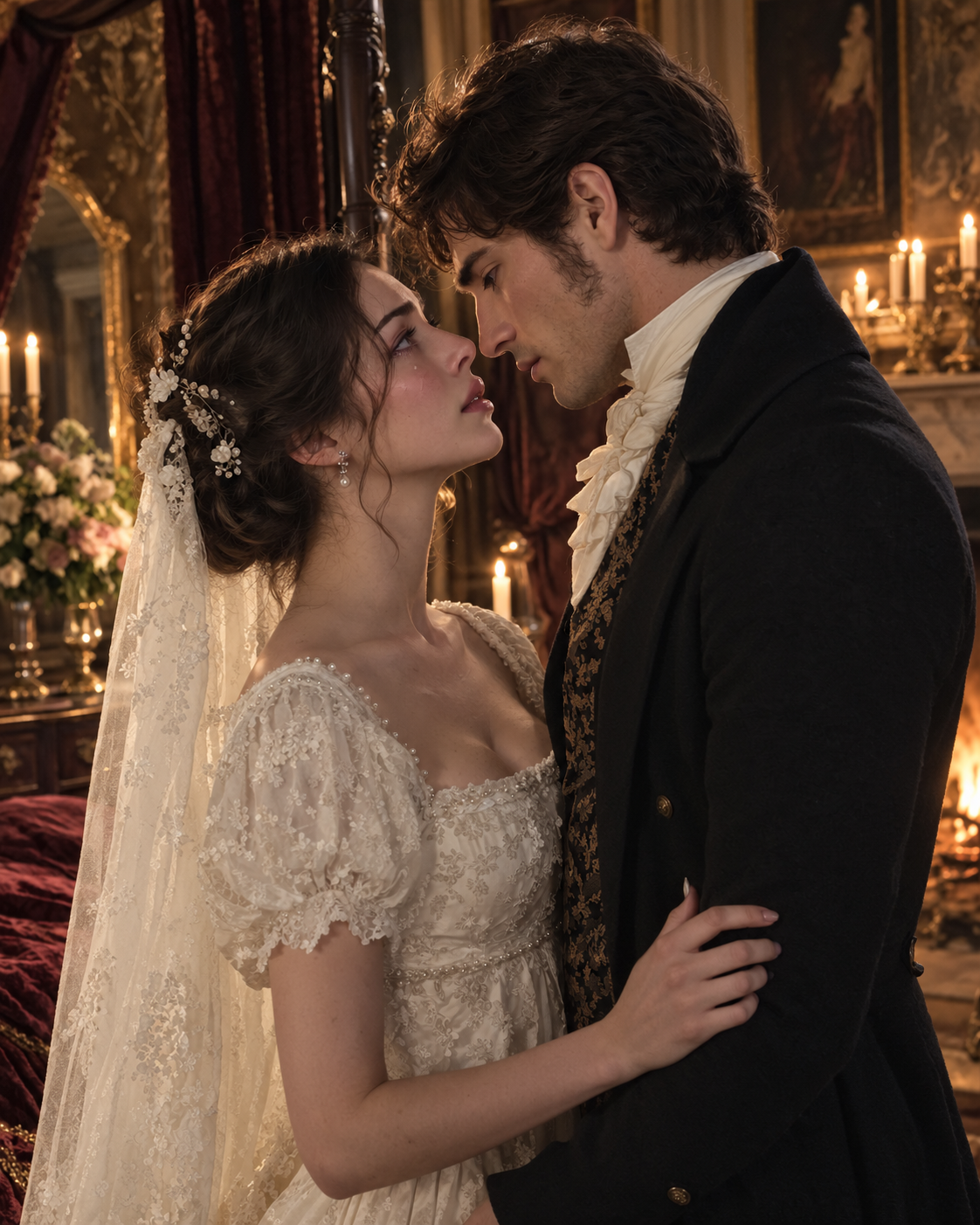
Josephine shook her head.
“No.”
Theodore looked at her.
“You don’t get to decide that before hearing the rest.”
For the first time that evening, something almost like surprise appeared in his eyes.
She squeezed his hand.
“Finish the story.”
Theodore drew a slow breath.
“When I reached him, Ashby could barely stand. He had been wounded. He thought I was an enemy officer.”
“What did you say?”
“I told him my name.”
“And he believed you?”
“Eventually.”
A faint, painful smile touched Theodore’s face.
“He kept apologizing.”
“For what?”
“For being afraid.”
Josephine’s expression softened.
“He was seventeen.”
“I know.”
Theodore looked down.
“That was the part I could never forget.”
He described carrying Robert through the darkness, moving from one piece of cover to another while gunfire passed around them. When they finally reached safety, Robert was barely conscious.
Theodore had thought the boy would die.
But he survived.
And Theodore had never seen him again.
“Why didn’t you tell anyone?”
“I did. Officially.”
“But not about what it cost you.”
“No.”
He looked toward the rain-streaked windows.
“People wanted a victory. I couldn’t give them that. All I could remember was the sound of men dying because I had chosen to move forward.”
Josephine understood then.
Major Fen had taken a wound from Theodore’s past and given it a different name.
Rage.
Violence.
Instability.
When the truth had actually been guilt.
The following morning, Theodore’s valet, Mr. Bell, arrived before breakfast.
He had served Theodore for years and possessed the unusual ability to know when his employer had slept badly without asking.
“I believe there is something Your Grace should know.”
Theodore looked up from his coffee.
“Go on.”
“Major Fen has been repeating the story for some time.”
Josephine stiffened.
“Do you know what really happened?”
Mr. Bell hesitated.
“I know what was recorded.”
He produced an old document.
“Your Grace’s report mentioned the rescue, but omitted several details.”
“Why?”
“Because you requested that they be omitted.”
Theodore closed his eyes.
“I remember.”
Mr. Bell continued.
“But there was another report.”
He placed it on the table.
“This one was written by the commanding officer.”
Josephine read it.
It described Theodore entering enemy territory alone.
It described the rescue of a seventeen-year-old soldier.
It described his refusal to leave the boy behind despite overwhelming danger.
And then came the detail Theodore had never spoken about.
The report stated that Theodore had returned carrying Ashby after fighting through the enemy position.
Not because he had lost control.
Because he had refused to abandon a child under his command.
Josephine looked at Theodore.
“Why didn’t you show me this?”
“Because I didn’t want you to think I wanted praise.”
“You don’t.”
“I also didn’t want you to think I was proud of what I had done.”
Josephine leaned closer.
“Are you?”
“No.”
“Then what do you feel?”
Theodore’s answer came quietly.
“Relief that he lived.”
That afternoon, Josephine made a decision without telling him.
She wrote a letter.
She did not know whether Robert Ashby still lived.
She did not know whether he remembered Theodore.
She only knew that if there was even a small chance he could answer one question, Theodore deserved to hear it.
She sent the letter to every address she could trace.
Weeks passed.
Then one morning, an envelope arrived.
Josephine recognized the handwriting before she opened it.
The letter began simply.
My name is Robert Ashby.
She sat down.
He remembered everything.
He remembered the darkness.
He remembered a hand pulling him upright.
He remembered Theodore telling him to keep breathing.
And he remembered one sentence.
You are going home.
Josephine’s eyes filled with tears.
Robert had gone home.
He had married.
He had children.
He had built a life.
And he had never forgotten the man who had carried him out.
Josephine read the final paragraph twice.
Robert wanted to meet Theodore.
The meeting took place several weeks later at the Ashgrove estate.
Robert arrived with his wife and young daughter.
He looked older than Theodore remembered, of course.
But the moment Theodore saw him, he seemed to forget how to breathe.
Robert walked toward him.
Neither man spoke.
Then Robert extended his hand.
Theodore stared at it.
Finally, he took it.
“I owe you my life,” Robert said.
Theodore shook his head.
“No.”
Robert frowned.
“You saved me.”
“I brought you out.”
“That is what saving someone means.”
Theodore’s eyes lowered.
“I killed men that night.”
Robert was silent for a moment.
“Did you kill them because you wanted to?”
“No.”
“Did you leave me there?”
“No.”
“Then don’t make my life into evidence against your own.”
Theodore looked up.
Robert smiled sadly.
“You were the reason I went home.”
The words broke something inside Theodore.
He turned away, covering his face with one hand.
Josephine had never seen him cry.
Not once.
But that afternoon, Theodore finally did.
Robert’s wife quietly led their daughter toward the garden, giving the two men privacy.
Robert remained beside Theodore.
“You carried me when I couldn’t walk,” he said.
“I remember.”
“I remember something else.”
“What?”
“You kept apologizing.”
Theodore looked at him.
“For what?”
“For not getting there sooner.”
Theodore’s face changed.
Robert continued.
“I was seventeen. I thought you were apologizing because you had failed me.”
He smiled.
“Now I understand you were apologizing because you cared.”
Theodore said nothing.
“You don’t have to carry that night anymore.”
For eight years, Theodore had believed the only honorable way to remember that night was through guilt.
Now a living man stood before him, telling him that memory could mean something else.
Not forgiveness from the world.
Not praise.
Simply the knowledge that someone had survived.
When Robert and his family finally left, Theodore remained outside with Josephine.
The summer evening had settled over the estate.
Crickets sang in the grass.
Far beyond the trees, the lights of the road glimmered.
“I thought I would feel different,” Theodore said.
“You do.”
He looked at her.
“How do you know?”
“Because you’re not trying to hide it.”
A small laugh escaped him.
“I suppose I’ve been hiding for a very long time.”
“Yes.”
Josephine slipped her hand into his.
“But you don’t have to anymore.”
Theodore looked at their joined hands.
Then he did something that would have astonished anyone who had known him years earlier.
He kissed her forehead.
Not cautiously.
Not briefly.
Without fear.
“I love you,” he said.
Josephine smiled.
“I know.”
“No.”
He shook his head.
“I need to say it.”
So he did.
Again and again, in the days that followed, Theodore became less afraid of saying what he felt.
He laughed more.
He opened letters himself instead of leaving them unanswered for days.
He began attending dinners he once would have avoided.
At gatherings in New York and Washington, people noticed the difference.
Some said marriage had softened him.
Others claimed Josephine had changed him.
Neither explanation was entirely true.
Josephine had not created the warmth inside Theodore.
She had simply been brave enough to wait for him to uncover it himself.
Major Fen eventually confronted the couple at a dinner in Manhattan.
He approached Theodore with the confidence of a man who still believed whispers gave him power.
“I hear you’ve been telling people an alternative version of Spain.”
Theodore looked at him calmly.
“There is no alternative version.”
Fen’s smile faltered.
“There is only the truth.”
“And what exactly is that?”
Theodore answered.
“I went back for a seventeen-year-old soldier.”
Fen’s expression tightened.
“I saved his life.”
The room had gone quiet.
“And the man is alive today.”
Fen looked around.
For the first time, his rumor had nowhere to hide.
Theodore did not threaten him.
He did not shout.
He simply walked away.
That was the moment Josephine understood the greatest change in him.
Theodore no longer needed anger to defend himself.
He no longer needed silence to protect his dignity.
And he no longer needed other people to decide what his past meant.
Months later, Robert sent another letter.
This time, there was a small photograph inside.
Robert stood with his wife and children in front of their home.
On the back, he had written:
You promised I was going home. I did.
Theodore kept that photograph in his study.
Not hidden in a drawer.
Not locked away.
On his desk.
Where he could see it every morning.
Years later, Josephine would remember that photograph whenever she saw him smile.
Because Theodore’s transformation had never been about becoming someone else.
It had been about finally allowing himself to be the man he had always been beneath the ice.
A man who cared too deeply.
A man who remembered every life he could not save.
A man who had once believed love made a person vulnerable, only to discover that love had been the very thing that gave him courage.
Their family grew.
The house became noisier.
There were children’s footsteps in the corridors, books left open on tables, laughter drifting through rooms that had once felt too formal to breathe in.
And Theodore never complained.
Sometimes Josephine would catch him standing in the doorway, watching their children play.
She would walk over and slip her arm through his.
“What are you thinking?”
He would smile.
“That I nearly missed all of this.”
She would rest her head against his shoulder.
“But you didn’t.”
“No.”
He would look at her.
“I didn’t.”
And perhaps that was the greatest lesson Theodore ever learned.
The past cannot always be changed.
Some choices cannot be undone.
Some memories will always carry scars.
But a painful memory does not have to become a life sentence.
Sometimes, the person we believe we must forgive is ourselves.
Sometimes, the proof that we survived is standing right in front of us.
And sometimes, the coldest walls are not built because there is nothing warm behind them.
They are built because there is too much.
Theodore had spent eight years believing his guilt was the only way to honor that terrible night.
Robert taught him otherwise.
Josephine gave him the courage to listen.
And in the end, the man everyone once called the Ice Duke discovered that the greatest strength was never in remaining untouched.
It was in finally allowing himself to feel everything—and still choosing to love.
For Theodore, quiet had once meant distance.
Now it meant peace.
The Ashgrove estate gradually changed with the family that lived inside it. The library that had once been Theodore’s refuge became a battlefield of children’s books, wooden toys, folded blankets, and drawings that appeared mysteriously on tables where important documents had once been placed.
Josephine loved every bit of it.
Theodore pretended to be annoyed.
He was not.
One autumn morning, years after Robert Ashby’s visit, Josephine found Theodore standing alone in the library.
He was holding the old photograph Robert had sent him.
The corners had become slightly worn from being handled so often.
“You still keep it there,” Josephine said.
Theodore looked over his shoulder.
“Of course.”
“You’ve had it for years.”
“And?”
“And nothing.”
She walked toward him.
“I simply wondered whether you still think about that night.”
“Sometimes.”
His thumb moved gently across the edge of the photograph.
“But I don’t remember it the same way anymore.”
Josephine smiled.
“How do you remember it?”
Theodore thought for a moment.
“As the night I learned that fear doesn’t always mean weakness.”
He looked toward the window.
“Theodore Ashgrove, the great Duke who never trembled.”
Josephine laughed softly.
“You did tremble.”
“I did.”
“Quite badly, according to you.”
“I was carrying a seventeen-year-old boy through enemy territory.”
“Fair enough.”
He smiled.
Then his expression became thoughtful.
“I used to think courage meant not being afraid.”
“And now?”
“Now I think courage means being afraid and going anyway.”
Josephine reached for his hand.
“That sounds like something Robert would say.”
“He probably would.”
They stood together in silence.
Outside, leaves drifted across the lawn.
The estate was no longer the imposing place it had once been. It still possessed grand columns, tall windows, and rooms large enough to make visitors feel insignificant, but the family had filled the house with something wealth could never purchase.
Life.
A sudden crash came from upstairs.
Then a child’s voice shouted, “It wasn’t me!”
Theodore closed his eyes.
Josephine began laughing.
“Your children are calling.”
“They are your children too.”
“Yes, but somehow you always look at me when they break something.”
“Because you are better at handling disasters.”
“That is not true.”
Another crash sounded.
Theodore sighed.
“Come.”
They hurried upstairs.
They found their youngest child standing in the corridor beside a broken vase.
Their older daughter stood nearby with an expression of complete innocence.
Theodore stared at them.
Neither child spoke.
Josephine folded her arms.
“Who did it?”
Silence.
Theodore raised an eyebrow.
“I’m waiting.”
Finally, the youngest pointed at his sister.
“She did.”
His sister gasped.
“I did not!”
Theodore looked at Josephine.
For one brief moment, the old Duke appeared—the man whose silence could make entire rooms nervous.
The children froze.
Then Theodore smiled.
“All right.”
They stared at him.
“No punishment?”
“Oh, there will be punishment.”
The children groaned.
“But first,” he said, “we clean it together.”
Josephine watched as he crouched beside them.
The man who had once believed tenderness was dangerous now patiently gathered broken pieces from the floor.
It was a small moment.
No newspaper would report it.
No historian would record it.
But Josephine knew these were the moments that mattered.
Years earlier, Theodore had thought his greatest failure was losing control on a battlefield.
Now he understood that his greatest victory was learning how to remain gentle afterward.
That evening, after the children were asleep, Josephine found him on the veranda.
A lantern burned beside him.
He was reading Robert’s latest letter.
“Another letter?” she asked.
“Yes.”
“Good news?”
“The best.”
He handed it to her.
Robert had written about his children, his work, and a small house he had recently purchased farther west.
At the end of the letter, there was one sentence:
My oldest son knows your name.
Josephine smiled.
“He told his son about you?”
“Yes.”
“Why?”
Theodore looked toward the dark garden.
“I asked him not to.”
“And he ignored you.”
“He said some debts should be remembered.”
Josephine sat beside Theodore.
“He doesn’t owe you anything.”
“I know.”
“Then why keep writing to each other?”
Theodore folded the letter carefully.
“Because we are no longer connected by debt.”
Josephine waited.
“We are connected by friendship.”
That answer pleased her more than she expected.
For years, Theodore had thought of Robert as the boy he had failed to save quickly enough.
Now he saw him as a man with a family, dreams, mistakes, laughter, and a future.
Robert was no longer a wound from the past.
He was simply Robert.
And Theodore was simply Theodore.
Not the Ice Duke.
Not the soldier from Spain.
Not the man from Major Fen’s rumor.
Just a husband.
A father.
A friend.
A man who had survived his own memories.
The following spring, something unexpected happened.
A letter arrived from Spain.
Theodore recognized the official seal immediately.
He almost placed it unopened into a drawer.
Josephine noticed.
“You don’t have to read it.”
“I know.”
He stared at the envelope.
For years, anything connected to Spain had made his chest tighten.
But that feeling had weakened.
Not disappeared.
Just weakened.
He opened it.
The letter contained information about an old military memorial being established for soldiers lost during the conflict.
Several names were being documented.
The commander wanted Theodore’s assistance verifying records.
At the bottom was a familiar name.
Robert Ashby.
Theodore sat motionless.
Josephine touched his shoulder.
“He survived.”
“Yes.”
“Then perhaps this is your chance to remember everyone.”
He looked at her.
“What do you mean?”
“You have spent years remembering the men who died.”
She took his hand.
“Maybe now you can remember that their lives mattered too.”
Theodore closed his eyes.
For the first time, he understood something he had missed all those years.
He had been carrying guilt because he believed remembering the dead required punishing himself.
But perhaps remembering them meant something else.
It meant acknowledging their lives.
Their names.
Their families.
The people they had loved.
The futures they had imagined.
He agreed to help.
For months, he worked through old records.
Some names were easy to verify.
Others required letters, military reports, and conversations with surviving relatives.
It was painful work.
But it was different from the pain he had carried before.
He was no longer trapped inside one terrible night.
He was helping give meaning to many lives.
When the memorial was finally completed, Theodore and Josephine traveled to New York City for the dedication ceremony.
The monument stood in a quiet public garden.
There were no grand speeches about glory.
No romanticized descriptions of war.
Only names.
Hundreds of them.
Theodore stood before the stone for a long time.
Josephine remained beside him.
“You all deserved more,” he whispered.
She heard him.
But she did not interrupt.
A young boy approached them.
He was perhaps ten years old.
He had been walking with his mother, who stopped a few steps away.
The boy looked at Theodore.
“Are you the Duke?”
Theodore smiled.
“I suppose I am.”
“My mother says you helped build this.”
“I only helped with the names.”
The boy looked at the memorial.
“Were you a soldier?”
“Yes.”
“Were you brave?”
Theodore paused.
Josephine watched him carefully.
Once, he might have given the expected answer.
Now he said:
“Sometimes.”
The boy frowned.
“Sometimes?”
Theodore crouched slightly so they were closer in height.
“Being brave doesn’t mean you’re never frightened.”
The boy listened.
“It means you try to do what is right even when you are frightened.”
The boy nodded thoughtfully.
“Were you frightened?”
“Yes.”
“Very?”
“Very.”
The boy smiled.
“Then you were brave.”
Theodore laughed softly.
“Perhaps.”
The boy ran back to his mother.
Josephine looked at Theodore.
“You liked that.”
“I did.”
“You’ve changed.”
He looked at the names carved into the stone.
“I hope so.”
That night, they returned home late.
The children were asleep.
The house was quiet.
Josephine changed into her nightclothes while Theodore stood by the window.
“What are you thinking?”
He turned.
“About how strange life is.”
“How so?”
“I spent years believing my past had ruined me.”
“And now?”
He walked toward her.
“Now I think it shaped me.”
Josephine smiled.
“That’s not always the same thing.”
“No.”
He took her hand.
“But perhaps we don’t get to choose what happens to us.”
He paused.
“We choose what we do with what happens.”
Josephine leaned against him.
“That’s a much better philosophy than the one you had when we married.”
“I was insufferable.”
“You were.”
“Cold.”
“Very.”
“Arrogant.”
“Frequently.”
He narrowed his eyes.
“You are enjoying this.”
“Immensely.”
He laughed.
The sound filled the room.
Josephine had once wondered whether she would ever hear Theodore laugh without restraint.
Now she could not remember the last day when she had not.
Years later, when their children were grown, people would still tell stories about the transformation of Theodore Ashgrove.
Some would say Josephine had melted the Ice Duke.
Others would claim Robert Ashby had freed him.
Some would insist that the scandal involving Major Fen had changed him.
The truth was more complicated.
Josephine had opened a door.
Robert had helped him walk through it.
But Theodore himself had chosen to step beyond the threshold.
That mattered.
Because no one else could live his life for him.
No one else could decide what his guilt meant.
No one else could force him to forgive himself.
And that became the lesson Theodore carried until the end of his life.
One summer evening, decades after the night in Spain, Theodore and Josephine sat beneath the old oak tree on their estate.
The children had long since left home.
Grandchildren now filled the house during holidays.
The once-formidable Duke had become an affectionate grandfather who allowed children to climb onto furniture that had been considered untouchable during his youth.
Josephine looked at him.
“You know,” she said, “I never thought I would see you like this.”
“Like what?”
“Happy.”
Theodore smiled.
“I didn’t think I would either.”
She rested her head against his shoulder.
“Do you ever think about the man you were?”
“Sometimes.”
“Do you miss him?”
Theodore considered the question.
“No.”
“Why?”
“Because he survived by being cold.”
He looked at the house where their grandchildren were laughing.
“I survived by learning how to be warm.”
Josephine’s eyes softened.
“You did.”
He took her hand.
“And you?”
“What about me?”
“Do you regret marrying the Ice Duke?”
She laughed.
“Not even once.”
“Not even when I was impossible?”
“Especially then.”
He smiled.
The evening sun disappeared behind the trees.
For a while, neither spoke.
Then Theodore said something so quietly Josephine almost missed it.
“I’m glad I went back for him.”
She knew exactly whom he meant.
“So am I.”
He looked at her.
“Even knowing what it cost?”
“Yes.”
“Why?”
Josephine squeezed his hand.
“Because if you hadn’t gone back, you wouldn’t be the man sitting here beside me.”
Theodore looked toward the distant fields.
Somewhere in the house, a child laughed.
A door closed.
Someone called for Josephine.
Life continued.
It always had.
And perhaps that was the final truth Theodore had spent so long trying to understand.
A person’s worst night does not have to become the definition of their life.
A mistake does not erase every good thing that follows.
A painful memory does not have to remain a prison.
Sometimes, healing begins when someone finally tells you the truth you were too frightened to believe:
You survived.
You mattered.
And you are allowed to live.
Theodore Ashgrove had once been known as the Ice Duke because everyone could see the wall he had built around his heart.
Almost no one understood why he had built it.
They saw the silence.
They saw the controlled expression.
They saw the distance.
They never saw the frightened young soldier he had carried through the darkness.
They never saw the guilt.
They never heard the apology Theodore had whispered for eight years.
But Josephine saw him.
Robert saw him.
And eventually, Theodore learned to see himself.
Not as a monster.
Not as a hero.
Not as the man Major Fen had invented.
Simply as a human being who had been afraid, had made difficult choices, had carried pain, and had still chosen to love.
That was enough.
More than enough.
The last photograph Josephine ever found of Theodore showed him sitting beneath the same oak tree, surrounded by grandchildren.
He was laughing.
His head was tilted back.
His eyes were closed.
There was nothing cold about him.
Nothing distant.
Nothing guarded.
Josephine kept the photograph beside her bed.
On the back, she wrote only one sentence:
He finally came home.
Not to America.
Not to the estate.
Not even to her.
He had finally come home to himself.
And perhaps that was the greatest victory of all.