For six long months, Mabel Pike had given everything she had to the Mercer Ranch
Gideon Mercer stood beside the kitchen window, holding the letter from Wichita as though it contained something far more dangerous than words.
Outside, the October wind swept across the Kansas prairie, bending the tall grass beneath a sky heavy with approaching rain.
The envelope was addressed in Mabel Pike’s familiar handwriting, the same careful lettering she had once used to label jars of preserves and record household expenses.
For several moments, Gideon could not bring himself to open it.
Eleven-year-old Tobias stood near the stove, watching his older brother with an expression that belonged to someone who had grown up too quickly.
“Is it from Mabel?” the boy finally asked.
Gideon nodded.
“Then open it,” Tobias whispered. “She wouldn’t have written if she had nothing to say.”
Gideon broke the seal with trembling fingers.
Inside was a single sheet of paper and a small, folded receipt.
He unfolded the letter first.
“Dear Gideon,
I hope the cattle have been brought closer to the barn before the November storms arrive. The western pasture fence will need attention, especially where the old cottonwood fell last spring.
Please remind Tobias to wear his wool coat when he goes outside. He has a habit of pretending he isn’t cold.
I am safely settled in Wichita.
I have found a room above Mrs. Whitcomb’s boardinghouse on Douglas Avenue, and I have begun working in her kitchen.
The wages are modest, but they are paid every Saturday.
There is something strangely beautiful about receiving money for work that everyone once expected me to give without question.
I am not writing to reopen old wounds.
I am writing because there is one thing I left behind that belongs to me.
In the bottom drawer of the kitchen cupboard, beneath the blue tablecloth, you will find a small wooden box.
Please send it to me when you can.
It contains something my mother gave me before she died, and I would be grateful to have it.
I hope you and Tobias find peace.
Mabel.”
Gideon read the letter twice.
There was no accusation in it.
No bitterness.
And somehow, that made the distance between them feel even greater.
She had remembered the broken fence, the cattle, and Tobias’s winter coat.
But she had not asked a single question about Gideon himself.
He understood why.
He had spent six months teaching her that her concern would rarely be returned.
“What does she say?” Tobias asked.
“She has work,” Gideon replied quietly. “And a place to live.”
The boy’s shoulders relaxed.
“Is she happy?”
Gideon looked down at the letter.
“I think she’s learning how to be.”
Tobias nodded, but his expression remained troubled.
“Then don’t ask her to come back just because we’re lonely.”
Gideon looked at him sharply.
The boy swallowed.
“Mabel was lonely here too. We just didn’t notice because she was always busy.”
Those words followed Gideon long after Tobias had gone upstairs.
That evening, Gideon opened the bottom drawer of the kitchen cupboard.
Beneath the faded blue tablecloth lay a small walnut box with a brass clasp.
He lifted it carefully.
The clasp had loosened with age, and when he turned the box, the lid slipped open.
Inside rested a silver thimble, a narrow ribbon, and a photograph so faded that the woman’s face was barely visible.
There was also an old newspaper clipping.
Gideon unfolded it.
The clipping described a terrible winter fire near Independence, Missouri, nearly twenty years earlier.
A young seamstress named Eleanor Pike had rescued two children from a burning farmhouse before collapsing from smoke inhalation.
She survived the fire but never fully recovered.
Beneath the clipping, in faded ink, someone had written:
“Courage is not always loud. Sometimes it is simply choosing to stay when another person needs you.”
Gideon sat down slowly.
Mabel had carried those words with her for years.
And he had mistaken her courage for an obligation.
He carefully placed everything back inside the box.
For the first time, he understood that returning her belongings was not an opportunity to demand another conversation.
It was simply something he owed her.
The next morning, he wrapped the box in clean cloth and prepared it for the mail coach.
But before he could leave for town, a rider appeared on the eastern road.
It was Samuel Briggs, the neighboring rancher.
His horse was sweating heavily, and his expression carried the urgency of bad news.
“Gideon!” Samuel shouted. “You’d better come see the creek.”
They rode together toward the northern pasture.
Heavy rain in the surrounding hills had swollen the usually shallow stream into a violent current.
The wooden footbridge connecting the Mercer property to the neighboring farms had partially collapsed.
Worse, a section of fence had broken, leaving several cattle stranded near the rising water.
Samuel pointed toward the opposite bank.
“If that creek rises another foot, you’ll lose half your herd.”
Gideon stared at the animals.
The cattle represented nearly everything he had left after two years of poor harvests, unpaid bills, and the illness that had taken his family from him.
He could not afford another loss.
His first instinct was to charge across the water and bring them back himself.
Then he remembered something Mabel had once said while watching him struggle with a broken wagon wheel.
“Pride makes expensive repairs, Gideon. Sometimes asking for help costs less.”
He turned to Samuel.
“I need men and rope.”
Samuel looked surprised.
Then he nodded.
“I’ll bring my boys.”
By noon, five neighbors had arrived.
Together, they worked in freezing rain, guiding frightened cattle through a safer crossing farther upstream.
Gideon worked beside them, soaked and exhausted.
He did not bark orders.
He did not pretend he could manage everything alone.
When the final animal reached solid ground, Samuel clapped him on the shoulder.
“Your place has been mighty quiet since Miss Pike left,” he observed.
Gideon said nothing.
Samuel glanced toward the farmhouse.
“That woman came by my place twice last summer asking whether my wife had extra preserving jars. Said she was putting food away for your winter.”
Gideon looked at him.
“I didn’t know that.”
Samuel’s expression softened.
“There’s a good deal you didn’t know.”
The words were not cruel.
They were simply true.
That night, Gideon wrote down the names of every neighbor who had helped him.
He made a second list of people to whom he owed money, favors, or apologies.
For years, he had treated independence as the refusal to need anyone.
Now he was beginning to understand that a man could stand on his own feet without standing alone.
Three days later, he sent Mabel’s wooden box to Wichita.
Inside the parcel, he included a short note.
“Your belongings are enclosed. I am sorry the box was left behind, and I hope everything arrives safely. Tobias and I are well. The western fence has been repaired. Gideon.”
He did not ask her to return.
He did not mention the notebook.
And he did not tell her how much he missed her.
Those feelings belonged to him.
They were not debts she was required to repay.
November came early to Kansas that year.
Frost silvered the fields, and the first snow dusted the hills beyond the ranch.
Gideon learned to cook simple meals without burning them.
He discovered that Tobias disliked overly salted potatoes and preferred his eggs soft.
He repaired the loose porch railing Mabel had warned him about.
He cleaned the pantry, patched the roof, and began paying his workers every Saturday without being reminded.
At first, Tobias watched these changes cautiously.
The boy had heard promises before.
But promises were easy beside a stagecoach.
They were much harder to keep during ordinary mornings when no one was watching.
One evening, after Gideon had washed the supper dishes, Tobias brought his schoolbook to the table.
“Can you help me with my arithmetic?”
Gideon nearly answered that he was tired.
He had spent twelve hours repairing a barn wall.
His shoulders ached, and his hands were rough with blisters.
Then he noticed the hesitation in the boy’s face.
Tobias was already preparing to hear no.
Gideon pulled out a chair.
“Show me where you’re stuck.”
The problem involved dividing forty-eight bushels of wheat among six families.
Gideon explained it twice.
When Tobias finally understood, his face brightened.
“Mabel used to help me like that.”
Gideon smiled sadly.
“She was a patient teacher.”
Tobias studied him.
“You can be too.”
That night, Gideon sat awake long after the house grew quiet.
He realized that becoming a better man would not be measured by one grand sacrifice.
It would be measured by hundreds of small decisions, most of which no one outside the farmhouse would ever see.
Meanwhile, nearly one hundred and fifty miles away, Mabel Pike was discovering the unfamiliar rhythm of a life that belonged to her.
Wichita was louder than the prairie.
Wagons rattled over crowded streets, merchants called from storefronts, and the railroad brought strangers from places she had only read about.
Mrs. Whitcomb’s boardinghouse stood above a bakery near Douglas Avenue.
Its kitchen was warm, noisy, and filled with the smell of fresh bread.
Mabel worked hard.
But at six o’clock each evening, her duties ended.
Mrs. Whitcomb insisted that she sit down for supper with the other workers.
And every Saturday, a small envelope containing her wages waited beside her plate.
At first, Mabel hardly knew what to do with the money.
She had become so accustomed to giving everything away that keeping something for herself felt almost selfish.
Then one cold afternoon, she bought a new pair of gloves.
They were dark blue, lined with soft wool.
Nothing extravagant.
Yet as she walked back through Wichita’s busy streets, she kept looking down at them.
For the first time in years, she had purchased something simply because she wanted it.
That evening, Mrs. Whitcomb noticed her smiling.
“Good news?” the older woman asked.
Mabel laughed softly.
“Just warm hands.”
Mrs. Whitcomb understood more than Mabel realized.
She had spent thirty years running her own establishment after losing her husband.
“A woman ought to know the pleasure of buying her own gloves,” she said.
Mabel tucked her hands into her lap.
“I suppose I’m learning.”
But independence did not make every evening easy.
Some nights, Mabel thought of Tobias.
She wondered whether he remembered to finish his homework or whether Gideon still forgot to close the barn doors before a storm.
She missed the sound of the ranch at dawn.
She even missed the stubborn old rooster that used to wake her before sunrise.
But she did not mistake missing a place for needing to return to it.
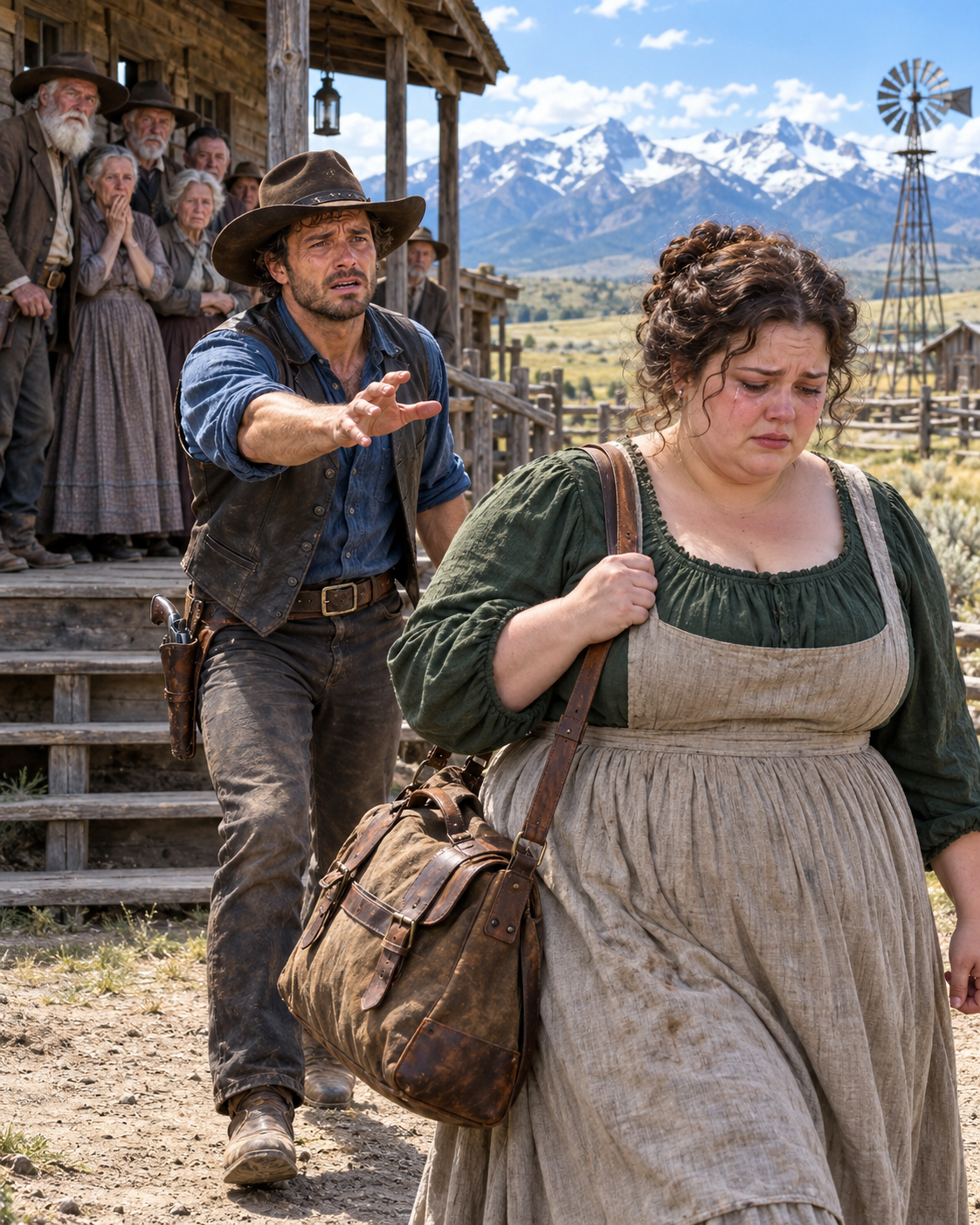
Then, in the middle of November, a parcel arrived.
When Mabel opened it and saw her mother’s wooden box, she sat down immediately.
She touched the silver thimble, the ribbon, and the faded photograph.
Tears slipped down her cheeks.
For years, those objects had been the only physical reminders of the woman who taught her that kindness was a strength.
She read Gideon’s note.
It was brief.
Almost painfully ordinary.
Yet something about it surprised her.
There was no plea.
No attempt to bargain.
No reminder of the money he had finally paid.
Just the simple completion of something she had requested.
Mabel folded the note and placed it beside the box.
She was beginning to see a difference between a man who wanted forgiveness and a man who was learning responsibility.
Still, she knew one note could not prove lasting change.
And she had no intention of building her future around another person’s promises.
Two weeks later, a new problem arrived at the boardinghouse.
Mrs. Whitcomb developed a severe cough that kept her confined to bed.
The doctor ordered rest, but the busy holiday season was approaching, and the boardinghouse was filled with railroad workers, traveling merchants, and families passing through Wichita.
Without its owner, the business quickly began to struggle.
One cook threatened to leave.
A supplier demanded immediate payment.
Two guests complained that their rooms had not been prepared.
Mabel could have limited herself to the work she had been hired to perform.
No one would have blamed her.
But she recognized the familiar signs of a household beginning to collapse.
The difference was that this time, she had a choice.
She went upstairs to Mrs. Whitcomb’s room.
“I can manage the kitchen and the rooms until you’re stronger,” she offered.
Mrs. Whitcomb looked relieved.
Then Mabel added something she would never have dared say at the ranch.
“But we should agree on the additional wages first.”
The older woman studied her for a moment.
Then she smiled.
“Of course we should.”
They settled on a fair amount and shook hands.
Mabel returned downstairs feeling a strange mixture of nervousness and pride.
She had offered help without surrendering her worth.
And nothing terrible had happened.
In fact, Mrs. Whitcomb respected her more for it.
For the next three weeks, Mabel managed the boardinghouse with remarkable efficiency.
She negotiated with suppliers, organized the staff, balanced accounts, and introduced a simple breakfast service that attracted additional customers.
Soon, travelers began asking whether Miss Pike was in charge.
When Mrs. Whitcomb recovered, she called Mabel into her office.
“I’ve been considering something,” she said.
Mabel sat across from her, uncertain what was coming.
“My knees aren’t what they used to be, and I have no children interested in this business.”
She slid a document across the desk.
“I’d like to offer you a partnership.”
Mabel stared at the paper.
A partnership.
Not merely employment.
Not charity.
A real financial interest in something she could help build.
For several seconds, she could not speak.
Mrs. Whitcomb chuckled.
“Don’t look so frightened. You’ve earned the opportunity.”
Mabel picked up the document.
She thought about the six empty flour sacks she had left on the Mercer kitchen table.
She thought about the thirty dollars Gideon had withheld.
And she thought about how close she had come to believing that her labor had no value unless someone else decided to recognize it.
“I’d like to consider the terms,” she finally replied.
Mrs. Whitcomb smiled broadly.
“That’s exactly what a good businesswoman should say.”
Back at Mercer Ranch, December brought a storm unlike anything Gideon had seen in years.
Snow fell for two days, burying the fence posts and turning the prairie into an endless white wilderness.
On the second evening, Tobias developed a fever.
At first, Gideon assumed the boy had caught a winter cold.
But by midnight, Tobias was coughing heavily, and his skin burned beneath the blankets.
Gideon remembered the remedies Mabel had once prepared.
He made warm broth, brought fresh water, and kept the stove burning.
Yet the boy’s breathing grew increasingly difficult.
Before dawn, Gideon saddled his horse and rode through the storm to fetch Doctor Harlan from the nearest town.
The journey was dangerous.
Snow blinded the road, and ice gathered along the horse’s mane.
Twice, Gideon nearly lost his way.
But he kept riding.
When the doctor finally reached the farmhouse, he examined Tobias and warned that the boy had developed a serious chest infection.
For three days, Gideon barely slept.
He followed the doctor’s instructions, kept Tobias warm, and watched for every change in his breathing.
Samuel Briggs’s wife arrived with soup and clean linens.
Other neighbors brought firewood and helped care for the livestock.
This time, Gideon accepted their help without shame.
On the fourth morning, Tobias opened his eyes.
“Did Mabel come?” he whispered.
Gideon’s heart tightened.
“No, son. She’s in Wichita.”
Tobias looked disappointed.
Then he reached for Gideon’s hand.
“You stayed.”
Gideon swallowed hard.
“Of course I stayed.”
The boy’s fingers tightened around his.
“You used to leave whenever things got sad.”
Gideon felt those words settle deep inside him.
He remembered the months after his father’s death and the later loss of the woman who had helped raise Tobias.
He had buried himself in ranch work because the house reminded him of everything he could not repair.
Mabel had stepped into the silence he left behind.
And he had allowed her to carry responsibilities that should never have rested on her shoulders alone.
“You’re right,” Gideon whispered. “I did.”
Tobias watched him.
“Are you going to leave again?”
Gideon brushed the damp hair from the boy’s forehead.
“Not when you need me.”
For the first time in a long while, Tobias seemed to believe him.
By Christmas, the boy had recovered.
The Mercer farmhouse was still poor, still weathered, and still missing the warmth Mabel had once brought into every room.
But it was no longer a place where grief ruled unchallenged.
Gideon decorated the kitchen with evergreen branches.
He baked a crooked apple pie using a recipe Tobias remembered.
And on Christmas morning, he gave the boy a small leather journal.
Inside the front cover, Gideon had written:
“Your words helped me see what I had refused to understand. Never be afraid to speak the truth with kindness.”
Tobias hugged him fiercely.
Then he asked a question Gideon had expected for weeks.
“Do you think Mabel will ever visit?”
Gideon looked toward the snow-covered fields.
“I don’t know.”
“Do you want her to?”
“Yes.”
“Then why don’t you write and ask?”
Gideon considered the question.
“Because wanting someone to return isn’t the same as giving them a good reason to.”
Tobias thought for a moment.
Then he nodded.
“That sounds like something Mabel would say.”
In January, a letter arrived from Wichita.
This one was addressed to Tobias.
Gideon handed it over without opening it.
The boy tore the envelope carefully and began reading aloud.
Mabel wrote about her work, Mrs. Whitcomb’s recovery, and the busy boardinghouse.
She described the railroad engines, the winter markets, and a stray orange cat that had adopted the kitchen as its home.
She congratulated Tobias on his arithmetic and reminded him to keep reading.
Near the end, she wrote:
“I have learned that a person can care deeply for a place without belonging to it forever. I hope you understand that leaving the ranch did not mean I stopped caring about you.”
Tobias read those words several times.
Then he turned the page.
There was one final sentence.
“Tell Gideon I am glad the western fence is standing.”
Gideon smiled when he heard it.
It was not forgiveness.
It was not an invitation.
But it was kindness freely offered.
And he had learned not to ask kindness to become something more than it was.
Spring came slowly to Kansas.
The snow melted, the creeks filled, and fresh grass appeared across the pastures.
The ranch began to recover.
Gideon sold part of his herd to settle the oldest debts and used the remaining money to purchase seed and repair equipment.
He hired a young farmhand named Caleb Morris, whose family had fallen on difficult times.
On Caleb’s first Saturday, Gideon counted out his wages and placed them directly into his hand.
Caleb looked surprised.
“Most men around here wait until month’s end.”
Gideon shook his head.
“A man who has done his work shouldn’t have to wonder whether he’ll be paid.”
He spoke without mentioning Mabel.
Some lessons became most meaningful when they changed the way a person treated someone who knew nothing of the original mistake.
By April, the Mercer Ranch was no longer prosperous, but it was honest.
That mattered more to Gideon than it once had.
Then one afternoon, Samuel Briggs rode up carrying unexpected news.
“The county agricultural fair is being held in Wichita this year,” he announced.
“They’re looking for ranchers to demonstrate new fencing methods and livestock management.”
Gideon shrugged.
“I don’t know that they’d want me.”
Samuel laughed.
“Your north pasture survived the worst winter in ten years. I’d say you’ve got something worth showing.”
Tobias, who had been listening from the porch, nearly jumped out of his boots.
“Wichita?”
Gideon knew what the boy was thinking.
He also knew it would be unfair to turn the journey into a scheme to bring Mabel home.
Still, the fair offered an opportunity for Tobias to see the city and learn something beyond ranch life.
So Gideon agreed.
They traveled to Wichita in May.
The city seemed impossibly large to Tobias.
He stared at the crowded streets, the handsome storefronts, and the enormous steam locomotive waiting beside the railroad platform.
Gideon watched his brother with quiet amusement.
They spent the morning at the fairgrounds, examining livestock and agricultural equipment.
By afternoon, Tobias had learned about new plows, improved seed varieties, and a fencing system that required fewer wooden posts.
But eventually, he asked the question Gideon had been expecting.
“Could we see Mabel?”
Gideon hesitated.
“We can send word that we’re in town. If she’d like to visit, she can decide.”
They left a message at Mrs. Whitcomb’s boardinghouse and returned to the fair.
An hour later, Mabel appeared near the entrance.
She wore a dark green dress, neat black boots, and the blue gloves she had purchased during her first winter in Wichita.
Her hair was pinned beneath a simple straw hat.
She looked healthier than Gideon remembered.
More rested.
And unmistakably confident.
Tobias saw her first.
“Mabel!”
He ran across the fairground before Gideon could stop him.
Mabel opened her arms, and the boy nearly knocked her backward with his embrace.
For several moments, neither spoke.
Then Mabel laughed through her tears.
“My goodness, Tobias. Have you grown a foot?”
“Almost,” he declared proudly.
She examined his face.
“You look well.”
“Gideon makes me eat vegetables now.”
Mabel raised an eyebrow.
“Does he?”
“And he cooks breakfast.”
“Successfully?”
Tobias considered the question.
“Most days.”
Mabel laughed again.
Gideon approached slowly.
For one brief moment, their eyes met.
“Hello, Mabel.”
“Hello, Gideon.”
He had imagined this meeting many times.
In his dreams, he always found something powerful and beautiful to say.
But standing before her now, he understood that dramatic speeches would only diminish the quiet work they had both done.
“You look well,” he said.
“I am well.”
“I’m glad.”
She studied him.
There was something different in his face.
The guarded hardness had softened.
He looked tired, but no longer defeated by the world.
Tobias began excitedly describing the ranch, the winter storm, and the apple pie Gideon had burned before making another.
Mabel listened with delight.
When he mentioned his illness, however, her expression changed.
“You were that sick?”
Tobias nodded.
“But Gideon stayed with me every night.”
Mabel looked at Gideon.
He did not seek praise.
He simply said, “He frightened me badly.”
Something passed between them then.
Not romance.
Not forgiveness.
Recognition.
Mabel was seeing a man who had finally begun accepting the responsibilities he once avoided.
And Gideon was seeing a woman who had become more fully herself after leaving him.
They walked together toward the edge of the fairgrounds.
There, beneath the shade of a cottonwood tree, Mabel told them about her new partnership with Mrs. Whitcomb.
Tobias was delighted.
“You own part of the boardinghouse?”
“A small part,” Mabel answered.
“But we’re hoping to expand the dining room next year.”
Gideon felt genuine pride.
“You always had a talent for making a place run properly.”
Mabel smiled faintly.
“Yes,” she said. “I suppose I did.”
Then she looked directly at him.
“But now I know how to charge for it.”
Gideon accepted the gentle rebuke.
“As you should.”
The afternoon passed more quickly than any of them expected.
When the fair began closing, Tobias reluctantly wandered toward a nearby wagon selling lemonade.
For the first time that day, Gideon and Mabel stood alone.
“I owe you an apology,” he said.
Mabel looked toward the bustling street beyond the fairground fence.
“You’ve already apologized.”
“I know. But I don’t think I understood what I was apologizing for.”
She turned toward him.
Gideon took a slow breath.
“I used to think my greatest mistake was keeping your wages. It wasn’t.”
Mabel remained silent.
“My greatest mistake was believing my pain mattered so much that I didn’t have to notice yours.”
The sounds of the fair seemed to fade around them.
“I was grieving,” he continued. “But I made you carry the weight of a house that wasn’t yours to save.”
Mabel’s eyes filled.
Gideon looked down.
“And when you finally left, I chased you because I was frightened of what your absence would mean for me.”
He paused.
“I should have been thinking about what staying had already cost you.”
Mabel wiped one tear from her cheek.
For a long moment, she said nothing.
Then she answered quietly.
“That is the first time you’ve truly understood it.”
Gideon nodded.
“I know.”
She looked at the man before her and thought about the six months they had shared.
There had been moments of warmth.
Small kindnesses.
Even laughter.
But there had also been long stretches of loneliness, exhaustion, and silent disappointment.
Those memories could not be erased by one sincere conversation.
And they did not need to be.
“I forgive you, Gideon,” she said at last.
He closed his eyes.
The words brought relief, but not the triumph he might once have expected.
Because forgiveness was not a command to return.
And he finally knew the difference.
“Thank you,” he whispered.
Mabel glanced toward the lemonade wagon, where Tobias was struggling to carry three cups without spilling them.
“I hope you keep becoming the man that boy deserves.”
Gideon followed her gaze.
“So do I.”
Then he asked one final question.
“Are you happy here?”
Mabel smiled.
It was not a hesitant smile or one offered to reassure him.
It came naturally.
“Yes,” she answered. “I really am.”
Gideon felt the old ache of wanting her beside him.
But beneath it was something new.
He was glad.
Genuinely glad.
And that surprised him more than anything else.
When Tobias returned, they shared their lemonade beneath the cottonwood.
Before leaving, Mabel invited them to supper at the boardinghouse.
“Not because anyone owes anyone anything,” she added with a playful smile.
“Just because I’d enjoy the company.”
Gideon laughed.
For the first time, the invitation felt like a gift rather than a responsibility.
That evening, they sat together at a long table surrounded by travelers, railroad workers, and the warm fragrance of fresh bread.
Mabel introduced Gideon and Tobias to Mrs. Whitcomb as old friends from the countryside.
Gideon noticed the pride in her voice when she spoke about the boardinghouse.
He noticed how the staff listened when she gave instructions.
And he noticed that when supper ended, Mabel sat down beside them instead of immediately beginning another round of work.
Someone else cleared the dishes.
Someone else tended the stove.
Mabel was allowed to rest.
He had never understood how beautiful such an ordinary sight could be.
Before they departed, Tobias handed Mabel a small folded paper.
It was a drawing of Mercer Ranch in spring.
The farmhouse stood beneath a bright blue sky, surrounded by green fields.
On the porch were two figures.
Gideon and Tobias.
Beside them was an empty rocking chair.
Mabel looked at the picture.
“What’s the chair for?”
Tobias smiled.
“In case you ever visit.”
She touched his cheek.
“Then I’ll know where to sit.”
No one asked her when.
No one demanded a promise.
And that made the invitation feel safe.
Over the following years, Mercer Ranch slowly flourished.
Gideon never became one of the wealthiest ranchers in Kansas.
But he earned a reputation for paying fairly, keeping his word, and helping neighbors when storms or hardship struck.
Tobias grew into a thoughtful young man who understood that strength had little to do with how loudly someone gave orders.
And Mabel’s boardinghouse became one of the most respected establishments in Wichita.
Travelers praised its meals.
Workers valued its fair wages.
Women seeking employment found not only work but an employer who understood the importance of dignity.
Every autumn, when the cottonwoods turned gold, Mabel visited the Mercer Ranch for a Sunday supper.
Sometimes she stayed only an afternoon.
Sometimes she remained for several days.
She brought stories from Wichita, gifts for Tobias, and laughter that filled the farmhouse without the burden of obligation.
She never returned as an unpaid caretaker.
And Gideon never asked her to.
Their friendship grew slowly, strengthened by respect rather than dependence.
One October evening, five years after Mabel first left the ranch, Tobias found his old notebook while cleaning the attic.
The leather cover had cracked, and the pages had yellowed.
He carried it downstairs, where Gideon was preparing supper.
“Do you remember this?” Tobias asked.
Gideon took the notebook gently.
He remembered every page.
Every small kindness.
Every painful sentence.
And especially the words that had changed the direction of his life.
“Nobody said thank you to Mabel today.”
Tobias, now sixteen, sat across from him.
“Do you ever wish things had happened differently?”
Gideon looked toward the window.
Outside, the autumn fields glowed beneath the setting sun.
For a moment, he pictured Mabel standing in the farmhouse kitchen six years earlier, tired and unappreciated.
He remembered the stagecoach disappearing down the road.
And he remembered how desperately he had wanted to undo what he had done.
“Yes,” he answered. “I wish I’d treated her better from the beginning.”
Tobias nodded.
“But if she hadn’t left, would you have changed?”
Gideon thought carefully.
“I don’t know.”
He closed the notebook.
“And that’s the part I regret most. She should never have needed to leave for me to learn how to treat her properly.”
The boy fell silent.
Then Gideon continued.
“I used to believe that love meant keeping people close, no matter what.”
He looked at Tobias.
“Now I think love sometimes means making sure someone is free to choose a life that doesn’t include you.”
Tobias smiled faintly.
“That sounds like Mabel.”
Gideon laughed.
“She taught us both a great deal.”
The following Sunday, Mabel arrived from Wichita carrying a basket of fresh bread and a jar of peach preserves.
Gideon met her at the porch.
Her hair had begun to show a few strands of silver, but her smile was as warm as the October sunlight.
“Good afternoon, Gideon.”
“Good afternoon, Mabel.”
He took the basket from her hands.
Inside, Tobias was setting the table.
Three plates.
Three cups.
And three chairs.
Mabel stepped into the kitchen and looked around.
The old farmhouse had changed over the years.
The windows were repaired.
The walls were freshly painted.
The pantry was organized.
And beside the kitchen door hung a small wooden plaque Tobias had carved.
Mabel moved closer to read it.
The words were simple.
“A home is not measured by how much one person gives, but by how faithfully everyone cares.”
She turned toward Gideon.
“That’s beautiful.”
He shook his head.
“Tobias made it.”
From the dining room, the boy called, “I learned it from both of you.”
Mabel smiled through sudden tears.
Then she sat down at the table while Gideon brought supper from the stove.
No one expected her to serve.
No one treated her presence as something owed.
She was there because she wanted to be.
And as laughter filled the farmhouse, Gideon glanced toward the kitchen drawer where the old wage ledger had once rested.
He had kept that ledger all these years.
Not as a reminder of money.
But as a reminder of the price of failing to value another human being.
He had once believed that forty dollars could bring Mabel home.
He eventually learned that money could settle the wages he owed, but it could never purchase trust, forgiveness, or love.
Those things could only be offered freely.
And they could only grow where dignity was protected.
As the October sun disappeared beyond the Kansas prairie, Mabel lifted her cup and looked around the table.
For the first time, the Mercer Ranch felt like a place she could visit without losing herself.
Gideon saw the peace in her eyes and understood something he had spent years learning.
The greatest kindness was not convincing someone to stay.
It was becoming the kind of person who would never need to hold someone back.
And sometimes, the most meaningful happy ending is not two people returning to the life they once shared.
It is two people finding the courage to build better lives, carrying forward the lessons that changed them.
Six empty flour sacks had once marked the end of Mabel Pike’s quiet suffering.
But they had also marked the beginning of something neither she nor Gideon could have imagined.
A woman’s freedom.
A man’s redemption.
A boy’s faith in the power of kindness.
And a home finally rebuilt—not by unpaid sacrifice, but by gratitude, responsibility, and respect.
THE END.