For nearly a year, one of the most feared men in New York City had been slowly dying—and no amount of money, power, or protection could explain why
The heavy oak doors burst open just as Enzo Vital pulled Carla behind his desk.
A security guard stumbled into the office, blood running down his forehead and his expensive black suit torn at the shoulder.
“Boss, we’ve got trouble! Three vehicles breached the eastern gate. They’re armed, and they’re heading straight for the house!”
Before Enzo could respond, the unmistakable sound of gunfire shattered the peaceful afternoon.
Glass exploded somewhere down the hallway.
Carla flinched, covering her ears as the sound echoed through the enormous Long Island mansion.
Enzo remained frighteningly calm.
“Lock down the west wing. Get the household staff into the basement. Nobody leaves the property without my authorization.”
The guard nodded and disappeared.
But Carla wasn’t looking at the door anymore.
She was watching Vincent Moretti.
The underboss stood near the bookshelves, his right hand concealed inside his jacket, his face pale beneath the warm office lighting.
And his phone was still vibrating.
“Vincent,” Enzo said quietly.
The man looked up.
“Put your phone on my desk.”
Vincent forced a laugh.
“Enzo, we’ve got an army outside. This isn’t the time for—”
“Your phone.”
Two words.
That was all it took.
For fifteen years, Vincent had stood beside Enzo through federal investigations, territory disputes, and dangerous negotiations with rival criminal organizations.
He had attended family funerals, celebrated birthdays, and shared Sunday dinners at the same table where Enzo’s mother once served homemade pasta.
Enzo had trusted him with everything.
Now, watching Vincent hesitate, he felt something colder than fear.
He felt recognition.
Carla noticed the smallest movement of Vincent’s fingers.
Then everything happened at once.
Vincent reached inside his jacket.
Enzo lunged forward.
Carla grabbed the heavy ceramic sculpture sitting beside the desk and struck Vincent’s wrist before he could pull his weapon free.
The gun fell onto the Persian carpet.
Enzo slammed Vincent against the bookshelf, sending leather-bound volumes crashing to the floor.
“Who sent them?” Enzo demanded.
Vincent struggled, his expression twisted with panic.
“You don’t understand what’s happening!”
“Then explain it.”
Another burst of gunfire echoed from downstairs.
Vincent’s eyes darted toward the office windows.
“They weren’t supposed to come this early.”
Silence.
Even the distant alarms seemed to fade.
Enzo slowly loosened his grip.
“What did you just say?”
Vincent realized his mistake immediately.
But the words had already escaped.
And for Enzo Vital, betrayal had never required a second confession.
Carla’s heart pounded as Enzo ordered Vincent to sit in the chair opposite his desk.
He retrieved the fallen weapon and placed it out of reach.
“Start talking.”
Vincent wiped sweat from his forehead.
Outside, the unmistakable rumble of engines moved across the estate’s gravel driveway.
“They offered me a deal,” Vincent whispered.
“Who?”
“Salvatore Russo.”
Enzo’s face hardened.
Salvatore Russo controlled a rival criminal network operating between northern New Jersey and New York City.
For years, Russo had wanted Enzo’s waterfront businesses, warehouses, and connections along the East Coast.
But direct confrontation had always been too expensive.
Too dangerous.
Too uncertain.
“So he decided to kill me slowly?” Enzo asked.
Vincent shook his head.
“No. That wasn’t how it started.”
Carla stepped closer, her eyes narrowing.
“What do you mean?”
Vincent stared at her with undisguised hatred.
“Those plates were already dangerous. Nobody needed to put anything in his food.”
Enzo’s jaw tightened.
“Keep talking.”
Vincent swallowed.
“Russo had someone research the old dinnerware after hearing you refused to replace it. He found out that certain antique glazes could release toxic metals. He knew you ate from those plates almost every night.”
Carla felt a wave of disbelief.
The discovery she had made through years of studying ceramics had been understood by someone else long before she entered the mansion.
Someone who had chosen to use that knowledge in the cruelest possible way.
“And you knew?” she asked.
Vincent looked away.
Enzo leaned forward.
“Answer her.”
“Yes.”
The admission settled over the room like dust after an explosion.
Enzo’s expression didn’t change.
But Carla saw the pain behind his eyes.
“How long?”
Vincent hesitated.
“Almost a year.”
For a moment, Enzo couldn’t speak.
A year.
Twelve months of doctors, sleepless nights, collapsing strength, and fear.
A year of wondering whether he would live to see another Christmas.
And the man sitting across from him had watched everything happen.
“You could have told me,” Enzo said.
Vincent’s voice rose defensively.
“You don’t understand! Russo promised me control of your operations when you were gone. I spent fifteen years working in your shadow!”
Enzo stared at him.
“I gave you a place at my table.”
Vincent laughed bitterly.
“Exactly. Your table. Your empire. Your rules.”
Carla looked toward the hallway as footsteps thundered closer.
She understood that the conversation was running out of time.
“Enzo,” she said urgently, “we have to move.”
He nodded.
Then he did something Vincent clearly hadn’t expected.
Instead of retaliating, Enzo pressed a button on the office intercom.
“Daniel, get upstairs. Vincent is detained. Keep him alive and secure.”
Vincent’s face drained of color.
“You can’t seriously think—”
“I’m thinking,” Enzo interrupted, “that you’ve already cost me enough of my life.”
Within moments, Daniel Mercer, Enzo’s longtime head of security, entered with two guards.
They restrained Vincent and escorted him toward a protected room in the interior wing.
But before reaching the hallway, Vincent twisted around.
“Russo won’t stop! He knows you’re weak, Enzo! He knows you can barely stand!”
Enzo looked at his former friend without blinking.
“Then he’s about to learn that weakness and surrender are not the same thing.”
The doors closed.
Carla exhaled shakily.
She had never imagined that an ordinary inspection of antique pottery could lead to something like this.
Yet standing beside Enzo, she realized the greater danger had never been the plates alone.
It was the people who knew the truth and chose silence.
A tremendous crash shook the lower floor.
Daniel’s voice erupted through the radio.
“Boss, they’re inside the service entrance. We need to relocate now.”
Enzo tried to stand.
His knees buckled.
Carla caught his arm before he could fall.
For a brief instant, embarrassment crossed his face.
The most feared man in New York’s criminal underworld could no longer trust his own legs.
“Don’t look at me like that,” he muttered.
“Like what?”
“Like I’m dying.”
Carla tightened her grip.
“Then stop acting as if you have to survive everything alone.”
He stared at her.
Nobody spoke to Enzo Vital that way.
Not anymore.
But Carla’s voice held no disrespect.
Only determination.
She helped him toward a concealed door behind a wall of bookshelves.
Daniel entered a security code, revealing a narrow passage leading toward the property’s underground garage.
The mansion had been designed to survive almost anything.
Apparently, Enzo had never considered that its greatest vulnerability might be someone he trusted.
As they moved through the dim corridor, Carla heard shouting overhead.
A chandelier crashed somewhere behind them.
Enzo’s breathing became uneven.
“You’re getting worse,” she whispered.
“I’ve had worse days.”
“That doesn’t make this one acceptable.”
He almost smiled.
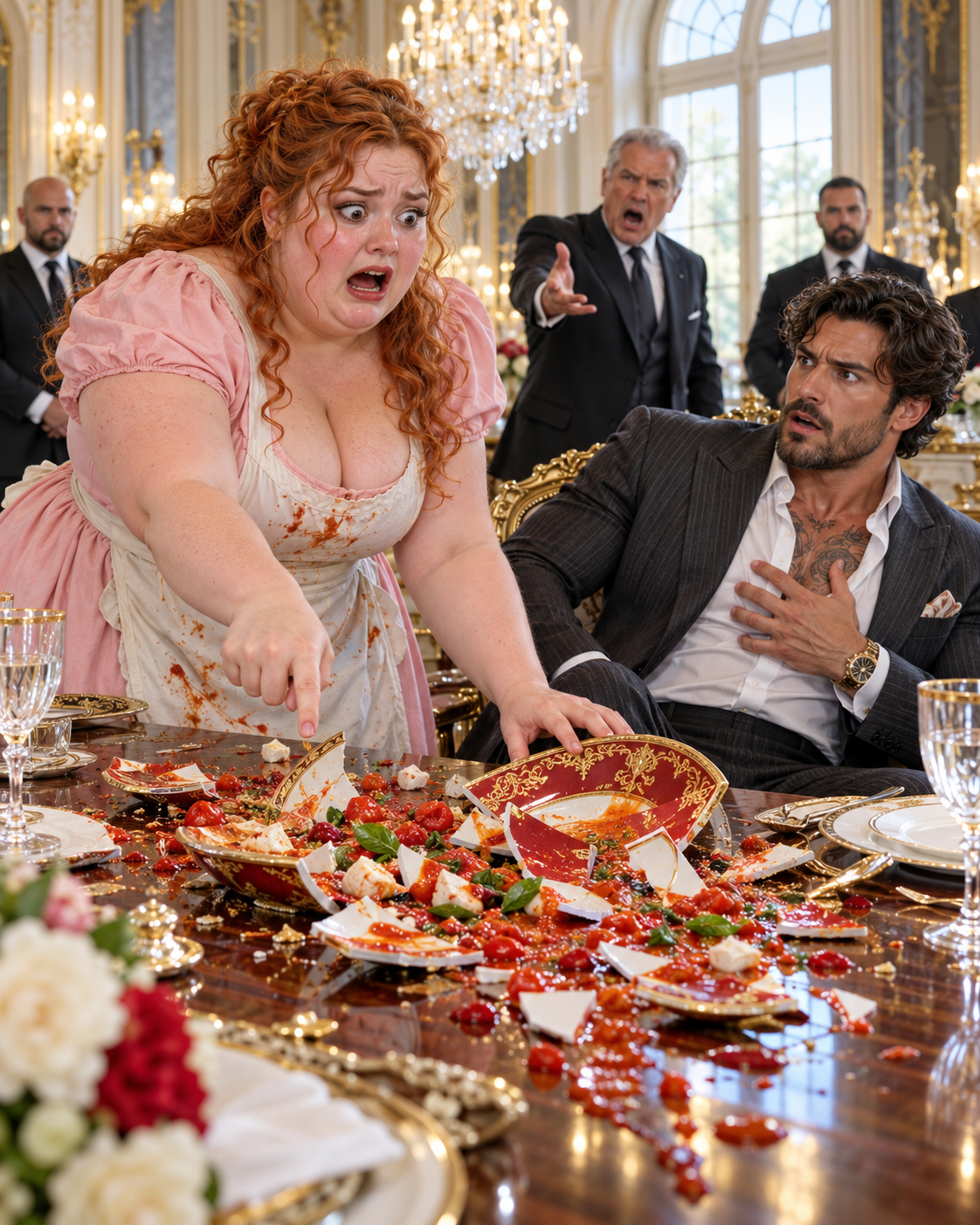
They reached the underground garage just as another explosion rattled the building.
Daniel opened the rear door of an armored Cadillac Escalade.
“Hospital,” Carla ordered.
Daniel glanced at Enzo.
“Boss?”
Enzo leaned against the vehicle, struggling to remain upright.
He looked toward the mansion that had belonged to his family for generations.
Then he turned to Carla.
“Hospital.”
The word carried more surrender than any command he had ever given.
And perhaps more courage.
Twenty minutes later, the vehicle sped along a Long Island expressway toward a private medical facility in Manhattan.
Behind them, security teams and responding authorities converged on the estate.
Russo’s attackers had expected a weakened target, confusion, and an easy victory.
Instead, they found a prepared security system, armed resistance, and an evacuation route they hadn’t known existed.
Several attackers were apprehended as the remaining vehicles fled.
The estate suffered significant damage.
But the people sheltered in the basement survived.
And Enzo Vital was still alive.
Carla sat beside him in the back seat, holding a folded medical report that detailed the laboratory’s findings.
The words seemed almost unreal.
Lead.
Cadmium.
Potential chronic exposure.
Possible organ damage.
The laboratory had confirmed hazardous metals in the aged glaze and concerning results from simulated food-contact testing.
Subsequent medical investigations would be needed to determine the full extent of Enzo’s exposure.
But one thing was already clear.
The plates should never have been used for serving food.
Enzo watched the city skyline appear in the distance.
“My mother loved those plates,” he murmured.
Carla looked at him.
“She loved you more.”
He closed his eyes.
For the first time, he allowed himself to believe that keeping her memory alive didn’t require preserving every object she had touched.
At the hospital, specialists moved quickly.
They ordered blood and urine tests, assessed his kidney and liver function, and reviewed months of medical records that had previously seemed impossible to connect.
The toxicology team found evidence consistent with significant heavy-metal exposure.
His kidney function was badly impaired.
Other abnormalities required urgent evaluation.
And the persistent abdominal pain and neurological symptoms now had a possible explanation that physicians could investigate.
Treatment began under close specialist supervision.
The doctors were careful not to promise a full recovery.
Chronic exposure could leave lasting damage, and removing the source was only the first step.
But Enzo finally had something he hadn’t possessed in nearly a year.
A path forward.
Carla stayed in the waiting room until nearly sunrise.
She sat beneath harsh fluorescent lights, still wearing the same clay-stained denim jacket she’d worn when she arrived at the mansion.
Around her, nurses moved between rooms, phones rang softly, and the smell of hospital coffee filled the air.
She was exhausted.
She was frightened.
And she couldn’t stop thinking about Vincent’s confession.
He hadn’t needed to tamper with a single meal.
He had simply watched a dangerous situation continue while accepting the promise of power.
The cruelty of that realization disturbed Carla more than the gunfire.
At six in the morning, Daniel entered the waiting area.
His suit was wrinkled, and there was dried blood on his collar.
“He’s asking for you.”
Carla stood immediately.
“How is he?”
“Stable. Tired. Still giving everyone orders.”
She managed a small smile.
“That sounds familiar.”
Daniel hesitated.
“Miss Carla, there’s something you should know.”
Her smile disappeared.
“Vincent has been taken into custody. The authorities are investigating his communications with Russo.”
“And Russo?”
“Not in custody yet. But there’s evidence tying his organization to the attack.”
Daniel looked down.
“The police also want to speak with you.”
Carla nodded.
She had witnessed too much to pretend otherwise.
But before following Daniel, she asked a question that surprised him.
“Did they save the plates?”
He frowned.
“From the dining room?”
“Yes.”
“Most of them.”
“Good.”
Daniel looked confused.
Carla continued.
“They aren’t just family heirlooms anymore. They’re evidence.”
Inside Enzo’s hospital room, morning sunlight spilled across pale walls and stainless-steel equipment.
He looked smaller beneath the white blankets.
Without his tailored suits, expensive watch, and imposing office, he seemed almost ordinary.
Almost.
His sharp eyes followed Carla as she entered.
“You look terrible,” he said.
She folded her arms.
“You look worse.”
For a moment, neither spoke.
Then Enzo laughed.
It was a quiet, exhausted laugh.
But it was real.
“Daniel tells me you helped save everyone.”
“I helped you get into a car.”
“You also disarmed a man who was reaching for a gun.”
Carla glanced toward the window.
“I panicked.”
“You hit him with a sculpture.”
“It was the closest thing available.”
“It was worth twelve thousand dollars.”
She turned toward him, horrified.
Enzo smiled faintly.
“Best twelve thousand dollars I’ve ever spent.”
The laughter faded as he studied her face.
“Why did you stay?”
Carla pulled a chair beside his bed.
“Because you still need help.”
“I can afford the best care in the country.”
“Then listen to the people providing it.”
He raised an eyebrow.
She leaned forward.
“And because I don’t like leaving a story unfinished.”
Enzo looked at her for a long moment.
Something changed between them.
Not the sudden, dramatic transformation of strangers falling in love.
Something quieter.
Respect.
The kind that couldn’t be bought, demanded, or enforced.
Over the following weeks, Enzo’s condition slowly improved.
His medical team adjusted treatments, monitored his organ function, and worked to reduce further harm.
Recovery was uneven.
Some mornings he could walk down the hospital corridor without assistance.
Other mornings, even sitting upright felt exhausting.
Carla visited whenever her work allowed.
Sometimes she brought books.
Sometimes she brought coffee.
Once, she brought a small piece of unfinished porcelain.
Enzo held it between his fingers.
“What is it?”
“A bowl.”
“It looks like a lump of clay.”
“That’s because it’s unfinished.”
He studied the object.
“Why bring it here?”
Carla smiled.
“To remind you that unfinished things aren’t necessarily ruined.”
He placed the bowl carefully on his bedside table.
And every evening, when the hospital lights dimmed, he looked at it.
Meanwhile, the investigation into Vincent Moretti and Salvatore Russo began uncovering a far larger conspiracy.
Financial records revealed hidden payments.
Messages showed how Russo’s associates had learned about Enzo’s illness.
Surveillance footage connected several attackers to vehicles used in the assault on the estate.
Vincent eventually admitted that he had concealed warnings about the potentially hazardous dinnerware and discouraged changes to Enzo’s dining routine.
He had also supplied information about Enzo’s declining health and security arrangements.
But the most devastating evidence came from an unexpected place.
A former household employee had kept copies of emails describing concerns about the antique plates.
The warnings had been sent months before Carla arrived.
Vincent had intercepted them.
He had dismissed the employee and ensured Enzo never saw the messages.
When Daniel brought the records to Enzo’s hospital room, Carla was sitting by the window.
Enzo read the documents in silence.
Then he lowered them onto his lap.
“She tried to tell me.”
Carla looked up.
“Who?”
“One of the housekeepers. Margaret Ellis. She worked for my family for eleven years.”
He swallowed.
“Vincent told me she was stealing.”
Carla watched grief settle across his face.
“Was she?”
“No.”
Enzo shook his head.
“She was trying to protect me.”
For the first time, Carla saw him confront a painful truth about the empire he had built.
He had surrounded himself with men who obeyed his commands.
But somewhere along the way, he had stopped listening to people who had no power.
He had mistaken obedience for loyalty.
And silence for peace.
“Find her,” he told Daniel.
Not to frighten her.
Not to persuade her to forget.
To apologize.
Margaret Ellis lived in a small house in Queens with her daughter and two grandchildren.
When Enzo visited several weeks later, she opened the door and froze.
She had every reason to be afraid.
But Enzo stood on her porch without guards crowding behind him.
He carried no expensive gift.
Only a letter.
“I owe you an apology,” he said.
Margaret stared at him.
“I lost my job because I tried to warn you.”
“I know.”
“I had bills, Mr. Vital. A family.”
“I know.”
Her eyes filled with tears.
Enzo lowered his head.
“I should have listened.”
He arranged restitution for her lost wages and damages, without asking her to remain silent or withdraw her cooperation with investigators.
Margaret accepted the apology cautiously.
Forgiveness, she told him, was not something he could purchase.
And for once, Enzo didn’t try.
He simply thanked her for having cared enough to speak.
By December, federal and local investigators had gathered substantial evidence against Vincent and several members of Russo’s organization.
Russo was eventually arrested following a coordinated investigation into the attack, financial crimes, and organized criminal activity.
The case attracted enormous attention across New York.
News outlets described an extraordinary conspiracy involving a powerful crime figure, contaminated antique dinnerware, and an unlikely ceramic artist from Brooklyn.
Carla hated the publicity.
Reporters gathered outside her pottery studio.
Strangers called her a hero.
Some wanted interviews.
Others wanted photographs.
One morning, she arrived to find a television crew standing beside her front door.
She walked past them, unlocked the studio, and turned on her pottery wheel.
Clay still needed shaping.
Kilns still needed firing.
Bills still needed paying.
And Carla had never wanted to become famous for being near someone else’s suffering.
Then Enzo made a request that changed everything again.
He arrived at her studio on a cold Friday afternoon, accompanied by Daniel.
The streets of Brooklyn were decorated with Christmas lights, and a light snowfall drifted between the old brick buildings.
Enzo looked healthier.
Not fully recovered.
But stronger.
His face had regained some color, and he walked without assistance.
Carla was shaping a vase when he entered.
“You’re blocking my light,” she said without looking up.
“Good afternoon to you too.”
She smiled.
“Shouldn’t you be resting?”
“My doctors said moderate activity was good for me.”
“I doubt they meant bothering ceramic artists.”
Enzo laughed softly and stepped closer.
He studied the rows of handmade mugs, bowls, and plates arranged along the wooden shelves.
Then his expression became serious.
“I want to commission something.”
Carla wiped her hands on a towel.
“What?”
“A complete dinner service.”
“How many pieces?”
“Enough for the family.”
She hesitated.
“Enzo…”
He raised a hand.
“No red glaze.”
Carla understood immediately.
He continued.
“I want bone-white porcelain. Simple. Beautiful. Every piece properly made, tested, and safe for serving food.”
She looked at him.
“And what happens to your mother’s plates?”
“They’ll be preserved as part of a documented collection. Behind glass. Where they belong.”
For several seconds, Carla said nothing.
Then she nodded.
“I can do that.”
But Enzo hadn’t finished.
“I want you to design them however you think best.”
Carla folded her arms.
“You’re not going to tell me what they should look like?”
“No.”
“You’re not going to have someone negotiate my price?”
“No.”
“You’re not going to send Vincent to complain?”
The smile vanished from both their faces.
Then Enzo shook his head.
“No more Vincent.”
Carla studied him.
“Good.”
She picked up a small porcelain sample and placed it in his palm.
“This is the finish I’d recommend. White, with a soft translucent glaze.”
He turned it toward the winter light.
It was almost luminous.
“So simple,” he murmured.
“Simple doesn’t mean easy.”
Enzo looked at her.
“I think I’m beginning to understand that.”
Carla insisted on using documented food-contact-safe materials, firing the porcelain properly, and arranging appropriate testing before the finished pieces entered his kitchen.
Enzo agreed to every condition.
For once, he wasn’t interested in rushing anyone.
He had learned what impatience could cost.
The commission took several months.
During that time, Enzo’s recovery continued under medical supervision.
His kidney function improved somewhat, although he would require long-term monitoring.
Some symptoms persisted.
There were days when fatigue forced him to cancel meetings and spend the afternoon resting.
Carla never pretended the damage could be erased.
She simply reminded him that healing wasn’t always a straight line.
At the same time, Enzo began changing the way he lived.
He cooperated with the authorities and retained legal counsel to confront the criminal operations that had defined much of his adult life.
Leaving that world was neither simple nor immediate.
There were legal consequences, damaged relationships, and people who had been hurt by decisions made under his leadership.
He couldn’t rewrite history.
But he could stop pretending it didn’t matter.
He began separating legitimate businesses from criminal activities and establishing independent oversight where possible.
Some former associates walked away.
Others threatened him.
A few were genuinely relieved.
Carla watched these changes from a distance at first.
She had no intention of becoming an accessory to Enzo’s old world.
And she made that clear.
One evening, while they walked beside the East River beneath the glow of the Manhattan skyline, he asked her whether she would ever consider living at the estate.
Carla stopped.
“Enzo, I have a life.”
“I know.”
“I have my studio. My students. My own work.”
“I know.”
“And I won’t become another beautiful thing you keep inside that enormous house.”
He turned toward her.
“Is that what you think I want?”
“I don’t know. But I need you to understand something.”
She looked directly into his eyes.
“You don’t get to own people just because you’re afraid of losing them.”
The words struck him harder than any accusation.
For decades, ownership had been the language of his life.
Territory.
Property.
Business.
Power.
Even loyalty had been treated as something that belonged to him.
But Carla refused to exist inside that system.
And strangely, that was one of the things he admired most about her.
He nodded slowly.
“Then I’ll have to learn another way.”
She smiled.
“That’s a good place to start.”
By spring, the first set of porcelain was ready.
Carla invited Enzo to the studio to inspect the finished pieces.
The plates were extraordinary in their simplicity.
Pure bone-white porcelain with delicate, almost invisible lines around the rims.
No gold.
No elaborate decoration.
No dramatic crimson glaze.
Just clean forms shaped by patient hands.
Carla lifted one plate and placed it beneath the studio’s skylight.
The afternoon sun passed softly across its surface.
“Every piece has been tested,” she explained. “They’re intended for regular food use.”
Enzo ran his fingers along the smooth rim.
“They’re beautiful.”
Carla smiled.
“Your mother liked red because it reminded her of family celebrations, didn’t she?”
He nodded.
“She used to say a dinner table should feel alive.”
Carla walked to a nearby shelf and returned with a small porcelain serving dish.
At its center was a single red flower, painted beneath a clear, food-safe glaze.
Not the deep, dangerous red of the antique plates.
A gentle red.
The color of a blooming rose.
“I thought you might still want a little of her spirit at the table.”
Enzo stared at the dish.
For a long moment, he couldn’t speak.
Then he asked quietly, “How much do I owe you?”
Carla laughed.
“For the plates? I’ll send an invoice.”
“And for this?”
She glanced at the little flower.
“That one’s a gift.”
He looked away, blinking rapidly.
“Thank you.”
It was a small moment.
No gunfire.
No betrayal.
No dramatic confrontation.
Yet Carla would remember it longer than almost anything that had happened at the mansion.
Because she had just seen a man who once commanded fear learn how to accept kindness.
The new dinner service arrived at Enzo’s restored Long Island estate on a warm Sunday afternoon.
The damaged windows had been replaced.
The broken chandeliers repaired.
The security system redesigned.
But the house felt different.
The old red plates were no longer stacked inside the dining room cabinets.
They rested in a protected display case in a quiet family gallery, accompanied by documentation explaining their history and why they could no longer be used for food.
Beside them stood a photograph of Enzo’s mother.
In the photograph, she was laughing.
Her hands were covered in flour.
A wooden rolling pin rested beside a half-finished tray of pasta.
Carla stood in front of the display for several minutes.
Enzo joined her.
“She would have liked you,” he said.
Carla smiled.
“She sounds like she was quite a woman.”
“She was.”
He looked toward the photograph.
“I spent so many years trying to keep everything exactly as she left it.”
“And?”
“I forgot that what she wanted most was for her family to keep living.”
Carla reached for his hand.
He took it gently.
That evening, Enzo hosted his first family dinner in the renovated dining room.
There were no intimidating business meetings.
No whispered negotiations.
No underboss seated at his right hand.
Instead, there were relatives he hadn’t seen in years, former employees he had reconciled with, and a few trusted friends who had remained through the difficult months.
Margaret Ellis attended with her daughter.
Daniel arrived without a firearm visible beneath his jacket.
And Carla took the seat beside Enzo.
The table was set with bone-white porcelain.
Fresh bread rested in the center.
A large bowl of pasta stood beside a platter of roasted vegetables.
And at the far end, the little serving dish with its red flower held freshly picked garden herbs.
Enzo looked around the table.
For most of his adult life, he had believed power meant being the person everyone feared.
He had mistaken isolation for authority.
And control for security.
But that evening, listening to the sounds of conversation and laughter, he realized something far more unsettling.
He had never truly understood what it meant to feel safe.
He lifted his glass of sparkling water.
Everyone turned toward him.
“I want to say something.”
The room grew quiet.
Enzo looked down at the porcelain plate in front of him.
“A year ago, I thought I was dying because someone had found a way to get past my guards.”
He paused.
“I searched for enemies outside my home while the danger sat at my own table.”
Several guests lowered their eyes.
“I trusted the wrong people. I ignored the right ones. And I nearly paid for those mistakes with my life.”
He looked toward Margaret.
“Some people tried to warn me.”
Then toward Carla.
“One person refused to let me ignore the truth.”
Carla shook her head slightly, embarrassed by the attention.
But Enzo continued.
“I used to believe that strength meant never needing anyone.”
His voice softened.
“Now I know that real strength sometimes begins when you admit you need help.”
He raised his glass.
“To second chances. To those brave enough to tell the truth. And to the people who stay because they choose to, not because they’re afraid to leave.”
Glasses lifted around the table.
For the first time in years, the dining room filled with genuine laughter.
Later that night, after the guests had gone home, Carla stood on the terrace overlooking the dark gardens.
The Atlantic breeze carried the smell of salt and spring flowers.
Beyond the trees, the distant lights of Long Island shimmered against the horizon.
Enzo joined her, carrying two cups of tea.
He handed one to Carla.
“You were quiet at dinner.”
“I was thinking.”
“About what?”
She smiled.
“About the first day I came here.”
He chuckled.
“When you told me my mother’s plates might be killing me?”
“When your underboss laughed at me.”
Enzo’s expression darkened briefly.
Then he sighed.
“I should have listened sooner.”
“You listened eventually.”
“I nearly got you killed.”
Carla looked at him.
“That wasn’t your only mistake.”
He turned toward her.
She continued gently.
“You trusted someone who didn’t deserve it. You ignored people who were trying to help. And you built a life where everyone was afraid to disagree with you.”
Enzo accepted every word.
“But you’re changing,” she said.
“I’m trying.”
“That’s all anyone can do, as long as they keep doing it.”
He looked out over the gardens.
“Do you ever regret walking into my house that afternoon?”
Carla considered the question.
She remembered the terrifying sounds of gunfire.
Vincent’s betrayal.
The hospital corridors.
The long nights of uncertainty.
And the first time she’d seen Enzo laugh without hiding behind his reputation.
“No,” she answered.
“Not even a little?”
She turned toward him.
“I regret what happened to you. I regret the people who were hurt. But I don’t regret telling the truth.”
Enzo nodded.
“Neither do I.”
For a while, they stood together without speaking.
Then Enzo reached into his coat pocket.
Carla glanced at him suspiciously.
“If you’re about to pull out an enormous diamond ring, I’m going back to Brooklyn.”
He laughed.
“No ring.”
Instead, he produced a small brass key.
Carla frowned.
“What’s that?”
“There’s an old greenhouse on the west side of the property.”
“I’ve seen it.”
“It hasn’t been used in years.”
“And?”
“I had it restored.”
Carla looked at him.
“Enzo…”
He raised one hand.
“Before you object, listen.”
She folded her arms.
He smiled.
“I thought it might make a good pottery studio. Natural light. Plenty of space. A separate entrance.”
Carla stared at the key.
“I already have a studio.”
“I know.”
“And I’m not giving it up.”
“I wouldn’t ask you to.”
“Then why?”
Enzo looked at her with an expression she had never seen during their earliest meetings.
Vulnerability.
“Because I’d like you to have a place here, too. If you want one.”
She said nothing.
“No conditions,” he added. “No expectations. The building can remain empty forever if that’s what you prefer.”
Carla examined the key resting in his palm.
For a man who once tried to control everything around him, the offer was remarkable.
He wasn’t demanding an answer.
He wasn’t negotiating.
He was giving her a choice.
She took the key.
“I’d like to see it.”
Enzo smiled.
“Tomorrow?”
“Tomorrow.”
Over the following months, the restored greenhouse became a small ceramic workshop and teaching space.
Carla continued operating her Brooklyn studio while using the new workshop for larger projects and community classes.
Local students visited to learn pottery techniques, material safety, and the history of ceramic glazes.
Some came from families who could never have afforded private art lessons.
Enzo helped fund scholarships through a legally established community arts program, leaving Carla and an independent board in charge of educational decisions.
He learned not to interfere.
Mostly.
One afternoon, Carla caught him trying to rearrange the pottery shelves.
“Enzo!”
He froze.
“What?”
“Those are organized by firing temperature!”
He slowly returned a bowl to its original position.
“Of course they are.”
She gave him a look.
He smiled and backed away.
Outside, a group of teenagers burst into laughter.
And for a man once feared across New York, the sound was strangely satisfying.
A year after Carla first entered the mansion, Enzo returned to the family gallery alone.
He stood before the antique red plates.
Their crimson glaze still gleamed under the carefully controlled display lights.
They remained beautiful.
And they remained dangerous for food use.
Both truths could exist together.
Enzo studied his mother’s photograph and remembered something she had told him when he was a boy.
“Never confuse the price of a thing with its worth.”
As a child, he hadn’t understood.
As a young man, he’d ignored it.
As a powerful criminal figure, he’d believed the opposite.
Everything had a price.
Every person could be bought.
Every obstacle could be removed.
But Carla had proved him wrong.
Her integrity wasn’t for sale.
Margaret’s warning had been offered without reward.
And his mother’s love had never depended on the value of a single plate.
Enzo gently touched the glass display case.
“I finally understand, Mama,” he whispered.
Behind him, footsteps approached.
Carla appeared in the doorway, her hands lightly dusted with white clay.
“Dinner’s ready.”
He turned.
“What’s on the menu?”
“Your mother’s tomato sauce.”
Enzo smiled.
“On the new plates?”
Carla raised an eyebrow.
“Obviously.”
He walked toward her.
And together, they returned to the dining room.
The table was glowing beneath the chandelier.
Fresh pasta steamed in a large white porcelain serving bowl.
The red flower on Carla’s handmade dish caught the golden light.
Enzo pulled out a chair for her.
Carla sat down, smiling.
A year earlier, that same dining room had been filled with suspicion, fear, and secrets.
Now it held something he had once thought impossible.
Peace.
He had survived the poisoned legacy of an antique collection, the betrayal of his closest associate, and an attack designed to end his life.
But survival wasn’t the greatest victory.
The greatest victory was learning that a second chance meant nothing unless he used it to become a different man.
And Carla had learned something, too.
Courage didn’t always arrive wearing a uniform or carrying a weapon.
Sometimes it wore a clay-stained jacket and spoke a truth nobody wanted to hear.
Sometimes saving a life began with noticing a small crack that everyone else had overlooked.
And sometimes the most important thing an artist could create wasn’t a beautiful object.
It was an opportunity for someone to begin again.
That night, Enzo looked across the table at Carla.
“Do you know what you really gave me?” he asked.
She glanced at the white porcelain beneath his dinner.
“A very expensive set of plates?”
He laughed.
“No.”
He reached across the table and gently took her hand.
“You gave me back the part of my life I thought I’d lost forever.”
Carla smiled.
“I didn’t give it back, Enzo. I just showed you where to look.”
Outside, the lights of Long Island shimmered beneath the stars.
Inside, two people who had once belonged to completely different worlds shared a simple meal.
No secrets.
No threats.
No promises of impossible perfection.
Only honesty, respect, and the quiet decision to keep choosing a better future.
And perhaps that was the greatest lesson hidden beneath the beautiful red glaze.
The things we treasure can sometimes hurt us, the people we trust can sometimes betray us, and the truth can arrive from the most unexpected places.
But real love never asks us to remain trapped in the past. It gives us the courage to protect what matters, release what harms us, and make room for a healthier tomorrow.
For Enzo Vital, a man who once believed he owned everything, the greatest gift was discovering something money could never buy.
A life worth living.
And someone who chose to share it with him, freely and as an equal.
THE END.