For forty years, the Leone family had guarded one dress as if it were more than silk, lace, and history.
Nadia stood alone in the small room behind the chapel, staring at the brass key in her palm.
The wedding ceremony had ended only minutes earlier.
Beyond the closed doors, voices drifted through the grand Leone estate. Glasses were being filled. Chairs were moving across polished floors. Men who had spent decades building alliances in the shadows were gathering beneath crystal chandeliers to celebrate the marriage of Casius Leon.
Her marriage.
Nadia looked down at the key again.
It was tiny, old, and strangely warm from the pressure of her hand.
For years, she had believed the most dangerous thing about the Leone family was the man at its center.
Now she was beginning to understand that the most dangerous thing might be the truth buried beneath its history.
She unfolded Victoria’s letter one more time.
The handwriting was elegant but uneven, as though the woman had been writing while fighting exhaustion.
Victoria had written that she had not died naturally.
She had been poisoned.
And the name she had left behind was Aldo Rizzo.
Nadia knew the name.
Everyone in the Leone household did.
Aldo Rizzo had been presented for decades as one of the family’s oldest allies, a respected figure within the American underworld and a man whose presence at important Leone occasions had become almost ceremonial.
He had attended funerals.
He had attended weddings.
He had sat beside Leone leaders during negotiations.
And tonight, he would be sitting among them again.
Nadia folded the letter carefully.
There was one sentence she could not stop reading.
Victoria had warned that the poison would return through a gesture of trust.
A marriage cup.
A ceremonial toast.
A tradition that had survived forty years because nobody had ever questioned what it meant.
Nadia’s heartbeat accelerated.
She looked toward the chapel doors.
Casius was waiting for her.
The moment she stepped outside, the marriage would be publicly celebrated.
And somewhere inside that celebration, someone intended to make history repeat itself.
Nadia did not run.
That surprised her.
For most of her life, running had seemed easier than confrontation.
She had learned to disappear before anyone could reject her. She had learned to keep her opinions quiet and her hands busy. When people laughed at her clothes, she pretended not to notice. When wealthier women dismissed her, she stepped aside. When powerful men entered a room, she made herself smaller.
But Victoria’s letter had changed something.
Perhaps courage did not always arrive as a dramatic feeling.
Perhaps sometimes it arrived as a simple decision.
Nadia closed her fingers around the key.
She would not disappear tonight.
She opened the door.
Casius was standing at the end of the corridor.
His black suit was immaculate, but his expression had changed.
He had spent the ceremony watching Nadia with a focus that had unsettled everyone around him.
Now his eyes moved immediately to her face.
“What happened?”
Nadia walked toward him.
“We need to talk.”
His jaw tightened.
“Now?”
“Before the toast.”
For a moment, neither of them moved.
Then Casius noticed the brass key between her fingers.
“Where did you get that?”
“Inside your grandmother’s gown.”
Something in his expression went still.
“Show me.”
She handed him the letter instead.
He read it once.
Then again.
The color seemed to leave his face.
“My grandmother wrote this?”
“Yes.”
“When?”
“Forty years ago.”
Casius looked toward the celebration hall.
Aldo Rizzo’s name was visible on the seating arrangement beside several senior members of the underworld commission.
Casius’s fingers tightened around the paper.
“Why didn’t you tell me before the ceremony?”
“Because I didn’t know whether I could trust anyone.”
His eyes returned to hers.
“You could have trusted me.”
Nadia held his gaze.
“I was afraid that if I was wrong, I’d destroy your family. And if I was right, someone inside your family might already know.”
Casius did not answer immediately.
Then he gave the letter back.
“You were right to be careful.”
It was the first time Nadia had heard him say those words without anger.
She took a breath.
“What are we going to do?”
Casius looked toward the doors.
“We’re going to let them believe nothing has changed.”
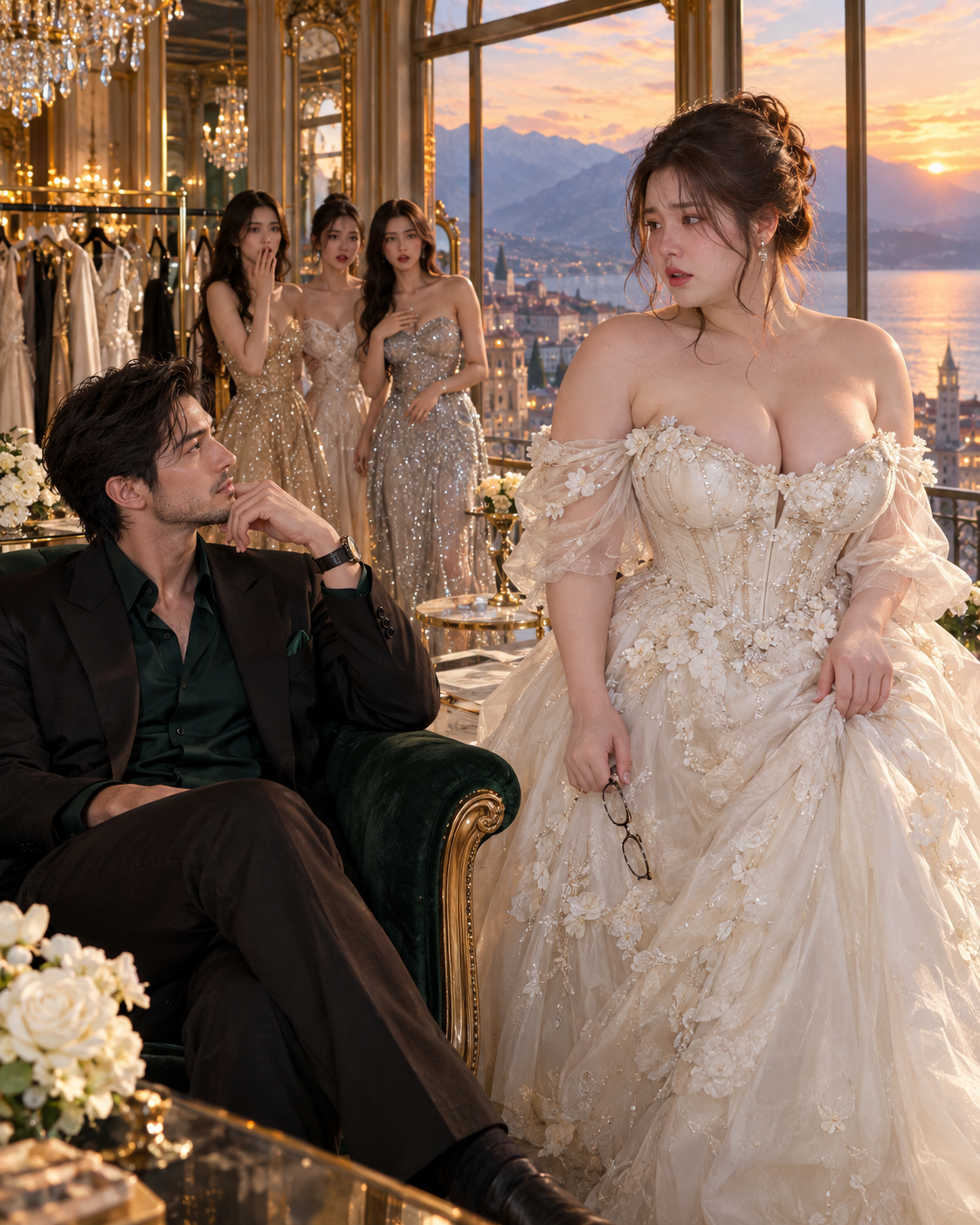
The celebration hall glittered with gold light.
American flags stood discreetly beside the entrance, a reminder that beneath the old-world traditions and private power structures, this was still a family rooted in the United States, in a country where generations of the Leone name had built their influence.
Guests turned as Nadia and Casius entered.
For a moment, every conversation seemed to soften.
Then the music resumed.
Smiles returned.
The celebration continued.
Aldo Rizzo rose from his chair.
He was an older man with silver hair and a calm expression that made him appear almost grandfatherly.
“Nadia,” he said warmly, approaching her.
She forced herself not to step back.
“Mr. Rizzo.”
“Tonight belongs to you.”
His smile widened.
“You look exactly as Victoria once did.”
Nadia felt the words like ice against her skin.
Casius heard them too.
His eyes narrowed.
Aldo lifted his glass.
“To the new queen of the Leone family.”
A few guests laughed softly.
Nadia smiled.
But inside, every instinct was screaming.
The queen.
That was how Victoria had been remembered.
And Aldo had just placed himself beside the memory of the woman he had supposedly never harmed.
Dinner began.
Plates appeared.
Conversations flowed.
No one mentioned the letter.
No one mentioned the key.
Casius sat beside Nadia, his hand occasionally touching hers beneath the table.
It was subtle.
Almost invisible.
But Nadia understood.
Stay calm.
Watch everything.
Across the room, Aldo spoke with members of the commission.
He seemed relaxed.
Too relaxed.
Then a servant entered carrying a silver tray.
At its center rested an ornate ceremonial cup.
Nadia’s breath caught.
The cup was made of silver and gold, decorated with the Leone crest.
The marriage cup.
Aldo noticed her looking.
He smiled.
“An old tradition,” he said.
Casius stood.
The room quieted.
One of the senior commission members raised his glass.
“Tonight, we honor the union of Casius Leon and Nadia.”
Applause spread through the hall.
Nadia looked at the cup.
Then at Casius.
Then at Aldo.
A servant poured wine into the ceremonial vessel.
Aldo rose.
“As an old friend of the Leone family,” he said, “I believe tradition deserves respect.”
He walked toward the cup.
Nadia’s pulse hammered.
Victoria’s letter seemed to burn inside her memory.
A gesture of trust.
A marriage cup.
The poison returns through tradition.
Aldo lifted the cup.
He extended it toward Casius.
“To the future.”
Casius reached for it.
And Nadia stood.
“Wait.”
The single word cut through the hall.
Silence fell.
Dozens of faces turned toward her.
Casius froze.
Aldo lowered the cup slightly.
Nadia could hear her own heartbeat.
She had imagined this moment in a dozen different ways.
In none of them had the room felt this large.
She stepped forward.
“Nobody drinks from that cup.”
A murmur moved through the guests.
One of the commission members frowned.
“Mrs. Leon, this is an old ceremony.”
“I know.”
Nadia looked directly at Aldo.
“That’s why I stopped it.”
His expression remained calm.
“You are nervous. Weddings do that to people.”
“I am not nervous.”
Her voice was steadier now.
“I found something inside the gown.”
The room changed.
Casius said nothing.
Aldo’s face remained composed, but Nadia noticed the smallest movement in his right hand.
His thumb pressed against his ring.
Once.
Twice.
A habit.
A nervous habit.
Or perhaps an old one.
Nadia continued.
“I found a letter from Victoria Leon.”
Someone gasped.
Aldo’s expression finally shifted.
Only slightly.
But enough.
Casius stepped forward.
“My grandmother believed she was poisoned forty years ago.”
The room erupted in whispers.
Aldo laughed.
It was a short, controlled sound.
“After forty years, you are going to accuse me based on a letter found in a dress?”
Nadia answered.
“Not just a letter.”
She held up the brass key.
“This key was sewn into the same seam.”
Aldo stared at it.
Casius took the key and placed it on the table.
Then he turned toward the oldest member of the commission.
“My grandmother’s private records were sealed after her death.”
The older man nodded slowly.
“Yes.”
“Where?”
“At the old Leone residence.”
Casius looked at Nadia.
She understood.
The key was not meant to open a door.
It was meant to reveal where the evidence had been hidden.
Aldo’s composure cracked.
“You’re making a mistake.”
Nadia turned to him.
“Then let us prove it.”
Casius gave a signal.
Two trusted family members left the room.
Minutes passed.
The celebration had transformed into an interrogation without anyone formally declaring it.
Guests sat frozen.
The music had stopped.
The servants stood against the walls.
Then the men returned carrying an old wooden box.
Dust covered its surface.
The Leone crest had been carved into the lid.
Casius inserted the brass key.
The lock clicked.
Inside were documents, a small glass vial, and an old ledger.
The room went silent.
The oldest commission member leaned forward.
“What is that?”
Casius lifted the vial carefully.
“Evidence.”
Aldo stood abruptly.
“You cannot know what that is.”
Nadia looked at him.
“How would you know?”
He stopped.
The question landed harder than any accusation.
Casius opened the ledger.
Inside were records of payments made forty years earlier.
Several names appeared.
One was Aldo Rizzo.
Another was the physician who had declared Victoria’s death natural.
A third belonged to a servant who had disappeared shortly afterward.
The evidence did not erase every uncertainty.
Forty years had passed.
Memories could fade.
Records could be incomplete.
But the pieces formed a pattern that could no longer be ignored.
Aldo looked around the room.
“You are all going to believe this because a frightened young woman found an old letter?”
Nadia stepped closer.
“No.”
She pointed toward the ceremonial cup.
“We are going to ask why you insisted on bringing that cup back tonight.”
Aldo’s eyes hardened.
“I did not bring it.”
“The records say otherwise.”
Casius held up another document.
“The cup was removed from storage this morning under your authorization.”
Aldo said nothing.
The silence became unbearable.
Then one of the commission members stood.
“Open the cup.”
The servant hesitated.
Casius nodded.
The cup was taken apart carefully.
Hidden beneath its inner lining was a small residue.
A chemist who had been called into the room examined it.
The result confirmed what everyone had feared.
The substance was poisonous.
Nobody moved.
Aldo looked toward the doors.
Two men were already standing there.
He had nowhere to go.
Yet he did not look frightened.
He looked betrayed.
“Victoria was going to destroy everything,” he said finally.
Casius’s voice was quiet.
“Why?”
“She wanted to change the rules.”
Aldo’s eyes moved toward Nadia.
“She believed the family could become something different. She wanted the old alliances broken.”
“And you killed her for that?”
“I stopped her.”
The words hung in the room.
No one needed an explanation after that.
For decades, Victoria’s death had been treated as an unfortunate chapter in the Leone family’s past.
Now the truth had a name.
A motive.
And evidence.
Aldo was escorted away.
The commission would decide his fate according to its own rules, but the Leone family would never again speak of Victoria’s death as a mystery.
The celebration did not resume that night.
Guests left quietly.
The chandeliers remained lit over an empty dance floor.
Nadia stood near the window, still wearing the gown.
Casius joined her.
For several moments, neither spoke.
“You saved my life,” he said.
Nadia shook her head.
“Victoria saved us both.”
Casius looked at the gown.
“She waited forty years.”
“Maybe she was waiting for someone who would listen.”
He looked at Nadia.
“You were always listening.”
Nadia smiled faintly.
“For years, I thought being invisible was the safest way to live.”
“And now?”
She looked across the empty hall.
“Now I think being invisible only makes it easier for people to decide your worth for you.”
Casius reached for her hand.
The gesture was simple.
No audience.
No ceremony.
No political alliance.
Just two people standing in the aftermath of a truth that had changed everything.
The next morning, the Leone estate felt different.
Victoria’s portrait was taken from the dark hallway where it had hung for decades and placed in the center of the main room.
For the first time, Nadia stood beneath it without feeling like an outsider.
The gown was carefully preserved.
The brass key was placed beside Victoria’s letter.
The evidence was transferred into secure custody.
And the Leone family began confronting a history it had spent forty years avoiding.
Nadia did not suddenly become fearless.
She still had moments when old habits returned.
She still sometimes reached for oversized sweaters when she wanted to disappear.
But she no longer confused humility with silence.
She no longer believed that being overlooked meant being insignificant.
Casius changed too.
He began listening before giving orders.
He stopped treating loyalty as obedience.
And when family decisions were made, Nadia was no longer standing behind the room.
She was sitting at the table.
Not because she had married Casius.
Not because an ancient gown had chosen her.
But because she had proved something more important.
She had the courage to question what everyone else accepted.
Months later, the Leone family held a private memorial for Victoria.
There were no extravagant speeches.
No grand performance.
Just a small gathering beneath the American evening sky.
Nadia stood beside Casius as Victoria’s name was spoken.
She thought about the woman who had hidden a letter inside a dress and waited four decades for someone brave enough to find it.
Then Nadia understood the real legacy Victoria had left behind.
It was never the gown.
It was never the family name.
It was never the power.
It was the warning.
Never surrender your voice simply because the room is louder than you.
After the ceremony, Casius asked Nadia whether she wanted to return home.
She looked at the city lights beyond the estate.
“Yes,” she said.
Then she paused.
“Our home.”
Casius smiled.
“Yes. Our home.”
They walked away together.
Behind them, the old portrait remained illuminated.
The gown rested safely nearby.
The brass key had finally opened what it was meant to open—not merely a box, but a truth that had been locked away for forty years.
And Nadia, the woman who had once tried to make herself invisible, no longer needed to hide.
She had discovered that power did not always belong to the loudest person in the room.
Sometimes it belonged to the person who noticed what everyone else ignored.
Sometimes courage was not the absence of fear, but the decision to speak while fear was still present.
And sometimes the quietest voice, when it finally chooses to be heard, can change the course of an entire family.
The Leone name would continue.
The old world would continue to shift.
But from that night forward, Nadia would never again measure herself by how little space she could take.
She had learned her worth.
And no one could take that knowledge away from her.
Three months after Aldo Rizzo’s downfall, the Leone estate had finally learned how to breathe again.
The halls were still grand. The black cars still arrived through the iron gates. Men who had spent decades speaking in careful voices still gathered behind closed doors.
But something fundamental had changed.
Nadia no longer walked through those halls as an assistant.
She walked through them as Casius’s wife—and, more importantly, as a woman whose voice had earned its place at the table.
The old family members were still learning how to accept that.
Some respected her.
Some feared her.
A few quietly resented her.
Nadia understood all three reactions.
She had once believed power meant making everyone obey.
Now she understood that real power could be something quieter.
The ability to remain standing when everyone expected you to kneel.
One rainy evening in New York, Nadia was sitting in Victoria’s old study when she heard three knocks at the door.
Not two.
Not four.
Three.
She looked up.
“Come in.”
The door opened.
An elderly woman stood outside.
Nadia had never seen her before.
She wore a dark wool coat, carried a weathered leather handbag, and held an envelope in both hands.
“Mrs. Leon?”
“Yes.”
The woman stepped inside.
“My name is Eleanor Hayes.”
Nadia studied her face.
“Do we know each other?”
“No.”
Eleanor closed the door behind her.
“But I knew Victoria.”
Nadia’s heart skipped.
“How?”
Eleanor placed the envelope on the desk.
“Because forty years ago, I was the nurse who treated her during the final week of her life.”
Nadia stared at the envelope.
“You were there?”
“I was.”
“Why haven’t you spoken before?”
Eleanor lowered her eyes.
“Because I was afraid.”
The word sounded painfully familiar.
Nadia gestured toward the chair.
“Sit down.”
Eleanor did.
For several seconds, rain tapped against the windows.
Then she pushed the envelope across the desk.
“Victoria gave this to me the night before she died.”
Nadia didn’t touch it.
“Why didn’t she put it with the letter?”
“Because she knew someone was watching the house.”
Nadia’s stomach tightened.
“Someone other than Aldo?”
Eleanor nodded.
“That is why I came here now.”
Nadia opened the envelope.
Inside was a single photograph.
It showed Victoria standing beside a younger man Nadia didn’t recognize.
On the back, Victoria had written six words:
HE WAS NEVER WORKING FOR ALDO.
Nadia read the sentence twice.
Then she heard footsteps in the hallway.
Casius entered.
He stopped when he saw Eleanor.
His expression changed instantly.
“Who is she?”
“Eleanor Hayes,” Nadia said.
“She knew Victoria.”
Casius moved closer.
Eleanor looked at him for a long moment.
“You have your grandfather’s eyes.”
Casius frowned.
“What did you know about my family?”
“More than I wanted to.”
She pointed to the photograph.
“That man was Samuel Cross.”
Casius’s face hardened.
The name meant something to him.
“Cross disappeared in 1987.”
“He didn’t disappear,” Eleanor said.
“He ran.”
“From whom?”
Eleanor looked at Nadia.
“From the people who killed Victoria.”
The room became silent.
Casius took the photograph.
“Why would Victoria write this?”
“Because Samuel tried to warn her.”
“Warn her about Aldo?”
“No.”
Eleanor shook her head.
“About someone much closer.”
Nadia felt a chill.
“Who?”
Eleanor didn’t answer immediately.
Instead, she reached into her handbag and removed a small cassette tape.
“It contains Victoria’s final recorded message.”
Casius stared at it.
“Where did you get that?”
“Victoria gave it to me.”
“Forty years ago?”
“Yes.”
“Why bring it now?”
Eleanor’s eyes filled with tears.
“Because I was the last person who knew where it was.”
Nadia looked at the tape.
“Then let’s hear it.”
They found an old player in the estate’s archive room.
The machine crackled when Casius pressed play.
For several seconds, there was only static.
Then Victoria’s voice emerged.
Older.
Tired.
But unmistakably strong.
“If you are hearing this, I am already gone.”
Nadia closed her eyes.
Victoria continued.
“I have discovered that Aldo is not acting alone.”
Casius looked at Nadia.
The recording continued.
“The man helping him sits close to my family. He has access to every meeting, every account, every decision.”
A pause.
Then Victoria whispered a name.
The tape crackled.
The final syllables were almost impossible to hear.
Casius stopped the machine.
“Play it again.”
They did.
Again.
And again.
This time Nadia heard it.
Not clearly.
But enough.
A name.
A family name.
Casius went pale.
“No.”
Nadia looked at him.
“Who is it?”
“My father.”
The room seemed to shrink.
Casius’s father had died when he was a teenager.
He had always been remembered as a loyal Leone patriarch who had protected the family after Victoria’s death.
Casius had spent years believing his father had inherited a broken empire and rebuilt it.
Now the recording suggested something else.
Eleanor shook her head.
“Victoria didn’t have time to explain everything.”
“Then why did she leave this?”
“Because she wanted someone to know the truth eventually.”
Casius walked toward the window.
Rain streaked the glass.
“My father was seventeen when Victoria died.”
“He was eighteen,” Eleanor corrected.
Casius turned.
“You remember?”
“I remember because he came to the hospital.”
Nadia noticed something in Eleanor’s expression.
“You saw him?”
“Yes.”
“What did he do?”
Eleanor hesitated.
“He asked whether Victoria had said anything before she lost consciousness.”
Casius’s eyes narrowed.
“What did you tell him?”
“Nothing.”
“Why?”
“Because Victoria had warned me not to trust him.”
Silence followed.
For the first time, Nadia saw something in Casius’s face she had never seen before.
Not anger.
Not fear.
Grief.
The possibility that the father he had spent his entire life honoring might have been part of the conspiracy was tearing through him.
Nadia stepped beside him.
“We don’t know everything yet.”
Casius looked at her.
“That’s what scares me.”
The next morning, they began searching Victoria’s records.
They found old bank documents.
Letters.
Photographs.
Business agreements.
Nothing was conclusive.
Then Nadia noticed a strange pattern.
Every document connected to Victoria’s death had one thing in common.
A handwritten number.
17.
She found it on receipts.
Letters.
A ledger.
Even on the back of one photograph.
“Seventeen,” she whispered.
Casius looked over.
“What?”
“This number.”
He studied the papers.
“Maybe it’s a date.”
“Victoria died on the seventeenth.”
Nadia shook her head.
“It appears on documents from months before that.”
They searched the archive again.
Near midnight, Nadia found a locked drawer inside an old desk.
The brass key from Victoria’s gown opened it.
Inside was a single notebook.
On the first page, Victoria had written:
WHEN TRUST BECOMES A WEAPON, LOOK FOR THE PERSON WHO NEVER NEEDS TO ASK FOR PERMISSION.
Nadia read it aloud.
Casius frowned.
“The person who never needs permission.”
They turned the pages.
Most contained names and dates.
Then they reached the final entry.
17 — THE HOUSEKEEPER KNOWS.
Nadia stopped breathing.
“The housekeeper.”
Casius stared at the words.
“Who was the housekeeper forty years ago?”
They searched old employment records.
One name appeared.
Margaret Bell.
She had worked for the Leone family for twenty-six years.
She had died peacefully in Pennsylvania twelve years earlier.
But the records showed something else.
Her son was still alive.
And his name was Samuel Cross.
The man in Victoria’s photograph.
Nadia looked at Casius.
“The housekeeper was his mother.”
Casius understood immediately.
“Victoria trusted her.”
“And Samuel tried to warn her.”
They found Samuel living in a small town outside Philadelphia.
He was seventy-two now.
When Nadia and Casius arrived, he was waiting on the porch.
“I wondered when you would come.”
Casius stopped.
“You knew we’d find you?”
Samuel smiled sadly.
“Victoria always believed you would.”
Inside the house, Samuel told them everything.
His mother had discovered that Aldo was manipulating the Leone family from within.
But she had also discovered that Casius’s father knew.
“He didn’t start the conspiracy,” Samuel said.
“He inherited it.”
Casius stared at him.
“What does that mean?”
“Your father discovered what Aldo had done. He wanted to expose him. But by then, Aldo had already placed people inside the family.”
“Why didn’t my father go to the police?”
Samuel shook his head.
“Because he believed the police were compromised.”
Nadia frowned.
“And Victoria?”
“She wanted to leave the criminal world entirely.”
Casius looked shocked.
“She wanted to dismantle the empire?”
“Yes.”
Samuel handed him a final letter.
“Your father helped her.”
Nadia looked at Casius.
The mystery shifted again.
His father hadn’t betrayed Victoria.
He had been trying to protect her.
But someone had discovered the plan.
Aldo.
And perhaps others.
Casius opened the letter.
His father’s handwriting filled the page.
I failed her once by believing I could protect her alone.
I will not make the same mistake twice.
Casius’s hands trembled.
For the first time in forty years, the truth about his father was no longer a shadow.
He had been neither hero nor villain.
He had been a frightened young man caught inside a system larger than himself.
And he had made mistakes.
But he had tried.
Nadia placed a hand over Casius’s.
“What will you do now?”
He looked at the letter.
Then at the city beyond the window.
“The same thing Victoria wanted.”
“What?”
“End what needs to end.”
Months later, the Leone family changed more than anyone expected.
Several illegal operations were dismantled.
Old alliances were dissolved.
Legitimate businesses were separated from the family’s criminal history.
Some members left.
Others fought the changes.
But Casius refused to rebuild the empire in the same image.
And Nadia stood beside him.
Not as a symbol.
Not as a decoration.
As an equal voice.
The old gown remained in a glass case in Victoria’s study.
Nadia sometimes visited it.
She no longer saw it as a magical object.
She saw it as a reminder.
A woman had once hidden the truth inside its seams because she believed someone, someday, would be brave enough to find it.
And that someone had been Nadia.
One year after their wedding, Casius took Nadia back to the chapel.
There were no guests.
No commission.
No ceremony.
Only the two of them.
He held out a small box.
Nadia smiled.
“What is this?”
“Open it.”
Inside was the brass key.
“I thought we already knew what it opened.”
Casius shook his head.
“It opened more than a drawer.”
Nadia looked at him.
“What then?”
He answered quietly.
“A future.”
She laughed softly.
For the first time, the word Leone no longer felt like a burden.
It felt like something they could redefine.
Nadia looked toward the chapel windows.
The American city beyond them was alive with traffic, sirens, lights, and thousands of people living lives completely separate from theirs.
For decades, the Leone family had believed power meant controlling what happened around them.
Nadia had learned something different.
Power could also mean knowing when to let go.
The gown had chosen her because she fit it.
But Nadia realized that the deeper truth was the opposite.
She had not been chosen because she was perfect.
She had been chosen because she was willing to see what others refused to see.
She had been quiet, but she had never been empty.
She had been overlooked, but she had never been powerless.
And when the moment came, she had spoken.
Casius took her hand.
“Ready?”
Nadia smiled.
“For what?”
“For whatever comes next.”
She looked at the man beside her.
Then at the old gown behind the glass.
“Yes.”
Outside, the rain had stopped.
Sunlight broke through the clouds and touched the city.
The past would always remain part of the Leone story.
Victoria’s death.
Aldo’s betrayal.
Her father’s hidden struggle.
The secrets buried inside the old estate.
None of it could be erased.
But it could be remembered differently.
Not as proof that darkness always wins.
As proof that truth can survive longer than fear.
Nadia squeezed Casius’s hand.
Then they walked out together.
The door closed behind them.
And for the first time in forty years, the Leone legacy did not belong to the past.
It belonged to the people brave enough to change it.
The lesson Nadia carried with her was simple.
You do not become powerful by making yourself smaller so other people can feel important.
You become powerful when you finally understand that your voice deserves to exist in the room.
Sometimes the person everyone overlooks is the person who sees the truth most clearly.
Sometimes a legacy is not something you inherit.
Sometimes it is something you have the courage to rebuild.
And sometimes the greatest victory is not taking someone else’s place at the top.
It is becoming the kind of person who no longer needs a throne to know their worth.
Nadia never forgot the woman she had once been.
The quiet assistant in the oversized sweater.
The woman who stood in corners.
The woman who thought disappearing would keep her safe.
She did not hate that woman anymore.
She was grateful to her.
Because that woman had survived long enough to become someone who could finally speak.
And somewhere inside the Leone estate, beneath glass and soft light, the forty-year-old gown remained waiting.
Not for another bride.
Not for another queen.
But as a reminder that sometimes the most extraordinary transformation begins when an ordinary person finally stops asking whether she belongs.
Nadia had stopped asking.
She knew.
She belonged wherever her courage carried her.
And that was enough.
THE END.