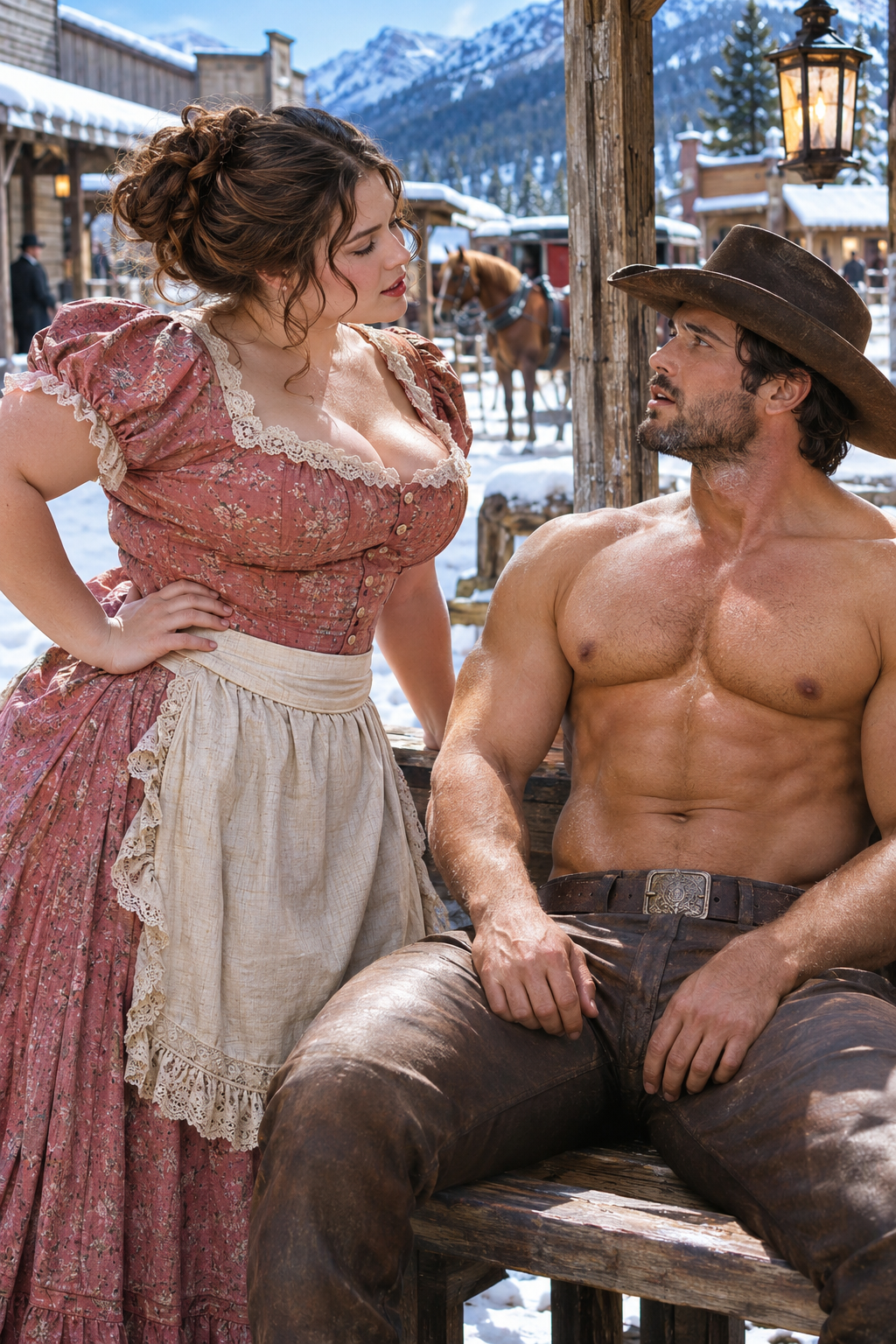
Every Friday, Luke Harrison stood outside the Silver Pine stagecoach station, watching passengers arrive.
The receipt was dated twelve years earlier.
I turned it over, expecting to find another delivery charge. Instead, I found a handwritten note beneath Raymond Foster’s signature.
“Payment received. Original agreement remains in effect. M.H.”
I read it twice.
“Who is M.H.?” I asked.
Luke didn’t answer immediately. His eyes remained fixed on the initials.
“Matthew Harrison.”
The room suddenly felt smaller.
“You mean your brother signed this?”
Luke nodded slowly. “But he would have been seventeen. He wasn’t even allowed to make decisions about the ranch back then.”
“Perhaps he was helping your father.”
“Perhaps.”
He took the receipt and held it closer to the lamp.
Then his face changed.
“Look at the amount, Anna.”
I leaned forward.
The payment was almost three thousand dollars. It was far more than any ordinary freight delivery could have cost in those days.
“What was your father paying Raymond for?”
Luke stood abruptly.
“I don’t know.”
For the first time since I’d met him, he looked genuinely frightened.
We searched the wooden box until midnight, but found no other document mentioning the agreement.
The following morning, Luke rode to Raymond Foster’s property.
I went with him.
Raymond lived in a large white farmhouse north of town. His land was well maintained, his fences newly painted, and his horses looked healthier than most ranchers’ animals.
He was a man who had prospered while others struggled.
When we arrived, he was sitting on his porch, cleaning a revolver.
“Well, Luke Harrison,” he said, smiling. “What brings you here?”
Luke dismounted.
“I want to talk about some old freight records.”
Raymond’s smile disappeared for half a second.
Then it returned.
“Business matters?”
“Family matters.”
Raymond put down the revolver.
“Your father is gone, Luke. Whatever he and I discussed, it’s buried with him.”
“Not anymore.”
Luke placed the receipt on the porch table.
Raymond glanced at it.
His expression remained calm, but his fingers tightened around the edge of the paper.
“Where did you get this?”
“From my father’s records.”
“Your father kept too many things.”
“What was the agreement?”
Raymond laughed softly.
“You’ve spent seven years mourning a brother who abandoned you. Perhaps you should spend less time digging through old papers and more time looking after your own ranch.”
Luke stepped closer.
“Did you steal from us?”
Raymond’s eyes hardened.
“Be careful what you accuse me of.”
“Then answer the question.”
Raymond stood.
“I have nothing more to say.”
He walked toward the door.
Before entering, he turned to me.
“Miss Collins, I suggest you return to your freight office. Some questions are better left unanswered.”
I felt a chill run down my spine.
But I didn’t look away.
“Honest people don’t usually mind questions.”
Raymond slammed the door.
On the ride back, Luke barely spoke.
I could tell he was thinking about Matthew.
Finally, he said, “I should have listened to him.”
“Listened to whom?”
“My brother.”
He looked toward the distant hills.
“The last time we spoke, he told me Raymond was taking money from the ranch. He said he’d found proof. I called him a liar.”
“Why?”
“Because Raymond told me Matthew had been gambling. He said my brother was trying to cover his debts by blaming him.”
Luke’s voice grew rough.
“My father had died only a few months earlier. I was trying to keep the ranch alive. I didn’t want to believe that the man who’d helped us for years was stealing from us.”
“And Matthew?”
“I told him he was jealous because I had inherited the ranch.”
Luke swallowed.
“He left that night. I never saw him again.”
I reached for the reins and slowed my horse.
“Luke, perhaps he didn’t leave because he stopped loving you.”
He stared at the road.
“Then why didn’t he come back?”
I had no answer.
But something told me the receipt in his pocket was only the beginning.
That afternoon, I returned to the station and searched the old freight archives.
The stationmaster, Mr. Whitmore, watched me pull one dusty ledger after another from the shelves.
“Looking for something specific?”
“Anything connected to Raymond Foster or Matthew Harrison.”
He frowned.
“That’s a dangerous combination.”
I stopped.
“What do you mean?”
Mr. Whitmore glanced toward the front windows before lowering his voice.
“Your father used to ask questions about those two.”
My heart skipped.
“My father?”
“Years ago. He came here several times looking for delivery records. He believed someone was falsifying freight routes.”
“Did he ever tell you what he found?”
“No. But he stopped coming after a particular winter.”
“What happened that winter?”
Mr. Whitmore hesitated.
“Your father died, didn’t he?”
“Yes.”
He looked uncomfortable.
“I remember. I also remember Raymond visiting the station a few days before the funeral.”
I felt my stomach tighten.
“Why?”
“He wanted to know whether your father had left any unfinished business.”
I stared at him.
My father had died suddenly after becoming ill during a winter journey. I’d always believed it was an unfortunate illness.
Now I wondered whether there was something I had never known.
“Did my father leave anything here?”
Mr. Whitmore thought for a moment.
“Actually, yes.”
He led me into the stationmaster’s office and unlocked a small cabinet.
Inside was an envelope bearing my father’s handwriting.
My name was written across the front.
Anna.
My hands began to tremble.
I hadn’t seen his handwriting in nearly four years.
I opened it carefully.
Inside was a single sheet of paper.
My dearest Anna,
If you are reading this, I may no longer be here to explain what I discovered. There are people who make their fortunes by taking advantage of those who trust them. Never confuse a familiar face with an honest heart.
I have found irregularities in the Harrison freight accounts. Raymond Foster appears to be involved, but I believe he is not acting alone.
There is a document hidden where the old road meets the river. If you ever find yourself in a position to investigate, remember this: the truth is worth finding, but it is never worth losing yourself over.
With all my love,
Father.
I read the letter again.
Then a third time.
“The old road meets the river,” I whispered.
Mr. Whitmore nodded.
“Your father used to travel the eastern road. There’s an abandoned crossing about six miles from here.”
I folded the letter and slipped it into my coat.
That evening, I found Luke waiting outside the station.
He looked at my face and immediately knew something had happened.
“What is it?”
I handed him the letter.
He read it slowly.
When he reached the final paragraph, his expression became grim.
“Tomorrow morning,” he said, “we ride to the river.”
The abandoned crossing was almost swallowed by weeds.
An old wooden bridge stretched across the narrow river, its planks darkened by years of rain.
We searched beneath the bridge, around the old stone markers, and along the riverbank.
Nothing.
Luke was beginning to lose patience when I noticed a loose stone near the base of the eastern support.
Behind it was a small metal box.
My heart began pounding.
Luke pulled it free and wiped away the dirt.
The lock had rusted, but he managed to open it with the blade of his pocketknife.
Inside were several folded documents and a small leather-bound notebook.
The first document was a list of properties.
The second was a series of bank transfers.
The third was a contract signed by Raymond Foster and a man named Charles Whitaker.
Luke stared at the signature.
“Whitaker?”
“Do you know him?”
“He owns the Silver Pine Timber Company.”
I opened the notebook.
Its pages contained dates, amounts, names, and descriptions of freight deliveries. My father had recorded everything in meticulous detail.
Then I found a page marked with a large red cross.
The entry was dated twelve years earlier.
Raymond Foster and Charles Whitaker have arranged to divert valuable ranch supplies and equipment through false freight invoices. The goods are being sold elsewhere. Matthew Harrison discovered the scheme. His father has agreed to confront them.
I looked up.
“Luke, your father knew.”
He took the notebook from me.
His eyes moved rapidly across the page.
Then he found another entry.
Matthew has been threatened. He insists on collecting the remaining evidence himself. I fear something terrible may happen if he continues.
Luke’s face went pale.
“What does that mean?”
I turned to the next page.
It was empty except for a single sentence.
If Matthew disappears, do not believe he abandoned his family.
For several seconds, neither of us spoke.
Then Luke closed the notebook.
“We’re going to find out what happened to my brother.”
The first person we visited was Charles Whitaker.
His timber office stood near the southern edge of town, surrounded by enormous stacks of freshly cut lumber.
He was a polished man with silver hair and a friendly manner.
When Luke placed the contract on his desk, Whitaker’s smile vanished.
“I haven’t seen this in years.”
“Then you remember it,” Luke said.
Whitaker leaned back.
“Your father and Raymond had disagreements. That was a long time ago.”
“You were involved.”
“I invested in transportation.”
“You bought stolen ranch equipment.”
Whitaker’s face hardened.
“Watch your language, young man.”
“Where is Matthew?”
Whitaker looked at Luke for a long moment.
Then he laughed.
“You still think this is about your brother?”
“What else would it be about?”
Whitaker leaned forward.
“Your father was going to expose us. He had documents that could have sent several respected men to prison. Raymond was worried. I was worried. Everyone was worried.”
“And Matthew?”
“He was supposed to stay out of it.”
Luke gripped the edge of the desk.
“What did you do to him?”
“Nothing.”
“Don’t lie to me!”
Whitaker raised both hands.
“Your brother left Silver Pine alive. That’s all I know.”
Luke froze.
I stepped closer.
“You saw him?”
Whitaker looked toward the window.
“Seven years ago, shortly after your argument, Matthew came to my office. He wanted money in exchange for the evidence he had collected.”
Luke’s face twisted with disbelief.
“He wouldn’t do that.”
“Perhaps you didn’t know him as well as you thought.”
“What happened next?”
“I refused. He left.”
“Where did he go?”
Whitaker shrugged.
“West, I believe.”
Luke looked ready to strike him.
I touched his arm.
“Let’s go.”
Outside, Luke paced beside his horse.
“He wouldn’t sell the evidence. Matthew wanted to expose them.”
“Whitaker may be lying.”
“He knew something.”
“Then we need to find Raymond.”
Before we could mount, a young stable boy came running toward us.
“Mr. Harrison!”
Luke turned.
The boy was breathless.
“Someone left this at the station for you.”
He handed Luke a folded piece of paper.
There was no name on the envelope.
Inside was a short message.
Stop looking for the past. Your brother is not the only person who disappeared.
I felt the blood drain from my face.
Luke read it twice.
Then he looked at me.
“Anna, we need to get you home.”
“Why?”
“Because whoever wrote this knows we’re investigating.”
“I am not leaving.”
“I’m not asking.”
“Neither am I.”
For a moment, we stood facing each other.
Then Luke sighed.
“Fine. But from now on, you don’t go anywhere alone.”
I almost smiled.
“You sound like Raymond.”
He gave me a brief, tired smile in return.
It was the first time I’d seen him smile since the investigation began.
That night, someone broke into the freight office.
I arrived early the following morning and found the back door hanging open.
Drawers had been emptied. Ledgers were scattered across the floor. My father’s letter was missing.
But the leather notebook was still hidden inside my coat pocket.
I rushed to the stationmaster’s office.
Mr. Whitmore was sitting at his desk, his forehead bleeding.
“Mr. Whitmore!”
He looked up weakly.
“I’m all right.”
“What happened?”
“Two men came after closing. They wanted your father’s records.”
“Did you see them?”
“One had a scar across his left cheek.”
I knew immediately.
Raymond’s foreman.
A man named Silas Reed.
Luke arrived minutes later.
When he saw the broken door and the blood on Mr. Whitmore’s forehead, his face turned dark.
“This ends today.”
He sent for the sheriff.
But before the sheriff arrived, another message appeared.
It was slipped beneath the office door.
This time, it contained an address.
An abandoned mining camp west of Silver Pine.
Beneath it were five words.
Ask where Matthew worked.
Luke read the message and looked at me.
“Do you think it’s a trap?”
“Probably.”
“Then we’re not going.”
I considered the note.
“Whoever sent this knows about Matthew. They may know where he is.”
“And if they want to kill us?”
I looked at the wounded stationmaster.
“They’ve already shown us what they’re willing to do.”
Luke stared at the address for a long moment.
Finally, he nodded.
“We take the sheriff.”
The mining camp stood in a narrow valley, hidden between two rocky hills.
Most of its buildings had collapsed. Rusted equipment lay scattered across the ground.
A single cabin remained intact.
The sheriff and two deputies approached from the north while Luke and I circled around the eastern side.
The cabin door was slightly open.
Luke pushed it carefully.
Inside, we found a wooden table, an empty bottle, and a collection of old freight documents.
One document carried the name Matthew Harrison.
It was a work agreement.
Dated six years earlier.
Luke stared at the signature.
“That’s his handwriting.”
A floorboard creaked behind us.
We turned.
A thin, bearded man stood in the doorway, holding a rifle.
His eyes moved from Luke to me.
“Put your hands where I can see them.”
Luke slowly raised his hands.
“Who are you?”
The stranger’s gaze settled on Luke.
For several seconds, he seemed unable to speak.
Then he whispered,
“You took your time, brother.”
The rifle slipped from his hands.
Luke stopped breathing.
“Matthew?”
The man nodded.
And then the two brothers stood looking at each other across seven years of silence.
Luke took one step forward.
Matthew backed away.
“Don’t.”
Luke stopped immediately.
“It’s me.”
“I know who you are.”
Matthew’s voice trembled.
“That’s the problem.”
Luke’s eyes filled.
“I thought you were dead.”
Matthew let out a bitter laugh.
“You thought I was a thief.”
“I was wrong.”
“You told everyone I had stolen from our father. You said I was a disgrace.”
“I know.”
“You didn’t even come looking.”
Luke lowered his head.
“I came here every Friday.”
Matthew looked confused.
“What?”
“Every Friday, for seven years. I waited at the stagecoach station. I thought one day you might come home.”
Matthew stared at him.
Then he shook his head.
“I never knew.”
I stepped forward.
“Matthew, I’m Anna Collins. My father was Daniel Collins.”
His expression changed.
“Daniel?”
I nodded.
“He left records about Raymond and Whitaker. We found them.”
Matthew sat down heavily.
“Your father saved my life.”
Luke looked at him.
“What happened?”
Matthew rubbed his face.
“After our argument, I went to Raymond’s house. I wanted him to admit what he’d done. Instead, he told me he’d make sure I never returned to the ranch.”
“Why didn’t you come back?”
“Because I was afraid.”
He looked at Luke.
“Raymond had friends everywhere. He knew about the evidence I’d collected. He told me that if I returned, he’d destroy the ranch and make sure you were blamed for everything.”
Luke’s eyes filled with anger.
“So you disappeared?”
“I thought I was protecting you.”
Matthew paused.
“Daniel Collins helped me escape. He gave me money, found me work at a mine, and promised to keep investigating. He said he’d send word when it was safe.”
My throat tightened.
“What happened to him?”
Matthew looked down.
“He was on his way to meet me when I heard he’d died.”
The cabin seemed to go silent.
I gripped the edge of the table.
“Did you know what happened?”
“No. But I always suspected Raymond had something to do with it.”
I swallowed hard.
“Why didn’t you come back after seven years?”
Matthew looked at the documents.
“Because I still didn’t have enough proof to destroy them. And because I believed Luke hated me.”
Luke stepped closer.
“I never hated you.”
Matthew looked up.
“You had a strange way of showing it.”
“I was proud and angry. I chose to believe a man who was stealing from us instead of my own brother.”
His voice broke.
“I don’t expect you to forgive me. But I’m sorry.”
Matthew stared at him.
Then he stood.
For a moment, neither brother moved.
Finally, Matthew reached out and gripped Luke’s shoulder.
It wasn’t a complete reconciliation.
It wasn’t an erasure of seven years.
But it was a beginning.
We returned to Silver Pine with Matthew and the documents.
The sheriff immediately arrested Silas Reed, who was found attempting to leave town with a wagon full of stolen records.
Under questioning, Silas admitted that Raymond had ordered the break-in at the station and had threatened Matthew for years.
But the biggest revelation came from a letter hidden inside the mining cabin.
It was written by my father shortly before his death.
Matthew,
I have discovered that Raymond and Whitaker are preparing to move the remaining evidence. I believe they know I have copies. If anything happens to me, take the documents to the sheriff. Do not let fear decide what happens next.
Your friend,
Daniel Collins.
There was another sheet attached.
A statement from a doctor in Silver Pine.
It described a visit Raymond had made shortly before my father’s final journey. The doctor had been asked to provide a bottle of medicine for Daniel, supposedly to help him sleep during the trip.
The doctor had refused to dispense it without a proper prescription.
But the bottle had later been found among my father’s belongings.
The sheriff ordered an investigation into the circumstances of his death.
Raymond Foster was arrested that evening.
He didn’t resist.
Instead, he stood on his porch and watched the sheriff approach.
When Luke confronted him, Raymond smiled coldly.
“You think you’ve won?”
Luke said nothing.
“You’ll lose your ranch. Your brother will leave again. People like you never understand how the world works.”
Luke looked at him steadily.
“Perhaps. But I won’t spend another seven years believing your lies.”
Raymond’s smile faded.
The investigation continued for weeks.
The evidence from my father’s notebook, Matthew’s testimony, the forged invoices, and the recovered financial records exposed a scheme that had lasted more than a decade.
Raymond and Whitaker had stolen money, equipment, and land through fraudulent contracts. They had used false freight charges to hide their activities, relying on the trust the Harrison family had placed in them.
Whitaker was arrested while attempting to flee the state.
Raymond was charged with fraud, conspiracy, intimidation, and several offenses connected to the disappearance of Matthew.
The investigation into my father’s death remained open, but the sheriff uncovered enough evidence to establish that Raymond had arranged to have him followed and threatened.
For the first time in years, Silver Pine began to understand what had happened.
And for the first time in seven years, Luke stopped waiting for Friday.
Spring arrived slowly that year.
The snow melted from the Broken Spur Ranch, revealing green grass beneath the frozen earth.
Matthew returned to the ranch, though he didn’t immediately move into the old family house.
He rented a small cabin near the northern pasture.
Luke didn’t pressure him.
They worked together when Matthew was ready, and sometimes they spent entire evenings repairing fences without saying much.
Their relationship was still fragile.
There were memories that couldn’t be repaired with a single apology.
But something had changed.
One afternoon, I found them standing beside the old barn.
Luke was holding a weathered photograph of their father.
Matthew was pointing to something in the background.
“Remember that horse?” he asked.
Luke laughed.
“The one you tried to ride before you could even reach the stirrups?”
“I was six.”
“You were stubborn.”
“You were worse.”
Their laughter carried across the pasture.
I stood at the fence, watching them.
For seven years, Luke had believed his brother was somewhere beyond the horizon, refusing to return.
Now he was beginning to understand that sometimes people disappeared because they had been hurt, frightened, or trapped by circumstances nobody else could see.
And sometimes, the people we love most need us to listen before it is too late.
The following Friday, I went to the station.
Luke was already there.
But he wasn’t standing near the platform, staring down the tracks.
He was leaning against the wooden railing, holding two cups of coffee.
One was for me.
“Expecting someone?” I asked.
He smiled.
“Actually, yes.”
I took the coffee.
“Who?”
He looked at me.
“You.”
I felt my cheeks warm.
“That’s a different reason to wait.”
“Much better, I think.”
We stood together as the morning coach pulled into the station.
Passengers climbed down, greeting friends and collecting their luggage.
For the first time, Luke didn’t search every unfamiliar face.
He didn’t need to.
His brother was home.
And the man who had spent seven years looking toward the horizon was finally learning to look at the people standing beside him.
Luke reached for my hand.
“Anna, I owe you more than I can ever repay.”
“You don’t owe me anything.”
“You helped me find my brother.”
I shook my head.
“Your brother found his way home. I only helped you find the truth.”
He smiled.
“Then perhaps I can start by asking you something.”
“What?”
“Would you have supper with me tonight?”
I pretended to consider it.
“Only if you promise not to spend the entire evening talking about freight invoices.”
“I make no promises.”
We laughed.
And as the stagecoach disappeared down the dusty road, I realized something my father had tried to teach me in his final letter.
The truth is not always easy to find.
Sometimes it arrives buried beneath years of fear, pride, and silence. Sometimes it costs us the comfort of believing we were right.
But the truth gives us something that lies never can: the chance to begin again.
Because family is not held together by blood alone, nor by the promises we make when life is easy.
It is held together by the courage to admit when we are wrong, the patience to listen when someone is hurting, and the willingness to leave the door open when love has been tested.
Luke had waited seven years for his brother.
But the greatest thing he learned was not how to wait.
It was how to forgive.
And sometimes, the most important journey home doesn’t begin when someone returns.
It begins when someone finally finds the courage to welcome them back.