Chicago had been buried under freezing rain for three straight nights, the kind that turned Lake Shore Drive into black glass and made even the city’s sirens sound farther away than they really were.
“What is that?” Arthur asked.
His voice was low enough that Clara almost failed to hear him over the gunfire echoing through the underground corridor.
She closed her fist around the locket.
Arthur took one step toward her.
Another explosion shook dust from the ceiling.
“Mr. Cross!” one of his guards shouted from the stairwell. “We have at least six more on the west side!”
Arthur never looked away from Clara.
“The necklace,” he said. “Where did you get it?”
Clara’s mouth had gone dry.
“My mother.”
Something flickered behind his eyes.
“What was her name?”
Before Clara could answer, a bullet struck the steel door at the end of the hall.
Arthur grabbed her shoulder and pulled her behind a stone support column just as another round punched through the wooden paneling where she had been standing.
Whatever questions he had could wait.
Survival could not.
“Stay behind me,” Arthur ordered.
“I don’t need—”
“Tonight, you do.”
He moved toward the security room with his pistol raised.
Clara followed because every other corridor seemed to contain armed men, alarms, or smoke.
They entered a narrow surveillance chamber where several monitors had already gone dark.
Two guards were watching the remaining feeds.
“The attackers know the property,” one said. “They avoided the driveway cameras and came through the old service tunnel.”
Arthur’s expression hardened.
“Only twelve people know that tunnel exists.”
Clara watched him understand what that meant.
The assault was not merely an attack from a rival organization.
Someone inside Arthur’s own circle had opened the door.
On one surviving camera, a masked gunman moved past the wine cellar.
Arthur leaned closer.
“Freeze that.”
The guard stopped the image.
The man’s face was hidden, but a gold signet ring flashed on his right hand.
Arthur stared at it.
Clara noticed the change immediately.
“You recognize him.”
Arthur did not answer.
He picked up a radio.
“Elias, report.”
Static.
He tried again.
“Elias.”
Nothing.
One of the guards shifted uneasily.
Elias Mercer was Arthur’s oldest lieutenant, a man who had been beside him for nearly twenty years.
Clara had seen him dozens of times around the estate. He was always polite to staff, always perfectly dressed, always smiling as though he knew something no one else did.
Arthur lowered the radio.
“Lock the lower level.”
A guard hesitated. “Sir, some of our people are still upstairs.”
“If Mercer opened the tunnel, I don’t know which of them are ours anymore.”
The heavy security doors began sliding into place.
Clara still had one hand around her locket.
Arthur noticed.
“Open it.”
“No.”
His jaw tightened.
“I’m not asking twice.”
“And I’m not one of your men.”
For a moment, every person in the security room seemed to forget the gunfight above them.
Arthur Cross was not accustomed to being refused.
Clara expected anger.
Instead, something stranger happened.
He looked almost afraid.
“Please,” he said.
That frightened her more than any command could have.
Slowly, Clara opened the locket.
Inside was the faded photograph she had carried since childhood.
A young woman sat on the steps of a wooden house somewhere outside Chicago. Beside her were two children: a little girl wrapped in a blanket and a boy of perhaps seven or eight.
The boy was smiling.
His left sleeve had been pushed up.
Near his wrist was a dark crescent-shaped birthmark beside a fresh cut.
Arthur took the locket from Clara with hands that had suddenly lost their steadiness.
He stared at the photograph.
“No,” he whispered.
Clara felt her heartbeat in her throat.
“My mother said the boy was my brother.”
Arthur’s eyes remained fixed on the picture.
“She said his name was Daniel.”
The room became silent except for the alarms.
Arthur sank into a chair.
For the first time that night, Clara saw not a mafia boss, not the man whose reputation frightened half the city, but someone who had just been struck by a memory powerful enough to make him forget where he was.
“My name was Daniel,” he said.
Clara could not move.
Arthur turned the locket over.
On the back were three scratched initials.
M.H.
D.H.
C.H.
Clara had studied them as a child without understanding.
“My mother was Margaret Higgins,” she said.
Arthur shut his eyes.
“Margaret was my mother too.”
The gunfire upstairs suddenly stopped.
The silence that followed was worse.
Arthur stood.
“We have to move.”
Clara caught his sleeve.
“You don’t get to say that and walk away.”
His face hardened again, but not completely.
“I was eight years old when I was taken from her.”
“Taken by who?”
Arthur glanced toward the ceiling.
“Apparently, by the same kind of men trying to kill us tonight.”
A loud metallic crash came from the corridor.
The guards raised their weapons.
Arthur pushed the locket into Clara’s hand.
“Stay close.”
The door burst inward.
Two masked attackers entered.
The first fired wildly.
Arthur dropped behind the console and returned two controlled shots.
The second man rushed through the smoke.
Clara grabbed the iron fire extinguisher beside the door and swung it with both hands.
It struck the attacker’s forearm.
His pistol clattered across the floor.
One of Arthur’s guards tackled him.
Within seconds, both attackers were down.
Arthur stared at Clara.
“You hit armed men with kitchen equipment often?”
“Only on difficult shifts.”
To her surprise, Arthur laughed.
It lasted less than a second, but it was unmistakable.
Then the captured gunman began coughing.
Arthur knelt beside him and pulled off his mask.
Clara recognized him.
He was one of the estate’s night drivers.
Arthur did too.
“Who opened the tunnel?”
The man spat blood onto the floor.
Arthur’s guard raised his weapon.
Arthur held up a hand.
“No.”
He looked at the driver.
“Tell me.”
The driver laughed bitterly.
“You still don’t understand, Cross. Mercer isn’t taking your house.”
Arthur’s gaze sharpened.
“He’s taking everything.”
A phone began ringing on the security desk.
Arthur answered.
Elias Mercer’s voice came through the speaker.
“Arthur.”
Arthur’s expression turned to stone.
“You chose a dramatic way to resign.”
Mercer chuckled.
“You taught me presentation matters.”
“What do you want?”
“What should have been mine ten years ago.”
“The organization?”
“The future.”
Arthur looked toward Clara.
Mercer continued.
“You built your empire around loyalty, Arthur. That was always your weakness. You thought men stayed loyal because they respected you. They stayed because they feared you. Fear expires.”
“Then come downstairs and explain your philosophy in person.”
“Oh, I intend to.”
Mercer paused.
“But first, perhaps you should ask your little kitchen maid why she really came into your house.”
Clara froze.
Arthur’s eyes shifted toward her.
“I hired her,” Mercer said. “Or rather, I made certain she was hired.”
Clara shook her head.
“That’s a lie.”
“Is it? Her brother owed us money. Who do you think purchased the debt after he died?”
Arthur gripped the phone.
Mercer’s voice became almost cheerful.
“Who do you think arranged for Clara Higgins to work inside the only building in Chicago where Arthur Cross might eventually see that necklace?”
Clara felt suddenly cold.
Arthur said nothing.
Mercer had planned this.
But why?
“You knew who she was,” Arthur said.
“For years.”
“And you never told me.”
“I needed insurance.”
Arthur’s eyes darkened.
“Against what?”
“Against you discovering where you came from.”
The line went dead.
Clara looked at Arthur.
“What does that mean?”
Arthur stared at the black phone screen.
“It means Mercer knows more about my childhood than I do.”
A distant mechanical sound echoed below them.
The old service tunnel.
Someone was opening another gate.
Arthur ordered his remaining men to fall back toward the central vault.
They moved quickly through corridors Clara had never seen.
The subterranean estate was larger than she had imagined, built from old Prohibition-era tunnels beneath the mansion.
Arthur led them through a narrow archive room filled with steel cabinets.
He stopped at one.
“What are you looking for?” Clara asked.
“Something I should have looked at twenty years ago.”
He opened the cabinet and removed a yellowed envelope.
Across the front was written one name.
MARGARET HIGGINS.
Clara stopped.
Arthur looked ashamed.
“I received this after my adoptive father died.”
“You knew?”
“I knew the name.”
“That isn’t the same answer.”
“No.”
He placed the envelope on a table.
“I was told Margaret Higgins was a woman connected to the men who murdered my father.”
“Your real father?”
“The man who raised me.”
Arthur opened the envelope.
Inside were photographs, police reports, and a newspaper clipping dated twenty-seven years earlier.
The headline described a fire at a farmhouse outside Rockford.
One woman had been injured.
One child had vanished.
Clara read the names.
Margaret Higgins.
Daniel Higgins.
Her hands began shaking.
Arthur spread the files across the table.
“My adoptive father told me my birth family sold me to settle a debt. He said my mother abandoned me.”
Clara looked up sharply.
“Our mother spent her entire life looking for you.”
Arthur did not answer.
“She kept newspaper clippings,” Clara continued. “Missing-person notices. Old addresses. Every birthday, she lit an extra candle.”
Arthur’s face changed.
Clara felt anger rise inside her.
“You became powerful enough to find anyone in Chicago, and you never searched for her?”
“I believed she didn’t want to be found.”
“You believed a criminal who kidnapped an eight-year-old child.”
“He was the only father I remembered.”
“That doesn’t make him honest.”
Arthur flinched as though she had struck him.
Before he could reply, one of the guards called from the doorway.
“They’re coming.”
Arthur gathered the documents.
Then Clara noticed something beneath the newspaper clipping.
A photograph.
Three men stood beside a black Buick.
One was much younger, but unmistakable.
Elias Mercer.
Arthur stared.
Mercer had been there the night Daniel disappeared.
The betrayal was older than either of them had realized.
They reached the central vault minutes before Mercer’s men surrounded the corridor.
The vault had once stored bootleg liquor and cash. Now it contained records, weapons, and emergency supplies.
Arthur’s remaining guards numbered five.
Mercer had at least a dozen.
A voice came through the corridor.
“Arthur! We can finish this without destroying the house.”
Arthur leaned against the steel doorway.
“You’ve already destroyed the house.”
Mercer stepped into view.
He was in his sixties, silver-haired, wearing the same tailored suit Clara had seen him wearing at dinner hours earlier.
His gold signet ring gleamed under the emergency lights.
Arthur raised his pistol.
Mercer did not flinch.
“You won’t shoot me yet,” he said. “Not before you hear the truth.”
Arthur’s finger remained on the trigger.
Mercer looked at Clara.
“You resemble your mother.”
Clara felt sick.
“You knew her.”
“I did.”
Arthur’s voice was quiet.
“Start talking.”
Mercer sighed.
“Your biological father, Samuel Higgins, worked for an organization that existed before yours. He discovered money was being stolen by senior men. He intended to go to federal investigators.”
Arthur understood.
“My adoptive father was one of those men.”
“Yes.”
“And you?”
Mercer smiled faintly.
“I was young. Ambitious. Foolish.”
Clara clenched her fists.
“What happened to our father?”
Mercer’s smile disappeared.
“He was killed.”
Arthur’s gun lifted slightly.
“And my mother?”
“She survived because she agreed to disappear.”
“She didn’t disappear,” Clara said. “She raised me.”
Mercer looked at her with genuine surprise.
“She was pregnant?”
Arthur turned toward Clara.
Clara nodded slowly.
“Our mother told me my father died before I was born.”
Mercer seemed to calculate dates in his head.
Then he gave a quiet laugh.
“That woman was stronger than all of us.”
Arthur stepped forward.
“Why take me?”
“Leverage. Your mother had documents Samuel collected. They wanted those documents. They believed she would trade them for you.”
“Did she?”
“She tried.”
Mercer looked down.
“But the man who raised you had already decided to keep you.”
Arthur’s face became empty.
Not angry.
Empty.
“He told me she never came.”
“She came three times.”
The silence inside the vault was absolute.
“Three?”
“The last time, she brought police.”
Mercer continued before Arthur could speak.
“Your adoptive father moved you out of Illinois that night. By the time you returned to Chicago years later, Margaret believed you were dead.”
Clara felt tears burn behind her eyes.
Arthur did not move.
All the cruelty and control he had built around himself seemed, for one moment, to rest on the shoulders of the abandoned eight-year-old boy inside him.
“Why didn’t you tell me?” he asked.
Mercer’s answer came easily.
“Because secrets are currency.”
Arthur laughed once, without humor.
“So this entire war is about an old secret?”
“No. The secret merely gave me an opportunity.”
Mercer looked around the underground chamber.
“You became too cautious, Arthur. Too legitimate. You wanted investments, unions, politicians, businesses. You started refusing profitable work because you called it reckless.”
Arthur’s expression hardened.
“You mean narcotics near schools.”
“I mean money.”
“I said no.”
“And I decided you were no longer fit to lead.”
There it was.
Not destiny.
Not family.
Greed.
The oldest motive in Chicago.
Mercer raised one hand.
His men aimed their weapons.
Arthur’s guards did the same.
Clara stood between two worlds she had never wanted to enter.
Then she remembered something.
The service tunnels.
She had worked in the kitchen for eight months.
Old buildings had strange airflow.
And every night at eleven, a metal vent beside the pantry rattled when the underground exhaust system switched on.
The same ventilation duct ran behind the vault.
Clara looked upward.
A red emergency lever sat beside the ceiling.
FIRE SUPPRESSION—MANUAL RELEASE.
She leaned toward Arthur.
“Can that system fill this corridor?”
Arthur followed her eyes.
“With suppressant foam.”
“How fast?”
He understood immediately.
“Very.”
Mercer saw them whispering.
“What are you planning?”
Clara smiled.
“Kitchen problem.”
She grabbed a metal storage crate, climbed onto it, and pulled the lever.
Sirens erupted.
A second later, thick white fire-suppression foam blasted from ceiling vents throughout the corridor.
Mercer’s men shouted.
Visibility vanished.
Arthur’s guards moved.
Weapons were kicked away.
Men slipped across the floor.
Clara dropped behind the steel cabinet as gunshots cracked through the white cloud.
Arthur emerged on Mercer’s side of the corridor before anyone realized he had moved.
When the foam settled enough to see, Mercer was on his knees.
Arthur stood behind him with a gun.
The remaining attackers had surrendered.
Mercer looked up.
“So this is where you kill me.”
Arthur stared at him for a long time.
Clara wondered which version of Arthur Cross would answer.
The underworld kingpin?
The kidnapped child?
The brother she had found less than an hour earlier?
Arthur slowly lowered the gun.
“No.”
Mercer frowned.
Arthur handed the weapon to one of his guards.
“You spent your whole life teaching me that power means deciding who gets hurt.”
He looked at Clara.
“I think I learned the wrong lesson.”
Police sirens could now be heard above the estate.
Mercer’s eyes widened.
“You called the police?”
Arthur shook his head.
“Clara did.”
She had used the security desk phone minutes earlier, while Arthur gathered the old documents.
Mercer laughed.
“You think police fix this?”
“No,” Clara said. “But secrets stop being useful when everyone knows them.”
Arthur looked at the files concerning his childhood.
Then at the ledgers stored inside the vault.
Years of payments.
Bribes.
Illegal businesses.
Names.
Evidence.
Everything that had built the Cross organization.
His guards watched him nervously.
Arthur walked toward the shelves.
“What are you doing?” one asked.
“Ending something.”
By sunrise, federal agents and Chicago police occupied the estate.
Arthur surrendered the records.
Mercer was arrested along with several of his men.
Arthur’s own future became uncertain.
He was not innocent, and he did not pretend to be.
His attorneys negotiated for months.
He cooperated with investigations that dismantled parts of the network he had spent years creating.
Men who had believed Arthur Cross would rule Chicago’s underworld forever watched his empire collapse through courthouse windows and newspaper headlines.
Clara visited him once while he awaited sentencing.
They sat across from each other in a private interview room.
Arthur looked different without the expensive suit.
Smaller somehow.
More human.
Clara placed the old locket on the table.
“You should have this.”
Arthur shook his head.
“It was Mom’s.”
“She wanted you to have something.”
Clara looked down.
“Our mother died believing you were gone.”
“I know.”
“She also believed people could come back from terrible things.”
Arthur gave a tired smile.
“Did she?”
“She married my father after Samuel died. She raised me. She kept working. She laughed. She planted tomatoes every summer even though squirrels ate half of them.”
Arthur smiled more fully.
“I remember the tomatoes.”
Clara’s breath caught.
“You remember?”
“One summer. I was maybe six. I stole one before it was ripe. She made me eat the whole thing because I insisted I wanted it.”
“That sounds like her.”
For several minutes, they exchanged memories separated by decades.
Different versions of the same woman.
Arthur remembered her singing while washing dishes.
Clara remembered the same song playing from an old radio in their apartment.
Arthur remembered a blue winter coat.
Clara still had it packed inside a box.
Their lives had been divided by violence, but memory had quietly preserved a bridge between them.
Arthur eventually looked at the locket.
“I can’t undo what I became.”
“No.”
“I can’t undo what my organization did to your brother either.”
Clara’s expression tightened.
Her older brother Michael had gotten involved in gambling, borrowing money from men who worked under Arthur’s organization. After Michael died in a car crash, the debt had been passed onto Clara through threats disguised as obligations.
Arthur had already erased it.
But erasing a number did not erase the fear.
“I’m sorry,” he said.
Clara studied him.
The old Arthur Cross probably had not apologized often.
Maybe never.
She picked up the locket.
“I don’t know if I forgive you.”
“I’m not asking you to.”
“But I want to know my brother.”
Arthur looked at her.
“Daniel?”
Clara smiled slightly.
“Maybe we start there.”
Arthur received a prison sentence, reduced because of his cooperation but still substantial.
Chicago newspapers spent weeks debating whether he was a criminal seeking redemption or simply a strategist making one final deal.
Clara stopped reading the articles.
She knew the truth was less convenient.
Arthur was guilty.
Arthur had also been a victim.
One fact did not erase the other.
Years passed.
Clara left domestic work and trained as a physical therapy assistant, inspired partly by the strange night when knowledge learned from caring for her mother had saved a man’s life.
Later she opened a small rehabilitation clinic on the West Side.
The sign over the door read HIGGINS FAMILY RECOVERY.
No Cross.
Arthur insisted.
“Use the name Mom gave us,” he told her.
After his release, Arthur never returned to the organization.
There was barely an organization left to return to.
He worked quietly with reentry programs for young men leaving prison, many of whom reminded him of the frightened boy who had learned far too early that violence could create respect.
On the twentieth anniversary of Margaret Higgins’s death, Clara and Arthur drove outside Chicago to the cemetery where she was buried.
Autumn leaves covered the grass.
Arthur carried tomatoes.
Clara stared at him.
“Seriously?”
“She’d understand.”
They placed them beside the grave.
For a while, neither spoke.
Then Arthur took the old silver locket from his pocket.
Clara had eventually given it to him after all.
He opened it.
The photograph was nearly faded away now.
Two children.
One mother.
A family frozen before everything went wrong.
“You know what I used to think power was?” Arthur asked.
Clara looked at him.
“Making sure nobody could ever take anything from me again.”
“And now?”
Arthur closed the locket.
“Knowing when to stop taking from everyone else.”
Clara rested a hand on his shoulder.
Across the cemetery, traffic hummed from the highway carrying thousands of people toward Chicago, a city that had given both of them grief, danger, survival, and eventually a second chance.
Their family had not been restored to what it once was.
Some losses could not be repaired.
Some years could never be returned.
But Clara had learned that healing was not the same thing as pretending a wound had never existed.
Sometimes healing meant looking directly at the scar and deciding it would no longer control the rest of the story.
Arthur looked down at the crescent-shaped mark on his wrist.
For most of his life, it had been nothing more than a scar.
Now it was proof that somewhere beneath every name he had been given, every lie he had believed, and every terrible choice he had made, Daniel Higgins had never completely disappeared.
And Clara understood something too.
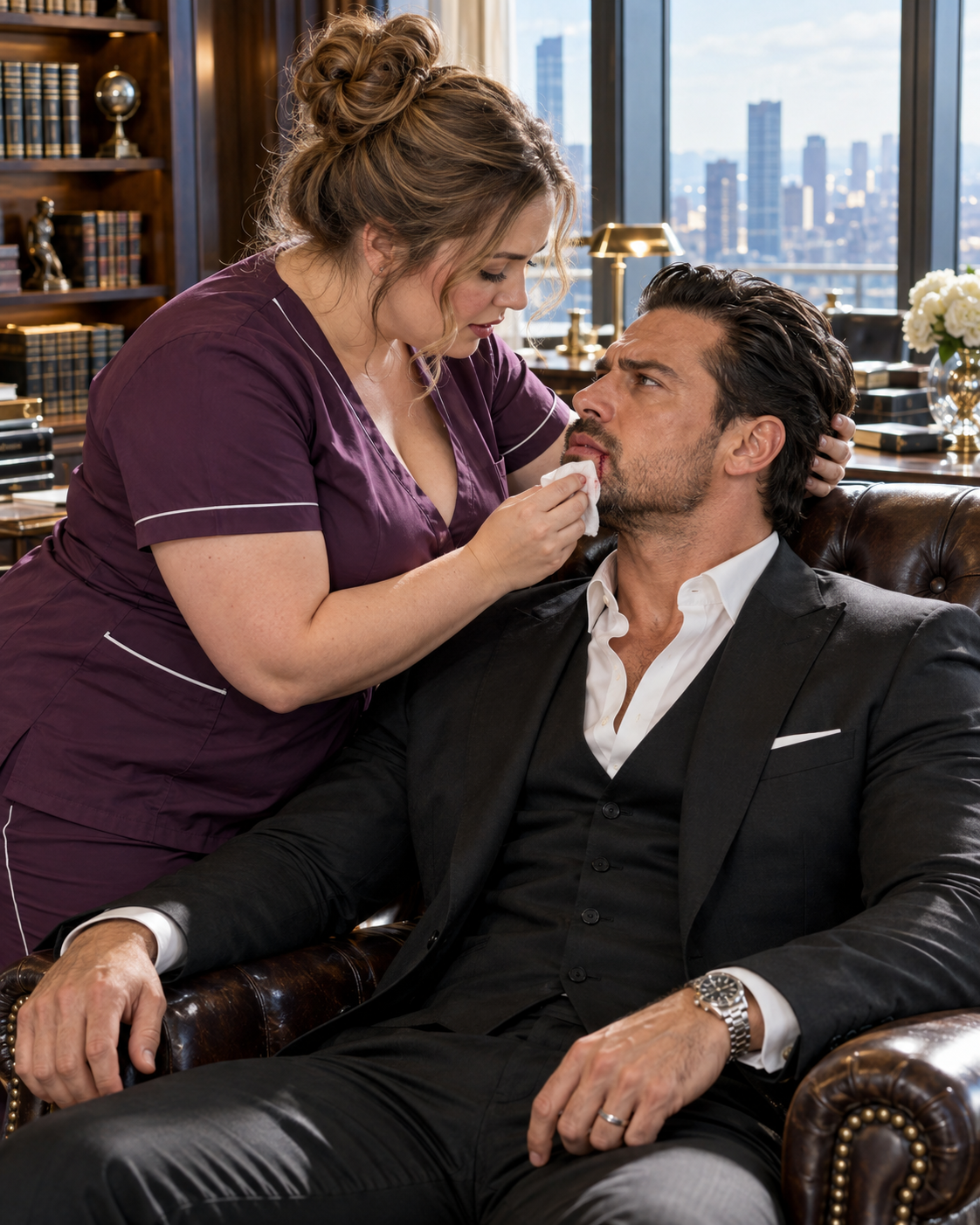
The night she stepped forward with an iron spoon, she thought she had saved Arthur Cross from a muscle spasm.
In truth, she had interrupted something much older.
A cycle of fear handed from one generation to the next.
Saving a life had taken only a few seconds.
Helping someone choose what to do with that life afterward took years.
That, she finally realized, was the harder kind of courage.
But the past was not finished with them yet.
Three months after Arthur began working with a reentry program on Chicago’s West Side, Clara arrived at her clinic one gray Monday morning and found a plain white envelope pushed beneath the front door.
There was no stamp.
No return address.
Only her name.
CLARA HIGGINS.
She carried it into her office before opening it.
Inside was a photograph.
Arthur stood outside the clinic two nights earlier, locking his car.
Behind him, half hidden across the street, was a man in a dark coat.
On the back of the photograph, someone had written five words.
THE CROSS DEBT ISN’T OVER.
Clara stared at the message for nearly a minute.
Then she called Arthur.
He answered on the second ring.
“What happened?”
He always knew.
Maybe that instinct never left men who had survived the life he had.
“I received something.”
“What?”
“A photograph of you.”
Silence.
“Don’t leave the building.”
“Arthur—”
“Clara.”
His voice changed.
Not into the old mafia boss exactly.
But close enough that she recognized it.
“Lock the doors.”
Twenty minutes later, Arthur arrived with no bodyguards, no convoy, and no weapon visible.
Clara handed him the photograph.
He studied it.
His face revealed nothing.
“Do you recognize the handwriting?” she asked.
“No.”
“The man?”
“No.”
“That’s comforting.”
Arthur ignored the sarcasm.
He turned the photograph beneath the desk lamp.
“It was taken from across Ashland.”
“You can tell that?”
“Reflection in the clinic window.”
Clara looked.
He was right.
“You said you were done with this life.”
“I am.”
“Apparently the life didn’t get the memo.”
Arthur set the photograph down.
“There are always people who benefit from unfinished business.”
“Mercer?”
“Still in federal prison.”
“Someone loyal to him?”
“Possibly.”
Clara crossed her arms.
“You’re doing that thing again.”
“What thing?”
“Where you answer every question with one word because you think mystery makes you look intelligent.”
“It usually does.”
Despite herself, Clara smiled.
Arthur did not.
“This is serious.”
“I know.”
“No, you don’t.”
Clara’s expression hardened.
“I was held at gunpoint in your underground mansion. I watched people try to kill us. I helped destroy your criminal organization. I think I have a working definition of serious.”
Arthur looked away.
That was when Clara understood.
He was afraid.
Not for himself.
For her.
“You think this is because of me,” she said.
Arthur did not answer.
“Arthur.”
“The old organization had money hidden in places the government never found.”
“How much?”
“Enough.”
“Meaning?”
“Millions.”
Clara sat slowly.
“And somebody thinks you know where it is.”
“I do.”
She stared at him.
Arthur added, “Some of it.”
Clara almost laughed.
“Of course you do.”
“The accounts were designed as emergency reserves.”
“For what?”
“War. Arrests. Betrayal.”
“So every normal family expense.”
Arthur gave her a look.
Clara picked up the photograph again.
“Why not tell the authorities?”
“Because some of that money can’t be touched without exposing people who are no longer involved.”
“Former criminals?”
“Some.”
“Innocent people?”
“Yes.”
Clara studied him.
“And you’ve just been pretending none of this exists?”
“I’ve been trying to turn it into something useful.”
“What does that mean?”
Arthur hesitated.
“I planned to transfer what I could into victim compensation funds.”
Clara blinked.
“You were going to give away the money?”
“It was never really mine.”
“That may be the healthiest sentence you’ve ever said.”
Arthur sat opposite her.
“The problem is that someone else knows the reserve exists.”
Clara tapped the photograph.
“And they want you scared.”
“No.”
Arthur’s eyes narrowed.
“They want me moving.”
Clara understood.
“If you access the money, they follow you.”
“Yes.”
“So don’t.”
“They threatened you.”
“No. They sent a photograph.”
“That is a threat.”
“It’s bait.”
Arthur looked at her with reluctant approval.
“Also yes.”
For the next four days, nothing happened.
Then the clinic’s front window shattered at 2:13 in the morning.
Nothing was stolen.
A brick lay on the floor.
Wrapped around it was another message.
NEXT TIME IT WON’T BE GLASS.
Chicago police increased patrols.
Arthur contacted a federal agent he had worked with during his cooperation agreement.
Clara installed stronger cameras.
She refused Arthur’s suggestion that she temporarily close the clinic.
“This place serves thirty-eight patients a day.”
“You can serve them next week.”
“They don’t stop needing treatment because somebody sends me scary stationery.”
Arthur paced her office.
Clara watched him.
“You know what your problem is?”
“I’m sure you’re about to explain.”
“You still think protecting people means controlling them.”
Arthur stopped.
“That’s not what I’m doing.”
“It’s exactly what you’re doing.”
“I’m trying to keep you alive.”
“And I’m trying to live.”
The distinction silenced him.
Clara softened.
“I’ll be careful.”
Arthur nodded reluctantly.
“Fine.”
“Fine.”
“I’m still staying outside tonight.”
“No.”
“Yes.”
“Arthur.”
“I’m sleeping in the car.”
“You’re sixty-two.”
“Sixty-one.”
“You make a noise when you stand up.”
“I was shot twice.”
“You make the noise before the weather changes.”
Arthur frowned.
“That is irrelevant.”
For the first time in days, Clara laughed.
The laugh lasted until she noticed the sedan parked across the street.
Black.
Engine running.
Arthur saw it too.
The humor vanished instantly.
The sedan pulled away.
Arthur moved toward his car.
Clara caught his arm.
“Don’t.”
“I need the plate.”
“The camera has it.”
Arthur stopped himself.
That mattered more than Clara expected.
Years earlier, Arthur Cross would have chased the car.
Now he chose restraint.
They reviewed the footage.
The plate was stolen.
But the driver turned his face for half a second.
Arthur went pale.
Clara noticed.
“You know him.”
Arthur leaned toward the screen.
“His name is Vincent Rook.”
“Friend?”
“Former employee.”
“That sounds promising.”
“He handled logistics.”
“For the organization?”
“Yes.”
“What happened to him?”
“I fired him.”
“Why?”
Arthur looked at her.
“He arranged a robbery without permission. A guard was killed.”
Clara felt the air in the room change.
“When?”
“Fifteen years ago.”
“Did you turn him in?”
“No.”
“Why?”
Arthur did not answer immediately.
“Because back then, I thought handling things internally made me stronger.”
Clara’s disappointment showed.
“He disappeared after I removed him.”
“And now he wants the money.”
“Probably.”
“Then give him money that isn’t real.”
Arthur looked at her.
Clara leaned back.
“You said he wants you to access the reserve.”
“Yes.”
“Give him a trail to follow.”
Arthur’s eyes sharpened.
“You want to set a trap.”
“I prefer ‘controlled opportunity.’”
“You really are my sister.”
“Don’t insult me.”
They contacted federal agents that afternoon.
The plan was dangerous but simple.
Arthur would make a visible visit to an old storage property near the Chicago River.
The property had once contained records for the Cross organization.
Rook would believe Arthur was retrieving access information.
Agents would monitor the area.
Clara was supposed to remain home.
She agreed.
Then ignored the agreement.
Arthur discovered her in the back of the surveillance van.
“What are you doing here?”
“Observing.”
“You are leaving.”
“The agent said I could stay.”
Arthur turned toward the federal agent.
The agent suddenly became deeply interested in his computer.
“Traitor,” Arthur muttered.
Clara smiled.
“Family.”
The operation began just after midnight.
Chicago looked almost silver beneath a thin layer of November frost.
Arthur entered the old warehouse carrying a metal case.
Inside were fake financial records and a tracking device.
For ten minutes, nothing happened.
Then one camera caught movement.
A man entered through the south door.
Vincent Rook.
He was older than Clara expected, broad-shouldered, with a shaved head and the heavy posture of someone who had spent decades assuming violence would solve whatever conversation could not.
Two men followed him.
Arthur stood near the center of the warehouse.
Rook smiled.
“Boss.”
“I haven’t been your boss in fifteen years.”
“You’ll always be my boss.”
“Then you were terrible at listening.”
Rook laughed.
“Still funny.”
His gaze moved to the case.
“That it?”
Arthur remained still.
“You threatened my sister.”
Rook’s smile grew.
“So she really is your sister.”
“You already knew.”
“I suspected.”
Arthur took one step forward.
“If you go near her again, this conversation ends.”
“Look at you.”
Rook spread his arms.
“Federal witness. Charity worker. Family man.”
He laughed.
“What happened?”
“I got old enough to understand consequences.”
“No.”
Rook’s expression hardened.
“You got weak.”
Arthur smiled faintly.
“That’s what Mercer thought too.”
Rook’s jaw tightened.
“He should’ve killed you when he had the chance.”
“And you should have left Chicago.”
Rook pulled a pistol.
Inside the surveillance van, agents tensed.
Clara stopped breathing.
Arthur didn’t move.
“You know what I learned while you were becoming respectable?” Rook said.
“Nobody remembers loyalty. They remember who has money.”
“So this is about the reserve.”
“It belongs to the men who built your empire.”
“No.”
Arthur’s voice was calm.
“It belongs to the people we hurt building it.”
Rook stared at him.
Then laughed so loudly it echoed through the warehouse.
“You actually believe that now.”
“Yes.”
“That’s pathetic.”
“Maybe.”
Arthur glanced toward the windows.
“But it helps me sleep.”
Rook raised the gun.
“Give me the case.”
Arthur placed it on the floor.
Rook’s man moved forward and picked it up.
That was when everything went wrong.
A fourth man appeared on the upper catwalk.
No agent had seen him enter.
He aimed directly at Arthur.
Clara saw him on the monitor first.
“Above him!”
The agents moved.
The gunman fired.
Arthur dropped.
The bullet struck a steel support beam.
Federal agents stormed the warehouse.
Rook fired twice toward the entrance.
His men scattered.
The catwalk gunman ran.
Clara watched the chaos through the monitor.
Then one camera went black.
Another.
“Where’s Arthur?”
No one answered.
Clara saw Rook disappear through a side corridor.
Arthur followed.
“Arthur, no.”
She jumped from the van.
An agent grabbed her.
“You cannot go in there.”
“My brother is inside.”
“So are six armed federal officers.”
Another gunshot echoed.
Then another.
Clara froze.
Seconds later, an agent’s voice came over the radio.
“Suspect down.”
“Which suspect?” Clara demanded.
Nobody answered.
Inside the warehouse, Arthur had cornered Rook near an old loading dock.
Rook’s weapon lay several feet away.
Blood ran from a cut above his eye.
Arthur held a pistol taken from one of Rook’s men.
Rook looked at him.
“There he is.”
Arthur said nothing.
“The real Arthur Cross.”
Arthur kept the gun trained on him.
Rook smiled through bloody teeth.
“You can wear all the charity badges you want. You can visit prisoners. You can plant flowers on your mother’s grave. But this is who you are.”
Arthur’s grip tightened.
Rook saw it.
“You want to do it.”
Arthur’s breathing grew heavier.
“You know I’ll come back.”
Arthur took one step forward.
“You know I’ll find your sister.”
Another step.
Rook smiled.
“There it is.”
For one terrible second, Arthur could almost hear every voice from his old life.
Men telling him mercy was weakness.
Men telling him fear was power.
Men teaching an abandoned child that the safest person in the room was the cruelest.
Then another voice came to him.
Clara’s.
Protecting people is not the same as controlling them.
Arthur lowered the gun.
Rook’s smile vanished.
“What are you doing?”
“Something you’ll never understand.”
Federal agents entered behind him.
Arthur stepped away.
Rook screamed.
“You coward!”
Arthur turned.
“No.”
He looked at the man who had spent fifteen years worshipping the worst version of him.
“I finally got brave enough not to be you.”
Agents placed Rook in handcuffs.
When Arthur emerged from the warehouse, Clara was waiting.
She slapped him.
Hard.
Every agent nearby looked away.
Arthur rubbed his cheek.
“I assume that means you’re happy I’m alive.”
“You followed him alone.”
“Yes.”
“You’re an idiot.”
“Probably.”
“You could have been killed.”
“Yes.”
Clara’s eyes filled with tears.
Arthur’s expression changed.
He opened his arms awkwardly.
Clara hugged him.
For several seconds, neither spoke.
Then she whispered, “Don’t make me find another long-lost brother.”
Arthur almost laughed.
“I’ll do my best.”
Rook’s arrest finally broke the last serious network connected to Arthur’s former organization.
The hidden reserve funds were recovered over the following year.
Most were transferred through court-approved programs to families affected by crimes tied to the old syndicate.
Arthur did not receive praise.
He did not want it.
Some people never forgave him.
He accepted that too.
He learned that redemption was not a transaction.
You could not perform enough good deeds to force somebody else to stop remembering the harm you caused.
All you could do was stop causing more harm.
Then keep going.
Five years later, Higgins Family Recovery expanded into a second building.
The original clinic now included a small job-training center for former inmates, recovering addicts, and young adults leaving foster care.
Arthur came every Tuesday.
Officially, he handled mentoring.
Unofficially, he fixed broken chairs, carried boxes, argued with insurance forms, and made terrible coffee.
One Tuesday afternoon, a seventeen-year-old boy named Malik sat across from Arthur in the training room.
Malik had been arrested twice.
He had dropped out of high school.
He believed nobody respected him unless they feared him.
Arthur listened quietly.
“I need money,” Malik said.
“No.”
“I need people to stop disrespecting me.”
“No.”
Malik frowned.
“What do you mean, no?”
“I mean that isn’t what you need.”
“You don’t know me.”
Arthur nodded.
“That’s true.”
Malik looked toward the crescent scar on Arthur’s wrist.
“You some kind of gangster before?”
Arthur smiled.
“Something like that.”
“You kill people?”
Arthur was silent for a moment.
“I hurt people.”
Malik leaned closer, fascinated.
“So you were powerful.”
Arthur looked through the glass wall.
Clara was in the hallway laughing with a patient.
On the wall behind her hung a framed photograph of Margaret Higgins.
Arthur looked back at Malik.
“No.”
The boy seemed confused.
“I thought I was.”
“What’s the difference?”
Arthur leaned forward.
“If everyone around you is afraid to tell you the truth, you’re not powerful.”
“What are you?”
“Alone.”
Malik looked down.
Arthur continued.
“When I was young, people taught me that being feared meant nobody could hurt me.”
“Did it work?”
“No.”
“Then what does?”
Arthur considered the question.
“Nothing works forever.”
Malik laughed.
“That’s depressing.”
“It’s accurate.”
Arthur smiled.
“But having people who can tell you when you’re wrong helps.”
Malik nodded toward Clara through the glass.
“She tell you when you’re wrong?”
“Constantly.”
“I can hear you,” Clara called from the hallway.
Malik laughed.
Arthur did too.
That evening, after the clinic closed, Clara and Arthur walked outside together.
Snow had begun falling over Chicago.
Not heavy snow.
Just enough to soften the sidewalks and catch beneath the streetlights.
Arthur stood beside his car.
“You remember the night we met?” Clara asked.
Arthur looked offended.
“You worked in my house for eight months.”
“The night we actually met.”
He smiled.
“The spoon.”
“The spoon.”
“You nearly broke my neck.”
“I saved your neck.”
“Debatable.”
Clara laughed.
“You know, I used to think finding you would change everything.”
“Did it?”
“Yes.”
Arthur looked surprised.
Clara added, “Just not in the way I expected.”
“How did you expect it?”
“I don’t know. Some magical family reunion. Answers. Closure.”
“And instead?”
“I got you.”
Arthur shook his head.
“Terrible outcome.”
“Tragic.”
They stood quietly for a moment.
Chicago traffic moved behind them.
A train rattled somewhere in the distance.
Arthur looked at the scar on his wrist.
“I spent half my life wishing someone had come to find me.”
Clara turned toward him.
Arthur continued.
“Then when you finally did, you didn’t even know you were looking.”
Clara smiled.
“Maybe that’s how some people get found.”
Arthur glanced at her.
“By accident?”
“By someone deciding not to walk past when something is wrong.”
Arthur looked toward the clinic.
Years earlier, Clara had been a frightened kitchen maid whose family debt had trapped her inside a house controlled by powerful men.
Arthur had been the most feared man in that house.
Neither could have imagined where one small decision would lead.
She had stepped forward because a man was in pain.
She did not know his name had once been Daniel Higgins.
She did not know his scar matched the photograph in her mother’s locket.
She did not know that saving him would expose a kidnapping, destroy an empire, uncover decades of betrayal, or eventually create a place where people once discarded by the city could try again.
She had simply seen someone who needed help.
And she had acted.
That was the part Clara remembered most.
Not the gunfire.
Not the mansion.
Not Mercer.
Not Rook.
Not even the revelation that Arthur was her brother.
She remembered the moment before all of that.
The surgeon had been frozen.
The guards had been frightened.
Everyone powerful in the room had been waiting for someone else to take responsibility.
Then a kitchen maid stepped forward.
Sometimes entire lives changed that way.
Not because someone knew exactly what would happen next.
But because someone decided that fear would not make the decision for them.
Arthur opened his car door.
“Dinner Sunday?”
Clara nodded.
“You’re cooking.”
Arthur sighed.
“That seems dangerous.”
“You’ve survived worse.”
He started to get into the car, then stopped.
“Clara?”
“Yes?”
“Thank you.”
“For what?”
Arthur looked at her.
He could have said for saving his life.
For finding him.
For carrying their mother’s memory long enough to return part of his identity to him.
For forcing him to face the truth.
Instead, he said something simpler.
“For not letting Arthur Cross be the last person I became.”
Clara’s eyes softened.
“Goodnight, Daniel.”
Arthur stood perfectly still.
Even after all those years, that name still reached somewhere inside him that Arthur Cross never could.
Then he smiled.
“Goodnight, Clara.”
He drove away beneath the falling snow.
Clara remained outside the clinic for another minute, watching his taillights disappear into Chicago traffic.
Above the entrance behind her, the Higgins name glowed warmly against the winter night.
It had survived debt.
Violence.
Loss.
Lies.
And time.
Not untouched.
But alive.
Years later, when people asked Clara how Higgins Family Recovery began, she rarely told them the full story.
The newspapers had already told enough about Arthur Cross.
Some called him a monster.
Some called him redeemed.
Some treated his transformation like a mystery that could be reduced to one dramatic night.
Clara knew better.
Nobody changed once.
People changed in hundreds of decisions no one applauded.
Arthur changed every time he chose not to threaten someone.
Every time he accepted blame without defending himself.
Every time he sat across from a frightened young man and told him the truth about power.
Every time he allowed someone he had hurt to refuse forgiveness.
Every time he woke up and chose not to become the man he had been yesterday.
And Clara changed too.
She stopped believing courage meant having no fear.
Fear had been present at every important moment of her life.
Courage was simply the decision that something else mattered more.
A patient.
A brother.
The truth.
A future.
On the fiftieth anniversary of Margaret Higgins’s death, Clara returned to the cemetery.
Arthur had died peacefully two years earlier at the age of eighty-two.
No gunfight.
No enemies.
No dramatic ending.
His heart had simply stopped one winter morning while he slept.
Clara had cried harder than she expected.
Even at eighty, losing a brother still made part of you feel like a child.
She walked between the graves carrying two tomatoes.
One she placed beside her mother’s headstone.
The other she placed beside Arthur’s.
His stone did not say ARTHUR CROSS.
At his request, it read:
DANIEL ARTHUR HIGGINS
SON
BROTHER
A MAN WHO CHOSE TO CHANGE
Clara sat between the two graves.
“You were both exhausting,” she said.
Wind moved through the trees.
She smiled.
Then she opened the old silver locket.
The photograph inside had faded almost completely.
Margaret’s face was barely visible.
Daniel’s small figure had become a pale shape.
Clara could still make out the crescent near his wrist.
She closed the locket.
By then, Higgins Family Recovery had four clinics across Illinois.
Hundreds of patients had passed through its doors.
Dozens of former inmates had become counselors, technicians, drivers, therapists, and mentors.
Many never knew the strange history behind the name on the building.
That was fine with Clara.
A legacy did not need to advertise the pain that created it.
It only needed to produce something better.
She stood slowly and brushed leaves from her coat.
Before leaving, she touched Arthur’s headstone.
For decades, he had believed that the scar on his wrist represented the night his family was taken from him.
In the end, Clara thought it meant something different.
A scar was not evidence that a person had escaped damage.
It was evidence that damage had happened and life had continued anyway.
Families could carry scars.
Cities could carry scars.
People could carry things they were not proud of and still decide what came next.
Clara walked toward the cemetery gate.
Morning sunlight appeared between the clouds.
Behind her rested a woman who had refused to stop loving a missing son.
Beside her rested that son, who had spent most of his life believing he had been abandoned.
And walking away from them was the daughter who had unknowingly brought their broken story back together.
There had never been a way to restore the family they could have been.
There was only the family they eventually became.
Imperfect.
Late.
Complicated.
Real.
And perhaps that was the lesson hidden inside everything that happened beneath that Chicago mansion so many years ago.
The past could explain a person.
It could wound them.
It could shape their instincts and whisper excuses into every decision.
But it did not have to receive the final word.
Arthur Cross had once built his life around fear because fear was the only language his childhood had taught him.
Daniel Higgins spent the end of that life learning another language.
Responsibility.
Mercy.
Truth.
And love.
Not the sentimental kind.
The difficult kind.
The kind that does not erase consequences.
The kind that does not demand forgiveness.
The kind that stays long enough for somebody to become different.
Clara reached the cemetery gate and looked back once.
Then she continued toward the city.
Toward patients waiting for her.
Toward family.
Toward another ordinary day.
And somewhere in Chicago, in a clinic bearing the name of a family that violence once tried to erase, a frightened young person would walk through the door believing their worst mistake had already decided their entire future.
Someone would sit beside them.
Someone would listen.
Someone would tell them what Arthur had spent a lifetime learning.
A scar is not the end of a story.
Sometimes, it is simply the place where the next chapter begins.
THE END.