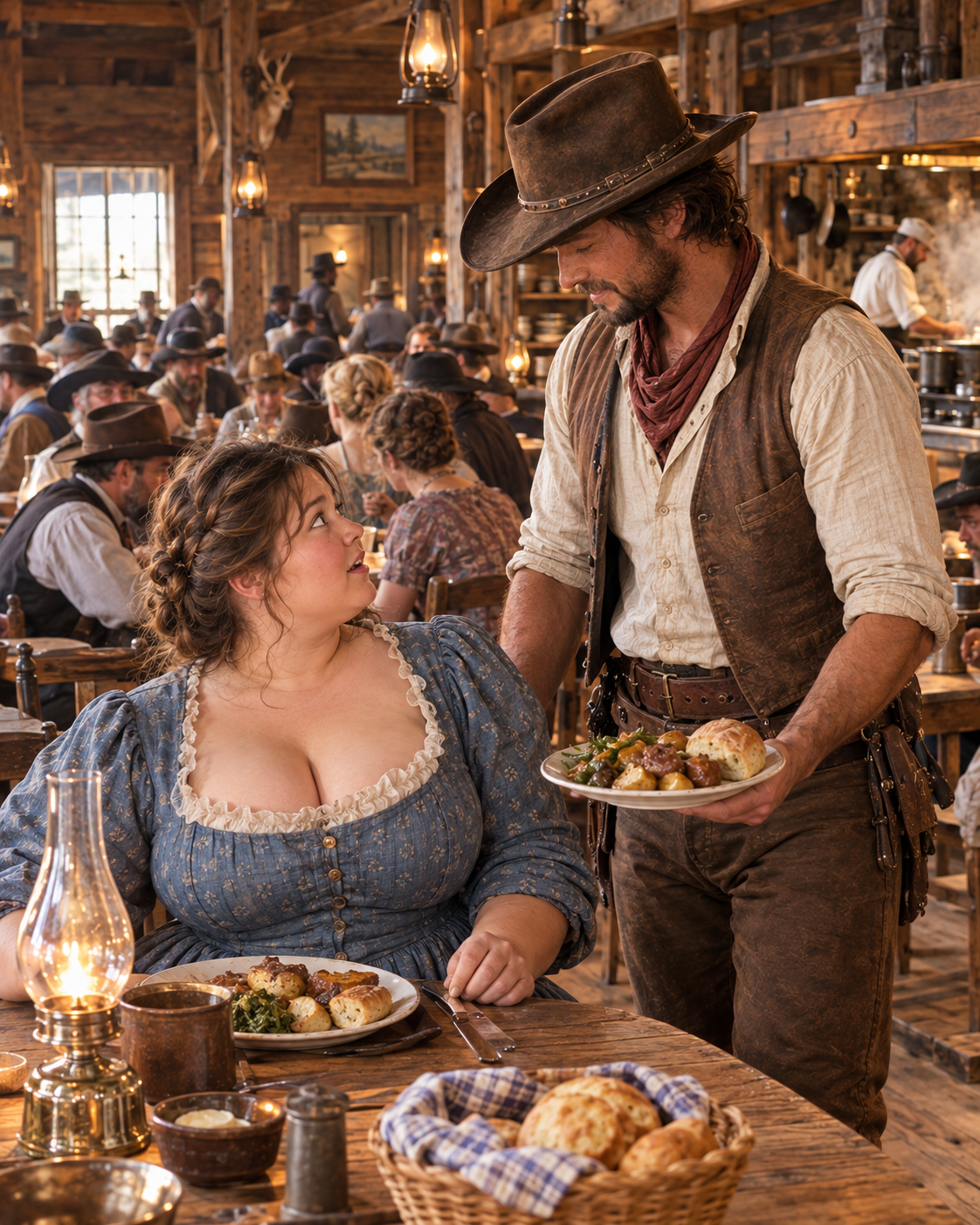
At the Harvest Hall, I was publicly sent to the worst table while Silas Whitaker watched coldly, but I soon learned he had arranged my humiliation for another reason.
The paper trembled between my fingers.
“Eleven years,” I whispered.
Silas nodded.
“And you knew?”
“I suspected.”
“That is not the same thing.”
“No,” he said. “It isn’t.”
I looked again at the signature.
Evelyn Hart.
My name.
The handwriting was mine in every detail—the narrow E, the long stroke beneath the H, even the small hesitation before the final t.
But eleven years ago, I had been sixteen years old.
I had never worked for a supplier.
I had never signed an invoice.
And I had never heard of the man whose name appeared beside the payment.
“Who was he?”
“Thomas Whitaker.”
I stared at Silas.
His face had gone still.
“Your father?”
“My uncle.”
He rose and walked to the window.
Snow covered the ranch yard, softening the fences and hiding the hoofprints left that morning.
“My father died when I was seventeen. Thomas was his older brother. He managed most of the business accounts before I took control.”
“And he paid me?”
“According to this.”
“For what?”
“That is what I have spent the last six months trying to discover.”
I folded the paper carefully.
“Why didn’t you ask me before hiring me?”
“Because I didn’t know whether you were involved.”
The words struck harder than they should have.
“You thought I was stealing from you?”
“I thought someone had spent eleven years making sure your name was connected to money that disappeared from my family’s accounts.”
I stood so quickly that the chair scraped against the floor.
“You should have told me.”
“I know.”
“You brought me here. You gave me authority over your books. You let me sleep under your roof while you investigated me.”
“I wasn’t investigating you.”
“Then what were you doing?”
Silas turned.
“Protecting you.”
I laughed once, without humor.
“From whom?”
His answer came quietly.
“Everyone.”
A knock sounded at the door.
Silas and I both looked toward it.
Cole stepped inside, snow clinging to his coat.
“Mr. Whitaker.”
Silas straightened.
“What is it?”
“There was a wagon outside the north barn.”
“Whose?”
Cole hesitated.
“No wagon.”
I frowned.
“What do you mean?”
“Tracks.”
He looked at me.
“Someone came through the snow after midnight. Stopped near the storage shed. Then left on foot.”
Silas crossed the room.
“Did you see anyone?”
“No.”
“Did they take anything?”
“Not that I can tell.”
Silas looked at me.
“Stay here.”
I hated the command immediately.
“I am not a child.”
“I know.”
“Then don’t order me around.”
His eyes softened for a moment.
“Evelyn, please.”
It was the first time I had ever heard fear in his voice.
That frightened me more than the mysterious invoice.
The next morning, Silas and Cole searched the north barn.
I remained in the office, going through the old ledgers.
If someone had been using my name, there had to be a pattern.
Numbers rarely lied.
People did.
I spent three hours comparing invoices from 1875 through 1886.
At first, I found nothing.
Then I noticed something strange.
Every questionable payment connected to my name had been made through the same bank.
The Bellweather County Bank.
The same bank whose president had sat at the Harvest Hall banquet.
Mr. Gideon Caldwell.
My stomach tightened.
I pulled another ledger from the shelf.
There it was again.
Caldwell’s signature.
Not on the invoice.
On the authorization slip.
I kept searching.
There were fourteen payments.
Then twenty-one.
Then thirty-six.
My hands began to shake.
Someone had not simply stolen money using my name.
Someone had built an entire false history around me.
A knock sounded.
I quickly closed the ledger.
Silas entered.
“We found something.”
“So did I.”
He looked at the book beneath my hand.
“What?”
“Caldwell.”
His expression changed.
“You’re sure?”
I opened the ledger.
“He authorized the payments.”
Silas read the pages without speaking.
Then he sat down.
For several seconds, neither of us moved.
“My father trusted Caldwell,” he finally said.
“Your father trusted a lot of people.”
“Yes.”
His jaw tightened.
“Too many.”
I pushed the invoice toward him.
“What happened eleven years ago?”
Silas stared at the signature.
“My father had a shipment of cattle disappear.”
“How many?”
“Forty-seven head.”
“That’s a fortune.”
“It nearly ruined him.”
“Did he report it?”
“He blamed Thomas.”
I frowned.
“Your uncle?”
“Yes. They fought over it. Three days later, Thomas was found dead.”
The room seemed colder.
“How?”
“His horse came back without him.”
I waited.
“His body was found in a ravine two days later.”
“An accident?”
“That was the conclusion.”
“And you don’t believe it.”
“No.”
“Why?”
“Because Thomas was terrified before he died.”
I looked down at the invoice.
“Of what?”
Silas’s eyes met mine.
“Someone had discovered the theft.”
I felt the pieces shift.
The stolen cattle.
The missing money.
The false invoices.
My name.
“Why me?”
“I don’t know.”
“You must have some idea.”
Silas stood.
“I think your father may have known my uncle.”
“My father?”
“Yes.”
I shook my head.
“My father died when I was twelve.”
“I know.”
“Then how could he have been involved?”
“I found letters.”
My breath caught.
“Where?”
“In my father’s study.”
“Do you have them?”
Silas hesitated.
“Yes.”
“Show me.”
He led me upstairs to a room I had never entered.
The study smelled of old leather, dust, and wood smoke.
A portrait of Thomas Whitaker hung above the fireplace.
He had the same hard eyes as Silas.
Silas opened a locked drawer and removed a small wooden box.
Inside were letters tied with faded blue ribbon.
He handed me the first.
The handwriting was unfamiliar.
My father had written it.
I read the first few lines.
My knees weakened.
The letter was dated September 1875.
It mentioned Thomas Whitaker.
It mentioned cattle.
And it mentioned my mother.
I looked up.
“My mother knew him.”
Silas nodded.
“Apparently.”
I read faster.
My father’s letter described a shipment of cattle that had been purchased under false names.
He believed someone at the bank was moving money through several ranches.
He had refused to participate.
The final paragraph made my blood run cold.
“If anything happens to me, keep Evelyn away from Caldwell. He has already asked about her.”
I dropped the letter.
Silas caught it before it touched the floor.
“Why would Caldwell care about me?”
“I don’t know.”
“He asked about a twelve-year-old girl?”
“That is what the letter says.”
I walked to the fireplace.
The room suddenly felt too small.
“My father knew.”
“Yes.”
“And then he died.”
“Yes.”
“And eleven years later, someone is still using my name.”
Silas stepped closer.
“I think your father’s death was connected to the same scheme.”
I turned.
“Then why am I still alive?”
He looked at me for a long moment.
“Because perhaps they needed you alive.”
“For what?”
Before he could answer, the door downstairs slammed.
A man’s voice shouted.
“Mr. Whitaker!”
Silas drew the revolver from his belt.
“Stay here.”
“No.”
“Evelyn—”
“I am coming with you.”
He looked as though he wanted to argue.
Instead, he nodded.
We descended the stairs together.
Cole stood in the entrance, holding a torn piece of paper.
“Found this nailed to the barn door.”
Silas took it.
His face went pale.
“What does it say?”
He handed it to me.
There were only seven words.
STOP DIGGING OR SHE DIES LIKE HER FATHER.
My hands went numb.
Silas reached for me.
I stepped back.
“Don’t.”
His expression broke.
“I won’t let them touch you.”
“You can’t promise that.”
“Yes, I can.”
“No.”
My voice shook.
“You couldn’t even tell me the truth.”
He went silent.
I hated that he had no answer.
That afternoon, Silas sent Cole into town with instructions to speak to no one except the sheriff.
But the sheriff returned before sunset.
Alone.
He entered the ranch office with his hat in his hands.
“Mr. Whitaker.”
Silas looked up.
“What happened?”
The sheriff swallowed.
“Sheriff Bell is dead.”
The room went silent.
“When?”
“An hour ago.”
“How?”
“Shot.”
“Where?”
“Outside his house.”
I stared at Silas.
He looked at the sheriff.
“Did he say anything?”
“No.”
The sheriff hesitated.
“His wife found this beside him.”
He placed a small envelope on the desk.
My name was written across it.
I did not want to touch it.
Silas opened it instead.
Inside was a single sentence.
THE HARVEST HALL LEDGER IS UNDER THE STAGE.
Silas looked at me.
“The banquet.”
I remembered that night.
The worst table.
The whispers.
Caldwell.
The moment Silas had sat beside me.
“You knew.”
“I suspected there was something hidden at the hall.”
“And you deliberately humiliated me.”
His eyes closed briefly.
“Yes.”
“Why?”
“Because Caldwell was watching.”
I felt my anger rise.
“You used me as bait.”
“I put myself beside you so he would believe I was protecting you for selfish reasons.”
“And he believed it?”
“I think so.”
“Then why did you tell everyone I was interesting?”
Silas looked at me.
“Because that part wasn’t an act.”
My anger faltered.
He continued.
“I needed Caldwell to think I had become careless. That I had developed a weakness.”
I whispered, “Me.”
“Yes.”
“You could have told me.”
“If I had, you might have been in greater danger.”
“You don’t get to decide that for me.”
“No.”
He stepped closer.
“I understand that now.”
The sheriff cleared his throat.
“I’ll need to know what you’re planning.”
Silas looked toward the dark window.
“We’re going to Bellweather Hall.”
That night, the three of us rode into town.
The Harvest Hall was empty.
The banquet decorations had been removed.
Moonlight spilled through the tall windows.
Silas carried a lantern.
I followed him toward the stage.
We lifted the wooden boards one by one.
Nothing.
Then I noticed a loose plank beneath the center.
I pried it up.
A small iron box lay beneath it.
Inside were ledgers.
Dozens of them.
My hands shook as I opened the first.
Payments.
Names.
Dates.
Ranches.
Banks.
Judges.
Suppliers.
Politicians.
The entire county seemed to be inside those pages.
Silas opened another.
His face hardened.
“Here.”
He showed me a list of cattle shipments.
Forty-seven head.
Another shipment.
Thirty-two.
Another.
Fifty-one.
All marked as delivered.
All paid for.
None received.
At the bottom of every page was the same authorization.
Gideon Caldwell.
Then I saw my own name.
Evelyn Hart.
Used as an account holder.
A witness.
A clerk.
A supplier.
I stared at it.
“They built a person who never existed.”
“No,” Silas said.
“They built a person who was supposed to be you.”
A sound came from the balcony.
We looked up.
Someone was standing there.
The figure wore a dark coat.
Then the lantern went out.
A gunshot shattered the silence.
Cole tackled me to the floor.
Another shot struck the stage.
Silas fired toward the balcony.
The figure ran.
Silas chased him.
I heard boots pounding across the wooden floor.
Then a crash.
I rose.
“Silas!”
No answer.
I grabbed the lantern and ran toward the stairs.
At the top, I found him kneeling beside a broken window.
Blood covered his sleeve.
“You’re shot.”
“Only grazed.”
“Where is he?”
“Gone.”
I looked through the window.
Snow covered the alley.
There were footprints.
Then I saw something else.
A silver pocket watch lay on the floor.
Silas picked it up.
His face changed.
“That’s Caldwell’s.”
We returned to the ranch before dawn.
The sheriff took the ledgers.
Silas had his wound bandaged.
I sat in the kitchen staring into the stove.
He entered quietly.
“You should sleep.”
“I don’t think I can.”
He sat across from me.
For a while, neither of us spoke.
Then I said, “You knew my name was dangerous before I ever walked into that banquet.”
“Yes.”
“And you still hired me.”
“Yes.”
“Why?”
He looked at me.
“Because I had spent years watching men profit from your father’s death while pretending you didn’t exist.”
My throat tightened.
“I wanted to find the truth.”
“And if the truth had destroyed me?”
“It wouldn’t.”
“You don’t know that.”
“No.”
He leaned forward.
“But I knew one thing.”
“What?”
“You were not what they said you were.”
I looked down.
“All my life, people treated me like I was poor because I was foolish.”
“You were poor because someone stole what belonged to you.”
The words struck somewhere deep.
I realized then that the worst thing about humiliation was not being placed at the wrong table.
It was beginning to believe you deserved the seat.
Three days later, Caldwell arrived at the ranch.
Alone.
He walked into the office wearing the same polished black coat he had worn at the Harvest Hall.
“Mr. Whitaker.”
Silas did not stand.
“Caldwell.”
Caldwell smiled.
“I understand there has been some confusion.”
“There has.”
Caldwell glanced at me.
“Miss Hart.”
I felt a chill.
“You know me.”
“Of course.”
“How?”
He smiled again.
“Your father spoke of you.”
“My father died eleven years ago.”
“Yes.”
“And you knew him?”
“Everyone knew Samuel Hart.”
I stepped closer.
“What did he know?”
Caldwell’s smile disappeared.
“Nothing that mattered.”
“That isn’t an answer.”
He looked at Silas.
“You’ve made a mistake bringing her here.”
Silas stood.
“You’ve made a bigger one coming here.”
Caldwell reached inside his coat.
Cole immediately raised his rifle.
Caldwell stopped.
Slowly, he removed a folded document.
“Your father’s debt.”
He placed it on the desk.
“Every penny was transferred to the Whitaker account after his death.”
Silas unfolded it.
His expression changed.
“This is forged.”
“No.”
Caldwell looked at me.
“It is the reason you were never allowed to inherit anything.”
I stared at the paper.
My father had supposedly owed money to Thomas Whitaker.
But the signature was wrong.
I knew because I had seen my father’s handwriting in the letters.
“This is not his signature.”
Caldwell smiled.
“You’ve become quite observant.”
Silas stepped between us.
“Enough.”
Caldwell’s eyes hardened.
“You think these ledgers will save you?”
“No.”
Silas looked directly at him.
“You’re going to save us.”
Caldwell frowned.
“The sheriff already has copies.”
For the first time, Caldwell looked afraid.
Silas continued.
“And if anything happens to either of us, those copies go to the state prosecutor.”
Caldwell’s face drained of color.
“You wouldn’t.”
“I would.”
“You’d destroy your own family.”
Silas’s voice was quiet.
“My family was destroyed eleven years ago.”
Caldwell turned toward me.
“You have no idea what you’re involved in.”
I answered before Silas could.
“I know enough.”
“You think you’re innocent?”
“I know I am.”
“You signed the invoices.”
“No.”
Caldwell smiled.
“Your handwriting says otherwise.”
I held his gaze.
“Then perhaps you should explain why my handwriting was copied from letters written by a sixteen-year-old girl who never worked for you.”
His expression changed.
Just for a second.
But I saw it.
So did Silas.
“You taught someone to forge my name,” I said.
Caldwell said nothing.
“And that person made mistakes.”
“What mistakes?”
I opened the ledger.
“The same mistake you made.”
I pointed to the invoices.
“You wrote the dates according to the old county calendar.”
Caldwell’s eyes narrowed.
“What does that mean?”
“It means whoever forged these documents knew my father’s business but did not know the accounting practices used in my household.”
I smiled faintly.
“They copied my handwriting.”
I looked at him.
“But they didn’t copy my life.”
The sheriff entered behind him.
Two deputies followed.
Caldwell turned.
Too late.
The next morning, Gideon Caldwell was arrested.
The investigation lasted months.
More names emerged.
Bankers.
Suppliers.
A judge.
Two ranch owners.
Even men who had spent years calling themselves respectable.
Thomas Whitaker had not died in an accident.
He had discovered the theft and threatened to expose it.
My father had discovered it too.
He had refused to join them.
They had forged documents to make both men appear dishonest.
Then they had used my name because I was young, poor, and easy to dismiss.
They had assumed no one would ever believe me.
They were wrong.
The county changed after the arrests.
Not quickly.
People rarely change quickly.
Some apologized.
Some pretended they had always supported me.
Mrs. Caldwell never apologized.
She simply stopped looking me in the eye.
The Harvest Hall closed for nearly a year.
When it reopened, the broken wooden chair from that October banquet was gone.
I asked Silas what had happened to it.
He smiled.
“I had it repaired.”
“Why?”
“Because some things deserve to survive.”
Months later, the ranch prospered again.
We recovered part of the stolen money.
Not all of it.
Some losses could never be repaired.
But the ranch no longer depended on secrets.
Every payment was recorded.
Every shipment was counted.
Every worker had a voice.
Cole became foreman.
He still pretended to dislike paperwork.
I still made him count every nail.
One spring morning, Silas found me standing beside the new office shelves.
“You’re smiling,” he said.
“I have reason to.”
“What reason?”
I held up a letter.
The county had offered me a position managing agricultural accounts for several local ranches.
I had accepted.
Silas read the letter.
“You’re leaving?”
“I never said that.”
“You’re taking another job.”
“Yes.”
He looked wounded.
I laughed.
“You’ll survive.”
“I suppose I will.”
I stepped closer.
“You taught me something.”
“What?”
“That trust isn’t something one person gives another.”
He waited.
“It is something two people build by telling each other the truth.”
His eyes softened.
“I should have told you everything from the beginning.”
“Yes.”
“I was afraid.”
“Of what?”
“Of losing you.”
I smiled.
“You almost did.”
“I know.”
The silence between us felt different now.
Not heavy.
Not uncertain.
Honest.
Silas reached for my hand.
I let him.
“I loved you before I knew your name,” he said.
I laughed softly.
“That makes no sense.”
“It does to me.”
He looked toward the ranch.
“I saw you at that banquet sitting alone while everyone else pretended not to notice you.”
“And?”
“I knew then that you were stronger than all of them.”
I squeezed his hand.
“I wasn’t strong.”
“You were.”
“I was frightened.”
“Those things can exist together.”
I looked across the fields.
For years, I had believed survival meant becoming invisible.
I thought if I spoke softly enough, worked quietly enough, and asked for little enough, the world might leave me alone.
But invisibility had never protected me.
It had only made it easier for others to write my story without asking what I wanted.
The stolen invoices had taught me something I would never forget.
A name could be forged.
A reputation could be manufactured.
A lie could be repeated until an entire town believed it.
But the truth had a stubbornness of its own.
It waited.
It survived.
And when someone finally had the courage to uncover it, even the most carefully built deception could collapse.
Years later, people would tell the story of the Whitaker ranch differently.
Some would say Silas saved me.
Others would say I saved him.
Neither version was completely true.
We saved each other by refusing to let fear decide what the truth was worth.
And whenever someone asked me about the worst night of my life, I never spoke about the gunshots.
I spoke about the broken chair.
Because that was where everything began.
The night I had been sent to the worst table in the room, I thought the world was telling me where I belonged.
I was wrong.
Silas had sat across from me not because I was beneath everyone else, but because he had already seen something they could not.
Worth is not determined by the table where someone places you.
It is determined by what you bring with you when you stand up.
And sometimes the seat you are ashamed to occupy becomes the very place where you discover your own strength.
I never forgot that.
Neither did Silas.
And neither did the people who watched me walk back into Bellweather Hall one year later.
This time, I did not enter through the serving door.
I walked through the front.
I wore a dark blue dress.
Silas stood beside me.
The room went quiet.
For a moment, I remembered the girl I had been.
The girl who had lowered her eyes whenever someone important walked past.
The girl who believed she needed permission to belong.
Then I lifted my head.
Someone pulled out a chair.
I smiled.
But before I sat, I looked around the room and understood something I wished I had known much earlier.
I had never needed a better table.
I had needed the courage to stop believing that the wrong people had the authority to decide where I belonged.
So I took the seat I chose.
And for the first time in my life, nobody had given it to me.
I had earned it.
I had claimed it.
And I had finally learned that sometimes the most powerful thing a person can do is not fight for a place among people who refuse to value them.
Sometimes it is simply to stand up, walk away from their table, and build one of your own.
For a long time after that evening at Bellweather Hall, Evelyn believed the story was over.
She had learned the truth.
Caldwell was in prison.
The men who had helped him were being prosecuted.
Her father’s name had been cleared.
The Whitaker accounts had been restored.
And, most importantly, she had stopped being afraid of the name she carried.
But life rarely ends a story simply because the worst chapter has finished.
Sometimes the real test comes afterward, when there is nothing left to fight and a person must decide what to do with the life they fought so hard to keep.
By the summer of 1888, the Whitaker ranch had changed completely.
The old storage buildings had been rebuilt.
The accounting office had expanded into two rooms.
Workers were paid on time.
Suppliers knew that every crate, sack, barrel, and piece of equipment would be counted before payment was made.
And hanging above Evelyn’s desk was a small wooden sign.
TRUST, BUT VERIFY.
Cole had carved it for her.
He insisted it was a joke.
Evelyn knew better.
One afternoon, while she was checking a shipment of wheat, a young girl appeared at the office door.
She could not have been more than fourteen.
Her dress was faded.
Her boots were too large.
She held a letter against her chest.
“Are you Mrs. Whitaker?”
Evelyn looked up.
“Not yet.”
The girl blinked.
Evelyn smiled.
“But I am Evelyn.”
The girl stepped inside.
“I was told you might help me.”
“Who told you?”
“Mrs. Bell.”
Evelyn frowned.
“The sheriff’s wife?”
The girl nodded.
“She said you know what it is like when people don’t believe you.”
Evelyn slowly put down her pen.
“What happened?”
The girl looked at the floor.
“My father died.”
“I am sorry.”
“He owed money to Mr. Harlan.”
“Harlan the mill owner?”
“Yes.”
“He says my father left nothing.”
“And you don’t believe him.”
The girl shook her head.
“He says my father signed papers. But my father could barely write his own name.”
Evelyn felt something cold move through her.
“Show me.”
The girl handed her the papers.
Evelyn read them.
Then she read them again.
The handwriting was clumsy.
The figures were wrong.
The dates did not match.
It was not the same scheme as Caldwell’s.
But it was familiar enough.
Someone was using a dead man’s name to take what belonged to his daughter.
Evelyn looked at the girl.
“What is your name?”
“Clara.”
“Well, Clara, let’s find out what happened to your father.”
That evening, Evelyn told Silas.
He listened without interrupting.
When she finished, he smiled.
“You’ve started something.”
“I know.”
“Are you going to stop?”
“No.”
“I didn’t think so.”
He kissed her forehead.
“Then I’ll help.”
And that was how the second chapter of Evelyn’s life began.
She started helping families who had been cheated by dishonest landowners, merchants, and lenders.
At first, people came quietly.
A widow with a missing deed.
A farmer charged for tools he never received.
A laborer whose wages had been withheld.
A young woman whose inheritance had mysteriously disappeared.
Evelyn checked every document.
Every number.
Every signature.
Every date.
She discovered something that frightened her more than Caldwell ever had.
Caldwell had not been an exception.
He had been part of a culture that allowed powerful people to assume that poor people would never challenge them.
The law did not always protect the weak.
Sometimes the weak had to learn how to protect themselves.
So Evelyn began teaching them.
She opened an office in town.
The sign above the door read:
HART ACCOUNTING & CLAIMS.
There was no husband’s name above it.
No father’s name.
No ranch owner’s name.
Only hers.
People talked.
Of course they did.
Some men laughed.
Some women whispered.
A few said she had become too proud.
Evelyn learned to let them talk.
She had spent too many years trying to control other people’s opinions.
She had discovered that freedom was not caring less about people.
It was caring less about whether they approved of you.
One autumn morning, Silas entered her office carrying a letter.
“You have a visitor.”
“Who?”
He handed her the envelope.
The name on it made her heart stop.
Thomas Whitaker.
She stared at it.
“That is impossible.”
Silas nodded.
“I know.”
She opened it.
Inside was a single sheet of paper.
If you are reading this, I am already dead.
Evelyn read the next line.
Do not trust the official story of my death.
Her fingers tightened around the paper.
Silas leaned over her shoulder.
The letter continued.
I discovered who was stealing from the ranch. I also discovered they were not working alone. Caldwell was only the banker. Someone inside the Whitaker family gave him access to everything.
Silas went completely still.
Evelyn looked at him.
“Your family?”
“My father.”
She shook her head.
“No.”
He read the letter again.
“My father knew.”
“Maybe.”
“No.”
His voice was strained.
“He couldn’t have.”
The letter named a man.
Edward Whitaker.
Silas’s younger brother.
Evelyn looked up.
“Did you know you had an uncle named Edward?”
Silas swallowed.
“He died when I was a child.”
“According to this, he didn’t.”
The room seemed to lose all warmth.
They spent the next two weeks searching old records.
Edward Whitaker had supposedly died of pneumonia in Missouri in 1877.
But there was no death certificate.
No grave.
No funeral record.
Then they found a railway receipt.
Edward had purchased a ticket under another name.
He had traveled west.
And someone had continued sending money to that name for years.
Silas stared at the document.
“My father knew.”
“Yes.”
“Thomas knew.”
“Yes.”
“And Caldwell.”
“Yes.”
Silas closed his eyes.
“Then who was Edward?”
That question remained unanswered until December.
A letter arrived from a small town in Colorado.
The writer claimed to know where Edward Whitaker was living.
Silas wanted to leave immediately.
Evelyn stopped him.
“We go together.”
“No.”
“Silas.”
“This is my family.”
“And it is my life too.”
He looked at her.
She did not move.
Finally, he nodded.
They traveled west through bitter winter weather.
When they reached the town, they found a man living in a small house outside the settlement.
He was older than Silas remembered.
His hair was gray.
His face was thin.
But the eyes were unmistakably Whitaker.
Edward opened the door.
When he saw Silas, he froze.
Then he looked at Evelyn.
His expression changed.
“You found her.”
Evelyn’s heart sank.
“What do you mean?”
Edward stepped aside.
“Come in.”
Inside the house were boxes of documents.
Hundreds of them.
Ledgers.
Letters.
Bank records.
Contracts.
Everything.
Silas stared.
“You knew.”
Edward sat down.
“I knew everything.”
“Why?”
“Because I was the one who started it.”
Silas’s face hardened.
“Why?”
Edward looked toward the window.
“Your father inherited everything. The ranch. The money. The respect.”
“And you were jealous?”
“No.”
He laughed bitterly.
“I was angry.”
“About what?”
“Our father promised the ranch to me.”
Silas said nothing.
“Then he changed his mind. He said Thomas was more responsible. When Thomas became successful, Father gave him control.”
Edward’s voice became colder.
“I believed they had stolen my future.”
“So you stole theirs.”
“Yes.”
Evelyn stepped forward.
“And my father?”
Edward looked at her.
“He refused to cooperate.”
“Did you kill him?”
“No.”
“Did you order it?”
Edward hesitated.
“I told Caldwell to frighten him.”
Evelyn felt sick.
“My father died because of you.”
“I never ordered his death.”
“But you created the circumstances.”
Edward lowered his head.
“Yes.”
Silas looked at his uncle.
“And Thomas?”
“I didn’t kill him either.”
“Who did?”
Edward stared at him.
“Your father.”
Silas went pale.
“What?”
“Your father discovered Thomas was going to expose everything. He confronted him. They argued. Thomas threatened to go to the authorities.”
“And then?”
“Your father struck him.”
Silas stepped back.
“He killed his own brother?”
“By accident.”
Silence filled the room.
Edward continued.
“After that, your father panicked. Caldwell helped him cover it up.”
Evelyn felt the entire history collapse.
For years she had imagined villains and victims.
But the truth was uglier.
People could be both.
Silas’s father had been betrayed.
Then he had betrayed others.
A man could be frightened and still do terrible things.
A victim could become an accomplice.
The world was not divided neatly between good people and bad people.
It was divided by choices.
And choices had consequences.
Edward handed Silas a final document.
“Take it.”
“What is it?”
“The confession.”
Silas looked at him.
“Why give it to me?”
“Because I am tired.”
“Tired?”
“Tired of living with the knowledge that every comfortable meal, every warm room, every peaceful night came from something I helped destroy.”
He looked at Evelyn.
“And I know what I did to your family cannot be repaired.”
“No,” Evelyn said quietly.
“It cannot.”
Edward lowered his head.
“But the truth can still be told.”
They returned to Bellweather County in February.
Edward confessed.
The remaining investigation revealed that Silas’s father had indeed helped conceal Thomas’s death.
Silas inherited a ranch built partly on money obtained through corruption.
For the first time, he faced the possibility of losing everything.
People expected him to fight.
Instead, he opened the Whitaker records.
Every document was turned over to the authorities.
Every questionable claim was reviewed.
Every victim was compensated where possible.
Silas sold part of the ranch.
He used the money to repay families who had been harmed by his family’s actions.
Some people called him a fool.
Others called him a hero.
Evelyn called him something else.
“Honest.”
One evening, they stood together on a hill overlooking the ranch.
The sun was setting.
“You gave away half of what your family built,” Evelyn said.
Silas looked at the fields.
“Half of it was never truly ours.”
She took his hand.
“Do you regret it?”
“No.”
“Not even a little?”
He thought for a moment.
“I regret that it took me so long to understand.”
Evelyn leaned against his shoulder.
“So do I.”
They stood quietly.
Then Silas reached into his pocket.
“I have something for you.”
He handed her a small key.
“What is it?”
“The old bank building in town.”
She frowned.
“I bought it.”
“Why?”
“I want you to turn it into whatever you want.”
Evelyn stared at him.
“You bought me a building?”
“Yes.”
“Silas.”
“You can refuse.”
She smiled.
“I won’t.”
Within a year, the building became the Hart House.
It was not a bank anymore.
It was a school.
Women learned bookkeeping.
Farmers learned how to read contracts.
Workers learned how to calculate wages.
Children learned that numbers were not only tools for wealthy men.
They were tools that could protect the truth.
Above the entrance, Evelyn placed a simple sentence:
KNOW WHAT IS YOURS.
People asked why she chose those words.
She always gave the same answer.
“Because no one should have to depend on another person’s honesty to know what they deserve.”
Years passed.
Clara grew into a confident young woman.
She eventually became one of Evelyn’s best assistants.
Cole married a schoolteacher and became famous for complaining about paperwork.
The ranch flourished honestly.
The Hart House expanded.
And Evelyn and Silas finally married in a small ceremony beneath the old oak tree.
There were no politicians.
No bankers.
No elaborate banquet.
Only friends, workers, families, and a few people who had once believed Evelyn did not belong among them.
After the ceremony, Silas took her hand.
“Do you remember the broken chair?”
She laughed.
“I remember thinking you were an arrogant fool.”
“You were right.”
“I was.”
He smiled.
Then he looked toward the gathering.
“Would you sit with me?”
Evelyn looked at him.
“Where?”
“Anywhere.”
She smiled.
“Then let’s choose our own table.”
They walked toward the people they loved.
Not the richest table.
Not the most important.
Not the one closest to the mayor.
Just a long wooden table beneath the trees.
They sat there together.
And for the first time, Evelyn understood the full meaning of everything that had happened.
The stolen money had been recovered.
The criminals had been exposed.
Her father’s name had been cleared.
But those were not the greatest victories.
The greatest victory was that the girl who had once been ashamed of being poor had become a woman who taught others never to be ashamed of needing justice.
She had spent years believing her life was a story written by other people.
Her father had written one version.
Caldwell had forged another.
The town had whispered a third.
Even Silas, despite his good intentions, had once tried to decide what she needed without asking her.
But eventually she understood.
A person’s life is not the sum of what others say about them.
It is the sum of the choices they make after the truth becomes clear.
And sometimes the hardest choice is not revenge.
It is choosing to build something better than the world that hurt you.
On the anniversary of the Harvest Hall banquet, Evelyn returned to the building alone.
The hall had changed.
The old stage had been repaired.
The wooden floors had been polished.
New chairs stood where the broken ones had once been.
She walked to the center of the room.
For a moment, she could almost see the girl she had been.
Brown dress.
Cheap shoes.
Head lowered.
Hands trembling.
She closed her eyes.
Then she heard footsteps behind her.
Silas.
“I thought I might find you here.”
“I wanted to remember.”
“Why?”
“So I never forget how far I’ve come.”
He stood beside her.
“Do you regret that night?”
She considered the question.
“No.”
“Not even the humiliation?”
“No.”
He looked surprised.
“Why?”
“Because if they had treated me kindly, I might never have discovered how badly I needed to change.”
She looked around the hall.
“They thought they were putting me in the worst seat.”
Silas smiled.
“They were.”
“And they were right.”
He raised an eyebrow.
She laughed.
“It was a terrible chair.”
He laughed with her.
Then Evelyn became quiet.
“But they didn’t understand something.”
“What?”
“The worst seat in the room is still a seat.”
Silas looked at her.
“And sometimes,” she continued, “you sit there long enough to realize you don’t need their permission to stand.”
Silas took her hand.
Outside, evening light poured across Bellweather County.
The same fields.
The same hills.
A different life.
Evelyn looked at him and smiled.
The story had begun with humiliation.
It had traveled through betrayal, fear, corruption, grief, and truth.
But it did not end with revenge.
It ended with choice.
That was the lesson Evelyn carried for the rest of her life:
People may lie about your worth.
They may forge your name.
They may place you at the table they think you deserve.
But none of them can decide who you become.
The world can hand you a story.
You are still allowed to write the ending.
And Evelyn Hart finally understood that her greatest victory had never been proving the powerful people wrong.
It had been becoming someone who no longer needed them to be right about her.
She squeezed Silas’s hand.
“Come home.”
He smiled.
“Together?”
“Always.”
And they walked out of Bellweather Hall side by side, leaving the broken chair, the old lies, and the ghosts of the past behind them.
This time, neither of them looked back.
THE END.