After years of putting everyone else first, Ruthie Lane thought she had finally found a quiet new beginning.
The silence lasted only a few seconds, but inside the Harbor Light Ballroom, it felt much longer.
Ruthie could hear the orchestra members shifting uneasily in their chairs. A bow scraped softly against a violin string. Someone near the champagne table whispered, “What happened?”
Then came a sharper sound.
A woman gasped.
Mistress Alden.
Ruthie turned toward the voice.
The legendary jazz musician was standing beside the small display table where she had left her vintage saxophone earlier that evening. Her fingers hovered over the empty velvet stand.
“My saxophone,” she said.
The words were quiet.
They were also enough to change the entire room.
Conversations erupted almost instantly.
A few guests stood. Others looked toward the ballroom entrance. Someone suggested calling security. Another voice wondered whether the instrument had been moved for safekeeping.
Ruthie remained still.
She was listening.
The room had become a storm of tiny sounds.
Shoes moving across polished wood.
Champagne glasses being placed too quickly on tables.
A chair scraping backward.
A door closing somewhere beyond the main hall.
And underneath all of it, something bothered her.
The orchestra had not simply stopped.
The musicians had stopped together.
Too perfectly.
Ruthie looked toward the conductor.
He was pale.
Then she looked toward Mateo.
He hadn’t moved.
His head was slightly turned, as if he were mapping the room through sound.
“Mateo,” Ruthie whispered.
He leaned slightly toward her.
“Tell me.”
“The music didn’t stop because they lost the rhythm.”
His expression tightened.
“What did you hear?”
“Something happened before the final note.”
“Where?”
Ruthie closed her eyes.
She replayed the last few seconds in her mind.
The violin.
The piano.
The soft pulse of the drums.
Then a faint metallic click.
Not part of the music.
Not a chair.
Not a glass.
Something mechanical.
“It came from the side corridor,” she said.
Mateo’s face changed.
Before he could respond, Pietro appeared.
His advisor moved quickly through the crowd with an expression of controlled concern.
“Everyone, please remain calm,” Pietro announced. “Security is already checking the building.”
His voice was smooth.
Too smooth.
Ruthie watched him.
Pietro was the kind of man who seemed permanently prepared for a crisis. His suit was immaculate. His silver tie was perfectly aligned. Even his concern looked rehearsed.
“We should close the doors,” someone suggested.
“No,” Mateo said.
The room quieted.
Pietro turned toward him.
“Mateo, this is precisely why we need to control the situation.”
“I said no.”
There was nothing loud about Mateo’s voice.
Yet the room obeyed it.
He raised his chin.
“Locking everyone inside before we understand what happened creates panic. Let people remain where they are.”
Pietro hesitated.
Ruthie noticed.
It was brief.
But it was there.
“You heard something,” Mateo said.
Pietro’s expression remained neutral.
“I heard a great deal of noise, sir.”
“Not what I asked.”
A tense pause followed.
Then Pietro smiled.
“I was near the west corridor.”
Ruthie looked at him.
“That isn’t what he asked either.”
Several guests turned.
For the first time that evening, Pietro looked directly at her.
His smile disappeared.
Mateo’s head tilted slightly toward Ruthie.
“She’s right.”
Ruthie swallowed.
She had not intended to become part of the confrontation.
But she had spent years learning how to listen to people who were often ignored. She knew the difference between nervousness and fear. She knew the sound of someone trying to hide an important detail.
Pietro was afraid.
Not of the missing saxophone.
Of something else.
Mistress Alden stepped forward.
“That instrument belonged to my grandfather,” she said. “It survived decades of touring. It has been in my family longer than some of these buildings have been standing.”
Her voice trembled.
“I want it back.”
Mateo nodded.
“You will have it.”
Pietro immediately interrupted.
“We cannot promise that.”
Mateo turned toward him.
“I just did.”
The room fell silent again.
Ruthie felt something change between the two men.
This was no longer an argument about an instrument.
It was a struggle over control.
And somehow, she had been pulled into the middle of it.
Mateo turned to her.
“Ruthie.”
“Yes?”
“Can you tell me exactly what you heard?”
She described the final musical phrase, the interruption, the faint click, and the sound from the corridor.
Mateo listened without interrupting.
When she finished, he asked, “How certain are you?”
“Certain enough to investigate.”
A small smile appeared on his face.
“Good.”
Pietro shook his head.
“This is speculation.”
Ruthie looked at him.
“No. Speculation would be saying who took the saxophone. I’m telling you what I heard.”
Mateo nodded.
“Then we start with what we know.”
He turned toward the ballroom.
“No one leaves the building until security confirms the exits are clear. Nobody touches the display table. And nobody moves anything in the west corridor.”
Pietro’s jaw tightened.
That was when Ruthie understood something.
Mateo wasn’t merely reacting.
He was testing the room.
And Pietro had just failed the first test.
A security officer arrived moments later.
The west corridor was checked first.
Nothing appeared unusual.
The hallway was lined with framed photographs from the ballroom’s history. At the far end stood a service door leading toward the old loading area.
Ruthie followed Mateo carefully.
Pietro followed them too.
“You shouldn’t be doing this,” Pietro said.
Mateo stopped.
“Why?”
“Because if someone is still inside the service area, you could be putting yourself at risk.”
Ruthie noticed the choice of words.
Not “we.”
Not “the guests.”
You.
Mateo seemed to notice it too.
“I have spent my entire life knowing when someone thinks I am vulnerable,” he said quietly.
Pietro said nothing.
They continued.
Near the service door, Ruthie stopped.
“Wait.”
Mateo turned toward her.
“What?”
She crouched near the floor.
There was a faint scent in the air.
Metal.
Dust.
And something sweet.
“Polish,” she said.
“For the instrument?”
“Maybe.”
She touched nothing.
Instead, she looked at the narrow gap beneath the door.
A thin dark line crossed the floor.
Not a shadow.
A mark.
“Someone dragged something through here.”
The security officer examined it.
“You’re right.”
Pietro stepped backward.
Only one step.
But Mateo heard it.
“Pietro,” he said.
“Yes?”
“Why did you move?”
“I didn’t.”
“You did.”
Pietro laughed nervously.
“Mateo, this is becoming ridiculous.”
Ruthie stood.
“No. It’s becoming specific.”
The security officer opened the service door.
Cold ocean air rushed inside.
Beyond it was a loading platform overlooking the dark waters of the Providence harbor.
A small delivery van was parked near the curb.
Its rear doors were open.
Empty.
The security officer walked outside.
Ruthie followed.
Mateo stayed near the doorway.
He tilted his head.
“What do you hear?” Ruthie asked.
“Water.”
“Anything else?”
He listened.
“Engine cooling.”
She looked toward the van.
“So it was used recently.”
“Perhaps.”
The officer returned.
“No driver.”
Pietro spoke quickly.
“The van could belong to one of the catering companies.”
“Could,” Ruthie repeated.
Pietro stared at her.
She suddenly realized what he was trying to do.
He wanted everyone to move toward the obvious explanation.
A thief had entered.
The thief had taken the saxophone.
The thief had escaped through the service area.
Simple.
Too simple.
Ruthie turned toward Mateo.
“Can I ask you something?”
“Anything.”
“Who knew exactly where the saxophone would be?”
Mateo didn’t answer immediately.
Mistress Alden had placed it there after arriving.
The orchestra knew.
The event coordinator knew.
Mateo knew.
Pietro knew.
And perhaps several members of the staff.
“Too many people,” Mateo said.
“Then we need to narrow it down.”
They returned to the ballroom.
The guests were becoming impatient.
Some were whispering that the gala had been ruined.
Others were already checking their phones.
Ruthie noticed the contrast.
People cared about the missing saxophone.
But some cared more about how quickly they could leave.
Mateo asked the security team to gather everyone who had access to the service corridor.
Pietro objected.
“This will humiliate our guests.”
“Good,” Mateo said.
Ruthie almost smiled.
Pietro did not.
One by one, staff members were questioned.
A bartender.
Two servers.
The event coordinator.
A lighting technician.
A stage assistant.
Then a young orchestra page named Evan.
He looked terrified.
Ruthie crouched beside him.
“Evan, nobody thinks you stole anything.”
“I didn’t.”
“I believe you.”
He looked up.
“You do?”
“Yes. So tell me what you saw.”
He swallowed.
“Mr. Pietro told me to take the blue folder to the office.”
“When?”
“Right before the music stopped.”
Ruthie exchanged a glance with Mateo.
“What happened next?”
“I went down the west corridor.”
“Did you see anyone?”
Evan hesitated.
“Yes.”
“Who?”
“A man.”
“What man?”
“I don’t know. He was carrying something long.”
Pietro immediately stepped forward.
“Evan, you were nervous. It was probably a lighting stand.”
Evan looked at him.
“No.”
Pietro’s expression hardened.
“You should be careful.”
Ruthie stood.
“That’s enough.”
Pietro looked at her.
“You’re an employee here, Ms. Lane. You don’t understand the seriousness of what you’re doing.”
Ruthie met his gaze.
“I understand enough to know that frightened people shouldn’t be threatened.”
Mateo’s hand tightened around his cane.
“Pietro.”
The advisor stopped.
“Leave the questioning to us.”
For the first time, Pietro looked genuinely cornered.
But he recovered quickly.
“Of course.”
He walked away.
Mateo waited until he was gone.
“Ruthie.”
“Yes?”
“Thank you.”
“For what?”
“For not treating me like I need to be protected.”
She looked at him.
“Do people do that often?”
“Constantly.”
“I won’t.”
A quiet smile crossed his face.
“I know.”
The investigation continued.
Then Ruthie heard something from the ballroom.
A single note.
A saxophone note.
Everyone froze.
Mistress Alden turned toward the sound.
“That’s impossible.”
The note came again.
Faint.
Distorted.
From behind the old stage wall.
Security rushed forward.
Mateo raised his hand.
“Wait.”
Ruthie listened.
The note was not being played.
It was coming through a speaker.
A recording.
She recognized it immediately.
“That’s Alden’s saxophone.”
Mistress Alden nodded.
“Yes.”
Mateo asked, “Why would someone play a recording?”
“To make us think the instrument is still inside,” Ruthie said.
Or to make us look in the wrong place.
Mateo turned toward the stage.
“Find the source.”
The security team searched behind the curtain.
A small wireless speaker was discovered inside a storage cabinet.
Beside it was a folded piece of paper.
Ruthie picked it up carefully.
Three words had been written across it.
LOOK WHERE LIGHT FALLS.
Mateo went silent.
Pietro approached.
“What does it mean?”
Ruthie looked at the ballroom’s enormous crystal chandeliers.
Then the old photographs.
Then the tall windows.
“Light falls differently here at night.”
She walked toward the western wall.
A spotlight illuminated a framed photograph of the ballroom from 1948.
Something looked wrong.
The frame was crooked.
Security removed it.
Behind the photograph was a narrow recessed compartment.
Empty.
Except for a strip of black velvet.
Mistress Alden recognized it.
“That velvet was around the saxophone case.”
Pietro stepped backward.
Mateo heard him.
“Don’t move.”
Pietro stopped.
The entire room seemed to hold its breath.
Mateo spoke slowly.
“Tell them the truth.”
Pietro’s voice became defensive.
“I don’t know what you’re talking about.”
Ruthie looked at him.
“You knew the recording was there.”
“No.”
“You knew about the west corridor.”
“No.”
“You knew the saxophone had been placed in the display.”
“Everyone knew.”
“Then why did you tell the security team the instrument was stolen before anyone confirmed it?”
Pietro said nothing.
Ruthie felt the room shift.
She remembered his first words.
Security is already checking the building.
Not asking whether it was missing.
Not asking where it had gone.
He had immediately framed the event as a theft.
Mateo understood too.
“You planned this.”
Pietro shook his head.
“You have no proof.”
“Not yet,” Mateo said.
The security officer returned from the service area carrying a small black case.
Inside were old maintenance keys.
One was missing.
Pietro’s face changed.
The officer continued.
“We found fingerprints on the storage cabinet.”
“Whose?” Mateo asked.
“We’re sending them for confirmation.”
Pietro laughed.
“You’re going to destroy my reputation over fingerprints?”
Mateo’s voice remained calm.
“No.”
He turned toward Mistress Alden.
“We are going to find the saxophone.”
Alden suddenly looked toward the old loading platform.
“The harbor.”
Ruthie followed her gaze.
“What?”
Alden’s face had gone pale.
“My grandfather’s instrument has a distinctive case. If someone intended to remove it through the service entrance, they wouldn’t leave it in an empty van.”
“Then where?”
Alden whispered, “The boat.”
Outside the ballroom, a narrow private dock extended into the harbor.
Security rushed toward it.
Ruthie followed.
Mateo came beside her.
The night air was cold.
The water moved beneath the dock in dark ripples.
At the far end sat a small motorboat.
Its engine was still warm.
A search revealed nothing at first.
Then Ruthie heard a faint metallic rattle.
She turned.
“Under the seat.”
The security officer lifted the cushion.
Nothing.
Ruthie shook her head.
“Lower.”
He removed the wooden panel beneath it.
A hidden compartment opened.
Inside was the saxophone.
Wrapped carefully in black cloth.
Mistress Alden covered her mouth.
For several seconds, nobody spoke.
Then she reached for it.
Her hands trembled as she touched the case.
“My family has carried this through generations,” she whispered.
Ruthie looked at Mateo.
His face softened.
“We found it.”
“No,” he said.
“We found the instrument.”
He turned toward the ballroom.
“Now we find out why.”
Pietro was waiting inside when they returned.
His confidence was gone.
The security officer placed the saxophone case on the table.
Pietro stared at it.
Mateo spoke quietly.
“You arranged the blackout.”
“I didn’t.”
“You instructed the orchestra to stop.”
“No.”
“You had access to the service corridor.”
“That proves nothing.”
“You planted the recording.”
“I didn’t.”
Ruthie stepped forward.
“Then why was your key missing?”
Pietro had no answer.
Mateo waited.
Finally, Pietro lowered his head.
“I was trying to protect the ballroom.”
Mistress Alden stared at him.
“By stealing my instrument?”
“I wasn’t going to keep it.”
“Then why?”
Pietro’s voice cracked.
“Because someone was going to expose the financial records.”
The room became silent.
Mateo’s expression hardened.
“What records?”
Pietro looked at him.
“The restoration accounts.”
Ruthie frowned.
“What about them?”
Pietro closed his eyes.
“There were payments that shouldn’t have been made.”
“To whom?”
He hesitated.
Then gave the name of a construction company.
Mateo immediately recognized it.
“It was one of our contractors.”
“Yes.”
“And you knew?”
“I discovered it months ago.”
Ruthie looked at him.
“Then why steal the saxophone?”
Pietro’s eyes filled with shame.
“Because the contractor’s owner wanted leverage. He threatened to expose private information about the ballroom unless I helped him.”
Mateo was silent.
“You could have come to me.”
“I thought I could fix it.”
“You made it worse.”
“I know.”
The truth was finally out.
But the damage remained.
The gala had nearly become a public scandal.
An innocent musician had been terrified.
A priceless instrument had disappeared.
And a man who claimed to protect the ballroom had nearly destroyed the trust holding it together.
Mateo asked the security officer to document everything.
He also ordered a full independent audit of the restoration accounts.
No shortcuts.
No private settlements.
No hidden arrangements.
Pietro was escorted away to cooperate with the investigation.
The ballroom slowly began to breathe again.
Guests returned to their tables.
The orchestra sat quietly.
Mistress Alden opened the saxophone case.
She lifted the instrument.
Then she looked at the musicians.
“Play.”
The conductor hesitated.
“What should we play?”
Alden smiled.
“Something honest.”
The first notes floated through the ballroom.
This time, nobody interrupted them.
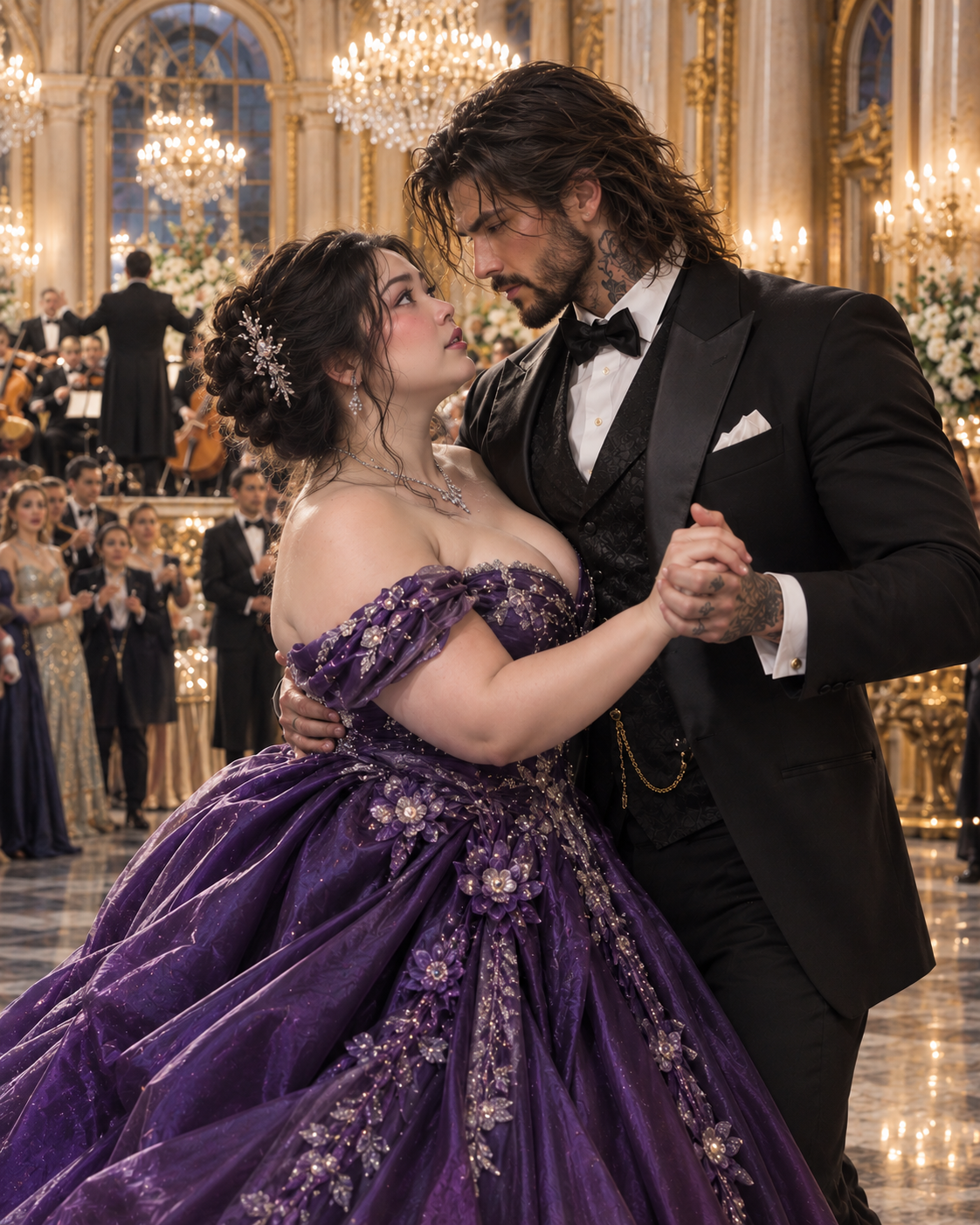
Ruthie stood near the edge of the dance floor.
Mateo approached.
“Would you dance with me again?”
She smiled.
“The music isn’t stopping this time.”
“I hope not.”
They stepped onto the floor.
The guests watched.
But Ruthie no longer cared.
Neither did Mateo.
He listened to the music.
She listened to his footsteps.
They moved together.
Not because one was leading and the other was following.
Because they were listening to each other.
When the song ended, Mateo said, “You know what I realized tonight?”
“What?”
“I spent years believing trust meant finding someone who would never let me fall.”
Ruthie looked at him.
“And now?”
“Now I think trust means knowing that if you do fall, the other person won’t pretend it didn’t happen.”
She smiled.
“That sounds much harder.”
“It is.”
“Better?”
He considered it.
“More honest.”
Ruthie looked around the restored ballroom.
The chandeliers.
The musicians.
The harbor beyond the windows.
The people who had witnessed everything.
For years, she had believed caring for others meant carrying their burdens for them.
Tonight had taught her something different.
Helping someone did not mean deciding what they could handle.
It did not mean speaking for them.
And it certainly did not mean treating them as fragile.
Sometimes real care meant standing beside someone while they found their own way forward.
Mateo offered his hand again.
Ruthie took it.
The orchestra began another song.
Outside, the Rhode Island harbor reflected the lights of the city.
Inside, Harbor Light Ballroom finally felt alive.
Not because the building had been restored.
Not because the wealthy guests had returned.
Not because a priceless saxophone had been recovered.
It felt alive because, after years of hiding behind appearances, people had finally been forced to listen to one another.
And Ruthie understood that the strangest part of the night was not the theft.
It was what came after.
The music had stopped.
The truth had surfaced.
And somehow, in the silence between those two moments, two people who had spent their lives protecting themselves had learned something neither had expected.
Trust was not about seeing everything clearly.
It was about having the courage to listen when you couldn’t.
Sometimes the most important person in the room was the one everyone else had overlooked.
Sometimes the quietest voice carried the truth.
And sometimes a single act of courage—a hand extended across a crowded dance floor—could become the beginning of something neither person had known they were searching for.
Weeks later, Harbor Light Ballroom reopened for its first regular evening.
Mistress Alden returned.
The orchestra played.
The restored doors opened to the people of Rhode Island.
And near the center of the ballroom, Ruthie and Mateo danced again.
This time, nobody looked away.
THE END.