A $280 MILLION DEAL WAS ABOUT TO COLLAPSE IN ALASKA—UNTIL A QUIET PRINT ROOM CLERK NOTICED SOMETHING EVERY EXPERT HAD MISSED.
THE $280 MILLION BETRAYAL: THE GIRL NOBODY NOTICED
Thea Whitam stood perfectly still as the elevator doors opened at the far end of the deserted hallway.
A familiar voice echoed through the quiet office building, followed by the unmistakable sound of expensive leather shoes against the marble floor.
“Make sure everything is ready before tomorrow morning,” the man said into his phone.
Thea recognized that voice immediately.
It belonged to Richard Hale, Gabriel Vanucci’s trusted financial consultant.
The same man who had dismissed the dangerous mistranslation as a harmless clerical error.
Thea quickly slipped the mysterious document back into its envelope and turned toward the printer, pretending to organize a stack of papers.
Her heart pounded as Richard approached the print room.
For a moment, she hoped he would simply walk past.
Instead, his footsteps stopped outside the open doorway.
“Miss Whitam,” he said pleasantly. “Working late?”
Thea forced a small smile.
“Just finishing tomorrow’s meeting materials, sir.”
Richard glanced around the room, his eyes lingering on the scattered documents beside her computer.
“Quite an impressive performance today,” he remarked. “I didn’t realize our print room employed a Norwegian language expert.”
“My grandmother taught me,” Thea answered.
“How fortunate for everyone.”
His smile remained perfectly polite, but something behind his eyes felt strangely calculating.
“Although,” he continued, stepping closer, “sometimes understanding a few words can make people believe they’ve understood an entire situation.”
Thea kept her expression neutral.
“I only explained what the contract said.”
“Of course you did.”
Richard reached toward the counter, casually straightening a pile of papers.
His hand stopped inches from the envelope.
“Well, don’t stay too late. Anchorage can be unpleasant after dark.”
He gave her one final smile and disappeared down the hallway.
Thea waited until the elevator doors closed before releasing the breath she had been holding.
She looked at the envelope again.
The warning on her phone suddenly seemed much more serious.
Someone had changed a multimillion-dollar contract.
Someone had known she discovered the change.
And someone wanted her to stop asking questions.
What frightened her most was that she couldn’t prove whether those three things were connected.
Not yet.
THE DOCUMENT THAT SHOULD NEVER HAVE EXISTED
Thea locked the print room door and returned to the photocopied document.
At the top of the first page was the name Northstar Meridian Capital, a Seattle-based investment firm that had competed unsuccessfully for the Norwegian partnership.
She remembered the name because one of the attorneys had mentioned the company during the negotiations.
Northstar had offered aggressive financial terms, but the Norwegian investors had reportedly questioned its transparency.
Gabriel’s company had ultimately secured the opportunity instead.
The document in Thea’s hands appeared to be an internal proposal prepared for Northstar.
Its date was nearly three weeks old.
And buried in the middle of the proposal was the exact liability language that had appeared in Gabriel’s supposedly confidential contract.
Thea read the paragraph three times.
The wording wasn’t merely similar.
It was identical.
Even the unusual punctuation matched.
A terrible possibility began forming in her mind.
What if the mistranslation had never been an accident?
What if someone had deliberately inserted language that would make Gabriel’s company responsible for obligations it had never agreed to accept?
And what if the resulting dispute was intended to destroy the Norwegian partnership?
She took photographs of the document, preserving its appearance without altering the original.
Then she called the only person in the building who had listened to her without treating her like an inconvenience.
Gabriel Vanucci.
His number had been printed on the temporary security instructions he had given her after the meeting.
He answered on the third ring.
“Thea?”
“Mr. Vanucci, I think something is wrong.”
There was a brief silence.
“Tell me where you are.”
“The print room.”
“Stay somewhere secure. I’m contacting building security and my attorney.”
Twenty minutes later, Gabriel arrived with his chief of staff, Elena Brooks, and an outside lawyer named Margaret Pierce.
Thea showed them the envelope and the photographs.
Gabriel’s expression changed as he read the competing firm’s name.
But it was Margaret who noticed the most troubling detail.
“Where did you get this?”
“It was waiting on my counter.”
“Did you see who left it?”
“No.”
Margaret carefully examined the pages.
“This may be significant, but we need to establish where it came from before drawing conclusions.”
Gabriel looked toward Thea.
“Did anyone approach you tonight?”
She hesitated.
Then she described Richard’s unexpected visit.
For the first time since entering the room, Gabriel looked genuinely shaken.
Because Richard Hale wasn’t simply another consultant.
He was the man Gabriel had trusted to manage the negotiations from the beginning.
A MAN WHO KNEW EVERY SECRET
Richard Hale had spent almost twelve years building his reputation in Alaska’s financial circles.
He was polished, persuasive, and exceptionally skilled at making complicated deals appear effortless.
He attended charity dinners in Anchorage, advised influential business owners, and maintained connections with investors from New York to Seattle.
Gabriel had hired him after a mutual associate recommended his expertise in international transactions.
Over the years, Richard became one of the few people permitted to review Gabriel’s most sensitive financial agreements.
He knew the company’s expansion plans.
He knew which investments were profitable.
And he knew how desperately Gabriel wanted the Norwegian partnership to succeed.
The $280 million agreement wasn’t merely another transaction.
It represented Gabriel’s opportunity to build a legitimate, lasting enterprise beyond the shadow of his family’s notorious past.
His father had been associated with organized crime.
His grandfather’s name still appeared in old newspaper stories about corruption and intimidation.
Although Gabriel had spent years trying to establish lawful businesses, people rarely allowed him to escape the reputation he had inherited.
The Norwegian investors represented something different.
They operated a renewable infrastructure fund interested in developing modern port facilities and cold-climate logistics systems.
Their proposed partnership could bring significant investment and employment opportunities to Alaska.
For Gabriel, it was a chance to prove that his future did not have to resemble his family’s history.
And Richard knew exactly how much that chance mattered.
Back in the conference room, Margaret reviewed the mysterious Northstar document while Elena contacted the company’s cybersecurity firm.
“We need to preserve the contract revision history, account access records, and any relevant correspondence,” Margaret explained.
Gabriel nodded.
“Do whatever is necessary.”
“Legally,” Thea added quietly.
Everyone turned toward her.
She immediately regretted speaking.
But Gabriel didn’t look offended.
“Go on.”
“If someone deliberately changed the contract, they’ll probably expect you to react angrily.”
Gabriel studied her.
“And?”
“Then they can make your reaction part of the story.”
The room became unusually quiet.
Thea continued, choosing her words carefully.
“If you accuse someone without evidence, they can deny everything. But if you investigate properly, the facts can speak for themselves.”
Margaret gave a small nod of approval.
“She’s right.”
Gabriel looked down at the contract.
For years, anger had been the emotion people expected from a Vanucci.
Perhaps that expectation was exactly what someone intended to exploit.
“Then we follow the evidence,” he said.
THE DIGITAL TRAIL
By nine the following morning, Anchorage was waking beneath a pale gray sky.
Snowplows moved along the downtown streets while commuters hurried into coffee shops carrying steaming paper cups.
Inside Gabriel’s headquarters, a team of independent digital investigators began examining the company’s document management system.
Thea had barely slept.
She arrived wearing the same inexpensive winter coat she’d owned since college and carrying a notebook filled with handwritten observations.
She expected to return to the print room.
Instead, Elena met her in the lobby.
“Mr. Vanucci would like you to join the review team.”
Thea stared at her.
“Me?”
“You recognized the problem before anyone else.”
“I don’t have a law degree.”
“Neither do most people who discover something important.”
Thea followed her upstairs.
In the conference room, the investigators had already uncovered an unusual sequence of events.
The original bilingual contract had been reviewed and approved by the legal teams six days earlier.
At that point, both versions contained matching liability provisions.
But shortly before the final meeting, someone had uploaded a replacement English document.
The account belonged to Richard Hale.
That alone wasn’t proof of wrongdoing.
Richard had legitimate authorization to submit revised documents.
However, the investigators discovered something more disturbing.
The file had been created outside Gabriel’s corporate network.
And its metadata contained traces of a document template associated with Northstar Meridian Capital.
Margaret leaned forward.
“Can you determine whether that proves Northstar created the file?”
“Not yet,” the investigator replied. “Metadata can be copied, and templates can be reused. We need independent corroboration.”
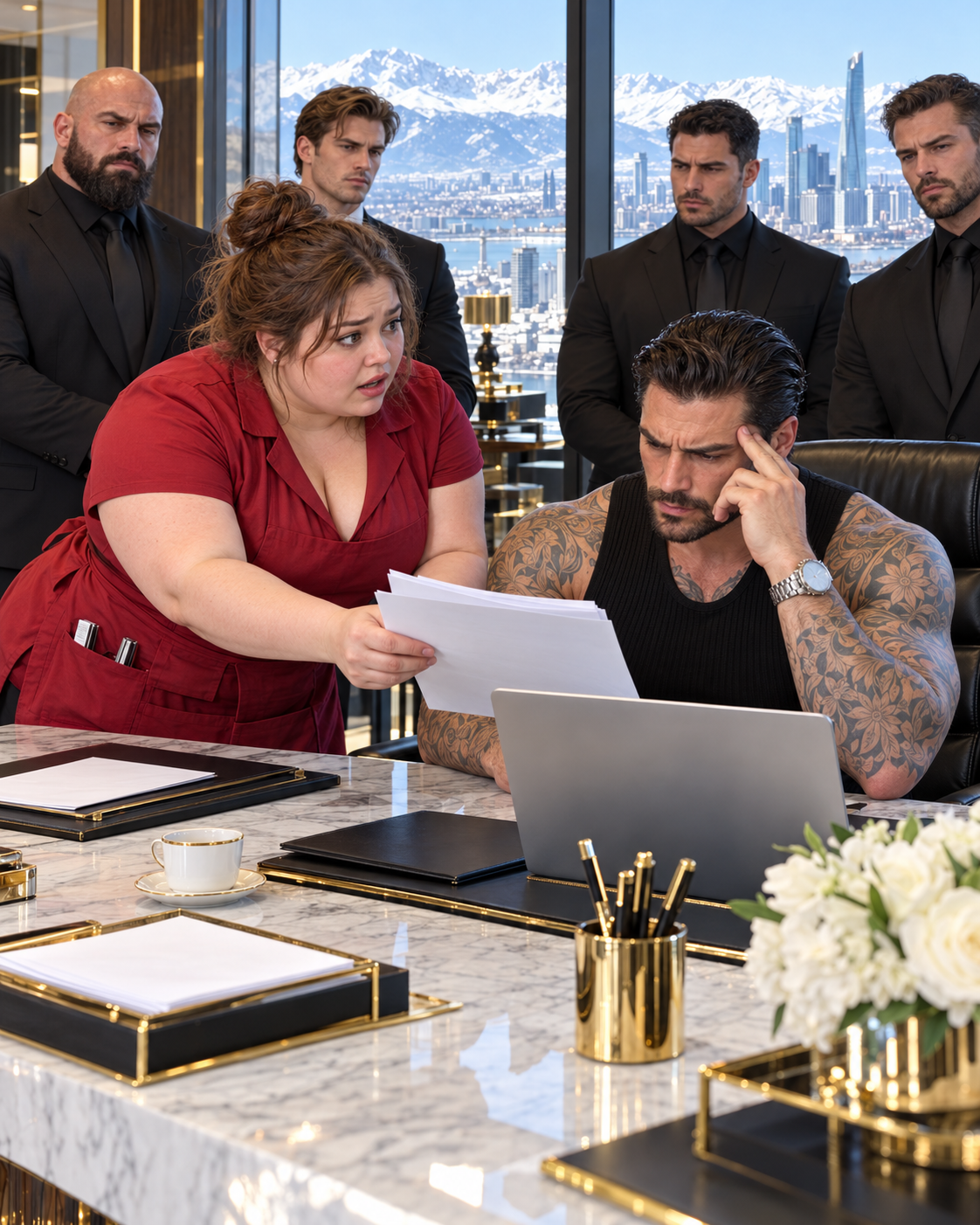
Gabriel folded his arms.
“Find it.”
Thea examined the language displayed on the large screen.
“Could you show the Norwegian draft from the same day?”
The investigator opened it.
She studied the paragraph carefully.
Then she pointed to a phrase near the bottom.
“This sentence is different from the earlier version too.”
Margaret frowned.
“Different how?”
“The meaning is still acceptable, but the wording is unusual. It reads like someone tried to make two versions look consistent without actually correcting the responsibility problem.”
The investigator compared both files.
Seconds later, another piece of information appeared.
Both documents had been submitted within seven minutes of each other.
From the same account.
The room fell silent.
Someone hadn’t merely replaced a page.
Someone had coordinated changes across both language versions.
And whoever did it had understood enough about the negotiations to know where those changes would matter most.
THE FIRST CRACK IN THE PERFECT STORY
Richard arrived shortly after ten, carrying a leather briefcase and wearing the confident expression of a man expecting an ordinary business meeting.
He stopped when he saw the outside attorney and digital investigators.
“What’s going on?”
Gabriel remained seated.
“We’re reviewing yesterday’s contract discrepancy.”
Richard smiled.
“Naturally. An unfortunate translation issue.”
Margaret gestured toward an empty chair.
“We’d appreciate your help understanding the document revision process.”
Richard sat down.
For nearly forty minutes, he answered questions with remarkable ease.
He acknowledged uploading the revised contract.
He explained that last-minute changes were common.
He claimed the language had been supplied by an external translation service.
And he suggested that the confusing liability provision originated with the Norwegian delegation.
Then Margaret asked a simple question.
“Which translation service?”
Richard named a small consulting firm based in Washington State.
The investigator searched the vendor records.
No purchase order appeared.
No invoice.
No approved engagement.
Richard’s smile faltered slightly.
“It may have been arranged informally.”
“Through whom?” Margaret asked.
“I’d need to check.”
Gabriel said nothing.
That silence seemed to trouble Richard more than any accusation could have.
Finally, Richard turned toward Thea.
“I assume this entire investigation began because our new language specialist misunderstood something?”
Thea felt every pair of eyes move toward her.
For a moment, she was back in the print room, invisible and easily dismissed.
Then she remembered her grandmother’s voice.
Knowing something means very little if you’re afraid to use it when it matters.
She straightened.
“I didn’t misunderstand the contract, Mr. Hale.”
Richard raised an eyebrow.
“The legal teams have already confirmed the difference in meaning,” she continued. “The question now is how it got there.”
Margaret quietly placed the approved original beside the altered version.
Richard glanced down.
For the first time, he seemed unable to find an immediate answer.
Then his phone vibrated.
He looked at the screen.
And the color drained from his face.
A WARNING FROM SEATTLE
Richard excused himself shortly afterward, claiming an urgent personal appointment.
Margaret advised Gabriel not to interfere with his departure.
There was still no conclusive evidence of fraud, and the investigation needed to remain independent.
But as Richard left the building, Elena received an unexpected call.
It came from a former employee of Northstar Meridian Capital.
The caller identified herself as Olivia Mercer, a compliance analyst who had resigned two months earlier.
She had learned about the disputed Norwegian deal through a professional contact.
And she believed she possessed information that could explain what happened.
Margaret arranged a secure video conversation that afternoon.
Olivia appeared on the screen from a small office in Seattle.
She looked nervous.
Before saying anything, she asked whether the call would be documented.
Margaret assured her that the legal team would handle her information through appropriate procedures.
Then Olivia began.
“Northstar was furious when the Norwegian delegation chose your proposal.”
Gabriel watched silently.
“The company had invested heavily in acquiring that partnership. When it lost, certain executives began discussing ways to reopen the negotiations.”
“What kind of ways?” Margaret asked.
Olivia hesitated.
“One strategy involved creating doubts about the selected bidder’s reliability.”
She opened a folder on her computer.
Inside was an internal meeting summary describing a plan to identify weaknesses in Gabriel’s contract approval process.
A particular line caught Margaret’s attention.
Any material discrepancy discovered after approval could justify reconsideration of the preferred partnership.
Gabriel’s jaw tightened.
“Are you saying they planned to sabotage our contract?”
“I’m saying this discussion took place,” Olivia replied carefully. “I don’t know who carried it out.”
Then she revealed something else.
Several weeks before the contract dispute, a Northstar executive had approved an unusual consulting payment.
The recipient was a private advisory company.
And according to the records Olivia had preserved, its registered director was connected to Richard Hale.
Margaret leaned closer to the screen.
“Can you provide those records through an authorized process?”
“Yes.”
Olivia paused.
“But there’s something you should know.”
She glanced toward her office door.
“The payment wasn’t described as compensation for translation work.”
“What was it described as?”
Olivia swallowed.
“Transaction disruption services.”
THE CHOICE THAT CHANGED EVERYTHING
Gabriel stood abruptly and walked toward the window.
Below him, the streets of Anchorage continued their ordinary routines.
Cars moved through intersections.
Pedestrians crossed icy sidewalks.
A delivery truck stopped outside a nearby restaurant.
Everything looked normal.
Yet someone he trusted appeared to have been paid to jeopardize an agreement that could shape his company’s future.
For several seconds, nobody spoke.
Elena had worked with Gabriel long enough to recognize the dangerous silence.
“Gabriel,” she said softly.
He turned.
“What?”
“Whatever you’re thinking, remember what we’re trying to protect.”
He looked toward Thea.
She hadn’t moved from her chair.
But there was something steady in her expression.
Not fear.
Not admiration.
Simply expectation.
She expected him to make the right decision.
And that unsettled him more than he wanted to admit.
“My father would have handled this differently,” Gabriel said.
Margaret closed her folder.
“Your father isn’t responsible for this company.”
Gabriel looked back through the window.
Growing up, he’d learned that power meant ensuring nobody dared cross you twice.
That reputation could be more valuable than truth.
That the fastest way to resolve betrayal was to make an example of the person responsible.
But the world he’d spent years trying to leave behind had already taken enough from him.
It had damaged his family’s name.
It had narrowed his opportunities.
And it had taught strangers to fear him before knowing anything about him.
He wasn’t going to let Richard turn his future into another chapter of that history.
“Contact the appropriate authorities,” Gabriel said.
Margaret nodded.
“We’ll provide the verified evidence and cooperate with any lawful inquiry.”
“And the Norwegian investors?”
“We should disclose the confirmed contract discrepancy and explain that we’re investigating its origin.”
Gabriel took a slow breath.
“Then that’s what we do.”
Thea lowered her eyes, hiding a small smile.
For the first time, she understood that courage wasn’t always about confronting someone.
Sometimes it was about refusing to become the person everyone expected you to be.
THE MEETING NO ONE EXPECTED
Two days later, the Norwegian delegation returned to Gabriel’s headquarters.
The original signing ceremony had been postponed.
News of the delay had begun circulating among Anchorage business circles, and speculation was spreading quickly.
Some claimed the investors were withdrawing.
Others suggested Gabriel’s company had concealed financial obligations.
A few anonymous online posts attempted to connect the situation to his family’s criminal reputation.
Gabriel knew those rumors could damage the partnership even if the contract was corrected.
Margaret recommended complete transparency about the verified facts.
So Gabriel entered the conference room without the grand presentation his team had originally prepared.
No promises.
No elaborate speeches.
Only the corrected agreement, independent legal opinions, and a clear explanation of what had happened.
At his request, Thea joined the meeting as a language support specialist alongside a qualified independent interpreter.
The delegation leader, Henrik Solberg, greeted her warmly.
“Miss Whitam, I understand we have you to thank for identifying the discrepancy.”
Thea blushed.
“I was only doing what I thought was right.”
Henrik smiled.
“That is rarely a small thing.”
The meeting lasted nearly three hours.
The Norwegian legal team examined the corrected liability language.
Independent specialists confirmed that both versions now reflected the same obligations.
Margaret explained the investigation without making unsupported accusations.
Gabriel answered every question directly.
Finally, Henrik closed his folder.
“Mr. Vanucci, our concern was never simply that a mistake appeared in the contract.”
Gabriel nodded.
“I understand.”
“Our concern was whether your organization would acknowledge the problem and correct it responsibly.”
Henrik glanced toward Thea.
“Yesterday, we wondered whether we could trust your company.”
He paused.
“Today, we have seen how you respond when that trust is tested.”
Gabriel remained silent.
Then Henrik extended his hand.
“We are prepared to continue.”
The room filled with relieved applause.
But Thea noticed Gabriel didn’t immediately smile.
His eyes remained fixed on the signed memorandum confirming the parties’ intention to move forward.
For him, the document represented something far greater than money.
It represented the first time an international partner had judged him by his actions rather than his surname.
THE TRUTH BEHIND THE BETRAYAL
Over the following weeks, the independent investigation uncovered a more complete picture.
Forensic specialists verified that Richard’s authorized account had submitted the altered contract files.
Additional records revealed repeated communication between Richard’s advisory company and individuals associated with Northstar Meridian Capital.
The payment records obtained through proper channels supported concerns about a concealed financial relationship.
The investigators also discovered that Richard had received confidential information about the contract review schedule.
He knew when the final translations would be distributed.
He knew the legal teams were under pressure to finish.
And he knew a last-minute discrepancy could disrupt the Norwegian delegation’s confidence.
But one question remained unanswered.
Why had someone left the Northstar document in Thea’s print room?
The answer emerged from an unexpected source.
An administrative assistant named Daniel Reyes requested a confidential meeting with Margaret.
Daniel had worked for Richard during the negotiation process.
He admitted that he had noticed unusual document requests and had become concerned after recognizing the disputed liability language.
He hadn’t known whether the changes were deliberate.
But after the meeting collapsed, he feared the situation was more serious than he’d imagined.
So he printed a copy of an earlier Northstar proposal that Richard had instructed him to archive.
He placed it where Thea would find it.
“Why didn’t you come forward directly?” Margaret asked.
Daniel looked ashamed.
“I was afraid of losing my job.”
“Why choose Thea?”
“Because she was the only person who had spoken up.”
Thea listened quietly.
For years, she’d believed nobody noticed her.
Yet someone had trusted her enough to leave behind a clue that might expose an elaborate deception.
The anonymous warning message remained under investigation.
Digital specialists later linked it to an online messaging account associated with a device used by someone in Richard’s professional circle, although they couldn’t conclusively identify who typed it.
Margaret refused to treat uncertainty as proof.
The verified records were referred to the appropriate authorities.
Richard was removed from his consulting responsibilities while the formal inquiries proceeded.
Northstar’s leadership denied authorizing wrongdoing and announced its own internal review.
The legal outcome would take time, and Gabriel’s team understood that accusations were not the same as convictions.
But the immediate damage had been contained.
The Norwegian partnership remained intact.
And the documents that had nearly destroyed it became the foundation of an investigation conducted through evidence rather than intimidation.
THE OFFER
Nearly a month after the disastrous meeting, Thea received an invitation to Gabriel’s office.
She arrived expecting another question about the translations.
Instead, she found a small folder waiting on his desk.
Gabriel motioned toward the chair opposite him.
“Sit down, Thea.”
She sat cautiously.
“Have I done something wrong?”
Gabriel almost laughed.
“Why would you think that?”
“Usually when someone from the print room gets called to the executive floor, it isn’t because something wonderful happened.”
His expression softened.
“Then perhaps we should change that.”
He opened the folder.
Inside were details of a university program in international business communication and Scandinavian languages.
Thea recognized the institution immediately.
It was the university she’d attended before withdrawing when her grandmother became seriously ill.
For years, the thought of returning had felt impossible.
After her grandmother passed away, medical expenses and family debts had forced Thea to work full-time.
Every semester, she told herself she would save enough to enroll again.
And every semester, something happened.
Rent increased.
Her car needed repairs.
A relative needed help.
Eventually, she’d stopped checking the university website altogether.
“How did you know?” she whispered.
“Elena mentioned that you left school before completing your degree. I asked whether you might be interested in returning.”
Thea looked at the folder.
“I can’t afford it.”
“I thought you might say that.”
Gabriel explained that the company was establishing an educational assistance program for employees pursuing skills relevant to their professional development.
The program would have clear eligibility requirements and independent administration.
Thea could apply without accepting any personal obligation to him.
If approved, she would receive tuition support and a flexible work schedule.
Her throat tightened.
“Why would you do this?”
Gabriel leaned back.
“Because we almost lost $280 million while someone with the ability to prevent it was making photocopies downstairs.”
Thea shook her head.
“I was lucky.”
“No,” Gabriel said gently. “You were prepared.”
He gestured toward the university brochure.
“Luck doesn’t spend years learning languages around a kitchen table.”
Thea touched the edge of the folder.
For the first time in years, the future looked like something she might be allowed to choose.
A LETTER FROM THE PAST
That evening, Thea returned to the small apartment she’d rented on the outskirts of Anchorage.
Snow drifted across the parking lot as she carried the university brochure upstairs.
She placed it beside an old wooden box that had belonged to her grandmother.
For years, the box had remained tucked beneath her bed.
Inside were handwritten vocabulary cards, faded notebooks, and photographs from a childhood filled with quiet evenings and difficult lessons.
Thea opened one of the notebooks.
Her grandmother’s careful handwriting filled the pages.
Norwegian words were written beside English translations.
Little stars marked particularly difficult phrases.
Occasionally, her grandmother had added encouraging notes in the margins.
Thea smiled through unexpected tears.
Then a folded letter slipped from the back cover.
She recognized the handwriting immediately.
It had been written shortly before her grandmother’s death.
Thea unfolded the paper carefully.
My dear Thea,
If you are reading this, there may come a day when you wonder whether all those evenings studying together were worth the effort.
You always worried that you were learning things the world would never need from you.
But knowledge is not wasted simply because nobody applauds it.
Sometimes it waits quietly until the moment someone needs it most.
Never confuse being overlooked with being unimportant.
And never allow another person’s inability to recognize your gifts to convince you that those gifts do not exist.
The world can be loud, impatient, and unfair.
You do not have to become loud to make a difference.
You only have to be brave enough to speak when the truth needs your voice.
I will always be proud of you.
Thea pressed the letter against her chest.
For several minutes, she sat silently beside the window.
Outside, Alaska’s long winter night stretched across the sleeping neighborhood.
But for the first time since her grandmother’s passing, Thea didn’t feel quite so alone.
She finally understood something she had missed during all those years of struggling.
Her grandmother hadn’t simply taught her languages.
She had taught her to trust the value of her own mind.
SIX MONTHS LATER
Spring arrived slowly in Anchorage.
The snowbanks retreated from the roads, daylight lingered longer over Cook Inlet, and the city’s businesses began preparing for another busy summer.
Gabriel’s partnership with the Norwegian investors had officially moved into its first operational phase.
The companies announced plans for infrastructure improvements and new training opportunities.
The initial agreement remained valued at $280 million, subject to the project’s established milestones and commercial conditions.
The legal inquiries surrounding the attempted contractual manipulation were still progressing.
Gabriel had resisted invitations to speculate publicly about their outcome.
He had learned that protecting his reputation didn’t require controlling every rumor.
It required making decisions he could defend when the facts were examined.
Richard Hale’s name had disappeared from the company’s consulting roster.
And the organization introduced stronger document controls, independent translation reviews, and clearer procedures for reporting concerns.
The changes weren’t glamorous.
They didn’t generate dramatic headlines.
But they made it harder for anyone to manipulate a critical agreement without detection.
Thea, meanwhile, had returned to university.
She attended classes part-time while working in a newly created international communications support role.
Her days were exhausting.
There were lectures, assignments, meetings, and late-night study sessions.
Sometimes she wondered whether she had taken on too much.
But every time she opened her textbooks, she remembered the letter from her grandmother.
And she kept going.
One afternoon, Gabriel invited her to join a company event welcoming a new group of international partners.
The conference room looked almost identical to the one where everything had changed.
The same polished table.
The same windows overlooking Anchorage.
The same mountains standing in the distance.
But this time, Thea entered through the main doors carrying her own presentation folder.
No stack of photocopies.
No hurried instructions from someone who couldn’t remember her name.
She was introduced as a member of the international communications team.
And when she spoke, people listened.
After the event, Gabriel joined her beside the window.
“Do you remember the first thing you said in this room?” he asked.
Thea smiled.
“I think there’s a mistake in the translation.”
Gabriel laughed softly.
“Those might be the most valuable words anyone has ever said to me.”
She shook her head.
“They were just words.”
“No,” he replied. “They were words you had the courage to say.”
For a moment, they watched the afternoon sunlight spill across the distant mountains.
Then Thea turned toward him.
“Can I tell you something?”
“Of course.”
“That day, I was terrified you would fire me.”
Gabriel looked genuinely surprised.
“Why?”
“Because people like me aren’t usually supposed to interrupt people like you.”
His smile faded.
He considered her words before answering.
“Then people like me need to become better at listening.”
THE LEGACY OF ONE QUIET VOICE
A year after the original contract meeting, Gabriel established a scholarship fund supporting employees and young adults in Alaska who had postponed their education because of financial hardship.
It wasn’t named after him.
Instead, the program honored the idea that ability could exist anywhere, regardless of someone’s job title, income, or social standing.
Thea helped design its language and communication training opportunities.
She insisted that applicants be evaluated on potential, commitment, and personal circumstances rather than polished résumés alone.
The first recipients included a single mother studying accounting, a warehouse employee learning computer programming, and a young receptionist hoping to become a nurse.
During the program’s opening ceremony, Gabriel was invited to speak.
He stood before a modest audience of employees, educators, and community representatives.
For once, he had no carefully prepared speech.
He simply told them about a winter afternoon when he almost lost a $280 million partnership.
He described the missing interpreter.
The altered contract.
The people who possessed impressive credentials but failed to identify a dangerous discrepancy.
Then he spoke about a young woman from the print room who had recognized the truth.
“The most expensive mistake I nearly made,” Gabriel said, “wasn’t trusting the wrong consultant.”
The audience grew quiet.
“It was almost overlooking the right person.”
Thea, seated near the front, felt her eyes fill with tears.
Gabriel continued.
“We spend so much time measuring people by their titles, their salaries, their connections, and the places they sit at a conference table.”
“But character doesn’t always arrive wearing an expensive suit.”
“Intelligence doesn’t always come with an impressive résumé.”
“And courage doesn’t always announce itself with a loud voice.”
He paused, looking toward the young scholarship recipients.
“Sometimes the person who can change everything is someone you’ve walked past a hundred times without noticing.”
The room filled with applause.
But Thea barely heard it.
Her thoughts had traveled back to a little kitchen table where her grandmother had patiently taught her foreign words beneath the warm light of an old lamp.
She remembered the afternoons spent wondering whether those lessons would ever matter.
The years of disappointment.
The feeling of being invisible.
And the terrifying moment when she had raised her voice inside a room full of powerful strangers.
She hadn’t known her words would help protect an enormous investment.
She hadn’t known they would expose evidence of a possible betrayal.
And she certainly hadn’t known they would open the door to a future she’d nearly stopped believing in.
She had simply recognized something wrong and chosen not to remain silent.
After the ceremony, Thea stepped outside into the crisp Alaska evening.
The distant mountains were brushed with gold as the sun descended toward the horizon.
Her phone buzzed with a message from the university.
Her latest examination results had been posted.
She opened them.
She had passed with distinction.
For a moment, she stood motionless.
Then she laughed, wiping away tears as she looked toward the endless northern sky.
She wished her grandmother could have seen it.
But perhaps, in a way, she already had.
Because every lesson, every patient correction, and every word of encouragement had been leading Thea toward this moment.
Back inside the building, Gabriel noticed her standing alone near the entrance.
He approached quietly.
“Good news?”
Thea turned toward him, smiling.
“The best.”
He looked at the results on her phone and offered a warm congratulations.
Then he said something she would remember for years.
“You know, Thea, I once thought success meant becoming powerful enough that nobody could ever tell me what to do.”
She tilted her head.
“And now?”
Gabriel glanced toward the scholarship recipients celebrating inside.
“Now I think it means building something worthwhile with people who are brave enough to tell me when I’m wrong.”
Thea smiled.
Her grandmother would have liked that answer.
As the evening lights flickered on across Anchorage, they returned to the celebration, no longer simply an influential businessman and an overlooked employee.
They were two people whose lives had changed because one had dared to speak and the other had finally chosen to listen.
And somewhere between a ruined contract and a second chance, both had discovered something far more valuable than $280 million.
That integrity could succeed where intimidation failed.
That opportunity could uncover talent hidden in plain sight.
And that the worth of a human being was never determined by how important the world believed them to be.
Because sometimes, the person everyone overlooks is the very person carrying the answer everyone else has been searching for.
And sometimes, the smallest voice in the room is the one that changes everything.
THE END.