The first missile warning screamed through my cockpit less than an hour into Operation Silent Anvil. Three enemy Su-35s had locked onto my F-16
The missile warning continued to scream as I threw the damaged Viper into another turn.
For one terrible second, the aircraft refused to respond.
The control stick felt disconnected from the machinery beneath me. My right wing shuddered, the engine temperature climbed, and a fresh stream of smoke rolled past the canopy. I could feel the aircraft losing its fight against gravity.
“Viper One, your altitude is dropping!” Maeve Brooks called through the radio. “We have three hostile contacts behind you. Friendly fighters are scrambling, but they need time.”
“How much time?”
“Four minutes, possibly five.”
I almost laughed.
Five minutes might as well have been five hours.
The warning system sounded again, and I caught a glimpse of the missile warning indicator flashing across the damaged panel. I couldn’t trust my radar, my electronic countermeasures were unreliable, and my fuel gauge was hovering dangerously close to empty.
The enemy fighters had every advantage.
But I still had one thing they didn’t know about.
I had survived the first ambush.
And I had discovered where their command network was hiding.
“Magic,” I said, forcing myself to concentrate, “record everything from this moment forward. Every transmission, every contact, every change in their formation.”
“Already doing it.”
“Good. If I don’t make it back, I want that record preserved.”
There was a brief silence.
“Don’t talk like that, Viper One.”
“I’m not planning to die, Maeve. I’m planning for every possibility.”
Behind me, the three Su-35s spread apart, attempting to surround my crippled aircraft. They weren’t rushing blindly anymore. They were patient, methodical, and confident that the damaged American fighter had nowhere left to go.
I recognized the confidence.
It was the same kind Jaxon Drake had worn in the briefing room.
The kind that made a man believe the outcome was already decided.
I had spent enough time in the air to know better.
The outcome was never decided until the last possible moment.
And sometimes, even then, it wasn’t the pilot who determined it.
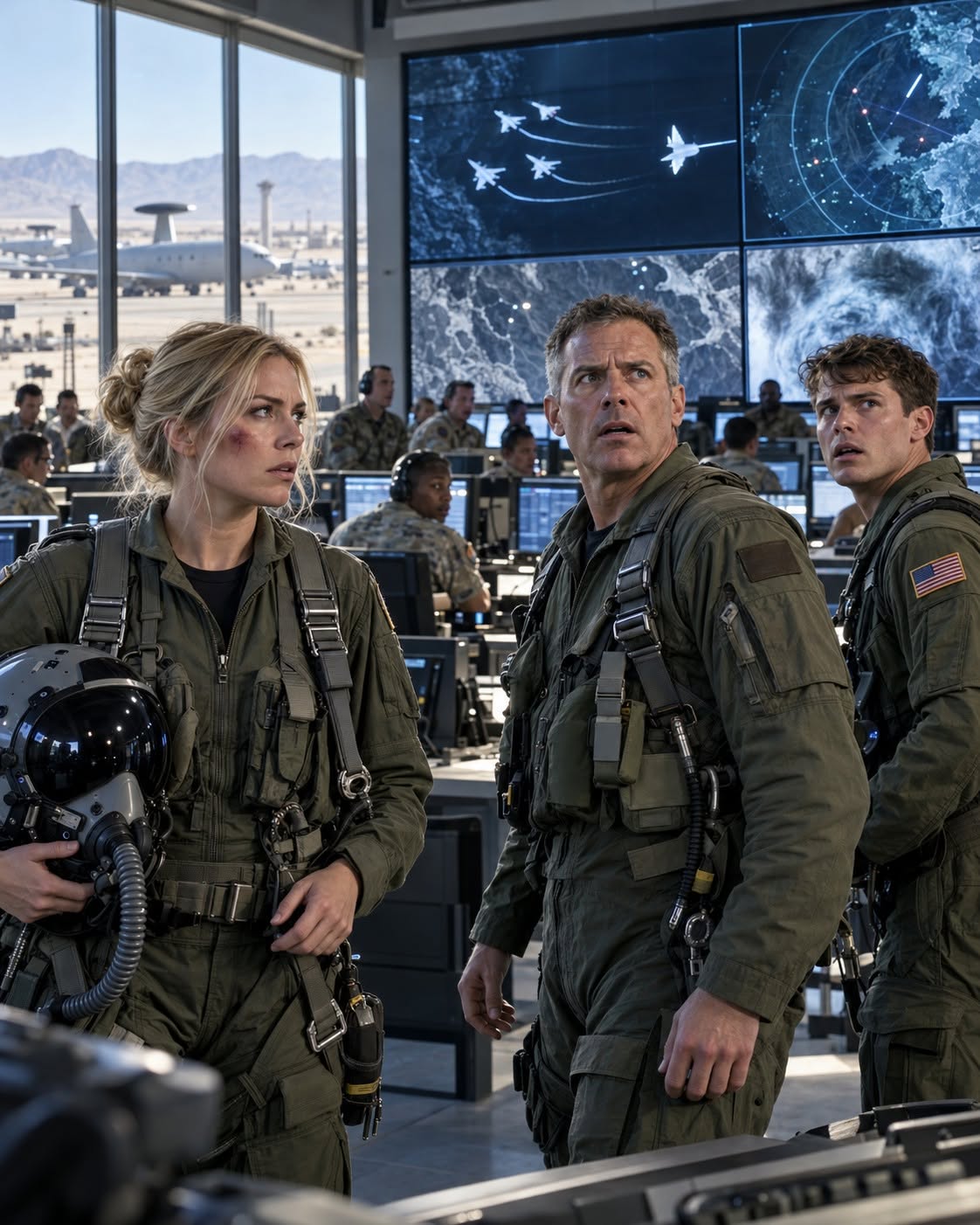
It was the decisions made before the engines ever started.
The Trap Inside the Trap
“Magic, I need a heading toward the western ridgeline.”
Maeve hesitated. “That route takes you closer to the mountains. Your aircraft may not have the power to clear the higher terrain.”
“I know.”
“Then why?”
“Because the enemy expects me to keep heading toward friendly airspace.”
I glanced at the paper map strapped beside my knee. The Uralsk Valley was bordered by steep ridges, narrow ravines, and a series of low passes that eventually opened toward the western foothills.
My aircraft could barely maintain altitude, but the terrain offered something the open sky did not.
Options.
“Viper One, Major Vance is asking whether you can maintain your current course until reinforcements arrive.”
“Tell him I can’t promise that.”
I adjusted the damaged controls and began angling toward the ridgeline.
The first Su-35 followed.
The second climbed to gain a better angle.
The third stayed farther back, maintaining a position that suggested its pilot was coordinating the engagement.
They were working together too well.
Three aircraft had appeared at precisely the right time. Their missile engagement had begun before we crossed the planned observation corridor. Their pilots had reacted to our formation as though they already knew our positions and intentions.
And someone had given them that information.
The thought had been bothering me since the first missile strike.
Now it was becoming impossible to ignore.
“Magic, did our mission plan change after the final briefing?”
“Negative. The authorized route remained the same.”
“Who had access to the final flight schedule?”
“Several command personnel, the operations staff, intelligence liaison officers, and the flight crews.”
That was too many possibilities.
“Was the route transmitted through any external coordination channel?”
“Checking.”
I watched the ridgeline grow larger through the canopy.
The aircraft gave another violent shudder.
A warning light illuminated, then disappeared.
“Viper One,” Maeve said, “we’ve confirmed an unusual access event involving the mission package. The details are incomplete, but someone retrieved the final route shortly before your departure.”
My stomach tightened.
“From where?”
“The access originated through an authorized account. We’re tracing the connection now.”
An authorized account.
That was worse than an outside intrusion.
It meant whoever had taken the information might have been someone who belonged in the system, someone whose credentials were trusted.
“Send that to Major Vance immediately.”
“Already sent.”
A new voice broke into the channel.
“Viper One, this is Major Vance. I need you to focus on getting home. The investigation can wait.”
“Respectfully, sir, the investigation is the reason I may not get home.”
He didn’t answer immediately.
I continued.
“The enemy wasn’t guessing. They knew our route, our timing, and the general shape of our formation. We need to find out who gave them that information before another crew flies into the same trap.”
“I understand your concern.”
“With respect, sir, understanding it won’t stop the next ambush.”
Silence filled the channel.
Then Vance replied, his voice harder than before.
“Continue your flight toward friendly territory. Do not attempt another engagement. Your mission is over.”
I looked toward the burning engine indicator.
For once, I agreed with him.
My mission was over.
But the consequences of what had happened were only beginning.
The Man Who Ran
“Magic, put Lieutenant Drake on the command channel.”
Maeve didn’t respond immediately.
“Viper One, Lieutenant Drake is currently on the ground at Aviano. His aircraft returned without damage. He reported an avionics malfunction.”
“Then he should have plenty of time to talk.”
A few seconds passed before Jaxon’s voice entered my headset.
“Viper One, what’s going on?”
His voice sounded casual, but there was a tightness underneath it.
“I’m having a difficult flight, Drake. I thought you might want to know.”
“I heard about the command post. That’s a hell of a thing to pull off.”
“Thank you. I also heard you experienced a total avionics failure.”
“That’s correct.”
“Interesting. Your aircraft was still transmitting a clean identification signal when you turned away.”
Silence.
I felt a cold certainty settle over me.
“Maybe your equipment was malfunctioning,” I continued. “Or maybe you had another reason to leave.”
“Watch what you’re implying.”
“I haven’t implied anything yet.”
His breathing became audible over the radio.
“I’m not going to argue with you while you’re in trouble.”
“Then answer one question. Did you know those fighters were waiting for us?”
“No.”
The response came too quickly.
I glanced at the radar display, which showed little more than fragments of unreliable data.
“Then you won’t mind cooperating with the investigation.”
“I’ll cooperate with whatever investigation command orders.”
“Good.”
I paused.
“Because I suspect someone gave the enemy our flight plan.”
Another silence followed.
When Jaxon spoke again, the confidence had returned to his voice, but it sounded rehearsed.
“That’s a serious accusation, Viper One.”
“Yes, it is.”
“You’re damaged, you’re under stress, and you’re trying to make sense of a situation that nearly killed you. Don’t turn a combat emergency into a conspiracy.”
I felt anger rising in my chest.
Not because he had insulted me.
Because he had used the same tactic people always used when the truth threatened their position: make the person asking questions seem unreasonable.
“Drake, I have three enemy fighters trying to kill me, an aircraft that’s barely controllable, and enough fuel for a very short conversation. I don’t have time for a conspiracy. I have evidence that our mission was compromised.”
“Evidence?”
“The enemy was waiting for us.”
“That doesn’t prove anything.”
“No. But it gives us a place to start.”
Before he could respond, another voice entered the channel.
Major Vance.
“Lieutenant Drake, remain available for questioning. Your mission record and aircraft data are being secured.”
Jaxon sounded startled.
“Sir, I already submitted my report.”
“You will submit it again, in person.”
“Understood.”
The channel closed.
I exhaled slowly.
My hands were trembling now, not from fear alone but from the effort of keeping the aircraft in the air.
“Viper One,” Maeve said quietly, “your oxygen level is stable, but your engine temperature is still rising. You need to prioritize recovery.”
“I know.”
“Then listen to me. Whatever Drake did or didn’t do, you cannot solve it from that cockpit.”
She was right.
I hated that she was right.
I looked toward the western ridgeline and concentrated on the only problem I could solve.
Getting home.
The Last Two Minutes
The mountains rose ahead of me like a wall.
I eased the damaged aircraft toward a narrow pass, searching for the lowest point in the ridgeline. The controls had become unpredictable, and each correction seemed to introduce another problem.
I could feel the Viper vibrating through the seat.
A fresh alarm sounded.
Engine temperature critical.
“Magic, I need a status update on rescue support.”
“Two friendly fighters are inbound. Estimated arrival, three minutes.”
“That’s too long.”
“I know.”
Her voice softened.
“Listen to me, Viper One. Rescue teams are being positioned along the western corridor. If you have to eject, they will know where to look.”
I looked at the terrain below.
The valley floor was a patchwork of dark forest, exposed rock, and winding roads. Ejecting would mean abandoning the aircraft and trusting the rescue teams to find me before the enemy did.
It was a reasonable option.
It might even be the only sensible one.
But I wasn’t ready to leave the Viper yet.
“Tell the rescue teams to stay clear of the eastern valley. The enemy may still have ground forces moving toward the command post.”
“Copy.”
The radio crackled.
Then the missile warning screamed again.
I jerked my head toward the display.
The remaining Su-35s had closed the distance.
One had moved above my altitude, positioning itself to prevent an escape over the ridgeline. The other two were approaching from different angles.
They weren’t simply trying to force me down anymore.
They were trying to finish the job.
“Viper One, friendly fighters are approaching from the west,” Maeve said. “Their radar picture is clean, but they haven’t reached visual range.”
“How far?”
“Approximately forty miles.”
Forty miles.
I might not have forty seconds.
The leading Su-35 rolled into position.
I could see its shape briefly through the smoke, a dark silhouette against the pale sky.
My warning system registered another threat.
I forced myself to breathe.
I couldn’t outrun them. I couldn’t rely on the damaged electronics. And I had no intention of making a desperate attack that would put the rescue teams at risk.
All I could do was keep moving and make it difficult for the enemy to predict my next decision.
I lowered the nose slightly and followed the terrain toward the pass.
The aircraft shuddered so violently that my helmet struck the headrest.
A sharp crack sounded somewhere behind me.
For one terrible second, the engine warning disappeared.
Then the entire instrument panel flickered.
“Viper One?” Maeve shouted. “Your signal just dropped!”
I pressed the transmit switch.
“Still here.”
“Your altitude is unstable!”
“I’m aware.”
I looked at the ridgeline.
There was barely enough room to clear it.
I pulled back on the control stick.
The aircraft responded slowly, then lurched upward as though something had finally released its grip on the controls.
The mountain passed beneath me.
I had cleared it.
But the effort had pushed the engine beyond what it could safely sustain.
A low mechanical vibration spread through the cockpit.
Then the engine began losing power.
I knew that sound.
I had heard it during training, in simulators, and once during an actual emergency that had ended with a safe landing.
This time, there was no guarantee of a safe ending.
“Magic,” I said, “I may have to eject.”
Maeve’s voice tightened.
“Understood. Rescue is moving into position.”
I looked toward the western foothills.
A small strip of open terrain appeared between the mountains and a network of roads. Beyond it lay friendly airspace.
I could see the way home.
It was so close that I almost laughed.
Then the engine faltered again.
I made my decision.
“Magic, tell Major Vance I’m attempting an emergency recovery. If I lose control, I’ll eject clear of the aircraft.”
“Copy.”
I steadied the nose and began a shallow descent toward the open terrain.
The Viper was no longer a fighter in any meaningful sense.
It was a damaged machine trying to carry me the last few miles.
And I was asking it to do something neither of us could guarantee.
The Rescue
The western foothills rushed beneath me.
I reduced the strain on the aircraft and tried to keep the descent smooth. The engine temperature was still dangerously high, and the controls responded only when I made deliberate, patient movements.
Then a new voice entered the radio.
“Viper One, this is Falcon Two. We have you in sight.”
I looked up.
Two friendly fighters swept across the sky to my left, their silhouettes unmistakable.
Relief hit me so hard that I nearly forgot to breathe.
“Falcon Two, be advised, my aircraft is severely damaged. Engine power is deteriorating, and my controls are unreliable.”
“Copy, Viper One. We see the smoke. We have no hostile contacts in our immediate area.”
“Keep watching the eastern approach. Three Su-35s were pursuing me.”
“Understood. We’ll maintain awareness.”
The second fighter moved into a position where its pilot could observe the surrounding airspace while the first coordinated with ground control.
I continued toward the open terrain.
For the first time since the missile strike, I no longer felt completely alone.
“Viper One,” Maeve said, “Major Vance has authorized an emergency landing at the forward recovery strip. Ground crews are standing by.”
I stared at the narrow strip ahead.
It wasn’t an ideal runway. It was a prepared emergency surface used for contingencies, surrounded by rugged terrain and temporary support facilities.
But it was long enough to give me a chance.
“Understood.”
I lowered the landing gear.
The indication appeared, disappeared, and then returned.
I checked it again.
The aircraft was fighting me at every step.
I adjusted the nose and began lining up with the strip.
A gust of wind pushed the damaged wing sideways.
I corrected.
The aircraft responded too sharply.
I corrected again, more gently.
“Easy,” I whispered to myself. “One thing at a time.”
The runway approached.
I could see the emergency vehicles waiting beyond the far end, their lights flashing.
The aircraft touched down hard.
The impact drove a shock through my spine. The Viper bounced, drifted, and slammed onto the runway again.
For a fraction of a second, I thought the damaged landing gear would collapse.
But it held.
The aircraft slid across the surface, trailing smoke, until the remaining speed finally bled away.
I brought it to a stop.
Then I sat motionless, listening to the engine wind down.
My hands remained on the controls.
I was afraid to let go.
“Viper One,” Maeve said, her voice trembling, “confirm you are on the ground.”
I swallowed.
“Viper One is down. I’m alive.”
A cheer erupted in the background.
I closed my eyes.
I had made it home.
But the moment I opened them, I knew that survival was only the first part of what had to happen next.
Because the people who had sent three enemy fighters after us were still out there.
And now they knew we had found their command post.
The Interrogation
The medical team cleared me of serious injuries, though my right shoulder was badly bruised and my hands had been cut by fragments from the damaged cockpit interior.
I barely noticed.
By the time I reached the operations building, Major Rex Vance was waiting with two intelligence officers and a counterintelligence investigator.
He looked as though he hadn’t slept.
“Captain, sit down.”
I took the chair.
A screen behind him displayed a map of the Uralsk Valley, along with a timeline of the engagement.
Vance folded his arms.
“Your aircraft’s telemetry has been recovered. The recordings from Magic’s station are secure. We’ve also obtained the mission access logs.”
I waited.
“The initial review indicates that the route was accessed using an authorized account shortly before launch. That alone doesn’t prove a deliberate leak. However, the timing is suspicious.”
“Who owns the account?”
Vance glanced at the investigator.
“Lieutenant Drake.”
For a moment, the room seemed to grow colder.
I had suspected Jaxon, but suspicion and proof were different things.
“What did he tell you?”
“He claims his credentials were compromised.”
“Convenient.”
“Indeed.”
The investigator placed a folder on the table.
“We have not reached a final conclusion. His aircraft data, communications, and personal devices are being examined. We’re also checking whether anyone else had access to his credentials.”
I looked at the map.
“Did the enemy know our exact flight route?”
“We’re still establishing the extent of the information they possessed,” the investigator replied. “The attack suggests they had more than a general awareness of our mission.”
I leaned forward.
“There’s something else. Drake’s aircraft was transmitting normally when he turned away. He claimed total avionics failure, but I saw no indication that his aircraft had lost power or control.”
Vance nodded.
“That discrepancy is already under review.”
I remembered the moment Jaxon’s aircraft had separated from mine.
“Sir, I want to make something clear. I don’t know whether Drake leaked the plan. I know he abandoned his assignment, and I know his explanation doesn’t match what I observed. The rest needs to be established by evidence.”
The investigator studied me.
“That’s a fair distinction.”
Vance leaned back.
“You nearly died out there.”
“Yes, sir.”
“And you still found time to investigate the leak.”
“I found time to recognize that the attack didn’t make sense.”
He looked at me for a long moment.
Then he nodded.
“That’s why we’re taking this seriously.”
The door opened, and a communications officer entered with a tablet.
“Sir, we’ve recovered another transmission from the enemy network. Intelligence believes it was sent shortly before the ambush.”
He handed the tablet to the investigator.
The man read the text, and his expression changed.
“What is it?” Vance asked.
The investigator looked up.
“The message refers to a flight corridor and a specific launch window. It also contains a reference associated with Lieutenant Drake’s mission package.”
Nobody spoke.
I felt my stomach tighten.
The evidence was becoming more substantial.
But even then, it wasn’t enough to tell us the entire story.
And the most dangerous question remained unanswered.
Had Jaxon acted alone?
The Senator’s Son
Jaxon was placed under formal investigation and removed from flight duties.
The news spread quickly through the base, but command kept the details restricted. No one wanted rumors to compromise the inquiry, and nobody was prepared to make a public accusation before the evidence had been examined.
Three days later, I was summoned to another meeting.
This time, a senior legal officer joined Major Vance and the counterintelligence team.
A recording played through the room’s speakers.
It was a conversation recovered from a secure communications device associated with Drake.
The audio was incomplete, and the speakers were not always clearly identifiable. But one voice was unmistakably Jaxon’s.
“…the corridor is confirmed. The timing won’t change.”
Another voice asked something about the engagement.
Jaxon replied, “I’ll be out before they realize what’s happening.”
The recording ended.
I stared at the screen.
“Is that enough?”
The legal officer answered carefully.
“It is significant evidence, but it must be authenticated and placed in context. We need to establish who was speaking, what the conversation referred to, and whether the recovered information was transmitted to the enemy.”
Major Vance rubbed his forehead.
“Drake’s father has already contacted senior officials requesting a full review of the investigation.”
“Does that change anything?” I asked.
“No,” the legal officer said. “The investigation will proceed according to the evidence.”
But I knew what the senator’s involvement meant.
Jaxon wouldn’t be treated like an ordinary officer.
Every decision would be questioned. Every procedural error would become an argument. Every person involved would face pressure from someone who had spent years exercising influence over powerful institutions.
The senator might genuinely believe his son was innocent.
Or he might be trying to protect him.
Either way, the investigation would have to survive the pressure.
That evening, Jaxon requested a meeting with me.
I considered refusing.
Then I decided I wanted to hear what he had to say.
We met in a secured interview room with an investigator present.
Jaxon looked different without his flight suit. His usual confidence had disappeared, replaced by a restless energy that made him seem younger than I remembered.
He sat across from me.
“You think I sold you out.”
“I think the evidence raises serious questions about your actions.”
He laughed bitterly.
“That’s a carefully worded answer.”
“It’s an accurate one.”
He leaned forward.
“You have no idea what it’s like being me.”
I almost laughed.
“Try explaining that to the people who were waiting for you to protect their lives in the air.”
His face hardened.
“My entire career has been one long test. Every time I do something well, people say it’s because of my father. Every time I make a mistake, they say I was never qualified to be there.”
“So you decided to make sure nobody could question your performance?”
He said nothing.
I watched him carefully.
“Jaxon, if your credentials were compromised, tell the investigators everything you know. If someone pressured you, tell them. If you made a mistake, admit it before that mistake becomes something worse.”
He looked away.
“You don’t understand.”
“Then help me understand.”
For several seconds, he seemed to be considering an answer.
Then the familiar arrogance returned.
“I did what I had to do.”
The words settled between us.
I felt something inside me go still.
“Did you give the enemy our flight plan?”
He didn’t answer.
“Did you know those fighters were waiting for us?”
His jaw tightened.
The investigator shifted in his chair.
Jaxon stood abruptly.
“This conversation is over.”
He left the room without another word.
I remained seated, staring at the empty chair.
I had wanted him to deny it, to offer an explanation that would make the evidence less disturbing.
Instead, he had given me something more revealing than an admission.
He had told me that, in his mind, his actions were justified.
That was the part I found hardest to forgive.
The Truth Comes Out
The breakthrough came from an unexpected source.
A maintenance specialist reviewing Drake’s aircraft records noticed that the reported avionics failure did not match the system diagnostics. Several systems had remained operational throughout the flight, and the recorded data showed no evidence of the catastrophic malfunction Jaxon had described.
Investigators then compared his flight path with the mission timeline.
His aircraft had turned away shortly after the enemy fighters launched their first attack, following a route that brought him toward friendly airspace while leaving my aircraft exposed.
The timing was too precise to dismiss as a random reaction.
Further analysis of the recovered communications established that the mission route had been transmitted through an unauthorized channel using credentials linked to Drake’s account. Additional evidence connected his device to communications with an intermediary believed to have passed information to the enemy.
When confronted with the combined findings, Jaxon changed his story.
He admitted that he had shared restricted mission information, claiming he believed the information would be used only to influence a planned encounter and demonstrate the enemy’s capabilities. He said he had expected to disengage before any serious confrontation occurred.
But the enemy had not followed the script he imagined.
The opposing force had launched missiles, destroyed my aircraft’s ability to fight effectively, and attempted to eliminate the remaining threat.
Jaxon had then fled.
His explanation did not make the decision less serious.
He had knowingly compromised a mission, endangered another pilot, and abandoned his responsibility when the consequences became real.
The inquiry also uncovered evidence that he had tried to conceal his actions by submitting a false report about his aircraft’s condition.
There was no longer a reasonable basis for treating the incident as a simple failure of courage or judgment.
This had been a deliberate betrayal of trust.
When Major Vance informed me of the findings, I felt no satisfaction.
I had imagined that proof would bring relief.
Instead, I thought about the missile exploding beside my wing, the fire warning, and the desperate attempt to reach the western foothills.
I thought about how easily the outcome could have been different.
If my aircraft had failed a few seconds earlier, I would never have reached the command post. The enemy’s radar network might have remained operational, and the next mission could have ended in another ambush.
If the rescue fighters had arrived later, I might have been captured or killed.
And if Jaxon had remained in formation, we might have faced the threat together rather than separately.
There was no version of the truth that made his choices acceptable.
But I also knew that the investigation had to proceed through proper channels. Evidence mattered. Fairness mattered. And accountability meant more than satisfying the anger of people who had been hurt.
The legal process continued for months.
Drake was charged with serious military offenses relating to the unauthorized disclosure of mission information, false reporting, and dereliction of duty. The proceedings examined his communications, flight records, and the consequences of his decisions.
His father’s political position attracted public attention, but the case remained under military jurisdiction, and the evidence was reviewed independently.
Jaxon ultimately accepted responsibility for the central acts established by the investigation.
He lost his flying status and was separated from operational service following the proceedings. The court imposed additional penalties under the applicable military rules.
His father released a statement saying that he respected the process and would not ask for special treatment.
I never learned whether the senator had truly accepted what his son had done.
But I hoped he understood that protecting someone from accountability was not the same as protecting their future.
Sometimes, the most damaging favor a powerful person can offer is to convince someone that consequences are meant for other people.
Jaxon had spent years believing he could escape the cost of his decisions.
In the end, the cost found him anyway.
A Different Kind of Victory
Six months after Operation Silent Anvil, I returned to the flight line.
My repaired F-16 stood beneath the morning sun, its fresh paint covering the worst of the damage but leaving a few small markings that the maintenance crew had decided not to remove.
I ran my hand along the fuselage.
The aircraft had survived.
So had I.
But I was no longer the same pilot who had walked into the briefing room expecting a difficult but routine mission.
I had learned how quickly confidence could become recklessness, how easily trust could be exploited, and how much courage it took to acknowledge uncertainty when people were depending on you.
Major Vance approached from behind.
“Beautiful morning for a flight.”
“Better than the last one.”
He studied the aircraft.
“The review board has completed its recommendations. We’re changing how mission packages are distributed and verified. Access will be more tightly controlled, and flight crews will receive clearer procedures for reporting suspicious activity.”
“Good.”
“We’re also revising the training scenarios to include situations where a wingman may be unable or unwilling to fulfill an assignment.”
I turned toward him.
“You’re teaching pilots how to recognize betrayal?”
“I’m teaching them how to respond when trust breaks down without allowing the mission to collapse.”
That was an important distinction.
Trust was essential in aviation, but blind trust was not a substitute for awareness.
A wingman needed to know that the person beside them would remain committed when the situation became dangerous. Yet every pilot also had a responsibility to communicate clearly, recognize warning signs, and respond professionally when something did not make sense.
“You can’t eliminate every possibility of failure,” I said.
“No,” Vance replied. “But you can make it harder for one person’s bad decision to endanger everyone else.”
We stood in silence for a moment.
Then he handed me a new mission folder.
“Your next assignment. Training and evaluation. You’ll be working with younger pilots.”
I opened the folder.
“Am I being punished?”
He smiled.
“Not unless you consider being asked to teach a punishment.”
I laughed.
“Depends on the students.”
“You’ll have a good group. One of them specifically requested to fly with you.”
“Who?”
“Lieutenant Daniel Reeves. Fresh out of advanced training.”
I nodded.
“Then I’d better make sure he learns something useful.”
Vance’s expression grew serious.
“One more thing, Captain. The report says your actions under pressure were exceptional. But the board also noted that you continued operating a severely damaged aircraft when an earlier ejection might have been the safer choice.”
I looked at him.
“They’re right to raise the question.”
“You agree?”
“Yes, sir. I made the decision based on what I knew at the time. I believed I could still reach friendly territory, but there was a point where the risk became nearly impossible to justify.”
“And what did you learn?”
I considered the question carefully.
“That determination isn’t always the same thing as good judgment. Sometimes continuing is the right choice. Sometimes it’s pride disguised as courage. You have to be willing to recognize the difference.”
Vance nodded.
“That’s what I want you to teach the new pilots.”
I closed the folder.
“I will.”
The Next Generation
Lieutenant Reeves arrived the following morning, looking as though he had spent the entire night preparing for the meeting.
He stood at attention outside my office.
“Lieutenant Daniel Reeves reporting as assigned, ma’am.”
“At ease, Lieutenant. Come in.”
He sat down and opened his notebook.
“I’ve read the report from Operation Silent Anvil.”
“Then you know more than most people.”
“I wanted to ask you about the moment Lieutenant Drake turned away.”
I leaned back.
“What about it?”
“Did you immediately know he had abandoned you?”
I remembered the empty space beside my wing.
“No. I knew he was leaving. I didn’t know why.”
“Did you trust him before that?”
“Yes.”
“Then how do you know who to trust?”
I studied the young pilot.
It was a good question, and there was no simple answer.
“You build trust through consistent actions. You watch how people respond when they’re tired, when they’re wrong, when they have to admit uncertainty, and when doing the right thing costs them something.”
Reeves wrote quickly.
“But you can’t predict everything.”
“No. You can’t.”
I paused.
“Trust isn’t a guarantee that someone will never fail you. It’s a relationship supported by evidence, communication, and accountability. And if new information shows that your trust was misplaced, you have to be willing to respond to that information.”
He looked up.
“What about courage?”
“Courage is doing what the mission requires, even when you’re afraid. But it also means knowing when to ask for help, when to withdraw, and when your own judgment needs to be challenged.”
He seemed surprised by that last part.
I smiled.
“People like to tell stories about pilots who refuse to quit. Those stories are inspiring, but they’re incomplete. A good pilot also knows when to stop pushing an aircraft beyond what it can safely do.”
I opened a drawer and pulled out a folded paper map.
It was the same kind I had used in the mountains when my electronic systems failed.
I placed it on the desk.
“This map helped me find a route when my displays were unreliable. It didn’t save me by itself. I had to understand the terrain, recognize my limitations, and make decisions with incomplete information.”
Reeves studied the map.
“So the lesson isn’t that technology failed.”
“Exactly. Technology is valuable. Training is valuable. Experience is valuable. But none of them can replace judgment, and none of them makes a pilot invulnerable.”
He nodded slowly.
I continued.
“And never confuse being aggressive with being brave. The bravest decision in a cockpit may be the decision that prevents a bad situation from becoming worse.”
He closed his notebook.
“Thank you, ma’am.”
As he stood to leave, I stopped him.
“Lieutenant?”
“Yes?”
“Someday, someone will depend on you to protect them. When that happens, don’t worry about looking impressive. Worry about being dependable.”
He gave a firm nod.
“I understand.”
After he left, I looked out toward the flight line.
A pair of F-16s taxied toward the runway, their engines producing a steady roar that seemed to vibrate through the building.
For a moment, I remembered the sound of my own damaged engine in the mountains.
I remembered the warning alarms, the smoke, and the fear that I might never see friendly territory again.
But I also remembered Maeve’s voice guiding me through the crisis, Major Vance coordinating the rescue, and the friendly fighters appearing over the ridgeline when I needed them most.
I had survived because I had refused to surrender.
But I had also survived because other people had refused to abandon me.
That was the part I wanted Reeves to understand.
No pilot was truly alone, even when the cockpit felt like the smallest and loneliest place in the world.
The Meaning of Coming Home
A year after Operation Silent Anvil, I received an invitation to speak at a military aviation training conference.
The organizers wanted me to discuss the mission, the compromised flight plan, and the lessons learned from the investigation.
I agreed, provided the discussion focused on leadership, judgment, and operational responsibility rather than sensational details.
On the day of the event, I stood before an audience of pilots, intelligence specialists, maintenance personnel, and young officers preparing for their first assignments.
I looked across the room and saw people who would one day face decisions far more difficult than anything they had encountered in training.
I began with a simple question.
“How many of you believe that a good pilot should always complete the mission?”
Nearly every hand rose.
I nodded.
“Now, how many of you believe that a good pilot should complete the mission even when the situation changes so dramatically that the original plan no longer makes sense?”
This time, fewer hands rose.
I waited.
“That difference matters. A mission plan is built on assumptions. When those assumptions collapse, you cannot simply keep following the plan because you are afraid of looking weak or admitting that circumstances have changed.”
I described the ambush, the failed avionics claim, and the moment I realized the enemy had known our route.
I did not turn Jaxon Drake into a monster or pretend that his downfall had been inevitable. I explained how misplaced confidence, pressure, and the belief that consequences could be avoided had contributed to his decisions.
Then I described Maeve’s role in the operation.
She had remained focused while the situation deteriorated, passed along critical information, and helped coordinate the rescue effort without losing sight of the broader mission.
I described Major Vance’s willingness to take the investigation seriously despite the pressure surrounding it.
And I described the mechanics who had discovered the inconsistencies in the aircraft records, the intelligence officers who had traced the unauthorized communications, and the investigators who had insisted on evidence rather than rumor.
“The lesson of Operation Silent Anvil,” I told the audience, “is not that one pilot was better than another. It is that one person’s failure can endanger an entire team, and one person’s courage cannot permanently compensate for a system that ignores warning signs.”
I paused.
“Trust matters. But trust must be supported by accountability. Technology matters. But technology must be supported by training and judgment. Courage matters. But courage must be guided by responsibility.”
The room was silent.
Then a young officer near the front raised his hand.
“Ma’am, if you could go back and change one thing about that mission, what would it be?”
I considered the question.
“I would want us to discover the security breach before launch. I would want the warning signs recognized earlier, the information better protected, and the mission designed so that no single failure could leave one pilot isolated against overwhelming odds.”
“And if you couldn’t change any of that?”
“Then I’d do what I did before. I’d use the information available, make the best decision I could, and keep communicating with the people trying to help me.”
I looked across the audience.
“But I would never confuse surviving a dangerous mistake with proving that the mistake was acceptable.”
The young officer lowered his hand.
I knew some people would remember the dramatic parts of the story: the three enemy fighters, the burning aircraft, and the desperate landing.
Those details made a compelling story.
But the deeper lesson was quieter.
A mission could fail long before the first missile was launched.
A team could be placed in danger by a decision made far from the battlefield.
And a pilot’s greatest responsibility was not to appear fearless, but to protect the people who had trusted them with their lives.
When the conference ended, several young pilots approached me with questions. I answered as many as I could before the organizers began clearing the room.
As I gathered my notes, I noticed a folded paper map on the table beside the lectern.
Someone had left it there.
For a moment, I thought of the map I had carried through the mountains, the one that had helped me find a way out when my aircraft’s electronics failed.
I picked up the new map and handed it to a young officer standing nearby.
“Keep this in your training bag.”
He looked puzzled.
“Ma’am?”
“Technology will help you. Training will help you. Your team will help you. But always remember that circumstances can change faster than your equipment can explain them.”
He accepted the map with a thoughtful nod.
I left the conference hall and stepped into the afternoon sunlight.
Beyond the buildings, aircraft were taking off and landing, carrying their crews toward missions that would demand skill, discipline, and trust.
I watched one fighter climb into the sky until it became a small shape against the clouds.
I thought about the pilot inside it.
I hoped that pilot had a good wingman.
I hoped the intelligence was accurate, the mission plan sound, and the people responsible for supporting the flight had done their jobs well.
And I hoped that if something went wrong, the pilot would remember that coming home mattered more than proving a point.
Because I had learned that lesson in the Uralsk Valley, where a damaged fighter, a compromised mission, and three enemy aircraft had stripped away every illusion of control.
I had survived, but survival alone had not made the mission a success.
The investigation had to uncover the truth. The command had to correct the failures. The people responsible had to be held accountable. And the next generation of pilots had to learn from what happened before they faced the same danger.
That was how a terrible experience became something useful.
That was how the loss of trust could become a reason to build something stronger.
And that was how a pilot could honor the people who had helped bring her home.
I never saw Jaxon Drake again after the final proceedings.
I sometimes wondered whether he eventually understood what he had thrown away—not his aircraft, not his career, and not his family’s reputation, but the trust of the people who had once expected him to stand beside them.
I hoped he did.
Not because I wanted him to suffer, but because understanding the damage we cause is the first step toward becoming someone who will not cause it again.
As for me, I returned to flying.
I continued to train younger pilots, study new systems, and prepare for missions whose dangers I could not always predict.
I still trusted my instincts, but I learned to question them when the evidence demanded it.
I still valued courage, but I stopped treating endurance as proof that every risk was worth taking.
And I never again assumed that a mission was safe simply because the plan looked perfect on a screen.
Somewhere, another pilot would eventually face a moment when the warning lights began flashing and the future narrowed to a handful of impossible choices.
When that moment came, I hoped the people around that pilot would be ready.
I hoped the systems would be strong enough to catch a mistake before it became a disaster.
I hoped the wingman would stay.
But above all, I hoped that everyone involved would remember what Operation Silent Anvil had taught us.
A pilot’s true worth is not measured by the confidence in their voice, the name on their uniform, or the influence of the people who protect them.
It is measured by the decisions they make when nobody can guarantee the outcome.
By the truth they tell when a lie would be easier.
By the responsibility they accept when blame would be more comfortable.
And by whether the people who trust them can depend on them when the sky turns hostile.
Because the greatest victory is not destroying an enemy command post or surviving a battle that should have killed you.
It is making sure that the people who fly after you have a better chance of coming home.
And sometimes, the most important mission of all begins after the aircraft has landed.