The colonel took one look at my weather warning, called it an insult to his judgment, and stripped me of my lead aircraft assignment in front of the entire briefing room.
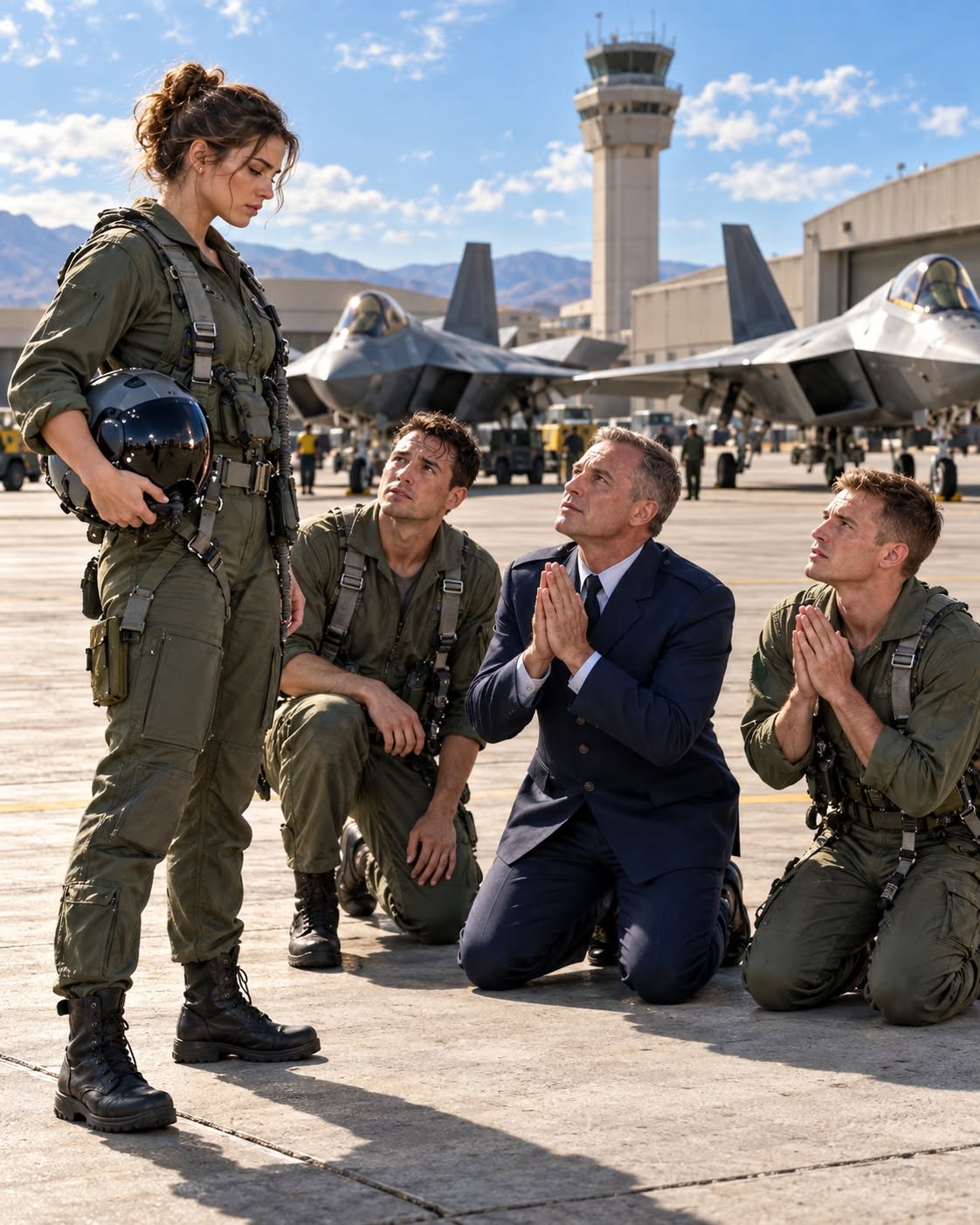
The following weeks brought changes that were far more difficult than rewriting a checklist or replacing a damaged communications network.
For the first time in years, the squadron was forced to confront an uncomfortable question: How many dangerous decisions had survived simply because nobody wanted to challenge the person making them?
The investigation had cleared the technical facts. The weather had developed exactly as my report predicted, and the backup frequencies had provided the path to recovery. But the report could not measure the cost of a culture in which speaking up was treated as disloyalty.
I thought the hardest part of the incident was behind us.
I was wrong.
Three weeks after the emergency, I received orders to attend a special review meeting at headquarters. General Patricia Hale had requested that the officers involved in the Sector Delta exercise appear before a senior aviation safety panel.
When I entered the conference room, Colonel Dalton was already seated at the far end of the table. Captain Ryan Cole sat beside him, holding a thin folder against his chest.
Neither man looked particularly comfortable.
General Hale entered a moment later, accompanied by three senior officers and a civilian safety investigator. She took her place at the head of the table and opened the meeting without wasting time on formalities.
“Major Brooks, your report identified the risk. Your recommendations were rejected. The primary communications network failed, and six aircraft were forced to recover under deteriorating conditions. Before we discuss corrective measures, I want to understand what happened before the aircraft ever left the ground.”
She looked directly at me.
“Did you believe your warning had been properly evaluated?”
“No, ma’am.”
“Why not?”
“Because the decision was made before the evidence was examined.”
A pen stopped moving somewhere across the table.
General Hale nodded once. “Explain.”
I described the morning briefing, the forecast, the relay-system data, and the recommendations I had submitted. I explained that I had not asked for the exercise to be canceled outright. I had asked for a contingency plan to be reviewed and for every pilot to understand the recovery procedures before takeoff.
Then I told them about the index card.
“I gave Captain Cole the backup information because I believed there was still a chance the network would fail. I couldn’t change the decision to launch, but I could make sure at least one more pilot had the information necessary to respond.”
General Hale turned toward Cole.
“Captain, is that accurate?”
Cole placed the folder on the table.
“Yes, ma’am. Major Brooks gave me the card about fifteen minutes before takeoff. I initially thought it was simply a precaution. When the primary network failed, I switched frequencies and used the procedures she had written down.”
He paused, then added something I hadn’t expected.
“Without that card, I might have waited too long to recognize that the backup channel was our best option. I had studied the procedures during training, but under pressure, knowing where to find information isn’t the same as having it immediately available.”
The general listened carefully.
“And Colonel Dalton?”
For several seconds, the room was silent.
Dalton adjusted his chair.
“My decision was based on confidence in the approved exercise plan,” he said. “I believed the existing system was sufficient.”
“That explains your confidence,” General Hale replied. “It doesn’t explain why you dismissed contrary evidence.”
Dalton’s jaw tightened.
“I believed Major Brooks was overestimating the likelihood of a failure.”
“Did you calculate that likelihood?”
“No, ma’am.”
“Did you request an independent review of her findings?”
“No.”
“Did you test the backup communications plan?”
“No, ma’am.”
The general closed her notebook.
“Then you did not evaluate the risk. You dismissed it.”
The words landed harder than a raised voice ever could have.
For the first time since the incident, I watched Dalton struggle to find an answer that did not sound like an excuse.
He finally lowered his eyes.
“Yes, ma’am. I did.”
The meeting continued for another two hours. The panel examined the communications logs, weather data, flight records, and statements from every member of the squadron. No one was accused of deliberately endangering the pilots. There was no need for such an accusation. The evidence showed something more ordinary and, in its own way, more disturbing: a preventable failure had developed because a leader had mistaken authority for certainty.
At the end of the review, General Hale announced a series of immediate changes. Every future exercise would require a documented assessment of critical system failures, an independently verified recovery plan, and a formal opportunity for any team member to raise safety concerns before launch.
Most importantly, a concern could no longer be dismissed solely because the person raising it held a lower rank.
“Experience is valuable,” she said, looking around the room. “Authority is necessary. But neither gives anyone permission to ignore evidence. If your leadership depends on people being afraid to question you, then you are not leading a safe operation.”
I left headquarters that afternoon expecting to feel vindicated.
Instead, I felt tired.
Being proven right after something dangerous happened was a hollow kind of victory. Six pilots had returned safely, but that outcome did not erase the moments when their voices had vanished into static or the uncertainty they had faced while searching for a way home.
I wanted to believe the review would be enough.
Then, two days later, I learned that it wasn’t.
Captain Cole came to my office shortly before the end of the duty day. He was carrying the same small index card I had given him before the flight.
Its corners were bent, and the ink had begun to fade where his fingers had repeatedly handled it.
“Major, do you have a minute?”
“Of course.”
He placed the card on my desk.
“I thought you might want this back.”
I picked it up, surprised that he had kept it.
“You could have thrown it away after the flight.”
“I considered that.”
He smiled faintly, then grew serious.
“There’s something I haven’t told you. During the recovery, Eagle Four was having trouble maintaining a stable heading in the turbulence. The pilot couldn’t hear the instructions from the ground clearly enough to confirm his position. I heard part of his transmission on the backup channel, but I wasn’t sure whether I should interrupt the sequence to respond.”
He paused.
“I remembered what you wrote on the card. The instructions weren’t just about frequencies. They reminded us to establish contact, acknowledge transmissions, and avoid unnecessary movements until we understood the situation. I relayed what I could, then waited for your instructions. It helped keep me from making the problem worse.”
I looked down at the card.
I had written it quickly in a hallway, using a pen that had barely worked. The letters were uneven, and I had squeezed the final recovery instruction into the bottom corner.
Yet that small piece of paper had become a reminder of something neither a technical manual nor an official order could fully teach.
Preparation mattered most when people no longer had the luxury of thinking slowly.
“Why are you telling me this now?” I asked.
“Because I used to think the best pilots were the ones who never hesitated,” Cole said. “You taught me that the best pilots are the ones who know what to do when their first plan stops working.”
He straightened.
“I’d like to help develop the new contingency training program, if you’ll have me.”
I studied him for a moment.
“You understand that the training won’t be glamorous?”
“Yes, ma’am.”
“There will be long hours, repeated simulations, and plenty of opportunities to discover how much you don’t know.”
“That sounds familiar.”
I laughed despite myself.
“All right, Captain. Let’s get started.”
The following month, we began designing a new training program for the squadron. We simulated communications failures, sudden weather changes, equipment malfunctions, and situations in which pilots had to make decisions with incomplete information.
We also introduced something that initially made several senior officers uncomfortable.
After each exercise, the pilots who had participated were invited to identify not only technical mistakes but also moments when hesitation, confusion, or fear of challenging an order had prevented them from acting.
At first, the discussions were stiff.
Some officers worried that admitting uncertainty would damage their reputations. Others believed that allowing junior personnel to question decisions would weaken discipline.
I understood their concerns. Aviation required coordination, and a cockpit could not become a place where every instruction turned into an argument.
But there was a difference between questioning an order during a critical maneuver and raising a legitimate concern before an operation began. There was also a difference between blind obedience and disciplined trust.
We made those distinctions part of the training.
A pilot who identified a problem was expected to explain the evidence. A leader who received a warning was expected to evaluate it. If the disagreement remained unresolved, the concern had to be documented and reviewed through the appropriate safety process.
The goal was not to make everyone equal in responsibility. It was to make sure responsibility could never become an excuse for refusing to listen.
For several weeks, the new program proceeded without incident.
Then came the exercise that tested whether anything had truly changed.
It was a cold morning in early spring, and our squadron was conducting a complex navigation exercise over unfamiliar terrain. The weather was expected to remain stable, but the training scenario included a simulated communications outage and an emergency diversion.
Colonel Dalton had been assigned to observe the exercise rather than lead it. His official role was to evaluate the new procedures, but I suspected he was also trying to determine whether he could regain the confidence he had lost.
Before the pilots boarded their aircraft, we held the required safety review.
One of the younger officers, Lieutenant Daniel Price, stood near the end of the table with a tablet in his hands. He had been reviewing the latest equipment checks and appeared uncertain about something.
“Sir,” he said, looking toward Dalton, “I have a concern about the backup navigation data.”
Dalton turned.
“What kind of concern?”
Price explained that one aircraft’s navigation database appeared to contain a discrepancy in a terrain reference. He could not yet establish whether it was a display error or an outdated data entry, but he believed the team should verify it before proceeding.
The room grew quiet.
I recognized the expression on Dalton’s face. For a fraction of a second, the old instinct returned. His eyes narrowed, and his shoulders stiffened as though the challenge itself were an inconvenience.
Then he looked at the tablet.
“How significant is the discrepancy?”
“I’m not sure yet, sir. That’s why I recommend we hold that aircraft until we verify the data.”
“Can the discrepancy affect the planned route?”
“It might, depending on the source of the error.”
Dalton glanced at the schedule posted on the wall. The exercise had already been delayed once, and several senior observers were waiting.
I could see the decision forming in his mind.
Then he took a breath.
“All right, Lieutenant. Show me the data.”
Price stepped forward.
Together, they examined the discrepancy, compared it with the approved reference information, and contacted the technical team responsible for maintaining the database.
Twenty minutes later, the discrepancy was confirmed to be a genuine data error. It had not yet caused an incident, but under certain conditions it could have contributed to an unsafe navigation decision.
The affected aircraft was held back while the issue was corrected and independently verified. The rest of the exercise proceeded with an adjusted plan.
No aircraft was lost. No emergency transmission was required. There was no dramatic rescue and no tense return through a storm.
Yet when the exercise ended, I felt something I had not felt in a long time.
Relief.
Not because the danger had been spectacularly overcome, but because it had been recognized before anyone was placed in danger.
After the final debriefing, I found Dalton standing alone beside the observation room window.
“Major,” he said, “do you have a moment?”
I joined him.
He watched the aircraft taxi toward their parking positions before speaking again.
“When Price first raised that concern, I almost dismissed it.”
I said nothing.
“I looked at the schedule and thought about the observers waiting outside. I wanted the exercise to proceed on time. For a moment, I told myself the discrepancy was probably insignificant.”
He turned toward me.
“Then I remembered Sector Delta.”
He gave a short, humorless laugh.
“I used to think that incident was about a weather forecast and a communications system. I was wrong. It was about what happens when a person becomes so attached to being right that he stops asking whether he is.”
I studied him carefully.
“Recognizing that is a start, Colonel.”
“I know. But I also know that an apology doesn’t automatically make me a better leader.”
“No, sir. What you do the next time someone challenges you will.”
He nodded slowly.
“I suppose that is the real test.”
“It usually is.”
For a moment, neither of us spoke.
Then Dalton asked a question I hadn’t expected.
“Do you think the squadron will ever trust me again?”
I considered giving him the comforting answer. It would have been easy to tell him that everyone made mistakes and that time would repair the damage.
But I had learned that honest leadership began with refusing to offer assurances I could not guarantee.
“Some people will,” I said. “Others may need more time. You can’t demand trust because you regret what happened. You have to earn it through what you do next.”
He accepted the answer without argument.
Over the following months, I watched him make an effort to change. He began asking junior officers to explain their concerns during planning sessions. He requested independent reviews of decisions that carried significant operational risk. When he disagreed with someone, he asked for the evidence before announcing his conclusion.
He was not transformed overnight. Old habits returned under pressure, and there were moments when he had to stop himself from interrupting someone who was still explaining a problem.
But he kept trying.
More importantly, when he made a mistake, he began acknowledging it without searching for someone else to blame.
That change influenced the squadron more than any speech could have.
Officers who had once remained silent started raising concerns earlier. Younger pilots became more willing to admit when they needed clarification. Experienced crew members learned to distinguish between a challenge to their authority and a contribution to the mission.
The atmosphere did not become softer. If anything, our discussions became more demanding.
We questioned assumptions, checked calculations, tested equipment, and challenged plans that had previously been accepted without much examination.
But we did so with a shared understanding that the purpose of disagreement was not to win an argument.
It was to find the safest and most reliable way forward.
Several months after the original incident, the squadron held a small ceremony to recognize the team responsible for implementing the revised safety program. General Hale attended and invited me to speak.
I stood before the assembled officers and pilots, looking at faces that had witnessed the worst morning of my career and the difficult work that followed it.
For a moment, I thought about the index card.
I could have spoken about the forecast, the failed network, or the moment when the first aircraft made contact on the backup frequency. Those were the events everyone remembered.
Instead, I spoke about the fifteen minutes before takeoff.
“That morning, I was removed from the lead aircraft assignment because I raised a concern that wasn’t welcomed. I was angry, and I believed I had been treated unfairly. But I had a choice. I could spend those fifteen minutes thinking about what had been done to me, or I could use them to help protect the people who were about to fly.”
I looked toward Captain Cole, who stood near the front.
“I chose to write down what they might need. It wasn’t a complicated solution. It was one small action taken when I had very little authority to change anything else.”
I paused, letting the room settle.
“Sometimes, leadership means making the final decision. Sometimes, it means having the courage to question that decision. And sometimes, when no one is listening, it means continuing to do the right thing without knowing whether it will matter.”
I could see several officers listening closely.
“Rank determines who carries certain responsibilities. It does not determine who is capable of seeing a problem. Experience helps us recognize danger, but only humility allows us to learn when someone else sees it first.”
When I finished, the room remained quiet for a moment before the applause began.
I did not mistake the applause for proof that everything had changed. A speech could inspire people for an afternoon, but only consistent decisions could change the way an organization behaved.
That was why the work continued.
We updated the training scenarios, reviewed the reporting procedures, and repeated the simulations until the new habits became part of our daily routine. We made it clear that a successful mission was not simply one that reached its objective. It was one in which the risks had been understood, the team had been prepared, and every person had been given a reasonable opportunity to contribute to the safety of the operation.
The small index card eventually found a place in the squadron’s training room. I had considered keeping it in my desk, but Cole suggested displaying it beside the new contingency procedures.
We placed it in a simple frame, with no medal, no photograph, and no grand explanation.
Underneath it, someone added a short line:
Preparation is an act of responsibility. Listening is an act of leadership.
I never learned who wrote those words.
I didn’t ask.
Years later, when new pilots visited the training room, some would stop to read the card. They often assumed it had belonged to a pilot who had survived a dramatic emergency.
When they learned the truth, they were usually surprised.
It wasn’t a sophisticated piece of equipment. It wasn’t an extraordinary invention. It was a handwritten list of frequencies and recovery instructions, prepared by an officer who had been publicly overruled and had fifteen minutes to decide what to do next.
That was precisely why I wanted them to see it.
The most important decisions in a person’s career do not always arrive with ceremony. Sometimes they appear in a briefing room, in a quiet conversation, or in the uncomfortable moment when someone with less authority recognizes a problem that everyone else has overlooked.
And sometimes the difference between a preventable disaster and an ordinary day is whether one person is willing to speak, whether another is willing to listen, and whether everyone involved is prepared to act on what the evidence reveals.
I still fly whenever my duties allow it. I still study weather forecasts carefully, review contingency plans, and prepare for possibilities I hope never become realities.
I have learned that caution is not cowardice, questions are not necessarily defiance, and confidence is not proof.
I have also learned that being right is not the same as being useful. If I had spent those fifteen minutes protecting my pride instead of preparing Cole, the outcome might have been very different. My warning would still have been correct, but correctness alone would not have helped six aircraft find their way home.
The index card reminded me that we cannot always control whether our advice is accepted, whether our work is recognized, or whether the people in authority will respond as they should.
We can, however, control whether we prepare carefully, speak honestly, and continue to act responsibly when circumstances become difficult.
And when we are the ones in authority, we can choose to listen before a mistake becomes a crisis.
That is the lesson I carry from Sector Delta.
The morning I was removed from the lead aircraft assignment, I believed I had lost something important. I thought my position at the front of the formation was the clearest measure of the trust I had earned.
The sky taught me otherwise.
A leader is not defined by being the first person in the formation, the loudest voice in the briefing room, or the one whose judgment is never questioned.
A leader is defined by the decisions that protect the team, the humility to recognize a mistake, and the willingness to place the mission above personal pride.
Because in the end, no one remembers who won the argument in the briefing room.
They remember whether everyone made it home.