The billionaire laughed when I said I could fix the $12 million hydraulic forging press his engineers had failed to repair for six weeks.
The folder sat between us.
I looked down at my name printed neatly across the front.
“What’s this about, sir?”
Conrad Whitaker leaned back in his chair and folded his hands.
“It’s a permanent position. Senior Reliability and Maintenance Specialist. You’ll report directly to the operations director, but you’ll also have the authority to review equipment failures before my engineering department approves major replacements.”
I blinked.
A permanent position.
After years of temporary contracts, uncertain schedules, and wondering whether I’d have enough hours to cover the rent, those words sounded almost unreal.
“What about the salary?” I asked.
Conrad slid a sheet across the desk.
I looked at the number.
It was nearly three times what I had been making.
For a moment, I couldn’t find anything to say.
Then he continued.
“There is another part of the offer. You’ll work closely with Peter. I expect both of you to put what happened yesterday behind you and focus on improving this company.”
There it was.
The catch.
Peter.
I looked at Conrad.
“Does Peter know about this?”
“He knows I’m considering a restructuring. He doesn’t know I’ve made you the offer.”
I studied the folder again.
The opportunity was everything I’d been hoping for. Financial stability. Health insurance. A chance to stop worrying every time Molly needed new shoes or a school expense came up.
But I also knew what it meant to walk into a department where people might resent me before I even sat down.
“Can I ask you something?”
“Go ahead.”
“Am I being hired because you want someone who can identify problems, or because you want someone to prove Peter wrong?”
Conrad’s expression changed.
For several seconds, he said nothing.
Finally, he leaned forward.
“I’ll be honest. Six weeks of lost production cost this company a fortune. I’m not interested in protecting anyone’s pride. I’m interested in preventing the next failure.”
“Then I want the job for the right reasons.”
“And what would those be?”
“I want the authority to investigate problems properly. I want access to the original technical records. And I want the people working under me to be allowed to speak up without worrying about whose feelings they might hurt.”
Conrad watched me carefully.
“You’re negotiating before you’ve even accepted?”
“I’m a single father, sir. I’ve learned that agreeing to something without understanding the conditions can become an expensive mistake.”
For the first time, he laughed.
Not the mocking laugh I’d heard on the factory floor.
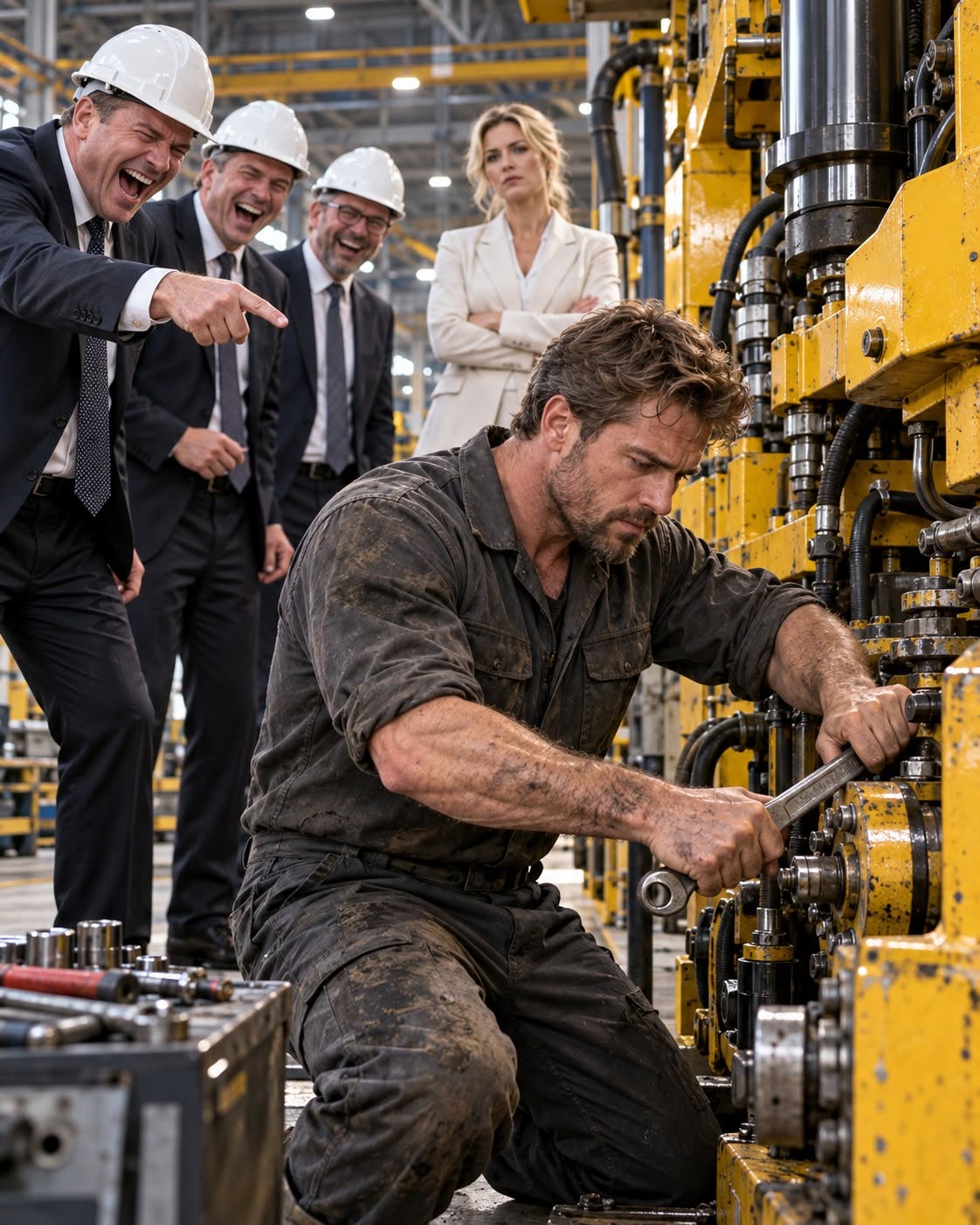
This one was genuine.
“Fair enough.”
He picked up a pen and made several notes.
“Let’s put those conditions in writing.”
I nodded.
Then I asked for one more thing.
“I’d like Nina Flores included in the reliability review team. She helped identify the problem, and she deserves recognition for it.”
Conrad looked surprised.
“You’re recommending someone else when you haven’t even started?”
“She didn’t have to help me. She could have ignored me like everyone else. But she listened, checked the records, and helped verify the findings. That’s the kind of engineer I want working beside me.”
Conrad closed the folder.
“Daniel, I think I’m beginning to understand why you found that problem.”
I signed the offer that afternoon.
When I got home, Molly was sitting at the kitchen table doing her homework.
She was eleven, with her mother’s brown eyes and the same habit of biting her pencil whenever she was concentrating.
“Dad, you’re late.”
“I know, sweetheart. Something happened at work.”
She looked up.
“Are you in trouble?”
I smiled.
“No. I think something good happened.”
I placed the folder on the table.
She read the title slowly, sounding out the unfamiliar words.
“Senior Reliability and Maintenance Specialist.”
Then she looked at me.
“Does that mean you aren’t temporary anymore?”
I pulled out a chair and sat beside her.
“That’s exactly what it means.”
Her face lit up.
“So you get to stay?”
“Yes.”
“Like, for real?”
“For real.”
She jumped out of her chair and wrapped her arms around my neck.
“Does that mean we can finally fix the washing machine?”
I laughed so hard I nearly knocked over my coffee.
“That’s the first thing you want?”
“Well, Dad, you’ve been telling me for three weeks that it’s making a strange noise.”
I hugged her tighter.
“I think we can manage a washing machine.”
That night, for the first time in years, I slept without calculating how many days remained before the next paycheck.
But the following Monday reminded me that a better job didn’t automatically mean an easier life.
When I walked into the engineering department, conversations stopped.
A few people glanced at me and quickly looked away.
Others whispered.
I recognized Peter immediately.
He was standing beside the main conference table, reviewing a set of technical drawings.
When he saw me, he put them down.
“So it’s official,” he said.
“Looks that way.”
“Congratulations.”
His voice was polite, but his expression wasn’t.
“Thank you.”
He gestured toward an empty chair.
“Welcome to engineering.”
I sat down.
The meeting began with Conrad explaining the new reliability review process. Every major equipment failure would now require a documented investigation before expensive components could be replaced.
Peter listened without interrupting.
Then Conrad announced that I would lead the new review team.
That’s when the room became uncomfortable.
One senior engineer shifted in his chair.
Another stared at the table.
Peter finally spoke.
“With all due respect, Conrad, I think we should be careful about changing responsibilities based on one successful repair.”
Conrad looked at him.
“It’s not based on one repair. It’s based on six weeks of evidence, the cost of repeated unsuccessful interventions, and the need to improve our process.”
Peter nodded slowly.
“I understand.”
But I could tell he didn’t.
After the meeting, he stopped me in the hallway.
“Daniel, I want to make something clear. I’ve spent twenty years building this department. I won’t have someone walking in and questioning every decision we’ve made.”
I held his gaze.
“I’m not interested in questioning every decision. I’m interested in understanding the decisions that affect the machines.”
“And what happens when your understanding is wrong?”
“Then I expect someone to show me where.”
He looked at me for a long moment.
“You’re very confident.”
“No. I’m careful. There’s a difference.”
He walked away.
I knew then that the real challenge hadn’t been fixing the hydraulic press.
It was going to be earning the trust of people who believed that admitting a mistake was the same thing as admitting they weren’t good enough.
During my first two weeks, I made a point of listening.
I met technicians, operators, electricians, and engineers. I asked about recurring problems, unusual sounds, inconsistent readings, and repairs that never seemed to last.
I didn’t arrive with a list of orders.
I arrived with a notebook.
Some people found that strange.
One technician named Marcus eventually asked me why I kept writing everything down.
“Because six months from now, I might forget what you told me,” I said. “And the machine won’t care whether I remember.”
He laughed.
Then he showed me a maintenance log that had been sitting in a cabinet for almost a year.
It contained repeated reports of vibration in one of the factory’s main production motors.
The motor had been inspected several times, but the reports were marked as minor.
I asked why.
Marcus shrugged.
“Every time we reported it, they told us the vibration was within acceptable limits.”
“Was it getting worse?”
“Slowly. But nobody wanted to shut down production to investigate.”
I reviewed the records.
The vibration readings had been increasing steadily. They weren’t dramatic, but the trend was impossible to ignore.
I asked Nina to help me examine the equipment history.
She agreed immediately.
Two days later, we discovered that the motor’s mounting foundation had developed a structural problem. The vibration was transferring additional stress to the coupling, and the condition was beginning to affect the connected machinery.
It wasn’t an emergency yet.
But if the pattern continued, it could become one.
We recommended a controlled shutdown and a full inspection.
Peter opposed the recommendation.
“We can’t stop that line every time someone notices a slightly elevated vibration,” he said during the review meeting.
I placed the trend chart on the screen.
“I’m not recommending a shutdown because of one reading. I’m recommending it because of fourteen consecutive readings showing deterioration.”
“Those values are still within operating limits.”
“Operating limits tell us when something becomes unacceptable. They don’t tell us when we should start paying attention.”
Conrad, who had joined the meeting, looked at the chart.
“How long would the inspection take?”
“Approximately twelve hours, assuming we find no additional damage.”
“And if we don’t inspect it?”
I answered honestly.
“We don’t know. But the evidence suggests the risk is increasing.”
Peter shook his head.
“This is becoming a pattern. Daniel sees a small discrepancy and wants to stop production.”
I turned toward him.
“Peter, if I’m wrong, I’ll document why. If you’re wrong, the company could lose another production line.”
The room went quiet.
Conrad authorized the inspection.
Twelve hours later, the team found damage that would have become significantly more expensive if the machine had continued operating.
The mounting bolts had loosened, and the coupling was showing signs of abnormal wear.
Nobody celebrated.
There was no dramatic applause or triumphant speech.
But Marcus approached me afterward.
“Thanks for listening.”
Those three words meant more than he probably realized.
I was beginning to understand something important.
The best information in a factory didn’t always come from the people with the most impressive titles.
Sometimes it came from the person who had spent ten years listening to the same motor every morning.
And if management didn’t listen, the company eventually paid for it.
For a while, things improved.
The reliability team identified several recurring issues before they developed into serious failures. We established better documentation procedures and created a system for tracking equipment changes.
Nina became the technical coordinator.
Marcus helped train technicians to recognize early warning signs.
Even some of the engineers who had initially doubted me began bringing their concerns directly to our team.
But Peter remained distant.
Then, six weeks after I had started my new position, something happened that nearly destroyed everything.
It began with a phone call at 2:17 in the morning.
I was asleep when my phone rang.
The maintenance supervisor’s voice was tense.
“Daniel, we have a problem at the forging line. The press is down again.”
I sat up immediately.
“What happened?”
“Pressure instability. The system tripped during a production cycle. Nobody was injured, but the machine is locked out.”
My stomach tightened.
“Has anyone restarted it?”
“No. We followed the shutdown procedure.”
“Good. Keep everyone clear. I’ll be there in twenty minutes.”
I got dressed quietly so I wouldn’t wake Molly.
She appeared in the hallway anyway, rubbing her eyes.
“Dad?”
“Go back to bed, sweetheart. There’s a problem at work.”
“Is it serious?”
“I don’t know yet.”
She looked worried.
I knelt beside her.
“Remember what I always tell you? We don’t guess when something important is involved. We find out what’s actually happening.”
She nodded.
“Be careful.”
“I will.”
When I arrived, the factory was already filled with activity.
Peter stood near the control room with two engineers.
The hydraulic press was silent.
A warning light flashed on the main control panel.
I checked the incident report.
The pressure had dropped sharply during a heavy cycle, triggering an automatic shutdown.
My first thought was the original pilot pressure issue.
Had the correction failed?
Had something else been overlooked?
I asked for the latest readings.
Nina arrived a few minutes later, carrying her laptop.
“It’s not the same pattern,” she said.
She showed me the pressure graph.
The earlier problem had produced a consistent pressure drop under heavy loads. This event looked different. The pressure had become unstable before the shutdown, and several control signals had registered irregularly.
Peter folded his arms.
“Perhaps the original repair wasn’t as complete as we thought.”
I ignored the comment.
“Let’s review everything that changed in the last two weeks.”
We started with the maintenance records.
There were several entries involving routine inspections, sensor calibration, and a control-system update.
Then Nina found something unusual.
A configuration file had been modified the previous afternoon.
“Who authorized this?” I asked.
She checked the digital history.
Her expression tightened.
“The change was made using an engineering administrator account.”
Peter stepped closer.
“That doesn’t prove anything. Several people have access.”
“I’m not accusing anyone,” I replied. “I’m trying to establish what changed.”
We examined the configuration history.
One pressure-monitoring parameter had been altered. The modification affected the system’s response during certain operating conditions.
It wasn’t immediately clear whether the change had caused the trip.
But it was significant enough to investigate.
Peter became defensive.
“That adjustment was part of the optimization work.”
“Was it tested?”
“Of course.”
“Under full production loads?”
He hesitated.
“Under simulated conditions.”
I looked at Nina.
She shook her head slightly.
The modification had not gone through the full validation process.
I felt a familiar heaviness in my chest.
This was no longer simply a disagreement between two engineers.
A critical industrial machine had experienced an unexpected shutdown after an undocumented or insufficiently validated configuration change.
We needed to understand why.
Conrad arrived just before sunrise.
He listened to the initial findings, then asked the question nobody wanted to answer.
“Could this have been prevented?”
I looked at the records.
“Yes, sir. If the change had been properly reviewed and validated before being introduced, we might have caught the problem.”
Peter immediately spoke.
“The adjustment was intended to improve cycle efficiency. There was no reason to believe it would create this particular condition.”
Conrad looked at him.
“Who approved it?”
Peter didn’t answer immediately.
Then he said, “I authorized the engineering work.”
Conrad’s face hardened.
“Did you authorize the change to be implemented without the full validation process?”
Peter glanced toward Nina.
“I believed the testing was sufficient.”
I stepped forward.
“Sir, we shouldn’t make assumptions about responsibility until we complete the investigation. We need to preserve the configuration history, inspect the affected components, and verify the control sequence.”
Conrad nodded.
“Do it.”
The investigation took three days.
We found that the altered monitoring parameter had changed how the system interpreted pressure fluctuations during a particular stage of the forging cycle.
The protective shutdown had worked exactly as designed.
The problem wasn’t that the safety system had failed.
The problem was that an engineering change had been introduced without completing the required production-load validation.
The machine had protected itself.
That distinction mattered.
It meant the press had not suffered the catastrophic damage some people feared, but it also meant our procedures had failed.
And the records showed that Peter had approved the modification.
When we presented the findings to Conrad, Peter looked exhausted.
He had spent twenty years building his reputation around technical excellence.
Now his own decisions were documented in a report that could not be dismissed.
Conrad closed the folder.
“Peter, I need to know why you bypassed the validation process.”
Peter stared at the table.
“I was under pressure to improve production efficiency. We were behind schedule, and I believed the change was minor.”
“Who pressured you?”
Peter hesitated.
Then he said something that surprised everyone.
“Your production director.”
Conrad looked up.
“What?”
“Three weeks ago, he told me the company couldn’t afford more downtime. He wanted the press running faster, and he wanted the improvements implemented before the next customer audit.”
The room became silent.
Conrad slowly turned toward the operations director, who had joined the meeting.
“Did you instruct Peter to bypass validation?”
The director shifted uncomfortably.
“I asked the engineering team to accelerate the work. I never told anyone to ignore safety procedures.”
Peter shook his head.
“You told me that another delay would put my department under review.”
“I said we needed results.”
“And I gave you results.”
“You gave me an unapproved change that shut down a twelve-million-dollar machine!”
The argument grew louder.
I let them speak.
But eventually, I placed the investigation report on the table.
“There’s something else we need to address.”
Everyone turned toward me.
“The process made this possible. Peter authorized the change. The operations director applied pressure. But our approval system allowed one person to make a critical modification without independent verification. If we only punish individuals and leave that system untouched, we’ll eventually repeat the same mistake.”
Conrad studied me.
“What do you recommend?”
I opened my notebook.
“Three things. First, every critical control-system change needs documented approval from both engineering and operations. Second, testing must include conditions that reflect actual production loads, not just simulations. Third, technicians and engineers need a protected way to report concerns without worrying about retaliation.”
Peter looked at me.
“You’re suggesting we rebuild the entire approval process?”
“I’m suggesting we stop relying on people being perfect.”
Nobody spoke.
Then Conrad nodded.
“Put it into practice.”
The production director was removed from the approval chain pending a separate management review. Peter was placed on a formal performance improvement plan and required to complete additional safety and change-control training.
He wasn’t fired.
Conrad made it clear that the purpose was accountability, not revenge.
But Peter’s authority over critical engineering modifications was temporarily suspended.
The decision wasn’t easy for anyone.
Especially Peter.
A few days later, I found him alone in the engineering office.
He was staring at an old photograph of the original team that had installed the forging press.
“Twenty years,” he said without looking up.
I stopped beside his desk.
“That’s a long time.”
“I used to know every part of this factory. Every system, every machine. People came to me because they trusted my judgment.”
He put the photograph down.
“Then you arrived.”
I didn’t answer.
He continued.
“I thought you were going to make me look incompetent.”
“I never wanted that.”
“You could have taken the credit for everything.”
I shook my head.
“Nina helped find the original problem. Marcus helped identify the motor issue. And your team built the systems we were reviewing. None of this happened because of one person.”
Peter gave a short, humorless laugh.
“That’s a generous way of looking at things.”
“It’s also the truth.”
He looked at me.
“Why didn’t you tell Conrad I was responsible for the control change?”
“I showed him the records. I didn’t hide anything. But I wasn’t going to turn an investigation into a personal attack.”
For a long moment, he said nothing.
Then he nodded.
“I owe you an apology.”
I hadn’t expected that.
He extended his hand.
“I should have listened when you asked for the maintenance records. I let my pride get in the way.”
I shook his hand.
“Then let’s make sure the next person who notices something gets heard.”
It wasn’t a dramatic reconciliation.
Trust doesn’t return because two people shake hands.
But it was a beginning.
Over the following months, the factory changed.
Not overnight.
Not perfectly.
But steadily.
The new reliability process became standard practice. Every significant equipment modification was documented, reviewed, and tested. Maintenance workers received additional training, and engineers began attending regular meetings with the people who operated the machinery every day.
Nina was promoted to Reliability Engineering Manager.
Marcus became the lead technician for preventive maintenance.
Peter gradually returned to technical leadership, this time with a stronger focus on mentoring and independent verification.
And I was no longer the temporary technician who had walked into the factory asking for old records.
I was responsible for a department that had grown from three people into a team of twelve.
But the biggest change happened outside the factory.
One Friday afternoon, I arrived home to find Molly sitting on the front steps.
She had a piece of paper in her hands.
“Dad, I need you to look at something.”
“What is it?”
She handed it to me.
It was an application for a summer science and engineering program.
“I want to apply,” she said.
I smiled.
“That’s great. Why are you waiting for me?”
She looked down.
“It’s expensive.”
I read the application.
The program included a scholarship option, but there were still costs for transportation and supplies.
“How much?”
She told me.
A year earlier, that number would have made my stomach drop.
Now, it was something we could plan for.
I handed the application back.
“Then we’ll figure it out.”
She smiled.
“Really?”
“Really.”
That evening, we sat at the kitchen table filling out the forms.
She asked me questions about the program, the instructors, and what kind of projects she might work on.
Then she paused.
“Dad?”
“Yeah?”
“Are you happy at work now?”
I thought about the question.
I thought about the first morning when Conrad had laughed at me. I thought about the engineers who had dismissed my concerns, the records that had revealed the original mistake, and the people who had eventually learned to work together.
“Most days,” I said.
“Why only most days?”
“Because machines still break, people still make mistakes, and sometimes everyone thinks they’re right.”
She giggled.
“Sounds annoying.”
“It can be.”
Then I looked at her.
“But I’ve learned something.”
“What?”
“Being good at your job isn’t about making sure nobody ever questions you. It’s about being willing to question yourself when the evidence tells you something is wrong.”
She considered that for a moment.
“Like when you fixed the big machine?”
“Exactly.”
She returned to her application.
A few weeks later, Molly received an acceptance letter with a partial scholarship.
She ran into the house waving it above her head.
“Dad! I got in!”
I lifted her off the floor and spun her around.
For a moment, I wasn’t thinking about production schedules, hydraulic systems, or engineering reports.
I was thinking about her future.
And how different it looked from the future I had feared for us.
A month later, Conrad called me into his office.
On his desk sat a photograph of the restored forging press.
Behind it was a framed copy of the new reliability policy.
He gestured toward the chair.
“I wanted to tell you something.”
I sat down.
“When you first walked into that maintenance area, I thought you were just another temporary worker with an opinion.”
I smiled slightly.
“I remember.”
“I was wrong.”
He paused.
“I’ve spent years believing that the most expensive equipment requires the most expensive experts. What I failed to understand was that expertise means very little if people are afraid to challenge assumptions.”
He handed me a small envelope.
Inside was a letter announcing an additional salary adjustment and a company-funded professional development program.
I looked up.
“What’s this for?”
“Your work. And your leadership.”
I thanked him.
But before I left, I had one question.
“Sir, can I ask you something?”
“Of course.”
“Why did you laugh that first morning?”
He looked out through the glass wall toward the factory floor.
“Because I had already decided what you were capable of before you said a word.”
He turned back toward me.
“And I suspect I’ve made that mistake more times than I care to admit.”
I nodded.
“Most people have.”
He smiled.
“Perhaps that’s something we should all work on.”
When I walked out of his office, I passed the maintenance department.
A young technician was standing beside a machine, speaking to an engineer who looked considerably older.
The technician was pointing at a set of readings.
The engineer was listening.
Actually listening.
I stopped for a moment and watched them.
Then I continued toward my office.
I still remembered what it felt like to stand in that maintenance area with everyone laughing at me.
I remembered the fear of losing my job, the pressure of being the only parent Molly could depend on, and the uncertainty of not knowing whether the next paycheck would be enough.
But I also remembered what happened when someone finally listened.
The hydraulic press had been worth twelve million dollars.
The components that had been replaced during those six weeks had cost the company a fortune.
Yet the most valuable thing we recovered wasn’t the machine.
It was the willingness to look at a problem without letting pride dictate the answer.
Years later, when Molly was old enough to understand the full story, she asked me what I considered my greatest achievement at Whitaker Industrial Group.
I could have told her about the promotion, the salary, or the machine that had returned to production.
Instead, I told her about the maintenance records.
She frowned.
“The records?”
I smiled.
“Those records gave us the truth. But it took people being willing to listen before the truth could make a difference.”
She thought about that.
Then she asked, “So what was the most important thing you learned?”
I looked at her.
“Never assume someone’s value based on their job title. And never become so proud of what you know that you stop learning.”
She smiled.
“I think that’s a pretty good lesson.”
“It took me forty-three years to learn it properly.”
She laughed.
And I laughed with her.
Because I finally understood that the morning Conrad Whitaker challenged me hadn’t really been about fixing a hydraulic press.
It had been about something much bigger.
A billionaire had believed that authority made him right.
An experienced engineer had believed that reputation made him infallible.
And a temporary technician had nearly believed that his position made his voice unimportant.
All three of us had been wrong about something.
The difference was what we chose to do after discovering it.
I never forgot that lesson.
Not when I became a department manager.
Not when I trained new technicians.
And not when I eventually sat across from a nervous young employee who was afraid to question a decision made by someone more senior.
I always told them the same thing:
“Bring me the evidence. Show me what you’re seeing. And don’t ever stay silent just because someone else has a bigger office.”
Because the strongest teams aren’t built by people who never make mistakes.
They’re built by people who can admit mistakes, learn from them, and make sure others have the courage to speak before a small problem becomes a disaster.
And sometimes, the person who saves a twelve-million-dollar machine isn’t the person with the biggest title or the most impressive degree.
Sometimes, he’s simply the person who cares enough to ask for the maintenance records.
And who understands that the most important thing in any workplace isn’t being the smartest person in the room.
It’s making sure the truth is allowed to speak.