On December 23, I had $14 in my pocket, a dead warehouse boiler behind me, and two days left before Christmas.
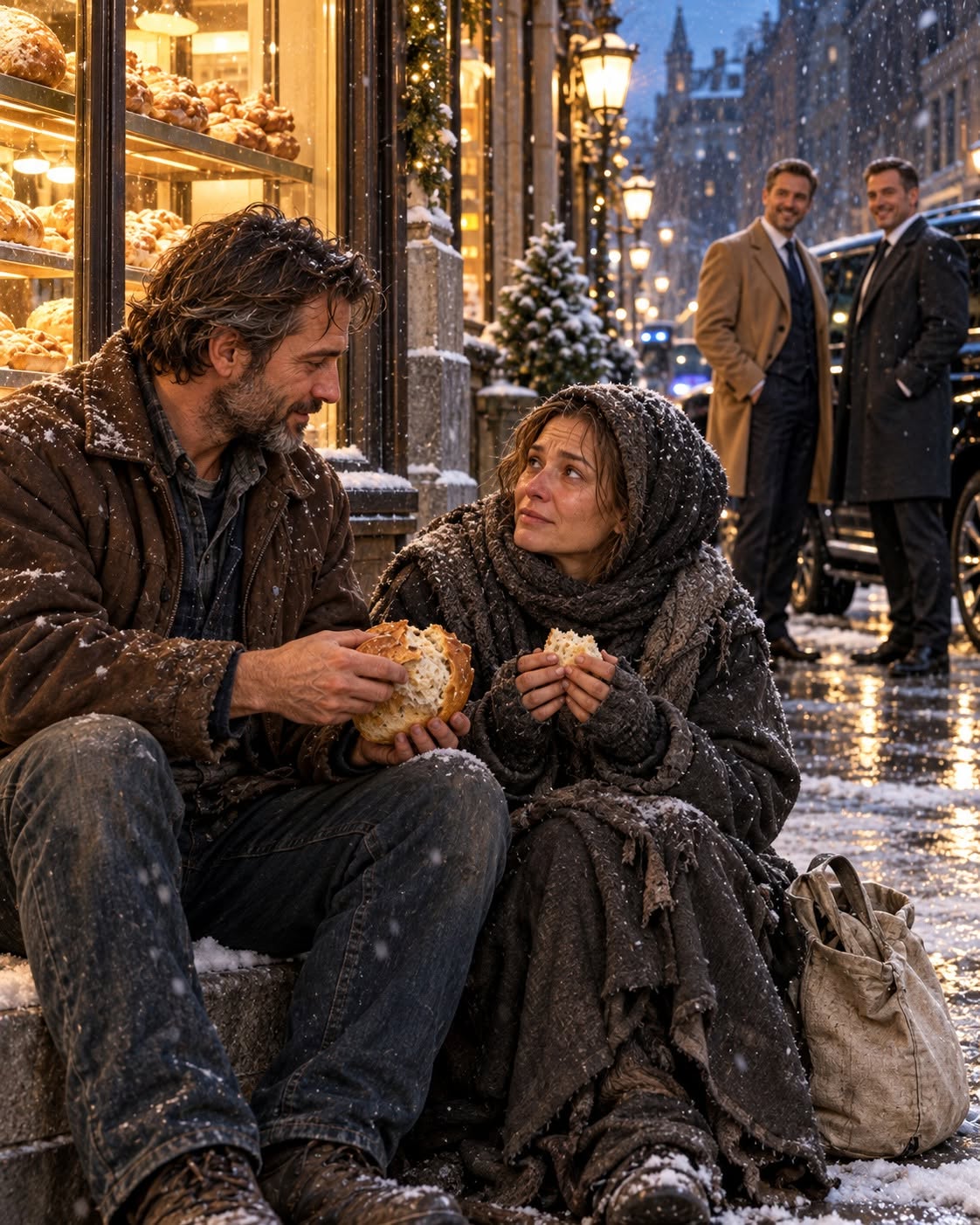
The sandwiches sat between us on the desk, and for a few minutes, I allowed myself to believe that the worst part of my life was finally behind me.
I was wrong.
Not because Maren had deceived me. Not because the board had changed its mind about my appointment. But because corruption rarely disappeared simply because the people at the top had been exposed. Sometimes, it dug itself deeper into the ground, waiting for the right moment to grow back.
I learned that on January 8, when my daughter, Emily, came home from school carrying a letter that made her cry.
She was twelve, old enough to understand that money was tight but young enough to believe that every problem could be solved if adults tried hard enough. Since Claire’s death, I had done everything I could to keep the worst of our struggles away from her. I packed lunches, fixed broken appliances instead of replacing them, and told her that our small apartment was cozy rather than cramped.
But children notice more than we think.
The letter was from our landlord. Our rent had fallen behind during the months I was unemployed, and although I had paid what I could, the remaining balance was still substantial. The notice gave us ten days to settle the account or begin the eviction process.
Emily stood in the kitchen, holding the paper in both hands.
“Are we going to lose our home?”
I set down the tools I had been cleaning.
“No,” I told her.
The word came out confidently, but I felt the old fear stir beneath it.
“Are you sure?”
I looked at my daughter and remembered every promise I had made to Claire when she was still alive. I had promised that Emily would always have a home, that she would never have to wonder whether her father could take care of her, and that I would do whatever was necessary to keep her safe.
I had never promised that life would be easy.
“I won’t let you face this alone,” I said. “We’ll figure it out.”
She hugged me, and I held her longer than usual.
That evening, I reviewed my finances at the kitchen table. My new position paid well enough to restore some stability, but my first paycheck had not yet arrived. The eviction notice had arrived before the recovery did.
For the first time since Christmas, I wondered whether doing the right thing had simply delayed the next disaster.
Then my phone rang.
It was Maren.
“I heard about the notice,” she said.
I stared at the window above the sink.
“Who told you?”
“Your payroll administrator mentioned that your salary advance hadn’t been processed. I asked why, and she explained that your employment file was still waiting on final clearance.”
“I’ll handle it.”
“I know you will. That’s not why I’m calling.”
I heard papers moving on her end of the line.
“There’s something happening at the redevelopment site. I need you to look at it personally tomorrow morning.”
“What kind of something?”
“A safety report has been filed claiming that the damaged equipment has been replaced. The contractor wants authorization to reopen part of the building.”
“Has the equipment actually been installed?”
“That’s what I need you to determine.”
I rubbed my forehead.
“Then why not send the site engineers?”
“Because the report bears the signature of a supervisor who has already been questioned about the missing funds. And because someone has been telling people that our investigation is finished.”
She paused.
“It isn’t finished.”
The following morning, I arrived at the redevelopment site before sunrise.
The building had once been a distribution warehouse. Hollis Meridian planned to convert it into a combination of commercial offices, residential units, and retail space. The project was supposed to bring hundreds of jobs to Old Harbor, and the town had celebrated it as a symbol of renewal.
Now, with its financing under scrutiny, the site was surrounded by temporary fencing and warning signs.
A security guard checked my identification and led me to the temporary project office. Inside, a contractor named Russell Pike stood beside a table covered in drawings.
Pike had worked in construction for nearly thirty years. He had a thick neck, a permanent scowl, and the confidence of a man accustomed to getting his way.
“You must be the new safety director,” he said.
“That’s right.”
He pushed a document toward me.
“We’re ready for a limited reopening. All critical repairs have been completed, and the updated inspection report is here.”
I read the report carefully.
It listed three replacement pressure sensors, two emergency shutoff valves, and a newly installed fire suppression control unit. Each item had a serial number, an installation date, and a technician’s signature.
The documentation looked convincing.
Too convincing.
I turned to the equipment inventory.
“Where are the removed components?”
“Disposed of.”
“Where’s the disposal record?”
Pike frowned.
“That isn’t part of your inspection.”
“It is when the replacement history is being used to certify the equipment.”
He crossed his arms.
“You’re new here. You should understand that projects don’t run on paperwork alone.”
“Neither do buildings.”
For a moment, we stared at each other.
Then I asked him to take me to the equipment room.
The first pressure sensor was mounted on a pipe near the boiler system. Its label matched the number in the report, but the mounting bolts were old, and a faint line of rust marked the bracket where the previous sensor had been removed.
I checked the wiring.
The connection had been patched with an adapter that did not appear in the installation documentation.
“Who installed this?”
“One of the subcontractors.”
“Which one?”
“I’d have to check.”
I photographed the connection and moved to the next component.
The second sensor had the same problem.
The third had never been replaced at all.
It had been cleaned, repainted, and fitted with a new identification label.
I stood there, feeling the familiar cold anger that came whenever someone treated safety as a box to be checked rather than a responsibility to be carried.
“These replacements were never installed,” I said.
Pike’s expression hardened.
“That’s a serious accusation.”
“It’s a physical observation. The report says these components were replaced. They weren’t.”
He stepped closer.
“Listen carefully. This project has already suffered enough damage from people who don’t understand how construction works. If you shut us down again, you’ll be responsible for every job lost and every dollar wasted.”
I had heard a version of that argument before.
My former boss had used it when he wanted me to approve code violations. Preston had used it when he wanted to redirect safety funds. Grant had used it when he offered me money to change my records.
They always made the same demand: accept a dangerous lie, then take responsibility for the consequences of telling the truth.
“I won’t authorize reopening,” I said.
Pike slammed his hand against the table.
“You have no idea who you’re interfering with.”
“Then explain it in writing.”
I collected my photographs and left.
By noon, the site had been placed under a temporary safety hold. Maren’s legal team requested the original purchase orders, installation logs, and payment records. The contractor was instructed not to remove or alter any equipment until an independent inspection could be completed.
At first, I believed the matter would be straightforward.
Then, at 4:17 p.m., I received a message from an unknown number.
You have a daughter. Think carefully about what you’re willing to risk.
I read it once.
Then again.
The room seemed to grow smaller around me.
I immediately called Maren and sent her a screenshot. She told me not to respond, to preserve the message, and to report it through the appropriate channels.
By evening, security personnel had been notified, and an incident report had been filed.
Still, when I collected Emily from her after-school art club, I found myself scanning the parking lot, watching every unfamiliar vehicle, and imagining dangers that might not exist.
Emily noticed.
“Is something wrong, Dad?”
I forced a smile.
“Work is complicated right now.”
She studied me with the directness only a child can manage.
“You’re doing that thing again.”
“What thing?”
“Where you say everything is fine, but you look like you’re carrying a whole building on your back.”
I almost laughed.
Instead, I crouched in front of her.
“Someone sent me a message that I didn’t like. The people at work are helping me deal with it. You’re safe, and if anything changes, I’ll tell you. I promise.”
She nodded, though I could see that she was worried.
“Is it because you’re doing the right thing?”
I swallowed.
“Maybe.”
“That’s stupid.”
The bluntness of it caught me off guard.
“Sometimes people get punished for doing the right thing,” she continued. “Mom used to say that didn’t mean they should stop.”
I looked at her.
Claire had been gone for nearly three years, yet her words still found their way into our lives at the moments when we needed them most.
“She did say that,” I replied.
Emily took my hand.
“Then don’t stop.”
That night, I slept poorly.
I checked the locks twice, placed my phone beside the bed, and listened for every sound outside the apartment. The following morning, I almost convinced myself to ask Maren to assign someone else to the investigation.
I could have done it. I could have told her the threats were affecting my judgment and stepped away until the situation settled.
But when I opened the folder containing the original inspection records, I saw the notes I had written months earlier, before I had ever met Maren.
I remembered the pressure sensor that had failed during a routine test. I remembered Grant standing beside me, telling me that replacing it would delay the schedule and that I should simply sign the report.
I remembered the workers who would eventually have occupied that building.
And I understood that leaving the investigation would not necessarily protect my family. It might only leave the next person facing the same choice with less information and fewer safeguards.
I called Maren.
“I want to continue,” I said. “But we need to do this properly. Independent inspectors, documented chain of custody, and no more informal assurances from contractors.”
“Agreed,” she replied. “And you’re not going to be expected to handle the threats alone.”
That afternoon, Elliot Harper arrived at the site with two independent engineers and an investigator appointed by the company’s audit committee.
They began a detailed examination of the equipment and records.
Within hours, the evidence grew worse.
The false installation reports were not isolated. They were part of a second attempt to make the project appear compliant after the original financial investigation had begun. Several suppliers listed in the paperwork denied having delivered the equipment. One company did not exist at the address provided on its invoices.
A retired electrician who had worked at the warehouse also came forward. He explained that he had been ordered to remove several functioning components from another building and install them temporarily at the redevelopment site so that photographs could be taken for an inspection package.
He had refused to sign the completion report and had been dismissed.
His statement connected the physical evidence to the paper trail.
But it also revealed something more troubling.
Someone had known exactly which inspection records I had preserved and which ones the investigation would need. The fabricated paperwork had been designed to imitate legitimate documents closely enough to pass a rushed review.
The question was no longer whether the site had been misrepresented.
It was who had coordinated the attempt to make the misrepresentation survive.
Elliot called me into a meeting with Maren the following evening.
On the table lay a printed email chain recovered from the project’s archived records. Several messages had been exchanged shortly before the false installation reports were submitted.
One of them contained a phrase that made my blood run cold.
The former maintenance supervisor’s original notes must remain unavailable. If they surface, the previous explanation collapses.
Below it was a reply from an account linked to a consulting firm hired by Preston Wilmington’s development group.
Another message mentioned Grant by name.
I leaned back.
“Grant knew the records could expose him.”
“Yes,” Elliot said. “But we haven’t established who authorized the latest falsification or who sent you the threat.”
Maren folded her hands.
“That’s why we’re not going to rush to a conclusion. We have enough evidence to stop the reopening. Now we need to establish responsibility.”
I appreciated her restraint. She had every reason to be angry, yet she was refusing to let anger substitute for proof.
The next morning, the story broke.
A local reporter published an article about the safety hold, the questionable invoices, and the new investigation. By lunchtime, news crews were gathered outside the project fencing. By late afternoon, my name appeared in an online article describing me as the whistleblower who had helped uncover the original fraud.
The attention was uncomfortable.
Some people called me a hero. Others accused me of sabotaging a project that the town desperately needed. Several anonymous comments claimed that I was trying to become wealthy by attacking successful businessmen.
I turned off my phone.
I had never wanted to be a symbol. I wanted the equipment to work, the records to be honest, and the people who entered those buildings to go home safely.
The following day, Maren asked me to accompany her to a public meeting at the Old Harbor community center. Residents, workers, and local business owners had gathered to hear what would happen to the redevelopment project.
The room was crowded and tense.
A construction worker stood first.
“My crew hasn’t been paid for two weeks,” he said. “We didn’t know anything about the missing money. We came to work, and now we’re the ones who might lose our jobs.”
Several people applauded.
Maren stepped to the microphone.
“You’re right to be angry,” she said. “Workers should not bear the cost of misconduct they didn’t commit. Hollis Meridian will fund an independent review of legitimate outstanding wages and work already completed, subject to verification. We will also provide support for workers affected by the suspension.”
A woman near the front raised her hand.
“And what about the homes? My son was supposed to move into one of those apartments in the spring.”
“We won’t reopen unsafe sections to protect a deadline,” Maren answered. “But we will publish a repair plan, an independent inspection schedule, and regular progress reports. The project will continue only when it meets the required standards.”
A man at the back shouted that the company should simply replace the contractors and get on with it.
Maren listened until he finished.
“Replacing a name on a contract doesn’t fix a dangerous system,” she said. “If we don’t understand how this happened, we risk repeating it with a different company.”
Then she looked toward me.
“That’s why we need people who are willing to report problems, even when the truth is inconvenient.”
I stepped forward, uncomfortable beneath the attention.
“I’m not here to tell anyone that stopping work is easy,” I said. “I’ve lost a job for refusing to approve unsafe conditions. I know what it means to worry about rent, groceries, and whether your family will be all right next month.”
The room grew quiet.
“But the workers in that building deserve more than a paycheck earned by pretending something is safe. The people who will live there deserve to know that someone checked the pipes, the alarms, and the emergency systems honestly. And the people who signed those reports should be accountable for what they knew and what they did.”
I paused.
“We can rebuild a project. We can replace equipment. We can recover money, though it may take years. What we cannot do is promise a family that their loved one will come home after an accident caused by a danger we knew about and chose to ignore.”
No one applauded at first.
Then the electrician who had come forward stood up and began clapping. Others followed, not all at once, but gradually, until the room was filled with a steady sound.
For the first time, I understood that honesty could be more than an individual refusing to sign a false report. It could become a shared standard, something people built together and defended together.
Two weeks later, the investigation produced a breakthrough.
A former financial officer from one of Preston’s companies agreed to cooperate after investigators showed him the recovered email chain. He provided records indicating that Grant had coordinated the original falsification of maintenance documents and that a consulting firm had helped arrange the later attempt to conceal the missing equipment.
The evidence did not prove that Grant had sent the threatening message, but it strengthened the case against him for his role in the broader scheme.
Preston and Grant were formally placed under investigation. Their access to the redevelopment project remained suspended, and the relevant records were preserved for the authorities.
Neither man offered an apology.
I had once imagined that if the truth ever came out, Grant would look at me and admit that I had been right. I thought Preston might finally understand the damage he had caused.
Instead, their public statements blamed misunderstandings, inexperienced staff, and administrative failures.
I found that I cared less than I expected.
An apology would have been welcome, but it was not necessary for the evidence to matter. My reputation was being restored because the facts supported it, not because the men who had attacked me had suddenly developed a conscience.
By February, the redevelopment site had a new independent contractor, a revised procurement process, and a safety team that reported directly to the audit committee rather than to the construction managers.
Every major replacement required proof of delivery, installation photographs, serial-number verification, and independent sign-off. Inspectors could report concerns confidentially, and no project manager could override a safety hold without a documented review.
The changes slowed the work.
They also made it more trustworthy.
My first full salary arrived near the end of the month. I paid the overdue rent, cleared the most urgent bills, and bought Emily a new set of art supplies she had been saving for.
When I gave them to her, she opened the package carefully.
“All of these?”
“Every one.”
She hugged me, then pulled back to look at the receipt.
“These cost a lot.”
“They cost what they cost.”
“Are we okay now?”
I thought about the months ahead, the unfinished investigation, and the work still required to repair the damaged systems.
“We’re doing better,” I said. “And we’ll keep working at it.”
She seemed satisfied with that answer.
Then she took one of the sketchbooks to the kitchen table and began drawing.
A few days later, I found the picture taped to the refrigerator. It showed two people sitting against a brick wall beneath a large yellow sun. One held a loaf of bread. The other held a paper cup of coffee. Above them, Emily had written: Sometimes strangers help each other find their way home.
I stood there for a long time, looking at it.
I remembered December 23, the freezing wind, the $14 in my pocket, and the woman who had asked whether I was sure I could spare half a loaf of bread.
At the time, I had believed I was giving away something I could barely afford.
I had not known Maren’s name, her wealth, or her reasons for sitting alone on that pavement. I had not expected a job, a restored reputation, or a chance to help rebuild a project that had been damaged by greed.
I had simply seen a person who was hungry.
When Maren visited the office the following week, I showed her Emily’s drawing.
She studied it in silence.
“Your daughter has a good understanding of the world,” she said.
“Better than I did at her age.”
Maren smiled faintly.
“Do you ever regret stopping that day?”
I considered the question.
“No. But I regret that we live in a world where sharing a meal can seem extraordinary.”
She looked down at the drawing again.
“Maybe the meal wasn’t the extraordinary part. Maybe it was that you treated me like a person before you knew what I could do for you.”
I had no clever answer.
For a moment, I remembered the way she had lowered her eyes when Preston laughed at the bread. I remembered how carefully she had held the crust, as if accepting kindness might cost her something.
Then I remembered her standing in the boardroom, refusing to let powerful men turn the truth into another transaction.
We had met at opposite ends of our lives. She had hidden her identity to discover whether the company she inherited was living up to its responsibilities. I had hidden my fear behind work, telling myself that if I could keep fixing broken things, I would never have to admit how close my own life had come to falling apart.
Neither of us had understood what the other needed.
Until that afternoon.
Months later, the first section of the redevelopment project reopened after independent inspections confirmed that the necessary repairs had been completed. The new safety systems passed their tests, and the workers returned under the revised oversight program.
I stood beside Maren as the site manager unlocked the entrance.
A young technician approached with a checklist in his hand.
“Director, we found a discrepancy in one of the final sensor readings,” he said. “It’s probably nothing, but I wanted you to see it before we sign off.”
The manager sighed.
“We’ve checked this system three times already.”
The technician looked uncertain.
I recognized the expression. It was the face of someone deciding whether speaking up would make him look foolish.
“Show me,” I said.
We followed him into the equipment room. The reading turned out to be a calibration issue, not a dangerous failure. The technician had caught it before the final verification, and the team corrected it before the system was certified.
When we finished, I thanked him for raising the concern.
He looked relieved.
“I wasn’t sure if I was overreacting.”
“You were doing your job,” I told him. “And you made it possible for the rest of us to do ours.”
As he walked away, Maren glanced at me.
“That sounded familiar.”
“Someone once told me that a job is supposed to mean more than doing what you’re told.”
She smiled.
“And someone else once gave away half his lunch when he had almost nothing.”
I looked across the site at the workers preparing the building for its next chapter.
“I didn’t do it because I thought it would change my life.”
“I know,” she said. “That’s why it mattered.”
The years ahead would bring new problems. The legal proceedings would take time, the project would face delays, and not every person responsible for the damage would admit what they had done. Integrity would not protect me from every threat or guarantee that every decision would be rewarded.
But I had learned something more valuable than the comfort of believing that good people always win.
Good choices matter even when the outcome is uncertain.
Kindness matters even when no reward follows.
And the truth matters most when telling it would be easier to look away.
I had once believed that being a good father meant protecting Emily from every hardship. I now understood that I could not promise her a life without fear, disappointment, or unfairness. What I could offer her was an example: a way of facing those things without allowing them to turn her into someone she did not want to be.
On the anniversary of that cold December afternoon, Emily and I returned to the neighborhood bakery. We bought two loaves of rye bread, one for home and one to share with the community kitchen nearby.
The baker recognized me.
“Big order today?”
“Just trying to make sure there’s enough to go around.”
Outside, the wind had softened, and the pavement glittered with a thin layer of frost. We walked toward the community kitchen, carrying the warm paper bags between us.
Emily slipped her hand into mine.
“Do you think you’ll ever be rich, Dad?”
I laughed.
“I don’t know. Why?”
She shrugged.
“I was just wondering if people treat you differently when you have money.”
I thought about Preston’s expensive coat, Grant’s contemptuous smile, and Maren sitting against a brick wall with no one recognizing her.
“Some people do,” I said. “But money doesn’t tell you who someone is. What they do when they think no one important is watching—that tells you much more.”
Emily considered that.
“Then I hope I never become the kind of person who walks past someone hungry.”
I squeezed her hand.
“Me too.”
At the community kitchen, we set the bread on a table beside a pot of soup. Volunteers moved around us, serving meals and welcoming people in from the cold. No one asked how much money we had or what we had accomplished. They simply made room.
I watched a woman accept a bowl of soup from a volunteer, then turn to help an older man carry his tray.
The gesture was small. Almost invisible amid the movement of the room.
But I recognized its value.
I had started that December with fourteen dollars, a lost job, and a fear that one more setback would take away the little stability I had left. I had ended it with a friendship, a chance to do meaningful work, and a renewed understanding of what integrity could accomplish when people refused to surrender it.
The real change, however, had begun before any of that.
It had begun when I saw someone in need and decided that what little I had was still enough to share.
I used to think that integrity meant standing alone and accepting the consequences. I still believe that sometimes it does. But I now know that integrity can also create the conditions for others to stand beside you. One honest record can expose a lie. One courageous report can prevent an accident. One person willing to speak can give another person the confidence to do the same.
And one small act of kindness can remind two strangers that neither of them is invisible.
I could not undo the months of hardship my daughter and I had endured. I could not recover every lost paycheck or erase the nights when I had lain awake wondering how I would keep our lives together. Nor could I guarantee that the next difficult choice would lead to a better outcome.
But I no longer needed that guarantee.
I had learned that the worth of a decision was not measured only by what it returned to the person who made it. Sometimes its greatest value lay in the danger it prevented, the dignity it protected, or the example it left behind.
When Emily and I stepped back into the winter air, I carried the empty paper bag beneath my arm. She walked beside me, talking about a drawing she wanted to finish for school.
The future was still uncertain, but it no longer looked like a locked door.
It looked like a road we could travel one honest step at a time.
And whenever I thought back to the woman against the brick wall, I remembered the question she had asked before accepting the bread.
“You’re sure you can spare it?”
I had answered yes because, at that moment, I believed sharing half a loaf was the right thing to do.
Now I understood that the bread had never been the only thing I had to give. I had offered respect when someone expected humiliation, trust when someone had every reason to distrust the world, and a simple reminder that a person’s worth did not depend on what they owned.
Maren had later helped me find work, but that was not the reason the moment mattered. If she had remained an ordinary stranger, the decision would still have been worth making.
That was the lesson I hoped Emily would remember long after she forgot the details of the story.
Do the right thing because it is right, not because you expect the world to reward you.
Tell the truth even when silence offers an easier path.
And when you have almost nothing, do not assume you have nothing left to give.
Sometimes, the smallest kindness will change another person’s day. Sometimes, it will help change an entire community. You may never know which one it will be.
All you can do is choose not to look away.
Because the measure of a person is not the size of their bank account, the title on their office door, or the number of people who know their name.
It is what they are willing to protect when doing so costs them something—and how they treat the person who has nothing to offer in return.
That December, I had fourteen dollars, a broken career, and half a loaf of rye bread.
I thought I was giving away part of my lunch.
In truth, I was holding on to the part of myself that mattered most.