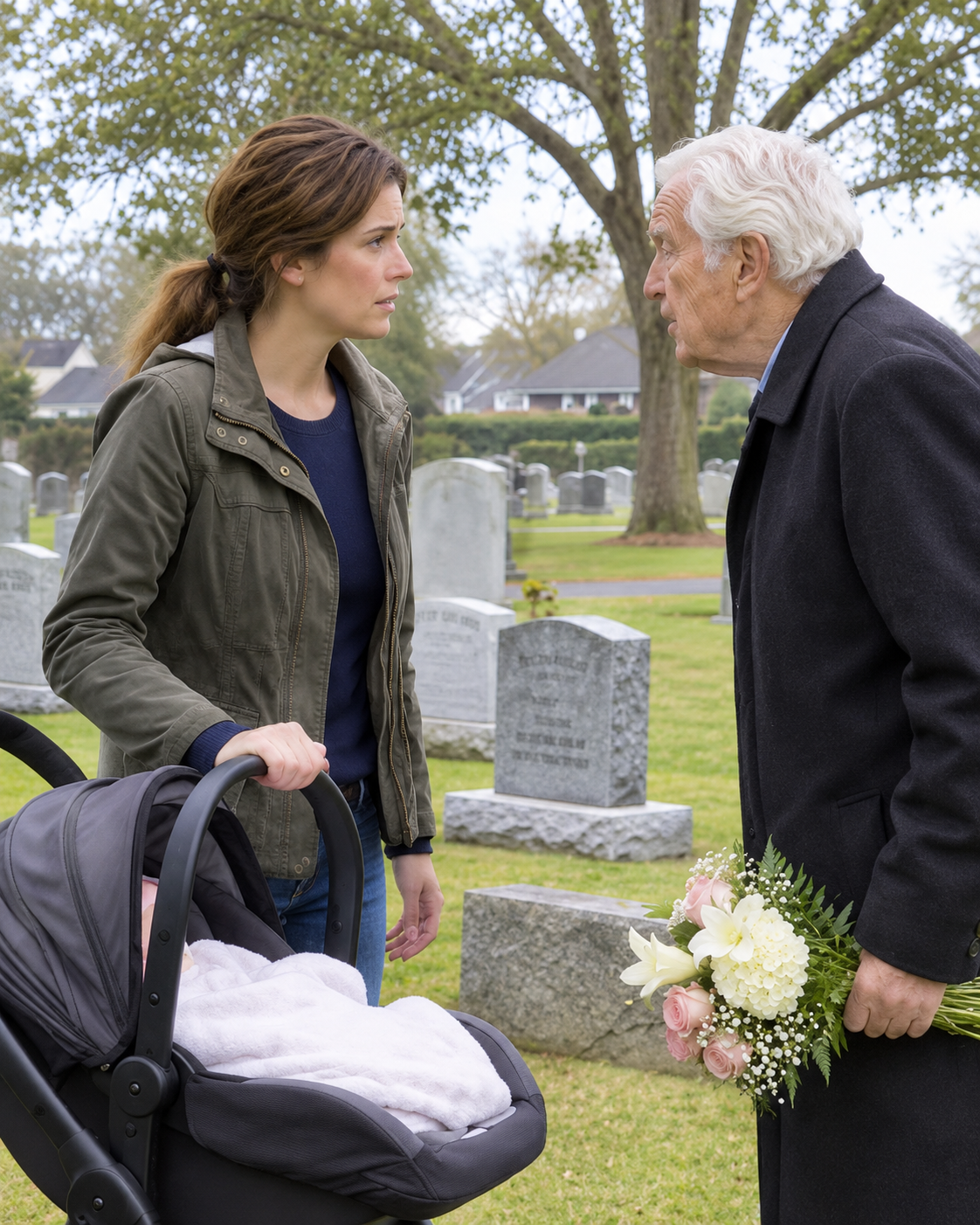
I thought I was standing at my grandmother’s grave to say goodbye, but that afternoon, my grandfather revealed something
The accountant turned the next page, and for a moment, nobody in the room spoke.
I stared at the document, trying to understand the words printed beneath my signature.
IRREVOCABLE POWER OF ATTORNEY AND TRUST MANAGEMENT AUTHORIZATION.
My husband, Daniel, had been appointed the sole manager of my grandmother’s trust.
But that wasn’t the part that frightened me most.
It was the date.
Two years earlier.
I remembered that day perfectly. Daniel had come home with a stack of paperwork, telling me we needed to update our life insurance and prepare some documents before starting a family. I had been exhausted from working double shifts, and I was dealing with morning sickness.
He had placed a pen in my hand and pointed to several yellow sticky notes.
“Just sign where I’ve marked, sweetheart. It’s boring legal stuff, but it’ll protect us and the baby.”
I had trusted him.
I had loved him.
And I had never imagined that the man sleeping beside me every night might be making decisions about money I didn’t even know existed.
“Can you explain exactly what this document allows him to do?” I finally asked.
The attorney, Mr. Collins, folded his hands.
“It gives your husband authority to manage the trust, communicate with financial institutions, approve distributions, and move certain assets within the limits established by the trust agreement.”
“Can he take the money?”
“Not legally for personal use. He’s a fiduciary. He’s required to act in your best interests.”
I looked at the accountant.
“Then where is it?”
He opened another folder.
“That’s what we’ve been trying to determine.”
His name was Robert Hayes. He was in his early fifties, with reading glasses resting low on his nose and the kind of expression people develop after spending years uncovering things other people desperately want hidden.
He turned his laptop toward me.
“Your grandmother established the trust twenty-three years ago. She contributed property, investment accounts, and a substantial amount of cash. After several years of growth, the total value reached approximately $4.8 million.”
I felt the room tilt.
Four point eight million dollars.
I had spent the previous winter calculating whether I could afford a secondhand stroller.
I had delayed taking my daughter to a private pediatric clinic because I was worried about the consultation fee.
I had stood in the grocery store putting items back because the total exceeded my weekly budget.
And somewhere, supposedly, there had been millions of dollars intended for me.
Robert continued.
“Your husband was appointed manager two years ago. Since then, we’ve identified a series of transfers from the trust.”
He clicked his mouse.
A list appeared.
“Some funds went to investment accounts. Others went to a company called Northbridge Holdings. There are also payments to several private creditors.”
I recognized the company name.
Daniel had mentioned Northbridge several times.
He told me it was a small investment company he had started with a former colleague.
He said it was doing well.
He said it was our future.
“How much?” I whispered.
Robert glanced at the screen.
“Approximately $1.9 million cannot currently be accounted for.”
My fingers tightened around the edge of the table.
“Are you saying my husband stole nearly two million dollars?”
Mr. Collins answered carefully.
“We’re saying there are serious irregularities. We need to establish whether the transfers were authorized, whether they benefited you, and whether any documents were falsified.”
I couldn’t breathe properly.
Then Robert opened another file.
“This is something else we found.”
It was an email.
The sender was Daniel.
The recipient was someone named Victor.
The date was six months earlier.
The subject line read: THE BENEFICIARY DOESN’T NEED TO KNOW.
I read the sentence beneath it once.
Then again.
“She doesn’t understand the financial side of things. As long as the household expenses are covered, she won’t ask questions. Keep the distributions under the radar until the property deal closes.”
I felt physically sick.
My husband hadn’t simply forgotten to tell me about the trust.
He had discussed keeping it from me.
“Who is Victor?” I asked.
Robert exchanged a glance with the attorney.
“Victor Lane. He was Daniel’s business partner.”
“Was?”
“He resigned from Northbridge three months ago.”
“Why?”
Robert hesitated.
“Because he contacted us.”
I looked up.
“What?”
“He received a request to sign a document confirming that certain trust withdrawals were legitimate business expenses. He refused. He says Daniel told him the money belonged to an inheritance account he controlled.”
I stared at the email.
The man I had married had been telling other people that my grandmother’s money was his.
And suddenly, another memory returned.
Three months earlier, Daniel had asked me to open a joint bank account.
He said it would make paying for the baby easier.
I had agreed.
He had insisted that he handle the banking because I was busy with work.
At the time, it had seemed thoughtful.
Now it felt like another piece of a carefully constructed plan.
“Can he access my personal bank account?” I asked.
Mr. Collins shook his head.
“Not without authorization. But we should review every account and device he may have access to.”
I swallowed.
“What happens now?”
The attorney leaned forward.
“First, we secure the remaining assets. Then we revoke his authority through the appropriate legal process. We also need to notify the relevant institutions that his management is under investigation.”
“And after that?”
“If the evidence supports it, we pursue recovery and consider civil or criminal action.”
I looked at the photograph of my daughter on my phone.
She was only eleven weeks old.
She had no idea that her parents might soon be on opposite sides of a courtroom.
I didn’t want revenge.
I wanted answers.
More than anything, I wanted to know whether the man who kissed my forehead every morning had ever loved me in the way I thought he did.
“Please,” I said quietly. “Don’t let him know we’re doing this yet.”
Mr. Collins nodded.
“We’ll proceed carefully.”
For the first time in years, I felt that someone was protecting me.
But the most painful part of the story was still waiting.
That evening, Daniel came home carrying a paper bag from my favorite restaurant.
He kissed my cheek, leaned over the stroller, and smiled at our daughter.
“How are my girls?”
I watched him take off his jacket.
He looked exactly like the man I had married.
Same warm eyes.
Same familiar smile.
Same little habit of rubbing the back of his neck when he was tired.
It was almost unbearable.
“How was your day?” he asked.
“Fine.”
“Work?”
I nodded.
He opened the refrigerator and looked inside.
“You need to stop working those early shifts. You’re exhausting yourself. I’ve told you, we can manage.”
I almost laughed.
We can manage.
Those words had never sounded so cruel.
“Daniel?”
“Yeah?”
“Do you remember the paperwork you asked me to sign two years ago?”
He stopped with his hand on the refrigerator door.
Only for a second.
Then he turned around.
“What paperwork?”
“The documents about our finances.”
He smiled.
“Oh, that old stuff? Why?”
“I was thinking about it.”
“There’s nothing to think about, sweetheart. I handled all of that.”
He came closer and touched my shoulder.
“You’re tired. Don’t worry about things that don’t matter.”
I looked directly at him.
“Do you think I worry too much?”
His smile softened.
“Sometimes. That’s why I’m here.”
I wanted to scream.
Instead, I picked up my daughter and carried her into the nursery.
That night, I didn’t sleep.
At 2:17 a.m., Daniel’s phone vibrated on the nightstand.
He was asleep beside me.
The screen lit up.
A message appeared from a contact saved as V.
Did you tell her about the second account?
My heart began pounding.
Before I could see anything else, the screen went dark.
I lay perfectly still.
The next morning, Daniel left early for a meeting.
As soon as the front door closed, I called Mr. Collins.
“There may be another account,” I whispered.
He was silent for a moment.
“Did you see the sender’s name?”
“Just the letter V.”
“Victor?”
“I don’t know.”
“Don’t access his phone or accounts. We can investigate through lawful channels. I’ll speak with Robert.”
I looked around our kitchen.
The little coffee machine Daniel had bought me.
The framed wedding photograph.
The baby bottles drying beside the sink.
Everything suddenly looked like evidence from a life I no longer understood.
Three days later, Robert called.
“There’s been a development.”
I sat down.
“What happened?”
“We found the second account.”
“How much?”
“Approximately $720,000.”
I closed my eyes.
“Where?”
“An offshore investment structure connected to a company registered in Delaware. But there’s something else. Your husband wasn’t the only person involved.”
My stomach tightened.
“Who else?”
Robert paused.
“Your mother.”
I couldn’t speak.
My mother and I had always been close, or at least I thought we were. She had helped plan my wedding, held my hand during labor, and visited every week after the baby was born.
She had even encouraged me to trust Daniel with the finances.
“That’s impossible,” I said.
Robert explained that my mother had signed a witness declaration supporting Daniel’s appointment as trustee manager. She had also received several payments from an account connected to Northbridge.
“How much did she receive?”
“About $85,000.”
I felt something inside me collapse.
My mother had spent years telling me that family was everything.
Apparently, she had a price.
I didn’t confront her immediately.
I needed to understand what had happened before allowing anyone to turn the situation into another family argument.
Mr. Collins arranged a meeting with Victor Lane.
We met in a quiet conference room at his office.
Victor looked uncomfortable.
He was a thin man with tired eyes, and he kept twisting his wedding ring as he spoke.
“I should have told you sooner,” he said.
“Why didn’t you?”
“Because Daniel convinced me you knew.”
I stared at him.
“He told you I knew about the money?”
Victor nodded.
“He said your grandmother had established the trust, but you didn’t want to manage it. He said you had asked him to handle everything.”
“That’s not true.”
“I know that now.”
He explained that Daniel had initially used trust funds to finance legitimate investments. But when one major property project collapsed, he began moving money around to cover the losses.
Instead of admitting the mistake, Daniel borrowed more.
Then he used additional trust assets to repay earlier obligations.
It had become a cycle.
“Why did my mother receive money?” I asked.
Victor looked down.
“Daniel said it was compensation for helping him get the authorization documents signed.”
My throat tightened.
“Did she know?”
“I can’t answer that. But she asked me once whether you would ever discover the trust.”
I felt tears gathering in my eyes.
“Did she say anything else?”
Victor hesitated.
“She said you were too trusting, and that she hoped you’d never have to learn how the money was being handled.”
I stood up.
I couldn’t listen anymore.
Outside, I sat in my car and cried until my chest hurt.
I wasn’t crying about the money.
I was crying because I had spent years believing I was surrounded by people who would never deliberately hurt me.
And now I wasn’t sure who I could trust.
That afternoon, I called my mother.
“Can you come over?”
“Of course, honey. Is the baby okay?”
“She’s fine. I need to talk to you.”
She arrived an hour later carrying a bag of groceries.
She kissed my cheek, placed the groceries on the counter, and immediately started asking about the baby’s feeding schedule.
I let her finish.
Then I asked one question.
“Did you receive money from Daniel?”
Her expression changed.
“What?”
“Money from Northbridge. Eighty-five thousand dollars.”
She looked at me for several seconds.
Then she sat down.
“Oh, sweetheart.”
That was all she said.
I felt my heart sink.
“How could you?”
She began crying.
“Your father had debts. We were going to lose the house. Daniel offered to help.”
“With my grandmother’s money?”
“He said it was money he was managing. He told me you had agreed.”
“Did you ever ask me?”
She lowered her eyes.
“No.”
“Why?”
“Because I knew you would ask too many questions.”
I stood up.
She reached for my hand.
“Please understand. I didn’t know how bad it had become.”
I pulled away.
“Did you know I was working at a bakery while my grandmother’s trust was supposed to be paying for my life?”
My mother began sobbing.
“I thought he was taking care of you.”
“Then why did you let him keep me in the dark?”
She had no answer.
Before she left, she gave me something I hadn’t expected.
An envelope.
“I should have given you this a long time ago,” she said.
Inside was a letter from my grandmother.
The handwriting was unmistakable.
I recognized the elegant loops and the little stars she used to draw above the letter I.
My hands trembled as I unfolded it.
My dearest Claire,
If you’re reading this, I hope you’re old enough to understand that money is not the same thing as security.
I created this trust because I wanted you to have choices.
I watched your mother struggle for years, and I never wanted you to believe that love required you to tolerate hardship or surrender your independence.
Never allow anyone to make you feel guilty for protecting what is yours.
Even someone you love.
Especially someone you love.
You may encounter people who believe your inheritance makes you fortunate. But remember that the greatest gift I can give you is the freedom to decide what kind of life you want.
I love you more than words can express.
Grandma.
I read it three times.
Then I pressed the letter against my chest.
For the first time since her funeral, I felt close to her.
She had known something I hadn’t.
Not necessarily about Daniel, but about the danger of confusing love with blind trust.
The following morning, Mr. Collins filed an emergency petition to suspend Daniel’s authority over the trust.
The court granted temporary relief.
The remaining assets were frozen pending further review, and an independent trustee was appointed.
Daniel discovered what was happening that afternoon.
He called me seventeen times.
I didn’t answer.
Then he sent a message.
What have you done? Call me immediately.
Another followed.
You’re making a terrible mistake.
Then:
Claire, we need to talk before you destroy our family.
I stared at the last message.
Our family.
As if I had been the one hiding millions of dollars.
When he finally came home, he found me sitting at the kitchen table with Mr. Collins.
Daniel stopped in the doorway.
His face went pale.
“What is he doing here?”
I stood.
“We need to talk.”
Daniel looked at the attorney.
“This is a private family matter.”
“No,” I said. “It stopped being private when you used my inheritance without my knowledge.”
His expression hardened.
“Claire, you don’t understand the situation.”
“Then explain it.”
He looked at me, then at the attorney.
For several seconds, he said nothing.
Finally, he pulled out a chair.
“You want the truth?”
“Yes.”
He rubbed his face.
“Northbridge was supposed to make us wealthy. I had a property investment that was guaranteed to return four times the original amount.”
“Was it?”
“No.”
“What happened?”
“The market shifted. The financing fell through. I lost money.”
“How much?”
He stared at the table.
“More than I could afford.”
I waited.
He continued.
“I borrowed against the trust because I knew the investment would recover. I thought I could replace everything before you ever needed to know.”
“How much did you take?”
“Claire, I was trying to protect you.”
“How much?”
He swallowed.
“Almost two million.”
The words hung between us.
I thought I would scream.
Instead, I asked something I had been wondering about since the cemetery.
“Why did you let me work at the bakery?”
His eyes lifted.
“What?”
“Why did you watch me wake up at four every morning? Why did you watch me worry about rent? Why did you let me put groceries back on the shelves?”
He opened his mouth, then closed it.
“I thought it was better if we kept our lifestyle modest until the investments recovered.”
“Modest?”
I felt a strange calm settle over me.
“Daniel, I wasn’t living modestly. I was struggling.”
He looked away.
“I didn’t want you asking questions.”
There it was.
The truth.
Not a misunderstanding.
Not a complicated investment strategy.
He had deliberately kept me poor enough not to notice how wealthy I was supposed to be.
“Did you ever love me?” I asked.
His face changed.
“Of course I did.”
“Then why did you make decisions about my life without allowing me to know what was happening?”
“I was trying to fix things.”
“Without telling me.”
“I was afraid.”
“So was I. Every single day.”
He stood abruptly.
“You’re going to ruin everything over money.”
I looked at him.
“No. You already did that.”
He began pacing.
“Think about our daughter. She needs both parents. We can work this out. I’ll sell the property. I’ll repay the money.”
Mr. Collins finally spoke.
“Any repayment proposal will need to be reviewed through the legal process.”
Daniel ignored him.
“Claire, please. Don’t let lawyers turn this into a war.”
I looked down at my daughter, sleeping in her bassinet.
“I don’t want a war. I want a life where I don’t have to wonder whether the person beside me is lying.”
He stared at me.
Then he said something that revealed just how much he had misunderstood me.
“You wouldn’t even have this life without me.”
For a moment, I couldn’t believe what I had heard.
Then I smiled sadly.
“That’s the difference between us, Daniel. I built a life with you. You thought you owned mine.”
He left that evening.
I didn’t chase him.
The investigation continued for months.
The forensic accountant traced a substantial portion of the missing money to failed property investments, loan repayments, and transfers made to accounts controlled by Daniel.
Some of the assets could be recovered.
Others were gone.
The court eventually determined that Daniel had breached his fiduciary obligations and used his authority for purposes that had not benefited the trust.
He was ordered to repay the recoverable losses, and his actions were referred to the appropriate authorities for further investigation.
The divorce proceedings were difficult.
There were arguments about custody, property, and finances.
There were days when I wanted to give up simply because I was exhausted.
But I had one reason to keep going.
My daughter.
I wanted her to grow up knowing that love should never require her to disappear inside someone else’s decisions.
Daniel eventually agreed to a settlement that included a structured repayment arrangement and supervised financial disclosure.
He also received regular parenting time under a court-approved schedule.
I never told my daughter that her father was a monster.
I didn’t need to.
As she grew older, she would learn who he was through his actions, just as I had.
My mother apologized many times.
At first, I couldn’t forgive her.
The betrayal was too deep.
But over time, I began to understand that forgiveness and trust were not the same thing.
I could forgive her without giving her access to every part of my life.
I could love her while still requiring honesty.
She eventually repaid a portion of the money she had received, selling a vacation property she owned with my father.
The rest became part of a separate civil settlement.
Our relationship never returned to what it had been.
But it slowly became something more honest.
And perhaps that was the only way forward.
Almost a year after the day at the cemetery, I returned to my grandmother’s grave.
This time, I wasn’t carrying the weight of unanswered questions.
My daughter was walking beside me, holding my hand and pointing at the flowers.
She was beginning to say a few words, although most of them sounded like little pieces of songs.
I placed a bouquet of white roses beside my grandmother’s headstone.
“Thank you,” I whispered.
For a long time, I stood there quietly.
Then I noticed an envelope tucked beneath the ribbon of the bouquet.
My name was written on the front.
The handwriting was my grandmother’s.
I looked around, confused.
Inside was a short note.
Claire,
Your grandfather asked me to keep this with him until the right time.
I hope you have found the courage to choose yourself.
There is one thing I want you to remember.
A person who truly loves you will never need you to remain unaware in order to feel powerful.
Live freely.
Love carefully.
And never confuse being needed with being valued.
Grandma.
I began to cry.
Not because I was sad.
Because I finally understood.
The money had never been the real inheritance.
It was the choice it gave me.
The choice to leave a marriage that had become dishonest.
The choice to raise my daughter without pretending everything was fine.
The choice to build a future that didn’t depend on someone else’s promises.
A few weeks later, I made a decision that surprised everyone.
I didn’t buy a mansion.
I didn’t purchase a luxury car.
I didn’t quit working forever.
Instead, I used part of the trust to purchase a small commercial building in the neighborhood where I had worked at the bakery.
The ground floor became a bakery and café.
The upper floor became a community space offering free financial literacy workshops, childcare support, and job training for single parents.
I called it Grandma’s Table.
The first morning we opened, my grandfather stood beside me as I unlocked the front door.
He looked around at the fresh flowers, the warm lights, and the rows of pastries behind the counter.
“Your grandmother would have loved this,” he said.
I smiled.
“I think she would have complained that I didn’t make the cinnamon rolls sweet enough.”
He laughed.
Then he became serious.
“Claire, I’m sorry I didn’t come sooner.”
I turned toward him.
“You came when I needed you.”
He shook his head.
“I should have been there before that.”
I reached for his hand.
“We can’t change the years we lost. But we can decide what happens next.”
He nodded, his eyes shining.
That afternoon, a young woman came into the café carrying a baby in a worn-out carrier.
She ordered a coffee and counted the coins in her palm before looking up.
“Could I get something small for my daughter, too?”
I glanced at the pastry display.
“Of course.”
I placed a warm muffin beside her coffee.
When she tried to pay for it, I shook my head.
“It’s on us.”
She looked embarrassed.
“You don’t have to do that.”
“I know,” I said gently. “That’s why it matters.”
After she left, I watched her walk down the sidewalk, adjusting the blanket around her baby.
I thought about all the mornings I had worked while wondering how I would afford the next week.
I thought about the millions I hadn’t known existed.
I thought about my husband, my mother, my grandmother, and the people who had taught me painful lessons.
And I realized something.
Money can give someone power.
But honesty gives people the ability to choose how that power is used.
I had lost years because I trusted someone who believed love meant control.
I had nearly lost my inheritance, my confidence, and my sense of who I was.
But I hadn’t lost myself.
My daughter would grow up watching a mother who knew how to work hard, how to love deeply, and how to walk away when love became a cage.
And that was the inheritance I wanted her to receive.
Not millions in a bank account.
Not a beautiful house.
Not a life without hardship.
But the knowledge that she never had to surrender her voice to deserve love.
As I turned off the café lights that evening, my phone vibrated.
It was a message from Daniel.
I hope someday you can forgive me.
I read it twice.
Then I put the phone away without responding.
Maybe someday I would.
Maybe I wouldn’t.
But forgiveness was no longer something I needed to give him in order to move forward.
I had spent too much of my life waiting for other people to tell me what was happening.
Now, I knew the truth.
And I was finally making my own decisions.
My grandmother had left me a fortune.
But the greatest thing she had given me was the courage to understand that I was worth protecting.
And that, I realized, was worth more than all the money in the world.