For nearly five years, Rachel Vance had kept her silver star and Distinguished Flying Cross hidden at the bottom of a carry-on bag.
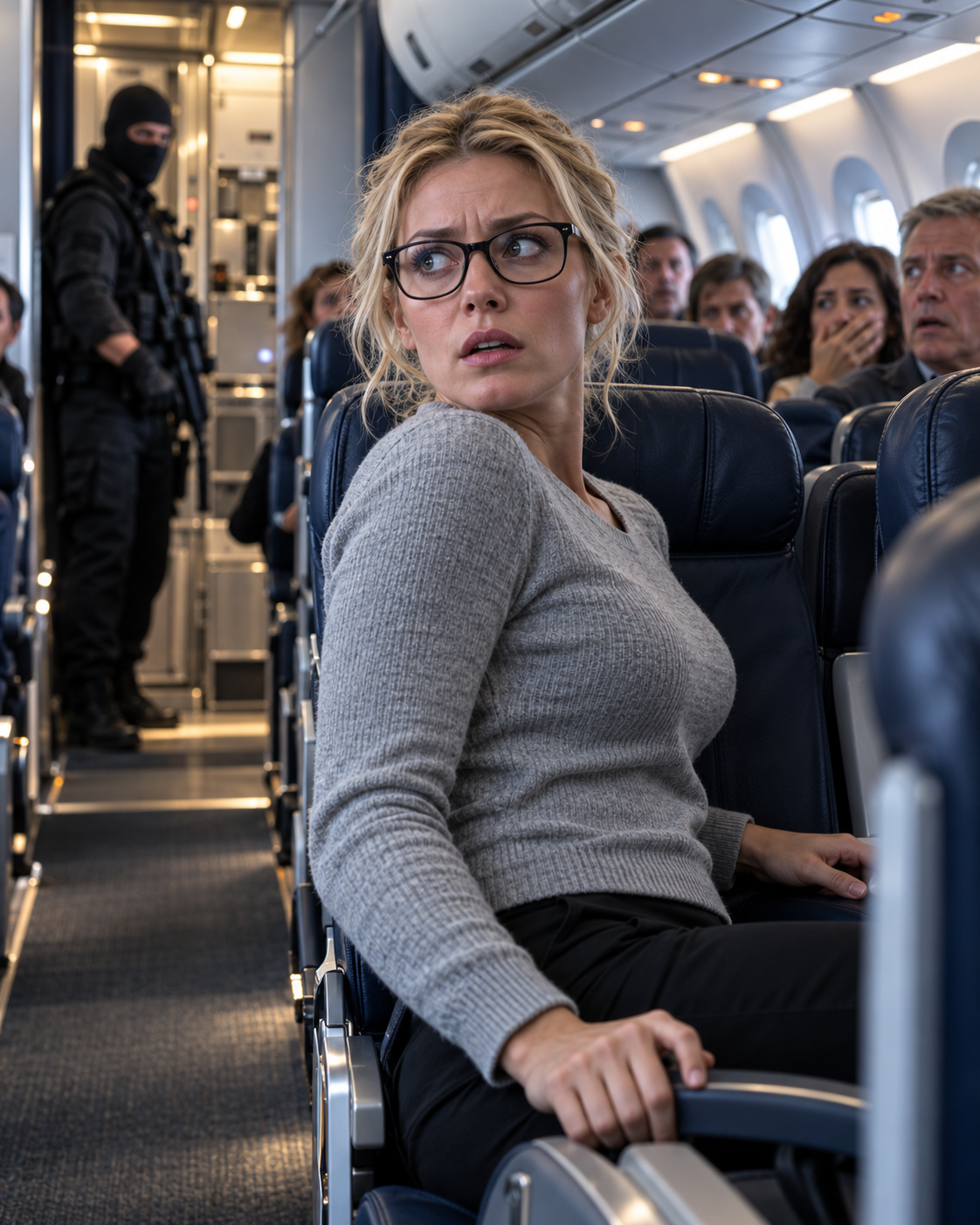
The first sign that Flight 719 might survive was not a change in the aircraft’s movement or a reassuring voice from Denver Center. It was Daniel Bennett’s breathing.
For the first time since Rachel had entered the cockpit, the young first officer managed a full, steady breath without wincing. His injured arm rested against his chest, secured as best Claire could manage with a folded jacket, while his good hand remained on the controls.
“I’m going to need you to tell me exactly what you’re seeing,” he said to Rachel.
She nodded. “You know this aircraft. I know what it feels like when a pilot is running out of options. Between us, we have a chance.”
Daniel looked at her for a moment, then gave a tired, almost disbelieving smile.
“That’s the strangest encouragement I’ve ever received.”
“Then let’s make it the most effective.”
A warning tone interrupted them. Daniel turned toward the instruments, his expression tightening. Rachel watched the display and listened as Denver Center requested another status report.
The aircraft was still unstable, and the cockpit had become a place where every second demanded a decision. Rachel could help organize the information, communicate with air traffic control, and keep Daniel focused, but she knew better than to pretend that military experience made her an expert on every commercial aircraft system.
She had not flown an F-15E in nearly five years. She had never been the captain of a Boeing 737. What she possessed was something more fundamental: the ability to remain useful when fear threatened to consume every available thought.
“Daniel, talk to me,” she said. “What do you need right now?”
“Time.”
“Then we’ll work for time.”
Behind them, a muffled crash came from the passenger cabin.
Claire glanced toward the cockpit door.
Rachel recognized the sound of a situation changing, and she knew that whatever was happening outside could not be ignored for long.
“Stay with him,” she told Claire. “If anything changes with the captain, tell us immediately.”
Claire nodded, but her eyes betrayed her fear.
“Rachel, those men have weapons. If they realize you’re helping us—”
“They already know.”
“Then why are you so calm?”
Rachel almost smiled. “I’m not calm. I’m deciding what deserves my attention.”
For a moment, Claire said nothing. Then she turned back toward Daniel and began helping him with the tasks he could safely delegate.
Rachel picked up the radio again.
“Denver Center, Guardian. We have continued instability and a hostile situation in the cabin. We need priority emergency assistance.”
The controller answered promptly, asking for the aircraft’s current condition and confirming that emergency services would be prepared at the destination.
Rachel listened carefully, repeating the essential information to Daniel so that the flight crew could make informed decisions. She did not promise an easy landing. She did not tell the controller that everything was under control.
The truth was that nothing about Flight 719 was under control yet.
But the people responsible for bringing it home were finally working together.
Then Daniel looked toward the cockpit door.
“Where did you say you were sitting?”
“Row fourteen.”
He swallowed. “Then you know how many people are back there.”
Rachel did not answer immediately.
She knew there were families, elderly passengers, people traveling for business, people returning home, and people who had probably spent the entire flight worrying about nothing more dangerous than a missed connection.
Every one of them had boarded believing that the crew would carry them safely through the sky.
Now, without their permission, they had become part of a nightmare.
“Yes,” she said. “I know.”
“And if we can’t—”
“We are not finishing that sentence.”
Daniel looked at her, startled by the firmness in her voice.
Rachel softened her tone.
“Fear is allowed in this cockpit, Daniel. Giving up is not something we have to decide today.”
For a few seconds, the only sounds were the aircraft’s warning tones and the distant voice of the controller.
Then another voice came through the radio.
“Guardian, be advised that emergency coordination is underway. Continue to report your condition. You are being given priority handling.”
Rachel acknowledged the message.
It was not a rescue. It was not a guarantee. But it meant that someone on the ground knew they were in trouble and was working to help.
She had learned in combat that the distance between hope and disaster could be measured in a single decision.
She had also learned that sometimes the best decision was simply to keep making the next one.
In the passenger cabin, Luke Davis was beginning to lose the confidence that had carried him onto the aircraft.
He had imagined a quick operation, a frightened crew, and a cabin full of people too terrified to resist. He had believed that taking control of a commercial flight would make him powerful.
Instead, the aircraft had lurched unexpectedly, the captain had collapsed, and his carefully rehearsed plan had disintegrated into a series of frightening surprises.
Now he stood near the front of the cabin, listening to the engines and watching passengers struggle to understand what was happening.
One of his accomplices, a broad-shouldered man named Victor, approached him.
“What’s going on up there?”
Luke shook his head. “They’re handling it.”
“Who is?”
“The first officer. That woman.”
Victor’s expression changed.
“You let a passenger into the cockpit?”
“She said she was a pilot.”
“You believed her?”
“I believed the plane was falling out of the sky!”
Victor grabbed Luke’s arm and pulled him closer.
“We came here for a reason. We do not let the crew regain control.”
Luke stared at him.
For the first time, he understood that Victor was not afraid of dying in the aircraft. He was afraid of losing whatever advantage they had gained.
That distinction made Luke feel suddenly sick.
Near row fourteen, Margaret Ellis was watching them.
She had taught English for thirty-seven years, long enough to recognize when a person was choosing between the person they wanted to be and the person they had become.
Luke was frightened. She could see it in the way his eyes moved, in the way he kept looking toward the cockpit, and in the way his fingers tightened around his weapon whenever the aircraft shook.
But fear did not make him harmless.
Margaret leaned toward a young mother sitting beside her.
“Keep your little boy close,” she whispered. “Don’t draw attention to yourself.”
The child, no older than six, clutched a small stuffed fox against his chest. His name was Oliver, and his mother had been trying to keep him quiet since the hijacking began.
Margaret offered him a gentle smile.
“What’s your fox called?”
Oliver whispered something she could barely hear.
“That’s a fine name,” she told him. “He looks like a brave fellow.”
The boy glanced toward the front of the aircraft.
“Are we going to die?”
Margaret felt her throat tighten.
She could have given him an easy lie. She could have promised that everything would be fine.
Instead, she placed her hand over his mother’s trembling fingers.
“There are people working very hard to bring us home,” she said. “And until they do, we’re going to help them by staying together.”
Oliver looked down at his fox and nodded.
Margaret returned her attention to Luke.
She had no weapon, no military training, and no way of knowing whether she would ever see her family again.
But she could observe. She could think. And if the opportunity came to help someone, she could choose not to look away.
At the front of the aircraft, Rachel heard a change in Daniel’s voice.
“Rachel, we’ve got another problem.”
She turned toward him.
He explained what he could see, then listened as Denver Center relayed information and asked for an updated assessment.
Rachel felt the familiar pressure of a mission narrowing around her. Every instinct demanded that she move faster, speak louder, and take charge.
She resisted it.
An aircraft in distress did not need a hero making reckless decisions. It needed trained people communicating clearly, using the information available to them, and refusing to let panic dictate their actions.
“Daniel, you have the aircraft,” she said. “I’ll handle the communication and help you keep track of what the controller is asking.”
He nodded.
That simple agreement mattered more than either of them realized. Rachel was not trying to become the person she had been five years earlier. She was trying to help the person sitting beside her do his job.
A few minutes later, the cockpit door moved.
Claire turned sharply.
Luke stood in the doorway, his weapon held close to his body.
“Step away from the radio,” he ordered.
Rachel raised her hands slowly.
Daniel froze.
For a moment, nobody spoke.
Luke’s gaze shifted from Rachel to the injured first officer, then to the controls and the instruments. He looked like a man who had walked into a room expecting to find a solution and discovered that the consequences of his choices were already waiting for him.
“You said you could help,” he told Rachel.
“I am helping.”
“Then tell me what’s happening.”
“The aircraft is in an emergency, and we are trying to get everyone on the ground safely.”
“Don’t talk to me like I’m stupid.”
“I’m not.”
“Then give me the radio.”
Rachel looked at him steadily.
“If you interfere with the crew, you make this harder for everyone. Including yourself.”
His jaw tightened.
“You think I care what happens to me?”
Rachel studied his face.
“Yes,” she said. “I think you care very much. That’s why you’re standing here instead of letting your accomplice make every decision for you.”
The words struck him harder than she had expected.
Luke glanced back into the cabin, where Victor was watching from a distance.
“Don’t talk about him.”
“Then don’t let him decide who you are.”
For a heartbeat, the weapon in Luke’s hand trembled.
Then Victor appeared behind him.
“Move,” Victor snapped. “We are finished waiting.”
Luke stepped aside, and Victor entered the cockpit.
Rachel immediately understood that the danger had changed. Luke had been unpredictable, but Victor was more deliberate. His eyes moved over the controls with a cold impatience that suggested he had already decided the crew was an obstacle rather than a group of people trying to keep an aircraft in the air.
“Get away from the radio,” Victor ordered.
Daniel’s face had gone pale.
Rachel kept her hands visible.
“You don’t want to do this.”
Victor laughed without humor. “You don’t know what I want.”
“No,” Rachel said. “But I know what happens when frightened people start making decisions they cannot undo.”
Victor raised his weapon.
“Enough.”
Rachel stopped speaking.
She could hear her own heartbeat, the hum of the aircraft, and the faint crackle of the radio. The world seemed to contract around the weapon in Victor’s hand.
Five years earlier, she had stood in a different cockpit beneath a different sky, listening to a fellow pilot’s final transmission.
She remembered the voice breaking through the static.
She remembered the seconds in which she had believed that one more action, one more decision, one more desperate attempt might somehow reverse what had happened.
And she remembered coming home alive when someone else did not.
The guilt had followed her long after the official reports were closed and the medals were presented.
It had convinced her that leaving the Air Force was the only way to stop being haunted by the past.
Now she understood something she had spent years refusing to admit.
She could not undo what had happened to her friend.
But she could still decide what happened next.
“Victor,” she said quietly, “look at Daniel.”
Victor’s eyes flicked toward the first officer.
“Look at his arm. Look at the instruments. You can see what this is costing everyone.”
“I said shut up.”
“Then answer one question. What happens if we don’t get this aircraft down safely?”
Victor’s face hardened.
Rachel did not look away.
“You don’t have to care about me. You don’t have to trust me. But you should understand that the people sitting behind you did not choose this.”
A small voice came from the doorway.
“Please.”
Everyone turned.
Margaret Ellis stood just outside the cockpit, one hand gripping the doorframe. She had followed Victor’s movements forward and now found herself facing the very people she had hoped would never notice her.
Behind her stood Luke.
“Go back to your seat,” Victor snarled.
Margaret swallowed.
“I will,” she said. “But first, I want you to know something.”
Victor raised his weapon toward her.
Rachel’s stomach tightened.
Margaret continued, her voice shaking but audible.
“My husband died six years ago. We spent forty-two years together. I have two daughters, three grandchildren, and a garden that desperately needs weeding. I had plans for next spring.”
She paused, fighting for breath.
“I don’t know what happened in your life to bring you here. Perhaps something terrible did. Perhaps you believe that the world owes you something. But you have no right to decide that all of us must lose everything because you are angry.”
Victor stared at her.
Margaret’s eyes filled with tears.
“I am frightened,” she whispered. “But I am still a person. So is the child sitting behind me. So is the woman standing in front of you.”
For the first time, Victor seemed unable to find an immediate answer.
Luke looked at Margaret, then at Victor.
The decision was coming.
Rachel could feel it in the sudden stillness.
What happened next lasted only seconds, but Rachel would remember every detail.
Victor ordered Luke to remove Margaret from the doorway. Luke moved toward her, then stopped when he noticed Oliver peering over his mother’s shoulder.
The boy’s stuffed fox had fallen to the floor.
Luke looked at the toy, then at the child.
He had expected passengers to scream, to beg, or to become faceless figures in the background of his plan. He had not expected a frightened little boy to remind him of his younger brother, who had once followed him everywhere and believed that Luke could fix anything.
His brother had stopped speaking to him two years earlier.
Luke had told himself it was because the boy was ungrateful.
Standing there, staring at Oliver, he wondered whether his brother had simply become tired of being afraid of him.
“Victor,” Luke said.
“Get her out of here.”
“No.”
The word was quiet, but it changed the room.
Victor turned slowly.
“What did you say?”
“I said no.”
“You think you can walk away now?”
Luke’s grip tightened around his weapon.
“I think we’ve gone too far.”
Victor’s expression turned murderous.
Rachel saw the movement begin, and she knew there was no time for another argument.
She did not rush toward Victor or attempt some impossible maneuver she could not guarantee would work. Instead, she used the only advantage she still possessed: the brief moment in which Victor was focused entirely on Luke.
“Daniel,” she said sharply, “stay with the aircraft.”
Then she moved toward Margaret, pulling the older woman back from the doorway as Victor turned toward them.
The cockpit erupted into confusion.
Luke stepped between Victor and the open doorway, shouting for him to stop. Victor struggled to get past him. Their weapons remained dangerously close, and everyone in the narrow space understood how quickly the situation could become irreversible.
Rachel pushed Margaret behind the cockpit partition and shouted for Claire to get the passengers away from the front.
Claire acted immediately.
The struggle lasted only moments, but it seemed to stretch endlessly. There was a sharp impact against the doorway, a startled cry, and the sound of a weapon striking the floor.
Luke stumbled backward.
Victor lunged toward the fallen weapon.
Before he could reach it, Luke seized his arm and dragged him away from the cockpit entrance.
“Don’t!” Luke shouted. “It’s over!”
Victor fought him.
Rachel heard Daniel call for help, and she turned back toward the controls. The aircraft was still in an emergency, and the argument behind her could not be allowed to pull the crew away from their task.
“Daniel, tell me what you need.”
“Just keep them away from me!”
Rachel helped Claire and Margaret move clear of the doorway while Luke struggled to restrain Victor. She could not know how long he would hold him or whether another accomplice would appear.
She could only make the next useful decision.
Then, from the cabin, came a cry.
One of the remaining hijackers had seen the confrontation and was moving forward.
Claire looked at Rachel in horror.
Rachel felt fear rise through her chest, cold and immediate.
For five years, she had believed that courage was something she had lost when she left the Air Force.
Now she knew that courage was not a permanent possession. It was a choice made again and again, often while every part of the body begged for safety.
“Claire, get Margaret and the passengers back,” she said. “Stay behind the crew.”
She turned toward the approaching man, keeping her hands visible and her voice controlled.
“Stop. The aircraft is in an emergency. If you care whether you leave this plane alive, you will not make this worse.”
The man hesitated.
Behind him, passengers were beginning to rise from their seats, frightened and confused. Someone called for a flight attendant. Oliver began crying again.
Rachel did not know whether her words would be enough.
But then the man glanced toward the cockpit, saw the chaos there, and lowered his weapon slightly.
That was all the opening Claire needed.
She pulled the cockpit door toward her, and Rachel stepped back inside.
A moment later, the door closed.
The sounds from the cabin became muffled.
Daniel was still at the controls.
Rachel returned to the radio.
“Denver Center, Guardian. We have a continuing security emergency. The flight crew is attempting to maintain control of the aircraft. We need immediate emergency response on arrival.”
The controller acknowledged her message.
Then another voice came over the radio, asking whether the aircraft was still capable of continuing toward its destination.
Rachel looked at Daniel.
He was exhausted, injured, and frightened, but his attention remained on the aircraft.
He answered the question himself.
“We can continue with assistance,” he said. “We need to get down.”
Rachel looked at him with renewed respect.
He had not become fearless. He had simply continued doing the work in front of him.
“Denver Center,” she said, “the first officer will provide the aircraft assessment. We are working together to bring this flight in safely.”
The controller confirmed the emergency arrangements and continued coordinating with the crew.
Outside the windows, the clouds began to thin.
For the first time since the hijacking began, the ground appeared beneath them.
Rachel felt her eyes sting.
She had spent years avoiding the sky because she believed it held nothing but memories of failure.
Now the sky was carrying her toward something she had almost forgotten existed.
A future.
The final minutes before landing were the longest of Rachel’s life.
The aircraft remained an emergency, and the cabin was still filled with danger. The captain had not yet recovered sufficiently to resume his duties. Daniel’s arm continued to cause him pain, and every communication required concentration.
Rachel stayed beside him, passing along information, coordinating with the controller, and helping him maintain a clear picture of what was happening.
She never touched a control without Daniel’s agreement. She never claimed certainty when she had none.
The old Rachel might have interpreted that restraint as weakness.
The woman she had become understood that responsibility meant knowing the limits of her own knowledge.
“Rachel,” Daniel said suddenly.
She leaned closer.
“Thank you.”
“Save it for when we’re on the ground.”
He gave a tired laugh.
“Fair enough.”
The runway appeared through the windshield, surrounded by emergency vehicles and flashing lights. Rachel could see fire engines waiting beyond the paved surface, ambulances positioned nearby, and airport personnel preparing for the aircraft’s arrival.
She thought of the people in the cabin.
Margaret, who had spoken despite her fear.
Oliver, who had held on to his stuffed fox.
Claire, who had stayed with an injured pilot when she could have fled.
Even Luke, who had finally chosen to resist the man he had helped bring onto the aircraft.
None of them had been prepared for this day.
None of them had known what courage would demand.
But each had made a choice that mattered.
Daniel concentrated on the landing, following the procedures and guidance available to him. Rachel stayed alert, ready to help where needed, but she understood that this was his moment and his responsibility.
The aircraft descended.
For a terrible instant, Rachel felt the familiar surge of fear that had once accompanied every mission in which the outcome remained uncertain.
Then the wheels met the runway.
The aircraft jolted.
A roar rose from the cabin as the plane slowed, and the emergency vehicles moved into position around it.
Daniel let out a breath that sounded almost like a sob.
Rachel closed her eyes.
They were on the ground.
They were alive.
For several seconds, neither of them spoke.
Then Daniel began to laugh, a disbelieving, exhausted sound that made Rachel laugh with him.
Claire appeared in the doorway, tears running down her face.
“We made it,” she whispered.
Rachel looked at the runway beyond the window.
“Yes,” she said. “We did.”
The aircraft stopped in a secured area of the airport.
Emergency personnel approached, and the passengers were instructed to remain seated while authorities assessed the situation. Armed officers entered the cabin, separating the hijackers and securing the scene.
Victor resisted until officers forced him to the ground. The remaining accomplices were detained. Luke surrendered without further struggle.
As the immediate danger passed, the cabin filled with the sounds of people discovering that they were still alive.
Some cried openly.
Others called family members, their voices breaking as they tried to explain what had happened.
A man embraced his wife so tightly that neither seemed able to let go. An elderly passenger sat motionless, staring at his hands. Oliver clung to his mother while she pressed her face against his hair.
Margaret remained seated for several moments.
Then she looked toward the front of the aircraft.
Rachel emerged from the cockpit with Claire beside her. She looked exhausted, her face pale beneath the harsh cabin lights, but she was standing.
Margaret rose carefully and approached her.
“I told you I was good at noticing things,” she said.
Rachel managed a small smile.
“You did.”
“I noticed you were frightened before any of this happened.”
Rachel’s smile faded.
Margaret reached for her hand.
“You don’t have to tell me why. But I hope you understand something now.”
“What?”
“Being frightened doesn’t mean you’re broken.”
Rachel looked down at their joined hands.
For five years, she had believed that her fear was proof that she no longer belonged to the life she had once lived. She had treated every memory as an accusation and every reminder of her military service as evidence that she had failed to become someone new.
Margaret had reduced that entire burden to a sentence.
Being frightened did not mean she was broken.
Rachel’s eyes filled with tears.
“Thank you,” she whispered.
Margaret squeezed her hand.
“Now go let someone take care of you for a change.”
Rachel laughed softly, though the sound dissolved into a sob.
For the first time in years, she allowed herself to cry in front of another person.
Later, in a quiet room at the airport, Rachel sat with a paper cup of water between her hands.
Medical personnel had examined her and Daniel. Claire had been checked as well, and the passengers were being interviewed and reunited with their families.
The captain was receiving treatment and was expected to recover.
Authorities wanted to speak with Rachel about the events aboard Flight 719. They needed her account of what she had observed, the communications she had helped coordinate, and the confrontation in the cockpit.
She would answer their questions.
But for the moment, she was simply a woman who had helped a group of strangers survive a terrible day.
A uniformed officer approached the room.
“Major Vance?”
Rachel looked up.
“I’m not a major anymore.”
The officer nodded respectfully.
“Understood. I’m here because the first officer asked me to give you this.”
He placed a folded piece of paper on the table.
Rachel opened it.
The handwriting was uneven, clearly written by someone whose arm was hurting.
You didn’t take over my job. You helped me do it. I hope someday I can offer someone the same kind of help.
Below the message, Daniel had written his name.
Rachel read it twice.
She had expected gratitude, perhaps even admiration. She had not expected those words to reach so deeply into the part of herself that still believed she had to carry every burden alone.
She folded the paper carefully and placed it in her pocket.
Then she looked at the officer.
“Did they find the passengers’ belongings?”
“Most of them. Why?”
“There’s a little boy who lost a stuffed fox.”
The officer smiled faintly.
“I’ll make sure someone checks.”
Rachel leaned back in her chair.
Even now, after everything that had happened, her first instinct was to think about the people who needed something.
Perhaps that was not a flaw she needed to correct.
Perhaps it was simply a part of who she was.
The investigation continued for weeks.
Rachel gave her statement, cooperated with investigators, and answered difficult questions about the decisions made during the emergency. The authorities examined the crew’s actions and the circumstances surrounding the hijacking.
She did not emerge from the experience believing that every decision had been perfect. She knew how close the situation had come to ending differently, and she understood that surviving an emergency did not erase the need to learn from it.
The passengers also carried the experience home with them.
Margaret returned to her daughters and grandchildren. For several weeks, she found herself waking at night, remembering the sound of the aircraft and the expression on Victor’s face. But she also remembered the little boy with the stuffed fox and the woman who had stood when everyone else was afraid.
Oliver eventually received a replacement fox from the airline, along with a handwritten note from Margaret telling him that bravery did not mean never being scared.
It meant trying to do the right thing while you were scared.
Daniel’s recovery took longer than he wanted. His arm healed gradually, and he endured months of rehabilitation before returning to flying. During that time, he occasionally sent Rachel updates about his progress.
At first, their messages were brief.
Then they became conversations.
They spoke about aviation, about the responsibility of carrying passengers, and about the strange burden of being expected to remain calm when circumstances were anything but.
Daniel never treated Rachel as a legend.
He treated her as a colleague.
That made their friendship more valuable to her than any public praise.
Luke Davis faced criminal charges for his role in the hijacking. His decision to turn against Victor did not erase what he had done, nor did it undo the terror he had caused.
Rachel understood that.
Compassion was not the same as absolution.
Still, when investigators later asked whether Luke’s actions had made a difference, she answered honestly.
“Yes. He made a difference when he finally chose to stop making things worse.”
She refused to call him a hero.
But she refused to pretend that a person’s final choice was meaningless simply because his earlier choices had been wrong.
That distinction stayed with her long after the case was closed.
Almost six months after Flight 719, Rachel finally unpacked the carry-on bag she had kept in the back of her closet.
She had returned home after the emergency and placed the bag where it had always been, as though nothing had changed. For several weeks, she could barely look at it.
Then, one quiet Saturday morning, she carried it into the living room and set it on the floor.
Inside were the silver star, the Distinguished Flying Cross, a collection of old photographs, and a small notebook filled with handwriting she recognized immediately.
She lifted the first medal.
Its surface caught the light.
She remembered the day it had been presented to her. She remembered the applause, the formal words, and the faces of people who had congratulated her without knowing what it had cost her to stand in front of them.
For years, she had believed that the medals were reminders of a person she could no longer bear to be.
Now she saw something different.
They were records of moments when she had acted with courage, but they were not definitions of her worth.
She was not required to earn the right to live an ordinary life by forgetting her extraordinary one.
Nor did she have to spend the rest of her life proving that she deserved the recognition she had received.
Rachel placed the medals on the table.
Then she opened the notebook.
On the first page was a photograph of her former wingman, Captain Michael Hayes, smiling beside an aircraft.
Rachel had not looked at that photograph in years.
Michael had died during a combat mission, and she had spent a long time blaming herself for coming home when he did not. The details of that mission were complicated, and the grief had never been something a medal could resolve.
She touched the edge of the photograph.
“I still miss you,” she whispered.
The room remained silent.
For years, she had waited for the guilt to disappear before allowing herself to move forward. She had believed that if she could only stop hurting, she might finally be forgiven.
But grief did not operate according to rules.
It could remain even when a person had done everything possible. It could return without warning, years after the world assumed the worst of it had passed.
Rachel realized that she did not need to forget Michael to live.
She did not need to turn his death into a punishment she carried forever.
She could remember him and still be happy.
She could honor him by living with the same care and courage that had once made them friends.
For the first time, the photograph no longer felt like an accusation.
She placed it beside the medals.
Then she made a decision she had postponed for nearly five years.
She called her former squadron.
The reunion took place on a clear autumn afternoon.
Rachel almost turned around twice before entering the building. She had spent so long avoiding the people who knew her former life that the thought of facing them made her palms sweat.
She had imagined their questions.
Why did you leave?
Why did you disappear?
Why didn’t you call?
But when the door opened, the woman who greeted her did not ask any of those things.
She simply stepped forward and embraced her.
For several seconds, Rachel could not speak.
Then she began to cry.
Her former colleagues welcomed her without demanding that she explain every silence or justify every year she had spent away. They talked about old missions, remembered friends, and shared stories that made them laugh until tears ran down their faces.
Michael’s name came up, as Rachel had known it would.
This time, she did not excuse herself from the room.
She listened.
She told them what she remembered and what she had struggled with. She admitted that she had spent years believing she had failed him simply because she had survived.
One of her former squadron mates shook his head.
“Rachel, you know Michael would have hated that.”
She looked at him.
“He would have told you to stop trying to punish yourself for being alive,” the man continued. “He would have told you to do something good with the time you still have.”
Rachel lowered her eyes.
For years, she had imagined that forgiving herself would mean declaring that nothing terrible had happened, or that the loss did not matter.
Now she understood that forgiveness was not denial.
It was accepting that the past could not be changed while refusing to let it destroy every possibility in the present.
She did not leave the reunion healed of every wound.
But she left with something she had not felt in years.
A sense of belonging.
One year after the hijacking, Rachel received an invitation to attend a small gathering honoring the crew and passengers of Liberty Airlines Flight 719.
She hesitated before accepting.
She had never wanted attention. The thought of standing before a room full of strangers while people called her brave made her uncomfortable.
But Daniel had written to her personally.
You helped bring us home. Please come. Not because you owe anyone a speech, but because some of us would like to thank you.
So she went.
The gathering was held in a modest conference room near the airport. There were no grand ceremonies, no military band, and no dramatic display of medals. Just the people whose lives had intersected on a terrible flight, along with a few family members and members of the emergency response team.
Claire hugged Rachel as soon as she arrived.
Daniel was there too, moving his arm with only a slight stiffness. He looked healthier, happier, and more confident than the injured young man Rachel had met in the cockpit.
Margaret approached them with a familiar smile.
“I’ve brought something,” she announced.
She opened her handbag and removed a small, framed photograph.
It showed Oliver standing beside his mother, holding his replacement stuffed fox. Margaret had added a short message beneath the picture.
For the people who helped us get home.
Rachel studied it for a long moment.
“That’s wonderful,” she said.
“His mother tells me he wants to be a pilot when he grows up,” Margaret replied.
Daniel laughed.
“Then we’d better make sure he learns to keep his passengers calm.”
Everyone smiled.
The conversation continued, moving between memories, recovery, and the ordinary details of life that had once seemed impossibly distant.
Eventually, someone asked Rachel to say a few words.
She stood reluctantly.
For a moment, she looked around the room and saw not an audience, but a collection of people who had faced the same frightening uncertainty and found different ways to endure it.
“I spent years believing that courage belonged to the person I used to be,” she began. “I thought it was something I had lost when I left the Air Force. I thought that if I could avoid the past, I could finally become someone who wasn’t afraid.”
She paused.
“But Flight 719 taught me that courage isn’t a personality. It isn’t a uniform, a medal, or a reputation. It’s a decision. Sometimes it’s a pilot asking for help. Sometimes it’s a flight attendant staying beside an injured colleague. Sometimes it’s an older woman speaking up when she’s terrified. And sometimes it’s simply a frightened person deciding not to make another person’s life worse.”
Her gaze moved toward Margaret.
“I also learned that helping someone doesn’t mean you have to solve everything alone. I couldn’t fly that aircraft by myself. Daniel knew the aircraft. Claire knew how to care for the crew and passengers. The people on the ground helped coordinate our emergency. We survived because people did what they could, together.”
She looked down briefly, gathering herself.
“And I learned that surviving something terrible doesn’t mean you must spend the rest of your life punishing yourself for it. We can’t change every loss. We can’t undo every mistake. But we can decide what we do with the lives we still have.”
Her voice trembled.
“For five years, I hid my medals because I thought they belonged to someone I no longer understood. Now I know they don’t tell the whole story. Neither does my worst day, my greatest mistake, or the loss I still carry. None of those things, alone, gets to decide who I am.”
She took a breath.
“I’m grateful that I could help bring you home. But I’m even more grateful that you reminded me I didn’t have to face my own life alone.”
The room remained quiet for a moment.
Then Margaret stood and began to applaud.
Daniel joined her. Claire followed, and soon everyone in the room was on their feet.
Rachel felt tears slide down her cheeks.
This time, she did not try to hide them.
That evening, after the gathering had ended, Rachel walked outside and stood beneath the open sky.
Aircraft lights moved across the distance, small and steady against the darkening horizon.
For years, the sight of an aircraft had filled her with memories she wanted to escape. She had mistaken avoidance for healing, believing that if she could keep the past far enough away, it would eventually stop following her.
But the past had never needed her permission to exist.
It had become part of her, just as every person she had lost, every mistake she had made, and every good thing she had done had become part of her.
She no longer needed to pretend otherwise.
Her phone vibrated.
A message from Daniel appeared on the screen.
Thinking about getting back into the air someday? Not necessarily as a pilot. Just as a passenger.
Rachel smiled.
She looked toward the distant runway and imagined herself boarding an ordinary commercial flight, choosing a window seat, fastening her seat belt, and watching the clouds rise around the wings.
She would probably still feel nervous.
She might remember Flight 719.
She might remember Michael.
She might feel the old guilt return, quiet and persistent, like a voice from a room she had once locked.
But she no longer believed that fear had the final word.
She typed a reply.
Maybe. One flight at a time.
Then she put the phone away and continued walking.
Rachel Vance had once believed that leaving the Air Force meant leaving behind the only part of herself that knew how to be brave. She had spent five years trying to outrun that belief, carrying her medals like secrets and her memories like sentences she could never finish serving.
But courage had found her again in the most ordinary of places: a commercial aircraft, a row of frightened strangers, and a moment when doing nothing would have been easier.
It had not made her invincible.
It had not erased her grief.
It had simply reminded her that she still had a choice.
And that was enough to begin again.
Because courage is not the absence of fear, and healing is not the absence of pain. Sometimes, the bravest thing a person can do is stop running from the past, accept the help of others, and use whatever remains of their strength to make the present a little better.
Rachel had not saved Flight 719 because she was fearless. She had helped save it because, even after everything she had lost, she was still willing to care.