“You’re the fourth woman he’s brought to that ranch,” the stagecoach driver whispered. “The other three left. One wouldn’t even tell us why.”
Molly lowered her eyes to the final sentence of Ruth’s letter.
If Benjamin Wade ever asks you to trust him, remember that a good man can keep a terrible secret, and sometimes the secret is what destroys everyone around him.
A cold sensation crept along Molly’s spine.
She read the sentence again, hoping she had misunderstood.
“What does this mean?” she whispered.
The woman standing across from her, Mrs. Abigail Turner, glanced nervously toward the barn.
“It means you should leave before winter comes.”
“Why winter?”
Abigail’s face lost its color.
“Because that’s when everything happened.”
Molly unfolded the rest of the letter. Ruth’s handwriting was uneven, as though her hand had trembled while writing.
Dear Benjamin,
I know you believe silence protects people. Perhaps it protected Clara. Perhaps it protected Elizabeth. But it will not protect the next woman who comes into this house.
You cannot keep paying for a crime you did not commit. And you cannot expect a woman to love you while refusing to tell her what she is standing in the middle of.
One day, the truth will come looking for you.
When it does, I pray you finally stop running.
Molly looked up.
“What crime?”
Abigail pressed her lips together.
“Seven years ago, Benjamin’s younger brother died in a fire. The sheriff called it an accident. Some people believed Benjamin started it.”
“Why would he?”
“Because his brother was about to inherit half the ranch.”
Molly felt her stomach tighten.
Outside, Benjamin emerged from the barn carrying a broken harness. He paused when he saw Abigail’s horse.
For one brief moment, his face revealed something Molly had never seen before.
Fear.
Not fear of Abigail.
Fear of what she might have told Molly.
Abigail took the letter from Molly’s trembling fingers.
“I’ve done what Ruth asked. What happens next is your decision.”
She hurried outside, mounted her horse, and rode away without speaking to Benjamin.
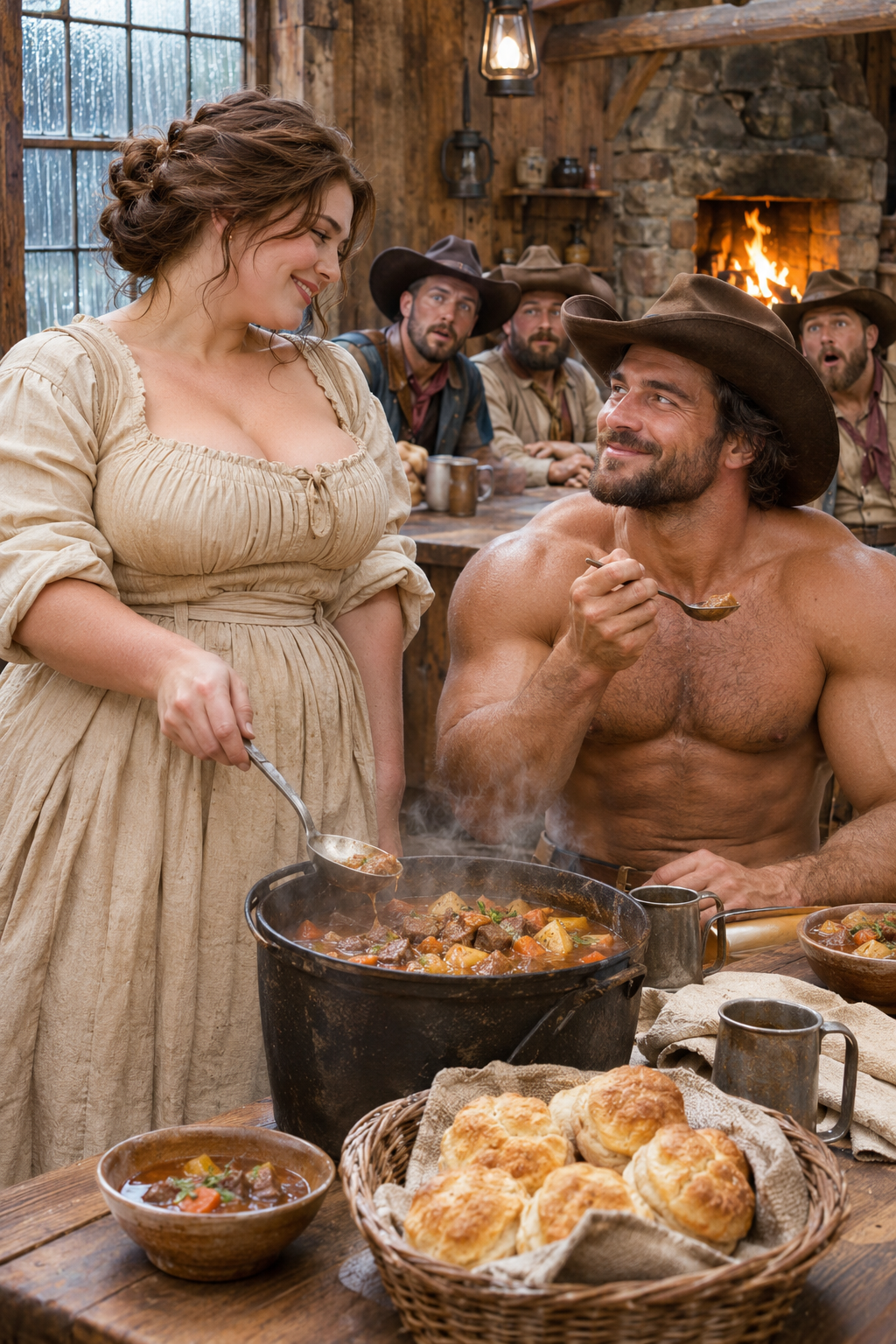
That evening, supper passed in near silence.
Benjamin noticed Molly barely touched her stew.
“Something troubling you?”
She placed her spoon down.
“Did you kill your brother?”
The question seemed to strike him harder than a fist.
For several seconds, he did not move.
Then he slowly pushed back his chair.
“No.”
“Did you start the fire?”
“No.”
“Then why does everyone believe you did?”
Benjamin stared at the lamp between them.
“Because I let them.”
Molly waited.
He rubbed a hand across his face.
“My brother Samuel was twenty-three. Wild, foolish, always chasing trouble. One night, the old barn burned. They found him inside.”
His voice roughened.
“The sheriff discovered a broken lantern and an empty whiskey bottle. Samuel had been drinking. Everyone assumed he knocked the lantern over.”
“But you said people blamed you.”
Benjamin looked toward the dark window.
“Samuel and I argued that afternoon. Half the town heard us. He wanted to sell his share of the land to a cattle company. I refused.”
“That doesn’t make you a murderer.”
“No. But the night he died, someone saw me leaving the barn.”
“Who?”
Benjamin’s jaw tightened.
“Deputy Sheriff Calvin Mercer.”
Molly recognized the name. Mercer had been among the men watching her stagecoach arrive.
“Why didn’t you explain?”
“Because I couldn’t tell them why I’d been there.”
Molly leaned forward.
“Why?”
Benjamin’s expression closed.
“Some things aren’t mine to tell.”
The familiar frustration rose in her chest.
“You expect me to marry you while hiding something this important?”
“No,” he answered quietly. “I expect you to decide whether you want to stay.”
He stood and carried his untouched plate to the sink.
Molly watched him leave.
For the first time, his kindness felt less like an answer and more like another mystery.
Three days later, she found the first clue.
It happened while cleaning the upstairs linen cupboard. A loose floorboard shifted beneath her foot, revealing a narrow space between the beams.
Inside lay a small tin box.
Molly hesitated before lifting it out.
The box contained several yellowed receipts, a silver pocket watch, and a photograph of two young men standing beside a horse.
One was Benjamin, younger and smiling.
The other must have been Samuel.
Behind the photograph was a folded document bearing the seal of the Wyoming Territorial Land Office.
Molly opened it.
Her eyes widened.
The document showed that Samuel had transferred his half of the ranch to Benjamin three weeks before his death.
Not after.
Before.
If Benjamin already owned the entire property, why would he have murdered his brother for an inheritance?
Then she noticed something else.
The transfer had been witnessed by Calvin Mercer.
A sound behind her made her turn.
Benjamin stood in the doorway.
For a moment, neither spoke.
Then his eyes dropped to the tin box.
“Where did you find that?”
“Under the floor.”
He crossed the room and took the document, his hands shaking.
“I thought I’d lost this.”
“Mercer witnessed the transfer,” Molly said. “He knew Samuel had already given you the land.”
Benjamin closed his eyes.
“Yes.”
“Then why did he accuse you?”
He did not answer.
Molly stepped closer.
“Benjamin, whatever you’re protecting, it’s already destroying your life.”
His shoulders sagged.
“Samuel didn’t transfer the land because he wanted to.”
“Then why?”
“Because Mercer was blackmailing him.”
The room seemed to grow smaller.
Benjamin sat heavily on the edge of the bed.
“Samuel had been seeing Mercer’s sister, Margaret. She was married to a wealthy merchant in Cheyenne. When her husband discovered the affair, he threatened to ruin Samuel.”
Molly listened without interrupting.
“Mercer offered to make the trouble disappear. All Samuel had to do was sign away his land. Mercer planned to buy it from me afterward for almost nothing.”
“But you refused.”
“I refused.”
“And Samuel died.”
Benjamin nodded.
“That night, Samuel told me Mercer had threatened Margaret. He said Mercer would hurt her if either of us went to the sheriff.”
“Was Margaret there?”
“She came to the barn. She begged Samuel to run away with her.”
Benjamin swallowed.
“I left them together. Twenty minutes later, the barn was burning.”
Molly felt the pieces shifting into place.
“Did Margaret survive?”
“Yes.”
“Where is she?”
Benjamin’s eyes filled with an old, exhausted sorrow.
“She’s Ruth.”
Molly stepped backward.
“Ruth?”
“Margaret Ruth Mercer. She began using her middle name after leaving Cheyenne.”
“The third woman you intended to marry?”
Benjamin nodded.
“But you were never going to marry her.”
“No.”
“Then why bring her here?”
“To protect her.”
Molly stared at him.
“She came back six years after the fire. Her husband had died, and Mercer was threatening her again. I offered her shelter. We let the town believe she was another prospective bride.”
“And Clara? Elizabeth?”
Benjamin looked away.
“Clara was a schoolteacher who witnessed Mercer meeting Samuel before the fire. Elizabeth was a nurse who treated Margaret for burns that night. Both came here because Mercer was looking for them.”
Molly’s heart pounded.
“All three women were witnesses?”
“Yes.”
“And they left because they were frightened?”
“Because Mercer found out where they were.”
Benjamin stood.
“I helped each of them leave Wyoming. I thought distance would keep them safe.”
“Why invite me here, then?”
His expression changed.
“Because I was tired of living alone. Because I wanted something real. And because I believed Mercer had finally forgotten.”
Molly looked at the photograph in her hands.
“Has he?”
Benjamin did not answer.
A sharp crack split the evening air.
Both of them froze.
Another crack followed.
Gunshots.
From the direction of the barn.
Benjamin rushed to the window.
Orange flames were already climbing the wooden walls.
“Stay inside!” he shouted.
But Molly was running behind him before he reached the stairs.
Outside, the night glowed red.
The horses screamed in their stalls.
Benjamin seized a bucket, then threw it aside when he saw how quickly the fire was spreading.
“The horses!”
He plunged into the smoke.
Molly grabbed a wet blanket from the trough and followed.
Inside, heat pressed against her face. Sparks fell from the rafters like fiery rain.
Benjamin kicked open the first stall.
Two horses bolted toward the yard.
Molly freed a frightened mare, coughing as smoke filled her lungs.
Then she heard a terrible sound.
A beam cracking overhead.
“Benjamin!”
He turned just as a burning timber fell between them.
Molly stumbled backward.
Through the flames, she saw him trying to reach her.
“Get out!” he roared.
She ran toward the side door, but the latch would not move.
Smoke thickened.
Her knees weakened.
Then a heavy shoulder struck the door from outside.
Wood splintered.
Benjamin pulled her into the cold night, wrapping his arms around her as the barn roof collapsed behind them.
They fell onto the grass.
For a long moment, Molly could only breathe.
Then she noticed the blood on Benjamin’s sleeve.
“You’re hurt.”
“Just a scratch.”
It was not a scratch.
A bullet had torn through the flesh of his upper arm.
Molly stared at it.
“Someone shot you.”
Benjamin looked toward the distant ridge.
“Mercer.”
“How can you know?”
“Because he warned me seven years ago that if I ever spoke, he’d burn everything I loved.”
His eyes met hers.
“And tonight, he saw you.”
By dawn, the barn was ashes.
The horses had survived, but half the winter hay was gone.
Molly cleaned Benjamin’s wound while he sat at the kitchen table.
He winced as she tightened the bandage.
“You should leave,” he said.
She continued working.
“There’s money in the pouch. Take the wagon into town. Abigail will help you.”
“Stop.”
“Molly—”
“I said stop.”
He fell silent.
She set the bloody cloth aside.
“You have spent seven years letting a wicked man decide how you live. You let him frighten away three women. You let him turn your neighbors against you. And now you’re asking me to help him do it again.”
Benjamin stared at her.
“I won’t risk your life.”
“Then stop protecting me with silence.”
She knelt beside his chair.
“I came here because your letters sounded like they were written by a decent man. I stayed because you treated me with more kindness than anyone ever has.”
Her voice trembled.
“But kindness without trust becomes another kind of prison.”
Benjamin looked at her for a long time.
Then he reached into his pocket and placed a small brass key on the table.
“There’s a locked drawer in my desk.”
“What is inside?”
“Everything Samuel left me. Everything I’ve been too afraid to use.”
Molly picked up the key.
“And what are we going to do with it?”
For the first time, Benjamin’s expression held something stronger than fear.
“We’re going to finish what Samuel started.”
Inside the drawer, Molly found a leather-bound journal.
Samuel’s handwriting filled its pages.
He had recorded Mercer’s threats, payments, and secret meetings with men representing the Western Range Cattle Company.
The final entry was dated the day of the fire.
Mercer says if I don’t convince Ben to sell, he’ll make sure Margaret suffers. I believe he means to kill her. Tomorrow I will take everything to Judge Whitcomb.
Molly turned the page.
There was nothing more.
Beneath the journal lay an unsigned statement written by Margaret Ruth Mercer.
It described Mercer entering the barn carrying a lantern, arguing with Samuel, and striking him with a pistol.
Margaret had hidden behind a stack of hay.
She had seen Mercer throw the lantern before fleeing.
But the statement ended abruptly.
Benjamin explained why.
“She was terrified. Mercer threatened her children. She couldn’t bring herself to sign.”
“Children?”
“Two daughters. They’re living with relatives in Nebraska.”
Molly looked at the journal.
“Then we need Ruth.”
“Mercer will be watching the roads.”
“Then we don’t use the roads he expects.”
That afternoon, Molly rode to Red Rock alone.
She entered Abigail Turner’s general store shortly before closing.
Abigail looked startled.
“Where’s Benjamin?”
“At home.”
“Is everything all right?”
“The barn burned last night.”
Abigail gripped the counter.
“Oh, Lord.”
Molly placed Samuel’s photograph before her.
“Ruth told you more than you admitted.”
Abigail’s face crumpled.
“She made me promise not to tell.”
“She also wrote that the truth would come looking for Benjamin. Well, it’s here.”
For several moments, Abigail said nothing.
Then she reached beneath the counter and produced a sealed envelope.
“Ruth sent this two months ago. She said I should open it if Mercer ever threatened Benjamin again.”
Inside was an address in Laramie.
And a message.
If he comes for the ranch, send word. I am ready to testify.
Molly exhaled.
“Then we send word tonight.”
Abigail shook her head.
“The telegraph operator is Mercer’s cousin.”
“Is there anyone in town he doesn’t control?”
Abigail considered.
“The new schoolmaster. Thomas Bell. He arrived last spring. Mercer doesn’t like him.”
“Why?”
“Because he asks questions.”
An hour later, Molly stood inside the little schoolhouse explaining everything to a thin young man with spectacles.
Thomas listened, his expression growing increasingly grave.
“My brother works for the railroad,” he said. “I can send a message from the station at Dry Creek.”
“Can you do it without Mercer knowing?”
“I can try.”
Molly handed him Ruth’s address.
“Tell her Samuel’s journal has been found. Tell her Benjamin needs her.”
Thomas nodded.
“And what will you do?”
Molly looked toward the darkening street.
“Make Mercer believe we’re leaving.”
The following morning, a wagon rolled away from the Wade ranch.
Two trunks sat beneath a canvas covering.
Molly wore her traveling dress.
Benjamin drove beside her, his injured arm resting in a sling.
They had gone less than three miles when three riders appeared ahead.
Calvin Mercer sat in the middle.
He smiled beneath his dark mustache.
“Morning, Wade.”
Benjamin pulled the horses to a stop.
“Deputy.”
“Heading somewhere?”
“Cheyenne.”
Mercer’s eyes moved to Molly.
“Changed your mind about marriage, miss?”
Molly lowered her gaze.
“Yes.”
Mercer chuckled.
“Can’t say I blame you.”
He dismounted and approached the wagon.
“Mind if I look in those trunks?”
Benjamin’s jaw tightened.
“Do you have a warrant?”
Mercer’s smile vanished.
“Careful, Wade.”
Molly placed a hand on Benjamin’s knee.
“It’s all right. We have nothing to hide.”
Mercer opened the first trunk.
Dresses.
Blankets.
A Bible.
He opened the second.
More clothing.
Then he lifted a folded quilt.
Beneath it lay the leather journal.
Molly’s breath caught.
Mercer picked it up.
“Well, now. What’s this?”
Benjamin said nothing.
Mercer opened the book and scanned the first page.
His expression darkened.
“Where did you get this?”
“It belonged to Samuel,” Benjamin replied.
Mercer slowly closed it.
“Funny thing about dead men. They sometimes leave behind stories that ought to stay buried.”
He slipped the journal into his coat.
Molly forced herself to speak.
“That belongs to Benjamin.”
Mercer looked at her.
“Not anymore.”
He drew his revolver.
“Both of you, down from the wagon.”
Benjamin moved first, stepping carefully onto the road.
Molly followed.
Mercer’s two companions dismounted.
One seized Benjamin’s good arm.
The other grabbed Molly.
“Don’t touch her,” Benjamin growled.
Mercer pressed the gun against Benjamin’s chest.
“You should have sold that ranch when I offered.”
“You murdered my brother.”
Mercer’s eyes narrowed.
“Your brother was a fool.”
“Did he beg?”
The question startled Molly.
Mercer’s face twisted.
“He begged me not to hurt Margaret.”
Benjamin’s fists clenched.
“And you burned him alive.”
Mercer laughed coldly.
“He was already dying when I dropped that lantern.”
Molly felt sick.
But she kept her eyes fixed on the ridge behind Mercer.
There, barely visible among the pines, something flashed.
Sunlight on a rifle barrel.
Mercer continued.
“Now I’m going to finish what I should have finished seven years ago.”
He raised his revolver.
A gunshot thundered.
Mercer’s weapon flew from his hand.
He screamed and staggered backward.
“Nobody move!”
Thomas Bell emerged from the trees with a rifle.
Beside him rode Sheriff Daniel Harlan of Dry Creek and four armed railroad guards.
Mercer’s companions reached for their pistols.
“Try it,” Harlan warned, “and you’ll be buried before sundown.”
Both men raised their hands.
Mercer clutched his bleeding wrist.
“This is an outrage! I’m a lawman!”
Harlan dismounted.
“Then you should know better than to confess to murder in front of witnesses.”
Mercer’s face drained of color.
His eyes darted toward Molly.
She looked directly at him.
“The trunks were bait, Deputy.”
Benjamin stared at her.
She gave him a faint smile.
“The real evidence left town yesterday.”
Thomas stepped forward.
“Samuel’s journal was copied before we put it in the wagon. The original is already with Judge Whitcomb.”
Mercer lunged toward Molly.
Benjamin struck him with his good fist.
The deputy collapsed into the dust.
Harlan snapped iron cuffs around his wrists.
For seven years, Benjamin Wade had carried the weight of a murder he had never committed.
Now, standing on a lonely Wyoming road, he watched the man responsible being dragged toward a prison wagon.
Yet there was no triumph on his face.
Only exhaustion.
Molly reached for his hand.
This time, he did not hesitate to take it.
The trial began six weeks later.
By then, winter had settled over Wyoming.
Snow covered the streets of Red Rock, and people traveled from neighboring towns to crowd into the courthouse.
Mercer pleaded innocent.
His lawyer called Samuel’s journal a collection of lies.
He accused Benjamin of inventing the story to protect his ranch.
Then Ruth entered the courtroom.
She wore a plain gray dress and carried herself with quiet determination.
Molly recognized the faded blue ribbon pinned near her collar.
The same ribbon that had hung behind Benjamin’s pantry door.
Ruth took the witness stand.
Her voice trembled at first.
Then she looked at Mercer.
“I saw my brother strike Samuel Wade. I saw him spill oil across the hay. I saw him throw the lantern.”
Mercer’s lawyer rose.
“Mrs. Mercer, why did you remain silent for seven years?”
Tears filled her eyes.
“Because he threatened my daughters.”
“And why should this court believe you now?”
Ruth looked toward Benjamin.
“Because a man who never harmed me has suffered for my fear long enough.”
The courtroom fell silent.
Then the prosecution called another witness.
Clara.
She testified that Mercer had threatened Samuel outside the bank.
Elizabeth followed, describing the burns on Ruth’s hands and the terror in her eyes on the night of the fire.
Three women whom Red Rock had dismissed as Benjamin Wade’s failed brides stood together and told the truth.
When the verdict came, Mercer was found guilty of murder, arson, and conspiracy to obtain property through threats.
He received a life sentence.
The courtroom erupted.
But Benjamin remained seated.
Molly touched his shoulder.
“It’s over.”
He shook his head slowly.
“Samuel is still gone.”
“I know.”
“I spent seven years believing that keeping quiet would protect everyone.”
Molly sat beside him.
“And now?”
He looked at Ruth, Clara, and Elizabeth embracing near the witness stand.
“Now I know silence only protected the man who hurt us.”
Outside the courthouse, the townspeople gathered around Benjamin.
Some apologized.
Others avoided his eyes.
The stagecoach driver removed his hat.
“Mr. Wade, I reckon we owe you an explanation.”
Benjamin studied him.
“No,” he said. “You owe the next stranger a fair chance.”
The driver lowered his head.
Molly smiled.
That was the Benjamin she had come to know.
Not a man who demanded respect.
A man who gave it, even when others failed to return it.
Spring arrived slowly that year.
The snow melted from the pastures, and wildflowers appeared along the creek.
Benjamin rebuilt the barn with help from neighbors who had once crossed the street to avoid him.
Thomas Bell brought lumber.
Abigail Turner sent fresh bread.
Clara returned to teaching, Elizabeth accepted a position at the new county hospital, and Ruth moved with her daughters to a small house outside Laramie.
One warm evening, Molly stood on the porch watching Benjamin repair the fence.
He had rolled up his sleeves, and the fading scar on his arm caught the golden sunlight.
She carried two cups of coffee into the yard.
“You’re working too hard.”
“Fence won’t mend itself.”
“Neither will your heart.”
He looked at her.
She handed him a cup.
“Benjamin, there’s something we haven’t discussed.”
His expression grew serious.
“The marriage.”
“Yes.”
He set down his hammer.
“I won’t hold you to any promise. You’ve done more for me than I ever deserved.”
Molly sighed.
“You really are the most stubborn man I’ve ever met.”
He looked confused.
“Why?”
“Because you keep giving me permission to leave when I’ve spent months showing you I want to stay.”
Benjamin stared at her.
The wind moved gently through the tall grass.
“Molly, I don’t have much to offer.”
She glanced toward the house.
A warm kitchen.
Fresh curtains.
A garden beginning to bloom.
A home that no longer felt haunted.
“You have a ranch,” she said.
“Yes.”
“Several stubborn horses.”
“That too.”
“A terrible habit of leaving muddy boots by the door.”
He almost smiled.
“And?”
She stepped closer.
“And the kindest heart I’ve ever known.”
Benjamin’s eyes glistened.
“I love you,” he whispered.
The words seemed to surprise him as much as they surprised her.
Molly smiled through her tears.
“I know.”
He swallowed.
“Do you think you could love a man like me?”
She took his rough hand between hers.
“Benjamin Wade, I’ve been loving you for quite some time.”
He pulled her gently into his arms.
For the first time, the enormous rancher who had always seemed strong enough to carry the whole world allowed himself to be held.
They married beneath the cottonwood trees in June.
There was no grand ceremony.
Just a preacher, a handful of friends, and the wide Wyoming sky.
Ruth attended with her daughters.
Clara brought flowers.
Elizabeth baked the wedding cake.
Abigail cried so hard that Thomas offered her his handkerchief twice.
And when the preacher asked whether Benjamin would take Molly as his wife, Benjamin looked into her eyes.
“With all that I am,” he answered.
Years later, Molly would remember that moment more clearly than anything else.
Not because of the wedding dress.
Not because of the flowers.
But because Benjamin’s hands were trembling.
The man who had faced fire, bullets, and seven years of suspicion was frightened by the happiness he had finally allowed himself to accept.
Their life was not perfect.
There were harsh winters, failed crops, sick cattle, and arguments over things neither would remember the next morning.
But they learned to speak when something hurt.
They learned to listen when silence seemed easier.
And they never allowed fear to make decisions that belonged to love.
Three years after their wedding, a little girl with Benjamin’s dark eyes and Molly’s stubborn chin ran through the kitchen.
Her name was Sarah Ruth Wade.
One afternoon, Sarah discovered four wooden hooks behind the pantry door.
Three were empty.
On the fourth hung a faded blue ribbon.
Beneath them were three names scratched into the wood.
“Papa,” she asked, “who are Clara, Elizabeth, and Ruth?”
Benjamin knelt beside her.
“Three very brave women.”
“Why are their names here?”
He looked toward Molly, who stood in the doorway.
“Because they helped teach your papa something important.”
“What?”
Benjamin lifted his daughter into his arms.
“That being strong doesn’t mean carrying every burden alone.”
Sarah considered this.
“Then why is Mama’s name missing?”
Molly laughed softly.
Benjamin smiled.
“Because your mama never left.”
That evening, after Sarah had fallen asleep, Molly found Benjamin standing beside the pantry.
He held a small carving knife.
Beneath the other names, he had carefully scratched one more.
Molly.
Beside it, he carved two words.
She stayed.
Molly slipped her arms around his waist.
“You know,” she whispered, “I almost left when Abigail gave me Ruth’s letter.”
Benjamin turned.
“Why didn’t you?”
She thought for a moment.
“Because I remembered the day you put that pouch of money on the table. You gave me the freedom to walk away before you ever asked me to stay.”
He kissed her forehead.
“And you gave me the courage to stop hiding.”
Outside, the wind moved across the fields, carrying the sweet smell of summer grass.
The house was filled with laughter, warmth, and the ordinary sounds of a family at peace.
Once, four women had come to that ranch, and the town had whispered that something terrible must be hidden there.
They had been right about the secret.
But wrong about the man.
And in the end, Molly discovered that love was not about finding someone without scars, or someone whose past held no darkness.
It was about finding someone willing to face the truth beside you, even when the truth was painful.
Because the strongest love is not the kind that promises life will never hurt.
It is the kind that gives two people the courage to stop being afraid of living.
And sometimes, the most beautiful thing a person can say is not I will never leave you.
It is You are free to go, and I will spend every day giving you a reason to want to stay.
But the story of Benjamin and Molly Wade did not end with the names carved into the pantry door.
For the next twenty years, their ranch became something neither of them could have imagined when Molly first stepped down from that stagecoach.
It became a refuge.
Women escaping cruel husbands found temporary shelter there. Orphaned children stayed until loving families could be found. Travelers caught in winter storms discovered that the Wade family never turned away someone in need.
Above the front door, Benjamin hung a wooden sign Molly had painted herself.
No one who enters this house shall be made to feel unwanted.
Benjamin grew older, his dark hair turning silver at the temples. His shoulders remained broad, but the years gradually slowed his steps.
Molly noticed the changes before he did.
He took longer to rise on cold mornings. Sometimes his injured arm ached when storms approached. And occasionally, she caught him standing beside the rebuilt barn, staring toward the place where his brother had died.
One autumn evening, she joined him there.
“Thinking about Samuel?”
Benjamin nodded.
“I used to wonder what my life would have been if he hadn’t died.”
“And now?”
He looked toward the house, where their daughter Sarah was laughing with her younger brothers.
“Now I wonder whether he’d be proud of what we built.”
Molly slipped her hand into his.
“He would be.”
Benjamin smiled faintly.
“You sound mighty certain.”
“I married his brother. I know what kind of man he was trying to protect.”
The years continued to pass.
Sarah grew into a determined young woman who inherited her mother’s courage and her father’s quiet kindness.
When she turned twenty-one, she announced that she intended to marry a schoolteacher named Daniel Foster.
Benjamin studied the young man across the supper table.
“Can you provide for my daughter?”
Daniel straightened nervously.
“I’ll do everything I can, sir.”
“Will you respect her decisions?”
“Yes, sir.”
“And if she disagrees with you?”
Daniel hesitated.
Then he looked at Sarah.
“I suppose I’d better listen carefully. She’s usually right.”
Molly burst into laughter.
Benjamin’s stern expression softened.
“Good answer.”
After the wedding, Molly found Benjamin alone on the porch.
“You’re going to miss her,” she said.
“Every day.”
“Then why did you smile when she rode away?”
Benjamin watched the distant road.
“Because she wasn’t running from something. She was riding toward the life she chose.”
Molly rested her head against his shoulder.
That was when she understood how completely the frightened, lonely man she had first met had changed.
He no longer confused love with holding on.
He understood that love sometimes meant opening the gate.
One winter, when Benjamin was seventy-two, a fierce snowstorm swept across the Wyoming plains.
He fell ill shortly afterward.
The doctor came twice, then quietly told Molly that Benjamin’s heart was weakening.
For three nights, she remained beside his bed.
On the fourth morning, Benjamin opened his eyes and found her holding his hand.
“Molly?”
“I’m here.”
He smiled.
“You always are.”
She brushed the silver hair from his forehead.
“Don’t you dare start saying goodbye.”
He chuckled weakly.
“Still giving orders.”
“Someone has to.”
He looked toward the window, where the first light of dawn touched the snow.
“Do you remember the day you arrived?”
“Of course.”
“I was so afraid you’d take one look at me and climb back into that stagecoach.”
Molly smiled through her tears.
“I nearly did.”
“I know.”
He squeezed her hand.
“But you stayed.”
She leaned forward and kissed him.
“And I’d choose you again, Benjamin Wade. Every single time.”
His eyes filled with tears.
“Then I reckon I’ve been the luckiest man in Wyoming.”
Benjamin passed away peacefully that morning, with Molly beside him and his family gathered close.
The entire town attended his funeral.
Men who had once feared him carried his coffin.
Women who had found shelter beneath his roof brought flowers.
Children who had grown up hearing stories of his generosity stood silently along the church steps.
And when the preacher spoke, he did not mention Benjamin’s wealth, his cattle, or the size of his land.
He spoke of the lives Benjamin had changed simply by treating people with dignity.
After the funeral, Molly returned to the ranch.
She walked slowly through the familiar rooms, touching the furniture they had chosen together, the curtains she had sewn, and the kitchen table where so many important conversations had taken place.
Finally, she stopped before the pantry door.
The four names were still there.
Clara.
Elizabeth.
Ruth.
Molly.
Beneath her name were the two words Benjamin had carved decades earlier.
She stayed.
Molly traced the letters with her fingertips.
Then she took a small knife from the drawer and carefully added another line beneath them.
And together, they made a home.
When Sarah found her mother there, Molly was crying.
“Are you all right, Mama?”
Molly nodded.
“I was just remembering something.”
“What?”
“The first thing your father ever gave me.”
Sarah smiled sadly.
“His coat?”
“No.”
“The ranch?”
Molly shook her head.
“He gave me a choice.”
She looked at the names once more.
“And that choice gave us an entire lifetime.”
Years later, long after Molly herself had been laid to rest beside Benjamin beneath the cottonwood trees, their grandchildren preserved the old pantry door.
They hung it in the entrance hall of the ranch house, where visitors could still see the four names and the words carved beneath them.
The Wade ranch continued welcoming those who needed shelter.
And whenever someone asked about the strange wooden door, the family told the story of a lonely rancher, three misunderstood women, and a courageous young bride who refused to judge a man by the rumors surrounding him.
They told how fear had nearly destroyed an innocent life, how truth had finally defeated cruelty, and how love had transformed a silent house into a place of hope.
But most importantly, they told what Molly and Benjamin had learned together.
That trust cannot grow where truth is buried.
That kindness is not weakness.
That courage sometimes means staying, and sometimes means leaving.
And that genuine love never demands someone surrender their freedom in exchange for belonging.
Because a home is not made by walls, land, or promises spoken before witnesses.
A home is made every day, through honesty, forgiveness, patience, and the simple decision to care for one another.
Benjamin Wade had once believed he needed a woman to fill the emptiness of his house.
Molly Grant had once believed she needed a husband to give her a place in the world.
In the end, they discovered something far greater.
Neither had needed someone to rescue them.
They had needed someone who believed they were worth standing beside.
And that was the legacy they left behind.
Not a perfect love story.
A love story made beautiful because two imperfect people chose, again and again, to face life together.
THE END.