“You are fifty-three years old, Your Grace. Surely you have lived long enough to recognize a terrible mistake.”
“There is something you must know before we become any closer.”
Edmund felt the warmth between them vanish, though the rain continued falling beyond the stone archway.
Juliet lowered her eyes.
“My name is not the only thing I inherited from my father, Your Grace. I also inherited his debts.”
Edmund studied her face.
“Every family has debts of one kind or another.”
“Not debts like these.”
She took a trembling breath.
“My father was Lord Arthur Everly. Twelve years ago, he was accused of stealing money from a railway investment company. Hundreds of families lost their savings. He died before he could defend himself.”
Edmund went completely still.
He knew that name.
Arthur Everly had been the principal figure in one of England’s most notorious financial scandals. Newspapers had called him a thief, a swindler, and a disgrace to the aristocracy.
But there was something else Edmund remembered.
The railway company had been connected to his late brother, Richard.
“Why did you not tell me sooner?” he asked.
“Because I knew what you would think.”
“And what exactly do you believe I think?”
“That a dishonest father must have raised a dishonest daughter.”
Edmund looked at her for a long moment.
“Lady Juliet, I have spent fifty-three years discovering that children are rarely responsible for their parents’ sins.”
Her eyes lifted toward his.
“Then you do not despise me?”
“No.”
The simplicity of his answer seemed to unsettle her more than any accusation could have.
But Edmund had not finished.
“However, I would like to know why you came to Brier Haven.”
Juliet hesitated.
“Because your railway crosses land that once belonged to my father.”
A cold sensation moved through Edmund’s chest.
“And?”
“And I believe his ruin was deliberately arranged.”
The rain suddenly seemed louder.
“By whom?”
Juliet looked directly into his eyes.
“By someone in your family.”
For several seconds, Edmund could not speak.
Then, slowly, he stepped away from her.
“You should be very careful with such accusations.”
“I have been careful for twelve years.”
“My brother was an honorable man.”
“Then perhaps you should ask yourself why an honorable man benefited so greatly from another man’s disgrace.”
Edmund’s expression hardened.
“Richard has been dead for eight years.”
“And my father has been dead for twelve. Death does not make either man innocent.”
Her words struck him with an unexpected force.
He turned toward the rain, struggling to control the anger rising inside him.
Richard had been his younger brother, charming and reckless, forever borrowing money and making extravagant promises. Edmund had spent much of his life rescuing him from unfortunate investments.
Yet he had never believed Richard capable of deliberate cruelty.
“Do you have proof?” he finally asked.
“Not enough.”
“Then you have brought me suspicions.”
“I have brought you the truth as far as I have been able to uncover it.”
Edmund turned back.
“And what do you expect from me?”
“Nothing you are unwilling to give.”
“That is not an answer.”
Juliet’s eyes shone.
“I want you to look where no one else has dared to look.”
Before Edmund could respond, thunder rolled across the countryside.
He offered her his arm.
“Come. We should return before the road floods.”
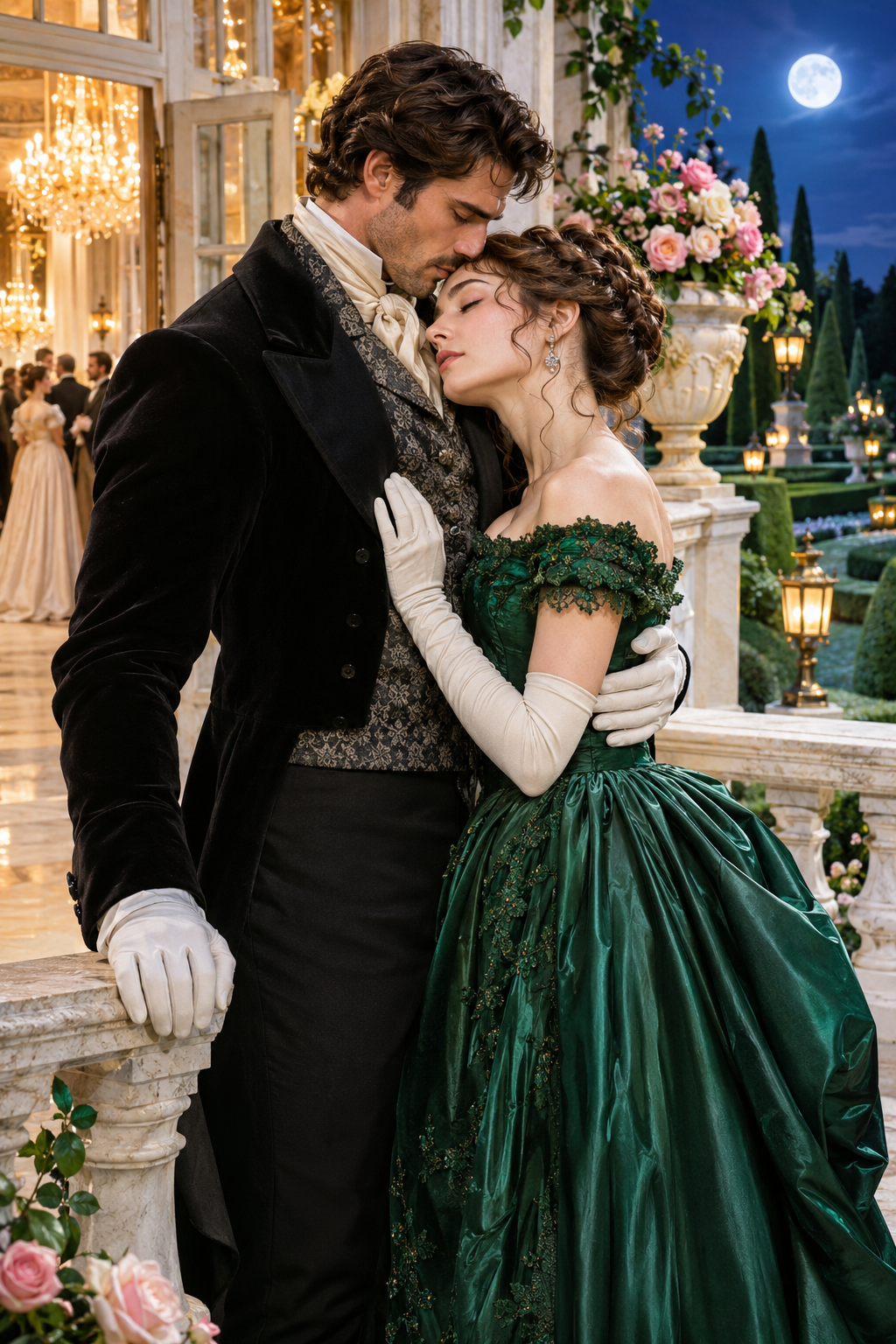
She accepted it, but neither spoke during the journey home.
That evening, Edmund locked himself inside his study.
For the first time in years, he opened the cabinet containing his brother’s private correspondence.
Richard had left behind dozens of letters, investment records, and contracts. Edmund had preserved them out of sentiment, never imagining they might contain anything sinister.
Near midnight, he discovered a familiar name.
Arthur Everly.
It appeared on a contract dated three months before the scandal.
Edmund read the document twice.
Then a third time.
The contract transferred ownership of several hundred acres of farmland from Everly Holdings to a company called Northern Development.
The purchase price was astonishingly low.
More disturbing was the signature beneath the agreement.
Richard Wclair.
Edmund sat back, feeling the first tremor of genuine doubt.
The following morning, he summoned his estate solicitor, Mr. Bartholomew Crane.
Crane had served the Wclair family for nearly thirty years. He was a thin, silver-haired man with an immaculate manner and an unfortunate habit of smiling without warmth.
“You wished to see me, Your Grace?”
Edmund placed the contract on his desk.
“Explain this.”
Crane glanced down.
For one brief instant, his expression changed.
Then his smile returned.
“An old business arrangement, I believe.”
“Why did my brother purchase Everly land for a fraction of its value?”
“The family was experiencing financial difficulties.”
“Difficulties caused by the railway scandal?”
“Precisely.”
Edmund leaned forward.
“Interesting. This agreement was signed before the scandal became public.”
Crane said nothing.
“Explain that.”
“There may have been rumors beforehand.”
“Rumors sufficient to destroy a man’s fortune?”
The solicitor adjusted his cuffs.
“Your Grace, I would strongly advise against reopening unpleasant matters.”
“Why?”
“Because some doors are better left closed.”
Edmund’s voice became dangerously quiet.
“Mr. Crane, I decide which doors remain closed in my own house.”
For the first time in their long acquaintance, Crane looked genuinely afraid.
That afternoon, Juliet received an unexpected invitation to the duke’s private library.
She entered cautiously.
Edmund stood beside the fireplace, holding a collection of documents.
“I owe you an apology,” he said.
Juliet blinked.
“For what?”
“For dismissing your concerns without examining them.”
He handed her the contract.
She read it, and the color drained from her face.
“This was my father’s land.”
“I know.”
“He always said he had been forced to sell it. He said someone had threatened to ruin him if he refused.”
Edmund watched her hands tremble.
“Did he tell you who?”
“No. He was trying to protect us.”
She looked up.
“Your Grace, where did you find this?”
“Among Richard’s papers.”
Juliet pressed the document against her chest.
“For twelve years, everyone told me to forget. They said my father was guilty, that nothing could change what happened.”
Her voice broke.
“And now, for the first time, I have something that proves he was telling the truth.”
Edmund approached her.
“It proves that the transaction deserves investigation. Nothing more, not yet.”
She nodded, though tears slipped down her cheeks.
He hesitated before offering his handkerchief.
Juliet accepted it with a fragile smile.
“You are not very good at comforting people, are you?”
“Not particularly.”
“Then perhaps you should practice.”
Something softened in his expression.
“I suspect you intend to give me many opportunities.”
For a moment, they stood close enough that Edmund could hear her breathing.
He wanted to touch her cheek.
Instead, he stepped away.
There were too many unanswered questions between them.
And too many years separating their lives.
Over the following week, Edmund and Juliet worked together every evening.
They examined ledgers, compared signatures, and questioned retired employees who had served the estate during Richard’s lifetime.
Slowly, a disturbing pattern emerged.
Several families had been pressured into selling their farms shortly before the scandal. Their land had passed through Northern Development before becoming part of the Brier Haven estate.
The railway Edmund intended to build would run directly across those properties.
More troubling still, Northern Development remained active.
Its present director was Mr. Bartholomew Crane.
When Edmund discovered this, he felt as though the ground had shifted beneath him.
For decades, Crane had advised him on purchases, investments, and legal disputes.
The man had known every weakness in the Wclair family.
And apparently, he had exploited them.
One evening, Juliet found Edmund standing before a portrait of his brother.
“Richard was not the man I believed him to be,” he said quietly.
“You do not know everything yet.”
“I know enough to understand that I was blind.”
Juliet approached him.
“Loving someone does not make you blind, Edmund. Refusing to see their faults does.”
He turned.
It was the first time she had called him by his Christian name.
Neither mentioned it.
“Do you know what frightens me most?” he asked.
“What?”
“That I may have spent twenty years protecting the very people who caused your family’s suffering.”
Juliet reached for his hand.
“Then spend the years ahead doing something different.”
He looked down at their joined fingers.
“I am not a young man, Juliet.”
“I had noticed.”
He gave a reluctant smile.
“You find everything amusing.”
“Only when you insist on reminding me of your age.”
“Twenty-six years separate us.”
“And yet we seem perfectly capable of having the same argument.”
“This is not a matter for jokes.”
“I know.”
Her expression became serious.
“Edmund, I do not care how many birthdays you have celebrated. I care about the man standing before me.”
He swallowed.
“And what sort of man is that?”
“One who is finally learning that kindness requires more courage than authority.”
Before he could answer, the library door opened.
Crane stood on the threshold.
His eyes dropped immediately to their joined hands.
“How touching,” he said.
Edmund released Juliet’s hand.
“Did you require something?”
“Only to inform Your Grace that the railway investors have arrived earlier than expected.”
“They were not due until Friday.”
“Plans change.”
Crane’s gaze moved toward Juliet.
“Especially when certain individuals interfere with important business.”
Edmund’s expression darkened.
“Choose your next words carefully.”
The solicitor bowed.
“Of course, Your Grace.”
But as he departed, Juliet felt a chill.
Something in Crane’s smile told her that their investigation had become dangerous.
That night, someone entered Juliet’s bedroom.
She awakened to the faint sound of a drawer opening.
Moonlight revealed a dark figure searching her writing desk.
Juliet sat upright.
“Who is there?”
The intruder turned.
Before she could scream, he rushed toward her.
She seized a porcelain vase and hurled it at his head.
It shattered against the wall.
The man stumbled, then fled through the adjoining dressing room.
Juliet screamed.
Within moments, Edmund appeared at her door, followed by two servants.
He wore a hastily fastened dressing gown and carried a pistol.
“Juliet!”
She was standing beside the bed, shaking.
“Someone was here.”
Edmund crossed the room.
“Are you hurt?”
“No.”
He took her shoulders.
“Look at me. Are you certain?”
She nodded.
Only then did he lower the pistol.
The servants searched the corridor and gardens, but the intruder had vanished.
A muddy footprint beneath the dressing-room window suggested that he had escaped down a ladder.
Edmund ordered guards stationed outside Juliet’s rooms.
Then he noticed her open writing desk.
“What was he looking for?”
Juliet’s face changed.
“My father’s letters.”
She hurried to the drawer.
The small leather packet she had carried from London was gone.
Edmund’s jaw tightened.
“Crane.”
“You cannot prove it.”
“No. But I intend to.”
He turned toward the door.
Juliet caught his sleeve.
“Edmund.”
He stopped.
She looked suddenly younger, frightened in a way he had never seen before.
“Please do not leave me alone tonight.”
The request pierced him.
He drew a chair beside the fireplace.
“Then I shall remain here until morning.”
“You cannot spend the night in a chair.”
“I have endured worse accommodations.”
She managed a faint smile.
“Your Grace, you are impossible.”
“So I have been told.”
For hours, he sat beside the dying fire while Juliet slept.
And as dawn approached, Edmund understood something he could no longer deny.
He loved her.
Not because she was beautiful.
Not because she made him laugh.
But because she had entered a life built upon certainty and taught him to question everything.
The next morning brought devastating news.
Crane had disappeared.
So had three important railway contracts and nearly forty thousand pounds from an estate account.
Worse, the solicitor had left behind a letter addressed to the duke.
Edmund opened it in the presence of Juliet and his steward.
The message was brief.
If Your Grace wishes to protect Lady Everly from the disgrace that destroyed her father, you will proceed with the railway as planned. Any interference will ensure that the world learns precisely what happened twelve years ago.
Juliet read the letter.
“What does he mean?”
Edmund stared at the handwriting.
“I do not know.”
But a terrible possibility had begun forming in his mind.
Perhaps Richard had not acted alone.
Perhaps Crane possessed evidence that implicated the Wclair family more deeply than Edmund imagined.
And perhaps the duke himself had unknowingly signed the documents that made the fraud possible.
Two days later, the answer arrived.
A newspaper published an article accusing Edmund of having personally authorized the fraudulent transfers that ruined Arthur Everly.
Copies of old financial documents appeared beneath the headline.
His signature was unmistakable.
By noon, London society was in an uproar.
By evening, several investors had withdrawn their support.
And before midnight, Juliet received a letter from her aunt demanding that she leave Brier Haven immediately.
Edmund found her packing.
“You are leaving?”
She looked up, tears shining in her eyes.
“I cannot stay.”
“Because of the newspapers?”
“Because everyone believes I came here to blackmail you.”
“Let them believe what they wish.”
“You do not understand.”
She closed her traveling case.
“If I remain, they will say you have been manipulated by the daughter of a criminal. They will destroy your reputation.”
Edmund approached her.
“My reputation has survived worse.”
“Has it survived falling in love with a woman everyone despises?”
The words escaped before she could stop them.
Silence filled the room.
Edmund stared at her.
“Is that what this is?”
Juliet turned away.
“Please.”
“Look at me.”
She shook her head.
He stepped closer.
“Juliet, are you in love with me?”
Her shoulders trembled.
“Yes.”
The confession was barely audible.
Edmund closed his eyes.
For twenty years, he had believed the deepest part of his heart had been buried beside his wife.
Now it was beating with a strength that frightened him.
He gently turned Juliet toward him.
“Then you must hear something.”
She looked up.
“I have loved you since the day you stood in my dining room and told me I was making a terrible mistake.”
A sob escaped her.
“Edmund—”
“I am stubborn, proud, and frequently unbearable. I cannot promise to become a different man overnight.”
He brushed a tear from her cheek.
“But I can promise that you will never have to face the world alone while I am alive.”
Juliet covered his hand with hers.
Then he kissed her.
It was a gentle kiss, uncertain at first, filled with the hesitation of two people who had spent too long believing happiness belonged elsewhere.
When they parted, Juliet rested her forehead against his.
“What happens now?”
Edmund smiled sadly.
“Now we discover whether I deserve the faith you have placed in me.”
The following morning, he traveled to London.
He met with the railway company’s directors, the family bankers, and an investigator formerly employed by the Crown.
For three days, he barely slept.
Then the investigator uncovered something extraordinary.
The signatures on the fraudulent documents were genuine.
But Edmund had signed them under false pretenses.
Twelve years earlier, Richard had presented the papers as guarantees for a temporary loan.
The pages had later been altered.
A former clerk, dismissed shortly after the scandal, confirmed that Crane had ordered the alterations.
More importantly, the clerk possessed a duplicate ledger.
It revealed that Arthur Everly had discovered the fraud and threatened to expose it.
Crane and Richard had responded by transferring the missing funds into accounts controlled by Everly, then reporting the supposed theft themselves.
Arthur had been framed.
But before Edmund could bring the evidence before the authorities, Juliet disappeared.
Her carriage was found abandoned near the northern woods.
The driver lay unconscious beside the road.
A single note had been pinned to the carriage door.
Bring the original ledger to the old railway tunnel at midnight. Come alone, or Lady Everly will die.
Edmund read the message without speaking.
His steward, Mr. Harris, watched his face.
“Your Grace, we must summon the constables.”
“We shall.”
“But the note says—”
“I have spent my life allowing men like Crane to dictate what others must sacrifice.”
Edmund folded the paper.
“That ends tonight.”
At eleven, he rode toward the abandoned tunnel.
Unseen by Crane, Harris and two constables followed at a distance.
The old tunnel lay beneath a wooded hill, its entrance concealed by ivy and crumbling stone.
Inside, a lantern flickered.
Juliet stood beside a wooden support, her wrists bound.
Crane waited nearby, holding a pistol.
“Your Grace,” he said pleasantly. “How punctual.”
Edmund dismounted.
“Release her.”
“The ledger first.”
Edmund raised a leather satchel.
“You shall have it when she is safe.”
Crane laughed.
“You still believe you are in a position to negotiate?”
Juliet struggled against her bonds.
“Edmund, do not give it to him!”
Crane struck her across the face.
Edmund moved forward.
“Touch her again, and you will regret it.”
The solicitor aimed his pistol.
“Stay where you are.”
For a moment, no one moved.
Then Crane spoke with a bitterness that stripped away his practiced politeness.
“Do you know what it is like to serve men who inherit everything while you must earn every penny?”
Edmund regarded him coldly.
“I know what it is like to trust a man who mistakes greed for ambition.”
“Your brother understood opportunity.”
“My brother understood very little beyond his own appetites.”
Crane’s face twisted.
“He was willing to do what you never dared.”
“Destroy innocent families?”
“Build an empire.”
Edmund glanced toward Juliet.
Her eyes met his.
He noticed that she had loosened one of the ropes around her wrist.
He needed to keep Crane talking.
“Why kill Arthur Everly?”
Crane froze.
Juliet stopped struggling.
Edmund continued.
“He did not die of fever, did he?”
For the first time, the solicitor looked genuinely startled.
“How did you know?”
“I did not.”
Crane realized his mistake.
His expression became murderous.
“Everly should have accepted his ruin. Instead, he threatened to expose everything.”
Juliet made a broken sound.
“You murdered my father?”
“He left me no choice.”
“There is always a choice,” Edmund said.
Crane raised the pistol toward him.
“Then I choose to end this.”
At that instant, Juliet pulled her hand free and seized the lantern.
She hurled it against the ground.
Flames erupted across the scattered straw.
Crane fired.
The shot echoed through the tunnel.
Edmund staggered backward, clutching his shoulder.
“Edmund!”
Juliet rushed toward him.
Crane turned to flee, but a thunderous crack sounded overhead.
The burning straw had ignited an old timber support.
Stones began falling from the ceiling.
Edmund seized Juliet’s hand.
“Run!”
They stumbled toward the entrance as the tunnel shook around them.
Behind them, Crane screamed.
A section of the ceiling collapsed, trapping his leg beneath a fallen beam.
“Help me!” he cried.
Edmund stopped.
Juliet stared at him.
“No. Edmund, please!”
Crane reached desperately toward them.
“You cannot leave me!”
For one terrible moment, Edmund looked at the man who had destroyed so many lives.
Then he turned back.
“Juliet, get outside.”
“Edmund!”
“Trust me.”
Despite his bleeding shoulder, he dragged the fallen timber aside with the last of his strength.
Crane crawled free.
At that moment, Harris and the constables reached the tunnel entrance.
Together, they pulled the three of them into the night.
Seconds later, the old tunnel collapsed behind them.
Crane was arrested before sunrise.
He confessed to the fraud, the theft, and Arthur Everly’s murder after learning that the former clerk had agreed to testify.
Richard Wclair’s role was also established.
For Edmund, the truth was devastating.
His brother had not merely been careless.
He had knowingly participated in a crime that ruined hundreds of innocent lives.
Yet when the newspapers published the full investigation, Edmund did something no one expected.
He issued a public statement acknowledging the Wclair family’s involvement.
He refused to conceal Richard’s guilt.
He also announced that the railway project would be suspended indefinitely.
The disputed farmland would be returned wherever lawful ownership could be established, and a substantial portion of his personal fortune would be placed in a fund to compensate the affected families.
Some called him reckless.
Others accused him of betraying his family.
But the villagers who had once feared the Duke of Brier Haven began speaking of him differently.
They spoke of a man who had finally listened.
Several weeks later, Edmund stood in the gardens with his injured arm resting in a sling.
Juliet approached carrying two cups of tea.
“The doctor says you are supposed to rest.”
“The doctor has never managed an estate.”
“And apparently neither have you, since you insist upon doing everything yourself.”
Edmund smiled.
“You have become remarkably commanding.”
“I learned from a particularly stubborn gentleman.”
She handed him his tea.
For a while, they watched the afternoon sunlight fall across the gardens.
Then Edmund spoke.
“I have been thinking about the railway.”
Juliet raised an eyebrow.
“Should I prepare for another argument?”
“Possibly.”
He unfolded a map.
“I have asked the engineers to study an alternative route. It would avoid the villages, preserve the farms, and connect the northern market towns.”
Juliet examined it.
“But that would cost considerably more.”
“Yes.”
“And take longer.”
“Undoubtedly.”
She looked at him.
“Then why consider it?”
Edmund folded the map.
“Because progress that destroys the people it claims to serve is not progress worth celebrating.”
Juliet smiled.
“You have changed.”
“Do not spread that rumor. I have a reputation to maintain.”
She laughed.
Edmund took her hand.
“There is one other matter I wish to discuss.”
Something in his expression made her suddenly nervous.
He reached into his coat and withdrew a small velvet box.
Juliet stared.
“Edmund.”
“I know I am not the husband society would choose for you.”
“Society has never been particularly good at choosing anything for me.”
He smiled faintly.
“I have already lived more than half my life. I cannot offer you the promise of endless years.”
He opened the box.
Inside lay a simple gold ring set with a single sapphire.
“But I can offer you every year I have left, every kindness I am capable of learning, and a heart that I thought had forgotten how to love.”
Juliet’s eyes filled with tears.
“Are you proposing to me, Your Grace?”
“I am attempting to, though you seem determined to interrupt.”
She laughed through her tears.
“Then finish.”
Edmund took a breath.
“Lady Juliet Everly, will you marry me?”
“Yes.”
He blinked.
“I had prepared a rather longer speech.”
“Then you may deliver it at our wedding.”
She threw her arms around him, carefully avoiding his injured shoulder.
And when he kissed her, there was no hesitation.
They married in the small village church six months later.
The ceremony was attended not only by members of the aristocracy but also by farmers, servants, merchants, and families whose lives had been affected by the scandal.
The elderly tenant who had first explained the railway’s dangers stood among the guests, holding his hat against his chest.
Juliet walked down the aisle wearing her mother’s pearl earrings.
When she reached Edmund, she whispered, “You look nervous.”
“I am facing the most formidable woman in England.”
“Then perhaps you should reconsider.”
“Not for all the kingdoms in the world.”
Their laughter filled the church.
In the years that followed, Brier Haven became known for something greater than its wealth.
The duke and duchess established a school for village children, a fund for struggling farmers, and a legal trust to protect tenants from exploitation.
The railway was eventually completed along the revised route, bringing new trade without destroying the communities it was meant to serve.
And Edmund, once feared for his temper, became famous for listening carefully before making decisions.
One autumn evening, many years later, Juliet found him sitting beneath the ancient oak tree overlooking the estate.
His hair had turned almost entirely silver.
She sat beside him.
“Do you ever regret it?” she asked.
“Regret what?”
“Marrying a woman who argued with you at your own dinner table.”
Edmund took her hand.
“My darling, that was the finest argument of my life.”
She rested her head against his shoulder.
Below them, children played in the fields, and the distant sound of a train drifted across the countryside.
“Do you remember what you said when we first met?” Juliet asked.
“I have spent years trying to forget it.”
“You told me I did not understand the responsibilities of power.”
“And you told me that power without compassion was merely another form of selfishness.”
“You were furious.”
“I was.”
“And now?”
Edmund kissed her forehead.
“Now I know that the greatest mistake of my life was believing that being respected mattered more than being understood.”
Juliet smiled.
“And the greatest decision?”
He looked at her with the same tenderness he had shown on their wedding day.
“Listening to you.”
For a long time, they sat together as the evening sun settled over Brier Haven.
Their love had not erased the tragedies of the past, nor had it made the world perfectly just.
But it had changed what they chose to do with the years they were given.
And perhaps that was the most extraordinary kind of love.
Not the kind that promises never to make mistakes, but the kind that gives two imperfect people the courage to recognize them, repair what they can, and become better together.
For in the end, Edmund Wclair discovered that a noble title could command obedience, wealth could purchase comfort, and fear could maintain authority.
But only humility could earn genuine respect.
Only courage could confront the truth.
And only love could teach a stubborn heart that it was never too late to change.
THE END.