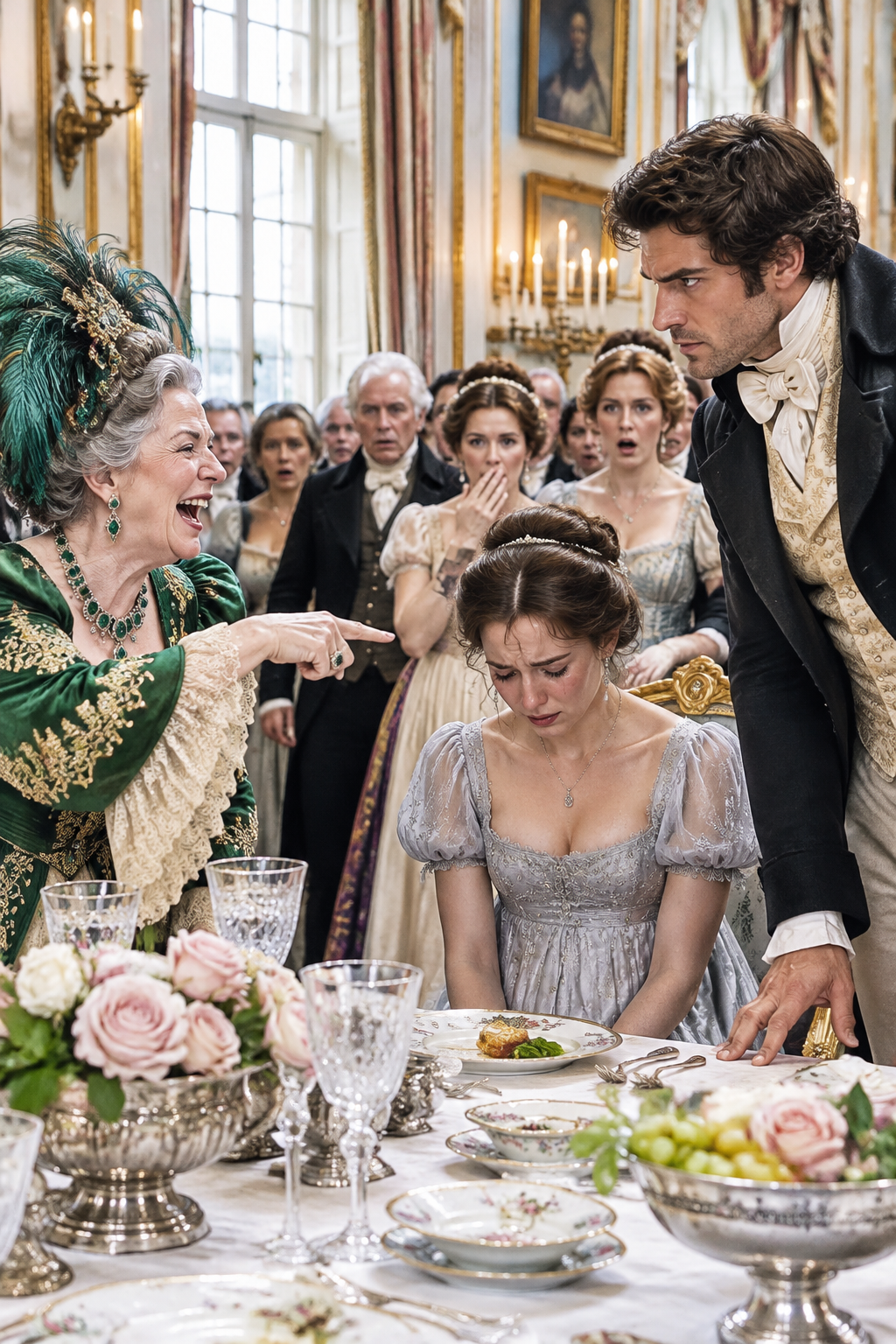
“Thirty years old, penniless, and still unmarried. Really, Eleanor, what gentleman would want you now?”
Eleanor stared at the small brass key in her hand, unable to speak. For twelve years, she had believed that Alexander Thorne had abandoned her. Now, the elderly housekeeper was telling her that the truth might be hidden inside Lady Harriet’s locked writing box.
“Mrs. Pell,” Eleanor whispered, “what exactly do you know?”
The housekeeper glanced nervously toward the hallway.
“More than I should have kept silent about, Miss Eleanor. And less than I wish I knew.”
“Did my aunt steal my letters?”
Mrs. Pell lowered her eyes.
“I was told to collect the household mail before anyone else touched it. Your aunt said it was necessary because you were grieving your father and becoming too emotional.”
Eleanor felt sick.
“And you believed her?”
“At first.” Mrs. Pell swallowed. “Then I began noticing letters addressed to you in the same handwriting. They came from military posts, sometimes weeks apart. Your aunt never delivered them.”
Eleanor gripped the key so tightly that its edges hurt her palm.
“Where are they?”
“I believe they’re in that box.”
“Why tell me now?”
The older woman’s eyes filled with tears.
“Because last night, I heard her say she would destroy everything before the Duke could learn the truth.”
A floorboard creaked outside.
Mrs. Pell immediately stepped away.
“Go before breakfast,” she whispered. “Her ladyship always walks in the east garden at seven. You’ll have fifteen minutes.”
Then she hurried away, leaving Eleanor alone with a key that suddenly felt heavier than gold.
That night, Eleanor barely slept.
Every time she closed her eyes, she saw Alexander standing in the conservatory, holding his mother’s pearl ring.
She remembered the young man who had studied Latin and history under her father, the village vicar. Alexander had been a second son then, with little expectation of inheriting a dukedom.
He had been serious, sometimes awkward, and hopelessly unable to hide his feelings whenever Eleanor entered the room.
Her father had liked him.
“A man who listens carefully,” he once told Eleanor, “usually has a heart worth knowing.”
Alexander had promised to marry her after his military service.
They had made that promise beneath the old apple tree behind the vicarage.
But Eleanor had spent twelve years believing that promise meant nothing to him.
Now she wondered whether every painful memory she carried had been built on a lie.
At precisely seven the next morning, Eleanor watched from her bedroom window as Lady Harriet crossed the lawn toward the east garden.
Clarissa was still asleep.
The servants were busy preparing breakfast.
Eleanor slipped downstairs.
Her aunt’s study smelled of lavender polish and old paper. Heavy curtains covered the windows, and a portrait of the late Lord Crane hung above the fireplace.
The writing box sat on a small table beside the desk.
It was dark mahogany, decorated with brass corners and a delicate floral pattern.
Eleanor inserted the key.
For one terrible moment, it refused to turn.
Then the lock clicked.
She lifted the lid.
Inside were bundles of letters tied with faded blue ribbon.
Her breath stopped.
The first bundle bore her own handwriting.
She recognized every curve, every carefully formed letter.
Twelve letters.
Twelve letters she had written to Alexander after he left for war.
Letters in which she had described her father’s declining health, her fear of losing him, and the loneliness that followed his death.
Letters in which she had begged Alexander to write.
Not one had been sent.
Eleanor pressed a hand over her mouth.
Beneath them lay a much larger bundle.
Forty-one letters.
All addressed to Miss Eleanor Whitmore.
All written by Alexander.
Her trembling fingers opened the oldest one.
“My dearest Eleanor,
I have been away only seventeen days, yet already I understand how terribly long a year can become when the person you love is not beside you.”
Tears blurred the page.
She opened another.
“I dreamed of the vicarage last night. Your father was reading beside the fire, and you were laughing at something foolish I said. I woke to the sound of rain against the barracks roof and wished with all my heart that I were home.”
Another letter was dated three months after her father’s death.
“My darling, I have heard nothing from you, and I fear something is wrong. I know your father has been ill. If you are suffering, please do not suffer alone. Whatever has happened, I remain yours.”
Eleanor sank into her aunt’s chair.
Alexander had not forgotten her.
He had written through storms, battles, sickness, and endless months of uncertainty.
He had loved her when she thought herself completely abandoned.
She reached for another letter.
This one had been written after he received the rejection supposedly sent in her name.
“Eleanor, your words have wounded me more deeply than I believed possible. Yet I cannot bring myself to hate you. If your happiness lies elsewhere, I will not stand in your way. I only pray that whoever holds your heart will treasure it as I would have done.”
Eleanor began to sob.
She had spent twelve years blaming herself for not being beautiful enough, wealthy enough, or important enough to keep his love.
And all that time, Alexander had been mourning the loss of hers.
A sudden sound made her look up.
Footsteps.
She quickly gathered the letters.
But before she could close the box, a voice spoke from the doorway.
“Well. I wondered how long it would take you.”
Lady Harriet stood there.
Her walking gloves were still on her hands.
Eleanor rose slowly.
“You knew.”
Harriet looked at the letters without surprise.
“Put those away.”
“You kept every letter he wrote me.”
“I said put them away.”
“You told me he had married someone in Lisbon.”
Harriet shut the door behind her.
“You were a foolish girl with ridiculous dreams. Someone had to make sensible decisions.”
Eleanor stared at her.
“Sensible decisions?”
“You had no money, Eleanor. No position. No prospects. Your father left you practically nothing.”
“He left me a home.”
“A modest vicarage that belonged to the parish. Hardly a fortune.”
“And he left me people who loved me.”
Harriet’s mouth tightened.
“Love does not pay household bills.”
Eleanor lifted one of Alexander’s letters.
“Then why did you keep these?”
For the first time, Harriet hesitated.
Eleanor noticed.
“Why not burn them?”
Her aunt’s eyes moved toward the open writing box.
“Because some things are better kept under control than destroyed.”
A cold understanding began to form in Eleanor’s mind.
“You wanted proof,” she whispered. “Something you could use if Alexander ever returned.”
Harriet said nothing.
“Did you think he might come looking for me?”
“He was a second son when he left,” Harriet snapped. “Nobody expected him to inherit anything. But circumstances change.”
Eleanor remembered that Alexander’s elder brother had died unexpectedly, leaving him the title.
“And when he became Duke of Ashford,” she said, “you wanted him for Clarissa.”
Harriet lifted her chin.
“My daughter deserves a secure future.”
“So you stole mine?”
“You had no future worth stealing!”
The words rang through the room.
For several seconds, neither woman moved.
Then Eleanor carefully placed the letters against her chest.
“I was eighteen when my father died,” she said. “I came here because I believed you were family.”
“And I gave you shelter.”
“You gave me a room and made me work for it.”
“I saved you from poverty.”
“You made sure I had no way to leave.”
Harriet’s face hardened.
“Give me those letters.”
“No.”
“Eleanor, do not test my patience.”
Eleanor moved toward the door.
Her aunt stepped in front of her.
“You have no idea what you are doing. If you take those letters to Ashford, you will destroy this family.”
Eleanor looked directly into her eyes.
“You destroyed this family twelve years ago.”
Harriet reached for the bundle.
Eleanor pulled back.
The older woman seized her wrist.
“Listen carefully. The Duke may feel sentimental today, but men of his rank do not marry penniless women simply because they once exchanged childish promises.”
Eleanor’s heart pounded.
“Then he may tell me so himself.”
Harriet released her with a sharp movement.
“Leave this house, and you will never return.”
Eleanor looked around the room where she had spent years copying invitations, organizing accounts, and carrying out her aunt’s endless demands.
For the first time, the threat did not frighten her.
“Perhaps,” she said quietly, “that would be a blessing.”
She walked past Harriet and out of the study.
By noon, the entire household knew something had happened.
Clarissa found Eleanor in her bedroom, placing the letters inside a small traveling case.
“Mother says you’ve become hysterical.”
Eleanor continued packing.
“Your mother has said many things about me that weren’t true.”
Clarissa folded her arms.
“Are you really planning to embarrass us over some old letters?”
Eleanor turned.
“Would you call it embarrassing if someone stole twelve years of your life?”
Clarissa looked uncomfortable.
“I don’t know what you’re talking about.”
“Then ask your mother.”
“She only wanted what was best for us.”
“Did she?”
Clarissa’s cheeks reddened.
“You’re being cruel.”
Eleanor almost laughed.
For years, she had helped Clarissa dress for balls, arranged her flowers, repaired her gowns, and comforted her through disappointments.
Yet Clarissa had watched her mother humiliate Eleanor at dinner without offering a single word of kindness.
“Clarissa,” Eleanor said, “did you know your mother wanted Alexander to marry you?”
Her cousin looked away.
“I knew she hoped he might.”
“And did you want that?”
Clarissa hesitated.
“He’s a duke.”
“That isn’t what I asked.”
For once, Clarissa had no answer.
A carriage arrived shortly after two.
Alexander stepped out before the footman could open the door.
Eleanor saw him from the upstairs window.
Her heart raced.
She had sent him a short note through Mrs. Pell, asking him to come.
Now she wondered whether she could bear to show him what she had found.
When Alexander entered the drawing room, Eleanor was waiting with the traveling case beside her.
He immediately noticed her pale face.
“What happened?”
She opened the case.
Alexander stared at the bundles.
“Where did you find those?”
“In my aunt’s writing box.”
He picked up the first letter.
His expression changed.
“I wrote this from Portsmouth.”
“I know.”
He opened another.
“And this one from Spain.”
Eleanor nodded.
“There are forty-one.”
Alexander slowly lowered himself into a chair.
For a long moment, he said nothing.
Then he looked at her.
“Forty-one?”
“Every one of them.”
His jaw tightened.
“I thought they had been lost. Or that you had chosen not to answer.”
“I did answer.”
She placed the twelve unsent letters beside his.
Alexander reached for them with shaking hands.
He opened the first.
As he read, Eleanor watched his face change from disbelief to grief.
When he reached the letter describing her father’s death, he closed his eyes.
“I should have been there.”
“You couldn’t have known.”
“I should have found a way.”
“You tried, Alexander. You wrote.”
He looked up.
“I came back to England once, during a short leave. I went to the vicarage, but the new vicar told me you were living here. When I sent word asking to see you, Lady Harriet replied that you were visiting relatives and wished not to be disturbed.”
Eleanor felt another wave of anger.
“I was here the entire time.”
Alexander stood abruptly.
“Then I will speak to your aunt.”
“No.”
He stopped.
Eleanor took his hand.
“Please. Not yet.”
“She has done something unforgivable.”
“Yes. But I need to understand all of it before she finds another way to twist the truth.”
Alexander studied her face.
Then he nodded.
“What do you want me to do?”
The question nearly brought her to tears.
For twelve years, nobody had asked what she wanted.
They had simply told her what she must do.
“I want you to read my letters,” she said. “All of them.”
Alexander took both her hands.
“I will.”
“And then I want us to decide what happens next together.”
He kissed her fingers.
“Together.”
Their quiet moment ended when the drawing room doors opened.
Lady Harriet entered with Clarissa behind her.
“What a touching scene,” Harriet said coldly.
Alexander turned.
“Lady Crane.”
“Your Grace. I trust my niece has not troubled you with her fantasies.”
He held up one of the letters.
“Would you call this a fantasy?”
Harriet’s expression barely changed.
“Private correspondence is easily misunderstood.”
“Forty-one letters?”
“Young people are often foolish.”
“And twelve letters written by Eleanor that never reached me?”
Harriet looked toward her niece.
“You had no right to enter my study.”
Alexander stepped forward.
“Answer the question.”
Harriet drew herself up.
“I acted to protect my household.”
“From what?”
“From an unsuitable attachment.”
Alexander’s voice became dangerously quiet.
“You forged a rejection in Eleanor’s name.”
Clarissa gasped.
Eleanor turned toward her cousin.
“You didn’t know?”
Clarissa stared at her mother.
“Mother?”
Harriet’s face tightened.
“It was necessary.”
Clarissa took a step back.
“You told me Eleanor had refused him.”
“Clarissa, be quiet.”
“You said she was too proud to accept a man without a title.”
Harriet’s silence confirmed everything.
Alexander looked at Eleanor.
She was trembling, but she did not look away.
“Did you ever stop loving me?” he asked.
“No.”
His eyes filled.
“Neither did I.”
Harriet gave a sharp, bitter laugh.
“How charming. But perhaps Your Grace should remember that marriage is not merely a matter of affection.”
Alexander turned toward her.
“I am well aware of what marriage means.”
“Then surely you understand that a duchess must bring something to her position.”
“She must bring character, compassion, and honesty. Eleanor possesses all three.”
Harriet opened her mouth.
Alexander continued.
“She also possesses something you appear to have forgotten, Lady Crane. The right to choose her own future.”
Clarissa suddenly spoke.
“Mother, is this why you kept Eleanor here?”
Harriet looked irritated.
“Don’t be ridiculous.”
“Is it?”
“I needed help managing the estate.”
“You had servants.”
“Servants cost money.”
Clarissa stared at her.
“So Eleanor was cheaper.”
The room fell silent.
Harriet’s face flushed.
“After everything I have done for you, Clarissa, you dare question me?”
Clarissa looked toward Eleanor.
For the first time, shame replaced the usual pride in her expression.
“I didn’t know,” she whispered.
Eleanor wanted to believe her.
But she also remembered every cruel joke Clarissa had made, every time she had watched Eleanor work while she enjoyed herself.
“Perhaps you didn’t know about the letters,” Eleanor said. “But you knew how I was treated.”
Clarissa lowered her head.
“Yes.”
The admission was small, but it mattered.
Harriet suddenly moved toward the fireplace.
Eleanor noticed the folded paper in her hand.
“What is that?”
“Nothing that concerns you.”
Alexander stepped closer.
“Lady Crane.”
Harriet threw the paper into the flames.
Eleanor rushed forward, but Alexander reached the hearth first.
Using the fireplace tongs, he pulled the burning sheet onto the stone.
One corner had already turned black.
He stamped out the flames.
Then he unfolded what remained.
Eleanor recognized her own name.
Below it was a sentence written in a hand that tried to imitate hers.
“I release you from every promise we made and ask that you never seek me again.”
Alexander went pale.
“The rejection letter.”
Harriet looked toward the door.
Alexander held the scorched page carefully.
“You kept a copy.”
“It proves nothing.”
“It proves you knew exactly what you were doing.”
Eleanor stared at the words.
For twelve years, that single lie had stood between them.
She imagined Alexander reading it alone, perhaps after a terrible day at war, believing she had rejected him.
She imagined herself waiting at Crane Park for letters that were already locked away.
Something inside her changed.
The sadness remained, but it no longer made her feel helpless.
She turned toward Harriet.
“You will never speak for me again.”
Her aunt’s face hardened.
“You are still under my roof.”
“Not for much longer.”
Alexander looked at Eleanor.
“Would you like me to arrange somewhere for you to stay?”
She considered his offer.
Then she shook her head.
“I have one more thing to do.”
That evening, Eleanor visited the village vicarage.
The new vicar, Reverend Bennett, welcomed her warmly. He had known her father and remembered Eleanor as a cheerful young woman who often helped teach the village children.
They sat in the small room where her father had once worked.
Eleanor told him everything.
When she finished, Reverend Bennett was silent for a long time.
“Your father would have been heartbroken by what happened,” he said.
“I know.”
“But he would also be proud that you found the courage to speak.”
Eleanor looked toward the familiar garden.
“I spent so many years thinking I had nothing to offer anyone.”
“Your aunt made you believe that.”
“Perhaps. But I believed her.”
The vicar leaned forward.
“Eleanor, being treated as though you have no worth does not mean you have none.”
She looked down at her hands.
“I don’t even know what kind of life I want anymore.”
“Then perhaps that is where you should begin.”
He offered her temporary lodging at the vicarage with his wife while she decided what to do.
Eleanor accepted.
For the first time in twelve years, she would sleep beneath a roof where nobody expected her to earn kindness through obedience.
The following morning, Mrs. Pell helped Eleanor carry her belongings downstairs.
There were only two small trunks.
Twelve years of living at Crane Park, and nearly everything Eleanor owned fit inside them.
Mrs. Pell looked ashamed.
“I wish I had spoken sooner.”
Eleanor took her hands.
“You cannot change what happened.”
“I know.”
“But you can decide what kind of person you will be from now on.”
Mrs. Pell began to cry.
“I have already given notice, Miss Eleanor. I cannot continue serving a woman who could do such a thing.”
Eleanor embraced her.
“Then perhaps we are both beginning again.”
As Eleanor stepped outside, Clarissa appeared near the carriage.
She looked tired.
“May I speak to you?”
Eleanor stopped.
Clarissa twisted her gloves.
“My wedding is in three weeks.”
“I know.”
“Mother says you won’t attend.”
“Your mother no longer makes decisions for me.”
Clarissa looked down.
“I suppose I deserve that.”
Eleanor waited.
“I was jealous of you,” Clarissa admitted.
Eleanor almost smiled.
“Of me?”
“You had your father’s love. You had books, music, and people who enjoyed talking to you. Even when you had nothing, you seemed to have something I couldn’t understand.”
“You had everything I thought I wanted.”
“Except the freedom to choose any of it.”
Clarissa wiped her eyes.
“Mother planned my entire life. She told me whom to meet, what to wear, what to say. I thought that was simply how families worked.”
Eleanor felt a reluctant sympathy.
“That doesn’t excuse how you treated me.”
“I know.”
Clarissa took a breath.
“I’m sorry.”
Eleanor studied her cousin.
The apology did not erase twelve years of cruelty.
But it was the first honest thing Clarissa had said to her in a very long time.
“Thank you,” Eleanor replied.
Clarissa glanced toward the house.
“Mother is furious. She says the Duke will regret choosing you.”
Eleanor looked toward the waiting carriage.
“Perhaps he will. But that is his decision, not hers.”
Over the next several days, Alexander visited Eleanor at the vicarage.
They walked through the village, visited the old churchyard where her father was buried, and read the letters they had never received.
Sometimes they laughed.
Sometimes they cried.
Sometimes they sat together without speaking, allowing the lost years to settle between them.
One afternoon, Alexander brought her a small wooden box.
Inside lay the pearl ring.
Eleanor looked up.
“I thought you had given it back to your mother.”
“My mother died before I returned from the war. I kept it because I couldn’t bear to part with the last thing that connected us.”
He paused.
“But I don’t want you to accept it because of a promise we made when we were young.”
Eleanor’s eyes filled.
“Alexander…”
“We are not the same people we were twelve years ago. We’ve suffered. We’ve changed. And I want to know the woman you are now, not simply reclaim the girl I remember.”
Eleanor touched the pearl.
“And if the woman I am now is afraid?”
“Then I will be patient.”
“If she wants to do something useful with her life?”
“I will help her find a way.”
“And if she sometimes feels angry about everything we lost?”
Alexander took her hand.
“Then she will not have to carry that anger alone.”
Eleanor looked at him for a long moment.
Then she closed the box.
Alexander’s expression fell slightly.
She smiled through her tears.
“I’m not refusing you.”
“Then what are you doing?”
“Making certain that when I wear that ring again, it will be because I choose you today. Not because I promised you yesterday.”
Alexander smiled.
“That sounds like the woman I fell in love with.”
A week later, the village learned the truth about Lady Harriet’s deception.
Alexander had not announced it publicly. Neither had Eleanor.
But servants talked, and the story spread.
Invitations to Crane Park became less frequent.
Several families quietly withdrew their daughters from Lady Harriet’s social gatherings.
Clarissa’s future husband, Mr. Edward Vale, requested a private conversation with her.
He had heard enough to become concerned about the household he was marrying into.
Clarissa told him the truth.
To her surprise, Edward did not abandon her.
Instead, he asked a question nobody had ever asked her before.
“Clarissa, do you want to marry me?”
She stared at him.
“Of course.”
“Because your mother arranged it?”
“No.”
“Because you want my family’s money?”
“No.”
“Then why?”
Clarissa took his hand.
“Because you’re kind to me, even when I don’t deserve it.”
Edward smiled gently.
“Then let us build a marriage that belongs to us, not to your mother.”
When Lady Harriet discovered that Clarissa intended to move away after the wedding and manage her own household, she was furious.
“You are abandoning me too?”
Clarissa stood straighter than Eleanor had ever seen her.
“No, Mother. I am growing up.”
For once, Harriet had no answer.
Two weeks later, Alexander invited Eleanor to Ashford Hall.
She arrived expecting a grand house filled with servants and intimidating portraits.
Instead, Alexander led her through the gardens to a small building near the orchard.
It had been empty for years.
“What is this place?” she asked.
“My grandmother used it as a schoolroom for the estate children.”
Eleanor looked through the windows.
Dust covered the desks.
Old books stood on crooked shelves.
A cracked globe rested beside the fireplace.
Alexander watched her expression.
“You once told me you wanted to teach children, like your father did.”
“I remember.”
“Do you still?”
Eleanor walked slowly into the room.
She imagined children sitting at the desks, learning to read, discovering stories, and finding confidence in themselves.
“Yes,” she whispered. “I think I do.”
“Then perhaps we could restore it.”
Eleanor turned.
“We?”
“Only if you want my help.”
She smiled.
“I would.”
For the next month, Eleanor worked with the estate staff to repair the schoolroom.
Alexander provided funds, but Eleanor made the decisions.
She chose books, arranged lessons, and invited children from nearby cottages whose families could not afford private instruction.
She also asked Mrs. Pell, who had found employment near Ashford, to help organize supplies.
The work gave Eleanor something she had not felt in years.
Purpose.
She was no longer simply waiting for someone to choose her.
She was building a life she wanted.
One afternoon, as the schoolroom neared completion, a carriage stopped outside.
Lady Harriet stepped down.
Eleanor was arranging books when her aunt entered.
“I hear you’ve become a schoolmistress,” Harriet said.
Eleanor turned calmly.
“I’m helping establish a school.”
“How noble.”
“What do you want, Aunt Harriet?”
Her aunt looked around the room.
For once, she seemed uncertain.
“Clarissa has moved away. The house is very quiet.”
Eleanor said nothing.
“Mrs. Pell has left. Several servants have given notice. People no longer visit as they once did.”
“That must be difficult.”
Harriet’s eyes narrowed.
“You sound pleased.”
“No. I know what loneliness feels like. I wouldn’t wish it on anyone.”
The older woman looked away.
After a moment, she spoke.
“I did what I believed necessary for my daughter.”
Eleanor placed the book in her hand on the table.
“And what did you believe was necessary for me?”
Harriet did not answer.
“You were my sister’s child,” she finally said.
“Yes.”
“Your mother was always loved more than I was. Your father adored her. People admired her. And when you came to live with me, you reminded me of everything I had never been.”
Eleanor felt a strange sadness.
“So you punished me for being her daughter.”
Harriet’s lips trembled.
“I suppose I did.”
The admission hung between them.
Eleanor had imagined this moment many times.
She had expected anger, satisfaction, perhaps even triumph.
Instead, she felt tired.
“You hurt me terribly,” she said.
“I know.”
“You stole years that cannot be returned.”
Harriet lowered her head.
“I know that too.”
Eleanor waited.
Then her aunt whispered, “I am sorry.”
It was the first apology Eleanor had ever heard from her.
She wanted to believe it.
But she also understood that a few words could not repair twelve years of deliberate cruelty.
“I hope you mean that,” Eleanor said.
Harriet looked up.
“Will you forgive me?”
Eleanor took a slow breath.
“Perhaps one day I will be able to forgive everything. But forgiveness does not mean I must return to the life you chose for me.”
Her aunt’s eyes filled.
“Then there is nothing I can do?”
“There is something.”
“What?”
“Tell the truth whenever someone asks. Stop blaming others for your choices. And treat the people who remain in your life with kindness.”
Harriet looked around the little schoolroom.
Then she nodded.
It was not a grand reconciliation.
There were no embraces or promises that everything would be as it once was.
But when Harriet left, Eleanor felt something inside her finally loosen.
She no longer needed her aunt’s approval.
That evening, Alexander found Eleanor beneath the apple trees behind Ashford Hall.
The sun was setting, turning the garden gold.
He approached quietly.
“Mrs. Pell told me Lady Harriet visited.”
“She did.”
“Are you all right?”
Eleanor considered the question.
“Yes. I think I finally am.”
Alexander stood beside her.
“Do you regret anything?”
“Many things.”
He looked concerned.
Eleanor smiled.
“But not loving you.”
He reached into his pocket.
The little wooden box appeared again.
Eleanor laughed softly.
“Alexander, you are remarkably persistent.”
“I have waited twelve years. I believe I can manage a little longer.”
He opened the box.
The pearl ring rested against blue velvet.
“Eleanor Whitmore, I loved you when we were young. I loved you when I believed you had forgotten me. And I love the woman standing before me now.”
Tears slipped down her cheeks.
“I cannot promise that life will always be easy,” he continued. “But I promise that you will never have to face it alone if you choose to share it with me.”
Eleanor looked at the ring.
Then she looked at the man who had crossed twelve years of silence to find her again.
“Yes,” she whispered.
Alexander smiled.
“Yes?”
“Yes, Alexander. I will marry you.”
He slipped the pearl ring onto her finger.
It fit perfectly.
Then he kissed her beneath the apple trees, and for the first time in twelve years, Eleanor did not think about what she had lost.
She thought about what lay ahead.
They married six weeks later in the little village church where Eleanor’s father had once preached.
Clarissa attended with Edward.
Mrs. Pell cried through most of the ceremony.
Reverend Bennett spoke of patience, truth, and the courage required to love after suffering.
Lady Harriet sat quietly near the back.
Eleanor had invited her, not because the past had been forgotten, but because she no longer wished to spend her future carrying hatred.
When the ceremony ended, Alexander took Eleanor’s hand.
“Ready, Duchess?”
Eleanor laughed.
“Not quite.”
He raised an eyebrow.
“Why not?”
“Because I have a school to open on Monday.”
Alexander laughed so loudly that several guests turned.
“Then we had better make certain the Duchess gets home in time to prepare her lessons.”
And that was exactly what they did.
The school at Ashford opened with fourteen children.
Within a year, there were thirty-two.
Eleanor taught reading, writing, and history, while Alexander helped establish a small library.
They also arranged for children from poorer families to receive books and supplies without charge.
Sometimes Eleanor would find Alexander standing in the doorway, watching her teach.
“What?” she would ask with a smile.
“Nothing,” he would reply. “I simply like seeing you happy.”
Years later, Eleanor kept the twelve unsent letters and Alexander’s forty-one letters in a wooden chest beside their bedroom fireplace.
She never destroyed them.
They were painful reminders, but they were also proof of something important.
Love had survived the lies.
Truth had survived the silence.
And a woman who had once believed herself worthless had discovered that her value had never depended on her aunt’s approval, her family’s money, or even a duke’s affection.
One winter evening, Alexander found Eleanor reading one of his old letters.
“Does it still hurt?” he asked.
“Sometimes.”
He sat beside her.
“I wish I could give you those twelve years back.”
Eleanor closed the letter and took his hand.
“So do I. But I wouldn’t trade the life we’ve built for another twelve years spent wondering whether I deserved happiness.”
Alexander kissed her forehead.
“You always deserved it.”
Eleanor smiled.
“I know that now.”
Outside, snow fell softly over Ashford Hall.
Inside, the fire burned warmly, and the sound of children laughing echoed from the next room.
Eleanor placed the old letter back into its chest.
The past would always be part of her story, but it would never again control the ending.
Because the greatest victory of her life was not becoming a duchess, marrying the man she loved, or watching her cruel aunt face the consequences of her actions.
It was learning that she had always been worthy of respect, kindness, and a future of her own choosing.
And sometimes, the most powerful thing a person can do after years of being silenced is not seek revenge.
It is finally find the courage to speak, walk away from those who refuse to listen, and build a life where love no longer comes at the cost of self-respect.