There was one chair inside Blackwood Manor that nobody in the household was allowed to touch. Not the housekeepers. Not the cooks
Victor Blackwood did not move when the phone disappeared beneath the edge of the table.
For several seconds, nobody at dinner seemed to notice anything unusual. The crystal glasses still caught the warm light of the chandelier. Silverware remained arranged with military precision. Outside the tall windows, a cold Chicago wind pushed against the old trees surrounding Blackwood Manor.
Victor simply looked down the table.
His expression gave nothing away.
The false information he had planted less than twenty minutes earlier was already moving beyond the room.
That was what he had wanted.
He had told his family that a shipment connected to one of his most sensitive operations would be moved through a warehouse near Joliet before sunrise. He had deliberately mentioned a route, a time, and a security weakness that did not exist.
None of it was real.
The warehouse was empty.
The route was meaningless.
The shipment was imaginary.
But someone at the table had believed every word.
Victor lifted his glass.
Across from him, Adrienne Blackwood smiled politely.
She was his cousin, elegant and composed, with the kind of calm that had always made her difficult to read. She had grown up in the same world Victor had, attended the same family gatherings, and learned early that information was more valuable than money.
For years, Victor had trusted her.
Or thought he had.
Adrienne placed her napkin beside her plate.
“I suppose that’s everything?” she asked.
Victor looked at her.
“For tonight.”
Nobody spoke.
The family slowly began to leave the dining room.
Victor remained seated.
So did Harold.
Emma stood near the wall, unsure whether she was supposed to stay or disappear with the other servants.
Victor finally turned toward her.
“Emma.”
She looked up.
“Yes, sir?”
“Stay.”
Harold’s eyes flickered toward her.
The door closed behind the last family member.
Silence settled over the room.
Victor leaned back in his chair.
“Tell me exactly what you saw beneath my mother’s chair.”
Emma hesitated.
“A small device,” she said. “Black casing. About the size of my thumb. There was a wire running into the underside of the frame.”
“Did you touch it?”
“Only enough to see what it was.”
“Did you remove it?”
“No.”
Victor nodded.
“That was wise.”
Emma folded her hands in front of her.
“Mr. Blackwood, may I ask something?”
“You already have.”
“Why did nobody ever check under the chair?”
Harold looked away.
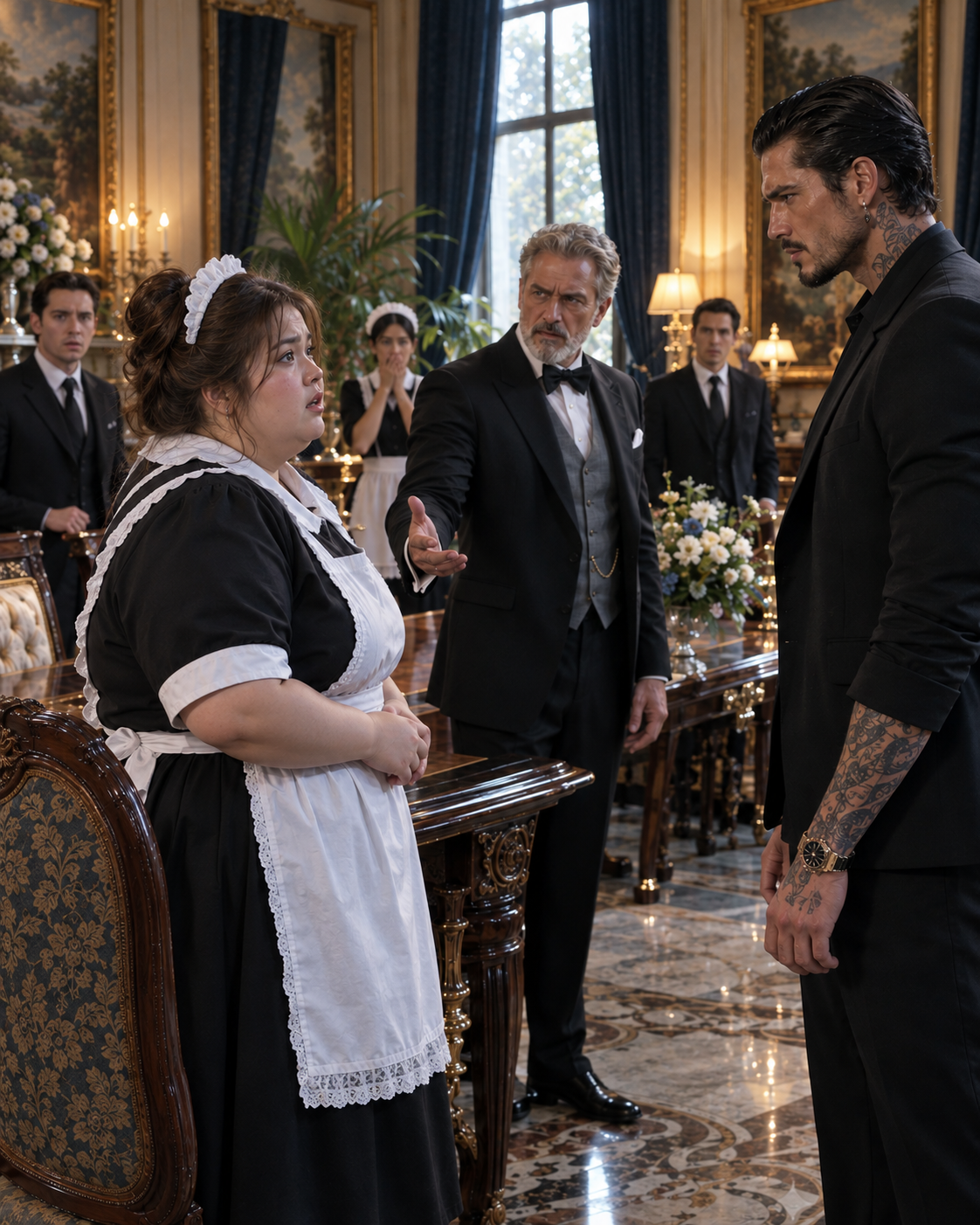
Victor did not.
“Because nobody was supposed to touch it.”
“That isn’t an answer.”
For the first time that evening, something almost resembling amusement crossed Victor’s face.
“No,” he said. “It isn’t.”
He stood and walked toward the empty chair.
Emma watched him carefully.
Victor stopped several feet away.
“My mother died eleven years ago,” he said. “Cancer. Fast enough that none of us were prepared, even though we’d had months to know it was coming.”
His voice had changed.
There was no threat in it now.
Only fatigue.
“She loved this house. She used to sit there every evening. She hated eating alone, so if someone was missing from dinner, she would leave that chair empty until they came back.”
Emma glanced at the chair.
“So the rule began after she died?”
“Yes.”
“Who created it?”
Victor’s silence answered before he did.
“I did.”
Harold lowered his head.
Emma understood.
The rule had not come from tradition.
It had come from grief.
Victor had been the one who had turned a chair into a monument.
He had ordered that nobody move it, nobody sit there, nobody interfere with it. Over time, servants stopped asking questions. New employees were given the rule as if it were part of the architecture.
And eventually, nobody remembered that the rule had been created by a grieving son.
They only remembered that breaking it was forbidden.
Victor looked at the chair.
“After my mother died, I couldn’t stand the idea of someone replacing her.”
Emma said nothing.
“I thought leaving it untouched meant I was protecting her memory.”
“And now?”
Victor’s eyes shifted toward the floor.
“Now I wonder if I was protecting my memory of her instead.”
Emma didn’t answer.
The question hung between them.
Then the door opened.
Harold stepped inside.
“We have confirmation,” he said.
Victor turned.
“From?”
“The external monitoring team.”
Harold held out a tablet.
“They intercepted an encrypted message three minutes ago.”
Victor took it.
His eyes moved across the screen.
The message contained the false warehouse location.
The false route.
The false time.
Everything Victor had deliberately invented at dinner.
Someone had transmitted it.
And the transmission had come from inside Blackwood Manor.
Emma watched Victor’s expression become completely still.
“Where did it originate?” he asked.
Harold swallowed.
“East corridor.”
Victor looked toward him.
“Which room?”
Harold hesitated.
“Miss Adrienne’s study.”
No one spoke.
Emma felt the atmosphere change.
The answer was almost too clean.
Victor stared at the tablet for several seconds.
“Bring her to me.”
Harold nodded.
But before he could leave, Victor stopped him.
“No.”
Harold turned.
Victor placed the tablet on the table.
“Don’t tell her we know.”
“What should we do?”
“Nothing.”
Harold looked confused.
Victor’s voice remained quiet.
“Let her think she got away with it.”
The following morning, Blackwood Manor looked exactly as it always had.
Breakfast arrived at seven.
The newspapers were placed beside the coffee.
The fireplaces were cleaned.
The polished floors reflected the pale winter sunlight.
Nothing appeared different.
But everyone inside the mansion was waiting.
Adrienne came downstairs at eight-thirty.
She wore a cream-colored coat and carried a leather handbag.
She greeted Harold with an easy smile.
“Good morning.”
“Good morning, Miss Blackwood.”
Her eyes moved toward the dining room.
“Is Victor awake?”
“He’s in his office.”
Adrienne nodded.
She walked away.
Harold watched her until she disappeared.
Emma was standing at the far end of the hall with a basket of folded linens.
She had spent the night barely sleeping.
The more she thought about the device beneath the chair, the more questions appeared.
How had someone installed it?
When?
Why beneath that chair?
And most importantly, how had they known that nobody would inspect it?
The answer was becoming obvious.
The superstition itself had become part of the security system.
Not intentionally.
But effectively.
Nobody touched the chair.
Therefore nobody found the device.
Emma suddenly remembered something.
She turned toward Harold.
“Mr. Harold?”
“Yes?”
“When was the chair last repaired?”
Harold frowned.
“I don’t know.”
“Could you find out?”
“Why?”
“The device wasn’t simply placed underneath it.”
Harold stared at her.
Emma lowered her voice.
“There was a wire.”
Understanding appeared slowly on his face.
“You think the chair was modified?”
“I think someone had access to it.”
Harold looked toward the dining room.
“And access would have been easiest during repairs.”
They found the maintenance records before noon.
The chair had been repaired twice in eleven years.
The first time was shortly after Mrs. Blackwood’s death.
The second was three years later.
Both repairs had been approved by someone in the family.
Both involved the same outside furniture company.
But there was a problem.
The company no longer existed.
Victor read the records in silence.
“Who authorized the first repair?” he asked.
Harold looked uncomfortable.
“Your cousin Adrienne.”
Victor slowly closed the folder.
That was the moment suspicion became certainty.
But certainty was not enough.
Victor wanted proof.
He wanted to know how deep the betrayal went.
And he wanted to know whether Adrienne had acted alone.
That evening, he summoned the family for dinner again.
Nobody questioned why.
The invitation was presented as routine.
The same long table.
The same silverware.
The same chandelier.
The same empty chair.
Only this time, Emma noticed something different.
Victor had changed the seating arrangement.
Adrienne sat directly across from him.
Harold stood near the doorway.
Two security officers were hidden beyond the adjoining room.
Emma was stationed beside the sideboard.
Victor entered last.
He sat down.
“Thank you for coming.”
Adrienne smiled.
“You sounded serious.”
“Did I?”
“A little.”
Victor poured himself water.
“I’ve decided to move tomorrow night’s operation forward.”
Adrienne’s fingers paused for the briefest moment.
Emma saw it.
So did Victor.
“The warehouse?” Adrienne asked.
Victor looked at her.
“Yes.”
A tiny smile appeared on Adrienne’s face.
“Joliet?”
Victor nodded.
“Exactly.”
The room remained quiet.
Victor continued.
“There is a problem with the southern access road, though. So the convoy will use the old industrial route instead.”
Adrienne nodded.
“And what time?”
Victor looked directly at her.
“Two in the morning.”
She lowered her eyes.
“That’s early.”
“It needs to be.”
Dinner continued.
Nothing else seemed unusual.
But underneath the table, a security monitor recorded every outgoing signal from the estate.
At 9:14 p.m., a phone connected to the mansion’s encrypted network.
At 9:15, the signal moved.
At 9:16, it disappeared.
Victor waited another minute.
Then he stood.
“Adrienne.”
She looked up.
“Yes?”
“Come with me.”
The color left her face.
Victor walked into the adjoining room.
Harold followed.
Emma remained behind until Victor looked toward her.
“Emma, you too.”
Adrienne entered last.
Victor closed the door.
He placed a tablet on the desk.
On its screen was the intercepted message.
The false route.
The false time.
The false warehouse.
Adrienne stared at it.
Then she looked at Victor.
“I don’t understand.”
“You transmitted it.”
“No.”
Victor’s voice remained calm.
“We tracked the signal.”
Adrienne’s expression tightened.
“You think I betrayed you?”
“I don’t think.”
He turned the screen toward her.
“I know.”
For the first time, Adrienne lost her composure.
She stepped backward.
“You don’t understand what happened.”
“Then explain it.”
She said nothing.
Victor waited.
Seconds passed.
Finally, Adrienne whispered, “It wasn’t supposed to go this far.”
Emma felt a chill.
Victor’s face hardened.
“How far?”
Adrienne closed her eyes.
“I only gave them information.”
“Who?”
She shook her head.
“I don’t know.”
“That’s not true.”
“I never met them directly.”
Victor stepped closer.
“Then how did they contact you?”
Adrienne remained silent.
Harold looked at Victor.
Victor nodded once.
Harold placed another photograph on the desk.
It showed a man standing outside the estate three years earlier.
Adrienne looked at it.
Her reaction was immediate.
“You know him.”
She shook her head.
“You know him.”
“I don’t.”
Victor’s voice became colder.
“His name is Daniel Mercer. He worked for the furniture company that repaired my mother’s chair.”
Adrienne stared at the photograph.
Emma understood.
The broken pieces were finally connecting.
The chair.
The repair.
The hidden device.
The transmissions.
Adrienne.
But Victor wasn’t finished.
“Mercer died two years ago,” he said.
Adrienne looked at him.
“Then who have I been communicating with?”
Victor slid another photograph across the desk.
This one showed a woman.
Adrienne’s face changed.
“No.”
“Your contact.”
“No.”
“You know her.”
Adrienne covered her mouth.
Emma recognized the fear in her eyes.
Not the fear of being caught.
The fear of realizing she had been manipulated.
“She told me she worked for my father,” Adrienne whispered.
Victor went still.
“My father?”
“Your uncle.”
Victor’s jaw tightened.
His father had been dead for twelve years.
But his uncle had been the man who once controlled much of the family operation before Victor took over.
He had also been one of the people who had resented Victor’s rise.
Adrienne had been young at the time.
Vulnerable.
Ambitious.
And desperate to prove that she belonged.
The woman had approached her years earlier.
She had offered information.
Protection.
Money.
And eventually, a sense of importance.
Adrienne had never believed she was destroying the family.
She had convinced herself she was balancing power.
But one compromise had become another.
A message became a location.
A location became a schedule.
A schedule became access to the mansion.
And eventually, a tiny device had appeared beneath a chair nobody dared touch.
Victor looked at his cousin.
“You were the reason they knew when we met.”
Adrienne nodded.
“You were the reason they knew which rooms were secure.”
Another nod.
“You were the reason they knew my plans.”
“I never gave them everything.”
“You gave them enough.”
Adrienne’s eyes filled with tears.
“I thought I could stop.”
Victor looked away.
That sentence seemed to hurt him more than the confession itself.
Because betrayal rarely begins with someone deciding to destroy everything.
Sometimes it begins with a person believing they can control one small secret.
Then another.
Then another.
Victor finally looked at Adrienne again.
“You should have come to me.”
“I was afraid.”
“Of me?”
“Of what would happen if you knew.”
Victor’s expression softened for just a moment.
Then the moment disappeared.
“What happened tonight?”
Adrienne looked down.
“The woman contacted me after dinner.”
“And you sent the information.”
“Yes.”
“Why?”
“She said people were going to die if I didn’t.”
Victor’s eyes narrowed.
“Did you believe her?”
“I don’t know anymore.”
Silence filled the room.
Emma stood quietly near the door.
She suddenly realized that the chair had never really been the center of the story.
It had been the blind spot.
A place where grief had made everyone stop looking.
Victor turned toward her.
“Emma.”
“Yes?”
“You were the only person who questioned it.”
She looked at the chair through the glass doorway.
“I just thought it was crooked.”
Victor almost smiled.
“That saved us.”
He walked back into the dining room.
Everyone else followed.
The empty chair remained where it had always stood.
Victor stopped beside it.
For eleven years, nobody had sat there.
Nobody had touched it.
Nobody had even dusted beneath it properly.
The chair had become sacred because Victor had made it sacred.
But now he looked at it differently.
He ran his fingers across the backrest.
“My mother would have hated this.”
Harold looked surprised.
Victor continued.
“She believed a house was supposed to be lived in.”
He pulled the chair away from the table.
The sound of its legs moving across the floor seemed strangely loud.
Everyone watched.
Victor turned toward Emma.
“Do you know why she chose this chair?”
Emma shook her head.
“She liked being able to see everyone.”
Victor looked around the table.
“That’s all.”
No ritual.
No superstition.
No mystery.
Just a mother who wanted to see the people she loved.
Victor placed the chair back.
But this time, he did not leave it empty.
He looked at Emma.
“Sit.”
She froze.
“Me?”
“Yes.”
Harold’s eyes widened.
Emma glanced at the chair.
“Are you sure?”
Victor nodded.
“For eleven years, I thought keeping this chair empty was how I honored her.”
He looked toward the portrait of his mother hanging on the far wall.
“I was wrong.”
Emma slowly approached.
She hesitated before sitting.
Nothing happened.
No thunder.
No punishment.
No curse.
The mansion did not collapse.
The walls did not change.
The chair was simply a chair.
And for the first time in eleven years, someone was sitting in it.
Victor took his place at the table.
Harold quietly brought another plate.
Emma looked around.
For the first time since she had arrived at Blackwood Manor, the dining room did not feel like a museum.
It felt like a home.
Adrienne was later turned over to the authorities handling the security breach and financial crimes connected to the operation. Victor did not excuse what she had done, but he also refused to let revenge become another family tradition.
The hidden listening device was removed.
Every security system in the mansion was replaced.
The old maintenance records were reviewed.
The furniture company was investigated.
And the rule about the chair was officially erased from the household handbook.
Weeks later, Emma was still working at Blackwood Manor.
One evening, she walked into the dining room and found Victor standing beside his mother’s portrait.
“She would have liked you,” he said.
Emma smiled.
“I think she would have told me not to straighten anything without asking.”
Victor laughed quietly.
“She probably would.”
Emma looked at the chair.
“Do you still miss her?”
Victor took a long breath.
“Every day.”
“Does it hurt less?”
“No.”
He paused.
“But it feels different.”
“How?”
Victor looked toward the table.
“I used to think remembering someone meant keeping everything exactly as it was.”
“And now?”
“Now I think remembering someone means carrying what they taught you forward.”
Emma nodded.
The lesson was simple, but it had taken eleven years for Victor to understand it.
His mother had not asked for an empty chair.
She had asked for people to sit together.
She had not left behind a rule.
She had left behind a way of living.
The chair had never been a symbol of fear.
Fear had been placed upon it by people who were afraid to let go.
That night, Victor invited everyone to dinner.
No one was given a special seat.
No one was told which chair belonged to whom.
The table was simply full.
Conversations overlapped.
Someone laughed.
Harold complained about the kitchen staff.
Emma teased him about the way he folded napkins.
Even Adrienne’s absence, painful as it was, no longer controlled the room.
The empty space left by one person did not have to become a monument.
It could simply be an empty space.
And eventually, someone could fill it with something new.
Years later, Emma would remember that night whenever she found herself afraid to question something everyone else accepted.
She learned that traditions could preserve love, but they could also preserve mistakes.
Rules could protect people, but rules could also create blind spots.
And sometimes the smallest act of noticing could uncover what everyone else had stopped seeing.
Victor learned something too.
Grief did not need to be frozen in place to remain meaningful.
Love did not disappear because a chair was moved.
A memory did not become less sacred because someone finally sat where a loved one once sat.
The most honest way to honor the past was not always to keep it untouched.
Sometimes it was to let it become part of the future.
And in Blackwood Manor, the chair that had once represented everything the family had lost became something entirely different.
A place where people gathered.
A place where stories were told.
A place where nobody was afraid to sit.
A place where the past could finally breathe.
Because in the end, Emma had not merely moved a chair a few inches.
She had moved an entire family out of the shadow of its grief.
THE END.