“Then go, Eleanor. If being my wife is such a burden, you’re free to leave.”
“Please,” Christopher Vale said, standing in the doorway of the village school. “There’s something about Her Grace that you need to understand before you make any decisions.”
Julian slowly closed the account book.
For the first time in years, he looked at his steward not as a trusted servant, but as a man whose words he could no longer believe.
“Then speak,” Julian replied. “And I suggest you choose your words carefully.”
Christopher glanced at the headmistress before stepping farther into the room.
“Your Grace, the duchess has never been entirely honest with you. She has been using her own money to interfere with estate matters. She has encouraged the tenants to question your authority. She has even persuaded several workers to ignore instructions from my office.”
Julian said nothing.
Christopher seemed encouraged by his silence.
“I have spent years trying to protect your interests. Her Grace simply doesn’t understand how difficult it is to manage an estate of this size. She makes promises without considering the cost. I had to prevent certain matters from reaching you because they would only have caused unnecessary conflict.”
Julian looked down at the account book again.
“Then explain these figures.”
Christopher’s expression changed.
“Those are ordinary administrative expenses.”
“Ordinary?”
“Yes, Your Grace.”
Julian turned a page.
“And these payments to a company that appears to have no registered connection to Ashcombe?”
Christopher hesitated.
“The company handled several private purchases.”
“Private purchases?”
“Nothing of importance.”
Julian raised his eyes.
“Then you will have no difficulty explaining why estate money was transferred into an account bearing your name.”
The room became completely silent.
The headmistress stepped back, sensing that something far greater than a disagreement over school repairs was unfolding.
Christopher swallowed.
“Your Grace, I can explain.”
“You have had years to explain. Now you will do so in front of an independent accountant.”
Christopher’s confidence finally disappeared.
Julian ordered him to surrender the estate records and keys. He also instructed the house steward to ensure that no documents were destroyed or removed.
Christopher tried one final time.
“Your Grace, you cannot seriously be taking the word of a village schoolmistress over the man who has served your family for generations.”
Julian looked at the broken windows, the damaged desks, and the children sitting quietly with books that had been repaired so many times that their pages were falling apart.
“No,” he answered. “I am taking the evidence seriously. Something I should have done a long time ago.”
That afternoon, Julian returned to Ashcombe Manor with a different kind of anger.
It was no longer directed at his wife for challenging him.
It was directed at himself for allowing his pride to make him blind.
For six years, he had believed that running an estate meant giving orders and expecting them to be followed. He had mistaken silence for loyalty and obedience for respect.
Now he was beginning to understand how much damage that belief had caused.
He summoned the senior household staff and instructed them to prepare every financial record from the previous six years.
He then contacted an independent solicitor and an accountant from London.
Christopher was not permitted to handle another estate transaction while the investigation continued.
By evening, the first results were already troubling.
Several payments intended for tenant repairs had been redirected. Funds allocated to agricultural improvements had disappeared. Requests for school supplies had been marked as unnecessary, even when the money had already been approved.
But the most painful discovery was not the missing money.
It was the letters.
Julian found dozens of them in a locked cabinet in Christopher’s office.
Some were from Eleanor.
Others came from tenants, workers, and local families who had asked for help.
Several had been returned with false notes claiming that the requests had been handled.
One letter was particularly difficult to read.
It was written in Eleanor’s hand and dated nearly two years earlier.
She had explained that the school was in danger of closing. She had asked Julian to visit it personally, even if he could spare only an hour.
At the bottom, she had written:
“I know you believe these matters are beneath your attention. But one day, when those children are old enough to ask why no one helped them, I hope we will have an answer that does not make us ashamed.”
Julian read the sentence twice.
Then he sat down.
He remembered that day.
He had been irritated because Eleanor had interrupted a meeting about a property dispute. He had told her to leave estate matters to the people who understood them.
He had never read the letter.
Christopher had removed it before it reached his desk.
But the truth did not excuse everything.
Julian had been the one who refused to listen.
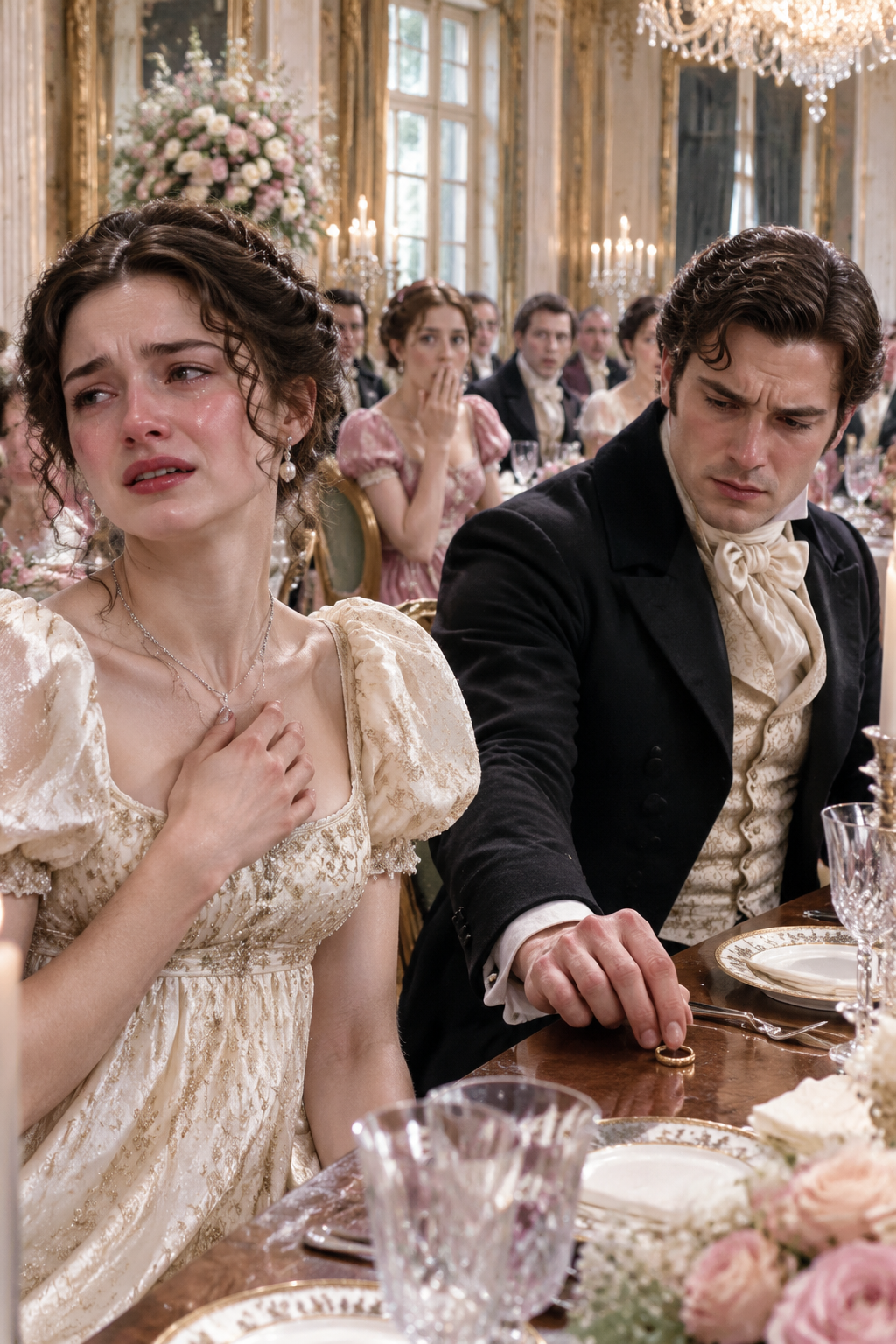
He had been the one who dismissed his wife’s concerns without asking for proof.
He had been the one who made her feel that her thoughts had no value in her own home.
No steward had forced him to behave that way.
That night, Julian did something he had rarely done.
He asked himself whether he deserved the loyalty he had always demanded from others.
The following morning, the investigation continued.
The accountant discovered that Christopher had diverted a substantial amount of estate money over several years. Some of it had been used to purchase property in his own name. Other amounts had disappeared through false invoices and payments to companies controlled by acquaintances.
The school was only one part of a much larger pattern.
Christopher had not simply neglected Eleanor’s requests. He had deliberately made her appear unreasonable whenever she questioned the estate accounts.
He had convinced Julian that his wife was interfering with matters she did not understand.
And because Julian had trusted Christopher more than he trusted Eleanor, the deception had worked.
When confronted with the records, Christopher eventually admitted that he had taken money.
He claimed that the sums were temporary loans and insisted that he had intended to repay them.
But the accountant’s findings showed otherwise.
Julian dismissed him immediately and arranged for the matter to be handled through the proper legal channels.
He did not allow Christopher’s long service to become an excuse for dishonesty.
Yet even after the steward was gone, Julian felt no sense of victory.
He had uncovered the truth, but he could not undo the years Eleanor had spent trying to make him see it.
And he could not simply send her a letter asking her to come home.
For the first time, he understood that an apology was not a key that automatically opened a locked door.
Meanwhile, Eleanor was living in a modest house on the edge of a neighboring town.
It was not luxurious, but it was peaceful.
She had brought a few dresses, several books, and the translation papers she had been working on before leaving Ashcombe Manor.
For the first few days, she hardly slept.
She would wake in the middle of the night expecting to hear Julian’s footsteps in the hallway.
Sometimes she still reached for the wedding ring she no longer wore.
Then she would remember the argument, the coldness in his voice, and the words that had finally made her leave.
She missed the beautiful gardens at Ashcombe.
She missed the familiar rooms and the quiet mornings when the sunlight entered through the tall windows.
But she did not miss feeling invisible.
She had spent six years learning how to make herself smaller so that her husband would never feel challenged.
She had carefully chosen her words, swallowed her disappointment, and accepted explanations that never truly answered her questions.
She had told herself that marriage required patience.
But she was beginning to understand that patience should not mean abandoning one’s dignity.
A few days after her arrival, a letter came from the headmistress of the village school.
Eleanor opened it eagerly.
The woman explained that Julian had visited the school and discovered what had been happening. He had ordered an investigation and promised that the children would not lose their education.
The headmistress also mentioned that the duke had looked deeply troubled.
Eleanor read the letter several times.
She felt relief for the children.
That was all.
At least, that was what she told herself.
She did not write back to Julian.
She did not ask whether he had dismissed Christopher.
She did not send word that she was willing to return.
She had learned that a promise made in the middle of a crisis could disappear once the crisis passed.
If Julian truly wanted to change, he would have to prove it without expecting a reward.
And she would have to decide what she wanted without allowing guilt to make the decision for her.
Two weeks later, Julian made his first attempt to contact her.
He sent a letter through the family solicitor.
It was short, without excuses or demands.
“Eleanor,
I have discovered the truth about the school and the estate accounts. Christopher deceived me, but I will not use that fact to excuse my own behavior.
You tried to speak to me, and I refused to listen. You deserved a husband who respected your judgment, not one who treated disagreement as disobedience.
I am sorry.
I will not ask you to return. I only hope that one day you might allow me the opportunity to speak with you.
Julian.”
Eleanor folded the letter carefully.
She placed it in a drawer rather than throwing it away.
For the first time, Julian had acknowledged that the problem was not simply the steward’s dishonesty.
It was his own treatment of her.
But an honest letter could not erase six years.
She needed time.
And Julian, who had spent much of his marriage expecting things to happen according to his wishes, would have to learn how to wait.
In the weeks that followed, he began making changes at Ashcombe.
He did not simply order a new roof for the school and consider the matter settled.
He visited the tenants’ cottages, listened to complaints, and asked questions without interrupting.
He discovered that several families had been struggling with rising rents and poor harvests.
He also learned that many workers had stopped reporting problems because they believed their concerns would never reach him.
He was ashamed.
He had always considered himself a fair landowner.
Yet he had judged the success of his estate by the condition of his own accounts and the appearance of his own household.
He had rarely asked whether the people whose labor sustained his wealth were living with dignity.
This time, he listened.
He ordered repairs to the tenants’ homes, reviewed the rental arrangements, and established regular meetings where workers could raise concerns without fear of punishment.
The school received immediate repairs.
New desks and books were purchased. The leaking roof was replaced, the windows were repaired, and the classrooms were made warm enough for winter.
But Julian knew that the most important decision concerned its future.
He instructed his solicitor to establish an independent perpetual trust for the school.
The trust would hold dedicated funds that could not be casually redirected by the estate steward or any future duke.
Its administration would be overseen by independent trustees, including representatives from the local community.
The school would no longer depend on the goodwill of one powerful family.
It would have a secure future of its own.
When the headmistress learned of the arrangement, she was almost unable to speak.
“Your Grace,” she said, “this is more than we ever dared to hope for.”
Julian looked at the children studying in their repaired classroom.
“No,” he replied quietly. “It is what they should have had all along.”
He made one more decision.
Eleanor’s name would not be used to promote the changes.
He would not tell the village that he was doing all this because he wanted his wife back.
He would not turn her kindness into a public story that could pressure her into forgiving him.
The school belonged to the children.
The trust belonged to their future.
And Eleanor owed him nothing in return.
Several weeks later, the school held a small reopening ceremony.
The villagers gathered in the courtyard. The children sang a song they had practiced with their teacher, and the headmistress thanked everyone who had helped.
Julian stood near the back.
He did not take the central position or make a grand speech about his generosity.
When he was invited to say a few words, he stepped forward and looked at the families.
“I have made mistakes,” he began. “For too long, I believed that responsibility meant giving instructions and expecting others to follow them. I was wrong. A person cannot claim to care for a community while refusing to hear its needs.”
He paused.
“This school was neglected because I failed to pay attention. I will not pretend otherwise. I hope the changes we have made will serve these children long after I am gone.”
The villagers listened quietly.
Some nodded.
Others still looked uncertain.
Julian did not expect immediate forgiveness.
He had finally learned that trust was not restored by a speech.
It was restored by consistent actions.
Later that afternoon, the headmistress approached him with a small parcel.
“Her Grace left this here some time ago,” she said. “I thought you should have it.”
Julian opened it.
Inside was a collection of handwritten lesson plans, several children’s drawings, and a small note.
The note was brief.
“For the little ones who believe they are not important enough to be heard.”
He recognized Eleanor’s handwriting immediately.
For a long time, he stood without moving.
Then he carefully folded the note and placed it inside his coat.
That evening, he wrote another letter.
This one was different.
He did not ask her to return.
He told her about the reopening, the trust, and the changes being made across the estate. He also told her that he had found her old lesson plans.
At the end, he wrote:
“I hope you know that the school will continue whether you return to Ashcombe or not. It should never have depended on your sacrifices. I am grateful for what you did, and I am sorry I made you do it alone.”
Eleanor received the letter three days later.
She read it beside the window of her small house.
For several minutes, she simply watched the rain falling over the garden.
Something had changed.
Not enough to make her forget.
Not enough to make her run back into Julian’s arms.
But enough to make her wonder whether the man she had left was beginning to understand what marriage was supposed to mean.
She wrote a reply.
“Thank you for telling me about the school. I am glad the children will be safe.
I hope you continue listening, even when the people speaking disagree with you.
Eleanor.”
Julian read the letter several times.
It was not a declaration of love.
It was not an invitation home.
But it was an answer.
And he was grateful for it.
He did not send another letter immediately.
Instead, he continued his work.
Months passed.
The estate gradually became a different place.
The workers began reporting problems without fear. The accounts were reviewed regularly by independent auditors. Decisions about tenant welfare were discussed openly.
Julian also discovered something unexpected.
When he stopped demanding that everyone agree with him, he began receiving better advice.
Some of the best ideas came from people he had barely noticed before.
A farm worker suggested a better way to manage the water supply. A tenant’s wife proposed a community garden that eventually provided fresh vegetables for several families. The headmistress recommended scholarships for students who wished to continue their education.
Julian listened to all of them.
He was still a duke, but he was slowly learning that his title did not make him the wisest person in every room.
Meanwhile, Eleanor’s life was beginning to take shape.
Her translation work became more successful.
A London publisher offered her a long-term contract after reviewing several of her manuscripts.
For the first time, she earned enough to support herself comfortably without depending on the Ashcombe estate.
She rented a pleasant house with a small library and a garden where she could read in the mornings.
She made friends with other women who shared her interests.
She attended lectures, visited bookshops, and spent afternoons discussing literature.
She had never realized how much of herself she had set aside during her marriage.
There were moments when she missed Julian.
She remembered the few occasions when they had laughed together, before silence became their usual language.
She remembered his kindness during the early months of their marriage, when he had seemed genuinely interested in her thoughts.
But she also remembered the years that followed.
She would not return to the same marriage simply because the house had become more comfortable.
If there was ever to be another beginning, it would have to be a different relationship.
One afternoon, nearly four months after leaving Ashcombe, Eleanor received an unexpected visitor.
It was the headmistress.
She had traveled to town to purchase books for the school and asked whether Eleanor might spare an hour.
They sat together in a small tea room.
The headmistress told her about the new classrooms, the scholarships, and the trust.
Then she smiled.
“The children still talk about you.”
Eleanor’s eyes softened.
“They should be talking about their teachers. I only helped where I could.”
“They know the difference between someone who gives orders and someone who truly cares.”
Eleanor looked down at her cup.
The headmistress hesitated before continuing.
“The duke visits every month now. Sometimes more often. He sits with the children and asks what they are learning. He even attended the school play last week.”
Eleanor smiled faintly.
“That sounds rather unlike him.”
“It is,” the headmistress admitted. “But I think he is trying.”
They spoke for a while longer.
Before leaving, the headmistress said something that stayed with Eleanor.
“He never asks us to persuade you to return. Not once. In fact, he told me that the school must never become a reason for you to feel obligated to him.”
Eleanor looked toward the window.
That mattered more than she expected.
It meant Julian had finally understood that kindness was not a debt.
Still, she was not ready to go back.
And she did not want anyone deciding that she should.
Another month passed before Julian saw her again.
He had traveled to town for a meeting with his solicitor when he noticed Eleanor leaving a bookshop.
For a moment, he thought his eyes were deceiving him.
She was wearing a simple blue dress and carrying several books against her chest.
She looked different.
Not because she had changed her appearance, but because she seemed lighter.
She was smiling at the shopkeeper.
Julian almost approached her immediately.
Then he stopped.
He remembered his promise not to demand anything from her.
He could simply walk away and allow her to continue her day.
But Eleanor noticed him.
Their eyes met.
Neither spoke for several seconds.
Finally, Julian inclined his head.
“Good afternoon, Eleanor.”
“Good afternoon, Julian.”
He was surprised she had used his name rather than his title.
“Would you mind if I walked with you for a little while?”
She considered the request.
“I suppose a short walk would be all right.”
They walked along the quiet street.
At first, the conversation was awkward.
Julian asked about her translation work. Eleanor told him about the publisher and the book she was currently working on.
He listened with genuine interest.
When she mentioned a difficult passage she had been translating, he asked questions instead of pretending to understand everything.
It was a small thing.
But Eleanor noticed.
Eventually, they reached a park bench.
Julian stopped.
“May I ask you something?”
“You may.”
“Are you happy?”
Eleanor looked at him.
It was not the question she had expected.
“I am learning to be,” she answered honestly.
He nodded.
“I am glad.”
She studied his face.
“You look tired.”
“I have been working rather hard.”
“Running an estate properly?”
A faint smile appeared on his face.
“Trying to.”
For the first time in months, Eleanor laughed.
It was a small laugh, but Julian felt something loosen inside his chest.
He did not attempt to turn the moment into a declaration.
Instead, he said, “I owe you an apology that I don’t expect you to accept simply because I have finally learned to make one.”
Eleanor remained silent.
“I treated your opinions as challenges to my authority. I made you feel that your place in my life depended on how quietly you could disagree with me. I was wrong.”
He took a breath.
“You were my wife, not my subordinate. I should have understood that from the beginning.”
Eleanor looked away.
There had been so many nights when she had wished to hear those exact words.
Now that they had finally come, she discovered that hearing them did not erase the hurt.
“Why did it take me leaving for you to understand?” she asked.
Julian did not try to defend himself.
“Because I was selfish. Because I had become comfortable with being obeyed. And because I confused having power with being right.”
He looked down at his hands.
“I cannot change the man I was. But I can choose what kind of man I become.”
Eleanor watched him carefully.
“And what do you want from me?”
He answered without hesitation.
“I would like to know you again. Not as the duchess who must return to her husband, but as the woman I should have listened to all along.”
She looked at him for a long moment.
“I cannot promise that I will return.”
“I know.”
“I cannot promise that I will ever trust you the way I once did.”
“I understand.”
“And I will not give up my work.”
“I would never ask you to.”
Eleanor’s expression softened slightly.
“Then perhaps we can have tea another day.”
Julian smiled.
“I would like that very much.”
It was not a reunion.
It was not forgiveness.
It was simply the beginning of a conversation that had been missing from their marriage for years.
And for once, neither of them tried to control where it would lead.
Their meetings became occasional at first.
Sometimes they had tea.
Sometimes they walked through the park.
Sometimes they discussed books, the school, or the latest developments at Ashcombe.
There were difficult conversations, too.
Eleanor told Julian how lonely she had felt during their marriage. She spoke about the times he had interrupted her, dismissed her concerns, or made decisions that affected her without asking her opinion.
Julian listened.
He did not interrupt to explain what he had intended.
He did not tell her that she was remembering things incorrectly.
He allowed her to finish.
Some evenings, he returned to Ashcombe feeling as though every sentence had revealed another part of himself that he needed to change.
But he did not resent her honesty.
He had finally learned that listening was not a punishment.
It was an act of respect.
Eleanor, in turn, began to see that Julian’s changes were not limited to their meetings.
The estate continued to improve.
He established a council that included tenant representatives and household employees. He consulted the school before making decisions about its needs. He also encouraged young women from the village to apply for scholarships, regardless of their families’ financial circumstances.
The school became a place of opportunity rather than a reminder of neglect.
One day, Eleanor received an invitation from the headmistress.
The school was holding its first annual scholarship ceremony, and the children had asked whether she would attend.
She hesitated.
Julian’s name was also on the invitation.
But she eventually accepted.
On the day of the ceremony, she arrived in a modest cream-colored dress.
The school looked almost unrecognizable.
The repaired building stood bright and welcoming beneath the afternoon sun. Flowers decorated the entrance, and the children waited excitedly in the courtyard.
The headmistress greeted Eleanor warmly.
“You must see what they have prepared.”
She led her into the main classroom.
On the front wall hung a large wooden sign.
It read:
“Every Child Deserves to Be Heard.”
Eleanor felt tears gather in her eyes.
It was not a monument to her.
It was a promise to the children.
During the ceremony, several students received scholarships to continue their education.
One girl, a quiet child named Mary, stepped forward to accept her award.
She was perhaps twelve years old.
Her hands trembled as she held the certificate.
“My father says I can become a teacher one day,” she told the audience. “I want to help girls who think they cannot do anything because they are poor.”
The room filled with applause.
Eleanor smiled through her tears.
After the ceremony, Mary approached her.
“Your Grace, are you the lady who used to bring us books?”
Eleanor knelt slightly so they were at eye level.
“I am.”
Mary smiled.
“Thank you for believing we were worth helping.”
Eleanor gently squeezed her hand.
“You were always worth helping, dear. Never forget that.”
From across the courtyard, Julian watched them.
He remembered the woman he had once accused of interfering in his affairs.
Now he understood that she had been doing what he should have done himself.
When the ceremony ended, he approached her.
“Would you like to walk around the garden?”
Eleanor nodded.
They walked past the new classrooms and the small library.
For a while, neither spoke.
Then Julian stopped beside a rosebush.
“I have something I would like to tell you.”
Eleanor turned toward him.
He reached into his coat and removed a small velvet box.
Her expression changed.
“Julian…”
“Please, let me explain.”
He opened the box.
Inside was her wedding ring.
The same ring she had left on the table the day she walked out of Ashcombe Manor.
“I found it exactly where you left it,” he said. “I have kept it safe. But I don’t want you to feel that you must wear it again.”
Eleanor looked at the ring.
For months, she had imagined what she would say if he ever returned it to her.
She had expected anger, perhaps.
Or sadness.
But now she felt something more complicated.
Julian closed the box.
“I am not asking you to put it on. I only wanted you to have it back. Whatever happens between us, it belongs to you.”
Eleanor looked at him.
“Do you still want me to be your wife?”
“Yes,” he said quietly. “But I no longer believe that wanting something gives me the right to demand it.”
She looked down at the ring once more.
“Then I think we should continue as we are.”
He nodded.
“Of course.”
They returned to the ceremony without another word.
But Eleanor carried the small box with her.
That evening, she placed it on the table beside her bed.
She did not put the ring on.
Not yet.
Over the following months, their relationship continued to grow.
There were moments when Eleanor became distant because an old memory had returned unexpectedly. There were times when Julian misunderstood something and had to learn to ask rather than assume.
They were not transformed into perfect people.
But they were becoming more honest.
For the first time, they discussed their expectations openly.
Eleanor told him that if they were ever to share a home again, she wanted her translation work to remain part of her life.
Julian agreed.
She wanted a voice in decisions that affected the estate, not because she was a duchess, but because she had knowledge and experience worth respecting.
He agreed to that as well.
She wanted the freedom to disagree without fearing that disagreement would cost her affection.
Julian promised to work toward that.
And when he made mistakes, she expected him to acknowledge them rather than hide behind his title.
He did not promise that he would never fail.
He promised that he would never again use his position to silence her.
Slowly, Eleanor began to believe him.
One spring morning, almost a year after she had left Ashcombe, Julian invited her to visit the manor.
He made it clear that she could refuse.
She accepted.
The house looked much the same from the outside.
The tall windows still reflected the morning sunlight, and the gardens were filled with flowers.
But something inside felt different.
The servants greeted Eleanor warmly.
Several remembered her kindness and welcomed her without asking when she would return permanently.
Her former sitting room had been left untouched.
Her books were still arranged on the shelves.
But Julian had also prepared a new study overlooking the garden.
It contained a large desk, shelves for her translation manuscripts, and a comfortable reading chair.
Eleanor looked around.
“You did this for me?”
“I thought you might like a place to work if you ever chose to spend time here.”
She ran her fingers over the desk.
“It is lovely.”
“I wanted you to have a room that was yours. Not simply a room assigned to the duchess.”
She turned toward him.
“You have changed.”
“I hope so.”
She smiled.
“Don’t become too pleased with yourself. There is still a great deal you have to learn.”
Julian laughed.
“I would be disappointed if you stopped teaching me.”
They spent the afternoon walking through the gardens.
When they reached the old rose arbor, Eleanor stopped.
It was the place where she had once imagined growing old beside him.
For years, that dream had seemed impossible.
Now it no longer felt like a dream she had to surrender completely.
Julian stood beside her.
“I have been thinking about the future,” he said.
“So have I.”
“I don’t want us to return to the marriage we had before. That marriage was not good for either of us.”
Eleanor nodded.
“Then what do you want?”
“I want to build something better. Something where neither of us has to disappear to keep the peace.”
He paused.
“I want to be your partner. Not your master. Not the man whose approval you must earn. Your partner.”
Eleanor looked at him for a long time.
“And when we disagree?”
“We talk.”
“And when you are angry?”
“I try to remember that anger does not give me permission to hurt you.”
“And when I am right?”
He smiled.
“Then I shall have to find the courage to admit it.”
She laughed.
This time, the sound came easily.
A few weeks later, Eleanor made her decision.
She had spent nearly a year living independently, rebuilding her confidence and discovering what she wanted from life.
She was not returning because she had nowhere else to go.
She was not returning because a duke had asked her to.
She was not returning because the villagers needed her or because the estate had become more generous.
She was choosing to give Julian another chance because she had seen him change, because he had respected her freedom, and because she believed they could build a marriage that was different from the one they had lost.
One evening, she invited him to meet her at the small house where she had been living.
When Julian arrived, she was waiting beside the fireplace.
On the table between them lay the velvet box.
He looked at it.
Then he looked at her.
“Eleanor?”
She opened the box.
The wedding ring rested inside.
“I have been thinking about what marriage should mean,” she said.
Julian remained completely still.
“I once believed that loving someone meant learning to endure whatever they could not give you. I thought patience meant staying quiet. I thought being a good wife meant never making my husband uncomfortable.”
She took a breath.
“I was wrong.”
Julian listened without interrupting.
“I don’t want that kind of marriage again. I won’t live that way.”
“You shouldn’t have to.”
“I want a life where we can both speak freely. Where our work matters. Where our decisions are made together. And where neither of us has to surrender our dignity to prove our love.”
Julian’s eyes grew moist.
“That is the only kind of marriage I want now, too.”
Eleanor picked up the ring.
For a moment, she held it between her fingers.
Then, slowly, she slipped it onto her hand.
Julian looked at her, almost afraid to breathe.
But she did not reach for him immediately.
Instead, she smiled.
“This time, I am choosing it.”
He nodded, his voice unsteady.
“And this time, I will spend the rest of my life making sure you never have to regret that choice.”
She stepped closer.
He took her hand gently, giving her every opportunity to change her mind.
But she did not pull away.
Their embrace was quiet.
There were no grand promises that everything would suddenly become perfect.
There was only the understanding that love could not survive on affection alone.
It needed honesty, respect, patience, and the freedom for two people to remain themselves.
Several months later, Eleanor returned to Ashcombe Manor permanently.
But the woman who entered the house was not the same woman who had left it.
She no longer believed that her title defined her worth.
She continued her translation work and helped establish educational opportunities for girls across the estate.
Julian never again expected her to abandon her interests for the sake of appearances.
They began holding regular meetings with the estate council together, and Eleanor’s advice was valued not because she was his wife, but because her judgment deserved to be heard.
Their marriage was not without disagreements.
Sometimes Julian became stubborn.
Sometimes Eleanor became impatient.
But they learned to speak before resentment had time to grow.
They learned that saying “I was wrong” did not make either of them weaker.
It made their relationship stronger.
And every year, they returned to the village school for the scholarship ceremony.
The school continued to grow under its independent trust.
More girls received opportunities to study. Some became teachers, others nurses, writers, and businesswomen.
Mary, the quiet girl who had once trembled while accepting her first scholarship, eventually returned to the village as a teacher.
On her first day, Eleanor sat in the back of the classroom.
Mary smiled when she saw her.
“Your Grace, I hope you know how much this place has changed my life.”
Eleanor looked around at the bright room filled with children.
“You changed your own life, Mary. We only made sure you had a fair chance.”
Julian stood beside her.
For a moment, their eyes met.
Neither needed to say anything.
They both knew what the school represented.
It was proof that a person’s worth should never be measured by wealth, position, or the power to command others.
Years earlier, Julian had believed that his title made him deserving of obedience.
He had almost lost the person he loved because he confused authority with respect.
Eleanor had believed that love required endless sacrifice.
She had nearly lost herself trying to preserve a marriage that left no room for her voice.
They had both learned difficult lessons.
Julian learned that being a good leader did not mean ensuring that everyone obeyed him. It meant listening, taking responsibility, and using his power to protect those who had less.
Eleanor learned that compassion did not require self-erasure. She could love someone without surrendering her independence, and she could forgive without pretending that the past had never hurt her.
One evening, long after the children had gone home, Julian and Eleanor walked through the school garden.
He reached for her hand.
She took it.
“Do you ever think about the day you left?” he asked.
“Sometimes.”
“Do you regret it?”
Eleanor considered the question.
“No. I think it was the first time I truly listened to myself.”
Julian lowered his eyes.
“I wish I had listened to you before it came to that.”
“So do I,” she replied gently. “But we cannot change the years behind us.”
He looked at the school building.
“No. But perhaps we can make the years ahead of us better.”
Eleanor smiled.
“That sounds like a good place to start.”
They continued walking beneath the fading evening light.
The wedding ring on Eleanor’s hand caught the last rays of sunlight.
It was no longer a symbol of a promise she was expected to keep at any cost.
It was a promise she had freely chosen to make again.
And that made all the difference.
Because the greatest lesson of their story was not that a husband could win back his wife through grand gestures, or that a marriage could be repaired simply by admitting a mistake.
It was that genuine love must leave room for two people to stand as equals.
An apology matters, but changed behavior gives it meaning.
Forgiveness can open a door, but it cannot be demanded.
And sometimes, the bravest thing a person can do is walk away from a life that has made them feel small.
Not because they have stopped loving someone, but because they have finally learned to love themselves.
Julian once told Eleanor she was free to leave.
He never understood the weight of those words until she actually did.
And when she finally returned, it was not because he had called her back.
It was because he had become a man she could choose again.
That time, neither of them mistook silence for peace.
And neither of them mistook obedience for love.
THE END.