Thea Bright had spent years believing that justice lived somewhere between the polished marble floors of a prestigious Manhattan law firm and the solemn words spoken inside an American courtroom
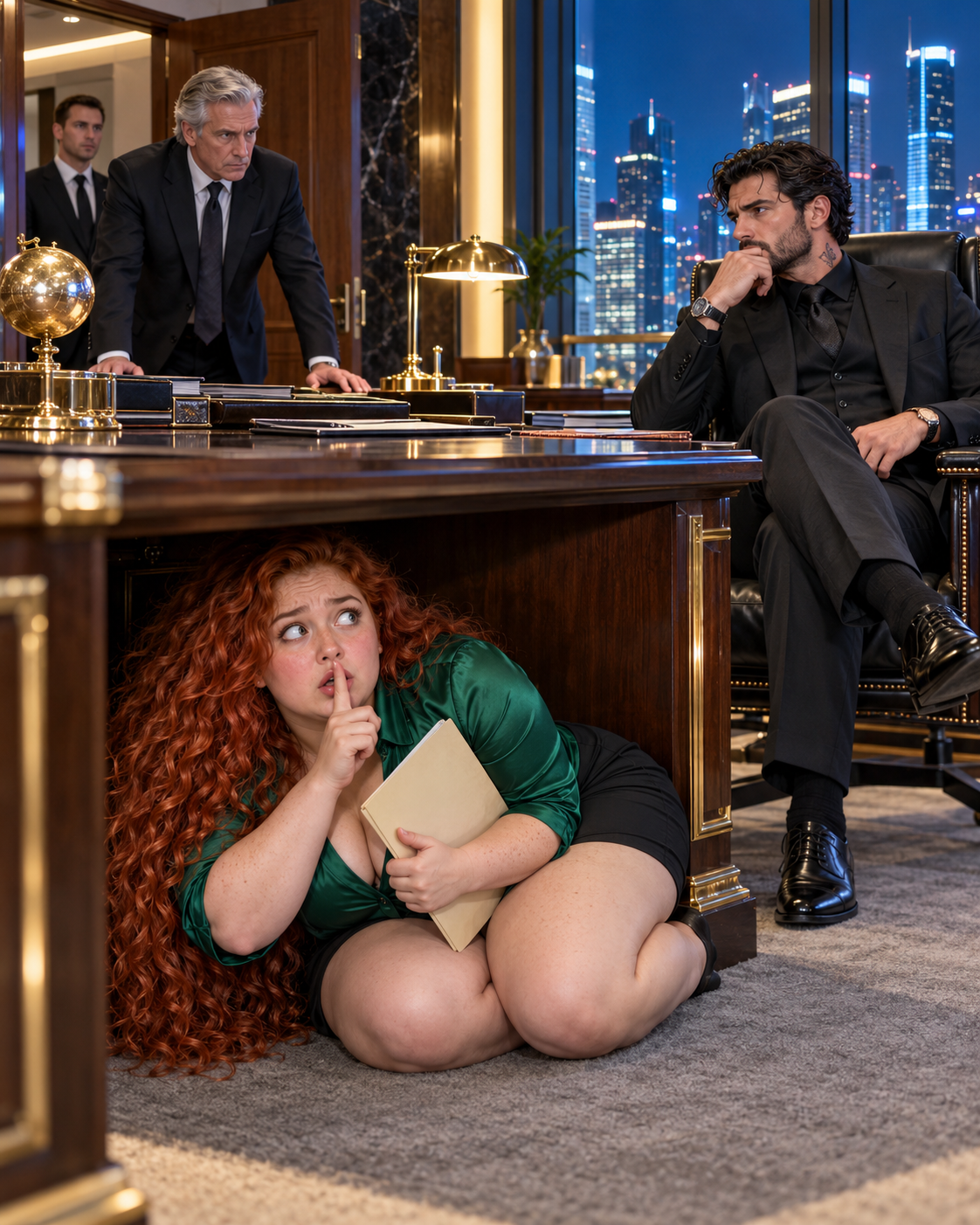
Thea Bright stood frozen in Dominic Volpi’s private office, the encrypted storage device pressing into her palm as Charles Whitmore’s voice echoed through the intercom.
Outside, Manhattan glittered beneath the midnight rain, but inside the room, the silence felt heavier than the storm.
“Dominic,” Whitmore repeated, his voice almost amused, “you cannot protect her from something you helped create.”
Thea slowly turned toward the man who had offered her sanctuary.
“What is he talking about?”
Dominic’s expression hardened, but something flickered behind his dark eyes that she had not seen before.
Regret.
“There’s something you need to understand,” he said quietly. “Three years ago, I financed a real estate project through one of Halloway’s investment companies.”
Thea stared at him.
“What does that have to do with a little boy’s death?”
“More than I knew at the time.”
Before he could continue, a violent knock shook the office doors.
“Open up, Dominic,” Whitmore called. “We can still handle this like gentlemen.”
Dominic looked toward the security monitor.
Whitmore stood outside with two broad-shouldered men in dark coats, neither wearing the expression of someone expecting a civilized conversation.
Dominic pressed a concealed button beneath his desk.
Somewhere behind the walls, heavy steel locks engaged.
“You have about four minutes before my security team gets here,” he told Thea. “Use them wisely.”
“For what?”
“To decide whether you trust me enough to hear the truth.”
Thea looked at the encrypted device in her hand.
Then she opened her laptop.
“Tell me everything.”
Dominic exhaled slowly.
“Three years ago, Richard Halloway began acquiring old apartment buildings across Brooklyn. His company promised affordable housing renovations, safer neighborhoods, and better living conditions for working families.”
Thea knew the advertisements.
They had appeared on subway platforms and local television stations, showing smiling children playing outside newly painted buildings.
“Halloway was celebrated for it,” she said.
“He was celebrated for the publicity. What actually happened was different.”
Dominic moved closer to the desk.
“Maintenance budgets disappeared. Safety inspections were approved without proper repairs. Contractors submitted invoices for work that was never completed.”
Thea felt a familiar chill.
“What building?”
Dominic hesitated.
“Riverside Gardens.”
Her stomach dropped.
That was where eight-year-old Noah Bennett had died.
Thea remembered every detail of the lawsuit.
The leaking ceiling.
The electrical fault.
The apartment fire that had spread through the family’s kitchen before sunrise.
The mother who had begged the building management company for repairs six separate times.
And the child who never made it out.
“You owned that building?” Thea whispered.
“Not directly. My investment company held a minority interest in the redevelopment portfolio. I didn’t manage Riverside Gardens, and I was told the buildings had passed independent inspections.”
“But you believed them.”
“Yes.”
The answer was painfully simple.
Dominic looked away.
“Until the fire.”
A sharp metallic impact sounded from the hallway.
Whitmore’s men were attempting to force the security panel.
Thea flinched, but Dominic continued.
“After Noah died, I ordered an independent review. The inspectors found something disturbing. The fire alarm system had been reported defective months before the fire, and the required repairs were never completed.”
“Then why didn’t that report appear in the lawsuit?”
“Because the report disappeared before it reached the court.”
Thea looked at him with growing horror.
“And you knew?”
“I knew someone was hiding something. I didn’t know who had taken the report, and I couldn’t prove what happened.”
“You could have gone to the police.”
“I did. Through my attorneys. By the time investigators requested the records, the original files had been replaced.”
Thea swallowed hard.
The pieces were beginning to connect.
Halloway’s redevelopment company.
Whitmore’s prestigious law firm.
The altered electronic evidence.
And the grieving mother who had spent two years fighting for answers.
“You were investigating them,” she realized.
Dominic nodded.
“And tonight, you found the evidence I couldn’t.”
The office lights suddenly dimmed.
A warning tone sounded near the door.
“Dominic,” Thea said, “they’re cutting the power.”
“Only to the outer security system.”
He reached for his phone.
But before he could make a call, Thea noticed something unusual on her laptop.
The encrypted device had connected automatically.
A password field appeared.
Below it were four words.
FOR NOAH. FIND THE ORIGINAL.
Thea froze.
“Dominic, who created this drive?”
“An investigator who worked for me.”
“What’s his name?”
“Daniel Mercer.”
Her eyes widened.
Daniel Mercer had been listed as a potential witness in the wrongful-death case.
According to the firm’s records, he had withdrawn his statement and moved overseas.
“Your investigator disappeared,” she said.
Dominic nodded grimly.
“Six months ago.”
Thea looked at the password prompt again.
Then she remembered a photograph from Noah’s case file.
A smiling boy standing beside a small birthday cake.
Eight candles.
A blue paper crown.
And a handwritten note from his mother.
Noah, my brightest star.
Thea typed BRIGHTESTSTAR.
The screen unlocked.
For several seconds, neither of them spoke.
Then dozens of folders appeared.
Inspection records.
Construction invoices.
Internal correspondence.
Financial transfers.
And a video file labeled RIVERSIDE_FINAL.
Thea opened the video.
A middle-aged man appeared on the screen, sitting inside what looked like a motel room.
His face was exhausted.
“My name is Daniel Mercer,” he began. “If you’re watching this, something has probably happened to me.”
Dominic stepped closer.
The investigator continued.
“I was hired to examine irregularities in the Riverside Gardens redevelopment project. What I discovered wasn’t simply corporate negligence.”
Thea’s fingers trembled over the keyboard.
“The maintenance company knew the electrical systems were unsafe. The building supervisor requested emergency repairs, but those requests were repeatedly denied by senior management.”
Mercer paused.
“And after Noah Bennett died, evidence was deliberately altered to conceal those decisions.”
A series of documents appeared beside him.
Original emails.
Maintenance requests.
Contractor reports.
Each carried digital signatures and verified timestamps.
Then Mercer said something that made Dominic straighten.
“The instructions to alter the records came from Charles Whitmore’s office.”
Thea covered her mouth.
Whitmore was supposed to represent Noah’s mother.
The very attorney entrusted with obtaining justice had participated in concealing the truth.
But Mercer wasn’t finished.
“Whitmore’s firm secretly maintained a financial relationship with Halloway through a consulting company. The conflict was hidden from the Bennett family.”
Thea stared at the screen.
“That’s why he kept delaying the case.”
Dominic nodded.
“He wasn’t trying to win.”
“He was buying them time.”
Suddenly, a deafening crash came from the hallway.
The outer door had given way.
Dominic closed the laptop.
“Thea, take the service elevator behind the conference room. My head of security is waiting downstairs.”
She shook her head.
“I’m not leaving you.”
“This isn’t a negotiation.”
“Neither is justice.”
Dominic studied her for a moment.
Then, unexpectedly, he smiled.
A small, exhausted smile.
“You really are the most stubborn woman I’ve ever met.”
“And you really need to stop giving orders like everyone works for you.”
For the first time that night, he almost laughed.
Then the inner office door opened.
Charles Whitmore stepped inside.
His gray suit was immaculate, his silver hair carefully combed, and his expression remained as composed as it had been during every firm meeting Thea had ever attended.
Behind him stood two men.
“Miss Bright,” he said pleasantly. “You’ve caused quite a disturbance.”
Thea rose from her chair.
“You falsified evidence.”
Whitmore sighed.
“That’s a very serious accusation.”
“I have the original files.”
His expression changed.
Only slightly.
But enough.
Dominic moved between them.
“You’re trespassing, Charles.”
Whitmore ignored him.
“Thea, you’re an intelligent young woman. Surely you understand that complicated cases involve difficult decisions.”
“A child died because people ignored dangerous conditions.”
“Yes, and no amount of litigation will bring him back.”
Thea felt anger rise in her chest.
“That doesn’t mean his mother deserves to be lied to.”
Whitmore adjusted his cuffs.
“Mrs. Bennett was going to receive a generous settlement.”
“A settlement based on falsified evidence and withheld documents.”
“A settlement that would have allowed her to rebuild her life.”
Thea stepped forward.
“You don’t get to decide how much truth a grieving mother can handle.”
For the first time, Whitmore’s polished smile vanished.
“You have no idea what you’re interfering with.”
“Then explain it.”
Whitmore looked at Dominic.
“Tell her what happens when Halloway’s investors start asking questions. Tell her how many businesses depend on that portfolio. How many careers collapse if this becomes public.”
Dominic’s voice was quiet.
“Careers can be rebuilt.”
Whitmore sneered.
“And reputations?”
“Not the ones built on lies.”
One of Whitmore’s men shifted toward Thea’s laptop.
Dominic immediately raised a hand.
“Don’t.”
The man stopped.
Something in Dominic’s tone made it clear that taking another step would be a mistake.
Whitmore glanced toward the door.
Then he changed his approach.
“Thea, I can offer you a future most paralegals only dream about.”
She stared at him.
“A partnership-track position when you finish law school. A substantial bonus. A recommendation from one of New York’s most prestigious firms.”
“You’re offering me a bribe.”
“I’m offering you an opportunity.”
Thea thought about the years she had spent working late, studying case law, preparing documents, and believing that people like Whitmore represented everything honorable about the legal profession.
Then she thought about Evelyn Bennett.
A mother sitting alone at her kitchen table, surrounded by photographs of a son who would never grow older.
“No,” Thea said.
Whitmore narrowed his eyes.
“Think carefully.”
“I already have.”
His expression darkened.
“Then you’re making an enormous mistake.”
Thea lifted her chin.
“The mistake was thinking I’d value my career more than someone else’s child.”
For a moment, the room fell completely silent.
Then Whitmore reached into his coat.
Dominic moved instantly, pulling Thea behind him.
But Whitmore produced only a phone.
“You have until sunrise,” he said, placing it on the desk. “After that, the firm’s attorneys will report that you illegally accessed confidential records, stole privileged documents, and attempted to extort your employer.”
Thea felt a flash of panic.
Whitmore saw it.
“Your career will be finished before breakfast.”
Dominic looked at the phone.
“And the evidence?”
Whitmore smiled coldly.
“Evidence can be interpreted many ways.”
Thea opened her mouth, but Dominic gently touched her arm.
“Let him finish.”
Whitmore turned toward the door.
“You have one chance to make this disappear.”
Then he left.
His men followed.
Only when the elevator doors closed did Thea release the breath she had been holding.
“He’s going to destroy me,” she whispered.
Dominic looked toward the laptop.
“Only if we let him control the story.”
Thea shook her head.
“Whitmore has connections everywhere. He knows judges, prosecutors, politicians, and half the legal community in New York.”
“Then we don’t rely on one person.”
Dominic picked up his phone.
“We rely on the evidence.”
Within twenty minutes, three people arrived at the building.
The first was Margaret Ellis, a retired federal prosecutor who now specialized in corporate misconduct.
The second was Samuel Reed, an independent digital forensic examiner who had testified in numerous federal proceedings.
The third was Olivia Chen, a civil-rights attorney known for representing families who could not afford expensive litigation.
Thea stared at them in disbelief.
“You called all of them?”
Dominic nodded.
“They agreed to examine what you found.”
Margaret opened her briefcase.
“Before we do anything else, we need to preserve the original evidence and document every transfer.”
Samuel connected a forensic workstation to Thea’s laptop and began creating verified copies.
He calculated cryptographic hashes, compared metadata against backup records, and examined the system logs.
The process took hours.
Outside, the rain gradually stopped.
Inside, Thea watched the truth emerge one file at a time.
By four in the morning, Samuel had confirmed something extraordinary.
The altered documents retained traces of their original versions within an archived backup.
The modification history showed that changes had been made from an administrative account assigned to Whitmore’s executive office.
More importantly, the original records matched the copies recovered by Daniel Mercer.
“These files support the conclusion that someone deliberately replaced key evidence,” Samuel said.
Margaret leaned forward.
“Can you establish who authorized the changes?”
“Not from metadata alone. But the account logs, internal emails, and approval records together provide a substantial trail.”
Olivia examined a financial spreadsheet.
“And this consulting company appears to have received payments from Halloway’s development group while Whitmore’s firm represented Mrs. Bennett.”
Thea felt sick.
“How much?”
Olivia looked up.
“Nearly two million dollars over eighteen months.”
The room fell silent.
Thea thought of Evelyn Bennett struggling to pay rent, selling her car to cover expenses, and taking extra shifts at the hospital cafeteria.
All while the people promising to fight for her son were receiving money connected to the opposing side.
“There’s more,” Samuel said.
He opened a folder marked PRIVATE_CORRESPONDENCE.
Inside was an email from Whitmore to Halloway’s chief financial officer.
The message was short.
The Bennett matter will be resolved without exposing the maintenance records.
Beneath it was a reply.
Make certain of it.
Margaret removed her glasses.
“This needs to go to independent authorities immediately.”
Thea looked at Dominic.
“What about Daniel Mercer?”
Dominic lowered his eyes.
“We still don’t know where he is.”
“Then we find him.”
Margaret shook her head gently.
“We can investigate his disappearance, but first we must protect the evidence and the witnesses we already have.”
For the first time, Thea understood that exposing corruption wasn’t a dramatic speech delivered in a courtroom.
It was a careful, exhausting process of preserving facts so powerful people could not explain them away.
By sunrise, Margaret had prepared a formal referral to federal investigators and the appropriate New York authorities.
Olivia began preparing an emergency motion in the civil case to address the concealed evidence and the apparent conflict of interest.
But Thea insisted on one thing.
“Mrs. Bennett needs to know before this becomes public.”
Olivia nodded.
“She deserves that.”
At eight-thirty that morning, Thea sat inside a modest Brooklyn apartment across from Evelyn Bennett.
Sunlight filtered through thin curtains.
A small collection of toy cars remained arranged on a shelf beside a framed school photograph.
Evelyn looked exhausted.
She had the careful expression of someone who had learned not to expect good news.
“Did something happen with the case?” she asked.
Thea swallowed.
“Yes.”
Olivia sat beside her.
“We’ve discovered evidence that important records may have been deliberately withheld or altered.”
Evelyn stared at them.
For several seconds, she said nothing.
Then she looked toward her son’s photograph.
“I knew it,” she whispered.
Thea felt tears gathering in her eyes.
Evelyn reached for a folded piece of paper on the table.
It was an old maintenance request.
Her handwriting filled the bottom of the page.
Please fix the wiring. My son is afraid of the sparks.
“They told me I was exaggerating,” Evelyn said.
Her voice began to tremble.
“They told me the building was safe. After the fire, they said nobody could have predicted what happened.”
Thea gently placed the original inspection report before her.
Evelyn read the first page.
Then the second.
When she reached the warnings about the electrical system, her hands began to shake.
“They knew,” she said.
No one answered.
“They knew my baby was sleeping in that apartment.”
Thea moved closer.
Evelyn pressed the paper against her chest and began to cry.
Not loudly.
Not dramatically.
Just the quiet, devastating sobs of a mother who had spent years wondering whether she could have done more.
Thea held her hand.
“You warned them,” she whispered. “You did everything you could to protect him.”
Evelyn looked at her through tears.
“Will they finally have to tell the truth?”
Thea paused.
She could not promise a verdict.
She could not promise prison sentences or financial compensation.
But she could promise something else.
“We have evidence that can be independently examined, and we’re going to make sure the right people see it.”
Evelyn nodded slowly.
Then she asked a question Thea would remember for the rest of her life.
“Will you make sure they remember his name?”
Thea looked at the photograph.
“Noah Bennett.”
She squeezed Evelyn’s hand.
“Yes. I will.”
Three days later, the first news reports appeared.
A major Manhattan law firm was under investigation following allegations of evidence tampering, undisclosed financial relationships, and misconduct in a wrongful-death lawsuit.
The story spread rapidly.
New York television stations covered the allegations.
Legal commentators questioned how the firm had handled the Bennett case.
Former employees began contacting investigators with information about internal practices.
Thea’s name remained largely outside the early coverage.
Margaret had advised her to avoid public statements while investigators reviewed the evidence.
But Charles Whitmore knew exactly who had exposed him.
On the fourth evening, Thea received a message from an unfamiliar number.
You think Volpi is protecting you. Ask him what happened to Mercer.
Her blood turned cold.
She showed Dominic immediately.
He read the message without speaking.
“What happened to Daniel?” she demanded.
Dominic looked exhausted.
“There was an incident.”
“What kind of incident?”
“Mercer believed someone was following him. I arranged for him to leave New York while we worked out how to protect the evidence.”
“And?”
“His car was found abandoned near Philadelphia.”
Thea stared at him.
“You never told me that.”
“I didn’t want to frighten you.”
“That wasn’t your decision to make.”
Dominic accepted the accusation without defending himself.
“You’re right.”
Thea turned away.
She had begun to trust this man.
Perhaps even more than she wanted to admit.
But trust could not survive on carefully selected pieces of truth.
“If we’re going to do this together,” she said, “you don’t get to hide things because you think you’re protecting me.”
Dominic stepped closer.
“I’ve spent most of my life believing that keeping people safe meant controlling what they knew.”
“And has that worked?”
He looked at her for a long moment.
“No.”
Before either could say more, his phone rang.
It was Margaret.
“Dominic, you’re going to want to hear this.”
Her voice was unusually urgent.
“Daniel Mercer is alive.”
Thea grabbed the edge of the desk.
“Where?”
“In Pennsylvania. He’s been staying with relatives under an assumed name after receiving threats.”
Dominic closed his eyes.
For the first time since Thea had met him, relief visibly broke through his composure.
“Is he safe?”
“For now. And he’s agreed to cooperate with investigators.”
Two weeks later, Mercer gave a detailed recorded statement supported by contemporaneous notes, financial records, and copies of communications he had preserved before disappearing.
His testimony connected the missing inspection reports to the internal decisions made after Noah’s death.
It also revealed why Whitmore had been so desperate to recover the storage device.
The law firm’s managing partner had not merely concealed evidence.
He had allegedly coordinated a plan to replace damaging records with sanitized versions while steering Evelyn Bennett toward a settlement that would prevent further examination of the building’s maintenance history.
Halloway’s executives had approved the payments.
Whitmore’s office had overseen the legal strategy.
And the people responsible had assumed that nobody with access to the truth would risk challenging them.
They had underestimated a paralegal.
The investigation did not end overnight.
There were interviews, subpoenas, court hearings, and months of legal maneuvering.
Whitmore’s attorneys challenged the authenticity of the files and accused Thea of improperly accessing company records.
But Samuel’s forensic analysis survived independent examination.
The archived records, financial documents, witness statements, and internal communications reinforced one another.
The digital timestamps alone had never been enough.
Together with the original documents and testimony, however, they helped establish a compelling evidentiary record.
Eventually, Whitmore resigned as managing partner.
The firm’s leadership disclosed the investigation to its clients, and disciplinary proceedings began against attorneys implicated in the misconduct.
Federal prosecutors brought charges against Whitmore and several participants in the concealment scheme.
Richard Halloway was also charged in connection with fraudulent business practices and obstruction-related conduct.
As the criminal cases proceeded, the civil court allowed the Bennett lawsuit to move forward with independent representation and the newly recovered evidence.
For Evelyn Bennett, that decision meant more than any newspaper headline.
It meant her son’s case would finally be heard on a truthful record.
Nearly a year after the night Thea had hidden in Dominic’s office, Charles Whitmore appeared in federal court.
The man who had once moved through Manhattan’s most exclusive legal circles with effortless authority now sat silently beside his defense attorneys.
During the proceedings, the prosecution presented the altered records, internal correspondence, and financial transactions.
Several former employees testified about instructions they had received to modify files.
Daniel Mercer described his investigation.
And Thea explained how she discovered the first discrepancy.
She spoke clearly.
Without exaggeration.
Without anger.
She described the original document, the timestamp mismatch, the archived backup, and the steps she had taken to preserve the evidence.
Whitmore’s attorney attempted to portray her as an ambitious employee seeking revenge against her firm.
“Miss Bright,” he asked, “isn’t it true that you believed exposing this case would advance your career?”
Thea looked toward the jury.
“No.”
“Then what motivated you?”
She paused.
“A mother trusted our firm to tell the truth about her son’s death. I discovered that the records didn’t match. Once I knew that, I couldn’t pretend I hadn’t seen it.”
The courtroom grew still.
The attorney tried another question.
“And you expect this jury to believe you acted without considering your own interests?”
Thea met his gaze.
“I considered them every day. I was terrified of losing my job and everything I’d worked for.”
“Yet you continued?”
“Yes.”
“Why?”
“Because being afraid of doing the right thing doesn’t make the wrong thing acceptable.”
There was no dramatic applause.
No sudden standing ovation.
Only the quiet sound of a court reporter’s keyboard.
But in the back row, Evelyn Bennett began to cry.
Dominic sat beside her.
He had attended every significant hearing, never attempting to interfere, never demanding recognition.
When Thea stepped down from the witness stand, their eyes met.
He gave her a small nod.
It was enough.
Months later, Whitmore was convicted on charges arising from the evidence-concealment scheme.
The court imposed a prison sentence, and professional disciplinary authorities moved to end his legal career.
Other defendants faced their own legal consequences through separate proceedings and negotiated agreements.
Halloway’s business empire began to unravel under the weight of financial investigations, civil claims, and public scrutiny.
The Bennett family ultimately reached a substantial court-approved settlement supported by the newly uncovered evidence.
But Evelyn refused to let the outcome be reduced to a dollar amount.
At a small gathering in Brooklyn, she announced the creation of the Noah Bennett Foundation.
Its mission was simple.
To help low-income families document dangerous housing conditions, understand their legal rights, and find trustworthy representation when their warnings were ignored.
The foundation’s first office opened in a renovated storefront not far from Riverside Gardens.
On the wall hung a photograph of Noah.
Beneath it were seven words.
Every child deserves a safe place home.
Thea attended the opening ceremony.
She stood near the back, watching Evelyn speak to local residents, community organizers, and families who had survived housing emergencies.
For the first time, she saw something beyond the tragedy.
A legacy.
Not the future Evelyn had wanted.
Not a replacement for the boy she had lost.
But something meaningful built from a truth that powerful people had tried to erase.
After the ceremony, Evelyn approached Thea.
“I have something for you.”
She handed her a small envelope.
Inside was a photograph of Noah wearing his blue birthday crown.
On the back, Evelyn had written a message.
Thank you for seeing what everyone else chose to overlook.
Thea pressed the photograph against her chest.
“I wish I could have done more.”
Evelyn gently shook her head.
“You listened when the world told me to be quiet.”
Neither woman spoke for a moment.
Then Evelyn hugged her.
Across the room, Dominic watched quietly.
He had provided financial support to the foundation, but only after agreeing to a condition Thea had insisted upon.
His donations would come through independently audited, lawful channels, with no influence over the organization’s decisions.
It was part of a larger change in his life.
The Riverside Gardens investigation had forced him to confront uncomfortable truths about the business empire he had built.
He had not ordered the dangerous conditions.
He had not knowingly approved the falsification of records.
But he had benefited from a system in which powerful investors were often far removed from the consequences of their decisions.
He could no longer pretend that distance meant innocence.
Over the following year, Dominic began restructuring his holdings, selling off questionable interests, bringing independent compliance officers into his companies, and withdrawing from business relationships he could not defend in daylight.
Some of his longtime associates disapproved.
Others quietly disappeared from his circle.
For a man who had once measured his influence by how many people feared him, the changes were neither simple nor painless.
One evening, Thea found him standing alone on the rooftop of his Manhattan building.
The city stretched beneath them, glittering under a clear autumn sky.
“You’ve been avoiding me,” she said.
Dominic turned.
“I thought you might want some distance.”
“Why?”
He leaned against the railing.
“Because you’ve spent the past year fighting men who believed power placed them above accountability.”
“And?”
He smiled faintly.
“I’ve spent most of my life being one of those men.”
Thea stood beside him.
“There’s a difference between who someone has been and who they choose to become.”
“That doesn’t erase the past.”
“No. But refusing to change doesn’t repair it either.”
Dominic looked down at the streets.
“I used to think I could fix anything with money, influence, or fear.”
“And now?”
“Now I know some things can only be repaired by admitting you were wrong.”
Thea smiled.
“That sounds suspiciously like personal growth, Mr. Volpi.”
He laughed softly.
“I wouldn’t tell anyone. I have a reputation.”
She looked at him.
“Your reputation could use some improvement.”
Their laughter faded into a comfortable silence.
Then Dominic reached into his coat and removed a small velvet box.
Thea raised an eyebrow.
“Should I be worried?”
“Probably.”
He opened it.
Inside was not a diamond ring.
It was a silver fountain pen.
Engraved along the side were the words:
THE TRUTH IS WORTH DEFENDING.
Thea stared at it.
“What’s this?”
“A graduation gift.”
She looked up in surprise.
“My law school acceptance isn’t even official yet.”
Dominic smiled.
“Margaret told me the letter arrived this morning.”
Thea gasped.
“You knew before I did?”
“Apparently, Margaret believes discretion is optional when good news is involved.”
Thea laughed, then suddenly covered her face.
After everything she had endured, after losing her position at the firm and spending months wondering whether she would ever work in the legal profession again, she had been accepted into law school.
Her dream had survived.
Dominic stepped closer.
“You earned this, Thea.”
She lowered her hands.
“I’m scared.”
“I know.”
“What if I’m not good enough?”
He looked at her with an expression so gentle that it made her heart ache.
“You stood in a courtroom against one of the most powerful attorneys in New York and told the truth while he tried to destroy you.”
“That doesn’t mean I’ll pass constitutional law.”
Dominic laughed.
“Fair point.”
She smiled.
Then she looked at the fountain pen again.
“Why this?”
“Because I wanted to give you something you’ll use to build your future. Not something that reminds you of what I can buy.”
Thea felt her eyes sting.
For a long moment, neither spoke.
Then she stepped forward and kissed him.
It was not the desperate kiss of two people escaping danger.
It was quiet.
Certain.
A choice made freely, after the truth had already stripped away every convenient illusion.
When they separated, Dominic rested his forehead against hers.
“I love you, Thea Bright.”
She smiled through tears.
“I know.”
He raised an eyebrow.
“That’s all?”
“You’re still learning patience.”
Dominic laughed.
Then she took his hand.
“I love you too.”
Far below them, Manhattan continued its restless rhythm.
Taxi horns echoed through the streets.
Subway trains rumbled beneath the sidewalks.
Millions of people hurried home, carrying private worries, unfinished dreams, and stories nobody else could see.
Somewhere in Brooklyn, Evelyn Bennett was closing the doors of a foundation bearing her son’s name.
Somewhere in a quiet apartment, Daniel Mercer was finally beginning to sleep without checking the windows.
And somewhere inside the courthouse, the records of a once-forgotten child’s death now contained the truth.
Not every wound had healed.
Not every injustice in the city had been corrected.
But one mother had been heard.
One child had been remembered.
And one young woman had proved that integrity did not belong only to people with impressive titles or powerful connections.
Years later, when Thea Bright became an attorney and began representing families who had been ignored by the institutions meant to protect them, reporters often asked about the case that had changed her life.
They wanted to know how she had found the courage to confront a powerful law firm.
They wanted to know whether she had been afraid.
And they always wanted to hear about the mysterious businessman who had become her unlikely ally.
Thea usually smiled before answering.
“Of course I was afraid,” she would say. “Courage doesn’t mean you stop being frightened. It means you understand that someone else may be depending on what you do next.”
But when one young law student asked what she considered the most important lesson of the entire experience, Thea gave a different answer.
She looked toward the photograph of Noah Bennett that stood on her office shelf.
Then she said, “Never mistake someone else’s silence for proof that nothing wrong has happened. Sometimes the people who need justice most have simply spent too long being told that nobody will believe them.”
The student nodded thoughtfully.
“And what about power?”
Thea smiled.
“Power reveals its true value through what we choose to do with it. Some people use it to bury the truth. Others use it to bring the truth into the light.”
That evening, Dominic arrived to take her home.
He waited patiently by the office door, holding two cups of coffee.
Thea gathered her files, switched off her desk lamp, and looked once more at Noah’s photograph.
So much of her life had changed because of one timestamp, one frightened decision, and one unexpected encounter in a dark Manhattan office.
But she no longer believed destiny had placed her there simply to find love or expose corruption.
It had given her a choice.
And the choice had given her life a purpose.
As she stepped into the hallway, Dominic offered her a cup of coffee.
“Long day, counselor?”
“The longest.”
“Worth it?”
Thea glanced back at the words engraved on the silver fountain pen resting on her desk.
Then she smiled.
“Every single minute.”
Together, they walked toward the elevators as the lights of New York shimmered beyond the windows.
And somewhere above the noise of the city, a simple truth remained.
Justice does not always begin with someone powerful enough to change the world. Sometimes, it begins with one ordinary person who notices something wrong, refuses to look away, and finds the courage to speak.
Because the truth may be delayed, threatened, or buried beneath a thousand carefully constructed lies. But when people are brave enough to protect it, even the smallest voice can become the beginning of extraordinary change.
THE END.