The woman who had promised Rebecca Lane a job was already dead when Rebecca arrived at Tate Ranch. And the quiet little girl in the doorway seemed just as surprised to see her as Rebecca was to learn the truth.
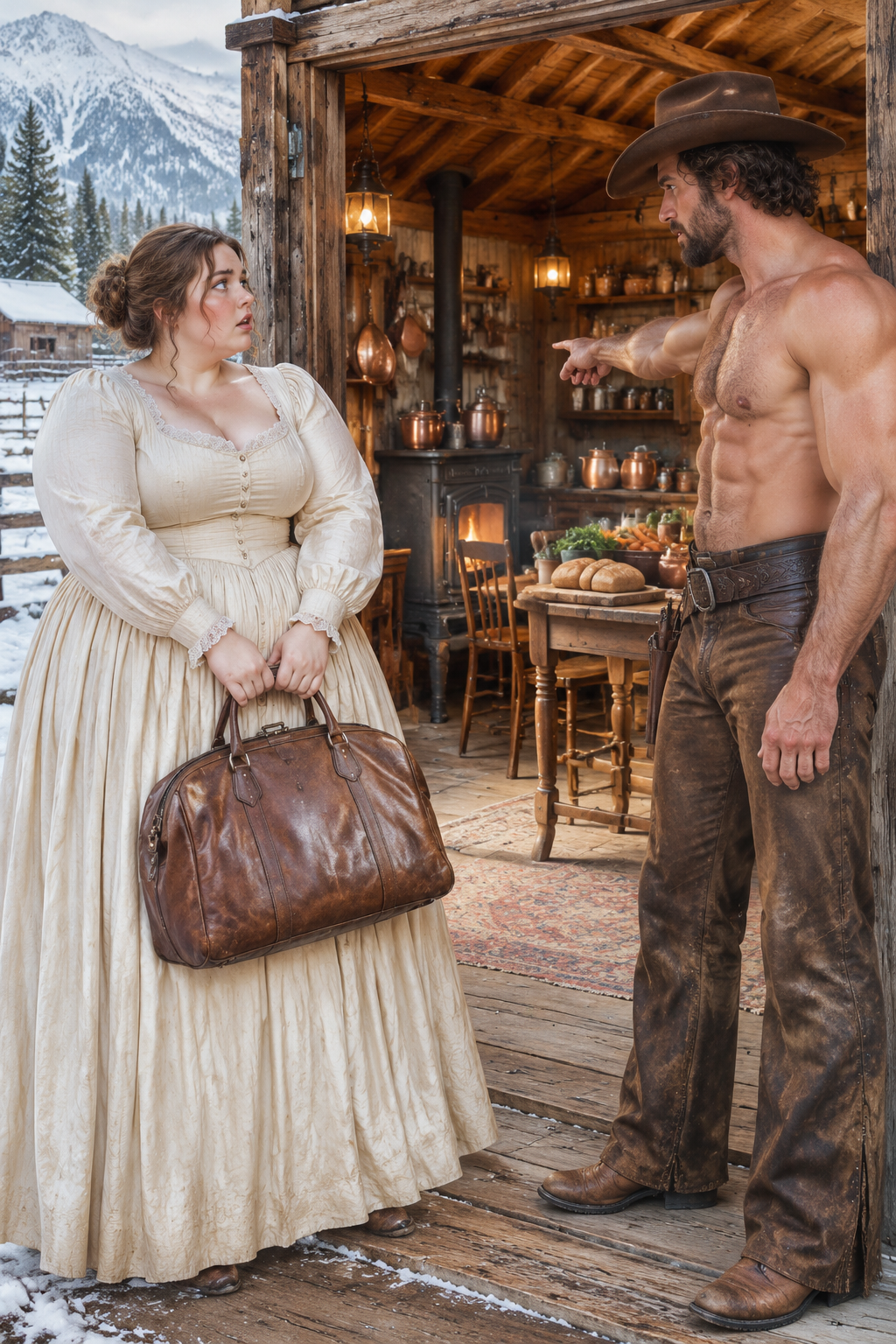
Benjamin looked at Rebecca for a long moment, as though he were deciding whether the truth would hurt more than another lie.
“You think my sister brought you here because she needed a cook?” he asked.
Rebecca glanced at the ashes settling inside the stove. “I think she believed I could help this family.”
“She believed a great many things.”
“And you don’t?”
Benjamin’s expression hardened. “The last woman I trusted with this house left a little girl standing at the front gate, waiting for someone who never came back.”
Rebecca felt the accusation beneath his words, though she knew it wasn’t meant entirely for her.
“Helen’s mother?”
Benjamin turned toward the window. Outside, the late afternoon sky hung low over the pastures, and the first cold wind of autumn bent the cottonwoods along the creek.
“My brother, Samuel, died four years ago. His wife, Clara, couldn’t bear what happened afterward. One morning, she packed a suitcase and told Helen she was going to town for medicine. She never returned.”
Rebecca swallowed. “How old was Helen?”
“Four.”
The answer was barely audible.
“Miriam took her in. I did what I could, but Miriam was the one who knew how to reach her. And now Miriam’s gone too.”
He looked back at Rebecca.
“Every person that child learns to love disappears. I won’t let you become another.”
Rebecca understood then that Benjamin’s coldness was not indifference. It was fear dressed in the only armor he knew how to wear.
“I never promised Helen I would stay forever,” she said.
“No. But she’s beginning to believe you will.”
“And what does she believe when you push everyone away?”
His face changed.
For a moment, Rebecca thought he might order her out that very evening.
Instead, he opened the writing-room door.
“We have work to do, Miss Lane.”
The formality hurt more than anger would have.
Rebecca passed him without another word.
That night, Helen appeared beside Rebecca’s bedroom door holding a small wooden horse.
“Uncle Ben is angry,” she whispered.
Rebecca knelt. “Sometimes grown people are angry because they’re frightened.”
“Are you frightened?”
“Sometimes.”
Helen considered this carefully.
“Are you going away?”
Rebecca’s heart tightened.
“I don’t know what will happen when winter comes.”
The child’s fingers closed around the horse.
“That’s what Mama said.”
Before Rebecca could answer, Helen hurried down the hallway.
Rebecca remained kneeling long after the little footsteps faded.
The following morning, she found Benjamin repairing a fence near the north pasture.
“I need to know something,” she said.
He continued tightening the wire. “What?”
“Did Miriam truly offer me employment, or did she bring me here for some other reason?”
Benjamin stopped working.
“What are you asking?”
“Your sister knew things about me. She knew I had nowhere to return to. She knew I needed a fresh beginning. How?”
Benjamin set down his pliers.
“Miriam wrote to several women through a church society. She said she wanted someone who understood loss.”
“Why?”
“Because she was dying.”
The wind seemed suddenly colder.
Rebecca stared at him.
“Miriam knew?”
“For nearly six months. The doctor gave her less than a year. She told me only three weeks before the end.”
“And she was arranging for someone to care for Helen.”
Benjamin nodded reluctantly.
“She was arranging for someone to replace her.”
“No,” Rebecca said. “Perhaps she was making sure Helen wouldn’t be alone.”
Benjamin looked toward the distant house.
“There’s a difference?”
“There is to a child.”
He said nothing, but when Rebecca turned to leave, he called after her.
“My sister was a better judge of people than I ever was.”
It was not an apology.
Still, it was the first honest kindness he had offered her.
For several days, peace returned to Tate Ranch.
Helen began helping Rebecca knead bread, leaving flour on her cheeks and tiny handprints across the table. The ranch hands took turns inventing reasons to visit the kitchen, and even Benjamin occasionally smiled when he thought no one was watching.
One Sunday afternoon, Rebecca found him standing outside the barn, holding a broken music box.
“It belonged to Miriam,” he explained.
“Does it still play?”
“Not properly.”
“May I see?”
He handed it over.
Inside, a little silver bird sat crookedly above a delicate brass mechanism. Rebecca turned the key, heard two uncertain notes, and noticed a loose spring.
“My father repaired clocks,” she said. “He taught me a few things.”
With a hairpin and considerable patience, she coaxed the spring back into place.
The music box began to play.
Benjamin stared at it.
For the first time, Rebecca saw tears in his eyes.
“Miriam used to play that for Helen every night.”
“Then perhaps you should give it back to her.”
He closed the lid gently.
“You’ve brought things back into this house I thought were gone forever.”
Rebecca looked up.
Benjamin stood close enough that she could see the faint scar beside his eyebrow and the exhaustion he carried beneath his stern expression.
“Not everything that’s lost is gone,” she said.
His hand brushed hers.
Neither moved away.
Then a horse came galloping into the yard.
The rider was Daniel Mercer, the ranch foreman, a broad-shouldered man whose loyalty to Benjamin had seemed unquestionable.
He dismounted so quickly that his boots skidded through the mud.
“Ben,” he said, breathless. “We’ve got trouble.”
Benjamin stepped forward.
“What kind?”
“Three hundred head are missing from the eastern grazing grounds.”
The warmth vanished from Benjamin’s face.
“Missing?”
“Driven out through the lower gate. Tracks heading toward Miller’s Crossing.”
Benjamin swore under his breath.
“Get the men saddled.”
Rebecca watched the two men hurry toward the stables.
She had lived on the ranch long enough to understand what three hundred cattle meant. They represented wages, winter supplies, and the loan Benjamin had been struggling to repay.
By supper, the house was filled with grim silence.
The search party returned after dark with no cattle and worse news.
The eastern gate had been unlocked from the inside.
Someone at Tate Ranch had helped the thieves.
Benjamin questioned every ranch hand individually.
Daniel insisted the gate had been secured the previous evening. Two younger workers admitted they had seen unfamiliar riders near the creek, but neither could describe them.
Then Benjamin discovered that the key to the eastern gate was missing from the kitchen drawer.
He came to Rebecca while she was washing dishes.
“Who has been in here today?”
“Nearly everyone.”
“Have you touched the gate keys?”
“Only when I needed the storeroom key.”
“Did you notice anything unusual?”
Rebecca thought carefully.
“Daniel came in before dawn. He said he wanted coffee for the men riding east.”
Benjamin frowned.
“Daniel was here?”
“Yes. He seemed surprised to find me awake.”
Something flickered across Benjamin’s expression, but he quickly concealed it.
“Don’t speak of this to anyone.”
The following evening, a stranger arrived at Tate Ranch.
He wore a dark wool coat and carried a leather document case. His name was Arthur Voss, and he represented the bank holding Benjamin’s mortgage.
“I regret the circumstances,” Voss said, removing his gloves, “but your next payment is due in twelve days.”
Benjamin stood beside the fireplace.
“You know about the missing cattle.”
“Indeed. Most unfortunate.”
“I need another month.”
Voss shook his head.
“The bank has already extended considerable patience.”
Rebecca, carrying a tray of coffee, noticed the man’s gaze moving around the room with peculiar satisfaction.
“If payment isn’t made,” Voss continued, “the bank will begin foreclosure proceedings.”
Benjamin’s hands curled into fists.
“This ranch has belonged to my family for forty years.”
“Sentiment,” Voss replied, “does not settle debts.”
After the banker departed, Benjamin remained motionless.
Rebecca placed a cup beside him.
“How much?”
He looked at her.
“How much do you owe?”
“More than you could possibly help me pay.”
“That’s not what I asked.”
“Four thousand dollars.”
Rebecca felt the weight of the number.
Four thousand dollars might as well have been a mountain.
“And without those cattle?”
“We won’t make it.”
That night, Rebecca lay awake listening to the wind scrape branches against her window.
She had come to Tate Ranch hoping to save herself.
Now the place that had begun to feel like home was being pulled apart.
Near midnight, she heard footsteps outside.
Looking through the curtains, she saw Daniel Mercer crossing the yard toward the old smokehouse.
A second figure waited in the shadows.
Rebecca couldn’t see the stranger’s face, but she recognized the dark wool coat.
Arthur Voss.
Her pulse quickened.
She watched Daniel hand the banker something small and metallic.
A key.
The next morning, Rebecca approached Benjamin in his office.
“I saw Daniel meeting Voss last night.”
Benjamin looked up sharply.
“Where?”
“Behind the smokehouse.”
“What were they doing?”
“I couldn’t hear them. But Daniel gave him something that looked like a key.”
Benjamin rose slowly.
“Daniel has worked for this family for fifteen years.”
“I know.”
“He helped bury my brother.”
“Then perhaps there’s an innocent explanation.”
Benjamin studied her.
“You don’t believe that.”
“No.”
His expression became unreadable.
“Leave this to me.”
But Rebecca had already learned that waiting quietly could be its own kind of danger.
That afternoon, while Daniel was overseeing repairs near the western corral, she entered the small office beside the stable.
She wasn’t proud of searching another person’s belongings. Yet three hundred stolen cattle and a family’s future were at stake.
Inside Daniel’s desk, beneath a bundle of receipts, she discovered a folded bill of sale.
It listed two hundred and ninety-eight cattle sold to a livestock broker in Red Hollow.
The seller’s signature read Benjamin Tate.
Rebecca knew immediately it was forged.
She had seen Benjamin sign household accounts dozens of times. His final letter always curved sharply upward. On the document, it slanted down.
Then she noticed the date.
The sale had been recorded two days before the cattle disappeared.
Her stomach turned.
She slipped the paper into her apron.
A floorboard creaked behind her.
“Well,” Daniel said from the doorway, “this is unfortunate.”
Rebecca turned.
Daniel stood with his hat in one hand and a revolver in the other.
“Put that paper down.”
She forced herself to remain calm.
“Benjamin knows about Voss.”
Daniel’s eyes narrowed.
“Does he?”
“He knows you met him.”
Daniel laughed without humor.
“Then I suppose the game is nearly over.”
“Why would you do this? Benjamin trusts you.”
“Trust doesn’t buy land, Miss Lane.”
He stepped inside and closed the door.
“For fifteen years, I watched the Tate family own everything while men like me worked ourselves into the ground. Voss offered me a share when the bank takes possession.”
“And Helen?”
Daniel hesitated.
“What about her?”
“She’ll lose the only home she’s ever known.”
His face hardened.
“Children survive.”
Rebecca thought of the little girl who still slept with a wooden horse beneath her pillow.
“Some things survive,” she said. “That doesn’t mean they heal.”
Daniel gestured toward the rear door.
“Move.”
He marched her through the stable yard and into an abandoned root cellar beyond the orchard.
The cellar smelled of damp earth and rotting wood.
Daniel pushed her inside.
“You’ll stay here until the bank takes what it’s owed.”
“You can’t hide me for twelve days.”
“I don’t need twelve days.”
He smiled.
“Voss is bringing the sheriff tomorrow. With a signed bill of sale, he’ll claim Benjamin secretly sold the herd and concealed the proceeds. The bank will demand immediate settlement.”
“You forged the signature.”
“Prove it.”
The door slammed.
A heavy bar dropped into place.
Rebecca was alone.
By sunset, Benjamin knew something was wrong.
Rebecca had never missed preparing supper, and Helen insisted she had seen her walking toward the stables.
Daniel claimed she had taken a horse and left the ranch.
“She was upset about the mortgage,” he said. “Perhaps she decided there was no future here.”
Benjamin’s face went pale.
For one terrible moment, he believed it.
He remembered Clara’s departure, Miriam’s death, and every promise that had ended in silence.
Then Helen spoke from the staircase.
“Rebecca wouldn’t leave without telling me.”
Daniel shrugged.
“People do things children don’t understand.”
Helen’s eyes filled with tears.
“No,” she said, louder this time. “Rebecca wouldn’t.”
Benjamin looked at his niece.
For four years, Helen had rarely raised her voice.
Now she stood trembling, defending someone she loved.
Something inside him shifted.
“Which horse did she take?” he asked Daniel.
“The bay mare.”
Benjamin walked to the window.
“The bay mare has been lame since Tuesday.”
Daniel said nothing.
Benjamin turned back.
“Where is she?”
The foreman’s hand moved toward his holster.
Benjamin struck first.
The two men crashed into the dining table, sending plates shattering across the floor.
Daniel drew his revolver, but Benjamin seized his wrist and slammed it against the mantel.
The weapon fell.
One of the ranch hands rushed in and pinned Daniel to the floor.
“Where is Rebecca?” Benjamin demanded.
Daniel spat blood onto the carpet.
“Find her yourself.”
Benjamin ordered the men to lock him in the tack room.
Then he rode into the darkness.
Meanwhile, Rebecca had spent hours searching the cellar.
The door was reinforced, and the small window near the ceiling was too narrow for her shoulders.
But beneath a pile of broken crates, she found an old iron hook.
She used it to pry at the rotting wooden frame surrounding the window.
Splinters cut her fingers.
Cold air burned her lungs.
At last, one board loosened.
Then another.
She squeezed through the opening, tearing her sleeve and scraping her shoulder against the stone.
Outside, the moon was hidden behind thick clouds.
Rebecca stumbled toward the ranch house.
Halfway through the orchard, she heard horses.
Two riders approached from the creek.
She dropped behind a fallen tree.
Arthur Voss dismounted beside the cellar, accompanied by a man she didn’t recognize.
“Mercer!” Voss called.
No answer came.
The banker approached the cellar door and lifted the bar.
When he discovered it empty, his expression twisted.
“She knows.”
The other man reached for his rifle.
“Then we find her.”
Rebecca began crawling backward.
A branch snapped beneath her knee.
The rifleman turned.
“There!”
A shot cracked through the orchard.
Rebecca ran.
Another bullet struck a tree beside her.
She reached the open pasture, where there was nowhere to hide.
Then a horse thundered out of the darkness.
“Rebecca!”
Benjamin.
He leaned from the saddle, caught her outstretched arm, and hauled her up behind him.
“Hold on!”
They galloped toward the house as gunfire echoed behind them.
Rebecca clung to his coat.
“Daniel and Voss stole the cattle!” she shouted.
“I know about Daniel.”
“They forged a bill of sale. Voss is coming with the sheriff!”
Benjamin urged the horse faster.
“Then we’ll make sure the sheriff hears our side first.”
At the ranch house, Rebecca showed him the document.
Benjamin studied the forged signature.
“This won’t be enough,” he said.
“Why?”
“Voss will claim I signed it and changed my mind. He has witnesses willing to lie.”
Rebecca looked at the date again.
“Then we need the cattle.”
“They could be halfway to another territory.”
“Not if they haven’t been delivered.”
Benjamin frowned.
“What do you mean?”
“The bill says the herd was sold to a broker in Red Hollow. But Daniel told me the bank would take possession tomorrow. Why would Voss risk moving stolen cattle so far before he owned the ranch?”
Benjamin stared at the paper.
Then understanding dawned.
“He wouldn’t.”
“Where could they hide three hundred cattle?”
Benjamin turned toward the window.
“The abandoned limestone quarry.”
The quarry lay beyond the northern ridge, hidden from the main roads by a narrow ravine.
Before dawn, Benjamin gathered six trusted men.
Rebecca insisted on accompanying them.
“You’ve already risked enough,” he protested.
“And you need someone who can recognize Voss’s accomplice.”
Benjamin looked ready to argue.
Instead, he handed her a heavy coat.
“Stay beside me.”
They reached the quarry just as pale light touched the hills.
Below them, hundreds of cattle crowded inside a natural basin.
Two armed guards stood near the entrance.
Rebecca recognized one immediately.
“The man from the orchard.”
Benjamin counted the animals.
“All of them,” he whispered.
But before they could retreat and summon the sheriff, a rifle shot rang out.
One of the guards had spotted them.
The horses scattered.
Benjamin shouted for his men to take cover.
Gunfire erupted across the rocks.
Rebecca slid behind a boulder as bullets chipped stone above her head.
A ranch hand named Thomas cried out and fell, clutching his leg.
Benjamin crawled toward him.
“Get back!” Rebecca shouted.
But Benjamin wouldn’t leave the wounded man.
The guard raised his rifle.
Rebecca seized a loose stone and hurled it down the slope.
It struck the guard’s horse, startling the animal into a violent leap.
The shot went wide.
Benjamin dragged Thomas behind cover.
Then a deep rumbling rose from the basin.
The frightened cattle had begun to move.
Hundreds of hooves pounded against the earth.
The guards shouted helplessly as the herd surged toward the narrow entrance.
“Open the lower passage!” Benjamin yelled.
His men understood.
Two riders raced along the ridge and cut the ropes holding a temporary barricade.
The cattle poured through the opening in a thunderous wave.
The guards abandoned their positions and scrambled up the rocks.
Within minutes, the quarry was empty except for dust, broken fencing, and two terrified thieves.
Benjamin’s men captured both without another shot.
By noon, the stolen herd was being driven home.
But the danger was not finished.
Arthur Voss had reached Tate Ranch ahead of them.
He stood on the porch with Sheriff Caldwell and two deputies when Benjamin rode into the yard.
“Mr. Tate,” Voss announced, “you are under investigation for fraudulent disposal of mortgaged property.”
Benjamin dismounted.
“Then you’ll be interested in what we’ve brought back.”
The sheriff watched the cattle streaming across the eastern pasture.
His eyebrows rose.
Voss’s face drained of color.
Rebecca stepped forward and handed Caldwell the forged bill of sale.
“Mr. Voss arranged the theft with Daniel Mercer. We found the herd hidden in the northern quarry. Two of his men are under guard.”
Voss recovered quickly.
“Absurd. This woman is a hired servant with no knowledge of financial affairs.”
“Perhaps,” Rebecca replied. “But I know a forged signature when I see one.”
The sheriff examined the document.
Voss laughed nervously.
“An accusation is hardly proof.”
“No,” said Benjamin. “But testimony might be.”
Two ranch hands brought Daniel onto the porch.
The foreman’s face was bruised, and his hands were bound.
When he saw Voss, his expression changed.
“You said nobody would get hurt.”
Voss took a step backward.
“Keep your mouth shut.”
Sheriff Caldwell looked between them.
“That’s a curious thing to say, Mr. Voss.”
Daniel lowered his head.
Then, slowly, he began to talk.
He confessed to the theft, the forged documents, and the agreement that would give Voss control of Tate Ranch.
He described payments, secret meetings, and the broker who had agreed to disguise the stolen herd’s ownership.
Voss attempted to flee.
He made it only as far as the hitching post before a deputy caught him.
By evening, both men were on their way to the county jail.
The sheriff promised a full investigation into the bank’s involvement.
For the first time in weeks, Benjamin could breathe.
But victory had come at a price.
The cattle were exhausted, Thomas was wounded, and the ranch still owed money.
Even with Voss arrested, the mortgage remained.
Three days later, Benjamin received a letter from the bank’s regional office.
An independent examiner would review the loan, but the payment deadline would not be suspended.
The family had nine days.
Benjamin read the letter twice before folding it.
Rebecca found him sitting alone in the kitchen.
“Is there nothing we can do?”
“I could sell the northern pasture.”
“Would that be enough?”
“Yes.”
“Then why do you look as though you’ve lost everything?”
“Because it’s where Samuel is buried.”
Rebecca sat opposite him.
Benjamin stared at his hands.
“My brother loved that land. He wanted Helen to inherit it someday.”
“Then don’t sell it yet.”
“What choice do I have?”
Rebecca thought about the ranch hands, the cattle, the storerooms, and the supplies she had carefully inventoried.
Then she remembered something Miriam had written in the household ledger.
A list of neighboring families who had purchased beef and preserved foods from Tate Ranch years earlier.
“Your sister kept records of every household that traded with this ranch,” she said.
Benjamin looked confused.
“What of it?”
“Some of them still owe favors. Others may be willing to buy directly from us.”
“We can’t raise four thousand dollars selling preserves.”
“No. But perhaps we can raise enough by selling livestock honestly, collecting old debts, and asking for an extension based on actual income.”
Benjamin shook his head.
“People don’t lend money to failing ranches.”
“Then we won’t ask them to believe in a failing ranch.”
She leaned forward.
“We’ll ask them to believe in the people who kept it alive.”
Over the next week, Rebecca worked harder than she ever had.
She organized the ranch accounts, uncovered unpaid invoices, and discovered that several neighboring farms owed Benjamin money for livestock and equipment.
Some debts had been forgotten.
Others had simply never been collected because Miriam had been too ill to manage the books.
Benjamin rode from farm to farm.
Rebecca wrote letters late into the night.
The ranch hands repaired wagons, prepared cattle for sale, and delivered goods to nearby settlements.
Word spread about Voss’s scheme and Benjamin’s determination to save the property.
Then something unexpected happened.
People began arriving.
A widow brought fifty dollars her late husband had borrowed from Samuel years before.
A blacksmith offered payment for horses Benjamin had once lent him without charge.
A neighboring rancher purchased forty cattle at a fair price and paid immediately.
Every contribution mattered.
Yet on the evening before the deadline, they were still short.
Rebecca counted the money three times.
“Three thousand seven hundred and sixty dollars,” she whispered.
Benjamin stood beside her.
“Two hundred and forty short.”
He looked toward the northern hills.
“I’ll ride out tomorrow and arrange the sale.”
Rebecca wanted to protest, but there were no more letters to write, no more accounts to collect.
Then Helen appeared in the doorway.
She carried Miriam’s music box.
“Aunt Miriam said this was valuable,” she announced.
Benjamin knelt.
“Sweetheart, we aren’t selling that.”
“But it’s ours,” Helen said. “And we need to save our home.”
Rebecca felt tears gathering.
Benjamin took the little girl into his arms.
“Some things are worth more than money.”
Helen rested her cheek against his shoulder.
“Then our home is worth more than the money too.”
Benjamin closed his eyes.
A knock sounded at the front door.
Standing outside was Sheriff Caldwell, accompanied by an elderly gentleman in a traveling coat.
“This is Mr. Whitcomb,” Caldwell explained. “He’s the bank’s regional examiner.”
Benjamin straightened.
“If you’ve come for payment, I’ll have most of it by morning.”
Whitcomb removed his hat.
“Actually, Mr. Tate, I’ve come to discuss Arthur Voss.”
The examiner entered and placed several documents on the table.
“Our investigation discovered that Mr. Voss had been charging unauthorized fees and altering your repayment records for nearly two years.”
Benjamin stared at him.
“What?”
“Your actual outstanding balance is considerably lower than the amount he demanded.”
Whitcomb adjusted his spectacles.
“After correcting the fraudulent charges, your payment due tomorrow is three thousand five hundred dollars.”
Silence filled the room.
Rebecca looked at the money spread across the table.
Then at Benjamin.
They had enough.
More than enough.
Benjamin sat down heavily.
For several seconds, he could not speak.
Helen tugged at his sleeve.
“Does that mean we can stay?”
Benjamin lifted her into his arms.
“Yes, sweetheart.”
His voice broke.
“We can stay.”
The celebration that followed lasted well past midnight.
The ranch hands filled the kitchen with laughter, someone produced a fiddle, and Rebecca baked the last of the stored apples into two enormous pies.
Even Thomas, his injured leg propped on a chair, insisted on joining the dancing.
Benjamin watched from the doorway.
When Rebecca approached him, he offered his hand.
“Dance with me.”
“I don’t believe I’ve ever seen you dance.”
“Neither have most of these men.”
“Then perhaps we shouldn’t frighten them.”
He laughed.
It was a deep, unguarded sound that made Rebecca’s heart stumble.
They danced slowly while the fiddle played.
For a little while, there was no debt, no fear, and no shadow of the past.
Only the warmth of the kitchen and Benjamin’s hand resting gently against hers.
But happiness did not erase the question Rebecca had been avoiding.
The first snow was coming.
Her agreement with Benjamin would soon end.
Two mornings later, she found a letter waiting beside her breakfast plate.
It was from a boardinghouse owner in Colorado, offering her a permanent position as head cook.
The wages were generous.
The accommodations were secure.
It was exactly the kind of opportunity she had once prayed for.
Benjamin entered as she finished reading.
“Good news?”
Rebecca folded the letter.
“A job offer.”
His smile faded.
“Where?”
“Colorado.”
He nodded slowly.
“You should consider it.”
She waited.
He said nothing else.
“Is that what you want?” she asked.
Benjamin looked toward the window.
“What I want shouldn’t decide your future.”
Rebecca felt the old distance rising between them.
“Then perhaps you haven’t understood anything I’ve tried to tell you.”
She left the room before he could answer.
That evening, Benjamin found Helen sitting beside the cold fireplace.
“Rebecca is leaving,” she said.
He stopped.
“She hasn’t decided.”
Helen looked up at him.
“Did you tell her you want her to stay?”
Benjamin couldn’t answer.
The little girl lowered her eyes.
“You didn’t tell Mama either.”
The words struck him harder than any accusation.
“What do you mean?”
Helen twisted the hem of her dress.
“The morning Mama left, she asked if anybody wanted her here. You were angry and told her she could do as she pleased.”
Benjamin remembered.
Clara had been drowning in grief after Samuel’s death. She had withdrawn from everyone, convinced that her presence brought only sorrow.
He had been grieving too, and instead of reaching for her, he had answered her despair with anger.
“I thought she needed time,” he whispered.
Helen looked at him.
“Maybe she needed someone to ask her to stay.”
Benjamin sank into the chair.
For years, he had told himself Clara left because she didn’t love her family enough.
Now he faced a more painful possibility.
She had believed she was unwanted.
And he had never tried to convince her otherwise.
The next morning, Rebecca began packing.
She had not yet accepted the Colorado position, but she could no longer bear living in uncertainty.
As she folded her dresses, someone knocked.
Benjamin stood in the doorway holding a small wooden box.
“May I come in?”
Rebecca stepped aside.
He placed the box on the bed.
“Miriam left this for you.”
Inside lay a silver thimble, a small embroidered handkerchief, and a sealed envelope.
Rebecca recognized Miriam’s handwriting.
Her name was written across the front.
“Where did you find it?”
“In her desk. Beneath the false bottom of a drawer.”
Rebecca opened the envelope carefully.
The letter was brief, but its words brought tears to her eyes.
Miriam had written that she knew Rebecca had endured hardship, though she had never asked for every painful detail.
She believed a person deserved to be known by the kindness they offered, not merely by the mistakes or losses they carried.
She had hoped Rebecca might find a place where she could stop running from her past.
And she had hoped Benjamin might learn that loving someone was never made safer by refusing to say so.
Rebecca lowered the letter.
Benjamin stood silently beside the window.
“I burned the first letter because I was angry with her,” he admitted. “She knew me better than I knew myself.”
Rebecca brushed away a tear.
“Why are you telling me this?”
“Because I’ve spent years confusing silence with strength.”
He crossed the room.
“When Samuel died, I couldn’t save him. When Clara left, I couldn’t bring her back. When Miriam became ill, I couldn’t stop it.”
His voice trembled.
“So I decided the only way to survive was to need nobody.”
Rebecca looked into his eyes.
“And did it work?”
“No.”
He shook his head.
“It only made everyone I loved feel alone.”
For a moment, neither spoke.
Then Benjamin took her hands.
“I don’t want you to stay because Helen needs you. Or because the ranch needs you.”
Rebecca’s breath caught.
“I want you to stay because I love you.”
Outside, the first snow began to fall.
Benjamin glanced at the packed suitcase.
“I know I have no right to ask you to give up a secure future. And if you choose Colorado, I’ll help you get there.”
He swallowed.
“But I won’t let you leave believing you’re unwanted.”
Rebecca stared at the man who had once threatened to send her away over an unfinished supper.
“You’re a stubborn, impossible man, Benjamin Tate.”
A faint smile touched his lips.
“I’ve been told.”
“And you make everything harder than it needs to be.”
“I know.”
She stepped closer.
“But I’ve loved you for longer than I dared admit.”
Benjamin drew her into his arms.
When he kissed her, it was gentle and uncertain at first, as though he were still learning that happiness could be held without being destroyed.
Rebecca rested her forehead against his.
“I don’t need you to promise that nothing will ever hurt us,” she whispered.
“Then what do you need?”
“Promise that when things become difficult, you won’t shut me out.”
Benjamin held her tighter.
“I promise.”
A small voice came from the hallway.
“Does this mean Rebecca isn’t leaving?”
They turned.
Helen stood in the doorway, clutching her wooden horse.
Rebecca knelt and opened her arms.
The child ran to her.
“I think,” Rebecca said, smiling through her tears, “I’ve finally found where I belong.”
Helen wrapped both arms around her neck.
“Then can I call you Mama someday?”
Rebecca’s eyes filled again.
She looked toward Benjamin, who was openly crying now.
“If that’s what your heart wants,” she whispered, “I’d be honored.”
The following spring, Benjamin and Rebecca married beneath the cottonwood trees beside the creek.
The entire valley seemed to attend.
Thomas walked without a crutch, the ranch hands wore their best coats, and Sheriff Caldwell arrived carrying a basket of wildflowers from his wife.
Helen scattered petals along the aisle, though she kept stopping to make sure Rebecca was still following.
When the minister asked Benjamin whether he would love and cherish his bride, his answer rang across the meadow.
“With everything I have, and everything I am still learning to become.”
Rebecca smiled.
She knew he meant it.
Marriage did not transform Benjamin into a perfect man.
There were still mornings when worry made him distant and evenings when Rebecca’s independence tested his patience.
But now they spoke.
They apologized.
They learned to disagree without threatening to disappear from each other’s lives.
And slowly, the old wounds began to heal.
One summer afternoon, a letter arrived from a distant town.
It was from Clara.
She had heard through a traveling minister that Helen was safe and that Benjamin had married.
She wrote of her shame, her years of wandering, and the terrible fear that had kept her from returning.
She did not ask to reclaim her place as Helen’s mother.
She asked only whether she might someday write to her daughter.
Benjamin carried the letter to Rebecca.
His first instinct was to destroy it.
Then he remembered the ashes of Miriam’s words.
Together, they sat with Helen beneath the cottonwoods and told her the truth.
The little girl listened without speaking.
At last, she asked, “Does Mama still love me?”
Rebecca held her hand.
“I believe she does. But you have every right to feel hurt.”
Helen thought for a long time.
“Can I write to her?”
“Of course,” Benjamin answered.
“Will she come back?”
“We don’t know.”
Helen leaned against Rebecca.
“Then I’ll write her a letter. But I want to stay here.”
Rebecca kissed the top of her head.
“You always have a home here.”
Years later, when Helen was grown, she would remember that afternoon more clearly than the wedding, the stolen cattle, or the winter when Tate Ranch had nearly been lost.
She would remember three people sitting beneath the trees, telling the truth even though it was difficult.
She would remember that nobody forced her to forgive before she was ready.
And she would remember that love had made room for her questions instead of demanding her silence.
As for Rebecca, she never forgot the rainy evening when she first arrived at Tate Ranch with a worn suitcase and nowhere else to go.
She had believed she was searching for employment.
Instead, she had found a frightened child, a wounded man, and a house waiting to become a home again.
Sometimes, when winter winds rattled the windows, Benjamin would find her standing in the kitchen where everything had begun.
He would come up behind her, wrap his arms around her waist, and ask what she was thinking.
And Rebecca would smile.
“About the day you gave me two hours to prove myself.”
Benjamin would laugh softly.
“You were the best thing that ever walked through that door.”
“Even though you nearly sent me away?”
“Especially because you stayed long enough to teach me what I was afraid to learn.”
Beyond the window, snow would settle across the fields, covering the old wagon tracks and the scars left by difficult seasons.
Inside, the lamps would burn warmly, Helen’s laughter would echo from another room, and the little music box would play its familiar tune.
Rebecca had once believed that a secure future meant finding a place where nobody could send her away.
But she came to understand something greater.
A true home was not a place where sorrow never entered, where mistakes were never made, or where love could never be lost.
It was a place where people chose to remain honest with one another, where forgiveness could grow without being forced, and where fear was no longer allowed to make every important decision.
Benjamin had spent years trying to protect his heart by keeping the world outside.
Rebecca had arrived with nothing but courage, kindness, and the willingness to begin again.
Together, they discovered that the strongest families were not those who had never been broken.
They were the ones who learned how to mend.
And in the house where a grieving man had once burned a letter rather than face the truth, love finally became something no one was afraid to speak aloud.
THE END.