The wealthiest rancher in Montana walked past every beautiful woman at his winter ball and stopped in front of his widowed housemaid. What he said next left the entire ballroom silent.
“You seem to believe I asked Sarah to dance because I felt sorry for her,” Nathan said, his voice carrying across the ballroom. “But nothing could be further from the truth.”
Judith’s expression changed. “Nathan, please. Think carefully before you say another word.”
“I’ve been thinking carefully for months.”
Sarah looked at him in surprise. She had never heard him speak to his aunt with such determination.
Nathan turned toward the guests. “Every woman here tonight was invited because someone thought she might make me a suitable wife. Yet the only woman I’ve genuinely looked forward to seeing every morning wasn’t even given an invitation.”
A murmur passed through the crowd.
Emily Prescott’s face turned red.
“Nathan,” Judith said sharply, “you cannot possibly be serious.”
“I am.”
He looked directly at Sarah.
“I asked her to dance because she’s the woman I wanted to dance with. And if I’m fortunate enough, it won’t be the last time.”
Sarah felt as though the floor had shifted beneath her feet. She had spent six months convincing herself that their conversations meant nothing more than friendship between two people who happened to enjoy each other’s company.
Now Nathan was standing before some of Montana’s most influential families, making it clear that she meant considerably more to him.
Judith shook her head.
“Your father would be ashamed.”
Nathan’s expression hardened.
“My father married a schoolteacher who owned two dresses and had twelve dollars to her name. I suspect he’d understand perfectly.”
Nobody knew how to respond.
Sarah, however, could no longer bear the attention.
“Excuse me,” she whispered.
Before Nathan could stop her, she slipped through the doorway and hurried toward the kitchen.
She reached the servants’ quarters, closed the door behind her, and pressed both hands against her face.
What had he done?
More importantly, what was she supposed to do now?
She heard footsteps approaching a few minutes later.
“Sarah?”
It was Nathan.
“Please go back to your guests.”
“They can manage without me.”
She opened the door.
Nathan stood there, his formal jacket slightly crooked, looking far less confident than he had in the ballroom.
“Are you angry with me?” he asked.
“I’m trying to decide.”
“That sounds promising.”
“Don’t make jokes.”
His smile disappeared.
Sarah folded her arms.
“Tomorrow, everyone in town will be talking about the rancher who danced with his housemaid. By next week, they’ll have invented an entire romance. And when you eventually marry someone respectable, I’ll still be the woman they laugh about.”
Nathan stared at her.
“Someone respectable?”
“You know what I mean.”
“No, Sarah. I don’t.”
She looked away.
“I have no family fortune. No education worth mentioning. I’m a widow who earns her living washing other people’s clothes and cleaning their floors.”
“And I’m a man who spends half his life standing in cow manure.”
Despite herself, she almost laughed.
Nathan stepped closer.
“Do you really think money makes me a better person than you?”
“That’s not the point.”
“Then tell me what the point is.”
Sarah’s eyes filled with tears.
“The point is that you can afford to make mistakes. I can’t.”
Nathan fell silent.
She continued, her voice trembling.
“If people turn against you, you’ll still have this ranch. You’ll still have your money and your name. If they turn against me, I could lose everything.”
For the first time that evening, Nathan understood the full weight of what he had done.
He had believed his public gesture would make Sarah feel valued. Instead, he had placed her in a position where she felt exposed and powerless.
“I’m sorry,” he said quietly.
Sarah looked up.
“I should have spoken to you privately before putting you in front of everyone. You deserved that much.”
She hadn’t expected an apology.
Nathan took a slow breath.
“But I’m not sorry I chose you.”
Her heart tightened.
“Good night, Sarah.”
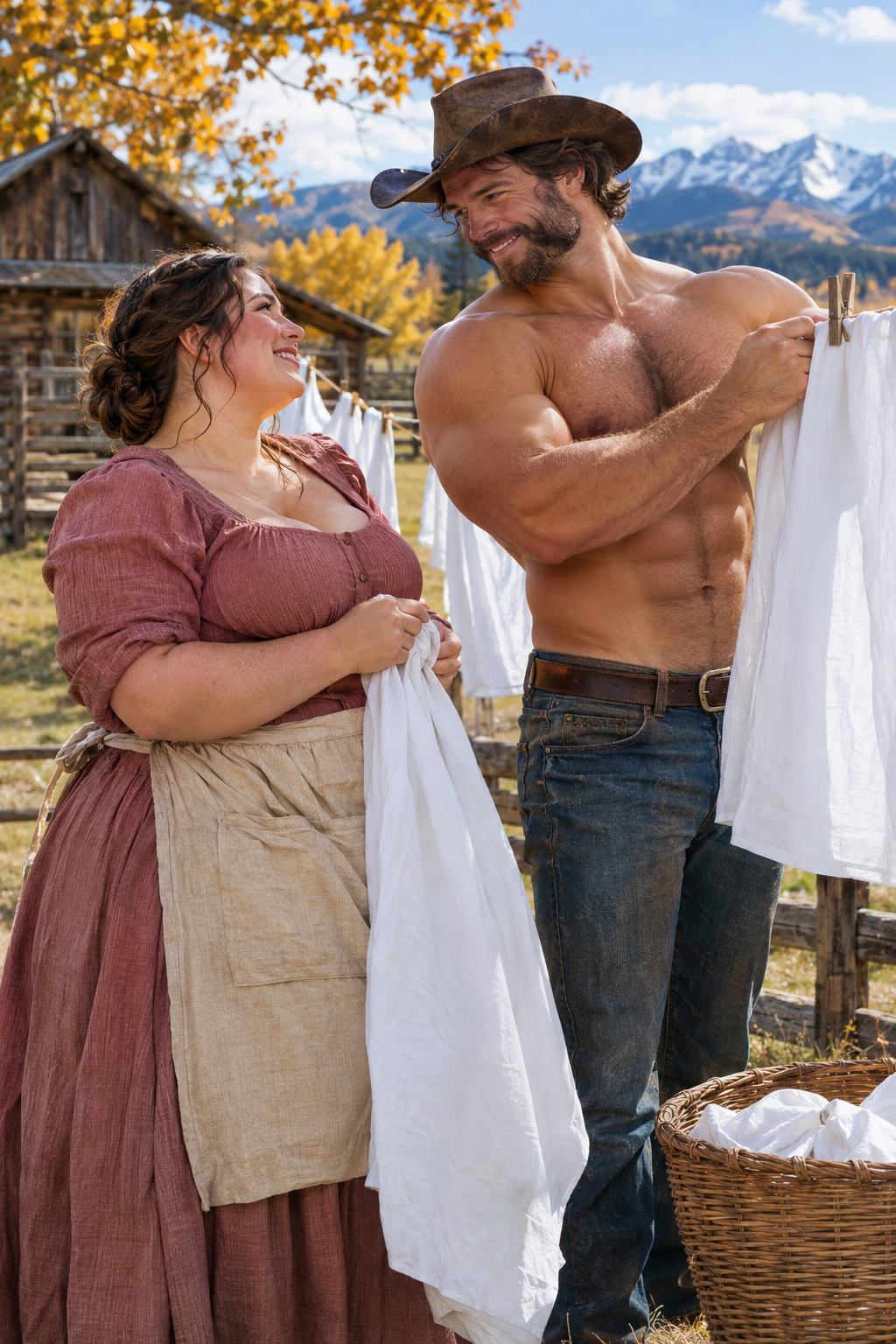
He walked away without asking anything more of her.
The following morning, the ranch felt strangely quiet.
Several guests had left before breakfast. Emily Prescott and her parents departed without saying goodbye to Nathan.
Judith remained.
Sarah was folding freshly washed tablecloths when Judith entered the laundry room and closed the door.
“I imagine you’re quite pleased with yourself.”
Sarah continued folding.
“I don’t know what you mean, ma’am.”
“Don’t insult my intelligence. I’ve watched women pursue my nephew for years. Apparently, you were simply more patient than the others.”
Sarah stopped working.
“I never pursued him.”
“Of course not. You merely made yourself indispensable.”
Judith placed an envelope on the table.
“There’s enough money in there to support you for several months. A carriage can take you into town this afternoon.”
Sarah stared at the envelope.
“You’re dismissing me?”
“I’m offering you an opportunity to leave with some dignity.”
“Does Mr. Cole know about this?”
“He doesn’t need to.”
Sarah pushed the envelope back.
“Then I suggest you speak to him first.”
Judith’s eyes narrowed.
“You think he’ll marry you? Men like Nathan occasionally become fascinated by women like you. That doesn’t mean they build their lives around them.”
Sarah swallowed hard.
Judith leaned closer.
“When his interest fades, what will you have left?”
Without waiting for an answer, she walked out.
Sarah stood motionless for several minutes.
The cruelest part was that Judith had spoken aloud the very fears Sarah had been trying to silence.
That afternoon, Nathan returned from inspecting the cattle and found a folded letter on his desk.
It was from Sarah.
She thanked him for his kindness, apologized for leaving without proper notice, and explained that she believed it would be better for everyone if she found employment elsewhere.
Nathan read the letter twice.
Then he ran upstairs.
Her room was empty.
The small suitcase she had arrived with was gone.
On the bedside table lay a sewing needle, a spool of thread, and the envelope Judith had offered her.
The money remained untouched.
Nathan found his aunt in the sitting room.
“What did you say to her?”
Judith calmly lowered her book.
“I reminded her of reality.”
“You had no right.”
“I was protecting you.”
“From what?”
“From a woman who has absolutely nothing to offer you.”
Nathan looked at her with disbelief.
“She has offered me more kindness, honesty, and companionship in six months than most of the people you invited last night have offered me in twenty years.”
“You’re blinded by affection.”
“Perhaps. But at least I’m finally seeing the people around me clearly.”
He grabbed his coat and headed outside.
His ranch foreman, Thomas, met him near the stable.
“Looking for Mrs. Whitaker?”
Nathan nodded.
“She took the afternoon carriage into town. Said she was hoping to catch the evening train.”
Nathan saddled his horse immediately.
Snow had begun falling, and the road was growing difficult to travel. By the time he reached town, his hands were numb.
He hurried into the railway station.
Sarah was sitting alone on a wooden bench, holding her suitcase against her knees.
When she saw him, her eyes widened.
“What are you doing here?”
“Apparently, making another questionable decision.”
“Nathan.”
It was the first time she had addressed him without calling him sir.
He sat beside her.
“Judith told me what happened.”
Sarah looked down.
“She wasn’t entirely wrong.”
“Yes, she was.”
“You don’t understand.”
“Then help me understand.”
For a long moment, Sarah said nothing.
Finally, she reached into her suitcase and removed a small photograph.
It showed a younger Sarah standing beside a smiling man outside a modest wooden house.
“My husband, Daniel.”
Nathan accepted the photograph carefully.
“We were married for four years,” she said. “He was a carpenter. We didn’t have much, but we were happy.”
“What happened?”
“He became ill. I spent everything we had trying to save him.”
Her voice softened.
“After he died, the debts took our home. People who had once called themselves our friends suddenly stopped visiting.”
Nathan listened without interrupting.
“One family offered me work. Their son began paying attention to me. I thought he was kind until his mother accused me of trying to marry into their money.”
Sarah wiped her cheek.
“They dismissed me. I left with nowhere to go.”
Nathan finally understood why she had been so careful around him.
“I’m not afraid of working,” she continued. “I’m afraid of trusting someone enough to build another life, only to discover that it was never really mine.”
Nathan returned the photograph.
“I can’t promise you’ll never be hurt again.”
She looked at him.
“But I can promise that you will never owe me affection because I employ you. You will never have to stay because you have nowhere else to go.”
The stationmaster announced that the evening train would be delayed because of the snow.
Nathan stood.
“If you want to leave, I’ll respect your decision. I’ll give you an excellent reference, and I’ll make sure you receive every dollar you’ve earned.”
Sarah studied his face.
“And if I stay?”
“Then I’d like permission to court you properly.”
Her lips parted.
“No ballroom full of witnesses. No expectations. Just you and me getting to know each other outside the kitchen.”
For the first time since the ball, Sarah smiled.
“You’re remarkably persistent.”
“So I’ve been told.”
She glanced toward the snowy railway tracks.
Then she picked up her suitcase.
“I suppose someone needs to make sure you don’t wear shirts with missing buttons.”
Nathan grinned.
“I was hoping you’d say something like that.”
When they returned to Silver Creek, Nathan made several things clear.
Sarah’s employment would remain secure regardless of what happened between them. Her wages would be reviewed according to her responsibilities, and Judith would have no authority to dismiss her.
He also hired additional household help so Sarah would have time for herself.
Their courtship began quietly.
They walked together after dinner. Nathan brought her books from town, and Sarah taught him how to repair a torn sleeve.
He was terrible at sewing.
“You’re holding the needle like you’re trying to kill something,” she told him.
“It’s a very small needle.”
“And you’re a very large man. Somehow, I expected you to manage.”
Their laughter often carried through the house.
But happiness did not arrive without resistance.
Several neighboring families stopped inviting Nathan to gatherings. Rumors spread that Sarah had manipulated him into giving her expensive gifts.
One afternoon, while purchasing fabric in town, Sarah overheard two women discussing her.
“Some women certainly know how to improve their circumstances.”
Sarah paid for her fabric and left without responding.
Nathan noticed her unusual silence that evening.
When she explained what had happened, he immediately wanted to confront the women.
Sarah stopped him.
“You cannot fight every person who dislikes me.”
“I could certainly try.”
“And spend the rest of your life being angry?”
He considered that.
“What would you have me do?”
“Keep being the man I know. Eventually, people will decide what they want to believe.”
Nathan took her hand.
“And what do you believe?”
Sarah smiled.
“That you’re considerably more trouble than I expected.”
By late winter, their relationship had grown deeper. Yet neither had spoken openly about marriage.
Then, one bitterly cold evening, a terrible storm swept across Silver Creek.
The wind rattled the windows, snow buried the fences, and several ranch workers struggled to bring the cattle into sheltered areas.
Nathan rode out with Thomas and the others.
Inside the house, Sarah was preparing blankets and hot food when a young stable hand burst through the kitchen door.
“There’s been an accident!”
Sarah dropped the towel she was holding.
“What happened?”
“Mr. Cole’s horse slipped near the north pasture. He’s hurt pretty bad.”
Her blood ran cold.
Nearly an hour later, the ranch workers carried Nathan inside.
He was unconscious, his clothes soaked with snow, and blood stained the side of his head.
Sarah rushed forward.
“Get the doctor!”
The roads were nearly impossible to travel, but Thomas managed to reach the physician in town.
Until he arrived, Sarah stayed beside Nathan, keeping him warm and watching his breathing.
Judith stood in the doorway, pale and frightened.
“Is he going to die?”
Sarah looked at her.
“I don’t know.”
For once, there was no hostility between them. They were simply two women terrified of losing someone they loved.
When the doctor finally arrived, he examined Nathan carefully.
“He has a serious concussion and several broken ribs. The next few hours are important.”
Sarah remained beside the bed throughout the night.
Judith brought her tea shortly before dawn.
“You should rest,” she said.
“I will when he wakes up.”
Judith sat down.
For several minutes, neither woman spoke.
Then Judith quietly said, “His mother died when he was seventeen.”
Sarah turned toward her.
“His father was never quite the same afterward. When he died, I promised myself I would protect Nathan and everything his parents had built.”
She looked at her nephew.
“I suppose somewhere along the way, I started believing that protecting him meant controlling him.”
Sarah listened.
Judith’s eyes filled with tears.
“When you left, I had never seen him so frightened. Not even when his father died.”
“He was angry.”
“No. He was afraid. There’s a difference.”
Sarah looked down at Nathan’s hand.
Judith took a deep breath.
“I was cruel to you. You didn’t deserve it.”
Sarah had imagined hearing those words many times. Now that they had finally come, she found she had no desire to make Judith suffer.
“Thank you for saying that.”
Judith nodded.
Shortly after sunrise, Nathan stirred.
Sarah leaned forward.
“Nathan?”
His eyes slowly opened.
He looked around the room before focusing on her.
“Did we get the cattle in?”
Sarah laughed through her tears.
“You nearly broke your neck, and you’re asking about cows?”
“Expensive cows.”
She squeezed his hand.
“They’re safe.”
“Good.”
He closed his eyes briefly.
“Are you?”
Sarah brushed the hair away from his forehead.
“I am now.”
His recovery took several weeks.
During that time, Sarah helped him when he needed assistance, but Nathan insisted that she continue taking time for herself.
One afternoon, he found her sitting by the window, drawing designs for dresses in a notebook.
“I didn’t know you did that.”
Sarah quickly closed it.
“It’s nothing.”
“May I see?”
She hesitated before handing him the notebook.
Inside were dozens of carefully drawn designs, along with measurements and notes about fabric.
“I always wanted a dressmaking shop,” she admitted. “Daniel was going to build the shelves himself.”
“What stopped you?”
“Life, mostly.”
Nathan returned the notebook.
“Perhaps life has something different planned now.”
Sarah raised an eyebrow.
“Don’t you dare buy me a shop.”
He laughed.
“I was going to suggest helping you make a business plan.”
“That would be acceptable.”
Over the following months, Sarah saved money, took sewing orders, and built a small customer base.
Even Emily Prescott eventually approached her about repairing an expensive dress.
Their first conversation was awkward.
“I owe you an apology,” Emily admitted.
Sarah looked surprised.
“I was embarrassed that evening. But Nathan never promised me anything. I simply assumed he would choose me.”
She looked down at her dress.
“I suppose being expected to marry someone isn’t the same as being loved by them.”
Sarah smiled gently.
“No, it isn’t.”
By spring, Sarah had enough orders to rent a small storefront in town. She left her housekeeping position at Silver Creek and moved into a modest apartment above her new shop.
Nathan missed seeing her every morning, but he was proud of her.
He visited whenever he could, sometimes bringing flowers and sometimes pretending he needed another shirt repaired.
“You’re running out of believable excuses,” Sarah told him.
“Then I’ll have to start coming without one.”
One evening, almost a year after the winter ball, Nathan invited Sarah to dinner at Silver Creek.
Afterward, he led her into the ballroom.
There were no guests, no musicians, and no expensive decorations. Only a few candles illuminated the familiar wooden floor.
“Do you remember the first time we danced here?” he asked.
“How could I forget? Your aunt nearly swallowed her own tongue.”
Nathan laughed.
Then he grew serious.
“That night, I wanted everyone to know how much you meant to me. But I forgot to ask what you wanted.”
He reached into his pocket and removed a small velvet box.
“I’m asking now.”
Sarah covered her mouth.
Nathan lowered himself onto one knee.
“Sarah Whitaker, I love your kindness, your courage, your stubbornness, and your terrible opinion of my sewing. I love the life you’ve built for yourself, and I’d be honored if you’d let me share it.”
He opened the box.
“Will you marry me?”
Sarah looked at the ring, then at the man before her.
She thought of Daniel, the little home they had shared, the years of hardship, and the lonely afternoon when she had arrived at Silver Creek carrying everything she owned in one suitcase.
She had once believed that loving again would somehow mean leaving her past behind.
Now she understood that her heart could carry both gratitude for what had been and hope for what was still to come.
“Yes,” she whispered.
Nathan smiled.
“Are you certain?”
“Before I change my mind, you might want to stand up.”
He slipped the ring onto her finger and pulled her into his arms.
They were married the following summer beneath a large cottonwood tree overlooking the ranch.
Judith helped Sarah prepare for the ceremony and gave her a necklace that had belonged to Nathan’s mother.
“I think she would have liked you very much,” she said.
Sarah embraced her.
Years later, Silver Creek became known not only for its cattle but also for the dressmaking business Sarah continued to operate.
She employed women who had fallen on difficult times, including widows who needed a chance to rebuild their lives.
She paid them fairly, taught them new skills, and never judged them by the clothes they wore when they first walked through her door.
Nathan supported her work, and their home became a place where laughter was more common than formal gatherings.
Every winter, they hosted another ball.
But unlike the first one, ranch workers, household employees, neighbors, and wealthy families were all invited to share the same dance floor.
And every year, when the musicians began playing, Nathan walked straight toward Sarah.
“Would you do me the honor of the first dance?”
She always accepted.
Not because he was the richest man in the room, but because he had learned to love her without asking her to become someone else.
Nathan had spent much of his life surrounded by people who measured worth in money, property, and family names.
Sarah taught him that a person’s true value could never be found in a bank account.
And Nathan taught Sarah that accepting love did not mean surrendering her independence.
Together, they built something far more valuable than the fortune everyone had once been so determined to protect.
They built a life in which neither person had to become smaller for the other to feel important.
And it all began with a rancher who walked past the woman everyone expected him to choose and offered his hand to the woman his heart had already chosen.
Twenty years after that unforgettable winter ball, Nathan Cole stood beside the ballroom window, watching snow fall across Silver Creek Ranch.
His hair had turned gray, and the years had softened the stern expression that once intimidated nearly everyone who met him.
Across the room, Sarah was helping their daughter, Charlotte, adjust her dress before the annual winter celebration.
Charlotte had inherited her father’s determination and her mother’s sharp sense of humor.
But that evening, something was troubling her.
“Mother, may I ask you something?”
“Of course.”
“Would you be disappointed if I married someone who had very little money?”
Sarah stopped adjusting her daughter’s sleeve.
“Is there someone you haven’t told us about?”
Charlotte nodded nervously.
“His name is William. He’s a carpenter. He wants to open his own workshop someday.”
Sarah smiled at the unexpected reminder of her first husband.
“Does he treat you well?”
“Better than anyone I’ve ever met.”
“Does he respect your dreams?”
“Yes.”
“And do you love him?”
Charlotte’s eyes filled with tears.
“Very much.”
“Then why are you frightened?”
“Some of my friends say Father would never approve.”
From the doorway, Nathan cleared his throat.
“Your friends apparently know very little about your father.”
Charlotte turned around in embarrassment.
Nathan walked toward her.
“Invite William to dinner on Sunday. I’d like to meet the young man who has stolen my daughter’s heart.”
“Really?”
“Certainly. Although I hope he’s better at carpentry than I am at sewing.”
Sarah laughed.
Charlotte threw her arms around her father.
Later that evening, as the guests gathered, Sarah noticed a young woman standing near the kitchen entrance.
Her dress was plain, her shoes were worn, and she appeared uncomfortable among the elegantly dressed guests.
Sarah recognized her as Margaret, a recently widowed woman who had started working at the ranch several weeks earlier.
“Why aren’t you dancing?” Sarah asked.
Margaret looked startled.
“Oh, Mrs. Cole, I’m only here to help.”
Sarah gently took her hand.
“Tonight, you’re here as our guest.”
“But I don’t belong with these people.”
Sarah remembered standing in that very doorway twenty years earlier, believing exactly the same thing.
“Neither did I, according to some people.”
Margaret looked confused.
Sarah smiled.
“Come with me. I have someone I’d like you to meet.”
She introduced Margaret to several guests, making sure the young woman felt welcome.
By the end of the evening, Margaret was laughing and dancing with a kindhearted ranch worker named Samuel.
Nathan watched from across the room.
When Sarah returned to him, he slipped an arm around her waist.
“Still changing people’s lives, I see.”
“Someone once changed mine.”
Nathan shook his head.
“You changed your own life, Sarah. I was simply fortunate enough to become part of it.”
The musicians began playing their final song.
Nathan extended his hand.
“May I?”
“After twenty years, you still feel the need to ask?”
“Especially after twenty years.”
She placed her hand in his.
They moved slowly across the ballroom, surrounded by their children, friends, employees, and neighbors.
Neither danced quite as gracefully as they once had, but neither cared.
“Do you ever regret it?” Sarah asked.
“What?”
“Walking past Emily Prescott that night.”
Nathan pretended to consider the question.
“Well, I certainly would have avoided several unpleasant conversations with my aunt.”
Sarah laughed.
“But no,” he continued. “Not for a single moment.”
Many years later, when Nathan passed away peacefully at home, Sarah found a sealed envelope inside his desk.
Her name was written across the front in his familiar handwriting.
With trembling hands, she opened it.
“My dearest Sarah,
If you’re reading this, then I have gone somewhere you cannot follow just yet. Please don’t spend your remaining days mourning what we have lost. Celebrate what we were fortunate enough to have.
Before you came to Silver Creek, I owned thousands of acres, hundreds of cattle, and a beautiful house. Yet I never truly understood what it meant to be rich.
You gave me a home filled with laughter, children who understood kindness, and a reason to become a better man.
Thank you for accepting that first dance.
And thank you for choosing me every day afterward.
Until our next dance,
Nathan.”
Sarah pressed the letter against her chest and wept.
She missed him terribly, but she continued living with the same courage that had carried her through every difficult chapter of her life.
She spent time with her grandchildren, visited her dressmaking shop, and continued helping women who needed a fresh start.
When Sarah eventually passed away at the age of eighty-four, her children buried her beside Nathan beneath the cottonwood tree where they had exchanged their wedding vows.
Charlotte arranged for a simple inscription to be carved beneath their names.
“True love does not measure what a person owns, but treasures who a person is.”
Silver Creek Ranch remained in the family for generations.
The annual winter ball continued, and every new generation heard the story of the wealthy rancher who had once shocked an entire ballroom by asking his housemaid to dance.
But the most important part of their story was never the difference between their social positions.
It was the courage to look beyond those differences.
Nathan had recognized Sarah’s worth long before society was willing to acknowledge it. Sarah had learned that hardship could take away her possessions without taking away her dignity.
Their love endured because it was built on respect rather than status, trust rather than obligation, and kindness rather than pride.
In a world where so many people spend their lives trying to impress others, Nathan and Sarah discovered something far more meaningful.
The greatest fortune anyone can possess is not wealth, power, or a respected family name.
It is finding someone who sees your true worth, stands beside you through life’s storms, and loves you without making you feel that you must earn the right to be loved.
And sometimes, an extraordinary lifetime of happiness begins with something as simple as an outstretched hand and the courage to accept it.
THE END.